
This lesson guides you through the essential rules of right-of-way on German roads, focusing on priority roads and traffic-controlled intersections. You will learn to correctly identify signage and signals that dictate your priority, a core requirement for safely navigating German traffic.
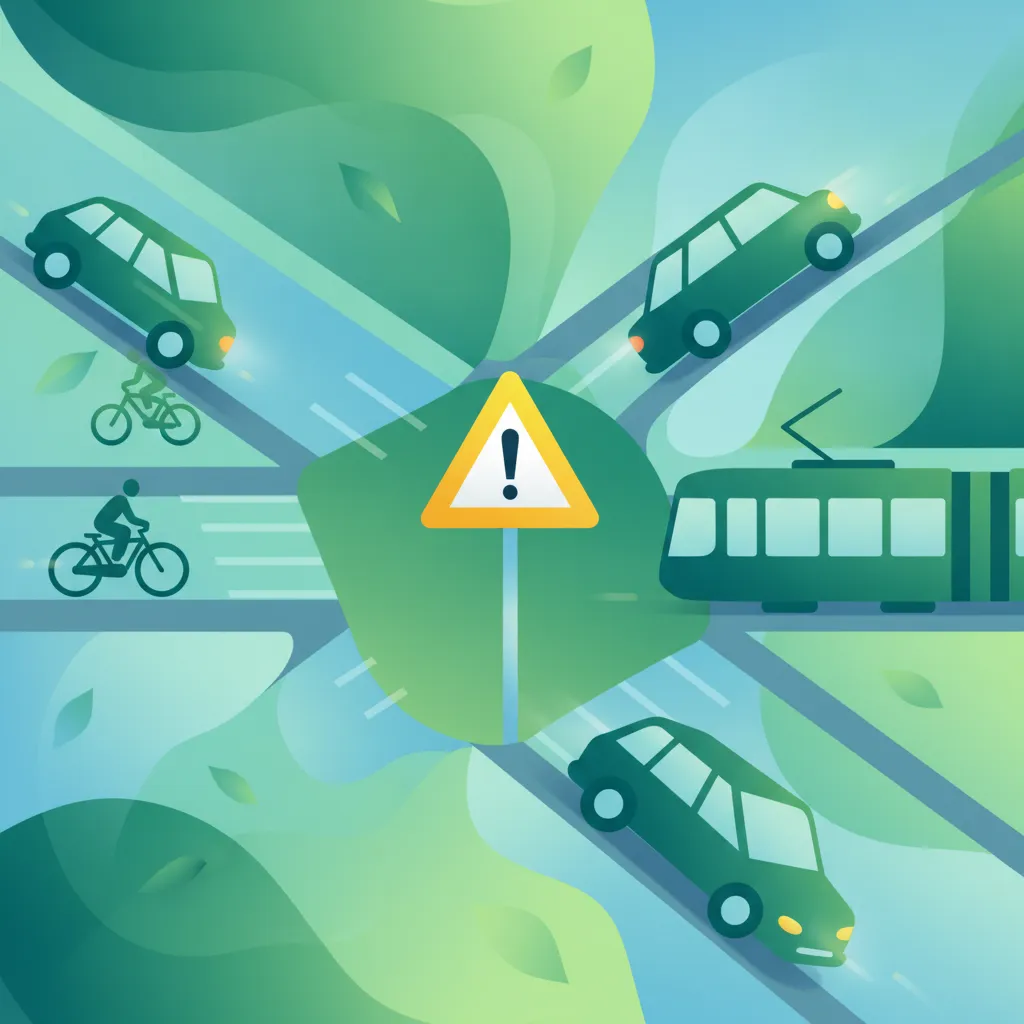
Lesson content overview
Navigating the German road network requires a deep understanding of right-of-way rules, especially concerning priority roads and intersections controlled by signals or police. This lesson, part of your German Driving License Theory – Comprehensive Category B Course, will explain the concept of a priority road (Vorfahrtstraße), how to identify it, and how priority is dynamically managed through traffic lights, the special 'Grünpfeil' (green arrow) sign, and the ultimate authority of a police officer. Mastering these principles is crucial for safe and efficient driving on German roads.
A core element of German traffic law is the concept of a "priority road" or Vorfahrtstraße. This designation is applied to main thoroughfares to ensure continuous and efficient traffic flow. Drivers on a priority road generally have the right-of-way over traffic entering or crossing from intersecting roads. This system simplifies navigation at numerous intersections, reducing the need for drivers on the main route to constantly stop or yield.
Understanding when you are on a Vorfahrtstraße and when that priority is superseded is fundamental. It not only enhances safety by clarifying who has the right to proceed but also contributes to smoother traffic by minimizing unnecessary stops and delays.
A Vorfahrtstraße is a road segment where traffic traveling along it has continuous right-of-way at intersections with other roads, unless specifically indicated otherwise by signs or signals. The primary purpose of such a road is to facilitate the uninterrupted movement of traffic on a main route, which is particularly vital for principal arteries in both urban and rural settings. This continuous priority is designed to prevent congestion and reduce the risk of collisions that often arise from ambiguity at junctions.
Drivers on these designated roads can proceed through intersections without stopping, provided no other traffic control device (like a traffic light or a yield sign) mandates otherwise. Conversely, drivers approaching a priority road from an intersecting side road must always yield to traffic already on the Vorfahrtstraße.
Priority roads play a critical role in managing traffic effectively. By clearly assigning priority to one flow of traffic, they streamline movement on major routes, decreasing the frequency of stop-and-go situations. This not only makes journeys quicker but also reduces fuel consumption and vehicle emissions.
From a safety perspective, Vorfahrtstraßen help prevent common intersection accidents by establishing clear expectations for drivers. When drivers know they are on a priority road, they can proceed with greater confidence, while those on non-priority roads are explicitly instructed to yield. This clarity minimizes hesitation and misjudgment, which are common causes of collisions at junctions. However, this system relies heavily on drivers correctly identifying and adhering to the relevant traffic signs and signals.
In Germany, specific traffic signs clearly mark the beginning and end of a Vorfahrtstraße. These signs are vital visual cues that inform drivers about their right-of-way status and responsibilities at upcoming intersections. Correctly interpreting these signs is a cornerstone of safe driving and adherence to the StVO (Straßenverkehrs-Ordnung – Road Traffic Regulations).
The Priority Road Start Sign (German: Zeichen 306) is a yellow square sign with a white border, rotated 45 degrees, so it appears as a diamond shape.
This sign indicates that the road you are currently driving on is a Vorfahrtstraße. From the point where Zeichen 306 is displayed, you have the right-of-way at all subsequent intersections with side roads, assuming there are no other overriding signals or signs. This means you do not need to stop or yield to traffic from the left or right at these junctions. This priority remains in effect until you encounter a Priority Road End Sign (Zeichen 307) or another traffic control device alters the priority.
When you see Zeichen 306, you can generally expect to maintain your speed and proceed through upcoming intersections without stopping, unless other signs or signals instruct you otherwise. Always scan intersections for other road users.
The Priority Road End Sign (German: Zeichen 307) is identical in shape and color to Zeichen 306, but it features a single thick black diagonal line running from the bottom left to the top right.
This sign signals that the priority status of the road you are on has ended. At the very next intersection following Zeichen 307, you no longer automatically have the right-of-way. Instead, you must adhere to the general right-of-way rules, such as "right before left" (rechts vor links), or any other signs (like a yield sign or stop sign) that might be present at that specific intersection. It is crucial to anticipate this change and adjust your driving behavior accordingly by reducing speed and preparing to yield.
Do not confuse Zeichen 307 with a stop sign. It merely indicates the end of your continuous priority, not a mandatory stop. Your actions at the next intersection will depend on the specific signs or rules governing that intersection.
While Zeichen 306 grants continuous priority, there are instances where even a priority road may require drivers to yield at specific points. The Yield Sign (German: Zeichen 205, commonly referred to as Vorfahrt gewähren!) indicates that you must give way to traffic on the intersecting road.
If Zeichen 205 appears on a priority road before an intersection, it overrides the general priority road status for that specific junction. This is often done for safety reasons, for example, to give priority to traffic turning into a busy area or coming from a particularly hazardous stretch of road. Drivers must slow down, stop if necessary, and only proceed when it is safe to do so without impeding other traffic.
While static signs like Zeichen 306 and Zeichen 307 define long-term priority, traffic signals provide dynamic, real-time control over intersections. Understanding the hierarchy of traffic control devices is crucial: traffic lights always supersede the instructions given by priority road signs. This means that even if you are on a Vorfahrtstraße, a red traffic light mandates a stop.
At any intersection equipped with traffic lights, these signals take absolute precedence over static priority road signs. This rule is fundamental for ensuring safety and managing traffic flow, especially in busy urban areas or at complex junctions where fixed priority might not be sufficient or safe.
If you are approaching an intersection on a Vorfahrtstraße and the traffic light is red, you must stop. You may only proceed when the light turns green and the intersection is clear. Conversely, if you are on a side road (not a Vorfahrtstraße) and the light is green, you have the right to proceed, even if the intersecting road is a priority road. The traffic light is the decisive factor in such situations.
The Grünpfeil (Green Arrow) is a special traffic sign that allows for conditional turning movements. It is typically a small green arrow on a black background, often mounted alongside a standard traffic light. There are specific versions for left (Zeichen 101) and right (Zeichen 102) turns.
When a Grünpfeil for a right turn is displayed, it means you may turn right even if the main traffic light for your lane is red. However, this is not an unconditional right. You must first come to a complete stop at the stop line, as if it were a stop sign. After stopping, you must ensure that there is no cross-traffic, pedestrians, or cyclists that would be impeded by your turn. Only when the path is clear and safe, may you proceed with the right turn. Failing to stop or impeding other road users is a violation.
The Grünpfeil is a privilege, not an automatic right. Always stop, check for clear passage, and yield to all other traffic, pedestrians, and cyclists before proceeding.
There are also instances of dedicated green arrows (often within the main traffic light display) that light up independently. These arrows grant an unconditional right-of-way for the indicated turning movement. In this case, you do not need to stop first, as the system ensures no conflicting traffic will have a green light.
In the hierarchy of traffic control, a police officer directing traffic stands at the very top. Their instructions always override all traffic signs, signals, and general right-of-way rules.
Whenever a police officer is actively directing traffic at an intersection, through a construction zone, or during a special event, their hand signals and verbal instructions must be followed without exception. This holds true regardless of what traffic lights are showing, what priority road signs are posted, or what general right-of-way rules would otherwise apply.
Police officers provide immediate, dynamic control over traffic, allowing them to react to unforeseen circumstances like accidents, power outages affecting traffic lights, or unusually heavy traffic. Failing to obey a police officer's directions is a serious offense and can lead to dangerous situations and legal consequences.
Familiarize yourself with common police hand signals for stopping, proceeding, and turning. In an emergency, these clear signals are your primary guide.
Understanding the specific rules governing priority roads and their interaction with other traffic control devices is vital for safe and legal driving in Germany. The StVO provides clear guidelines that drivers must follow.
Upon seeing the Priority Road Start Sign (Zeichen 306), you gain continuous priority at subsequent intersections. This means you do not need to stop or yield to vehicles from intersecting roads unless explicitly told to by a Yield Sign (Zeichen 205), a Stop Sign (Zeichen 206), or active traffic lights. When you encounter the Priority Road End Sign (Zeichen 307), your continuous priority ceases. At the very next intersection, you must apply the general right-of-way rules, such as rechts vor links (right before left), or follow any specific signs posted at that junction.
If Zeichen 205 (Yield Sign) or Zeichen 206 (Stop Sign) appears on your priority road before an intersection, you must comply with it. These signs temporarily override the priority road status for that specific junction. For Zeichen 205, slow down and be prepared to stop, yielding to traffic on the intersecting road. For Zeichen 206, you must come to a complete stop before the stop line, even if no traffic is visible, and then yield before proceeding. This ensures flexibility in traffic management where specific intersections require altered priority.
Traffic lights always take precedence over priority road signs. Regardless of whether you are on a Vorfahrtstraße or a secondary road, you must obey the traffic light signals. A red light means stop, a yellow light means prepare to stop (or prepare to go if it follows red), and a green light means proceed when the way is clear. Ignoring a traffic light is a serious offense with significant penalties and high risk of collisions.
The Grünpfeil for turning right (Zeichen 102) allows you to turn right on a red light, but only after coming to a full stop at the stop line. You must then carefully check for crossing pedestrians, cyclists, and traffic from other directions that may have a green light. Only proceed if it is absolutely safe and you do not impede anyone. This rule provides a way to reduce waiting times for right-turning traffic but demands extreme caution.
Instructions from a police officer actively directing traffic supersede all other traffic rules, signs, and signals. You must follow their hand signals and directions explicitly. This is crucial for maintaining order and safety during emergencies, traffic incidents, or special events where normal rules might be inadequate or unsafe.
Regardless of your priority status or any traffic signals, you must always yield to emergency vehicles (Einsatzfahrzeuge) that are using blue flashing lights and sirens. This includes police, fire brigade, and ambulance services. You must immediately provide a clear path for them to pass, often by moving to the side of the road or into a safe refuge.
Even with clear rules, misinterpretations and errors can occur. Understanding common violations and edge cases related to priority roads and signalled priority can help drivers avoid accidents and penalties.
Yield or Stop Sign on a Priority Road: A common mistake is for drivers on a Vorfahrtstraße to assume they always have priority, overlooking a Zeichen 205 (Yield) or Zeichen 206 (Stop) sign placed before a specific intersection. This can lead to dangerous right-of-way collisions.Zeichen 307 (End of Priority Road): Some drivers mistakenly believe Zeichen 307 means they must stop at the next intersection. In reality, it simply removes the automatic priority, meaning you must now apply default right-of-way rules or obey other signs at that junction.Grünpfeil: When turning right on a red light with a Grünpfeil, failing to come to a complete stop before the stop line is a common violation. This often leads to impeding pedestrians or cyclists, who have the right-of-way.Vorfahrtstraße, pedestrians at marked crossings (zebra crossings or Zebrastreifen) always have the right-of-way. Drivers must stop and yield to them.The German system of priority roads and dynamic traffic control is designed to maximize both safety and efficiency. Adhering to these rules:
Ultimately, a thorough understanding and consistent application of these rules are paramount for every driver on German roads, contributing to personal safety and the collective efficiency of the road network.
Priority roads (Vorfahrtstraßen) designated by Zeichen 306 provide continuous right-of-way at intersections, ending when Zeichen 307 is reached. However, this priority is not absolute—yield signs, stop signs, and traffic lights can override it for specific junctions. Traffic lights always take precedence over priority road signs, and police officers directing traffic hold the ultimate authority over all signals and signs. The Grünpfeil permits a right turn on red only after stopping completely and yielding to pedestrians and cross-traffic. Understanding the hierarchy of these control devices and recognizing that priority road status does not override other signals is essential for safe driving and passing the German theory exam.
A short set of high-value points that capture the most important learning from this lesson.
A Vorfahrtstraße grants continuous right-of-way at intersections unless a yield sign, stop sign, or traffic signal overrides it for that specific junction
Zeichen 306 marks the beginning of a priority road where you proceed without stopping; Zeichen 307 marks its end and requires applying general right-of-way rules at the next intersection
Traffic lights always take absolute precedence over priority road signs, meaning a red light must be obeyed even on a Vorfahrtstraße
Police officers directing traffic hold the highest authority and override all signs, signals, and general priority rules
The Grünpfeil permits turning right on red only after a complete stop and confirming no pedestrians, cyclists, or cross-traffic are impeded
Explore all units and lessons included in this driving theory course.
Zeichen 306 is the yellow diamond-shaped priority road start sign; Zeichen 307 is identical but with a black diagonal line indicating the end of priority
A yield sign (Zeichen 205) or stop sign (Zeichen 206) on a priority road overrides the Vorfahrtstraße status for that specific intersection only
Zeichen 307 does not require stopping—it simply means you must apply rechts vor links or other applicable rules at the next intersection
The Grünpfeil is a conditional privilege requiring a full stop before proceeding, not an automatic right-of-way
Pedestrians at zebra crossings (Zebrastreifen) always have priority, even when you are on a Vorfahrtstraße
Drivers on a priority road assume they always have priority and ignore yield or stop signs placed before specific intersections
Drivers mistakenly believe Zeichen 307 (end of priority) requires them to stop, when it only changes the applicable right-of-way rules
Running a red light on a priority road because drivers incorrectly think their Vorfahrtstraße status overrides the traffic light
Failing to come to a complete stop before turning right on a Grünpfeil, instead proceeding directly from the stop line
Disregarding a police officer's hand signals in favor of traffic lights or road signs, which violates the highest authority hierarchy
Lesson content overview
A short set of high-value points that capture the most important learning from this lesson.
A Vorfahrtstraße grants continuous right-of-way at intersections unless a yield sign, stop sign, or traffic signal overrides it for that specific junction
Zeichen 306 marks the beginning of a priority road where you proceed without stopping; Zeichen 307 marks its end and requires applying general right-of-way rules at the next intersection
Traffic lights always take absolute precedence over priority road signs, meaning a red light must be obeyed even on a Vorfahrtstraße
Police officers directing traffic hold the highest authority and override all signs, signals, and general priority rules
The Grünpfeil permits turning right on red only after a complete stop and confirming no pedestrians, cyclists, or cross-traffic are impeded
Explore all units and lessons included in this driving theory course.
Zeichen 306 is the yellow diamond-shaped priority road start sign; Zeichen 307 is identical but with a black diagonal line indicating the end of priority
A yield sign (Zeichen 205) or stop sign (Zeichen 206) on a priority road overrides the Vorfahrtstraße status for that specific intersection only
Zeichen 307 does not require stopping—it simply means you must apply rechts vor links or other applicable rules at the next intersection
The Grünpfeil is a conditional privilege requiring a full stop before proceeding, not an automatic right-of-way
Pedestrians at zebra crossings (Zebrastreifen) always have priority, even when you are on a Vorfahrtstraße
Drivers on a priority road assume they always have priority and ignore yield or stop signs placed before specific intersections
Drivers mistakenly believe Zeichen 307 (end of priority) requires them to stop, when it only changes the applicable right-of-way rules
Running a red light on a priority road because drivers incorrectly think their Vorfahrtstraße status overrides the traffic light
Failing to come to a complete stop before turning right on a Grünpfeil, instead proceeding directly from the stop line
Disregarding a police officer's hand signals in favor of traffic lights or road signs, which violates the highest authority hierarchy
Explore search topics learners often look for when studying Priority Roads and Signalled Priority. These topics reflect common questions about road rules, driving situations, safety guidance, and lesson level theory preparation for learners in Germany.
Browse additional driving theory lessons that cover connected traffic rules, road signs, and common driving situations related to this topic. Improve your understanding of how different rules interact across everyday traffic scenarios.
Learn the specifics of 'Vorfahrtstraße' signs, including how to identify the start and end of priority roads. This lesson clarifies the rules for traffic lights, green arrows, and police officer signals that affect right-of-way.
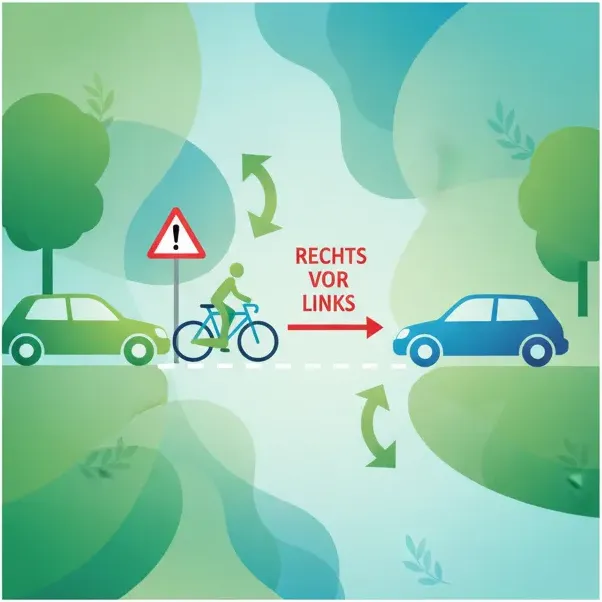
This lesson provides a detailed guide to navigating various types of intersections safely and correctly. It explains how priority is determined by traffic signs (such as the priority road, yield, and stop signs) and traffic lights. The lesson also covers complex scenarios, including the rules for turning left across oncoming traffic, to ensure you can handle any junction with confidence.
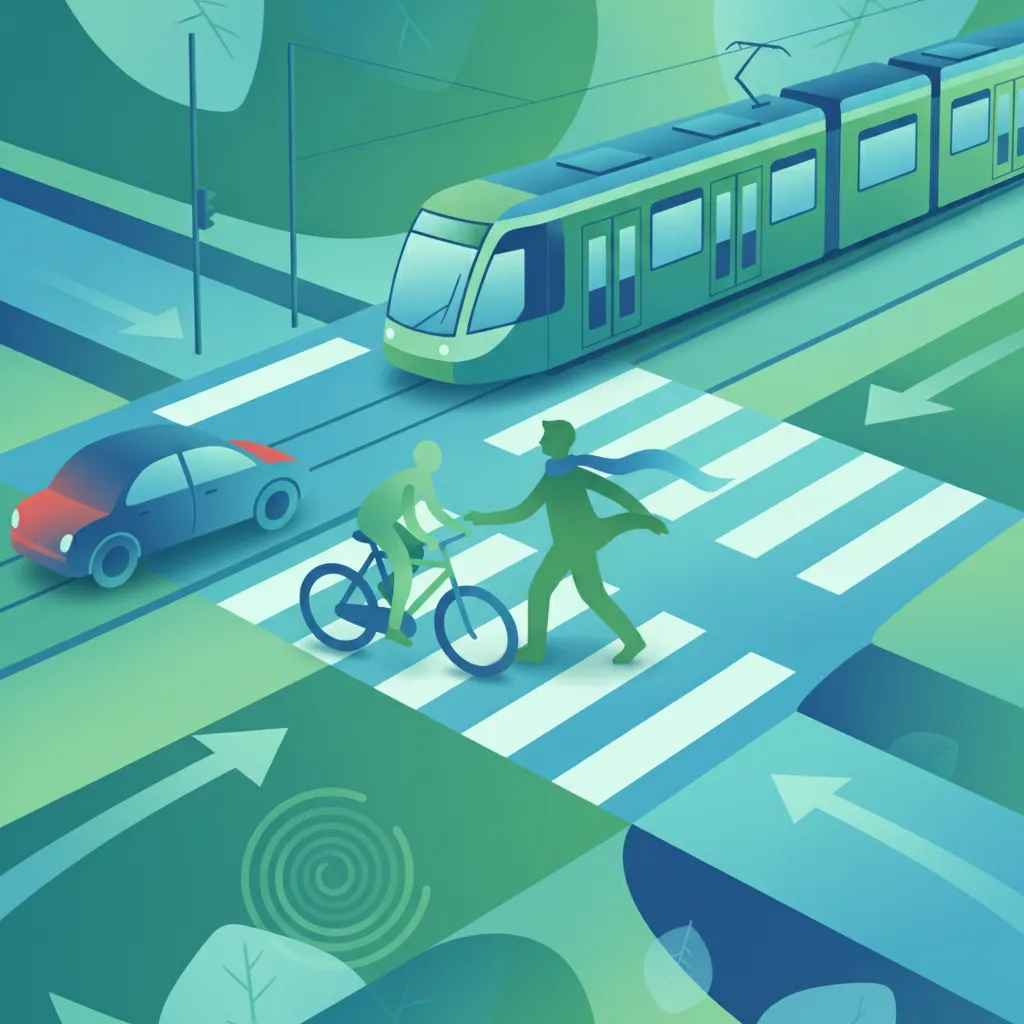
This lesson details the critical right-of-way regulations according to the German StVO. It covers the default 'right before left' rule, the meaning of priority road signs, and specific rules for roundabouts and yielding to pedestrians. A thorough understanding of these priority rules is fundamental for preventing accidents at junctions.
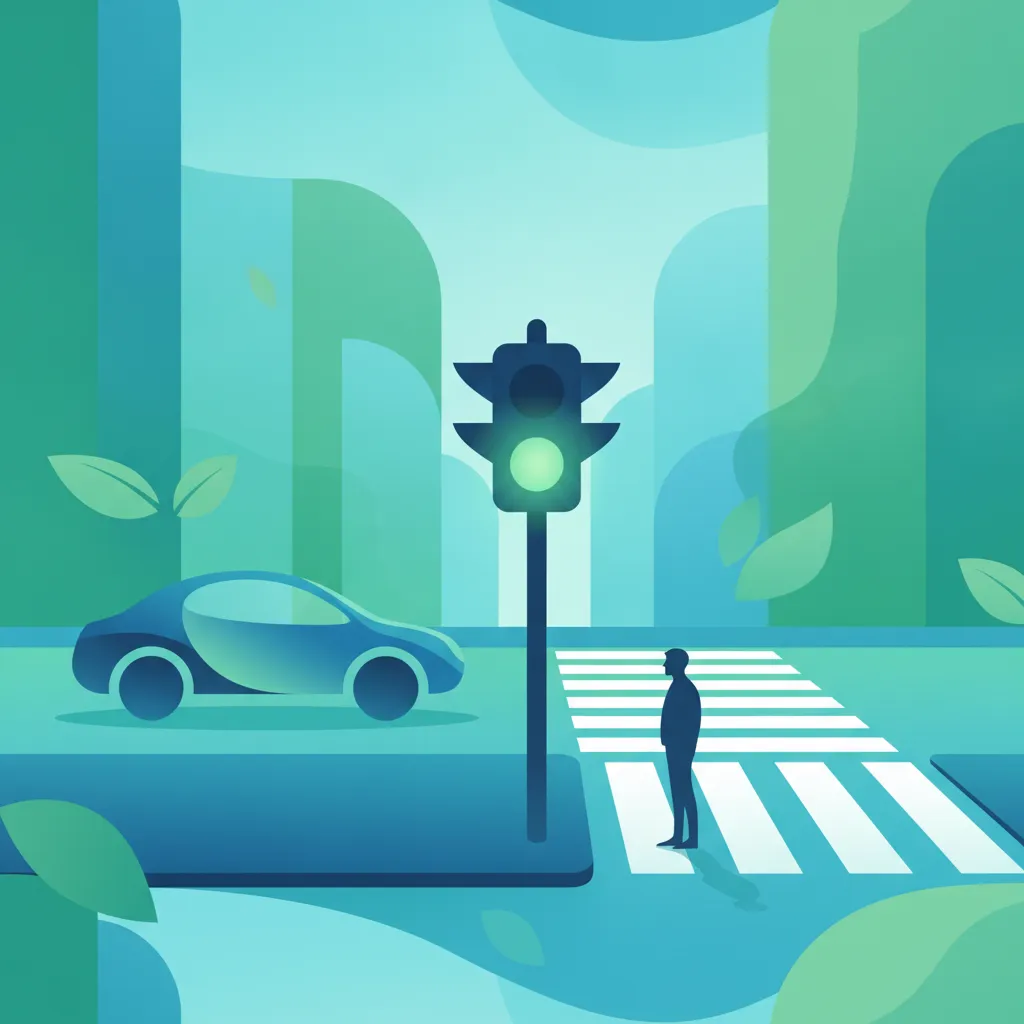
This lesson provides a thorough explanation of traffic light systems ('Lichtzeichenanlagen') used in Germany. It details the meaning of red, amber, and green lights and the correct response to each phase of the signal sequence. The lesson also covers special signals, such as the green arrow for turning right on red, pedestrian and cyclist signals, and the authority of signals given by a police officer, which override all other signs.
Effective communication is critical for road safety, and this lesson details the correct use of a vehicle's signaling devices. It explains when and how to use turn signals (indicators), hazard warning lights, the horn, and headlight flashes to clearly communicate your intentions to other road users. Proper signaling helps prevent misunderstandings and is a key component of defensive and cooperative driving.

This lesson explains the specific rules for driving in roundabouts ('Kreisverkehr'), a common feature on German roads. It covers the correct procedure for approaching and entering, the rule that traffic already in the circle has priority, and the requirement to signal before exiting. The lesson also addresses the unique characteristics of mini-roundabouts and how to interact with cyclists and pedestrians around them.

This lesson explains the various types of road markings and their significance for guiding traffic and ensuring safety. It covers the difference between solid and broken lines for lane separation and overtaking rules, the function of stop lines at intersections, and the markings for pedestrian crosswalks. You will also learn to interpret directional arrows, bicycle lane markings, and other symbols painted on the road.
This lesson introduces the foundational concept of right-of-way ('Vorfahrt') in German traffic law. It explains the default priority rule, 'Rechts vor Links' (right before left), which applies at intersections without any regulating signs or signals. You will learn to identify situations where this rule applies and understand the basic principles of yielding to ensure safe passage at junctions.
This lesson explains the function and meaning of traffic light signals, including standard cycles, flashing lights, and arrows. It also details how to interpret and obey hand signals given by police officers, which override all other signs and signals. Understanding these instructions is crucial for navigating controlled junctions and emergency situations.
This lesson provides comprehensive guidance on using vehicle signals to communicate with other road users. It covers the correct timing and use of turn indicators, the application of hand signals when necessary, and the proper use of hazard lights. Effective signaling is presented as a cornerstone of predictable and safe driving.
This lesson covers regulatory signs, which are legally enforceable and command specific actions from drivers. You will learn the meaning of critical signs such as the stop sign, yield sign, no-entry signs, and various parking and stopping prohibitions. The content also explains signs that establish speed limits, one-way streets, and restricted areas like environmental or pedestrian zones.
Explore how traffic lights and signals, including the green arrow ('Grünpfeil') and police officer directions, override standard priority rules. This lesson provides clarity on how these signals regulate traffic flow and right-of-way situations.
This lesson provides a thorough explanation of traffic light systems ('Lichtzeichenanlagen') used in Germany. It details the meaning of red, amber, and green lights and the correct response to each phase of the signal sequence. The lesson also covers special signals, such as the green arrow for turning right on red, pedestrian and cyclist signals, and the authority of signals given by a police officer, which override all other signs.
This lesson explains the function and meaning of traffic light signals, including standard cycles, flashing lights, and arrows. It also details how to interpret and obey hand signals given by police officers, which override all other signs and signals. Understanding these instructions is crucial for navigating controlled junctions and emergency situations.
This lesson familiarizes drivers with the various special traffic signals and signs that apply exclusively to buses and other public transport vehicles. It covers the interpretation of bus-only signals (often showing bars or letters), flashing priority indicators, and lane-use control signs. Correctly understanding these signals is crucial for legal compliance and for taking advantage of public transport priority measures in urban areas.
This lesson provides comprehensive guidance on using vehicle signals to communicate with other road users. It covers the correct timing and use of turn indicators, the application of hand signals when necessary, and the proper use of hazard lights. Effective signaling is presented as a cornerstone of predictable and safe driving.
Effective communication is critical for road safety, and this lesson details the correct use of a vehicle's signaling devices. It explains when and how to use turn signals (indicators), hazard warning lights, the horn, and headlight flashes to clearly communicate your intentions to other road users. Proper signaling helps prevent misunderstandings and is a key component of defensive and cooperative driving.
This lesson covers regulatory signs, which are legally enforceable and command specific actions from drivers. You will learn the meaning of critical signs such as the stop sign, yield sign, no-entry signs, and various parking and stopping prohibitions. The content also explains signs that establish speed limits, one-way streets, and restricted areas like environmental or pedestrian zones.
Find clear answers to common questions learners have about Priority Roads and Signalled Priority. Learn how the lesson is structured, which driving theory objectives it supports, and how it fits into the overall learning path of units and curriculum progression in Germany. These explanations help you understand key concepts, lesson flow, and exam focused study goals.
You can recognize a priority road by the yellow diamond-shaped sign. When this sign is present, you have the right of way over vehicles coming from intersecting roads at all junctions until you see a sign indicating the end of the priority road.
The green arrow, or Grünpfeil, allows you to turn right even when the traffic light is red, provided you first come to a complete stop at the stop line and ensure no other road users, such as pedestrians or cyclists, are endangered.
Yes, traffic directions given by a police officer always override traffic lights and road signs. You must follow the officer's hand signals or whistle instructions immediately to ensure safe traffic flow.
At intersections without specific signage or signals, the general rule of right-before-left applies. Always remain vigilant for hidden side streets and exercise caution if the priority is not explicitly marked.
Begin your targeted revision now. Use our practice search to quickly find specific German driving theory questions. Filter by StVO rules, road signs, or hazard perception to create your focused study plan. Master challenging areas and prepare confidently for your theoretical driving test.