
This lesson provides a comprehensive introduction to the essential right-of-way rules defined in the German StVO. Understanding these core priority principles is critical for both passing your Class B theory exam and navigating intersections safely in real-world traffic.
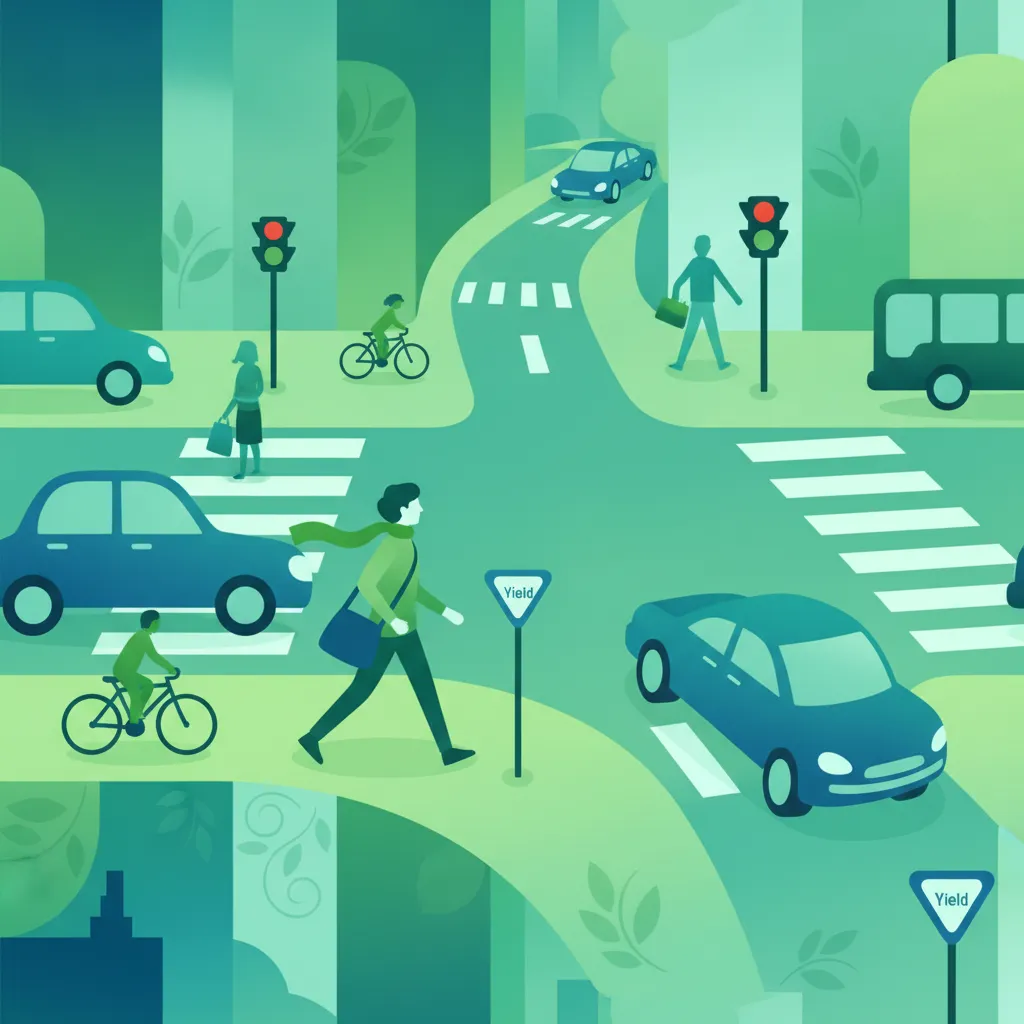
Lesson content overview
Successfully navigating German roads requires a firm grasp of the fundamental right-of-way rules, known in German as Vorfahrt. This concept dictates which road user has legal precedence to proceed first at junctions, crossings, and other points of potential conflict. Understanding these basic principles is crucial for ensuring safety, maintaining smooth traffic flow, and passing your German Driving License Theory – Comprehensive Category B Course exam. This lesson will introduce you to the core ideas, the default rules, and how to apply them correctly in various situations.
The concept of right-of-way, or Vorfahrt, is a cornerstone of German traffic law, primarily outlined in the Straßenverkehrs-Ordnung (StVO). It establishes a clear hierarchy among road users to prevent collisions and ensure an orderly flow of traffic. Without clear rules on who goes first, intersections and merging points would quickly descend into chaos, leading to frequent accidents and severe congestion.
The underlying logic of these rules is to provide predictable behavior for all drivers. When every road user understands and adheres to the designated priority, decision-making at junctions becomes simpler, reaction times improve, and the overall risk of accidents significantly decreases. This foundation is essential for learning more complex traffic scenarios, such as navigating roundabouts, dealing with traffic signals, and understanding priority roads.
The most basic and often misunderstood right-of-way rule in Germany is Rechts vor Links, meaning "right before left." This principle serves as the default rule, applying specifically where no other traffic signs, signals, or road markings indicate otherwise.
Rechts vor Links dictates that at an intersection where there are no traffic lights, no stop signs, no yield signs, and no priority road signs, vehicles approaching from the right have priority over vehicles approaching from the left. This rule is a simple, geometry-based guideline designed to provide clarity at unregulated junctions. Drivers on the left must yield (Vorfahrt gewähren) to those on their right.
This fundamental rule is applicable at any intersection that is not regulated by:
Vorfahrt gewähren (Yield), Halt! Vorfahrt gewähren (Stop), or Vorfahrtstraße (Priority Road) override Rechts vor Links.Rechts vor Links.It is critical to actively look for signs and signals. Only when their absence is confirmed should you apply Rechts vor Links. Many new drivers mistakenly assume Rechts vor Links applies everywhere or fail to notice regulatory signs.
While Rechts vor Links is the default, there are specific situations where it does not apply, even without explicit signs or signals. These exceptions are crucial to understand for safe driving:
Einfahrt-Stopp-Regelung (Entry-Stop Rule).Vorfahrtstraße (Priority Roads): Vehicles on a priority road have continuous priority at intersections.Rechts vor Links cautiously if in doubt, or assume the need to yield.Beyond Rechts vor Links, specific signs are used to explicitly regulate right-of-way at junctions, instructing drivers to yield or stop. These signs override the Rechts vor Links rule.
The Vorfahrt gewähren sign (Yield) is an inverted white triangle with a red border. When you encounter this sign, it means you must give way to traffic on the intersecting road. You are not necessarily required to stop completely, but you must slow down significantly and be prepared to stop if necessary to allow vehicles with priority to pass safely.
When approaching a yield sign, look for traffic from both directions on the priority road. Adjust your speed to ensure you can stop safely if there are vehicles with priority, or proceed smoothly if the way is clear.
The Halt! Vorfahrt gewähren sign (Stop! Yield Right of Way) is an octagonal red sign with a white border and the word "STOP" in white letters. This sign is more stringent than a yield sign. When you see a stop sign, you must bring your vehicle to a complete stop before the stop line (Haltelinie) or, if no line is present, at the edge of the intersection where you have a clear view of approaching traffic. After stopping, you must then yield to all traffic on the intersecting road, just as with a yield sign.
Rolling through a stop sign without coming to a complete stop is a serious violation in Germany and carries significant penalties. Ensure your vehicle's wheels cease all movement, even if only for a second, before proceeding.
A Vorfahrtstraße (Priority Road) is a road designated to have continuous priority at all intersections, unless otherwise indicated by specific signs or traffic lights.
A priority road is marked by a yellow diamond-shaped sign with a white border. This sign indicates that you are currently on a priority road.
When driving on a priority road, you generally do not need to yield to traffic from side roads, even those coming from your right, unless another sign (like a yield sign for you) explicitly tells you to do so. This helps maintain traffic flow on main routes. However, always remain vigilant and be prepared for drivers on side roads who might mistakenly assume Rechts vor Links or fail to notice the priority road signage.
The end of a priority road is indicated by the same yellow diamond sign, but with a thick black diagonal stripe through it. When you see this sign, it means that the continuous priority of the road you are on is ending. From this point onward, Rechts vor Links or other signs will regulate priority at subsequent intersections.
Regardless of general right-of-way rules, special consideration and priority must always be given to vulnerable road users, such as pedestrians and cyclists. Their safety is paramount, and drivers have a heightened responsibility to protect them.
Pedestrians always have priority at designated crosswalks, known in Germany as Zebrastreifen (zebra crossings). These are marked by white stripes on the road. When approaching a Zebrastreifen, drivers must reduce speed and be prepared to stop. If a pedestrian is waiting to cross or is already crossing, you must stop and allow them to cross safely.
Even if no pedestrian is immediately visible, always approach Zebrastreifen with caution. Failure to yield to pedestrians at a marked crosswalk can result in significant fines and penalty points.
Cyclists, like pedestrians, are vulnerable road users. Their right of way is often determined by the specific road layout and signs.
Rechts vor Links applies, a cyclist approaching from your right has priority.Beyond standard intersections, certain scenarios require specific yielding behaviors that override the default Rechts vor Links rule.
As mentioned earlier, vehicles entering a public road from a private driveway, garage, parking lot, private road, field path (Feldweg), or forest path (Waldweg) must always yield to all traffic on the public road. This is a crucial rule designed to protect the flow of traffic on established public routes. There are no signs indicating this, it's a rule based on the nature of the entry point.
When turning, drivers generally have specific yielding obligations:
Linksabbieger): A vehicle turning left at an intersection without specific signals or signs must yield to all oncoming traffic that is going straight or turning right. This applies even if the oncoming traffic is from the opposite direction and you have Rechts vor Links priority relative to vehicles from a side street.Rechtsabbieger): When turning right, drivers must be particularly attentive to pedestrians and cyclists crossing the street they are turning into. As per the rules for vulnerable road users, they often have priority.The rule for left-turning vehicles yielding to oncoming traffic applies broadly and is an important exception to Rechts vor Links when considering opposing traffic flows at an intersection.
Understanding and correctly applying right-of-way rules is not merely an academic exercise for passing your exam; it is fundamental to safe driving and has significant legal implications.
The primary purpose of all right-of-way rules is collision avoidance. By establishing a clear order of precedence, these rules reduce uncertainty and the potential for conflicting movements at points where vehicle paths intersect. When drivers adhere to these rules, they create predictable patterns, allowing everyone to anticipate actions and react safely. Ignoring these rules dramatically increases the risk of T-bone collisions, head-on crashes, and other severe accidents.
New drivers often make several common errors regarding right-of-way:
Rechts vor Links determine priority.Rechts vor Links: Applying it when signs are present, or failing to apply it when it is the correct rule.Violating right-of-way rules in Germany carries serious legal consequences, including:
Bußgelder): Significant monetary penalties.Punkte in Flensburg): Accumulating too many points can lead to license suspension.Fahrverbot): For serious or repeated violations.While the rules themselves are fixed, their application requires careful judgment influenced by various external factors.
Adverse weather conditions significantly reduce visibility and increase stopping distances. In fog, heavy rain, or snow, drivers must approach intersections much more slowly, even if they have the right of way. Reduced visibility can hide traffic from side roads or obscure signs, making it harder to determine priority. Always prioritize safety over strictly enforcing your right of way in poor conditions.
Right-of-way decisions can feel different depending on the setting:
Rechts vor Links more prevalent. Higher speeds on rural roads demand earlier observation and decision-making at intersections. Unexpected driveways or field paths also require constant awareness of emerging priority rules.The type and load of your vehicle can also influence how you apply right-of-way rules:
Let's look at some common scenarios to reinforce your understanding.
Scenario: You are driving a blue car on a residential street. At an upcoming intersection, there are no traffic lights, stop signs, yield signs, or priority road signs. A green car is approaching from the street to your right.
Rule Applied: Rechts vor Links.
Correct Behavior: You, in the blue car, must slow down, observe the green car, and yield to it. You allow the green car to proceed first before you enter the intersection.
Incorrect Behavior: You assume you have priority because you are on a slightly wider road and proceed without yielding, creating a collision risk with the green car.
Scenario: You are driving a red car on a minor road that is about to join a main road. There is a Vorfahrt gewähren (Yield) sign at your junction. A white car is approaching from your left on the main road.
Rule Applied: Yield sign (Vorfahrt gewähren).
Correct Behavior: You, in the red car, slow down significantly as you approach the yield sign. You check for traffic on the main road from both directions. Seeing the white car approaching from your left, you stop or slow down enough to allow it to pass safely before you proceed onto the main road.
Incorrect Behavior: You only glance quickly and proceed, assuming the white car is far enough away, potentially forcing the white car to brake sharply or swerve.
Scenario: You are driving a yellow car on an urban street and see a Zebrastreifen (crosswalk) ahead. A pedestrian is standing at the edge of the crosswalk, looking as if they intend to cross.
Rule Applied: Yield to pedestrians at crosswalks (StVO § 25, § 26).
Correct Behavior: You, in the yellow car, reduce your speed considerably as you approach the crosswalk. As the pedestrian clearly indicates their intent to cross, you stop before the crosswalk and wait until the pedestrian has safely reached the other side before proceeding.
Incorrect Behavior: You assume the pedestrian will wait for you and continue driving, endangering the pedestrian.
Mastering right-of-way basics is non-negotiable for safe and lawful driving in Germany. The default rule of Rechts vor Links is foundational, but it is equally important to recognize when this rule is overridden by signs (yield, stop, priority road), signals, or specific situations like emerging from a private driveway or giving way to vulnerable road users. Always remember that safety takes precedence over claiming your right-of-way, especially in ambiguous situations or adverse conditions. By consistently applying these rules with vigilance and caution, you contribute to a safer, more predictable traffic environment for everyone.
This lesson covers the foundational right-of-way rules in German traffic law, centered on the Rechts vor Links (right before left) principle that applies at uncontrolled intersections. The rule is overridden by traffic signs, signals, or specific situations such as priority roads, private property entry, or pedestrian crossings. Special attention must be given to vulnerable road users—pedestrians at Zebrastreifen and cyclists at intersections—who always receive priority protection. Understanding these rules is essential for both passing the German Class B theory exam and navigating real-world traffic safely, as violations carry fines, penalty points, and potential driving bans.
A short set of high-value points that capture the most important learning from this lesson.
Rechts vor Links (right before left) is the default rule at uncontrolled intersections where no signs or signals are present
Traffic signs, traffic lights, and police instructions always override the Rechts vor Links rule
Vehicles emerging from private driveways, parking lots, field paths, or forest paths must always yield to all public road traffic
Pedestrians have unconditional priority at marked Zebrastreifen (zebra crossings) regardless of other right-of-way rules
When turning left, you must yield to all oncoming traffic going straight or turning right, even if you have Rechts vor Links priority
Explore all units and lessons included in this driving theory course.
Vorfahrt gewähren (Yield sign) means slow down and be prepared to stop; Halt! Vorfahrt gewähren (Stop sign) requires a complete stop
Vorfahrtstraße is identified by a yellow diamond sign and grants continuous priority until the end sign (yellow diamond with black diagonal stripe)
Zebrastreifen crosswalks always grant pedestrians priority; you must stop if they are waiting or crossing
The Einfahrt-Stopp-Regelung requires yielding to public road traffic when entering from any non-public surface
Cyclists turning right require drivers to yield when the cyclist is going straight on a parallel path or lane
Assuming a wider or busier road has automatic priority over a smaller side road without checking for signs
Rolling through stop signs without bringing the vehicle to a complete stop, which carries significant penalties in Germany
Applying Rechts vor Links at intersections where yield signs, stop signs, or traffic lights are actually present
Failing to yield to pedestrians at crosswalks, especially when no pedestrian is immediately visible
Neglecting to check for cyclists when turning right, as cyclists on parallel paths often have priority
Lesson content overview
A short set of high-value points that capture the most important learning from this lesson.
Rechts vor Links (right before left) is the default rule at uncontrolled intersections where no signs or signals are present
Traffic signs, traffic lights, and police instructions always override the Rechts vor Links rule
Vehicles emerging from private driveways, parking lots, field paths, or forest paths must always yield to all public road traffic
Pedestrians have unconditional priority at marked Zebrastreifen (zebra crossings) regardless of other right-of-way rules
When turning left, you must yield to all oncoming traffic going straight or turning right, even if you have Rechts vor Links priority
Explore all units and lessons included in this driving theory course.
Vorfahrt gewähren (Yield sign) means slow down and be prepared to stop; Halt! Vorfahrt gewähren (Stop sign) requires a complete stop
Vorfahrtstraße is identified by a yellow diamond sign and grants continuous priority until the end sign (yellow diamond with black diagonal stripe)
Zebrastreifen crosswalks always grant pedestrians priority; you must stop if they are waiting or crossing
The Einfahrt-Stopp-Regelung requires yielding to public road traffic when entering from any non-public surface
Cyclists turning right require drivers to yield when the cyclist is going straight on a parallel path or lane
Assuming a wider or busier road has automatic priority over a smaller side road without checking for signs
Rolling through stop signs without bringing the vehicle to a complete stop, which carries significant penalties in Germany
Applying Rechts vor Links at intersections where yield signs, stop signs, or traffic lights are actually present
Failing to yield to pedestrians at crosswalks, especially when no pedestrian is immediately visible
Neglecting to check for cyclists when turning right, as cyclists on parallel paths often have priority
Explore search topics learners often look for when studying Right of Way Basics. These topics reflect common questions about road rules, driving situations, safety guidance, and lesson level theory preparation for learners in Germany.
Browse additional driving theory lessons that cover connected traffic rules, road signs, and common driving situations related to this topic. Improve your understanding of how different rules interact across everyday traffic scenarios.
Deepen your understanding of German traffic law beyond the basics. Explore priority rules in complex intersections, multi-lane junctions, and situations with multiple road users. Learn to navigate challenging scenarios with confidence.
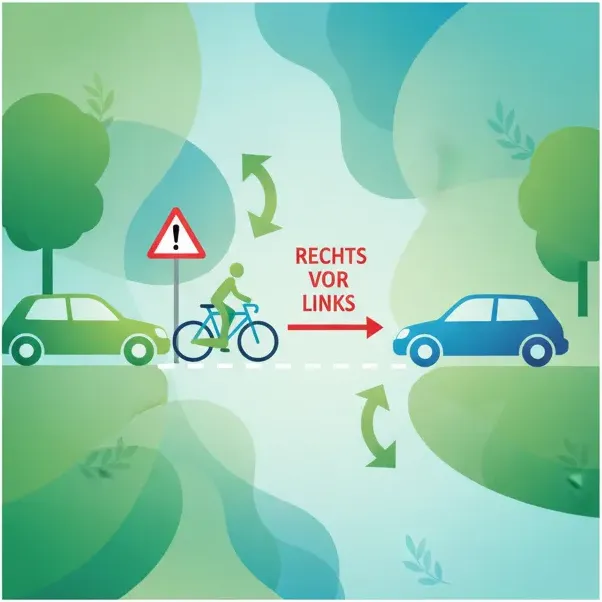
This lesson provides a detailed guide to navigating various types of intersections safely and correctly. It explains how priority is determined by traffic signs (such as the priority road, yield, and stop signs) and traffic lights. The lesson also covers complex scenarios, including the rules for turning left across oncoming traffic, to ensure you can handle any junction with confidence.
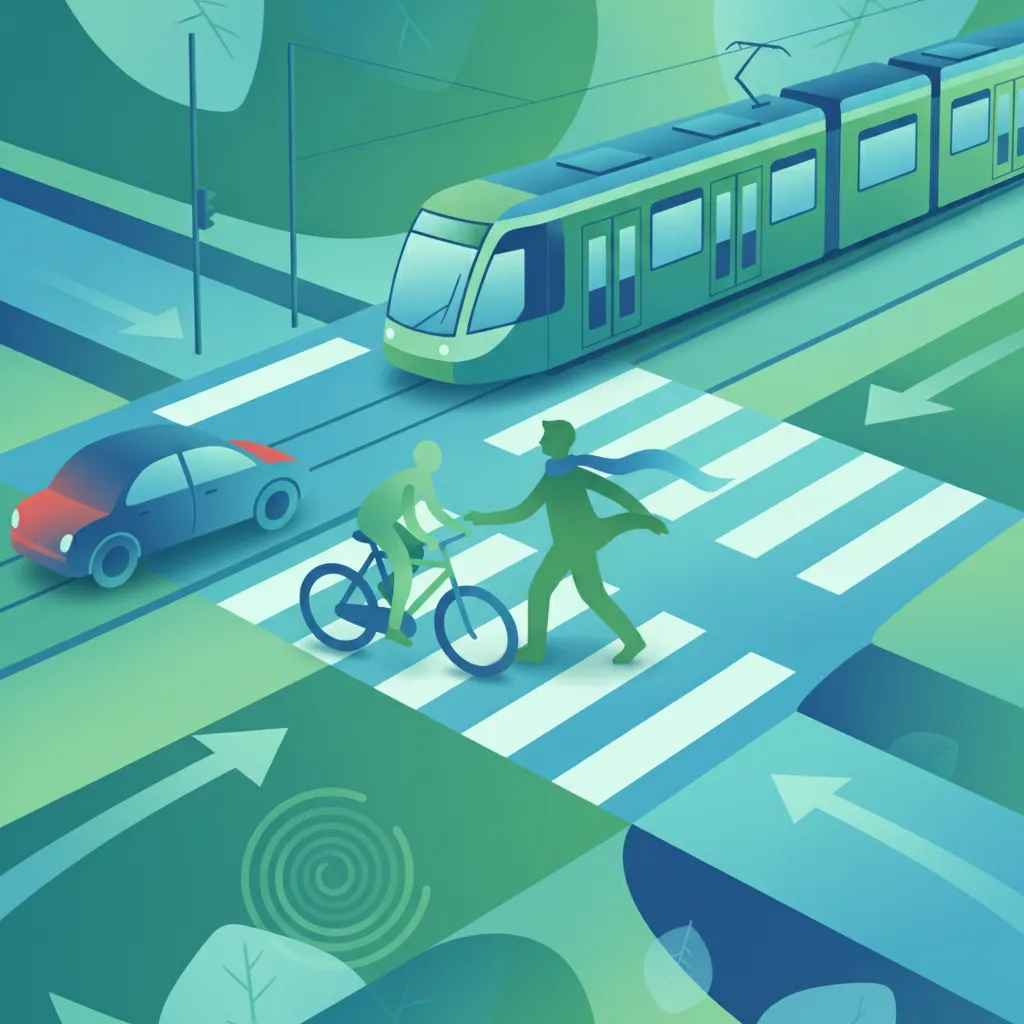
This lesson details the critical right-of-way regulations according to the German StVO. It covers the default 'right before left' rule, the meaning of priority road signs, and specific rules for roundabouts and yielding to pedestrians. A thorough understanding of these priority rules is fundamental for preventing accidents at junctions.
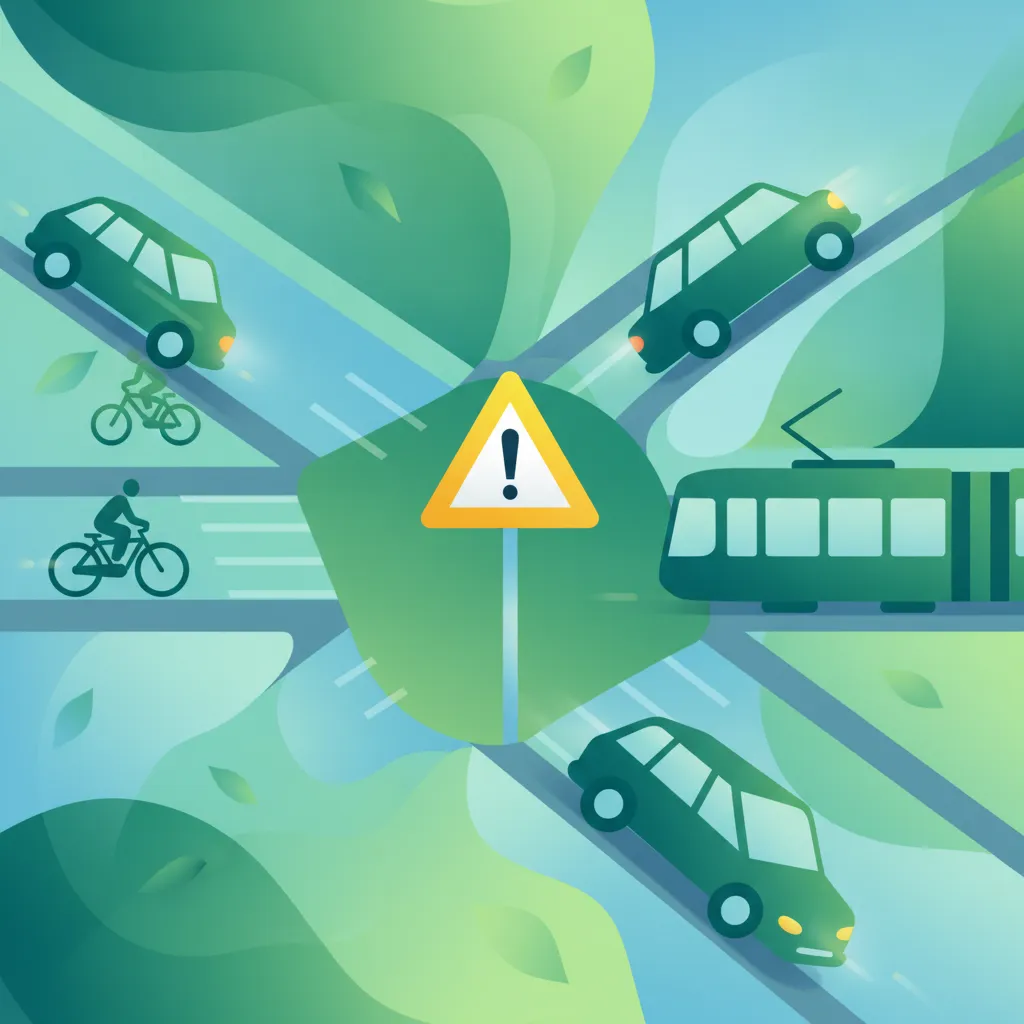
This lesson explains the concept of a priority road ('Vorfahrtstraße'), where you have right-of-way over traffic from intersecting roads. You will learn to recognize the signs that mark the beginning and end of a priority road. The lesson also covers how priority is managed through signals, including standard traffic lights, the special 'Grünpfeil' (green arrow) sign, and the overriding authority of a police officer directing traffic.

This lesson teaches a structured method for approaching any intersection. It covers identifying the type of junction, determining who has the right-of-way based on signs or rules, and performing thorough visual checks. The focus is on developing a safe and decisive approach to reduce risk in these high-conflict areas.

This lesson explains the specific rules for driving in roundabouts ('Kreisverkehr'), a common feature on German roads. It covers the correct procedure for approaching and entering, the rule that traffic already in the circle has priority, and the requirement to signal before exiting. The lesson also addresses the unique characteristics of mini-roundabouts and how to interact with cyclists and pedestrians around them.
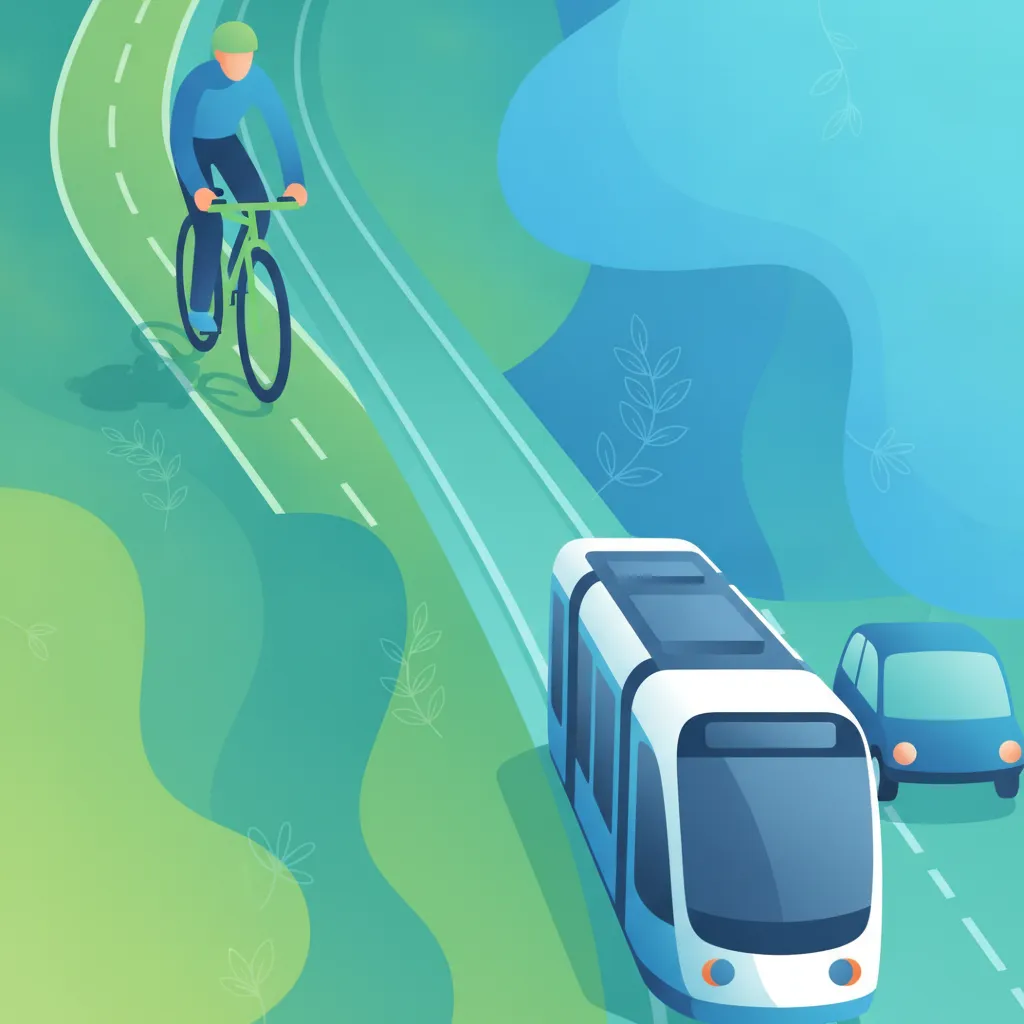
This lesson focuses on complex traffic environments where different types of road users share the same space. It provides guidance on situations like driving on streets with integrated tram tracks or where bus and bicycle lanes are part of the roadway. The content emphasizes understanding the specific priority rules and being extra vigilant to anticipate potential conflicts in these busy, shared zones.
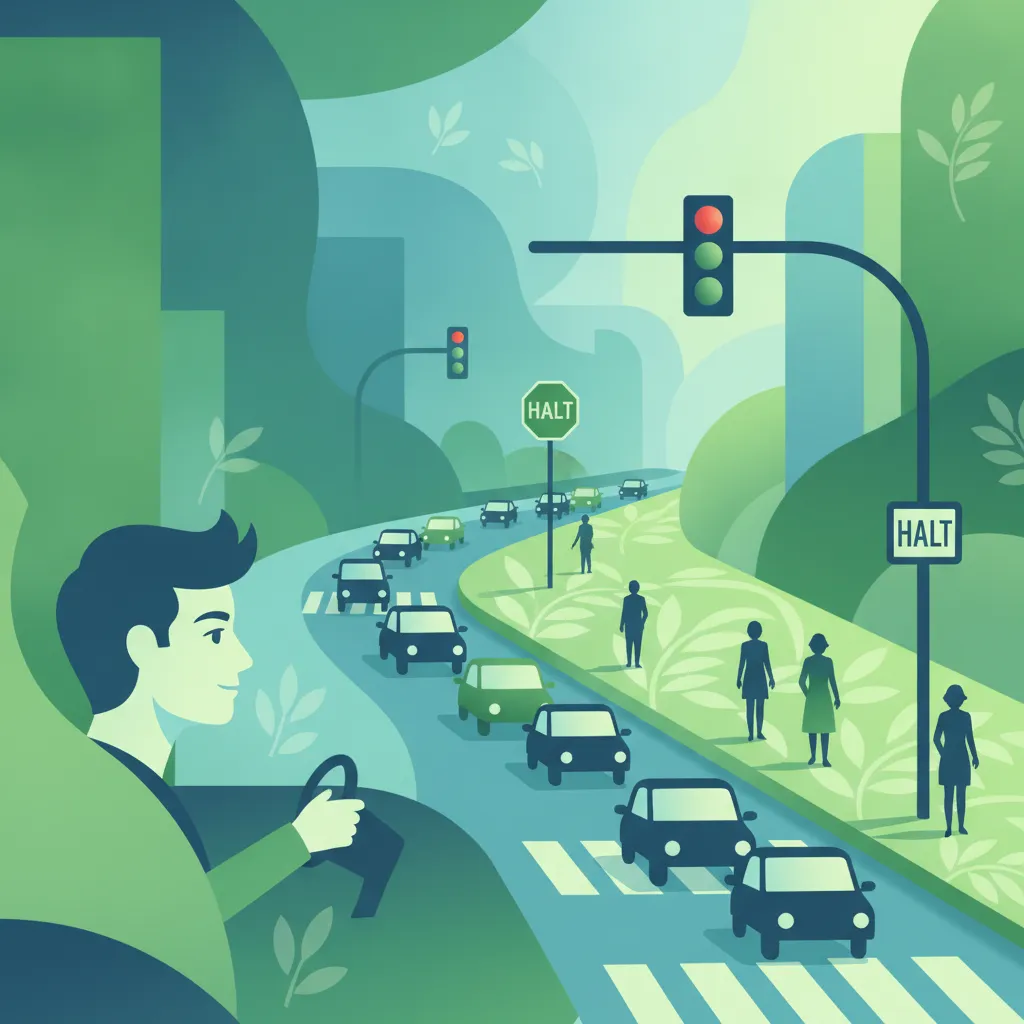
This lesson details the safe approach and navigation of various intersection types, including those controlled by traffic lights, stop signs, and give-way signs. Emphasis is placed on comprehensive observation of traffic flow, establishing eye contact with other road users, and ensuring clear visibility before proceeding. The lesson also covers correct lane positioning for turning and the importance of anticipating pedestrian movements.

This lesson provides a step-by-step guide to executing turns safely at intersections and other locations. It details the full observation sequence (mirrors, signal, blind spot check) required before initiating a turn. The lesson covers correct lane positioning for both left and right turns and explains the rules for performing U-turns or three-point turns where permitted.
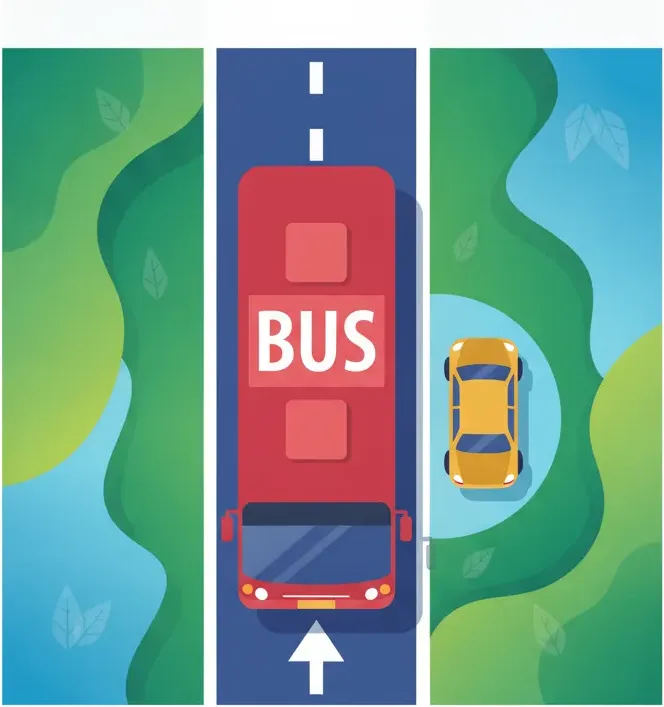
This lesson provides a detailed explanation of the rules governing dedicated bus lanes, including how to interpret markings and adhere to time-based restrictions. It clarifies the priority rules that grant buses precedence in certain traffic situations, such as when pulling out from a stop. Understanding these regulations allows drivers to use bus infrastructure efficiently and legally to maintain schedules and improve traffic flow.

This lesson focuses on the right-of-way rules that heavy vehicles must follow when interacting with cyclists and pedestrians, particularly at intersections and crossings. It emphasizes the need for trucks to yield appropriately and maintain safe distances. The content also covers the interpretation of traffic signs governing priority in urban areas.
Understand how fundamental right-of-way principles, including 'Rechts vor Links', apply in realistic driving situations. This lesson provides context for common scenarios encountered on German roads, helping you make safe decisions at intersections.
This lesson details the critical right-of-way regulations according to the German StVO. It covers the default 'right before left' rule, the meaning of priority road signs, and specific rules for roundabouts and yielding to pedestrians. A thorough understanding of these priority rules is fundamental for preventing accidents at junctions.
This lesson focuses on complex traffic environments where different types of road users share the same space. It provides guidance on situations like driving on streets with integrated tram tracks or where bus and bicycle lanes are part of the roadway. The content emphasizes understanding the specific priority rules and being extra vigilant to anticipate potential conflicts in these busy, shared zones.
This lesson explains the specific rules for driving in roundabouts ('Kreisverkehr'), a common feature on German roads. It covers the correct procedure for approaching and entering, the rule that traffic already in the circle has priority, and the requirement to signal before exiting. The lesson also addresses the unique characteristics of mini-roundabouts and how to interact with cyclists and pedestrians around them.
This lesson focuses on the right-of-way rules that heavy vehicles must follow when interacting with cyclists and pedestrians, particularly at intersections and crossings. It emphasizes the need for trucks to yield appropriately and maintain safe distances. The content also covers the interpretation of traffic signs governing priority in urban areas.
This lesson provides a detailed guide to navigating various types of intersections safely and correctly. It explains how priority is determined by traffic signs (such as the priority road, yield, and stop signs) and traffic lights. The lesson also covers complex scenarios, including the rules for turning left across oncoming traffic, to ensure you can handle any junction with confidence.

This lesson focuses on the unique challenges and safety protocols required when operating alongside trams and light rail systems. It clarifies the strict right-of-way rules that typically favor trams and explains how to safely navigate shared roadways and cross tracks. Learners will be taught to recognize specific signals and markings related to tramways to prevent conflicts and ensure the safety of all road users.
This lesson provides a step-by-step guide to executing turns safely at intersections and other locations. It details the full observation sequence (mirrors, signal, blind spot check) required before initiating a turn. The lesson covers correct lane positioning for both left and right turns and explains the rules for performing U-turns or three-point turns where permitted.

This lesson focuses on the particular care required when driving near pedestrians, with a special emphasis on children and the elderly, whose behavior can be unpredictable. It covers the rules for yielding at zebra crossings and the importance of reducing speed near schools, playgrounds, and residential areas. The goal is to instill a habit of constant vigilance and readiness to stop.
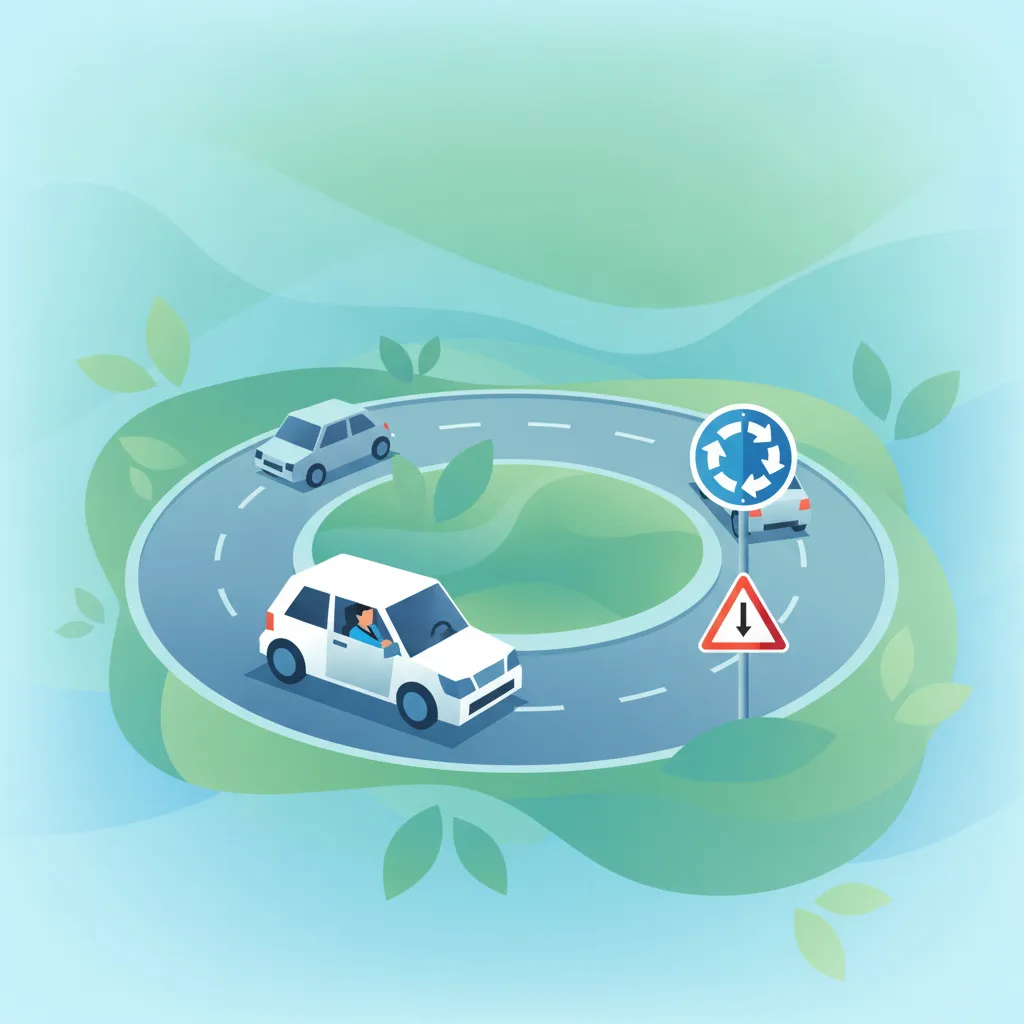
This lesson provides clear instructions on how to navigate roundabouts in Germany. It explains the crucial rule of yielding to traffic already inside the circle, proper lane choice for your intended exit, and the correct use of signals. Safe interaction with cyclists and pedestrians at roundabout exits is also covered.
This lesson covers the rules and safety considerations for overtaking ('Überholen'). It explains where overtaking is prohibited and how to assess whether it is safe and necessary to do so. The procedure for checking traffic, signaling, moving out, passing, and safely returning to the lane is detailed, with a strong focus on judging the speed and distance of oncoming traffic.
Find clear answers to common questions learners have about Right of Way Basics. Learn how the lesson is structured, which driving theory objectives it supports, and how it fits into the overall learning path of units and curriculum progression in Germany. These explanations help you understand key concepts, lesson flow, and exam focused study goals.
No, the right-before-left rule only applies at intersections without any traffic signs or light signals regulating priority. If a priority sign or traffic light is present, those take precedence.
Always adopt a defensive driving approach. Reduce your speed, observe the other road users, and establish eye contact. If in doubt, it is safer to yield to avoid a potential accident.
Yes, when turning left, you must generally yield to oncoming traffic going straight or turning right, even if the general intersection rule suggests otherwise. Always look for signs that clarify these specific turning situations.
Yes, priority and right-of-way scenarios are a central component of the German theory test. Mastering these rules is essential to passing the exam and avoiding frequent mistakes in intersection scenarios.
Begin your targeted revision now. Use our practice search to quickly find specific German driving theory questions. Filter by StVO rules, road signs, or hazard perception to create your focused study plan. Master challenging areas and prepare confidently for your theoretical driving test.