
This lesson guides you through the core priority and right-of-way rules required for the German Category B theory test. You will learn to navigate intersections safely by understanding traffic signs, markings, and signals. Mastering these rules is a critical step in becoming a confident driver and avoiding common mistakes on the official exam.
Lesson content overview
Navigating intersections safely and correctly is fundamental to driving in Germany. This comprehensive lesson provides a detailed guide to understanding the various priority rules, traffic signs, and signals that govern right-of-way at junctions. Mastering these rules is crucial for passing your German Category B driving license theory exam and ensuring your safety and the safety of other road users.
Right-of-way rules, known as Vorfahrtsregeln in German, are a set of legal guidelines that dictate which vehicle or road user has the right to proceed first at an intersection or merge point. These rules are designed to prevent collisions, ensure smooth traffic flow, and create a predictable environment for all drivers. Misunderstanding or ignoring priority rules is a leading cause of accidents and carries severe legal consequences.
The German Road Traffic Act (Straßenverkehrs-Ordnung, StVO) is the legal framework that defines these rules. Every driver must understand this hierarchy, as it forms the basis of safe and compliant driving. The system prioritizes clarity to minimize ambiguity in complex traffic situations.
The primary purpose of right-of-way rules is collision avoidance. By establishing a clear order of movement, drivers can anticipate the actions of others, reduce uncertainty, and react predictably. This predictability is vital, especially in busy urban areas or at high-speed junctions. Following these rules also minimizes traffic delays and promotes a harmonious flow, making roads more efficient for everyone.
Failure to observe priority rules not only puts lives at risk but also results in significant legal penalties, including fines, points on your driving record, and even the suspension of your driver's license. In the event of an accident, liability is often determined by who failed to yield the right-of-way.
The legally defined right of a vehicle or road user to proceed before others at an intersection or junction.
Right-of-way, or Vorfahrt, is the entitlement to proceed first in situations where paths may cross. It is not something to be assumed lightly; rather, it is granted or withheld by specific rules, signs, and signals. While having Vorfahrt means you can proceed, it never absolves you of the responsibility to drive cautiously and be prepared for unexpected actions by other road users. Always remain vigilant, even when you have the right-of-way.
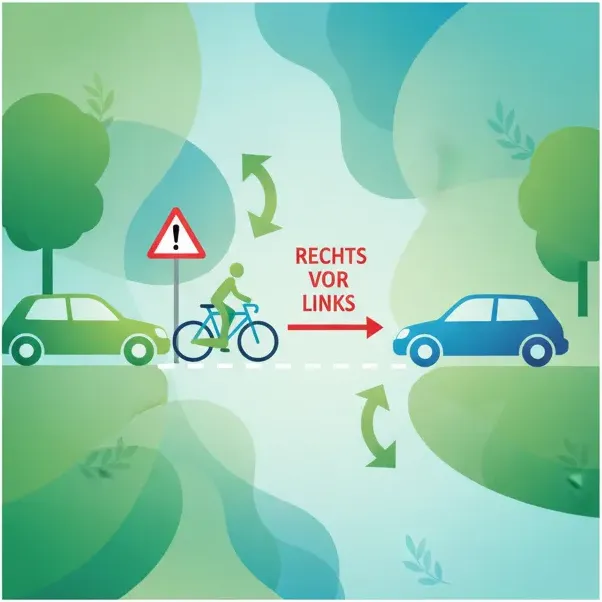
The most fundamental priority rule in Germany, and often the default where no other signs or signals are present, is Right-of-Way to the Right (Rechts vor Links). This rule is codified in StVO §8 and dictates that at an intersection without specific signs or traffic lights, vehicles approaching from the right have priority.
The Rechts vor Links rule applies in the following scenarios:
When Rechts vor Links applies, you must approach the intersection at a speed that allows you to stop safely if a vehicle approaches from your right. You must give way to them, allowing them to proceed before you enter the intersection.
Always assume Rechts vor Links unless a clear sign or traffic light indicates otherwise. If you are unsure, it is always safer to yield.
While Rechts vor Links is the general rule, it has several important exceptions that override it. These exceptions are critical to understand:
Rechts vor Links.Vorfahrtstraße (priority road) override Rechts vor Links.Vorfahrt gewähren) and Stop (Halt) Signs: These signs explicitly instruct drivers to yield or stop, overriding the general rule.Haifischzähne), indicate a need to yield, often reinforcing a sign.Understanding these exceptions is paramount, as they often dictate priority at more complex and busier intersections.
Traffic signs provide clear instructions for priority at intersections, overriding the Rechts vor Links rule. It is essential to recognize and understand the meaning of these signs immediately.
The Priority Road sign (Vorfahrtstraße) is a yellow diamond with a white border. When you see this sign, it means the road you are currently driving on has priority over any intersecting roads. Drivers on intersecting roads will be faced with a yield sign, a stop sign, or in some cases, a traffic light. This sign facilitates uninterrupted traffic flow on main thoroughfares.
Vorfahrtstraße, you can proceed without stopping, provided the intersection is clear and safe to enter. However, you must still be prepared to stop if another driver fails to yield.Even on a priority road, you must always be vigilant. Never blindly assume other drivers will adhere to the rules. Defensive driving is key.
The Yield sign (Vorfahrt gewähren) is an inverted red-bordered triangle with a white background. This sign instructs drivers to give way to traffic on the intersecting road.
The Stop sign (Halt) is an octagonal red sign with white lettering. This sign is the strictest of all priority signs. It requires drivers to come to a complete halt before proceeding.
Traffic lights, or Ampeln, provide the highest level of priority control at intersections. When active, traffic lights override all other signs and Rechts vor Links rules. Obeying traffic lights is non-negotiable for safe traffic flow.
The standard three-color traffic light system in Germany works as follows:
Rechts vor Links or other signs now applicable.Traffic lights can also include arrow signals or other specific signals:
A flashing amber light, particularly at pedestrian crossings (Fußgängerampel), signifies that drivers must proceed with extreme caution. While it doesn't always grant priority to pedestrians automatically (unless a crossing specifically does so or is regulated by a full pedestrian light cycle), it alerts drivers to be prepared to stop for pedestrians intending to cross. Always reduce speed and be ready to yield.
Beyond the basic rules, some intersection types and maneuvers require specific attention.
Making a left turn (Linksabbiegen) is one of the most hazardous maneuvers at an intersection, especially when it involves crossing the path of oncoming traffic.
Grüner Pfeil) is present, you must always yield to oncoming traffic that is proceeding straight or turning right.Roundabouts are designed to improve traffic flow and reduce the severity of collisions. Germany features both standard roundabouts and smaller mini-roundabouts.
Vorfahrt gewähren (Yield) signs and dotted lines at each entry point.An intersection marked with a yellow grid of crisscrossing lines, which drivers must not enter unless their exit path is clear.
Box junctions are typically found at busy, signal-controlled intersections, particularly in urban centers. They are marked by a yellow grid of crisscrossing lines on the road surface.
The rules governing priority at intersections are enshrined in the German Road Traffic Act (Straßenverkehrs-Ordnung - StVO). Understanding the specific paragraphs helps reinforce the importance and legal backing of these regulations.
Rechts vor Links. It states that at intersections where traffic is not regulated by signs or lights, the vehicle approaching from the right has priority. It also outlines exceptions, such as vehicles emerging from an unpaved road or private property.Even experienced drivers can make mistakes at intersections. Being aware of common pitfalls can help you avoid them.
Halt sign as merely a suggestion to slow down, rather than a mandatory full stop.
Vorfahrtstraße sign or a green traffic light. Otherwise, apply Rechts vor Links.Vorfahrt gewähren (Yield) means slow and stop if necessary; Halt (Stop) means full stop, then proceed if safe.Priority rules are absolute, but their application requires careful judgment influenced by environmental and situational factors.
Poor visibility due to fog, heavy rain, snow, or even bright sunlight can severely impact your ability to assess an intersection and detect other road users.
Pedestrians, cyclists, motorcyclists, and moped riders are considered vulnerable road users due to their lack of protection. Even when you technically have priority, you must exercise extra caution and be prepared to yield if a vulnerable user appears to be in danger or makes an unexpected move.
To solidify your understanding, consider these common scenarios:
Scenario 1: Uncontrolled T-Junction
Rechts vor Links rule. You must yield to the vehicle coming from your right, allowing it to proceed first.Scenario 2: Priority Road Intersection
Vorfahrtstraße sign, approaching an intersection. A vehicle is on the intersecting side road, which has a Vorfahrt gewähren (Yield) sign.Scenario 3: Left Turn at a Green Light Without Arrow
The kinetic energy formula (½mv²) underscores that even a slight increase in speed drastically increases stopping distance. This scientific principle reinforces the need to approach intersections with caution and be ready to yield, especially at higher speeds. Human reaction time (approximately one second) further adds to the total stopping distance, highlighting why early observation and decision-making are crucial for safely navigating intersections. Always prioritize safety over speed or perceived right-of-way.
This lesson covers the essential priority rules governing German intersections, starting with the fundamental Rechts vor Links rule that applies at uncontrolled junctions. Traffic signs and lights establish clear hierarchies of priority, with lights overriding all other signs when active. Key exceptions include vehicles emerging from private property or unpaved roads, which must always yield. Complex maneuvers like left turns across oncoming traffic require yielding unless a specific green arrow is displayed, while roundabouts give priority to circulating traffic. Understanding StVO regulations and recognizing common mistakes such as treating Stop signs as Yield signs or blocking box junctions are critical for both safe driving and passing the Category B theory exam.
A short set of high-value points that capture the most important learning from this lesson.
The Rechts vor Links rule (right before left) applies at uncontrolled intersections where no signs or traffic lights are present, giving priority to vehicles approaching from your right.
Traffic lights override all other priority rules including the Rechts vor Links principle when actively displaying red, amber, or green signals.
A Vorfahrtstraße (priority road) sign grants unconditional priority on that road over all intersecting roads, unless traffic lights indicate otherwise.
At box junctions (Kreuzungsboxen), you must not enter the yellow grid unless your exit path is completely clear, regardless of your traffic light being green.
When turning left across oncoming traffic without a dedicated green arrow, you must always yield to oncoming vehicles proceeding straight or turning right.
Explore all units and lessons included in this driving theory course.
Even on a priority road (Vorfahrtstraße), always remain vigilant as other drivers may fail to yield to you.
A Stop sign (Halt) requires a complete standstill, while a Yield sign (Vorfahrt gewähren) requires slowing and stopping only if necessary.
Vehicles entering a public road from a private driveway, parking lot, or unpaved surface must always yield to all traffic.
At roundabouts and mini-roundabouts, circulating traffic has priority over vehicles attempting to enter.
Amber light means prepare to stop; only proceed if stopping safely is impossible.
Treating a Stop sign as merely a suggestion to slow down instead of coming to a complete standstill before the stop line.
Entering a box junction without a clear exit, contributing to gridlock even when the traffic light is green.
Assuming priority on a wider or busier road without a Vorfahrtstraße sign, which does not grant automatic priority.
Failing to yield to oncoming traffic when turning left at a green light because a green light alone does not grant left-turn priority.
Proceeding through an amber light when it would have been safer to stop, which violates the prepare-to-stop requirement of the amber signal.
Lesson content overview
A short set of high-value points that capture the most important learning from this lesson.
The Rechts vor Links rule (right before left) applies at uncontrolled intersections where no signs or traffic lights are present, giving priority to vehicles approaching from your right.
Traffic lights override all other priority rules including the Rechts vor Links principle when actively displaying red, amber, or green signals.
A Vorfahrtstraße (priority road) sign grants unconditional priority on that road over all intersecting roads, unless traffic lights indicate otherwise.
At box junctions (Kreuzungsboxen), you must not enter the yellow grid unless your exit path is completely clear, regardless of your traffic light being green.
When turning left across oncoming traffic without a dedicated green arrow, you must always yield to oncoming vehicles proceeding straight or turning right.
Explore all units and lessons included in this driving theory course.
Even on a priority road (Vorfahrtstraße), always remain vigilant as other drivers may fail to yield to you.
A Stop sign (Halt) requires a complete standstill, while a Yield sign (Vorfahrt gewähren) requires slowing and stopping only if necessary.
Vehicles entering a public road from a private driveway, parking lot, or unpaved surface must always yield to all traffic.
At roundabouts and mini-roundabouts, circulating traffic has priority over vehicles attempting to enter.
Amber light means prepare to stop; only proceed if stopping safely is impossible.
Treating a Stop sign as merely a suggestion to slow down instead of coming to a complete standstill before the stop line.
Entering a box junction without a clear exit, contributing to gridlock even when the traffic light is green.
Assuming priority on a wider or busier road without a Vorfahrtstraße sign, which does not grant automatic priority.
Failing to yield to oncoming traffic when turning left at a green light because a green light alone does not grant left-turn priority.
Proceeding through an amber light when it would have been safer to stop, which violates the prepare-to-stop requirement of the amber signal.
Explore search topics learners often look for when studying Priority Rules at Intersections. These topics reflect common questions about road rules, driving situations, safety guidance, and lesson level theory preparation for learners in Germany.
Browse additional driving theory lessons that cover connected traffic rules, road signs, and common driving situations related to this topic. Improve your understanding of how different rules interact across everyday traffic scenarios.
Master complex right-of-way situations at German intersections. Learn detailed rules for junctions with multiple lanes, traffic lights, and challenging scenarios beyond basic priority. Essential for safe driving and passing your theory exam.
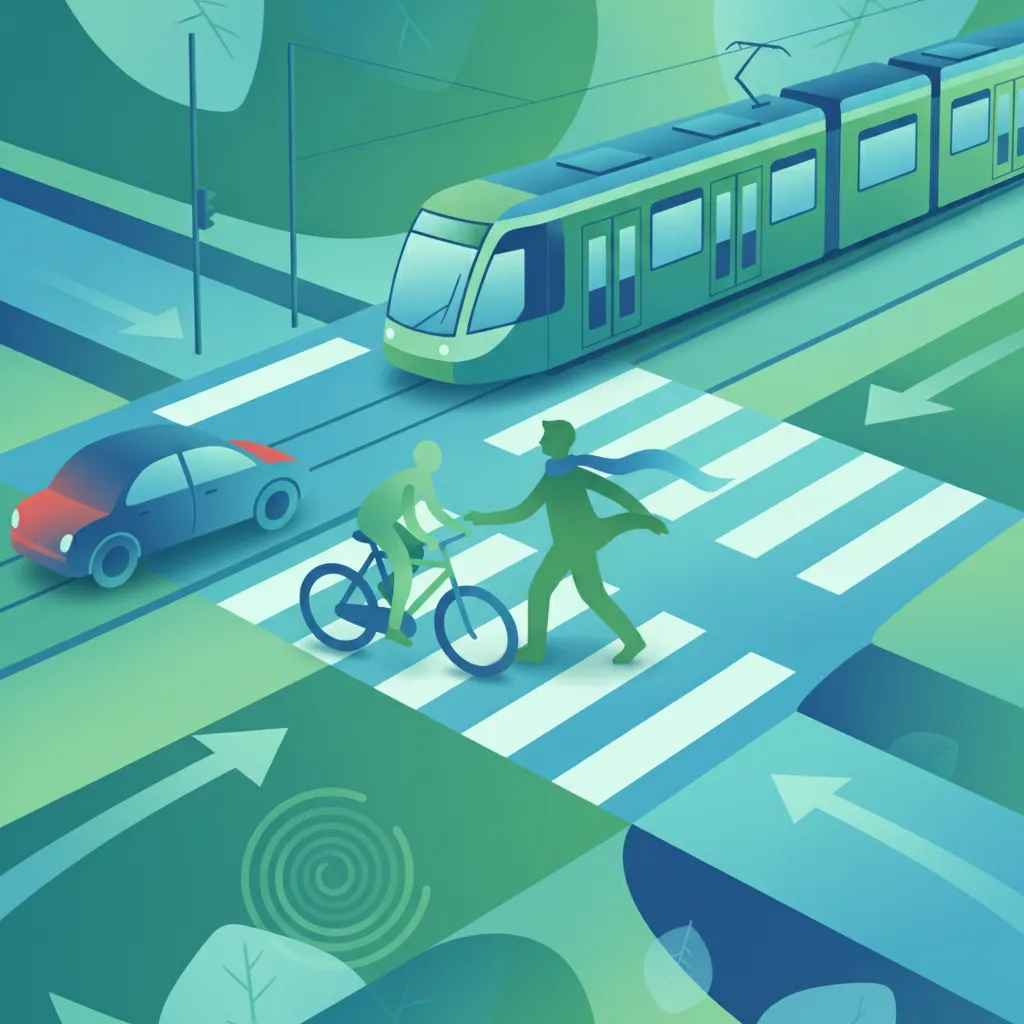
This lesson details the critical right-of-way regulations according to the German StVO. It covers the default 'right before left' rule, the meaning of priority road signs, and specific rules for roundabouts and yielding to pedestrians. A thorough understanding of these priority rules is fundamental for preventing accidents at junctions.
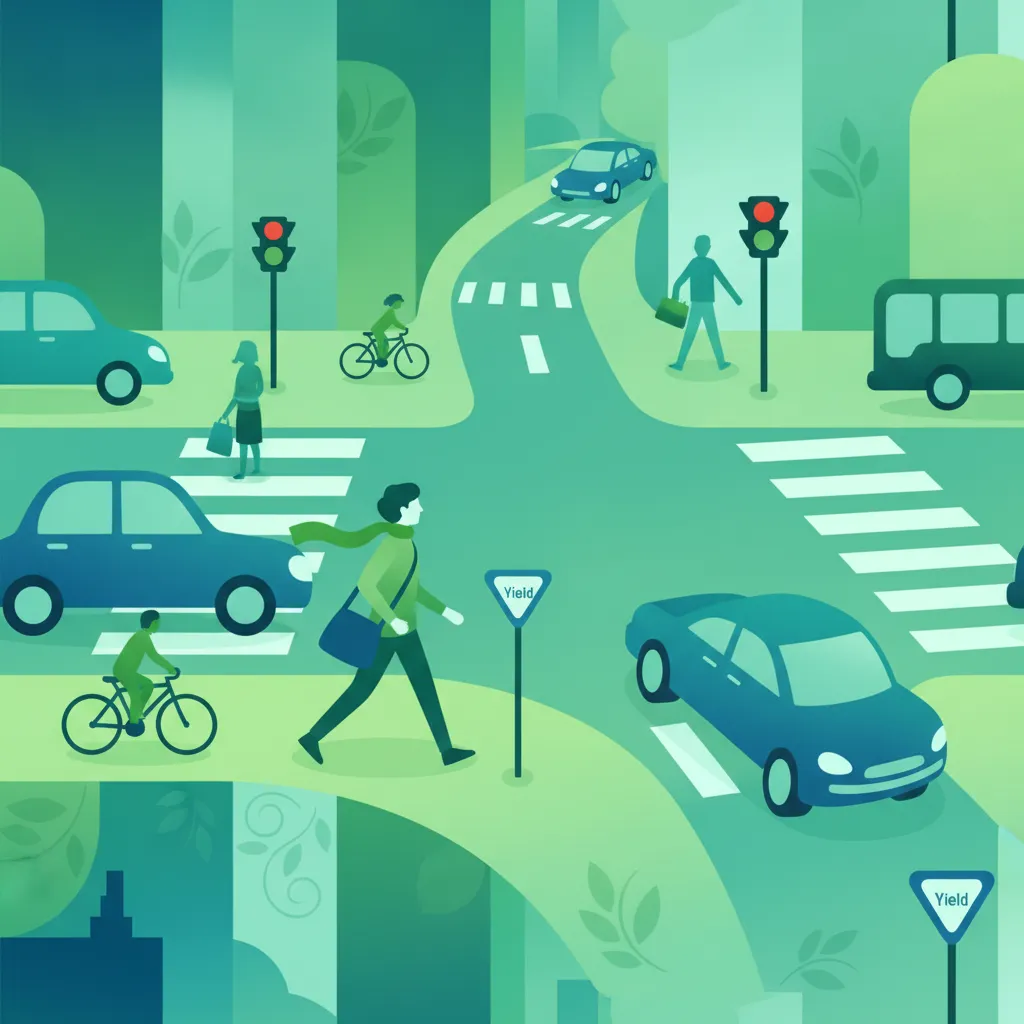
This lesson introduces the foundational concept of right-of-way ('Vorfahrt') in German traffic law. It explains the default priority rule, 'Rechts vor Links' (right before left), which applies at intersections without any regulating signs or signals. You will learn to identify situations where this rule applies and understand the basic principles of yielding to ensure safe passage at junctions.
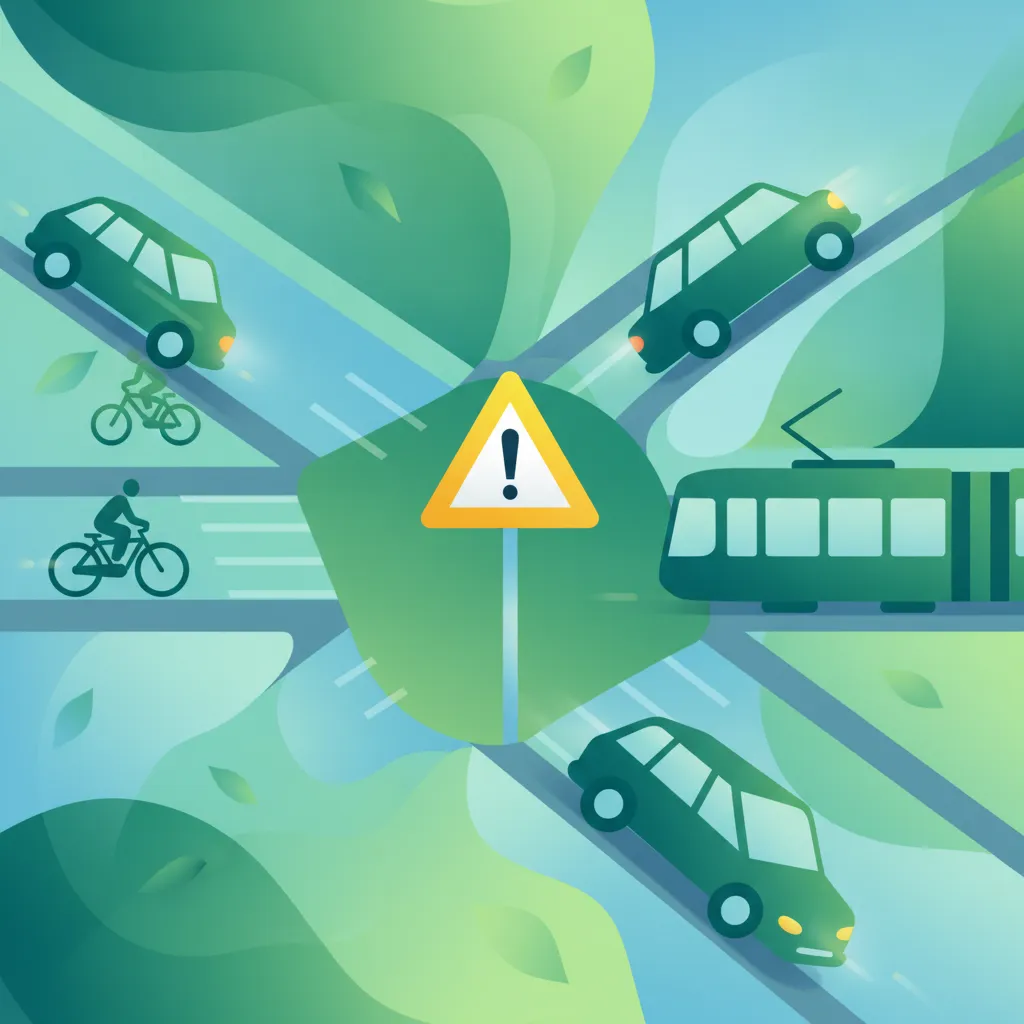
This lesson explains the concept of a priority road ('Vorfahrtstraße'), where you have right-of-way over traffic from intersecting roads. You will learn to recognize the signs that mark the beginning and end of a priority road. The lesson also covers how priority is managed through signals, including standard traffic lights, the special 'Grünpfeil' (green arrow) sign, and the overriding authority of a police officer directing traffic.
This lesson teaches a structured method for approaching any intersection. It covers identifying the type of junction, determining who has the right-of-way based on signs or rules, and performing thorough visual checks. The focus is on developing a safe and decisive approach to reduce risk in these high-conflict areas.

This lesson provides a step-by-step guide to executing turns safely at intersections and other locations. It details the full observation sequence (mirrors, signal, blind spot check) required before initiating a turn. The lesson covers correct lane positioning for both left and right turns and explains the rules for performing U-turns or three-point turns where permitted.

This lesson explains the specific rules for driving in roundabouts ('Kreisverkehr'), a common feature on German roads. It covers the correct procedure for approaching and entering, the rule that traffic already in the circle has priority, and the requirement to signal before exiting. The lesson also addresses the unique characteristics of mini-roundabouts and how to interact with cyclists and pedestrians around them.
This lesson details the safe approach and navigation of various intersection types, including those controlled by traffic lights, stop signs, and give-way signs. Emphasis is placed on comprehensive observation of traffic flow, establishing eye contact with other road users, and ensuring clear visibility before proceeding. The lesson also covers correct lane positioning for turning and the importance of anticipating pedestrian movements.
This lesson provides a detailed explanation of the rules governing dedicated bus lanes, including how to interpret markings and adhere to time-based restrictions. It clarifies the priority rules that grant buses precedence in certain traffic situations, such as when pulling out from a stop. Understanding these regulations allows drivers to use bus infrastructure efficiently and legally to maintain schedules and improve traffic flow.
This lesson focuses on complex traffic environments where different types of road users share the same space. It provides guidance on situations like driving on streets with integrated tram tracks or where bus and bicycle lanes are part of the roadway. The content emphasizes understanding the specific priority rules and being extra vigilant to anticipate potential conflicts in these busy, shared zones.

This lesson focuses on the right-of-way rules that heavy vehicles must follow when interacting with cyclists and pedestrians, particularly at intersections and crossings. It emphasizes the need for trucks to yield appropriately and maintain safe distances. The content also covers the interpretation of traffic signs governing priority in urban areas.
Learn to correctly interpret all traffic signs and signals that control priority at intersections in Germany. Understand regulatory signs, warning signs, and traffic lights as they apply to junction navigation and safe driving.

This lesson provides a thorough explanation of traffic light systems ('Lichtzeichenanlagen') used in Germany. It details the meaning of red, amber, and green lights and the correct response to each phase of the signal sequence. The lesson also covers special signals, such as the green arrow for turning right on red, pedestrian and cyclist signals, and the authority of signals given by a police officer, which override all other signs.
This lesson explains the concept of a priority road ('Vorfahrtstraße'), where you have right-of-way over traffic from intersecting roads. You will learn to recognize the signs that mark the beginning and end of a priority road. The lesson also covers how priority is managed through signals, including standard traffic lights, the special 'Grünpfeil' (green arrow) sign, and the overriding authority of a police officer directing traffic.
This lesson explains the function and meaning of traffic light signals, including standard cycles, flashing lights, and arrows. It also details how to interpret and obey hand signals given by police officers, which override all other signs and signals. Understanding these instructions is crucial for navigating controlled junctions and emergency situations.

This lesson explains the various types of road markings and their significance for guiding traffic and ensuring safety. It covers the difference between solid and broken lines for lane separation and overtaking rules, the function of stop lines at intersections, and the markings for pedestrian crosswalks. You will also learn to interpret directional arrows, bicycle lane markings, and other symbols painted on the road.
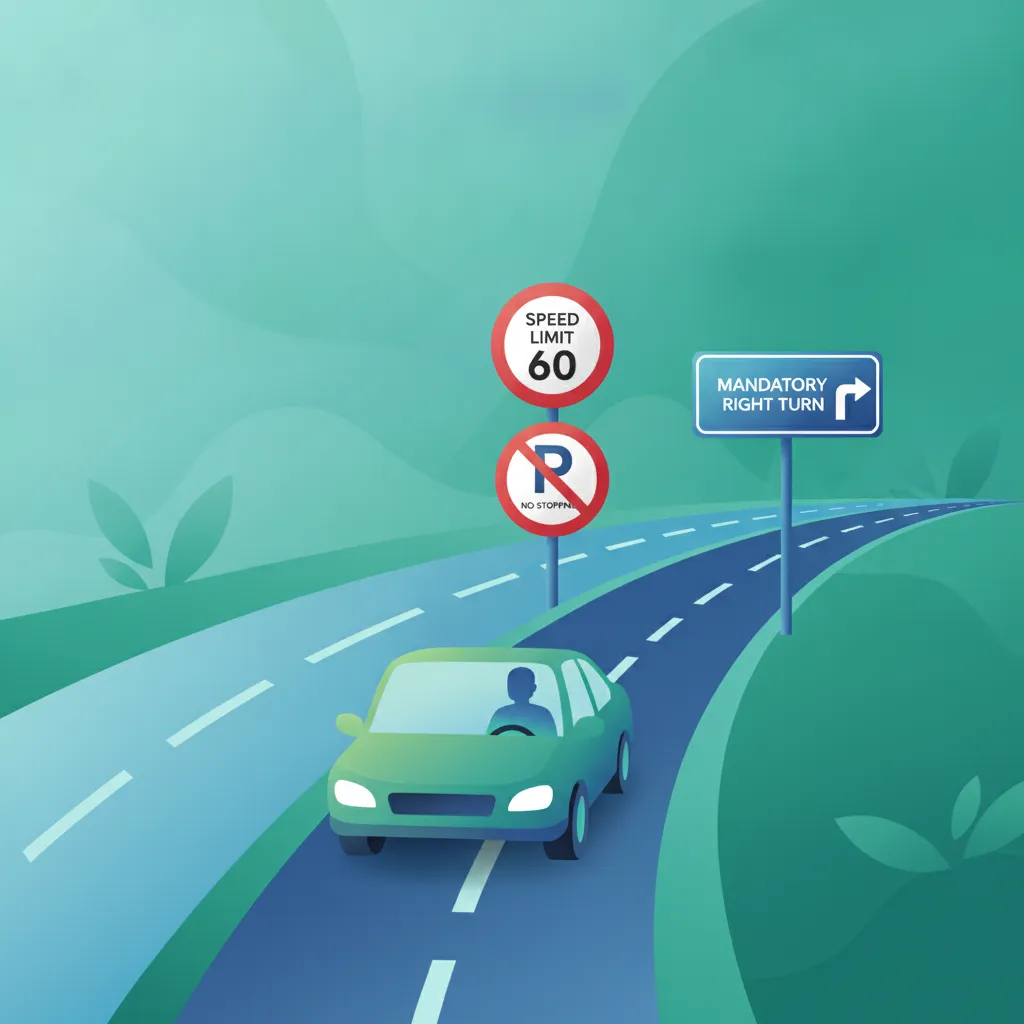
This lesson covers regulatory signs, which are legally enforceable and command specific actions from drivers. You will learn the meaning of critical signs such as the stop sign, yield sign, no-entry signs, and various parking and stopping prohibitions. The content also explains signs that establish speed limits, one-way streets, and restricted areas like environmental or pedestrian zones.
Effective communication is critical for road safety, and this lesson details the correct use of a vehicle's signaling devices. It explains when and how to use turn signals (indicators), hazard warning lights, the horn, and headlight flashes to clearly communicate your intentions to other road users. Proper signaling helps prevent misunderstandings and is a key component of defensive and cooperative driving.
This lesson details the critical right-of-way regulations according to the German StVO. It covers the default 'right before left' rule, the meaning of priority road signs, and specific rules for roundabouts and yielding to pedestrians. A thorough understanding of these priority rules is fundamental for preventing accidents at junctions.
This lesson provides a step-by-step guide to executing turns safely at intersections and other locations. It details the full observation sequence (mirrors, signal, blind spot check) required before initiating a turn. The lesson covers correct lane positioning for both left and right turns and explains the rules for performing U-turns or three-point turns where permitted.
This lesson explains the specific rules for driving in roundabouts ('Kreisverkehr'), a common feature on German roads. It covers the correct procedure for approaching and entering, the rule that traffic already in the circle has priority, and the requirement to signal before exiting. The lesson also addresses the unique characteristics of mini-roundabouts and how to interact with cyclists and pedestrians around them.
This lesson introduces the foundational concept of right-of-way ('Vorfahrt') in German traffic law. It explains the default priority rule, 'Rechts vor Links' (right before left), which applies at intersections without any regulating signs or signals. You will learn to identify situations where this rule applies and understand the basic principles of yielding to ensure safe passage at junctions.
Find clear answers to common questions learners have about Priority Rules at Intersections. Learn how the lesson is structured, which driving theory objectives it supports, and how it fits into the overall learning path of units and curriculum progression in Germany. These explanations help you understand key concepts, lesson flow, and exam focused study goals.
Yes. When a traffic light is flashing yellow or switched off, it is no longer in operation. You must then obey the traffic signs present at the intersection, or if no signs are present, follow the general 'right-before-left' rule.
No, a yield sign (Vorfahrt gewähren) requires you to slow down and prepare to stop, but you only have to come to a full stop if traffic is actually coming. A Stop sign, however, always requires a full stop regardless of traffic.
Generally, when turning left, you must wait for oncoming traffic that is going straight or turning right. You must also watch for pedestrians crossing the road you are turning into.
No, the right-before-left rule (Rechts-vor-Links) does not apply when exiting a private driveway, a parking lot, or a pedestrian zone. In those cases, you must yield to all road users on the main road.
Begin your targeted revision now. Use our practice search to quickly find specific German driving theory questions. Filter by StVO rules, road signs, or hazard perception to create your focused study plan. Master challenging areas and prepare confidently for your theoretical driving test.