
This lesson provides a comprehensive guide to navigating railway and level crossings safely according to the German Road Traffic Act (StVO). You will learn the exact meaning of the Andreaskreuz sign and how to correctly respond to visual and acoustic warning signals at crossings, ensuring you are fully prepared for related questions in your Class B theory exam.
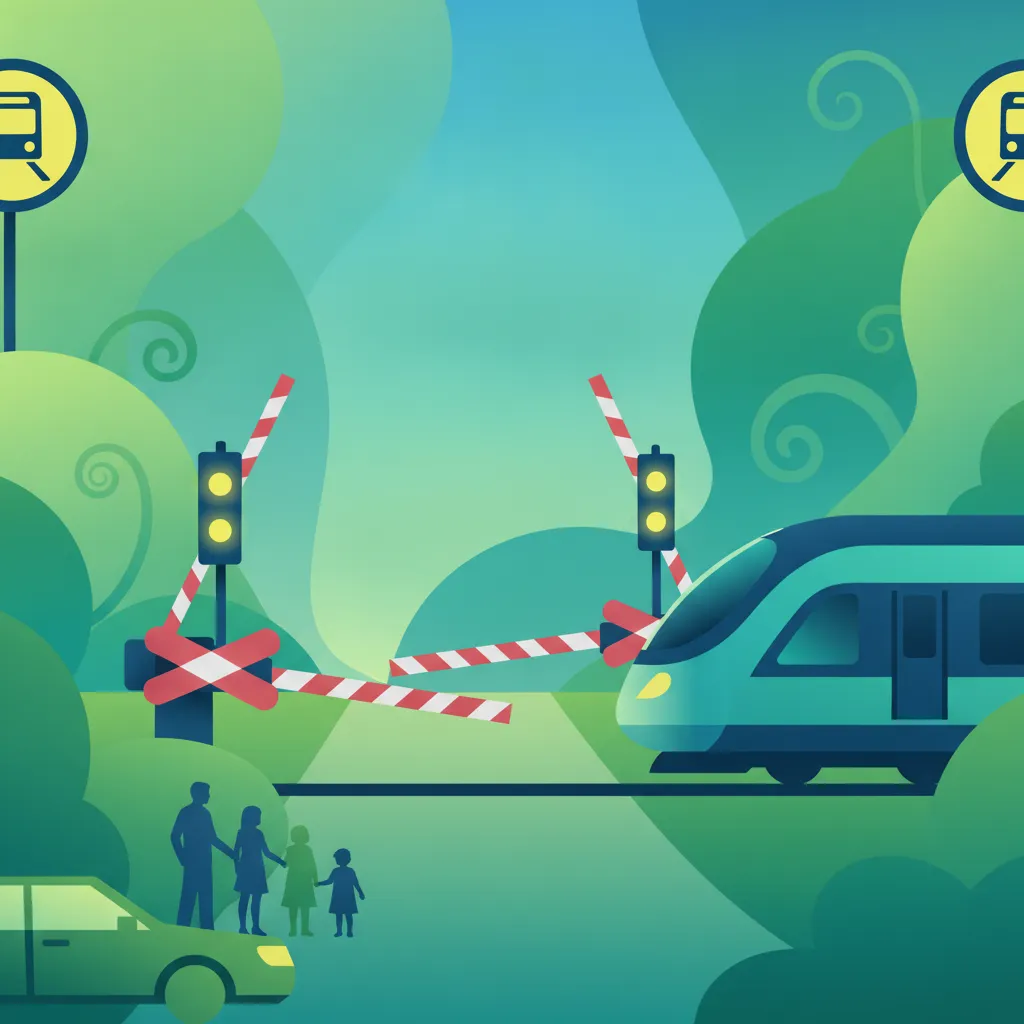
Lesson content overview
Railway crossings, also known as level crossings (Bahnübergänge), are critical points where road traffic intersects with rail traffic. Due to the inherent danger posed by fast-moving and massive trains, these crossings demand the utmost attention and adherence to strict safety rules from all road users. This comprehensive lesson for your German Driving License Theory – Comprehensive Category B Course will equip you with the knowledge and understanding necessary to approach, navigate, and safely clear railway crossings, ensuring compliance with German traffic law (Straßenverkehrs-Ordnung, StVO) and safeguarding your life and the lives of others.
We will explore the various warning signals, both visual and acoustic, the different types of crossings you might encounter, and the absolute priority trains hold over all other road traffic. Mastering this topic is crucial for passing your theoretical exam and, more importantly, for safe driving on German roads.
Railway crossings represent unique hazards compared to regular road junctions. Trains travel at high speeds and possess immense momentum, making it impossible for them to stop quickly or deviate from their tracks. Therefore, the responsibility for preventing collisions lies almost entirely with road users. Germany employs a multi-layered system of signs, lights, and sounds to alert drivers to the presence of a railway crossing and the approach of a train.
The fundamental rule at any railway crossing in Germany is the absolute and unconditional priority of rail traffic. This principle is enshrined in § 8 Abs. 1 StVO, which states that trains always have the right-of-way over all other road users, regardless of the presence of signs or signals. This means that as a driver, you must always yield to an approaching train. Your primary responsibility is to ensure the tracks are clear and safe to cross, and to stop if there is any indication of a train.
This rule exists because a train cannot swerve or brake like a car. Stopping a freight train can take several kilometers, making avoidance maneuvers impossible. Understanding and respecting this absolute priority is the most critical aspect of railway crossing safety.
The first and most important indicator of an upcoming railway crossing is the St. Andrew's Cross sign.
The Andreaskreuz (St. Andrew's Cross) is a distinctive white cross with red borders. It is typically placed at or immediately before the railway crossing itself. Its primary function is to unequivocally mark the presence of a crossing and to reinforce the message of absolute priority for trains.
Andreaskreuz, you must immediately become extra vigilant. Slow down, look and listen for trains, and be prepared to stop. This sign alone dictates the absolute priority of rail traffic.Andreaskreuz always signals the train's priority.The Andreaskreuz serves as a permanent reminder of the potential danger and the need for caution. It is often supplemented by distance markers that indicate how far you are from the actual crossing, usually with three, two, or one red stripe, positioned at 240, 160, and 80 meters respectively before the crossing.
Beyond the static Andreaskreuz, active warning systems provide real-time information about an approaching train. These are crucial for safe navigation, especially at controlled crossings.
Signalfahnen)Glockensignal)Glockensignal serves as an additional warning, particularly vital in conditions of poor visibility (e.g., fog, heavy rain, or darkness) or when other visual cues might be missed. Upon hearing this signal, you must stop, even if you cannot see flashing lights or a train.Glockensignal, regardless of weather or visibility conditions (§ 55 Abs. 1 StVO).These active warning systems work in conjunction to provide a robust safety net. It is important to react to the first active signal you encounter, whether visual or acoustic, by preparing to stop or stopping immediately.
Railway crossings can be broadly categorized into those with physical barriers and those that rely solely on signals. Your behavior must adapt accordingly, though the absolute priority of the train remains constant.
Bahnschranken)Bahnschranken) that automatically lower to block road traffic when a train is approaching.Attempting to cross a railway line when barriers are down or when warning signals are active is extremely dangerous and carries severe legal penalties, including significant fines, points on your license, and even license suspension.
Andreaskreuz) and active visual (flashing lights) and/or acoustic signals (Glockensignal).Andreaskreuz is present without any active warnings. Even without active signals, the Andreaskreuz demands caution and yielding.The Straßenverkehrs-Ordnung (StVO) provides the legal framework for safe conduct at railway crossings. Adherence to these specific paragraphs is not only mandatory but vital for preventing catastrophic accidents.
Understanding the specific legal texts reinforces why certain behaviors are required.
Trains and trams have absolute priority over all other road users at railway crossings.
Traffic signs must be observed and obeyed.
Andreaskreuz.Andreaskreuz sign is present.Andreaskreuz provide early warnings and crucial information about road conditions and potential hazards. Obeying them ensures you are prepared for the crossing.Andreaskreuz as a direct warning of a railway crossing and the train's priority. This sign alone dictates the need for increased caution.Drivers must obey traffic signals and acoustic warnings at railway crossings.
It is forbidden to cross tracks when a train is approaching, even if not immediately visible, or when barriers are lowered or closing.
Always ensure there is sufficient space on the other side of the tracks before you commit to crossing. Never stop on the tracks, even if traffic ahead is temporarily blocked.
Disregarding railway crossing rules can have fatal consequences. Understanding common violations helps reinforce correct behavior.
Glockensignal is a direct warning. Stop immediately upon hearing it, regardless of visibility, and wait for all signals to cease.Andreaskreuz as potentially dangerous. Slow down, look both ways, listen for trains, and be prepared to stop. Proceed only when you are certain the tracks are clear.Safe driving at railway crossings also involves adapting your behavior to various conditions:
When stopping at a railway crossing, keep your foot on the brake pedal (or engage the parking brake) to prevent rolling and maintain control, especially on sloped terrain.
The stringent rules surrounding railway crossings are not arbitrary; they are designed to prevent catastrophic accidents, which are almost always fatal for road users due to the immense force and speed of trains.
Glockensignale are essential because visual warnings can be compromised by weather, darkness, or obstructions. Hearing a train is often the first or only warning in such scenarios.This lesson covers the critical safety rules for navigating railway crossings (Bahnübergänge) under German traffic law. The fundamental principle is that trains always have absolute priority, established by § 8 Abs. 1 StVO, because they cannot stop quickly or swerve. Learners must understand the St. Andrew's Cross (Andreaskreuz) sign as both a warning and a priority indicator, and recognize that active warning systems—including flashing red lights and the acoustic Glockensignal—both command immediate stops. The lesson distinguishes between controlled crossings with barriers and uncontrolled crossings, emphasizing that even without barriers, the same yielding rules apply. Key legal requirements from § 55 StVO prohibit crossing when signals are active or barriers are down, and mandate that drivers ensure no part of their vehicle overhangs the tracks before entering.
A short set of high-value points that capture the most important learning from this lesson.
Trains have absolute and unconditional priority over all road users at railway crossings under § 8 Abs. 1 StVO, regardless of any signs or signals present
The Andreaskreuz (St. Andrew's Cross) indicates a railway crossing where you must always yield to rail traffic, even when no active signals are operating
Flashing red lights (Signalfahnen) and the acoustic signal (Glockensignal) both require immediate stopping—react to the first signal you encounter
Never stop with any part of your vehicle on the tracks; ensure sufficient space to clear the crossing completely before entering
At uncontrolled crossings without barriers, you must actively look both ways, listen for trains, and proceed only when absolutely certain the tracks are clear
Explore all units and lessons included in this driving theory course.
The Andreaskreuz sign alone—not just active signals—already dictates yielding to trains and demands heightened caution
The Glockensignal must be obeyed immediately upon hearing it, regardless of weather, visibility, or whether you can see flashing lights or a train
Distance markers with red stripes (240m, 160m, 80m) warn of approaching crossings and signal the need to increase vigilance
Barriers that are lowering or already lowered mean you must stop completely before the barrier line and wait until fully raised with all signals ceased
In poor visibility (fog, heavy rain, darkness), acoustic signals become your most critical warning and should be relied upon heavily
Crossing when flashing lights are active because no train is immediately visible—the lights mean a train is imminent even if out of sight
Believing the Andreaskreuz alone gives right-of-way to road users—wrong; it signals the train's priority
Attempting to drive around, under, or through partially lowered barriers—never bypass barriers regardless of gaps
Stopping too close to the tracks with vehicle overhang on the rails, risking the car being struck if traffic ahead stops
Accelerating to 'beat' an approaching train when signals activate—extremely dangerous and a leading cause of fatal accidents
Lesson content overview
A short set of high-value points that capture the most important learning from this lesson.
Trains have absolute and unconditional priority over all road users at railway crossings under § 8 Abs. 1 StVO, regardless of any signs or signals present
The Andreaskreuz (St. Andrew's Cross) indicates a railway crossing where you must always yield to rail traffic, even when no active signals are operating
Flashing red lights (Signalfahnen) and the acoustic signal (Glockensignal) both require immediate stopping—react to the first signal you encounter
Never stop with any part of your vehicle on the tracks; ensure sufficient space to clear the crossing completely before entering
At uncontrolled crossings without barriers, you must actively look both ways, listen for trains, and proceed only when absolutely certain the tracks are clear
Explore all units and lessons included in this driving theory course.
The Andreaskreuz sign alone—not just active signals—already dictates yielding to trains and demands heightened caution
The Glockensignal must be obeyed immediately upon hearing it, regardless of weather, visibility, or whether you can see flashing lights or a train
Distance markers with red stripes (240m, 160m, 80m) warn of approaching crossings and signal the need to increase vigilance
Barriers that are lowering or already lowered mean you must stop completely before the barrier line and wait until fully raised with all signals ceased
In poor visibility (fog, heavy rain, darkness), acoustic signals become your most critical warning and should be relied upon heavily
Crossing when flashing lights are active because no train is immediately visible—the lights mean a train is imminent even if out of sight
Believing the Andreaskreuz alone gives right-of-way to road users—wrong; it signals the train's priority
Attempting to drive around, under, or through partially lowered barriers—never bypass barriers regardless of gaps
Stopping too close to the tracks with vehicle overhang on the rails, risking the car being struck if traffic ahead stops
Accelerating to 'beat' an approaching train when signals activate—extremely dangerous and a leading cause of fatal accidents
Explore search topics learners often look for when studying Railway Crossings and Level Crossings. These topics reflect common questions about road rules, driving situations, safety guidance, and lesson level theory preparation for learners in Germany.
Browse additional driving theory lessons that cover connected traffic rules, road signs, and common driving situations related to this topic. Improve your understanding of how different rules interact across everyday traffic scenarios.
Explore more complex scenarios and less common situations at railway crossings in Germany. Understand detailed StVO regulations for priority and safe passage when barriers are absent or signals are unclear, building upon basic knowledge.
This lesson focuses on complex traffic environments where different types of road users share the same space. It provides guidance on situations like driving on streets with integrated tram tracks or where bus and bicycle lanes are part of the roadway. The content emphasizes understanding the specific priority rules and being extra vigilant to anticipate potential conflicts in these busy, shared zones.
This lesson details the critical right-of-way regulations according to the German StVO. It covers the default 'right before left' rule, the meaning of priority road signs, and specific rules for roundabouts and yielding to pedestrians. A thorough understanding of these priority rules is fundamental for preventing accidents at junctions.
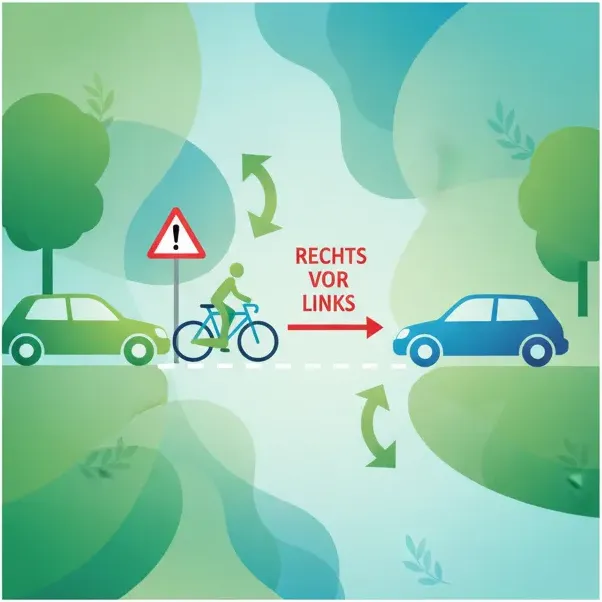
This lesson provides a detailed guide to navigating various types of intersections safely and correctly. It explains how priority is determined by traffic signs (such as the priority road, yield, and stop signs) and traffic lights. The lesson also covers complex scenarios, including the rules for turning left across oncoming traffic, to ensure you can handle any junction with confidence.
This lesson teaches a structured method for approaching any intersection. It covers identifying the type of junction, determining who has the right-of-way based on signs or rules, and performing thorough visual checks. The focus is on developing a safe and decisive approach to reduce risk in these high-conflict areas.
This lesson focuses on the unique challenges and safety protocols required when operating alongside trams and light rail systems. It clarifies the strict right-of-way rules that typically favor trams and explains how to safely navigate shared roadways and cross tracks. Learners will be taught to recognize specific signals and markings related to tramways to prevent conflicts and ensure the safety of all road users.
This lesson details the safe approach and navigation of various intersection types, including those controlled by traffic lights, stop signs, and give-way signs. Emphasis is placed on comprehensive observation of traffic flow, establishing eye contact with other road users, and ensuring clear visibility before proceeding. The lesson also covers correct lane positioning for turning and the importance of anticipating pedestrian movements.
This lesson focuses on the interaction between heavy vehicles and vulnerable road users at crossings, particularly when turning right. It covers the need for heightened vigilance, the importance of properly using mirrors, and correct signaling to alert others. The content highlights legal responsibilities and safe distance requirements to prevent accidents.
This lesson focuses on the right-of-way rules that heavy vehicles must follow when interacting with cyclists and pedestrians, particularly at intersections and crossings. It emphasizes the need for trucks to yield appropriately and maintain safe distances. The content also covers the interpretation of traffic signs governing priority in urban areas.
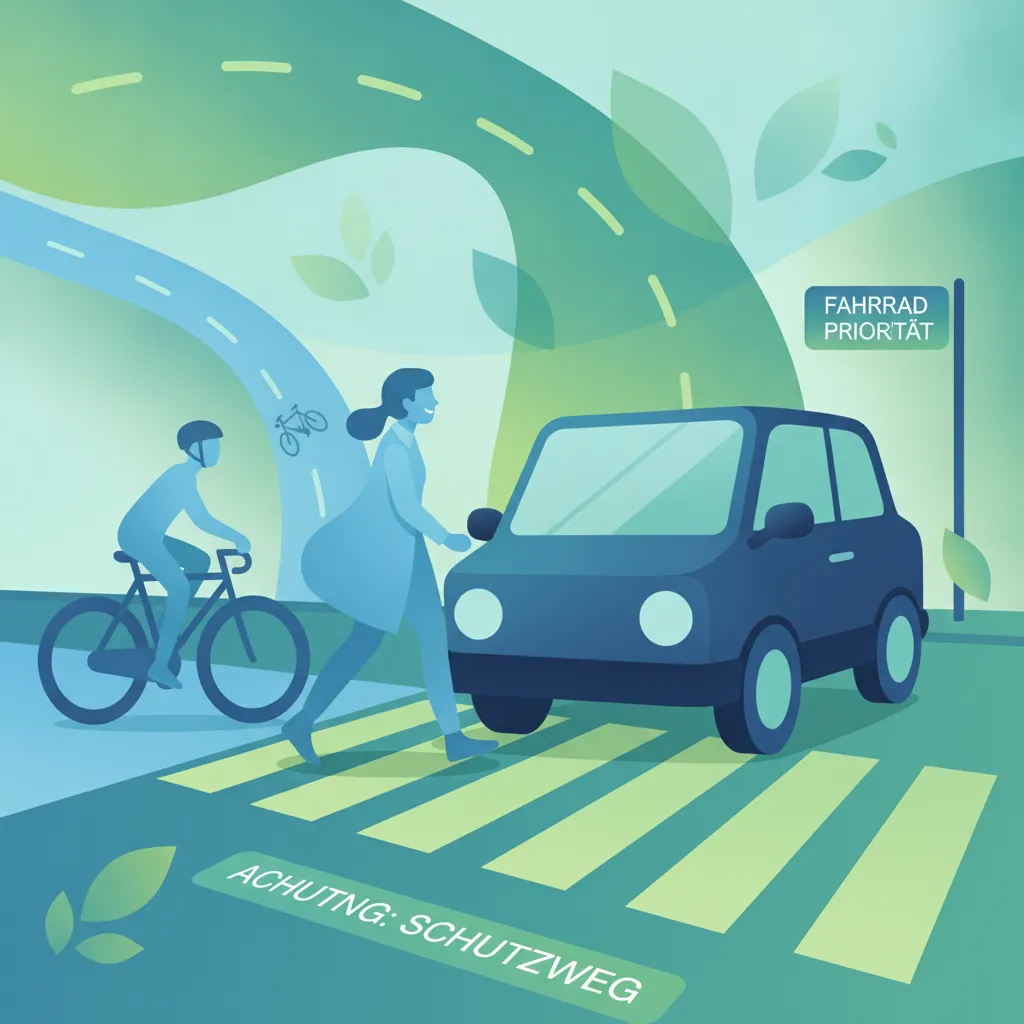
This lesson provides specific guidance on how to safely share the road with pedestrians and cyclists, who are among the most vulnerable road users. It covers the rules of conduct at zebra crossings, traffic lights for pedestrians, and designated cycle lanes. The content emphasizes the importance of vigilance, yielding right-of-way, and maintaining a safe distance to prevent accidents in urban and rural environments.

This lesson focuses on the particular care required when driving near pedestrians, with a special emphasis on children and the elderly, whose behavior can be unpredictable. It covers the rules for yielding at zebra crossings and the importance of reducing speed near schools, playgrounds, and residential areas. The goal is to instill a habit of constant vigilance and readiness to stop.
Understand the full spectrum of German traffic signals, including lights, acoustic signals, and road markings, and how they interact with priority rules. This lesson connects railway crossing signals to broader traffic control systems and right-of-way principles.
This lesson explains the concept of a priority road ('Vorfahrtstraße'), where you have right-of-way over traffic from intersecting roads. You will learn to recognize the signs that mark the beginning and end of a priority road. The lesson also covers how priority is managed through signals, including standard traffic lights, the special 'Grünpfeil' (green arrow) sign, and the overriding authority of a police officer directing traffic.

This lesson provides a thorough explanation of traffic light systems ('Lichtzeichenanlagen') used in Germany. It details the meaning of red, amber, and green lights and the correct response to each phase of the signal sequence. The lesson also covers special signals, such as the green arrow for turning right on red, pedestrian and cyclist signals, and the authority of signals given by a police officer, which override all other signs.
This lesson provides a detailed guide to navigating various types of intersections safely and correctly. It explains how priority is determined by traffic signs (such as the priority road, yield, and stop signs) and traffic lights. The lesson also covers complex scenarios, including the rules for turning left across oncoming traffic, to ensure you can handle any junction with confidence.
This lesson details the critical right-of-way regulations according to the German StVO. It covers the default 'right before left' rule, the meaning of priority road signs, and specific rules for roundabouts and yielding to pedestrians. A thorough understanding of these priority rules is fundamental for preventing accidents at junctions.

This lesson explains the various types of road markings and their significance for guiding traffic and ensuring safety. It covers the difference between solid and broken lines for lane separation and overtaking rules, the function of stop lines at intersections, and the markings for pedestrian crosswalks. You will also learn to interpret directional arrows, bicycle lane markings, and other symbols painted on the road.
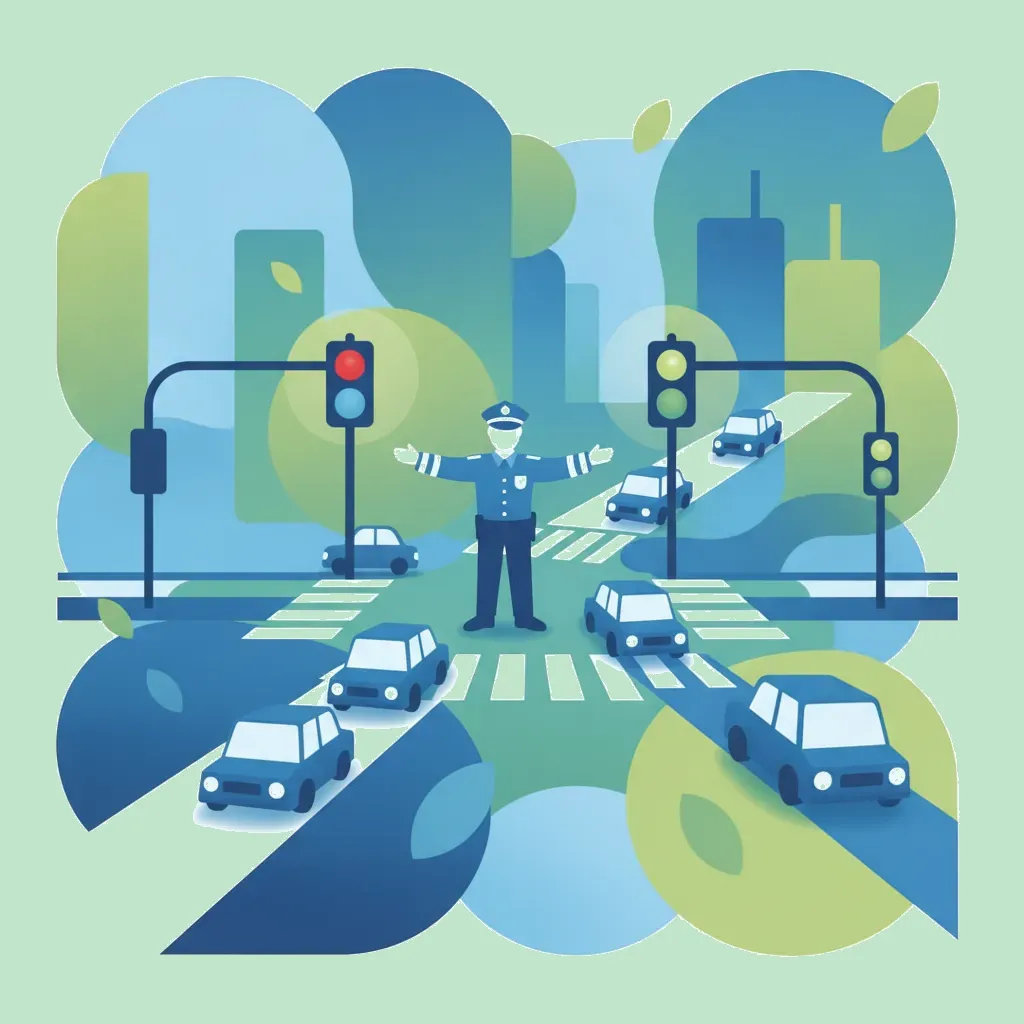
This lesson explains the function and meaning of traffic light signals, including standard cycles, flashing lights, and arrows. It also details how to interpret and obey hand signals given by police officers, which override all other signs and signals. Understanding these instructions is crucial for navigating controlled junctions and emergency situations.

This lesson explains the specific rules for driving in roundabouts ('Kreisverkehr'), a common feature on German roads. It covers the correct procedure for approaching and entering, the rule that traffic already in the circle has priority, and the requirement to signal before exiting. The lesson also addresses the unique characteristics of mini-roundabouts and how to interact with cyclists and pedestrians around them.
This lesson focuses on complex traffic environments where different types of road users share the same space. It provides guidance on situations like driving on streets with integrated tram tracks or where bus and bicycle lanes are part of the roadway. The content emphasizes understanding the specific priority rules and being extra vigilant to anticipate potential conflicts in these busy, shared zones.
This lesson focuses on interpreting various road markings, from lane lines and directional arrows to stop lines and pedestrian crossings. It explains the rules associated with solid versus broken lines and how to navigate temporary markings found in construction zones. Correctly reading these markings is vital for proper lane discipline and safety.
This lesson provides specific guidance on how to safely share the road with pedestrians and cyclists, who are among the most vulnerable road users. It covers the rules of conduct at zebra crossings, traffic lights for pedestrians, and designated cycle lanes. The content emphasizes the importance of vigilance, yielding right-of-way, and maintaining a safe distance to prevent accidents in urban and rural environments.
Find clear answers to common questions learners have about Railway Crossings and Level Crossings. Learn how the lesson is structured, which driving theory objectives it supports, and how it fits into the overall learning path of units and curriculum progression in Germany. These explanations help you understand key concepts, lesson flow, and exam focused study goals.
No. The Andreaskreuz (St. Andrew's Cross) serves as a warning sign. You must reduce your speed and observe the crossing carefully, but you only stop if a train is approaching, the barrier is lowering, or a flashing light/acoustic signal is active.
Immediately attempt to restart the engine. If the vehicle does not move and a train is approaching, abandon the vehicle immediately and move to a safe distance from the tracks to avoid injury from flying debris.
Overtaking is strictly prohibited at railway crossings that are controlled by the Andreaskreuz, unless you are overtaking a two-wheeled vehicle at a safe distance or if the crossing is managed by traffic lights.
A flashing white light indicates that the crossing equipment is operational and no train is currently approaching. You may proceed with caution, but always scan the tracks before driving over.
Begin your targeted revision now. Use our practice search to quickly find specific German driving theory questions. Filter by StVO rules, road signs, or hazard perception to create your focused study plan. Master challenging areas and prepare confidently for your theoretical driving test.