
This lesson covers the critical importance of tyre condition, which is your only contact with the road surface. You will learn how to maintain correct tyre pressure, interpret legal tread depth requirements, and understand when winter tyres are mandatory in Germany. These skills are essential for both passing your Category B theory exam and ensuring safety in real-world driving.
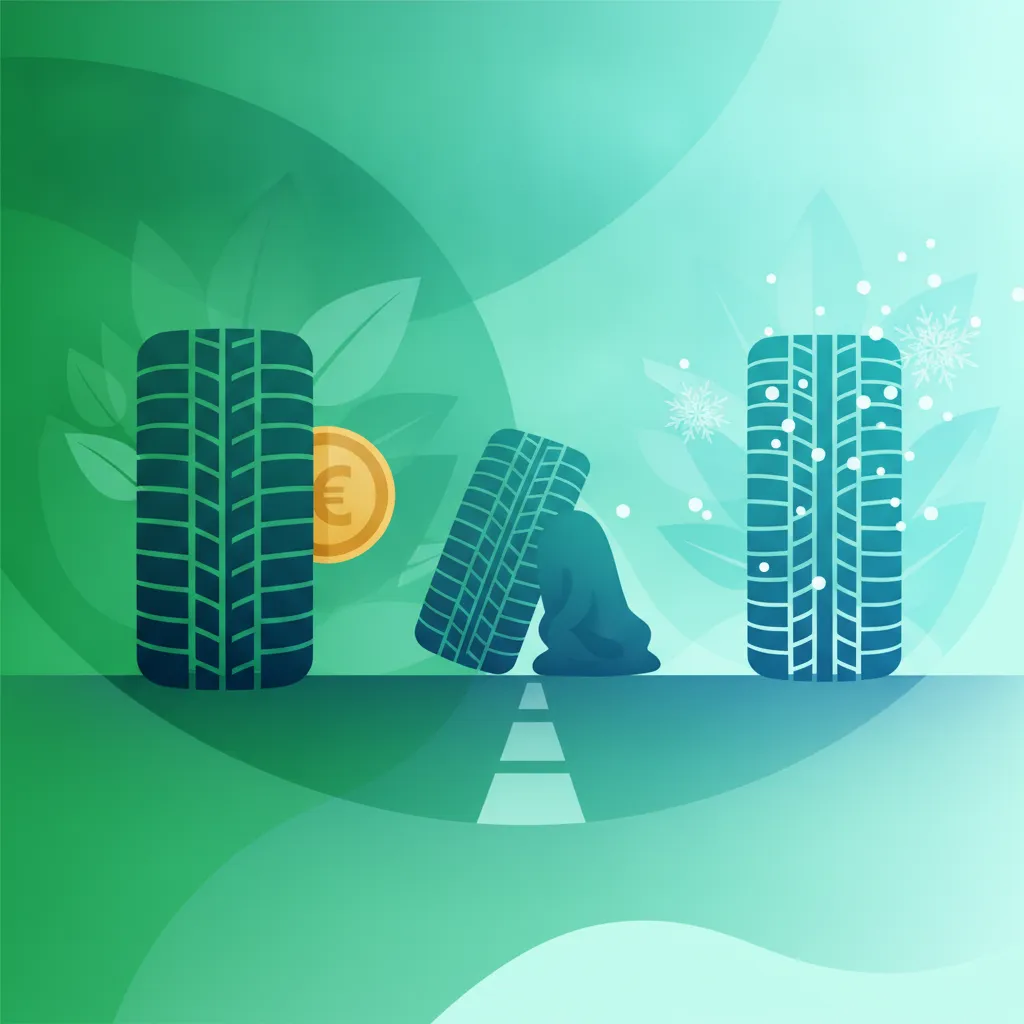
Lesson content overview
In the German Driving License Theory – Comprehensive Category B Course, understanding your vehicle's tyres is paramount. Tyres are the single most critical safety component, as they are the only part of your vehicle that touches the road. Their condition directly impacts steering, braking, acceleration, and overall vehicle stability. Proper maintenance of tyres ensures not only your safety but also the safety of other road users and contributes to fuel efficiency and environmental protection. This lesson will delve into tyre pressure, tread depth, seasonal requirements, and how to identify correct tyres, all in accordance with German traffic laws (StVO and StVZO).
Tyre pressure refers to the internal air pressure within a tyre, typically measured in bar or psi. This pressure is crucial for supporting the vehicle's weight, maintaining the tyre's shape, and ensuring maximum contact with the road surface. Correct tyre pressure is fundamental for safe driving, optimal vehicle handling, efficient braking, and extended tyre life.
It is vital to always measure what is known as cold pressure. Cold pressure is the tyre pressure when the vehicle has not been driven for at least three hours, or has been driven for less than a kilometre at a slow speed. As a tyre rolls, friction generates heat, causing the air inside to expand and the pressure to increase. Therefore, a reading taken after driving, known as warm pressure, will be higher and misleading. Adjusting pressure based on a warm reading can lead to underinflation once the tyres cool down.
Every vehicle manufacturer specifies the optimal cold tyre pressure for their models. This recommended pressure is typically found in one of several places:
The recommended pressure often includes different values for varying loads, such as "normal load" and "fully loaded" (e.g., with passengers and luggage, or when towing a trailer). Always use the pressure corresponding to your current vehicle load.
Maintaining the correct tyre pressure is not just a recommendation; it's a legal obligation under German law (§ 21 StVZO) and a critical safety measure.
Ensure your tyres are cold. If you've been driving, wait at least three hours before checking, or check before your first short trip of the day.
Remove the valve cap from one of your tyres.
Press a reliable tyre pressure gauge firmly onto the valve stem. Read the pressure indicated.
Compare the reading with the manufacturer's recommended cold pressure for your vehicle's load.
If the pressure is too low, add air. If too high, release air by pressing the pin inside the valve stem until the correct pressure is reached.
Replace the valve cap.
Repeat for all four tyres, and don't forget the spare tyre if your vehicle has one, as it can also lose pressure over time.
Check your tyre pressure at least once a month and always before long journeys or when carrying heavy loads. Many modern vehicles have Tyre Pressure Monitoring Systems (TPMS) which alert you to significant pressure drops, but manual checks are still recommended.
The tread of a tyre is the patterned rubber on its circumference designed to provide grip on various road surfaces and to channel water away. Adequate tread depth is crucial for maintaining traction, especially in wet conditions, and for ensuring effective braking.
In Germany, the legal minimum tread depth for passenger cars (Category B vehicles) and motorcycles is 1.6 millimetres across the entire width of the tread. Driving with tyres that have a tread depth below this limit is illegal and poses a significant safety risk, potentially leading to fines and points on your license (§ 30 StVZO).
While 1.6 mm is the legal minimum, for safety reasons, it is highly recommended to replace summer tyres when their tread depth falls below 3 mm. For winter tyres, a minimum of 4 mm is generally advised for optimal performance in snow and slush, although the legal minimum remains 1.6 mm.
Tyres are equipped with tread wear indicators (TWIs), small raised bars located in the main grooves of the tread pattern. When the tyre tread wears down to the level of these indicators, it means the tread depth has reached approximately 1.6 mm, signalling that the tyre needs to be replaced.
You can also use a dedicated tread depth gauge for a precise measurement. Simply insert the probe of the gauge into several main grooves across the tyre's surface and read the measurement. Check multiple points around the tyre, as wear can be uneven.
The intricate patterns on a tyre's tread are not just for aesthetics; they serve vital functions:
Uneven tread wear can indicate underlying issues such as incorrect tyre pressure, improper wheel alignment, or suspension problems. If you notice unusual wear patterns, have your vehicle inspected by a professional.
Germany has a situational winter tyre obligation (situative Winterreifenpflicht). This means that drivers are legally required to use winter tyres when weather conditions necessitate them, not during a fixed calendar period. This regulation is primarily governed by § 3 of the StVO and § 30 of the StVZO.
Winter tyres are mandatory when driving in winter conditions, which include:
These conditions dictate the use of tyres specifically designed to provide superior grip in cold temperatures. There is no specific date by which winter tyres must be fitted or removed; the obligation is entirely dependent on the prevailing weather. However, a common rule of thumb is "O to O" – Oktober to Ostern (October to Easter) – reflecting the typical period for winter conditions.
Identifying a compliant winter tyre is crucial:
All-season tyres aim to provide acceptable performance in both summer and mild winter conditions. However, to legally fulfill the winter tyre obligation in Germany, all-season tyres must also bear the snowflake symbol. If an all-season tyre only has the M+S marking (and was manufactured after 2017), it is not considered a compliant winter tyre in severe winter conditions. While convenient, all-season tyres are often a compromise and may not offer the same peak performance as dedicated summer or winter tyres in extreme conditions.
Every tyre has a wealth of information embossed on its sidewall, providing crucial details about its specifications, capabilities, and date of manufacture. Understanding these markings is essential for selecting the correct tyres for your vehicle and ensuring compliance with legal requirements.
A typical tyre marking looks like 205/55 R16. Let's break it down:
Following the size, you'll find a numerical code and a letter, for example, 91V.
The EU Tyre Label provides standardized information on three key performance characteristics, helping consumers make informed choices:
The DOT code (Department of Transportation) is a series of numbers and letters on the tyre sidewall, with the last four digits indicating the week and year of manufacture. For example, 2523 means the tyre was manufactured in the 25th week of 2023.
Tyres should be replaced after six years from their date of manufacture, regardless of how much tread they have left or how often they've been used. This is because the rubber compounds degrade over time due to exposure to UV light, temperature fluctuations, and chemical reactions, reducing the tyre's elasticity and grip. An aged tyre, even with sufficient tread, can become brittle and prone to cracking, severely compromising safety (§ 30 Abs. 1 Nr. 7a StVZO).
Adhering to German tyre regulations is not merely about avoiding fines; it is fundamental to road safety and ensuring your vehicle's roadworthiness. The primary laws governing tyres are found in the Straßenverkehrs-Ordnung (StVO), which sets rules for traffic behaviour, and the Straßenverkehrs-Zulassungs-Ordnung (StVZO), which specifies requirements for vehicle construction and operation.
Under § 21 of the StVZO, drivers are legally obliged to ensure their tyres are inflated to the pressure recommended by the vehicle manufacturer. This is a continuous responsibility applicable at all times, irrespective of load or ambient temperature (though adjustments for temperature and load are good practice). Failure to comply can lead to fines and, in case of an accident, may affect insurance coverage.
§ 30 of the StVZO mandates a minimum tread depth of 1.6 mm for tyres on passenger cars and motorcycles. This depth must be maintained across the entire tread width. Regular checks are required, and tyres falling below this threshold are considered unroadworthy and must be replaced immediately. Driving with excessively worn tyres is subject to penalties.
The situational winter tyre obligation (situative Winterreifenpflicht) is enshrined in § 3 of the StVO and further clarified in § 30 of the StVZO. It requires that vehicles be fitted with suitable winter tyres (those bearing the snowflake symbol) when winter driving conditions prevail. This includes ice, black ice, packed snow, slush, or frost roughness. The law prioritizes safety during hazardous conditions over a fixed calendar period.
While the tread depth is commonly checked, the age of tyres is also regulated. As per § 30 Abs. 1 Nr. 7a of the StVZO, tyres on passenger cars should generally not be older than six years from their date of manufacture, regardless of their visible condition or tread depth. This applies to all tyres, including the spare. This rule acknowledges the material degradation that occurs over time, even with minimal use.
Ignoring tyre maintenance and regulations is a common cause of accidents and legal penalties. Here are some frequent violations and the corresponding best practices:
The condition of your tyres fundamentally influences every aspect of driving.
Always remember that your safety, and the safety of others, begins with the proper condition and maintenance of your vehicle's tyres. Treat them as a priority, not an afterthought.
This lesson covers the essential role tyres play as your vehicle's only road contact, emphasising that proper tyre pressure must be measured cold and set according to manufacturer recommendations to ensure safety, fuel efficiency, and tyre longevity. The legal minimum tread depth of 1.6mm applies across the full tyre width, though summer tyres should be replaced below 3mm and winter tyres below 4mm for optimal performance. Germany's Winterreifenpflicht is a situational requirement—winter tyres with the snowflake symbol are mandatory when winter conditions prevail, not during a fixed calendar period. Tyre age matters equally: all tyres must be replaced after six years from their DOT code manufacture date, regardless of visible condition, due to material degradation. Understanding tyre markings, compliance symbols, and German road regulations (StVO and StVZO) is critical for both passing the Category B theory exam and maintaining roadworthiness.
A short set of high-value points that capture the most important learning from this lesson.
Tyres are the only contact point between vehicle and road, directly affecting steering, braking, acceleration, and stability.
The legal minimum tread depth in Germany is 1.6mm across the entire tread width, with safety replacement recommended at 3mm for summer and 4mm for winter tyres.
Always measure cold pressure (tyres not driven for 3+ hours) against manufacturer values found on the driver door frame, fuel flap, or owner's manual.
Germany's Winterreifenpflicht is situational, requiring winter tyres when conditions include black ice, packed snow, slush, ice sheets, or frost.
Since 2018, the snowflake symbol (three-peak mountain with snowflake) is mandatory for tyres to legally qualify as winter tyres; M+S marking alone is insufficient for tyres manufactured after 2017.
Explore all units and lessons included in this driving theory course.
Underinflation causes shoulder wear, higher fuel consumption, and longer wet braking distances; overinflation causes centre wear and reduced grip.
Replace all tyres after six years from manufacture date (shown in DOT code), regardless of tread depth, due to rubber degradation.
Winter tyres should be considered when temperatures consistently drop below 7°C, even without snow or ice present.
All-season tyres must carry the snowflake symbol to legally fulfil the winter tyre obligation if manufactured after 2017.
The EU Tyre Label rates fuel efficiency (A–G), wet grip (A–G), and external rolling noise (in decibels) to help consumers compare tyres.
Checking tyre pressure when warm or after driving, leading to false readings and underinflation once tyres cool down.
Relying on M+S marked all-season tyres during severe winter conditions without the snowflake symbol, which is non-compliant for post-2017 tyres.
Assuming tyres are safe simply because tread depth is above 1.6mm, without considering tyre age (max 6 years) or uneven wear patterns.
Using the wrong pressure setting (e.g., fully loaded instead of normal load) when inflating tyres to manufacturer specifications.
Fitting tyres with a speed rating or load index lower than specified in the vehicle's registration documents.
Lesson content overview
A short set of high-value points that capture the most important learning from this lesson.
Tyres are the only contact point between vehicle and road, directly affecting steering, braking, acceleration, and stability.
The legal minimum tread depth in Germany is 1.6mm across the entire tread width, with safety replacement recommended at 3mm for summer and 4mm for winter tyres.
Always measure cold pressure (tyres not driven for 3+ hours) against manufacturer values found on the driver door frame, fuel flap, or owner's manual.
Germany's Winterreifenpflicht is situational, requiring winter tyres when conditions include black ice, packed snow, slush, ice sheets, or frost.
Since 2018, the snowflake symbol (three-peak mountain with snowflake) is mandatory for tyres to legally qualify as winter tyres; M+S marking alone is insufficient for tyres manufactured after 2017.
Explore all units and lessons included in this driving theory course.
Underinflation causes shoulder wear, higher fuel consumption, and longer wet braking distances; overinflation causes centre wear and reduced grip.
Replace all tyres after six years from manufacture date (shown in DOT code), regardless of tread depth, due to rubber degradation.
Winter tyres should be considered when temperatures consistently drop below 7°C, even without snow or ice present.
All-season tyres must carry the snowflake symbol to legally fulfil the winter tyre obligation if manufactured after 2017.
The EU Tyre Label rates fuel efficiency (A–G), wet grip (A–G), and external rolling noise (in decibels) to help consumers compare tyres.
Checking tyre pressure when warm or after driving, leading to false readings and underinflation once tyres cool down.
Relying on M+S marked all-season tyres during severe winter conditions without the snowflake symbol, which is non-compliant for post-2017 tyres.
Assuming tyres are safe simply because tread depth is above 1.6mm, without considering tyre age (max 6 years) or uneven wear patterns.
Using the wrong pressure setting (e.g., fully loaded instead of normal load) when inflating tyres to manufacturer specifications.
Fitting tyres with a speed rating or load index lower than specified in the vehicle's registration documents.
Explore search topics learners often look for when studying Tyres, Pressure, Tread, and Seasonal Requirements. These topics reflect common questions about road rules, driving situations, safety guidance, and lesson level theory preparation for learners in Germany.
Browse additional driving theory lessons that cover connected traffic rules, road signs, and common driving situations related to this topic. Improve your understanding of how different rules interact across everyday traffic scenarios.
Understand essential German driving theory regarding tyre maintenance. Learn about checking tyre pressure, legal tread depth, and the specific requirements for seasonal tyres like winterreifenpflicht. Essential knowledge for safe driving and the theory test.
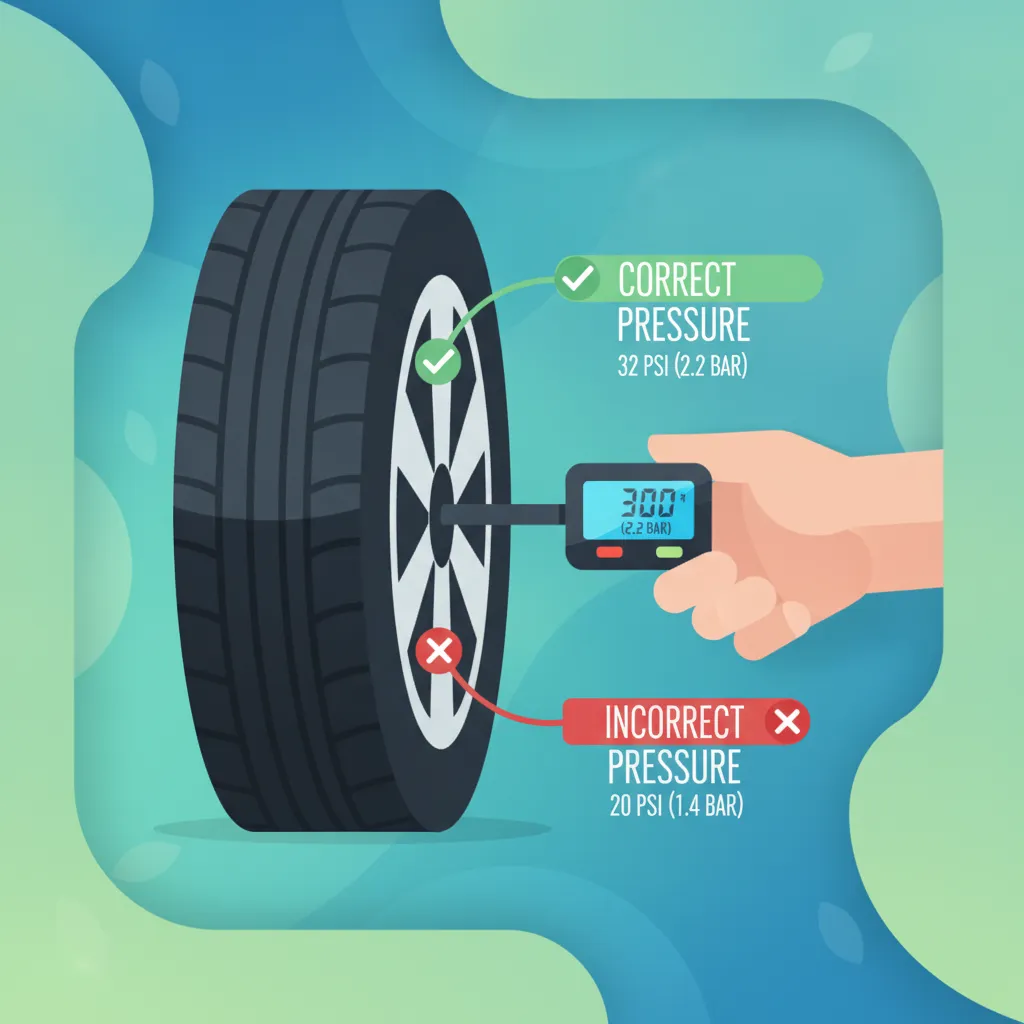
This lesson focuses on the importance of tyres and wheels for motorcycle safety and performance. It explains how to select appropriate tyres and the significance of maintaining correct tyre pressure, load rating, and tread depth. Detailed instructions are provided for conducting regular inspections to recognize signs of wear or damage and ensure optimal grip in various conditions.

This lesson examines how various road surfaces and conditions affect tyre grip and traction. It teaches riders to recognize and adapt to hazards like wet patches, loose gravel, or oil spills. The content covers techniques for maintaining control through smooth throttle and brake inputs, preventing traction loss while accelerating, braking, and cornering on compromised surfaces.
This lesson teaches riders how to conduct a simple but crucial pre-ride inspection of their vehicle. It provides step-by-step guidance on checking tyre pressure and tread depth, verifying brake function, and ensuring all lights are operational. Regular maintenance is presented as a fundamental responsibility for every rider.

This lesson teaches drivers how to safely manage their vehicle in challenging weather. It explains the dangers of aquaplaning in heavy rain, the loss of traction on snow and ice (including 'black ice'), and the severely reduced visibility in fog. You will learn to adjust your speed, increase following distances, and use lights correctly to suit these conditions.
This lesson outlines the driver's legal responsibility to ensure their vehicle is in a safe and roadworthy condition before every journey. It covers essential pre-drive checks, such as verifying lights, tyres, and fluid levels (oil, coolant, washer fluid). The lesson also explains the mandatory equipment that must be carried in the vehicle, including a warning triangle, high-visibility vest, and first-aid kit.

This lesson explores how different weather conditions impact driving safety and vehicle performance. It discusses the risks of hydroplaning in heavy rain, reduced visibility in fog, and loss of traction on snow and ice. Drivers will learn how to adapt their speed, increase following distances, and make smooth control inputs to maintain vehicle stability and prevent skids in these challenging conditions.

This lesson explains the legal framework for ensuring a passenger vehicle's roadworthiness, focusing on periodic technical inspections (TÜV) and scheduled maintenance. It identifies critical wear components, such as brakes and tires, that require regular monitoring and replacement. The importance of adhering to service intervals and maintaining accurate maintenance logs for regulatory compliance is also thoroughly covered.
This lesson addresses the challenges posed by various weather conditions on heavy vehicle operation. It discusses the effects of crosswinds on stability, reduced traction in rain or ice, and diminished visibility in fog. The content provides guidance on adjusting speed and using vehicle technologies to maintain control.
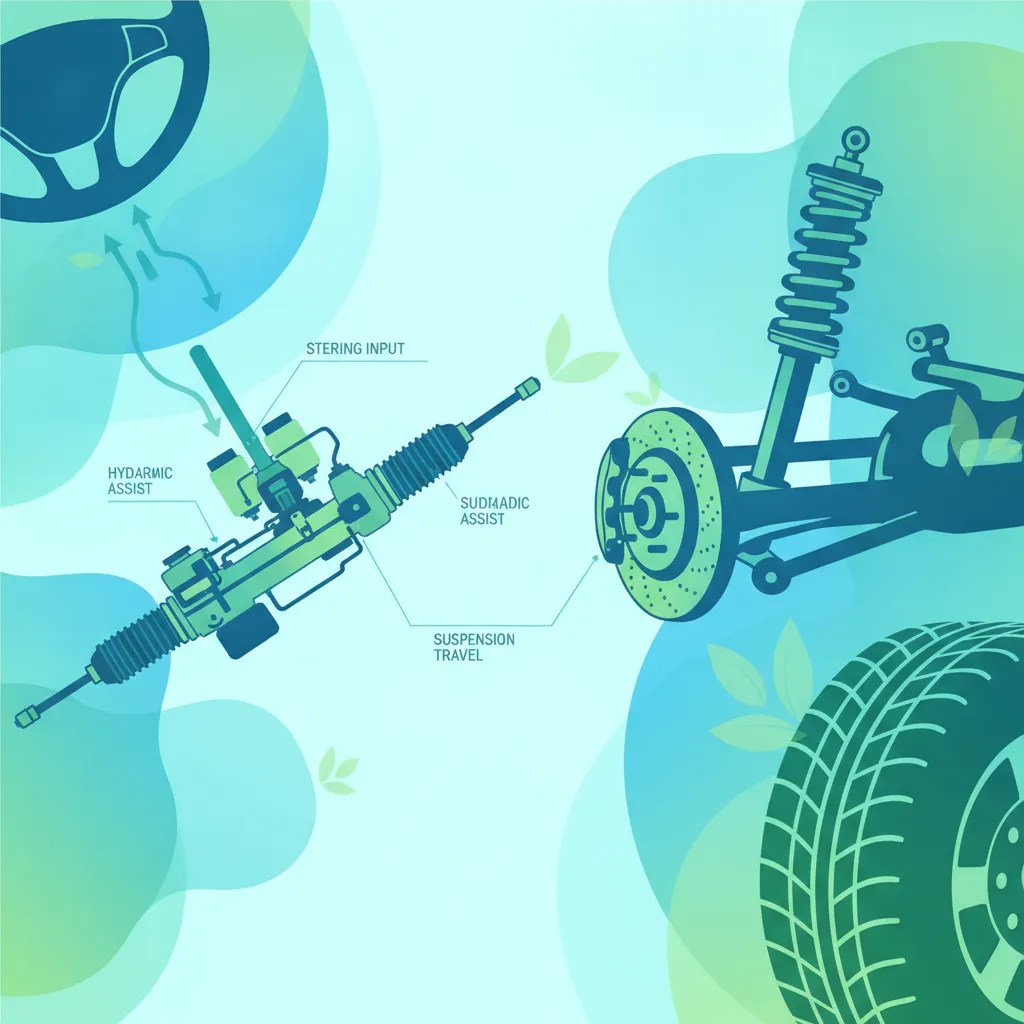
This lesson examines the steering mechanisms in heavy vehicles, including power-assisted systems, and their impact on handling. It also covers tyre technology, focusing on selection, pressure, load rating, and the importance of proper tyre maintenance. The content highlights how suspension components contribute to vehicle stability and control.
Explore the critical role of tyres as the sole contact point with the road. This lesson details how tyre pressure, tread condition, and seasonal suitability directly influence vehicle safety, braking effectiveness, and overall driving stability.
This lesson explores how different weather conditions impact driving safety and vehicle performance. It discusses the risks of hydroplaning in heavy rain, reduced visibility in fog, and loss of traction on snow and ice. Drivers will learn how to adapt their speed, increase following distances, and make smooth control inputs to maintain vehicle stability and prevent skids in these challenging conditions.
This lesson examines how various road surfaces and conditions affect tyre grip and traction. It teaches riders to recognize and adapt to hazards like wet patches, loose gravel, or oil spills. The content covers techniques for maintaining control through smooth throttle and brake inputs, preventing traction loss while accelerating, braking, and cornering on compromised surfaces.
This lesson focuses on the importance of tyres and wheels for motorcycle safety and performance. It explains how to select appropriate tyres and the significance of maintaining correct tyre pressure, load rating, and tread depth. Detailed instructions are provided for conducting regular inspections to recognize signs of wear or damage and ensure optimal grip in various conditions.

This lesson delves into the critical control systems of a passenger vehicle: steering, braking, and acceleration. It explains the mechanics of hydraulic and pneumatic brakes and the function of safety aids like ABS and ESP. Learners will understand how to apply smooth acceleration and deceleration techniques to ensure passenger comfort and maintain vehicle stability under various driving conditions.
This lesson teaches drivers how to safely manage their vehicle in challenging weather. It explains the dangers of aquaplaning in heavy rain, the loss of traction on snow and ice (including 'black ice'), and the severely reduced visibility in fog. You will learn to adjust your speed, increase following distances, and use lights correctly to suit these conditions.
This lesson examines the steering mechanisms in heavy vehicles, including power-assisted systems, and their impact on handling. It also covers tyre technology, focusing on selection, pressure, load rating, and the importance of proper tyre maintenance. The content highlights how suspension components contribute to vehicle stability and control.
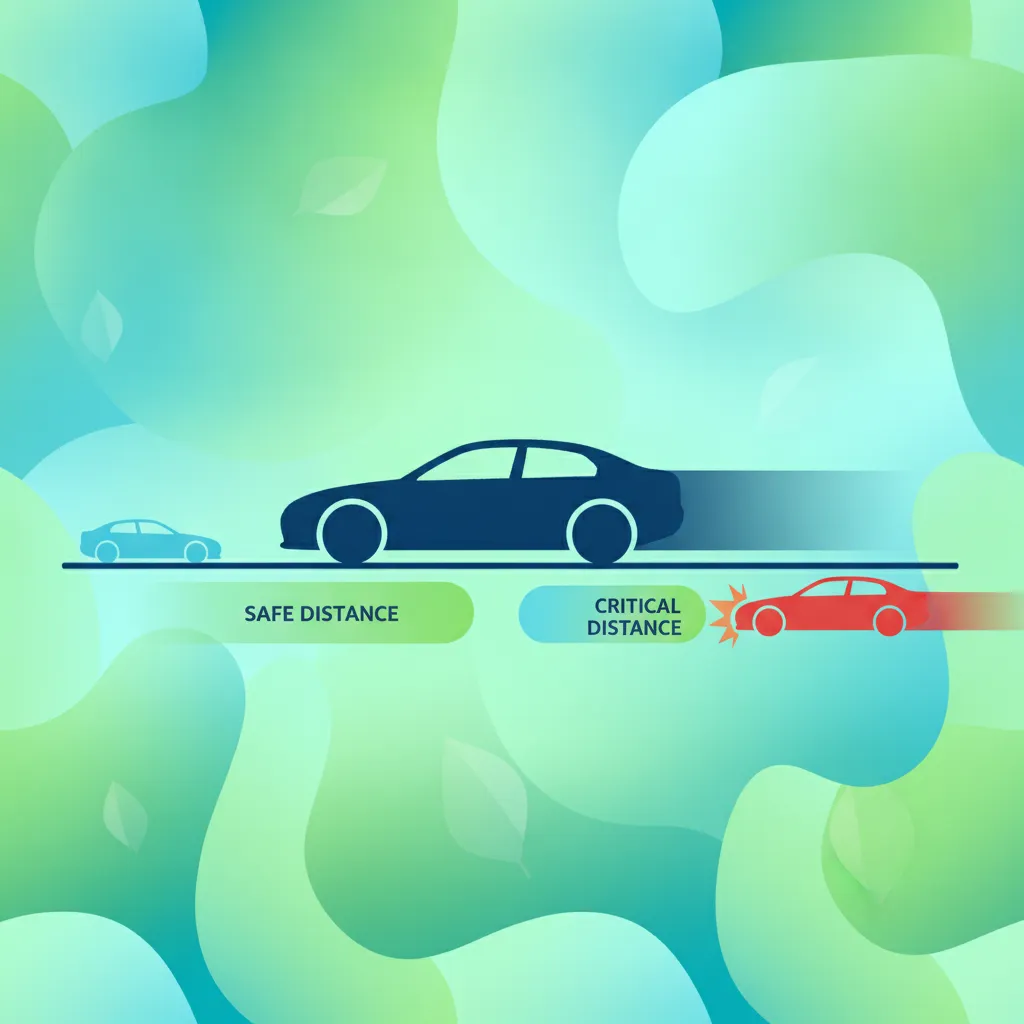
This lesson breaks down the concept of total stopping distance into reaction distance and braking distance. It teaches various braking techniques, including how to perform an emergency stop safely and the function of an Anti-lock Braking System (ABS). The relationship between speed, road condition, and braking effectiveness is a central theme.
This lesson explains the function of a vehicle's braking system and the technology designed to enhance its effectiveness. It describes how the Anti-lock Braking System (ABS) prevents wheels from locking up during hard braking, allowing the driver to maintain steering control. The role of the Electronic Stability Program (ESP) in preventing skids is also covered.

This lesson examines how different weather conditions, such as rain, strong winds, and fog, directly impact motorcycle safety. It explains how wet surfaces reduce tyre grip and increase braking distances, requiring smoother rider inputs. The content also provides strategies for managing reduced visibility and the physical effects of crosswinds on the motorcycle's stability.
This lesson examines the specific hazards posed by different weather conditions. It explains how rain can lead to hydroplaning and reduced grip, how fog impairs visibility, and how strong winds can affect stability. Riders will learn practical strategies, such as reducing speed and increasing following distance, to mitigate these risks.
Find clear answers to common questions learners have about Tyres, Pressure, Tread, and Seasonal Requirements. Learn how the lesson is structured, which driving theory objectives it supports, and how it fits into the overall learning path of units and curriculum progression in Germany. These explanations help you understand key concepts, lesson flow, and exam focused study goals.
The legal minimum tread depth for all vehicle tyres in Germany is 1.6 mm. However, for summer tyres, it is highly recommended to replace them at 3 mm, and for winter tyres at 4 mm, to ensure adequate safety and performance in wet or snowy conditions.
Germany has a situational winter tyre requirement. You must have tyres suitable for winter conditions—marked with the Alpine symbol—whenever there is black ice, packed snow, slush, or frost on the road. It is not tied to a specific calendar date, but to the weather conditions.
The manufacturer's recommended tyre pressure can usually be found on a sticker inside the driver-side door frame, inside the fuel filler flap, or in the vehicle's owner's manual. Driving with incorrect pressure is a common topic in theory questions.
Yes. Driving with tyres that have insufficient tread, deep cuts, or exposed cord is a safety hazard and a traffic violation in Germany. You can face fines and points in Flensburg, and it is a common reason for failing the practical examination if the examiner detects it during the vehicle check.
Begin your targeted revision now. Use our practice search to quickly find specific German driving theory questions. Filter by StVO rules, road signs, or hazard perception to create your focused study plan. Master challenging areas and prepare confidently for your theoretical driving test.