
This lesson provides a comprehensive guide to mastering parallel and reverse parking, essential maneuvers for both your practical driving and the German theoretical exam. By focusing on observation, steering control, and precise reference points, you will gain the confidence needed to handle these tasks safely in real-world traffic.
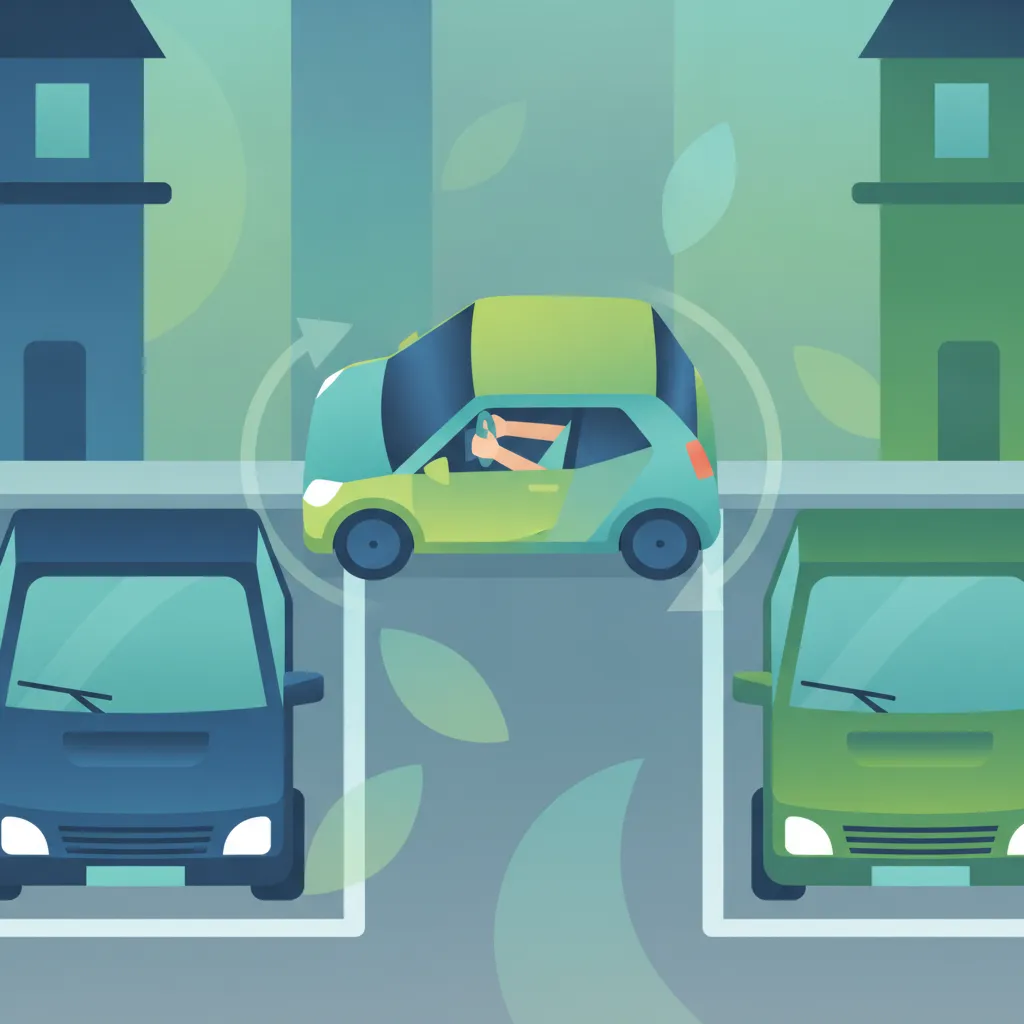
Lesson content overview
Efficient and safe parking is a cornerstone of responsible driving, particularly in densely populated urban areas and structured parking facilities in Germany. This comprehensive lesson provides detailed guidance on two fundamental parking maneuvers: parallel parking and reverse (bay) parking. Mastering these techniques not only ensures compliance with German traffic regulations (StVO – Straßenverkehrs-Ordnung) but also significantly enhances your confidence and spatial awareness as a driver.
Accurate parking is more than just a convenience; it is a critical safety skill and a legal requirement. In Germany, where urban spaces can be tight and parking regulations strict, the ability to maneuver your vehicle into confined spots safely and efficiently is indispensable. Poor parking can obstruct traffic flow, endanger pedestrians and cyclists, and lead to costly vehicle damage or fines. Developing proficiency in parallel and reverse parking demonstrates a high level of vehicle control and observation, which are crucial for obtaining your German Category B driving license.
Parallel parking involves positioning your vehicle parallel to the curb, typically between two other parked vehicles, by backing into the space. This maneuver is essential for street-side parking in residential areas and city centers where perpendicular or angled parking bays are unavailable.
The act of reversing a vehicle into a space parallel to the curb, usually between two other parked vehicles or designated markers. It requires precise alignment and controlled movement.
The primary goal of parallel parking is to position your vehicle neatly and legally within a space, without impeding traffic or obstructing pedestrian pathways. It showcases your ability to control the vehicle at low speeds, use mirrors effectively, and judge distances accurately.
Executing parallel parking safely requires a methodical approach, keen observation, and smooth control over your vehicle.
Identify a Suitable Space: Look for a space that is at least 1.5 times the length of your vehicle. Ensure there are no parking restrictions or signs prohibiting parking. Check your mirrors and signal your intention to park.
Position Your Vehicle: Pull up alongside the car you intend to park behind (the "target car"), ensuring your side mirror is roughly aligned with its side mirror. Maintain a lateral distance of about 0.5 to 1 meter from the target car. This initial positioning is critical for setting the correct angle.
First Reverse Phase – Initial Angle: Engage reverse gear. Look over your shoulder, checking all mirrors and blind spots for pedestrians, cyclists, or other vehicles. Slowly begin to reverse, turning your steering wheel fully towards the curb (e.g., if parking on the right, turn fully right).
Monitor Your Reference Point: Continue reversing slowly until your rear wheel is roughly aligned with the rear bumper of the target car, or when your rear passenger-side window lines up with the rear bumper of the target car. Some drivers use the rear-view mirror of the target car appearing in their own driver's side mirror as a reference.
Second Reverse Phase – Straighten Up: Once your vehicle is at approximately a 45-degree angle to the curb (or your front bumper is clear of the target car’s rear bumper), straighten your steering wheel (turn it back to the center position). Continue reversing slowly in a straight line.
Monitor Your Second Reference Point: Reverse until your driver's side mirror aligns with the rear bumper of the target car, or when the front of your vehicle is clear of the target car. Alternatively, check your passenger-side mirror; when you can see the entire front of the car behind the space you are aiming for, it's time for the next step.
Third Reverse Phase – Align with Curb: Turn your steering wheel fully away from the curb (e.g., fully left for right-side parking). Continue reversing slowly. Your front end will swing into the street, and your rear end will move closer to the curb.
Final Adjustments: Once your vehicle is parallel to the curb and roughly equidistant from the cars in front and behind, straighten your wheels. Move forwards or backwards slightly to center your vehicle within the space and ensure it is not too far from the curb (generally 10-30 cm).
Secure the Vehicle: Engage the handbrake and select neutral (for manual transmission) or park (for automatic transmission).
When parallel parking, especially near intersections or junctions, a crucial German regulation known as the one-meter rule applies.
A legal requirement in Germany (and other European countries) stating that a parked vehicle must maintain a minimum distance of one meter from intersections, road corners, or the edge of an entry/exit to ensure clear visibility and smooth traffic flow.
This rule is vital for safety, as parking too close to an intersection can obstruct the view for turning drivers and pedestrians, creating hazardous situations. Always ensure you leave sufficient space.
When practicing, always start with larger spaces and gradually move to tighter ones. Patience and smooth steering inputs are far more effective than speed.
Reverse bay parking, also known simply as bay parking, involves backing your vehicle into a marked parking bay, typically found in parking lots, shopping centers, or multi-story car parks. This method is often preferred over driving in forwards because it allows you to drive out forwards, providing better visibility when leaving the space.
The act of parking a vehicle into a marked parking bay by reversing directly into it, typically in a parking lot or structured parking area.
There are generally two types: straight-back reverse parking into a perpendicular space and diagonal reverse parking into a diagonally marked space. For your German driving license, mastery of straight-back reverse parking is crucial.
Reversing into a bay requires good judgment of space, effective use of mirrors, and precise steering.
Position Your Vehicle: Drive past the parking bay you intend to use. Position your vehicle so that the rear of your car is approximately two bays past the target bay. Maintain a distance of about 1.5 to 2 meters from the parked cars (or bay lines) to allow enough room for your turn. Signal your intention to reverse.
Initial Reverse and Steering: Engage reverse gear. Check all mirrors and over your shoulders for any obstacles, pedestrians, or approaching vehicles. Slowly begin to reverse, and when your rear wheel is aligned with the first line of your target bay (or the corner of the car next to it), turn your steering wheel fully towards the bay (e.g., fully right if the bay is to your right).
Monitor Your Angle: Continue reversing slowly, constantly checking your side mirrors. In your left mirror, you should see the left-hand line of your bay appearing, and in your right mirror, the right-hand line (or the side of the adjacent car). Adjust your steering to keep the vehicle centered within the bay.
Straighten Up: As your vehicle becomes parallel with the lines of the parking bay (or the sides of the adjacent cars), straighten your steering wheel (turn it back to the center position). Continue reversing slowly in a straight line.
Stop and Secure: Reverse until your vehicle is fully within the bay, without touching the curb or any markers at the back of the bay. Be mindful of any vehicles or obstacles behind you. Engage the handbrake and select neutral (for manual) or park (for automatic).
Always remember that reversing requires extra vigilance. Prioritize safety by moving slowly and making continuous all-round observations.
Modern vehicles often come equipped with driver assistance systems designed to make parking easier and safer. These include parking sensors and reversing cameras.
Electronic devices, usually located in the front and rear bumpers, that emit ultrasonic waves or electromagnetic fields to detect obstacles and provide auditory or visual alerts to the driver.
Parking sensors provide audible beeps that increase in frequency as you approach an obstacle. Some systems also display a visual representation of the distance on the vehicle's dashboard screen. They are particularly useful for detecting objects in blind spots directly behind or in front of the vehicle.
A camera system mounted on the rear of a vehicle that provides a real-time video feed of the area behind the car on a display screen, typically in the dashboard.
Reversing cameras offer a wide-angle view of the area directly behind your vehicle, often with superimposed guidelines that illustrate your trajectory and proximity to obstacles. Some advanced systems offer a 360-degree bird's-eye view, combining multiple camera feeds.
While these systems are incredibly helpful, they are driver aids, not replacements for your own observation and judgment.
Always prioritize direct visual observation. Use technology as a supplement to enhance your awareness, not to replace it.
Reference points are visual cues you use to accurately gauge your vehicle's position, angle, and distance during a maneuver. They are essential for consistent and precise parking.
A specific, consistent visual cue on your vehicle or in the environment that helps you determine distances and angles while maneuvering, especially during parking.
Reference points vary slightly depending on your specific vehicle's dimensions, seating position, and mirrors. It is crucial to find and practice with your own vehicle's reference points.
Spend time in a safe, open area practicing with your own vehicle to identify personal reference points. What works for one driver or car might need slight adjustment for another.
Adhering to German traffic laws (StVO) is paramount when parking. Non-compliance can lead to fines, towing, and dangerous situations.
Handbremse) when parking, especially on inclines, to prevent the vehicle from rolling. For manual cars, also leave it in gear (first gear when pointing uphill, reverse gear when pointing downhill) for added security.Halteverbot - no stopping, Parkverbot - no parking signs).Common violations such as parking too close to an intersection, blocking a driveway, or parking in a no-parking zone can result in fines (Bußgeld) and, in some cases, the vehicle being towed away. Such incidents are not only costly but also disrupt traffic and can pose safety risks.
Parking conditions are not always ideal. Factors like weather, lighting, and the environment require drivers to adjust their approach.
Understanding these terms is vital for effective communication and comprehension of parking regulations and techniques.
Mastering parallel and reverse bay parking is a fundamental step in becoming a competent and safe driver on German roads. By consistently applying the step-by-step procedures, utilizing appropriate reference points, understanding and adhering to StVO regulations like the one-meter rule, and using driver assistance systems wisely, you can execute these maneuvers with confidence. Remember that observation, patience, and smooth vehicle control are your best tools for successful parking in any situation.
Parallel and reverse bay parking are essential maneuvers requiring systematic observation, controlled steering, and use of reference points. In Germany, the One-Meter Rule requires at least one meter distance from intersections and corners. Parallel parking involves positioning alongside the target car, then reversing at an angle before straightening and swinging into the space. Reverse bay parking requires driving past the bay and reversing in at an angle. Driver assistance systems like sensors and cameras supplement but never replace proper observation techniques and mirror use. The handbrake must always be engaged when parking, and violations can result in fines (Bußgeld) or towing.
A short set of high-value points that capture the most important learning from this lesson.
Parallel parking requires initial positioning alongside the target car at 0.5–1 meter lateral distance before beginning the reverse maneuver
The One-Meter Rule (Ein-Meter-Regel) mandates parking at least one meter from intersections, road corners, and driveways in Germany
Reference points such as mirror alignment and bumper positioning are essential for accurate vehicle placement during parking
Reverse bay parking involves driving past the target bay and reversing at an angle, then straightening once aligned
Parking sensors and reversing cameras are helpful aids but must never replace physical observation and mirror checks
Explore all units and lessons included in this driving theory course.
Parallel parking sequence: position alongside → full turn toward curb → straighten → full turn away from curb → final adjustments
Driver assistance systems have limitations: they may miss thin objects, low curbs, or be affected by dirt, snow, or glare
Always engage the handbrake (Handbremse) when parking, and on inclines leave manual cars in gear (first uphill, reverse downhill)
Parking bays must be fully contained within marked lines to avoid blocking adjacent vehicles or being considered an infringement
Continuous all-round observation (mirrors, head checks, blind spots) is required before and throughout every parking maneuver
Incorrect initial positioning during parallel parking, such as stopping too close to or too far from the target vehicle
Failing to perform adequate observation, risking collision with pedestrians, cyclists, or moving vehicles
Over-reliance on parking sensors or cameras instead of maintaining direct visual contact and mirror checks
Parking too far from the curb (more than 30 cm) or mounting the curb during parallel parking
Turning too sharply during reverse bay parking, causing the front to swing wide and potentially hit adjacent vehicles
Lesson content overview
A short set of high-value points that capture the most important learning from this lesson.
Parallel parking requires initial positioning alongside the target car at 0.5–1 meter lateral distance before beginning the reverse maneuver
The One-Meter Rule (Ein-Meter-Regel) mandates parking at least one meter from intersections, road corners, and driveways in Germany
Reference points such as mirror alignment and bumper positioning are essential for accurate vehicle placement during parking
Reverse bay parking involves driving past the target bay and reversing at an angle, then straightening once aligned
Parking sensors and reversing cameras are helpful aids but must never replace physical observation and mirror checks
Explore all units and lessons included in this driving theory course.
Parallel parking sequence: position alongside → full turn toward curb → straighten → full turn away from curb → final adjustments
Driver assistance systems have limitations: they may miss thin objects, low curbs, or be affected by dirt, snow, or glare
Always engage the handbrake (Handbremse) when parking, and on inclines leave manual cars in gear (first uphill, reverse downhill)
Parking bays must be fully contained within marked lines to avoid blocking adjacent vehicles or being considered an infringement
Continuous all-round observation (mirrors, head checks, blind spots) is required before and throughout every parking maneuver
Incorrect initial positioning during parallel parking, such as stopping too close to or too far from the target vehicle
Failing to perform adequate observation, risking collision with pedestrians, cyclists, or moving vehicles
Over-reliance on parking sensors or cameras instead of maintaining direct visual contact and mirror checks
Parking too far from the curb (more than 30 cm) or mounting the curb during parallel parking
Turning too sharply during reverse bay parking, causing the front to swing wide and potentially hit adjacent vehicles
Explore search topics learners often look for when studying Parallel Parking and Reverse Parking. These topics reflect common questions about road rules, driving situations, safety guidance, and lesson level theory preparation for learners in Germany.
Browse additional driving theory lessons that cover connected traffic rules, road signs, and common driving situations related to this topic. Improve your understanding of how different rules interact across everyday traffic scenarios.
Learn the precise steps and reference points for successfully reversing into a parking bay. This driving theory lesson covers observation, steering control, and common techniques to master this essential maneuver safely.

This lesson clarifies the legal distinction between 'stopping' ('Halten') and 'parking' ('Parken') in Germany and explains the specific rules for each. You will learn to identify areas where stopping and parking are prohibited through signs and road markings. The lesson also covers the correct use of parking aids like the blue parking disc ('Parkscheibe') and paid parking systems.

This lesson focuses on the high-risk maneuver of reversing, emphasizing the importance of all-around observation due to limited visibility. It teaches techniques for controlling the vehicle at very low speeds and using mirrors and direct observation to manage large blind spots behind the car. The priority is to ensure the path is clear of pedestrians and obstacles at all times.

This lesson provides a step-by-step guide to executing turns safely at intersections and other locations. It details the full observation sequence (mirrors, signal, blind spot check) required before initiating a turn. The lesson covers correct lane positioning for both left and right turns and explains the rules for performing U-turns or three-point turns where permitted.
This lesson covers safe reversing techniques for both rigid trucks and articulated combinations, emphasizing the use of mirrors and cameras. It discusses the risks of jackknifing during reversal and the importance of speed control and safety checks. The content outlines best practices for planning a safe reversing path, potentially with a guide person.

This lesson covers the high-risk maneuver of reversing a large passenger vehicle. It details a systematic approach that includes using all available aids like mirrors, cameras, and audible alarms. The lesson stresses the need for slow, controlled movements, constant scanning of the surroundings, and conducting thorough clearance checks to prevent collisions with objects or people behind the vehicle, advocating for a spotter whenever possible.
This lesson covers the principles of correct vehicle positioning and lane discipline, which are essential for predictable and safe driving. It reinforces the 'Rechtsfahrgebot' (drive on the right) principle and explains how to choose the appropriate lane on multi-lane roads and motorways. Proper positioning for turns and maintaining a safe space cushion around the vehicle are also key topics.

This lesson focuses on the specific skills needed to operate within the confined spaces of a bus terminal or station. It provides instruction on precise docking maneuvers for aligning with platforms, managing speed and position in tight lanes, and ensuring passenger safety during loading. The importance of clear communication with ground personnel and using any available docking aids is also a key component of the training.

This lesson addresses the challenges of maneuvering heavy vehicles in confined spaces such as loading bays and narrow streets. It provides strategies for planning the maneuver, accounting for vehicle dimensions, turning radius, and blind spots. The content emphasizes slow, controlled movements and the need for high situational awareness.
This lesson examines the direct impact of a passenger vehicle's dimensions on its operation. It explains key concepts such as turning radius, swept path, and rear overhang, which are crucial for safe maneuvering in confined areas. Learners will understand how to account for these characteristics when positioning the vehicle in a lane, making turns, and navigating challenging urban environments to avoid collisions.
This lesson focuses on the critical maneuver of changing lanes ('Fahrstreifenwechsel'), a common cause of accidents if done incorrectly. It teaches a systematic, safe procedure based on thorough observation, clear signaling, and a final blind spot check. You will learn how to assess traffic speed and identify a safe gap before smoothly moving into the adjacent lane.
Master the art of parallel parking with detailed step-by-step instructions. This lesson focuses on observation, accurate steering, and using reference points to execute parallel parking maneuvers confidently in various urban environments.
This lesson clarifies the legal distinction between 'stopping' ('Halten') and 'parking' ('Parken') in Germany and explains the specific rules for each. You will learn to identify areas where stopping and parking are prohibited through signs and road markings. The lesson also covers the correct use of parking aids like the blue parking disc ('Parkscheibe') and paid parking systems.
This lesson focuses on the high-risk maneuver of reversing, emphasizing the importance of all-around observation due to limited visibility. It teaches techniques for controlling the vehicle at very low speeds and using mirrors and direct observation to manage large blind spots behind the car. The priority is to ensure the path is clear of pedestrians and obstacles at all times.
This lesson provides a step-by-step guide to executing turns safely at intersections and other locations. It details the full observation sequence (mirrors, signal, blind spot check) required before initiating a turn. The lesson covers correct lane positioning for both left and right turns and explains the rules for performing U-turns or three-point turns where permitted.

This lesson teaches the systematic observation techniques required for safe driving, starting with how to scan the road far ahead, nearby, and to the sides. It details the correct frequency for checking interior and exterior mirrors to maintain situational awareness. The lesson highlights the indispensable over-the-shoulder check ('Schulterblick') to cover the vehicle's blind spot before any change in direction.

This lesson teaches the fundamental techniques for safely turning a large passenger vehicle. It explains the concepts of turning radius, swept path, and off-tracking, where the rear wheels follow a tighter path than the front wheels. Learners will understand how to position the vehicle correctly before a turn and manage their speed to navigate corners without encroaching on other lanes or hitting curbs.
This lesson examines the direct impact of a passenger vehicle's dimensions on its operation. It explains key concepts such as turning radius, swept path, and rear overhang, which are crucial for safe maneuvering in confined areas. Learners will understand how to account for these characteristics when positioning the vehicle in a lane, making turns, and navigating challenging urban environments to avoid collisions.
This lesson addresses the challenges of maneuvering heavy vehicles in confined spaces such as loading bays and narrow streets. It provides strategies for planning the maneuver, accounting for vehicle dimensions, turning radius, and blind spots. The content emphasizes slow, controlled movements and the need for high situational awareness.
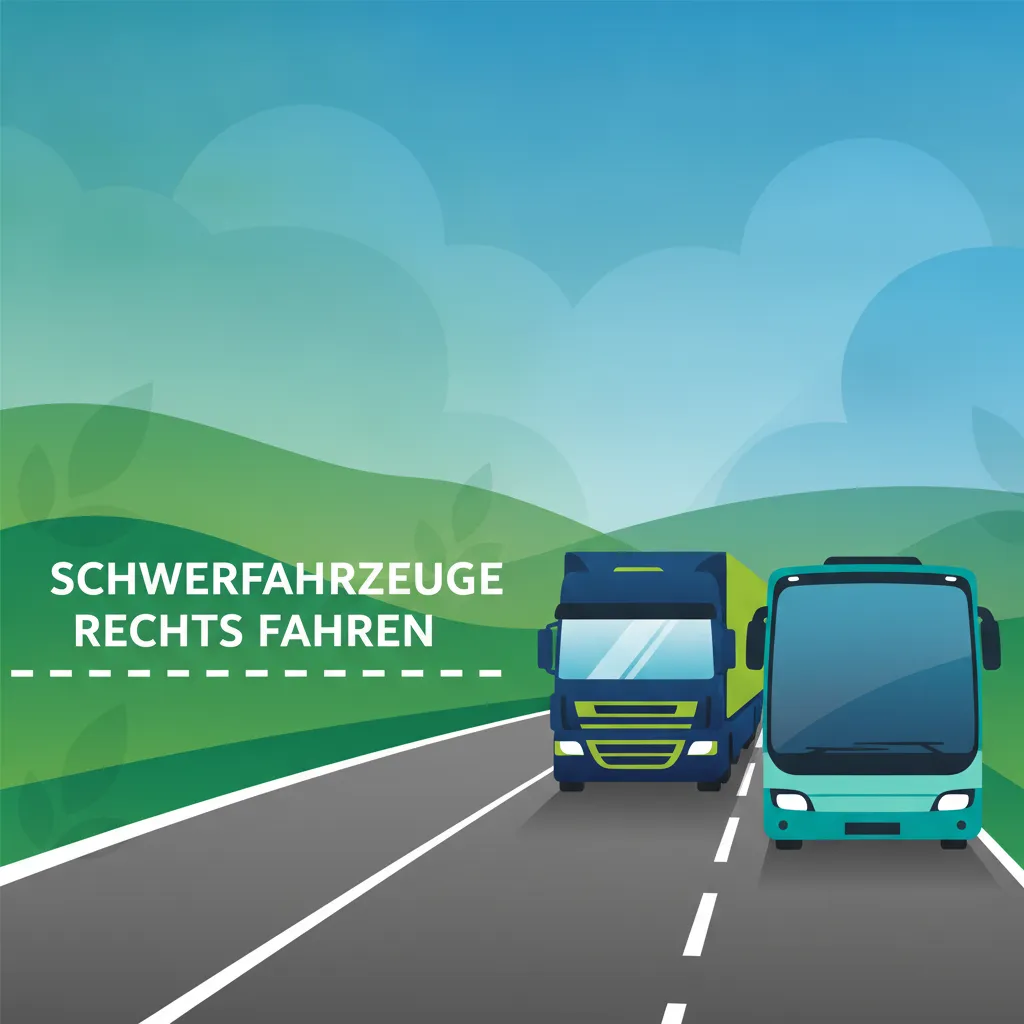
This lesson explains the specific regulations for operating heavy vehicles on Autobahnen, including speed limits, lane discipline, and overtaking rules. It discusses the use of dedicated truck lanes and the importance of maintaining appropriate following distances. The content also covers procedures for merging and exiting high-speed roads safely.
This lesson introduces the concept of defensive driving ('vorausschauendes Fahren'), a proactive approach focused on anticipating and mitigating potential risks. It teaches techniques for scanning the road ahead, identifying potential hazards early, and managing the space around your vehicle to create a safety buffer. The goal is to develop a mindset that prioritizes safety and collision avoidance above all else.

This lesson provides a complete guide to driving on the German Autobahn. It covers the correct procedure for entering and exiting via acceleration and deceleration lanes, the strict lane discipline rule of keeping right ('Rechtsfahrgebot'), and the principle of overtaking only on the left. It also explains the recommended speed limit and the critical procedure for forming an emergency corridor ('Rettungsgasse') in a traffic jam.
Find clear answers to common questions learners have about Parallel Parking and Reverse Parking. Learn how the lesson is structured, which driving theory objectives it supports, and how it fits into the overall learning path of units and curriculum progression in Germany. These explanations help you understand key concepts, lesson flow, and exam focused study goals.
No. While sensors and cameras are excellent aids, the German driving test strictly requires a full visual scan, including the shoulder check (Schulterblick), to ensure the area is clear of vulnerable road users.
You are generally allowed to correct your position if necessary, provided you maintain safety and observation. However, excessive corrections or failing to observe traffic can lead to a fail.
Failing to maintain continuous observation of the surroundings. Many students focus too much on the vehicle's position and forget to check for cyclists or pedestrians entering their blind spots.
Yes. Signaling alerts other road users to your intention to stop and maneuver, which is a core component of defensive driving and required by the StVO.
Begin your targeted revision now. Use our practice search to quickly find specific German driving theory questions. Filter by StVO rules, road signs, or hazard perception to create your focused study plan. Master challenging areas and prepare confidently for your theoretical driving test.