
This lesson provides a deep dive into the legal distinctions between stopping and parking as defined in the German StVO. Understanding these rules is essential for avoiding fines and navigating urban environments safely, serving as a critical component of your Category B practical and theoretical exam preparation.
Lesson content overview
Navigating German roads safely and legally requires a comprehensive understanding of traffic rules, especially those governing where and how you can stop or park your vehicle. This lesson, part of your German Driving License Theory – Comprehensive Category B Course, delves into the essential regulations for stopping (Halten) and parking (Parken), as defined by the Straßenverkehrs-Ordnung (StVO). Understanding these rules is not merely about avoiding fines; it is crucial for ensuring traffic flow, road safety, and preventing accidents.
We will explore the fundamental differences between stopping and parking, identify the signs and road markings that indicate prohibitions, and explain the correct use of essential parking aids like the Parkscheibe (parking disc). By the end of this chapter, you will be equipped to make informed decisions about where and how to bring your vehicle to a standstill, complying with German traffic law.
In German traffic law, there is a distinct and legally significant difference between Halten (stopping) and Parken (parking). This distinction forms the basis for many regulations and is essential for all drivers to grasp. Misinterpreting these terms can lead to violations and penalties.
Stopping (Halten) refers to any intentional halt of a vehicle for a short period, as long as the driver remains with or in immediate vicinity of the vehicle and is ready to move it at any time. The primary characteristic of stopping is its brevity and the driver's readiness to resume movement. This includes brief pauses to let passengers in or out, or to load/unload small items.
According to German law, a stop is considered Halten if it lasts less than three minutes, or if the driver does not leave the vehicle. If the driver leaves the vehicle or the stop exceeds three minutes, it generally transitions into parking. An exception exists for traffic-related stops, such as at a red light or in a traffic jam; these are not considered Halten in the context of these regulations, as they are involuntary.
Parking (Parken) is defined as bringing a vehicle to a standstill and leaving it stationary for an extended period, meaning the driver intends to leave the vehicle or has already left it. Specifically, parking occurs if:
Therefore, even a one-minute stop during which the driver walks away from the car to fetch something quickly is legally considered Parken. Understanding this crucial distinction is the first step towards correctly interpreting traffic signs and avoiding common errors.
The primary reason for distinguishing between Halten and Parken lies in the varying degrees of obstruction and safety risks they pose. A brief stop, with the driver present and ready to move, typically causes less traffic disruption than a parked vehicle. Consequently, regulations are often more stringent for parking than for stopping. For instance, an area might prohibit parking but allow brief stops for passengers or goods, while other areas might prohibit even the shortest stop.
An intentional halt of a vehicle for a brief period (less than three minutes) where the driver remains with or in immediate vicinity of the vehicle, ready to move it.
An intentional halt of a vehicle for more than three minutes, or any halt where the driver leaves the vehicle, regardless of duration.
Areas where stopping is prohibited are among the most critical regulations to observe, as even a momentary halt can impede traffic flow or create dangerous situations. These prohibitions are typically indicated by specific traffic signs and, in some cases, by road markings.
An absolute stopping ban (Absolutes Halteverbot) means you are not allowed to stop for any reason in the designated area, not even for a second to drop off a passenger. The only exceptions are traffic-related stops (e.g., at a red light, in a traffic jam) which are involuntary.
This ban is indicated by a round blue sign with a red border and two diagonal red lines forming an 'X'.
An absolute stopping ban can apply to a specific section of road, as indicated by supplementary signs, or for the entire length of a street if no ending sign is present. It is crucial to remember that where stopping is prohibited, parking is automatically also prohibited.
A restricted stopping zone (Eingeschränktes Halteverbot) means that while Halten (stopping) is generally allowed for brief periods, Parken (parking) is prohibited. You may stop for up to three minutes, or for longer if you are actively loading/unloading goods or allowing passengers to enter/exit, and you remain with the vehicle ready to drive off.
This prohibition is indicated by a round blue sign with a red border and a single diagonal red line.
This sign is commonly found in areas where a quick turnover of vehicles is desired, such as in front of shops or administrative buildings. If you stop for longer than three minutes or leave your vehicle, you are violating the parking prohibition.
Beyond specific signs, the StVO outlines several general situations where stopping, and by extension parking, is prohibited even without explicit signage. These rules are fundamental for safety and visibility:
Löschfahrzeugzufahrt): These areas, often marked with a fire symbol, must be kept clear at all times for emergency services.Always remember: Where Halten (stopping) is prohibited, Parken (parking) is also automatically prohibited. An Absolutes Halteverbot is therefore stricter than an Eingeschränktes Halteverbot, but both require careful attention.
While an Eingeschränktes Halteverbot explicitly prohibits parking, there are many other areas where parking is forbidden, either through specific signs, road markings, or general StVO rules. Understanding these helps ensure you always leave your vehicle in a legally permissible spot.
Parking is generally prohibited in the following situations, even if no specific sign is present:
Eingeschränktes Halteverbot): As discussed, this sign directly prohibits parking.Löschfahrzeugverbot): These zones, vital for emergency vehicle access, must remain absolutely clear.Road markings play a crucial role in reinforcing or indicating parking regulations:
Absolutes Halteverbot). You cannot stop or park here for any reason.Eingeschränktes Halteverbot). You cannot park here, but brief stops for loading/unloading or passenger pickup/drop-off are permitted, provided you remain with the vehicle.In many parking zones, especially those with time limits or fees, drivers are required to use specific parking aids. Failing to use these correctly is a common violation.
The blue parking disc (Parkscheibe) is a mandatory parking aid in zones with time restrictions. These zones are typically indicated by a P sign accompanied by a supplementary sign showing a parking disc symbol and a duration (e.g., "2 Stunden" for 2 hours).
When using a Parkscheibe:
Park your vehicle in the designated zone.
Set the arrow on the parking disc to the next half-hour mark after your arrival time. For example, if you arrive at 10:01, set it to 10:30. If you arrive at 10:29, also set it to 10:30.
Place the parking disc clearly visible behind the front windshield of your vehicle.
Do not alter the disc's time during your parking period. Once set, it must remain fixed until you depart.
Many urban areas in Germany operate paid parking zones (gebührenpflichtige Parkzonen). These zones are indicated by a P sign with a supplementary sign showing a symbol for a parking meter or information about payment (e.g., "Parkschein").
When parking in a fee zone:
Parkschein) from the machine.Some parking meters accept coins, while others may offer card payments or mobile app options. Always check the instructions on the machine.
Increasingly, cities are introducing electronic parking systems, often managed through smartphone apps. These systems allow you to pay for parking digitally without needing a physical ticket. Signage in these zones will indicate the availability of such systems, usually with logos of partner apps. Ensure you register correctly and activate the parking session via the app, and that your vehicle is identifiable by parking enforcement.
The primary legal framework for stopping and parking in Germany is the Straßenverkehrs-Ordnung (StVO). Several paragraphs within the StVO are particularly relevant to this topic.
§ 12 StVO (Halten und Parken) is the central paragraph that lays down the fundamental rules for where and how drivers may stop or park their vehicles. It covers the definitions of stopping and parking, the general prohibitions (e.g., on narrow roads, at junctions), and specific requirements for vehicles over a certain weight. It also specifies that parked vehicles must not obstruct traffic or endanger other road users. This paragraph is the foundation upon which all other specific rules and signs are built.
§ 41 StVO (Vorschriftzeichen) deals with regulatory signs, which include those for stopping and parking prohibitions. This paragraph provides the legal basis for signs like the Absolutes Halteverbot (Sign 283) and Eingeschränktes Halteverbot (Sign 286), as well as parking signs (Sign 314). It explains that these signs are legally binding and must be obeyed. Supplementary signs (Zusatzzeichen), which often provide crucial details like time restrictions or exceptions, are also covered under general provisions for traffic signs.
Always prioritize safety and common sense. Even if a particular spot is not explicitly signed as prohibited, if your vehicle would obstruct traffic, create a hazard, or prevent access, you should not stop or park there.
Violating stopping and parking regulations is a frequent cause of fines in Germany. Understanding common mistakes can help you avoid them.
Halteverbot with Parkverbot: A common error is stopping in an Absolutes Halteverbot (Sign 283) to quickly drop someone off, believing it only prohibits Parken. Remember, Absolutes Halteverbot means no stopping at all.Parkscheibe setting: Setting the parking disc to the exact arrival time instead of the next half-hour mark, or forgetting to display it at all.Parkscheibe or paid parking, leading to an expired ticket.EU-Behindertenparkausweis) to be displayed.Consequences for violations typically range from monetary fines (Verwarnungsgeld or Bußgeld) to points in the Flensburg register, and in severe cases, the towing of your vehicle. The severity of the penalty depends on the type of violation and how long it persists.
The regulations for stopping and parking are not arbitrary; they are meticulously designed to maintain safety and efficiency on public roads.
By diligently adhering to these rules, you contribute to a safer, more orderly, and more enjoyable driving experience for everyone in Germany.
German traffic law makes a crucial legal distinction between Halten (stopping), defined as a vehicle stationary for under 3 minutes with the driver present, and Parken (parking), which occurs when the vehicle is left for over 3 minutes or the driver leaves. Sign 283 imposes an absolute stopping ban prohibiting any intentional halt, while Sign 286 restricts parking but allows brief stops. The Parkscheibe must be set to the next half-hour mark after arrival. Prohibitions without signs apply near pedestrian crossings, junctions, on narrow roads, at bends, on acceleration/deceleration lanes, and within 5 meters of intersections. Yellow road markings parallel to the curb carry the same legal weight as posted signs, with solid lines indicating absolute bans and dashed lines indicating restricted zones.
A short set of high-value points that capture the most important learning from this lesson.
Halten (stopping) means a vehicle is stationary for less than 3 minutes with the driver present and ready to move; Parken (parking) means the vehicle is left for more than 3 minutes or the driver leaves, regardless of duration
Sign 283 (round blue with red border and double diagonal lines) is an absolute stopping ban where no stopping at all is permitted, not even for a second
Sign 286 (round blue with red border and single diagonal line) is a restricted stopping zone where parking is prohibited but brief stops up to 3 minutes are allowed if the driver remains with the vehicle
Where Halten is prohibited, Parken is automatically prohibited as well
The Parkscheibe must be set to the next half-hour mark after arrival, not the exact arrival time
Explore all units and lessons included in this driving theory course.
The 3-minute rule: if you leave the vehicle or stop for more than 3 minutes, it legally becomes parking
Yellow solid line = absolute stopping ban; yellow dashed line = restricted stopping zone
Parking is prohibited within 5 meters of pedestrian crossings, junctions, and traffic lights
Yellow zigzag lines at bus/tram stops indicate areas where stopping is prohibited
Parking on the left side of the road is forbidden except in one-way streets or where marked parking bays allow it
Believing that quickly dropping off a passenger in an absolute stopping ban zone is acceptable—in fact, stopping is never permitted there
Setting the Parkscheibe to the exact arrival time instead of the next half-hour mark, which is incorrect
Assuming a restricted stopping zone only prohibits parking while believing any brief stop is allowed—in fact, stops over 3 minutes or leaving the vehicle constitutes parking
Parking in disabled spaces, bus stops (within 15 meters), or fire lanes without realizing the specific restrictions apply even without explicit signs
Overlooking yellow lines along the curb, which have the same legal force as posted signs
Lesson content overview
A short set of high-value points that capture the most important learning from this lesson.
Halten (stopping) means a vehicle is stationary for less than 3 minutes with the driver present and ready to move; Parken (parking) means the vehicle is left for more than 3 minutes or the driver leaves, regardless of duration
Sign 283 (round blue with red border and double diagonal lines) is an absolute stopping ban where no stopping at all is permitted, not even for a second
Sign 286 (round blue with red border and single diagonal line) is a restricted stopping zone where parking is prohibited but brief stops up to 3 minutes are allowed if the driver remains with the vehicle
Where Halten is prohibited, Parken is automatically prohibited as well
The Parkscheibe must be set to the next half-hour mark after arrival, not the exact arrival time
Explore all units and lessons included in this driving theory course.
The 3-minute rule: if you leave the vehicle or stop for more than 3 minutes, it legally becomes parking
Yellow solid line = absolute stopping ban; yellow dashed line = restricted stopping zone
Parking is prohibited within 5 meters of pedestrian crossings, junctions, and traffic lights
Yellow zigzag lines at bus/tram stops indicate areas where stopping is prohibited
Parking on the left side of the road is forbidden except in one-way streets or where marked parking bays allow it
Believing that quickly dropping off a passenger in an absolute stopping ban zone is acceptable—in fact, stopping is never permitted there
Setting the Parkscheibe to the exact arrival time instead of the next half-hour mark, which is incorrect
Assuming a restricted stopping zone only prohibits parking while believing any brief stop is allowed—in fact, stops over 3 minutes or leaving the vehicle constitutes parking
Parking in disabled spaces, bus stops (within 15 meters), or fire lanes without realizing the specific restrictions apply even without explicit signs
Overlooking yellow lines along the curb, which have the same legal force as posted signs
Explore search topics learners often look for when studying Stopping and Parking Regulations. These topics reflect common questions about road rules, driving situations, safety guidance, and lesson level theory preparation for learners in Germany.
Browse additional driving theory lessons that cover connected traffic rules, road signs, and common driving situations related to this topic. Improve your understanding of how different rules interact across everyday traffic scenarios.
Explore the precise legal definitions of stopping ('Halten') and parking ('Parken') under German traffic law (StVO). Understand specific prohibitions, signs, and markings that restrict where you can stop or park, crucial for safe driving and passing your theory test.
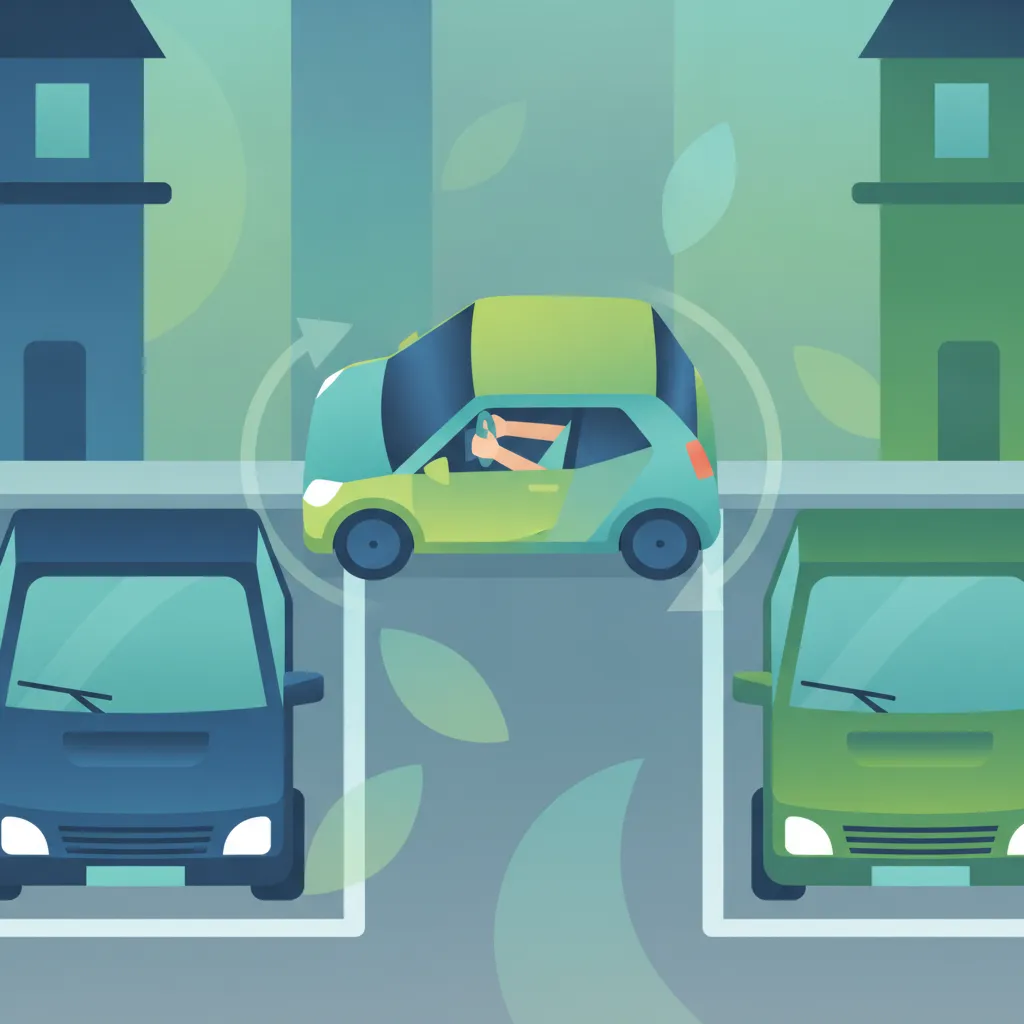
This lesson provides practical, step-by-step instructions for performing essential parking maneuvers. It breaks down the process of parallel parking and reverse (bay) parking into manageable steps, focusing on observation, steering control, and the use of reference points. The role of modern driver aids like parking sensors and reversing cameras is also discussed.
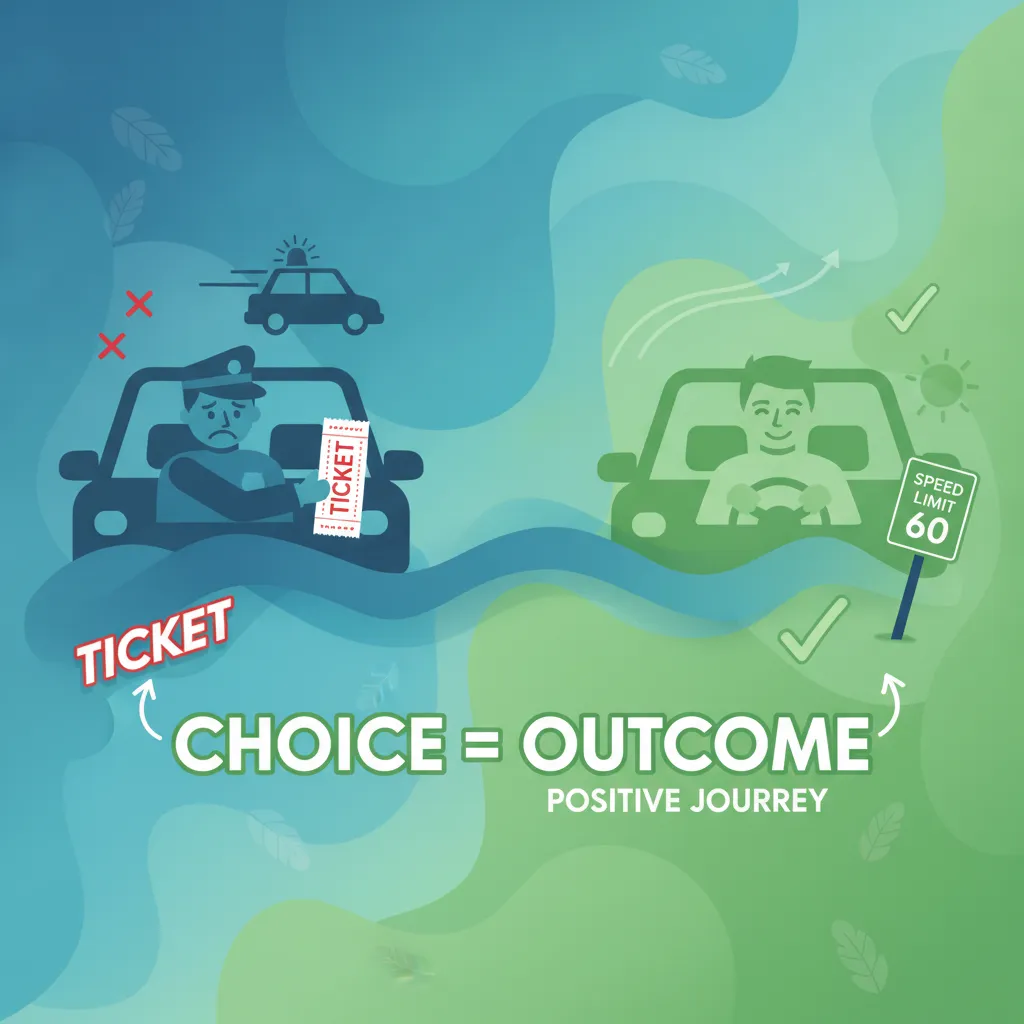
This lesson provides an overview of the German system for penalizing traffic offenses. It explains the catalogue of fines ('Bußgeldkatalog'), the system of demerit points ('Punkte in Flensburg') for more serious violations, and the conditions under which a temporary driving ban ('Fahrverbot') or a full revocation of the license can be imposed. Understanding these consequences reinforces the importance of lawful driving.
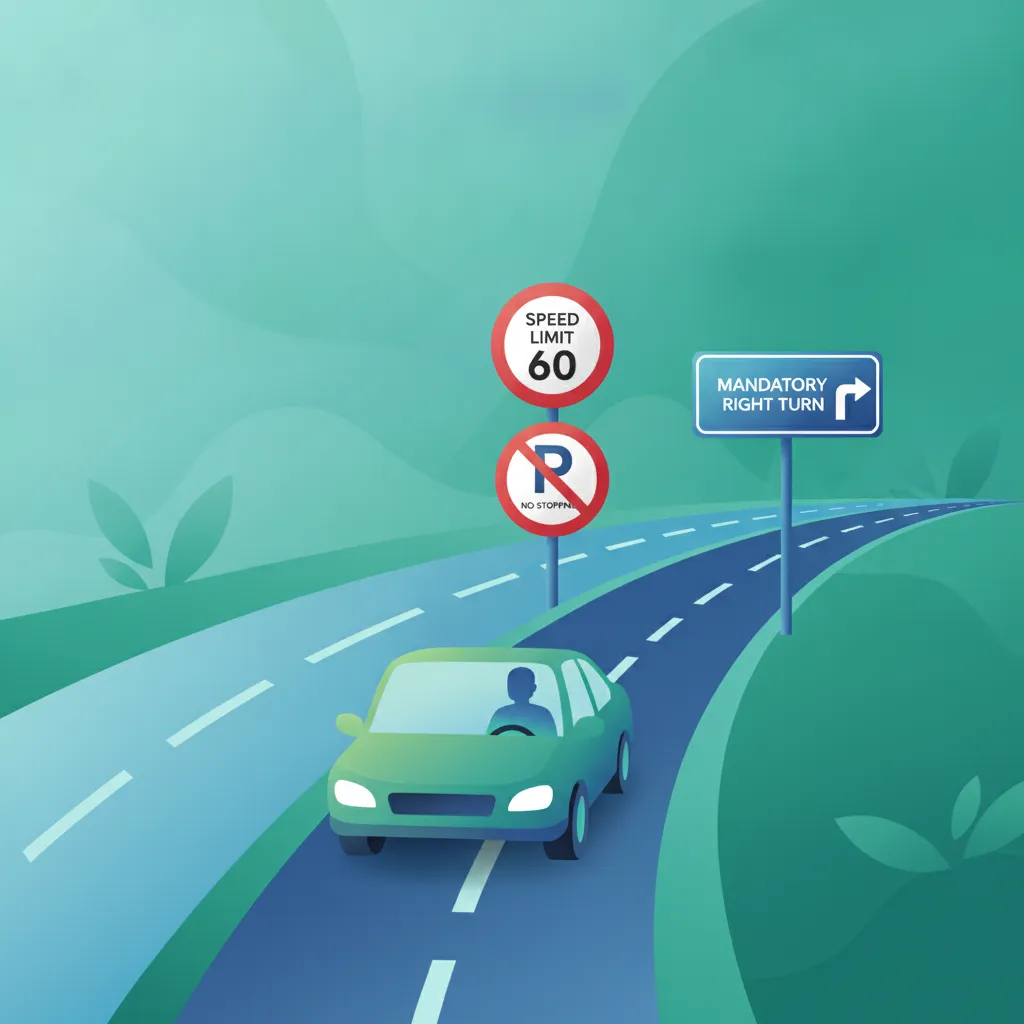
This lesson covers regulatory signs, which are legally enforceable and command specific actions from drivers. You will learn the meaning of critical signs such as the stop sign, yield sign, no-entry signs, and various parking and stopping prohibitions. The content also explains signs that establish speed limits, one-way streets, and restricted areas like environmental or pedestrian zones.
This lesson introduces the concept of defensive driving ('vorausschauendes Fahren'), a proactive approach focused on anticipating and mitigating potential risks. It teaches techniques for scanning the road ahead, identifying potential hazards early, and managing the space around your vehicle to create a safety buffer. The goal is to develop a mindset that prioritizes safety and collision avoidance above all else.

This lesson provides a complete guide to driving on the German Autobahn. It covers the correct procedure for entering and exiting via acceleration and deceleration lanes, the strict lane discipline rule of keeping right ('Rechtsfahrgebot'), and the principle of overtaking only on the left. It also explains the recommended speed limit and the critical procedure for forming an emergency corridor ('Rettungsgasse') in a traffic jam.

This lesson covers the rules and safety considerations for overtaking ('Überholen'). It explains where overtaking is prohibited and how to assess whether it is safe and necessary to do so. The procedure for checking traffic, signaling, moving out, passing, and safely returning to the lane is detailed, with a strong focus on judging the speed and distance of oncoming traffic.

This lesson focuses on the particular care required when driving near pedestrians, with a special emphasis on children and the elderly, whose behavior can be unpredictable. It covers the rules for yielding at zebra crossings and the importance of reducing speed near schools, playgrounds, and residential areas. The goal is to instill a habit of constant vigilance and readiness to stop.

This lesson provides an overview of the various types of bus stops, such as scheduled, request, and marked station stops. It explains the legal regulations governing stopping procedures, including how to interpret official signage and the importance of adhering to the route timetable. Learners will understand their obligations and the correct procedures for each type of stop to ensure legal compliance and efficient service.
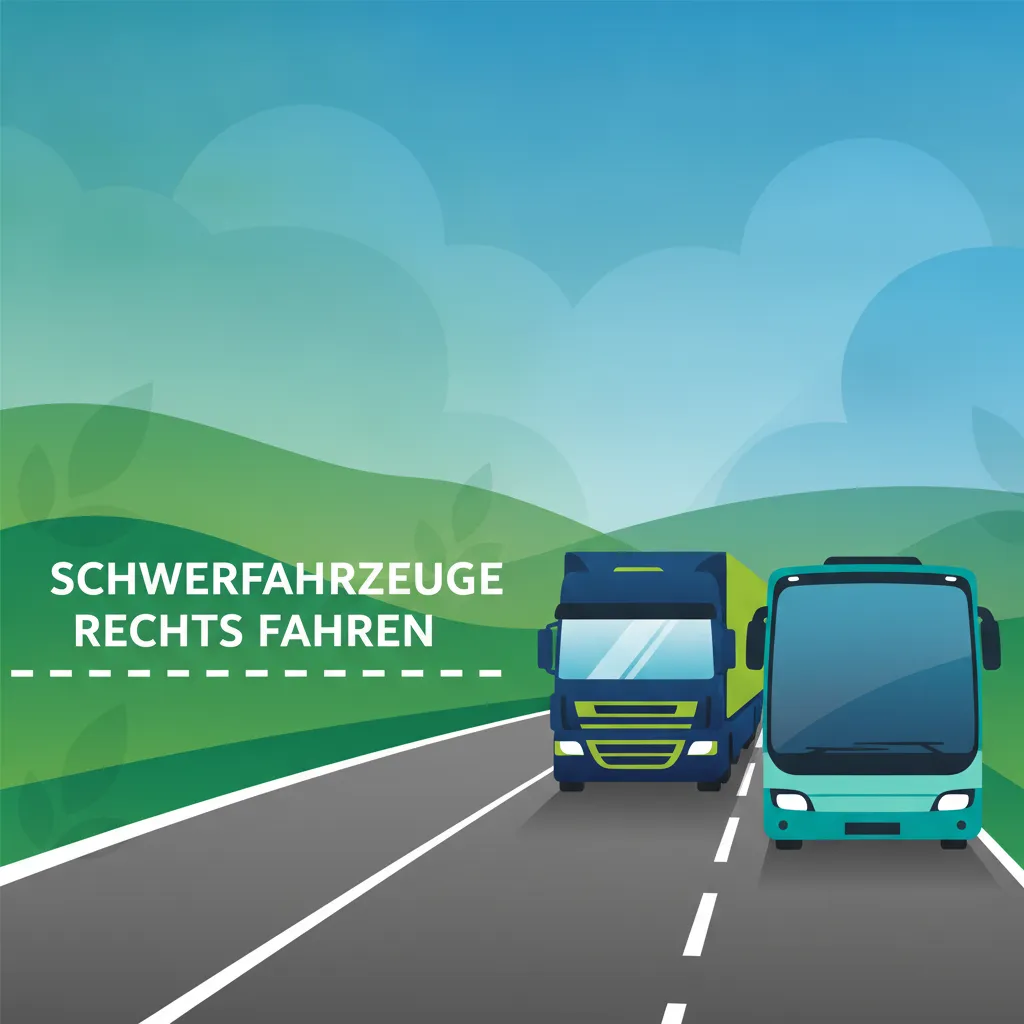
This lesson explains the specific regulations for operating heavy vehicles on Autobahnen, including speed limits, lane discipline, and overtaking rules. It discusses the use of dedicated truck lanes and the importance of maintaining appropriate following distances. The content also covers procedures for merging and exiting high-speed roads safely.

This lesson provides a step-by-step guide to executing turns safely at intersections and other locations. It details the full observation sequence (mirrors, signal, blind spot check) required before initiating a turn. The lesson covers correct lane positioning for both left and right turns and explains the rules for performing U-turns or three-point turns where permitted.
Learn the practical application of parking aids like the blue parking disc ('Parkscheibe') and understand the rules for various parking zones, including paid parking areas and residential zones. This lesson covers essential theory for everyday driving in Germany and exam preparation.
This lesson provides practical, step-by-step instructions for performing essential parking maneuvers. It breaks down the process of parallel parking and reverse (bay) parking into manageable steps, focusing on observation, steering control, and the use of reference points. The role of modern driver aids like parking sensors and reversing cameras is also discussed.
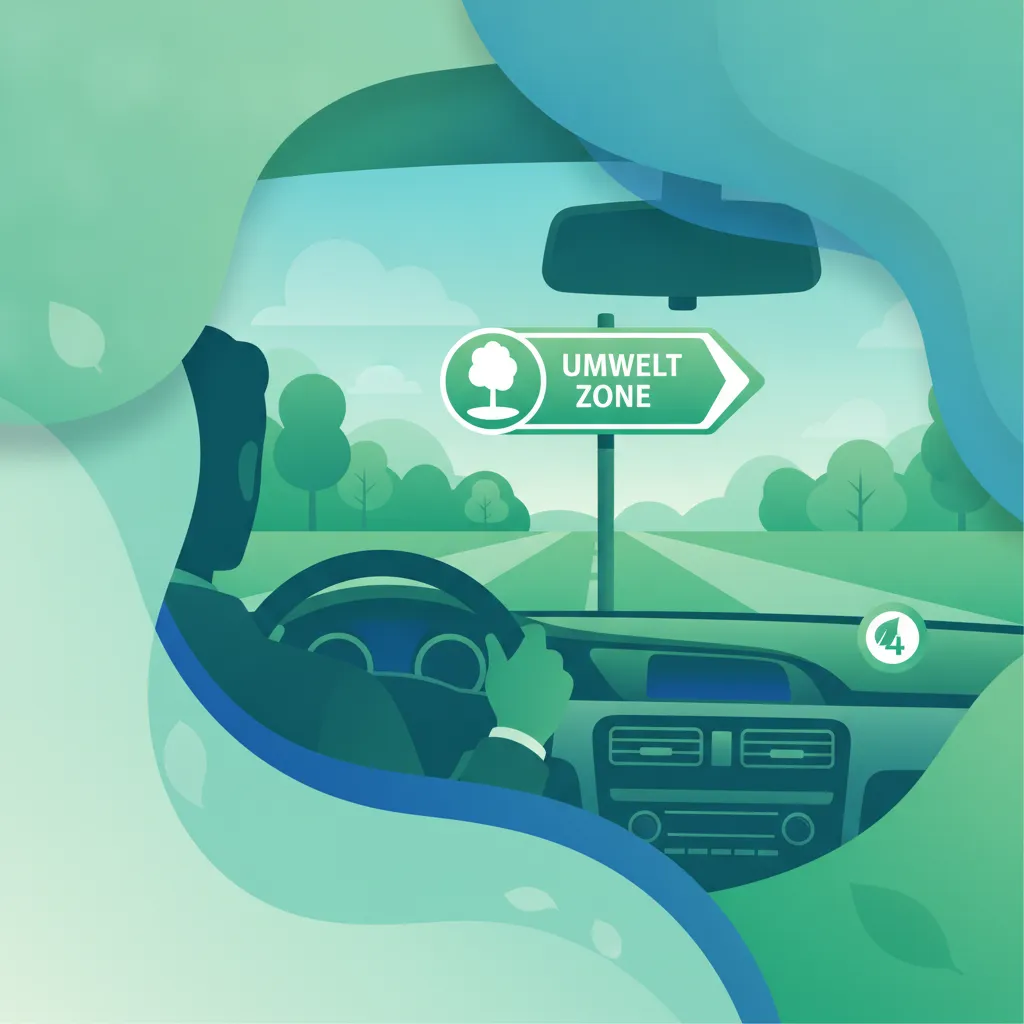
This lesson explains the system of low-emission zones ('Umweltzonen') established in many German cities to improve air quality. It details the different types of emissions stickers ('Feinstaubplakette') based on a vehicle's pollution standard. You will learn how to identify these zones and understand the legal requirement of displaying the correct sticker to be allowed entry.
This lesson covers regulatory signs, which are legally enforceable and command specific actions from drivers. You will learn the meaning of critical signs such as the stop sign, yield sign, no-entry signs, and various parking and stopping prohibitions. The content also explains signs that establish speed limits, one-way streets, and restricted areas like environmental or pedestrian zones.
This lesson provides an overview of the German system for penalizing traffic offenses. It explains the catalogue of fines ('Bußgeldkatalog'), the system of demerit points ('Punkte in Flensburg') for more serious violations, and the conditions under which a temporary driving ban ('Fahrverbot') or a full revocation of the license can be imposed. Understanding these consequences reinforces the importance of lawful driving.
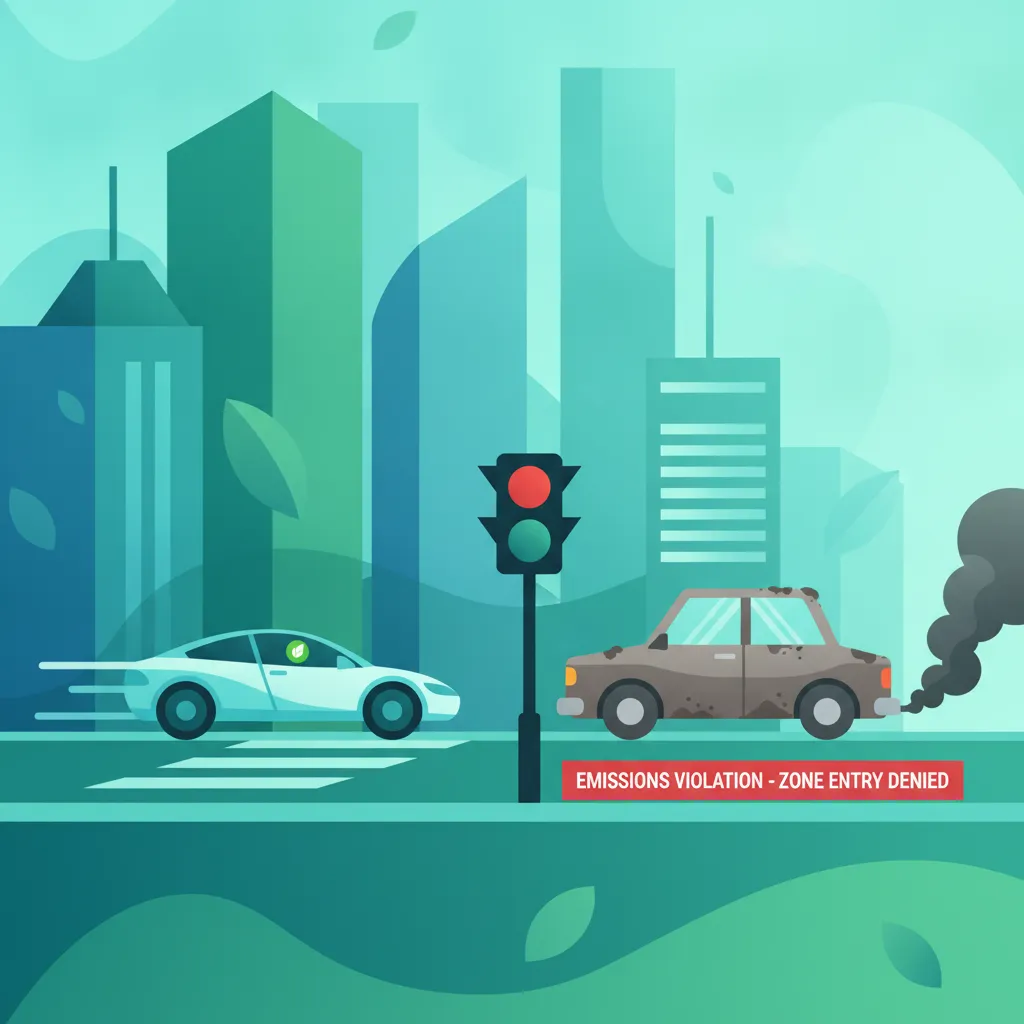
This lesson addresses the concept of environmental zones in German cities, explaining the requirements for emission stickers and the impact on heavy vehicles. It discusses the legal consequences of non-compliance, such as fines, and the importance of ensuring the vehicle meets emission standards. The content covers planning routes to avoid restricted zones if necessary.

This lesson explains the specific rules for driving in roundabouts ('Kreisverkehr'), a common feature on German roads. It covers the correct procedure for approaching and entering, the rule that traffic already in the circle has priority, and the requirement to signal before exiting. The lesson also addresses the unique characteristics of mini-roundabouts and how to interact with cyclists and pedestrians around them.

This lesson explains the various types of road markings and their significance for guiding traffic and ensuring safety. It covers the difference between solid and broken lines for lane separation and overtaking rules, the function of stop lines at intersections, and the markings for pedestrian crosswalks. You will also learn to interpret directional arrows, bicycle lane markings, and other symbols painted on the road.
This lesson explains the function of informational signs, which provide helpful guidance for navigation and services. You will learn how to read directional signs on all types of roads, including the Autobahn, and understand distance markers to upcoming cities and exits. The lesson also covers the symbols for services such as fuel stations, restaurants, and tourist attractions.
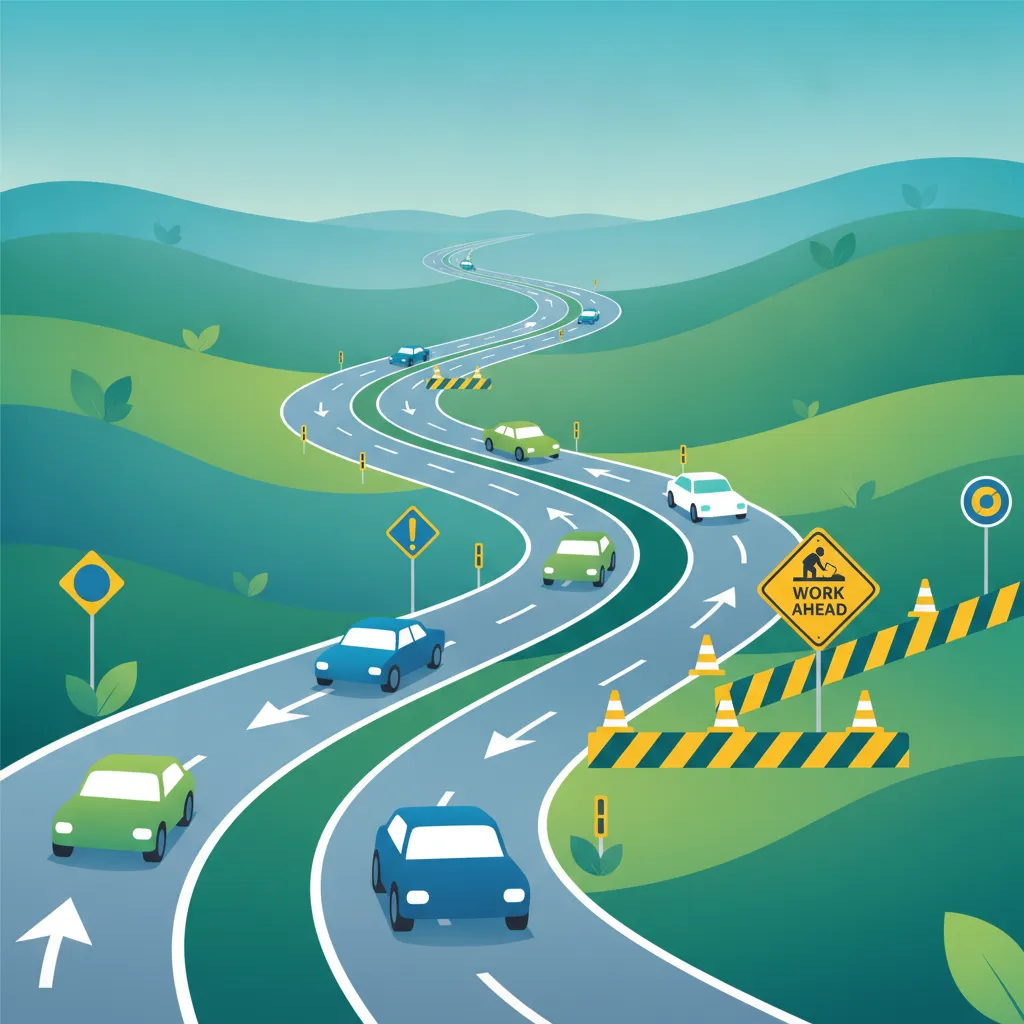
This lesson focuses on interpreting various road markings, from lane lines and directional arrows to stop lines and pedestrian crossings. It explains the rules associated with solid versus broken lines and how to navigate temporary markings found in construction zones. Correctly reading these markings is vital for proper lane discipline and safety.
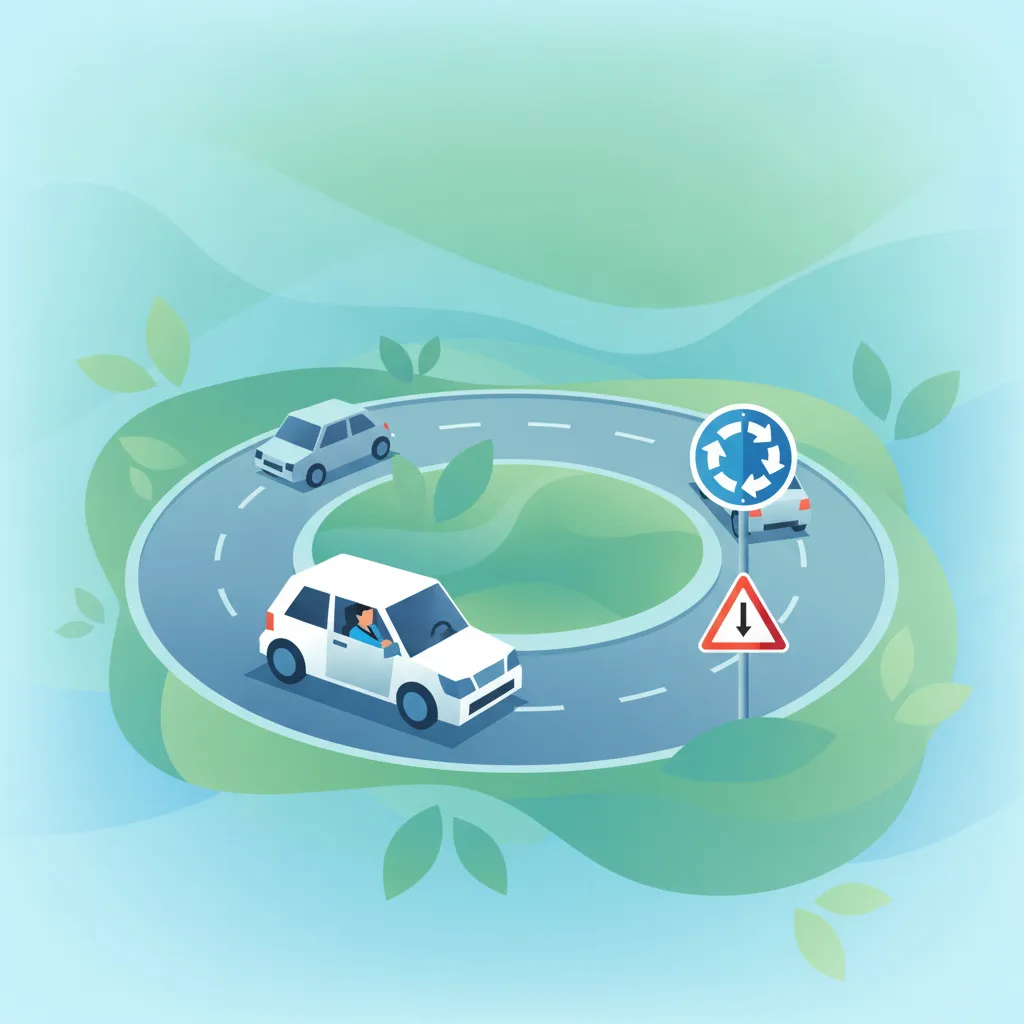
This lesson provides clear instructions on how to navigate roundabouts in Germany. It explains the crucial rule of yielding to traffic already inside the circle, proper lane choice for your intended exit, and the correct use of signals. Safe interaction with cyclists and pedestrians at roundabout exits is also covered.
Find clear answers to common questions learners have about Stopping and Parking Regulations. Learn how the lesson is structured, which driving theory objectives it supports, and how it fits into the overall learning path of units and curriculum progression in Germany. These explanations help you understand key concepts, lesson flow, and exam focused study goals.
In German traffic law, you are stopping if you remain stationary voluntarily for less than three minutes or for loading and unloading, regardless of time. If you leave the vehicle or stay for longer than three minutes, it is legally considered parking.
Stopping is prohibited in areas like narrow roads, near sharp curves, at pedestrian crossings, on clearways, and within five meters of intersections or designated cycle crossings to ensure safety and visibility for all road users.
You must set the arrow on the disc to the next half-hour mark following your arrival time. Ensure the disc is clearly visible through the windscreen and does not exceed the maximum allowed parking time displayed on the accompanying traffic sign.
No. Taxi stands are reserved exclusively for taxis. Stopping or parking there is prohibited as it obstructs public transport services and will likely result in a fine or your vehicle being towed.
Begin your targeted revision now. Use our practice search to quickly find specific German driving theory questions. Filter by StVO rules, road signs, or hazard perception to create your focused study plan. Master challenging areas and prepare confidently for your theoretical driving test.