
This lesson focuses on the critical skill of positioning your passenger vehicle correctly at bus stops. You will learn how to align your vehicle to ensure safe boarding and alighting while maintaining compliance with German traffic regulations. This knowledge is essential for professional passenger transport and frequently appears in the theoretical exam for categories D1, D1E, D, and DE.

Lesson content overview
For professional drivers operating passenger vehicles under German licence categories D1, D1E, D, and DE, mastering the art of correct positioning at designated stops is more than just a skill; it is a fundamental pillar of passenger safety, vehicle integrity, and efficient traffic flow. This lesson delves into the precise techniques required to position a bus or coach accurately at a bus stop, highlighting how meticulous placement protects passengers, other road users, and the vehicle itself, while adhering to strict German traffic regulations.
Proper positioning prevents accidents with pedestrians, cyclists, and other road users, ensures safe and accessible boarding and alighting for all passengers, and contributes significantly to maintaining the smooth flow of urban traffic. A professional driver's responsibility extends beyond simply stopping; it encompasses a comprehensive understanding of the spatial dynamics and safety protocols involved in every stop.
Every stop made by a professional passenger vehicle must adhere to several core principles. These are not merely suggestions but mandatory guidelines designed to mitigate risks and enhance operational efficiency. Understanding these fundamentals forms the basis of safe and legally compliant stopping procedures.
The main objective is to precisely align the passenger vehicle with the designated bus stop’s curb or marked zone. This involves careful consideration of the lateral distance to the curb, adequate side clearance for opening doors, and ensuring the door opening area (the "door zone") remains free from hazards. This meticulous approach ensures safe boarding and alighting, minimises disruption to surrounding traffic, and complies with legal requirements for passenger transport.
The lateral gap between your vehicle’s outermost edge (typically the tires or side mirror) and the curb or edge of the bus stop is known as the curb distance. Maintaining a safe curb distance is crucial for preventing vehicle damage, particularly to tires and rims, and for providing adequate space for passengers, especially those with mobility aids, to board and alight safely. An unsafe proximity to the curb, such as touching or driving over it, can lead to damage and may impede passenger movement or the deployment of accessibility ramps. A minimal safe distance, typically between 10-15 cm, is generally considered appropriate.
Unsafe Proximity: Believing that stopping directly against the curb is acceptable is a common misunderstanding. While it might seem efficient, it can cause wheel damage, potentially trap passengers' feet, or prevent the smooth operation of accessibility features. Always aim for a small, consistent gap.
The door zone is the area into which your vehicle's doors open. This zone must be completely free from moving traffic, parked vehicles, fixed obstacles, pedestrians, and cyclists before any door is opened. Failing to ensure a clear door zone poses significant risks, potentially leading to severe injuries for passengers, pedestrians, or cyclists who might be passing by. Drivers must always perform thorough checks using mirrors and direct observation, especially for vulnerable road users such as cyclists approaching from behind.
The specific area immediately adjacent to a vehicle into which its doors open. This zone must be checked for hazards and cleared before any door is opened to allow passengers to board or alight safely.
Cyclist Awareness: Be especially vigilant for cyclists. They often travel close to stopped vehicles and may not anticipate a sudden door opening. Always check your blind spots and external mirrors meticulously before operating doors.
The stop line is the designated transverse line painted on the road at which a vehicle must stop at a designated bus stop. Precise adherence to this line ensures that passengers are discharged and picked up at the intended location, aligning with the stop's infrastructure (e.g., shelters, raised platforms) and preventing any obstruction to traffic flow. Overshooting the stop line can misalign the vehicle with the boarding area, making it difficult or unsafe for passengers, while stopping too far behind it can cause unnecessary delays and confusion.
Drifting Past the Line: Allowing the vehicle to drift beyond the stop line, even slightly, can compromise passenger accessibility and interfere with other road users' expectations. Always aim for an exact stop.
The approach speed is the speed at which a vehicle approaches a bus stop. A controlled and significantly reduced approach speed is fundamental for precise positioning and for making necessary safety checks. Approaching a stop at an excessive speed not only increases the stopping distance but also severely limits the driver's ability to adjust positioning accurately, react to unexpected hazards, or ensure a smooth, comfortable stop for passengers.
Begin reducing speed well in advance of the stop, gradually and smoothly.
Utilise engine braking where appropriate to maintain control without harsh deceleration.
Monitor mirrors constantly for following traffic and potential hazards.
Aim for a slow, manageable speed (e.g., 5-10 km/h) as you enter the final positioning phase.
After passengers have boarded or alighted, the process of safely merging back into traffic is known as traffic flow re-entry. This maneuver must be executed smoothly and without causing other road users to brake unnecessarily or alter their course. Abrupt or unobserved re-entry can lead to rear-end collisions or other incidents, disrupting the overall traffic flow and compromising safety. Professional drivers must perform thorough checks of mirrors and blind spots, signal their intention clearly, and only proceed when it is safe to do so.
In Germany, specific regulations govern how professional passenger vehicles operate at bus stops, enshrined within the Straßenverkehrs-Ordnung (StVO) and other relevant legal texts. Adherence to these rules is mandatory and ensures the safety and efficiency of public transport.
The vehicle must stop as close as practicable to the designated stop line without crossing it.
The vehicle must maintain a safe lateral distance from the curb, typically at least 10 cm, to allow for passenger movement and prevent vehicle damage.
Vehicle doors must not open into moving traffic, other hazards, or block pedestrian paths without ensuring safety.
The vehicle must approach the stop at a reduced and controlled speed to allow for accurate positioning and safe stopping.
After passengers have alighted or boarded, the vehicle must re-enter traffic only when it is safe to do so, without impeding or endangering other road users.
Even experienced professional drivers can sometimes fall prey to common errors or face challenging scenarios at bus stops. Awareness of these situations is key to avoiding violations and maintaining a high standard of safety.
The ideal stopping procedure can vary significantly based on environmental and operational conditions. Professional drivers must be adept at adapting their techniques to maintain safety and efficiency in all circumstances.
Every action a driver takes when positioning their vehicle has a direct and measurable effect. Understanding these cause-and-effect relationships reinforces the importance of meticulous adherence to proper stopping procedures.
For professional drivers, the principles discussed in this lesson are intrinsically linked to broader aspects of their training and daily operations.
To illustrate the practical application of these principles, consider the following scenarios:
Scenario 1: Quiet Residential Street Stop
Scenario 2: Busy City Centre Stop with Cyclist Lane
Mastering correct positioning for stops is a hallmark of professional passenger vehicle driving. It demands precision, constant vigilance, and a deep understanding of safety principles and German traffic regulations.
By consistently applying these best practices, professional passenger vehicle drivers enhance passenger safety, ensure accessibility, prevent vehicle damage, and contribute positively to the overall efficiency and safety of German road traffic.
Correct positioning at bus stops is a fundamental skill for professional passenger vehicle drivers under German traffic regulations. The key requirements are: stopping precisely at the designated stop line, maintaining a safe curb distance of 10-15 cm, reducing approach speed well in advance to around 5-10 km/h, ensuring the door zone is completely clear before opening doors, and merging back into traffic smoothly after passenger exchange. These procedures protect passengers, vulnerable road users, and other traffic while ensuring compliance with StVO and efficient public transport operations.
A short set of high-value points that capture the most important learning from this lesson.
The vehicle must stop precisely at the designated stop line without crossing it to align correctly with boarding infrastructure.
A consistent lateral gap of 10-15 cm from the curb is mandatory to prevent vehicle damage and ensure safe passenger movement, especially for mobility aids.
The door zone must be completely clear of all hazards—including cyclists, pedestrians, and traffic—before any doors are opened.
Approach speed must be reduced significantly in advance (aiming for 5-10 km/h) to achieve accurate positioning and safe stopping.
Traffic re-entry after passenger exchange must be smooth and only executed after confirming a safe gap using mirrors, blind spot checks, and proper signalling.
Explore all units and lessons included in this driving theory course.
Curb distance: maintain 10-15 cm gap; stopping directly against the curb is unsafe and can damage tires and block accessibility ramps.
Door zone safety is mandatory under StVO—doors must never open into moving traffic, cyclists, pedestrians, or other hazards.
Approach speed should be reduced gradually and smoothly well before the stop, using engine braking for control.
The stop line is the legal reference point for positioning; overshooting or stopping too far behind misaligns the vehicle with the boarding area.
Vulnerable road users (cyclists, children, persons with reduced mobility) require heightened vigilance when checking mirrors and blind spots before door operation.
Stopping too close to or directly against the curb, which risks tyre damage, rim scratches, and impedes accessibility ramp deployment.
Opening doors without thoroughly checking the door zone, creating serious injury risks for passengers, cyclists, or pedestrians.
Failing to stop at the designated stop line, causing misalignment with boarding areas and potential obstruction of pedestrian crossings.
Re-entering traffic abruptly without proper mirror checks and signalling, forcing following vehicles to brake suddenly.
Approaching the stop at excessive speed, resulting in overshooting the stop line, harsh braking, and discomfort for passengers.
Lesson content overview
A short set of high-value points that capture the most important learning from this lesson.
The vehicle must stop precisely at the designated stop line without crossing it to align correctly with boarding infrastructure.
A consistent lateral gap of 10-15 cm from the curb is mandatory to prevent vehicle damage and ensure safe passenger movement, especially for mobility aids.
The door zone must be completely clear of all hazards—including cyclists, pedestrians, and traffic—before any doors are opened.
Approach speed must be reduced significantly in advance (aiming for 5-10 km/h) to achieve accurate positioning and safe stopping.
Traffic re-entry after passenger exchange must be smooth and only executed after confirming a safe gap using mirrors, blind spot checks, and proper signalling.
Explore all units and lessons included in this driving theory course.
Curb distance: maintain 10-15 cm gap; stopping directly against the curb is unsafe and can damage tires and block accessibility ramps.
Door zone safety is mandatory under StVO—doors must never open into moving traffic, cyclists, pedestrians, or other hazards.
Approach speed should be reduced gradually and smoothly well before the stop, using engine braking for control.
The stop line is the legal reference point for positioning; overshooting or stopping too far behind misaligns the vehicle with the boarding area.
Vulnerable road users (cyclists, children, persons with reduced mobility) require heightened vigilance when checking mirrors and blind spots before door operation.
Stopping too close to or directly against the curb, which risks tyre damage, rim scratches, and impedes accessibility ramp deployment.
Opening doors without thoroughly checking the door zone, creating serious injury risks for passengers, cyclists, or pedestrians.
Failing to stop at the designated stop line, causing misalignment with boarding areas and potential obstruction of pedestrian crossings.
Re-entering traffic abruptly without proper mirror checks and signalling, forcing following vehicles to brake suddenly.
Approaching the stop at excessive speed, resulting in overshooting the stop line, harsh braking, and discomfort for passengers.
Explore search topics learners often look for when studying Correct Positioning for Stops. These topics reflect common questions about road rules, driving situations, safety guidance, and lesson level theory preparation for learners in Germany.
Browse additional driving theory lessons that cover connected traffic rules, road signs, and common driving situations related to this topic. Improve your understanding of how different rules interact across everyday traffic scenarios.
Explore advanced strategies for positioning passenger vehicles at bus stops according to German driving theory (StVO). This lesson covers complex scenarios, ensuring passenger safety, managing traffic flow, and creating secure boarding zones, crucial for D and DE license holders.
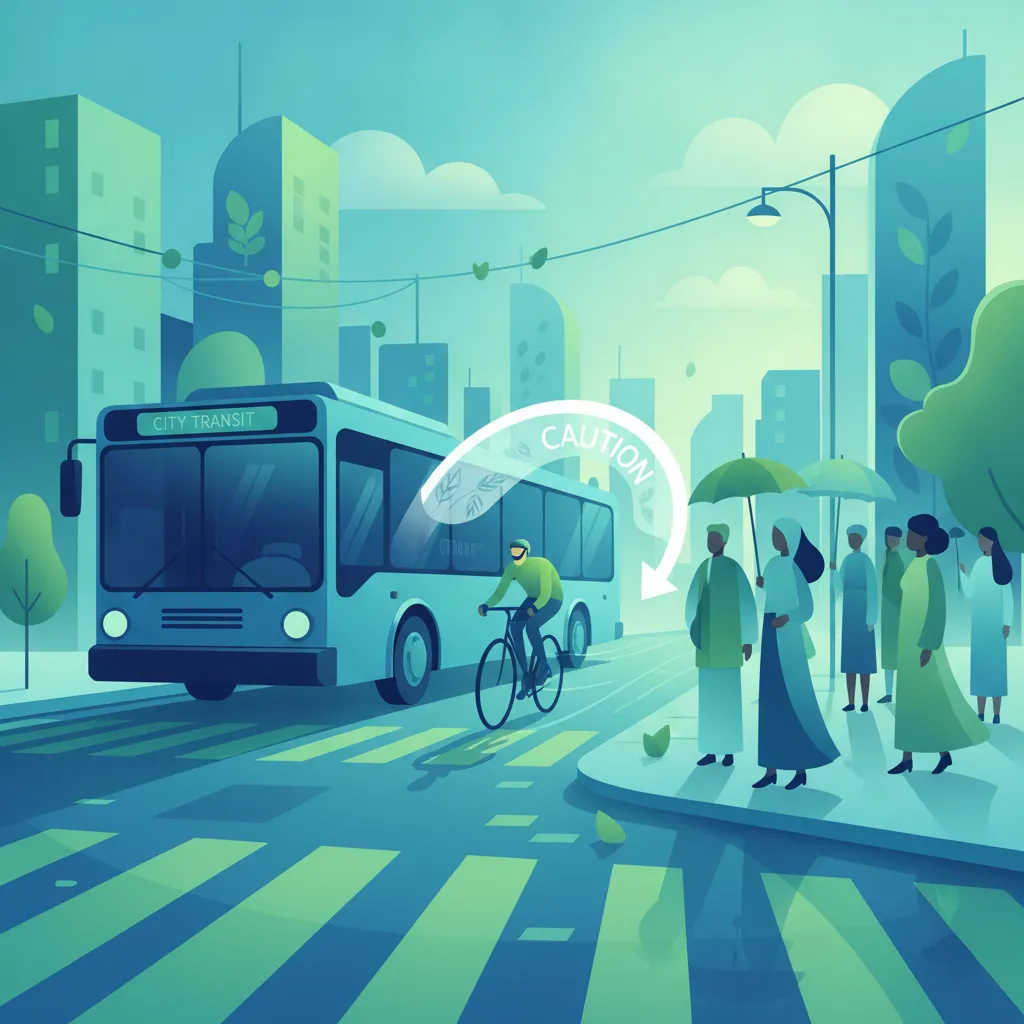
This lesson focuses on the critical moments of interaction with pedestrians and cyclists near bus stops, a common location for accidents. It reinforces the importance of reducing speed, yielding right-of-way, and constantly monitoring blind spots during the stopping process. Learners will practice techniques like making eye contact and using signals to communicate intentions, creating a safer environment for everyone around the vehicle.

This lesson provides an overview of the various types of bus stops, such as scheduled, request, and marked station stops. It explains the legal regulations governing stopping procedures, including how to interpret official signage and the importance of adhering to the route timetable. Learners will understand their obligations and the correct procedures for each type of stop to ensure legal compliance and efficient service.

This lesson focuses on the particular care required when driving near pedestrians, with a special emphasis on children and the elderly, whose behavior can be unpredictable. It covers the rules for yielding at zebra crossings and the importance of reducing speed near schools, playgrounds, and residential areas. The goal is to instill a habit of constant vigilance and readiness to stop.
This lesson provides instruction on the rules and best practices for operating a large passenger vehicle on the Autobahn. It covers the principles of strict lane discipline, regulations for minimum speed, and correct procedures for overtaking and merging. The importance of maintaining significantly increased following distances at high speeds and planning for exits well in advance is a key focus.

This lesson covers the crucial skills of managing speed and maintaining a safe buffer from other vehicles. It teaches methods for calculating an appropriate following distance, such as the time-gap method, which adapts to different speeds and conditions. Learners will understand how to adjust their speed based on traffic flow, road surface, and weather to ensure they always have enough time and space to stop safely.
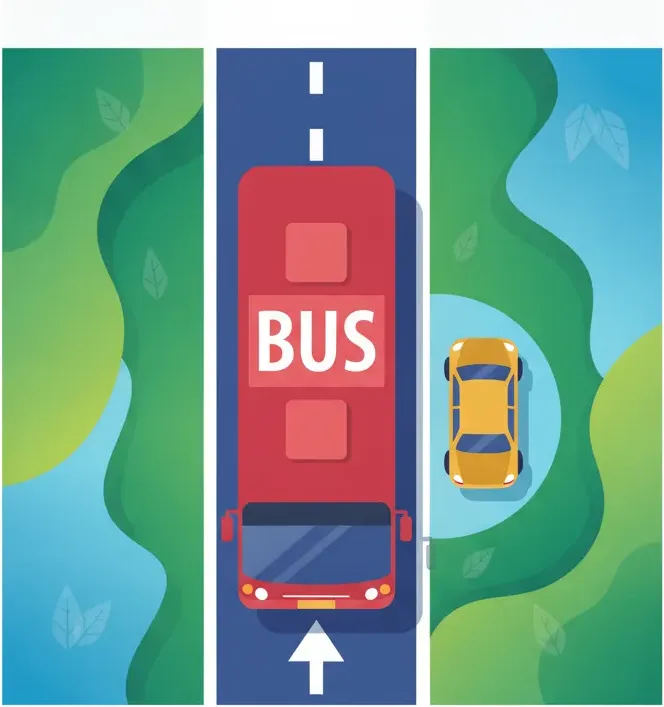
This lesson provides a detailed explanation of the rules governing dedicated bus lanes, including how to interpret markings and adhere to time-based restrictions. It clarifies the priority rules that grant buses precedence in certain traffic situations, such as when pulling out from a stop. Understanding these regulations allows drivers to use bus infrastructure efficiently and legally to maintain schedules and improve traffic flow.
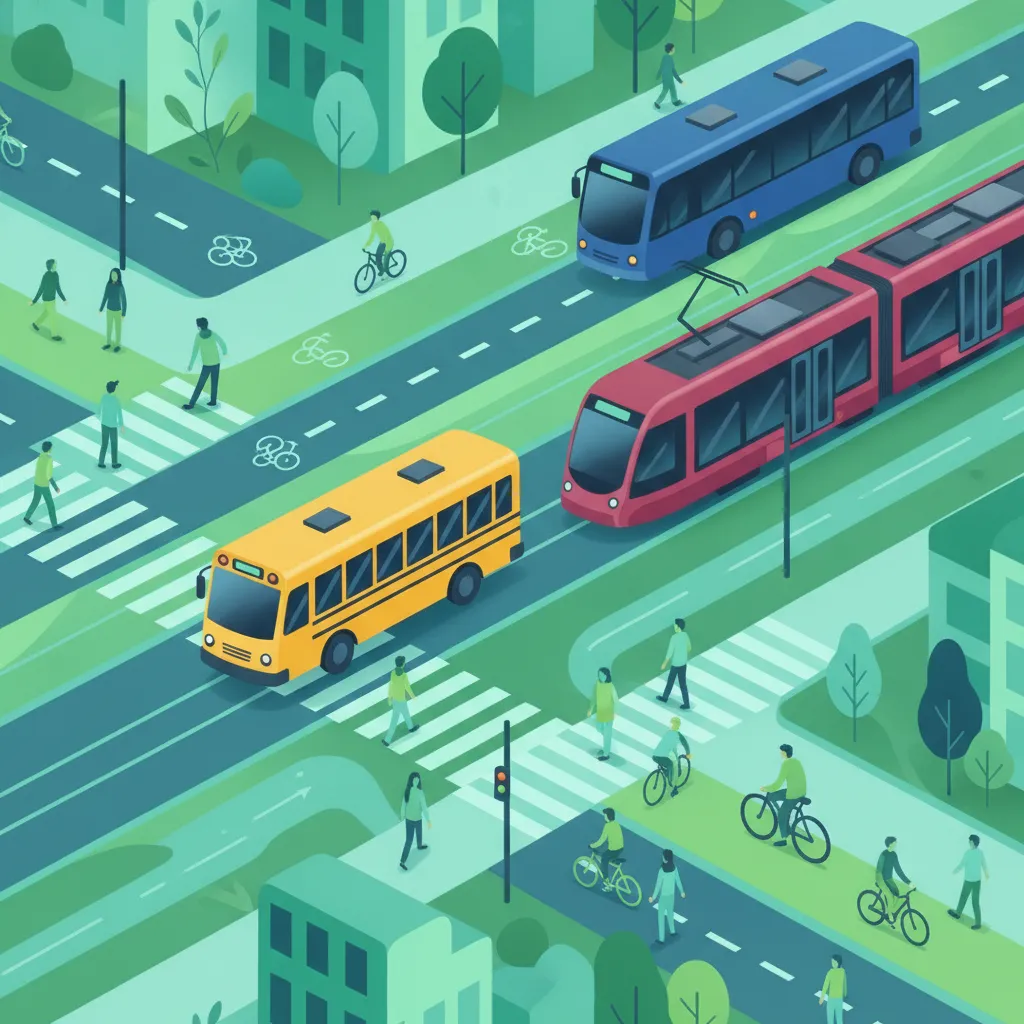
This lesson explains the specific regulations when encountering public transport. It covers the legal requirement to yield to public buses signaling to leave a bus stop and the strict rules for passing school buses with flashing hazard lights. You will also learn about the absolute priority of trams ('Straßenbahn') and how to safely drive on or across their tracks.
This lesson focuses on complex traffic environments where different types of road users share the same space. It provides guidance on situations like driving on streets with integrated tram tracks or where bus and bicycle lanes are part of the roadway. The content emphasizes understanding the specific priority rules and being extra vigilant to anticipate potential conflicts in these busy, shared zones.
This lesson familiarizes drivers with the various special traffic signals and signs that apply exclusively to buses and other public transport vehicles. It covers the interpretation of bus-only signals (often showing bars or letters), flashing priority indicators, and lane-use control signs. Correctly understanding these signals is crucial for legal compliance and for taking advantage of public transport priority measures in urban areas.
This lesson teaches drivers how to identify and assess stop locations that present elevated risks, such as those in dense residential areas, near schools, or with limited visibility. It provides strategies for mitigating these risks through careful vehicle positioning and heightened situational awareness. The goal is to ensure that passenger exchanges can be conducted safely even when the surrounding environment is challenging and unpredictable.
Learn about ensuring passenger safety and managing interactions with vulnerable road users, such as pedestrians and cyclists, when stopping passenger vehicles in busy urban German traffic. This covers specific hazards and safe positioning around bus stops and alighting areas.
This lesson focuses on the critical moments of interaction with pedestrians and cyclists near bus stops, a common location for accidents. It reinforces the importance of reducing speed, yielding right-of-way, and constantly monitoring blind spots during the stopping process. Learners will practice techniques like making eye contact and using signals to communicate intentions, creating a safer environment for everyone around the vehicle.
This lesson teaches riders how to interact safely and predictably with pedestrians, cyclists, and public transport vehicles. It highlights the importance of yielding at designated crossings, maintaining a safe passing distance, and anticipating the movements of buses and trams. The content emphasizes using eye contact and clear signaling to foster safe and respectful interactions with all road users.

This lesson focuses on identifying road users who require special attention and caution, such as children, the elderly, and individuals with disabilities. It details the appropriate behavior when encountering school buses and public transport, which often involve unpredictable pedestrian movement. A critical topic covered is the legal requirement to form an emergency corridor ('Rettungsgasse') for responding emergency vehicles.
This lesson focuses on complex traffic environments where different types of road users share the same space. It provides guidance on situations like driving on streets with integrated tram tracks or where bus and bicycle lanes are part of the roadway. The content emphasizes understanding the specific priority rules and being extra vigilant to anticipate potential conflicts in these busy, shared zones.

This lesson trains drivers to proactively identify vulnerable road users and anticipate their often unpredictable behavior. It highlights the specific risks posed by children, elderly pedestrians, cyclists, and e-scooter users, particularly near bus stops and crossings. The goal is to develop a heightened sense of risk perception and apply defensive driving techniques to protect those who are most at risk on the road.
This lesson focuses on the particular care required when driving near pedestrians, with a special emphasis on children and the elderly, whose behavior can be unpredictable. It covers the rules for yielding at zebra crossings and the importance of reducing speed near schools, playgrounds, and residential areas. The goal is to instill a habit of constant vigilance and readiness to stop.
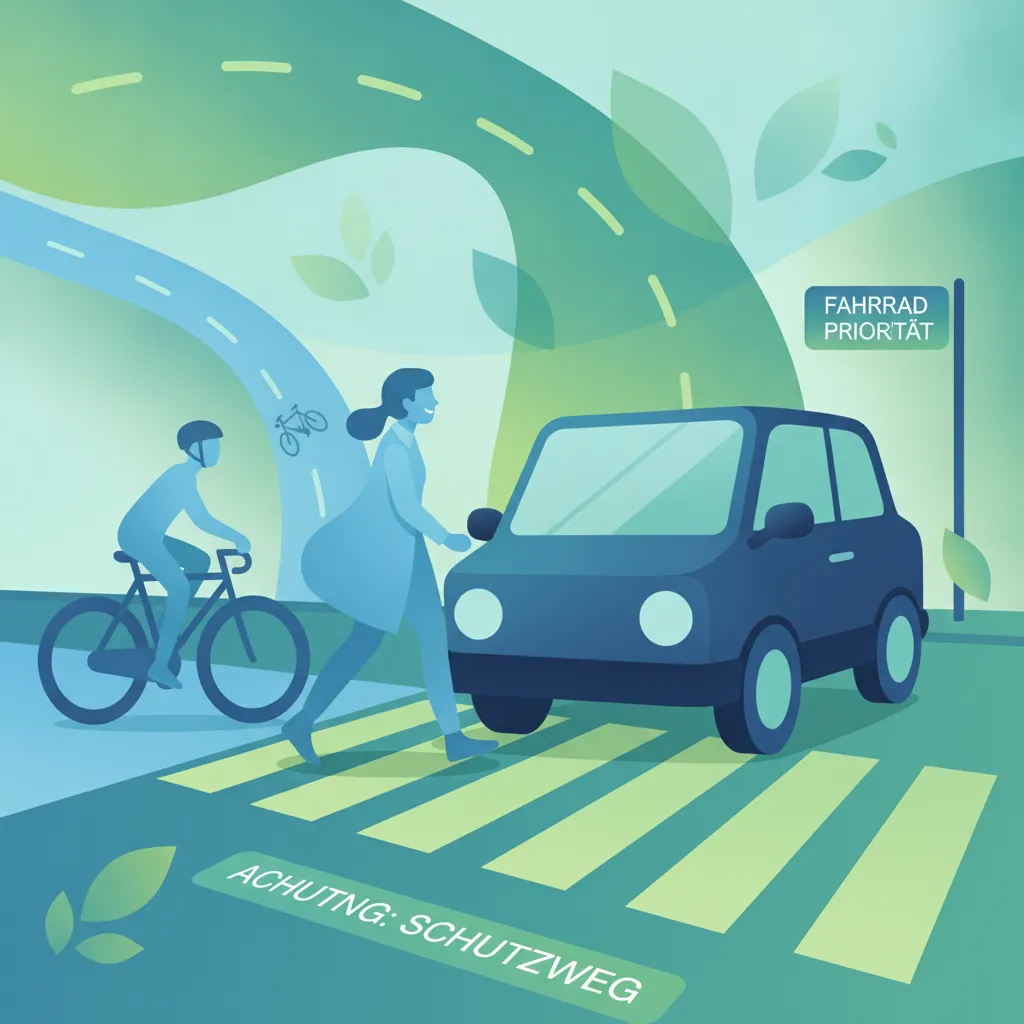
This lesson provides specific guidance on how to safely share the road with pedestrians and cyclists, who are among the most vulnerable road users. It covers the rules of conduct at zebra crossings, traffic lights for pedestrians, and designated cycle lanes. The content emphasizes the importance of vigilance, yielding right-of-way, and maintaining a safe distance to prevent accidents in urban and rural environments.
This lesson teaches drivers how to identify and assess stop locations that present elevated risks, such as those in dense residential areas, near schools, or with limited visibility. It provides strategies for mitigating these risks through careful vehicle positioning and heightened situational awareness. The goal is to ensure that passenger exchanges can be conducted safely even when the surrounding environment is challenging and unpredictable.
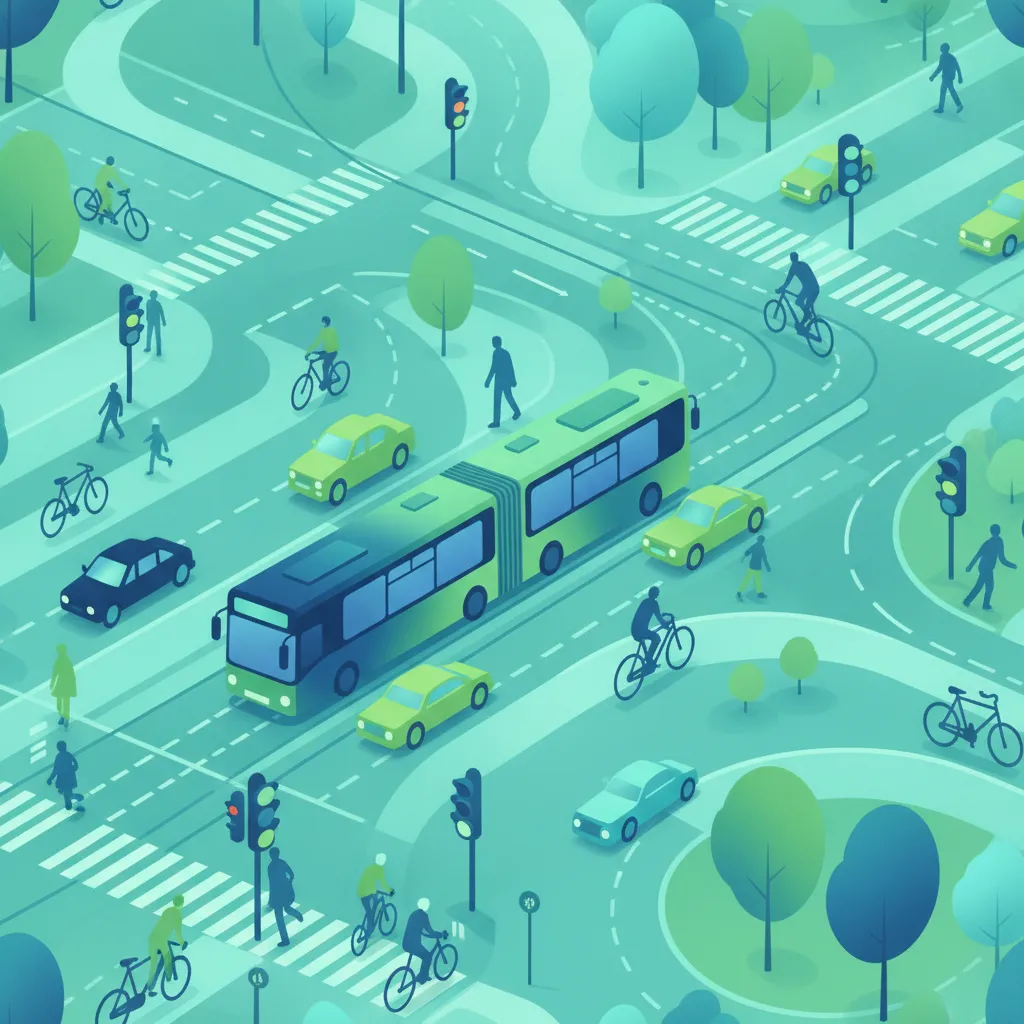
This lesson explores the complex and fast-paced nature of urban traffic environments. It covers topics such as high traffic density, frequent pedestrian crossings, and complex intersections that require heightened awareness. Learners will develop strategies for adapting their speed and lane positioning to navigate these challenges safely, especially during peak rush hour periods and in areas with traffic calming measures.
Find clear answers to common questions learners have about Correct Positioning for Stops. Learn how the lesson is structured, which driving theory objectives it supports, and how it fits into the overall learning path of units and curriculum progression in Germany. These explanations help you understand key concepts, lesson flow, and exam focused study goals.
You should aim for a position that allows the vehicle to be as close to the curb as possible without risking damage to the tires or wheels, ensuring that the boarding distance is minimal for passengers, especially those using wheelchairs or prams.
The theory exam tests your understanding of passenger safety and traffic disruption. Incorrect positioning can lead to accidents with cyclists or create unsafe gaps for passengers to cross, which are common error points in exam scenarios.
You must prioritize passenger safety. If you cannot safely position the vehicle at the designated stop, you should approach with extreme caution, notify passengers, and ensure a safe alighting area is available before opening the doors, staying alert for surrounding traffic.
Yes, absolutely. Opening doors in an unsafe position, such as too far from the curb or near an active cycle lane, poses a significant risk to passengers and other road users. Correct positioning is the first step in safe door operation.
Begin your targeted revision now. Use our practice search to quickly find specific German driving theory questions. Filter by StVO rules, road signs, or hazard perception to create your focused study plan. Master challenging areas and prepare confidently for your theoretical driving test.