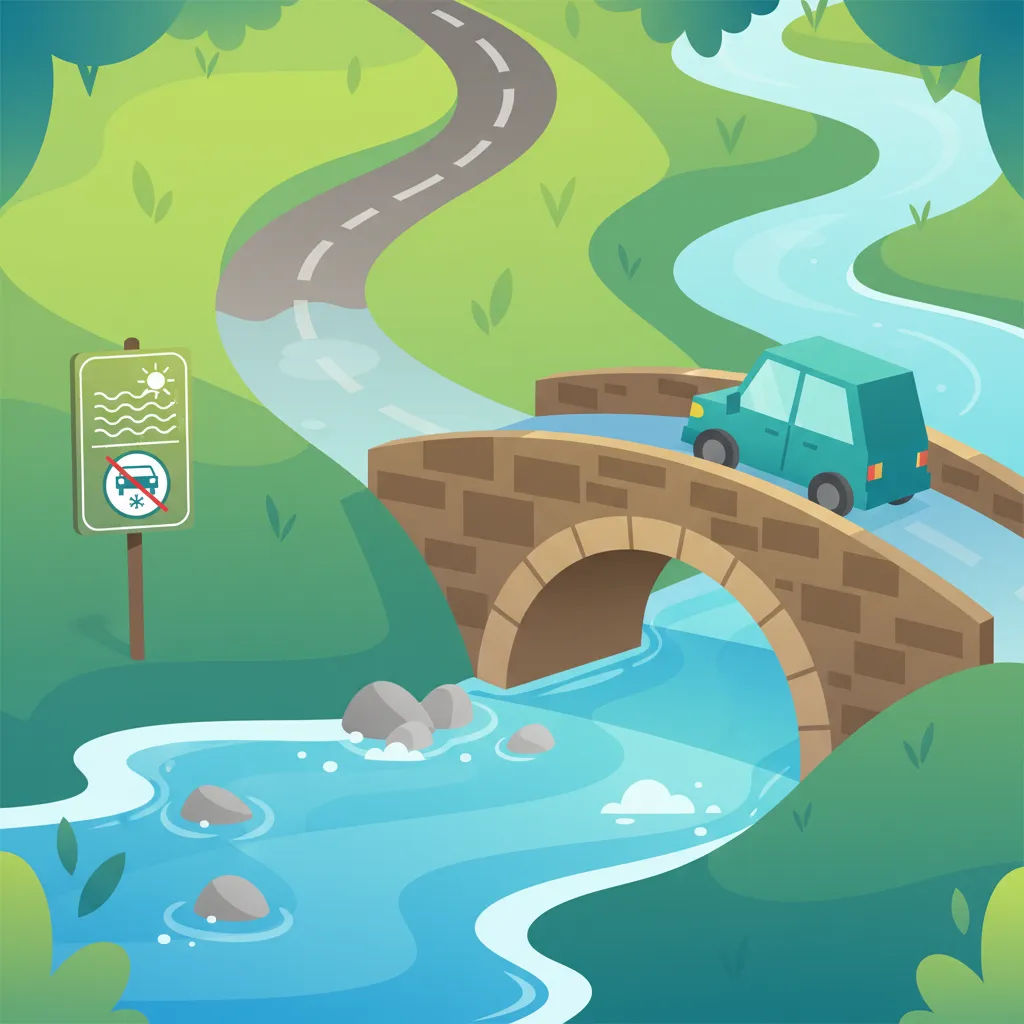
This lesson provides essential training on navigating unique Icelandic road features, such as single-lane bridges and water fords. You will learn the correct priority rules, safety assessments for water depth, and how to interpret seasonal signage to ensure safe passage in rural and highland areas.
Lesson content overview
Driving in Iceland presents unique challenges, particularly when traversing its diverse landscapes that include numerous single-lane bridges and natural water fords. This lesson provides essential knowledge and procedures for safely navigating these features, understanding vehicle limitations, and complying with specific Icelandic regulations, including seasonal restrictions and highland travel permits. Mastering these aspects is crucial for both safety and legal compliance within the Official Icelandic Driving License B Theory Course.
Single-lane bridges are a common sight on Icelandic rural routes, especially in areas with rugged terrain or numerous rivers. These bridges are designed to accommodate only one vehicle at a time, creating potential head-on conflicts if drivers from opposite directions attempt to cross simultaneously. Understanding the correct right-of-way rules is paramount to prevent collisions and ensure smooth traffic flow.
The fundamental rule for single-lane bridges is that the vehicle already on the bridge has priority. If you are approaching a single-lane bridge and another vehicle has already started crossing from the opposite direction, you must yield. This means slowing down and stopping before the bridge entrance, allowing the oncoming vehicle to complete its passage.
In situations where two vehicles approach a single-lane bridge at roughly the same time, specific signage dictates which vehicle has priority. Drivers must always be attentive to these signs, as they override the general rule of "right before left" that applies at some other intersections. The Icelandic Road Traffic Act, specifically §23‑5, addresses priority rules on narrow bridges, emphasizing the need for clear communication and cautious driving.
When approaching any single-lane bridge, reduce your speed significantly. Scan the bridge and its approaches carefully for oncoming traffic before committing to the crossing.
Specific road signs are used to indicate priority at single-lane bridges, providing clear instructions on who should proceed first. These signs are critical to avoiding dangerous misunderstandings.
When you see a sign granting you priority (often a blue square sign with a white arrow pointing in your direction and a red arrow pointing at oncoming traffic), you may proceed. However, always exercise caution and confirm that oncoming drivers have seen you and are yielding. Conversely, if you see a sign indicating you must yield (typically a round red-bordered sign with a black arrow pointing in your direction and a red arrow pointing at oncoming traffic), you must stop before the bridge and allow oncoming vehicles to pass.
Bridges, particularly older or smaller ones in rural areas, have structural limitations regarding the weight they can safely support. Exceeding these limits can lead to structural damage or even bridge collapse, posing extreme danger to road users.
The Gross Vehicle Weight (GVW) is the total weight of your vehicle, including all passengers, luggage, and any cargo. Before crossing a bridge with a posted load limit, it is your responsibility to ensure that your vehicle's GVW does not exceed this limit. Load limits are typically displayed on signs at the bridge entrance.
For standard Category B passenger vehicles, this is usually less of a concern, as their GVW rarely approaches the limits of most bridges. However, drivers of larger vehicles, such as vans, pickup trucks carrying heavy loads, or vehicles towing trailers, must be particularly diligent. Always be aware of your vehicle's maximum permissible laden mass (MPLM) and the weight of your cargo. If your combined weight is close to the posted limit, it is always safer to take an alternative route if one is available.
Ignoring bridge load limit signs can have severe consequences. Structurally, exceeding the dynamic load limit (the limit when the vehicle is moving) can cause immediate damage to the bridge, potentially leading to its failure. This not only endangers your life and the lives of others but also results in significant legal penalties, including heavy fines and liability for repair costs. The Icelandic Transport Authority enforces strict regulations concerning vehicle weights and bridge integrity.
Beyond right-of-way and weight limits, how you position your vehicle on a narrow bridge is crucial for safety, especially in challenging Icelandic conditions.
On single-lane bridges, it is essential to maintain a central trajectory. This ensures an equal distance from both sides of the bridge railing or barrier, maximizing your margin for error. Drifting too close to one side increases the risk of striking the railing, which can lead to loss of control, especially if the bridge is narrow or has minimal shoulders.
A recommended best practice, where feasible, is to maintain at least 0.5 metres of edge clearance from the bridge structure on either side. While specific markings may not always be present, driving centrally helps reduce the risk of impact and allows for minor corrections without immediate danger.
Iceland is renowned for its strong and unpredictable winds. These high winds can significantly impact vehicle stability on exposed bridges, which often lack windbreaks. A sudden gust can push a vehicle sideways, making maintaining a central position difficult.
In strong cross-winds, reduce your speed significantly and grip the steering wheel firmly. If winds are excessively strong (e.g., above 30 km/h), it may be advisable to wait for a lull or even reconsider crossing, especially if driving a high-sided vehicle like a camper van or a vehicle with a trailer.
Drivers of taller or lighter vehicles are more susceptible to the effects of wind. Be particularly vigilant when driving over bridges that cross deep canyons or open plains, as these are often the most exposed. Maintain extra vigilance and be prepared for sudden lateral forces.
Water fords, natural shallow crossings over rivers or streams, are a characteristic feature of many Icelandic rural and highland roads. They present unique challenges and require careful assessment to cross safely.
Never attempt to cross a water ford without first assessing its conditions. The appearance of a ford can be deceiving, and conditions can change rapidly, especially after rainfall or during spring melt.
Stop and Park Safely: Before the ford, stop your vehicle in a safe location where you can observe the water without obstructing traffic.
Visual Inspection: Observe the water's surface. Look for ripples, currents, and any signs of hidden obstacles like large rocks or debris. Identify the shallowest point if possible.
Estimate Depth with a Marker: If safe to do so, use a stick or rock to gauge the water's depth at various points across the ford, especially along your intended path. Compare this to your vehicle's ground clearance and its safe fording depth (the maximum water depth your vehicle can safely traverse without damage). For many standard passenger cars, this might be around 0.3 metres or less; off-road vehicles may have higher limits.
Assess Flow Speed: Observe the speed of the current. Even shallow water can be dangerous if the flow is rapid, as it can sweep your vehicle off course or cause loss of traction.
Check the Entry and Exit Points: Ensure the banks are firm and not too steep, as soft or uneven ground can cause your vehicle to get stuck.
If you determine that the ford is safe to cross, prepare your vehicle and adopt the correct technique:
Attempting to cross a ford without proper assessment or technique carries significant risks:
Icelandic roads, especially those in rural and highland areas, are subject to seasonal and temporary closures due to various factors, including harsh weather, maintenance, or environmental protection. It is a legal requirement to obey all closure signs.
Road closure signs are unambiguous and must be respected. They are typically red-bordered warning signs or rectangular signs with specific text.
When encountering a closure sign, you must turn back or follow any indicated detour routes. Attempting to bypass closure signs is illegal, highly dangerous, and can result in significant fines and potential vehicle damage. Always consult local road condition websites (e.g., Vegagerðin - The Icelandic Road and Coastal Administration) before and during your journey, especially when planning to drive in rural or highland areas. This information is regularly updated and can prevent wasted time and dangerous situations.
The Highlands of Iceland are vast, remote, and environmentally sensitive areas. Accessing many of these designated highland routes (often marked as F-roads) requires specific legal authorization.
Highland roads are generally unpaved, rugged, and feature numerous unbridged rivers and challenging terrain. To ensure drivers are adequately prepared and to minimize environmental impact, a highland travel permit is often required. These permits are not just bureaucratic hurdles; they serve to ensure that only suitable vehicles (typically 4x4 vehicles with high ground clearance) and experienced drivers venture into these challenging areas.
Specific restrictions may apply to vehicle types (e.g., no 2-wheel drive vehicles allowed on certain F-roads) and travel seasons. Many highland roads are only open during the summer months when conditions are safer.
If a permit is required for your chosen highland route, you must obtain it beforehand and be prepared to display it upon request. Authorities, often at checkpoints near the entrance to highland zones, will verify your permit.
Driving on restricted highland roads without the necessary permit or with a prohibited vehicle type can lead to substantial fines and immediate denial of access. In some cases, authorities may even impound your vehicle if you are found in violation. Always research the specific requirements for your intended route well in advance.
Successfully navigating bridges and fords in Iceland boils down to a combination of preparedness, careful assessment, and conservative driving practices.
When crossing single-lane bridges in Iceland, the fundamental rule is that vehicles already on the bridge have priority, with specific signs (B1 for grant of priority, B2 for give-way) directing alternating traffic flow; always reduce speed and scan for oncoming vehicles before committing. Water fords require a systematic assessment of depth, flow speed, and bank conditions before entry, followed by continuous low-speed crossing in low gear—never stop or guess the depth as hydrolocking and loss of control are serious risks. Seasonal closures on rural and highland roads are legally binding and protect roads from thaw damage, while F-road access requires highland travel permits for designated 4x4 vehicles. Iceland's unpredictable high winds demand extra vigilance on exposed bridges: maintain central lane position, reduce speed, and grip the steering firmly, especially when driving high-sided vehicles.
A short set of high-value points that capture the most important learning from this lesson.
The vehicle already on a single-lane bridge has priority; drivers must yield to oncoming traffic already crossing even without a sign.
Priority signs B1 (blue square) grants you right-of-way over oncoming traffic, while B2 (red circle) requires you to yield.
Water fords must be assessed before crossing: check depth against your vehicle's safe fording depth (typically under 0.3m for standard cars), flow speed, and bank conditions.
F-roads require highland travel permits and appropriate 4x4 vehicles; driving without permits or with prohibited vehicle types results in fines and denial of access.
High winds on exposed Icelandic bridges can cause loss of vehicle control, especially for high-sided vehicles; reduce speed significantly in such conditions.
Explore all units and lessons included in this driving theory course.
B1 priority sign = you have right-of-way; B2 give-way sign = you must stop and yield to oncoming traffic.
Calculate your Gross Vehicle Weight (GVW) including passengers, fuel, and cargo before crossing any bridge with a posted load limit.
Maintain at least 0.5 metres of edge clearance from bridge railings and keep a central lane position on single-lane bridges.
When fording, never stop mid-crossing; maintain constant low speed (5-10 km/h) with low gear engaged to create a protective bow wave.
Seasonal and temporary road closures must always be obeyed; consult Vegagerðin for current road conditions before highland travel.
Assuming priority at a bridge without checking for priority signs, potentially causing head-on collisions.
Driving into a water ford without first stopping and assessing depth, flow speed, and exit conditions, risking vehicle damage or hydrolocking.
Overlooking or misjudging posted bridge weight limits, especially when driving loaded vans, pickups, or vehicles towing trailers.
Stopping the vehicle inside a water ford, which allows water to enter the engine air intake and causes costly engine damage.
Attempting to bypass road closure signs, which is illegal, dangerous, and can result in environmental damage or being stranded in remote areas.
Lesson content overview
A short set of high-value points that capture the most important learning from this lesson.
The vehicle already on a single-lane bridge has priority; drivers must yield to oncoming traffic already crossing even without a sign.
Priority signs B1 (blue square) grants you right-of-way over oncoming traffic, while B2 (red circle) requires you to yield.
Water fords must be assessed before crossing: check depth against your vehicle's safe fording depth (typically under 0.3m for standard cars), flow speed, and bank conditions.
F-roads require highland travel permits and appropriate 4x4 vehicles; driving without permits or with prohibited vehicle types results in fines and denial of access.
High winds on exposed Icelandic bridges can cause loss of vehicle control, especially for high-sided vehicles; reduce speed significantly in such conditions.
Explore all units and lessons included in this driving theory course.
B1 priority sign = you have right-of-way; B2 give-way sign = you must stop and yield to oncoming traffic.
Calculate your Gross Vehicle Weight (GVW) including passengers, fuel, and cargo before crossing any bridge with a posted load limit.
Maintain at least 0.5 metres of edge clearance from bridge railings and keep a central lane position on single-lane bridges.
When fording, never stop mid-crossing; maintain constant low speed (5-10 km/h) with low gear engaged to create a protective bow wave.
Seasonal and temporary road closures must always be obeyed; consult Vegagerðin for current road conditions before highland travel.
Assuming priority at a bridge without checking for priority signs, potentially causing head-on collisions.
Driving into a water ford without first stopping and assessing depth, flow speed, and exit conditions, risking vehicle damage or hydrolocking.
Overlooking or misjudging posted bridge weight limits, especially when driving loaded vans, pickups, or vehicles towing trailers.
Stopping the vehicle inside a water ford, which allows water to enter the engine air intake and causes costly engine damage.
Attempting to bypass road closure signs, which is illegal, dangerous, and can result in environmental damage or being stranded in remote areas.
Explore search topics learners often look for when studying Bridge Crossings, Water Fords, and Seasonal Restrictions. These topics reflect common questions about road rules, driving situations, safety guidance, and lesson level theory preparation for learners in Iceland.
Browse additional driving theory lessons that cover connected traffic rules, road signs, and common driving situations related to this topic. Improve your understanding of how different rules interact across everyday traffic scenarios.
Explore detailed Icelandic regulations for single-lane bridges and water fords. Learn advanced techniques for assessing water depth, understanding load limits, and navigating seasonal closures and highland access routes.
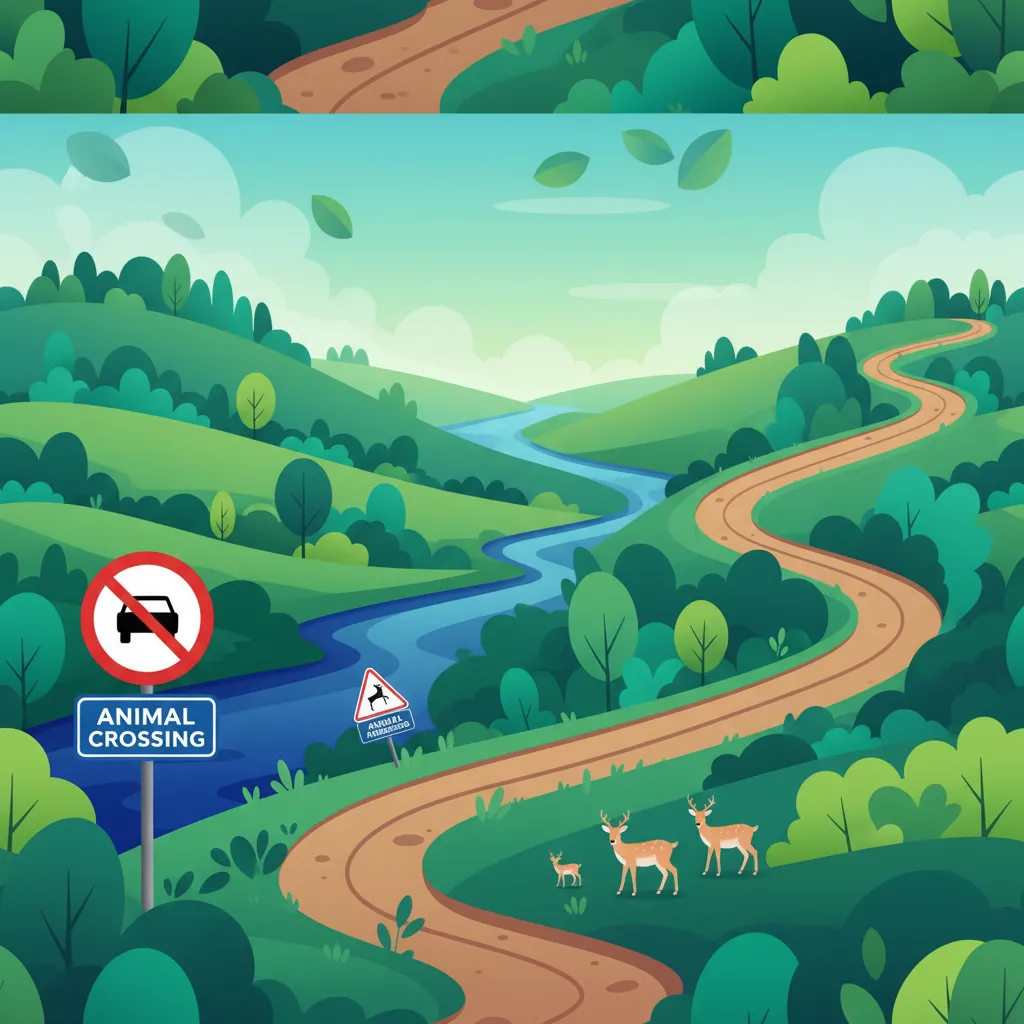
This lesson focuses on the regulations governing highland travel and off-road restrictions, including environmental protections that prohibit off-road driving in certain zones. The lesson details how to interpret highland road signage, understand restrictions related to wildlife crossings like reindeer and sheep, and adhere to road width management guidelines. Learners are also instructed on using emergency contact points in sparsely populated regions.
This lesson examines the specific techniques required for safe driving on snow-covered or icy roads in Iceland, covering the mandatory use of winter tires and the operation of anti-lock braking systems. Learners will study optimal low-speed cornering, proper braking distances on ice, and how to recover from a skid safely. By mastering these techniques, drivers can maintain control in challenging winter conditions and significantly reduce the risk of accidents on slippery surfaces.
This lesson addresses the challenges of driving in rain and fog, focusing on strategies to maintain visibility and vehicle control. Learners will explore the correct use of windshield wipers, defoggers, and appropriate headlight settings, including when to use fog lights. The content also covers the increased risk of hydroplaning, the importance of adjusting speed in wet conditions, and the need to extend following distances to account for longer stopping distances.
This lesson explores the specific challenges of driving on Icelandic gravel roads, focusing on the reduced traction and vehicle dynamics associated with loose surfaces. The content explains how to adapt speed appropriately, maintain safe following distances, and use gentle braking to avoid skidding. Learners also study proper lane sharing etiquette, including how to safely pass other vehicles and manage loose stones that may be thrown, ensuring vehicle stability.
This lesson helps learners develop an understanding of how drivers perceive and assess risks on Icelandic roads, particularly under variable weather and lighting conditions. The content discusses mental models used to anticipate the actions of other road users and the importance of identifying subtle hazards. By analysing environmental cues and applying systematic hazard perception strategies, students learn to enhance their situational awareness and make safer driving decisions.
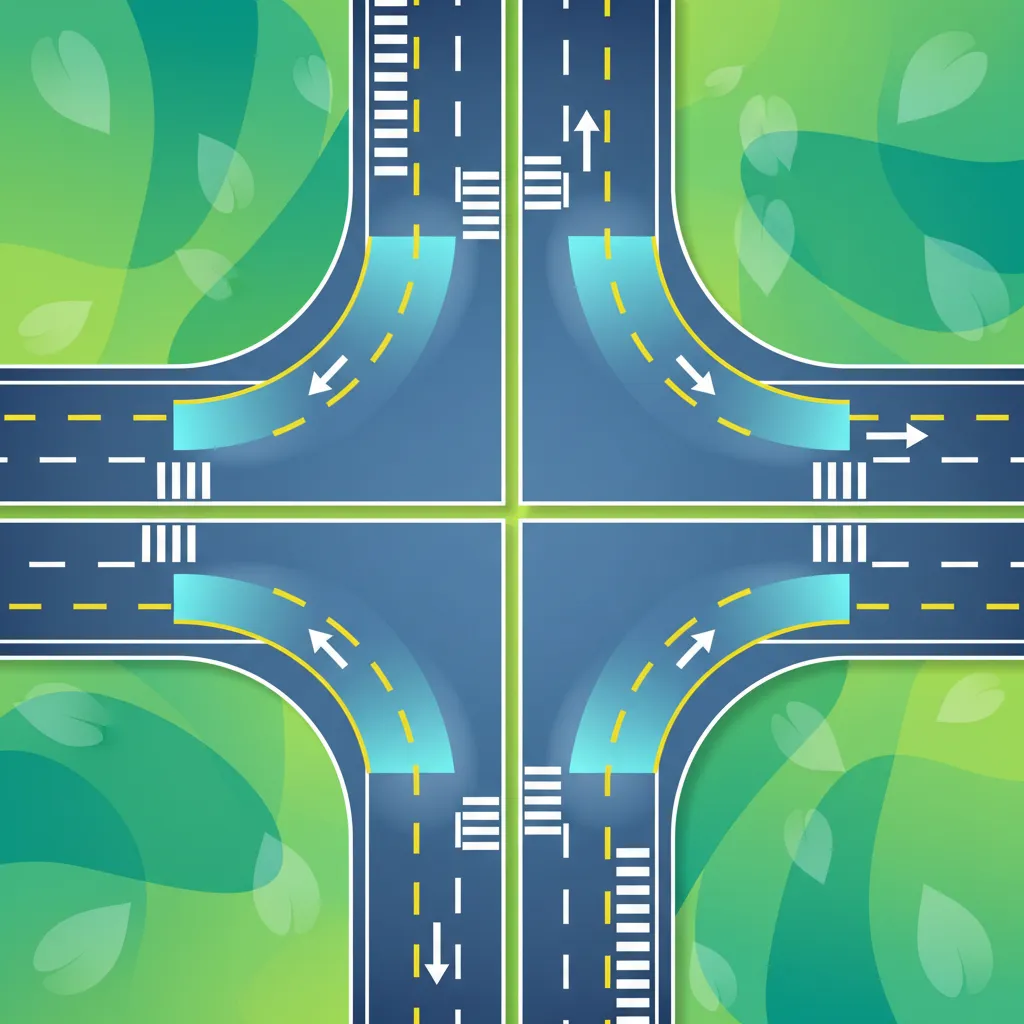
This lesson provides a comprehensive overview of the road markings found on Icelandic roads, from solid and broken lane lines to symbols indicating turning lanes and pedestrian crossings. The content details the visual meanings of each marking, such as solid lines indicating no crossing and broken lines permitting lane changes. Additionally, the lesson addresses the purpose of reflective markers and surface textures used in low-visibility or icy conditions, providing a framework for interpreting pavement cues.
This lesson focuses on the operation of roundabouts, which are common in Icelandic towns and rural areas, and explains how drivers must yield to circulating traffic upon entry. The content covers how to interpret roundabout signage and follow lane markings to maintain correct positioning. Students also learn strategies for safe exit, handling multi-lane roundabouts, and recognizing deceptive entries that require heightened vigilance for smooth navigation.
This lesson explores the proper use of lane markings to maintain correct vehicle centering and adherence to the prescribed traffic flow direction in Iceland. The content describes how to interpret solid and broken lines, maintain safe following distances within a lane, and avoid unintended lane departures. Learners also examine the legal prohibitions on using the road shoulder for general travel, ensuring compliance with lane discipline rules for overall traffic safety.
This lesson examines how strong winds and varying light conditions affect vehicle handling and safety, including techniques for maintaining stability under cross-winds and assessing gust intensity. The content also explains proper headlight usage during daylight, dusk, and nighttime, addressing glare reduction strategies and when to employ high-beam headlights. By mastering these concepts, drivers can navigate Icelandic weather and lighting challenges confidently and safely.
This lesson focuses on interpreting road surface markings, including solid and broken lines that govern lane changes and positioning. Learners will understand the rules associated with turning arrows, pedestrian crossings, and markings for dedicated lanes. Correctly reading these markings is essential for maintaining proper lane discipline and navigating complex road layouts safely.
Understand the critical safety risks associated with crossing single-lane bridges and water fords in Iceland. This lesson details dangers from weather, vehicle limitations, and improper techniques to ensure safe travel.
This lesson focuses on the regulations governing highland travel and off-road restrictions, including environmental protections that prohibit off-road driving in certain zones. The lesson details how to interpret highland road signage, understand restrictions related to wildlife crossings like reindeer and sheep, and adhere to road width management guidelines. Learners are also instructed on using emergency contact points in sparsely populated regions.
This lesson helps learners develop an understanding of how drivers perceive and assess risks on Icelandic roads, particularly under variable weather and lighting conditions. The content discusses mental models used to anticipate the actions of other road users and the importance of identifying subtle hazards. By analysing environmental cues and applying systematic hazard perception strategies, students learn to enhance their situational awareness and make safer driving decisions.
This lesson addresses the challenges of driving in rain and fog, focusing on strategies to maintain visibility and vehicle control. Learners will explore the correct use of windshield wipers, defoggers, and appropriate headlight settings, including when to use fog lights. The content also covers the increased risk of hydroplaning, the importance of adjusting speed in wet conditions, and the need to extend following distances to account for longer stopping distances.
This lesson explores the health criteria mandated by Icelandic law for operating a vehicle, focusing on visual and auditory acuity, as well as overall physical capability. Students will study required medical certifications and understand acceptable vision levels and hearing standards necessary for safe driving. The lesson also outlines how chronic illnesses, medication side-effects, and mental health conditions can influence driver fitness and legal compliance.
This lesson familiarizes learners with signs that warn of upcoming hazards, such as sharp curves, slippery surfaces, or animal crossings. It emphasizes the importance of early hazard recognition and response, which is especially critical for vulnerable moped riders. Understanding these signs allows riders to anticipate road conditions and adjust their riding strategy accordingly for increased safety.
This lesson explores the specific challenges of driving on Icelandic gravel roads, focusing on the reduced traction and vehicle dynamics associated with loose surfaces. The content explains how to adapt speed appropriately, maintain safe following distances, and use gentle braking to avoid skidding. Learners also study proper lane sharing etiquette, including how to safely pass other vehicles and manage loose stones that may be thrown, ensuring vehicle stability.
Find clear answers to common questions learners have about Bridge Crossings, Water Fords, and Seasonal Restrictions. Learn how the lesson is structured, which driving theory objectives it supports, and how it fits into the overall learning path of units and curriculum progression in Iceland. These explanations help you understand key concepts, lesson flow, and exam focused study goals.
Priority is determined by road signs. Usually, a white square sign with a red arrow indicates your priority, while a white circle with a red border and two arrows indicates you must yield. Always look for these signs before entering the bridge.
Always check the current water level and flow speed. If the water reaches above your vehicle's air intake or is flowing too rapidly to safely maintain traction, do not attempt to cross. When in doubt, seek an alternative route or wait for conditions to improve.
Many Icelandic roads, especially in the highlands, are closed during winter or spring thaw to protect the delicate landscape and ensure public safety. Ignoring these signs is illegal and highly dangerous.
No. Many older or remote bridges have specific weight and height restrictions posted at the approach. As a Category B driver, you must be aware of your vehicle's dimensions and respect all posted limitations.
Utilize our advanced practice set search to pinpoint the exact Icelandic driving theory topics you need to review. Filter by subject, difficulty, or question type to create a highly effective study plan and ensure you are fully prepared for your official driving licence test in Iceland.