
This lesson explores the essential communication techniques every rider must master to stay safe on Italian roads. You will learn how to use body language, clear hand signals, and strategic road positioning to signal your intentions to other drivers, building on the safety principles from the previous unit.

Lesson content overview
For motorcyclists, effective communication with other road users extends far beyond simply using electronic indicators. Your motorcycle's smaller profile and the inherent speed of traffic can sometimes make your intentions less obvious. This lesson, part of the Italian Driving License Theory Course for Motorcycle Categories A1, A2, & A, explores how deliberate body language, clear hand signals, strategic lane positioning, and direct eye contact become essential tools for conveying your actions and enhancing road safety for everyone. By mastering these non-verbal cues, you can significantly reduce ambiguity, prevent misunderstandings, and ride more predictably on Italian roads.
Motorcycles, due to their size, can sometimes be less visible or their movements harder to interpret by drivers of larger vehicles. While electronic indicators are mandatory, they might not always be sufficient in all situations—such as bright sunlight, when an indicator bulb fails, or if a driver in a blind spot cannot see it. This is where non-verbal communication becomes invaluable, acting as a critical layer of safety by ensuring your intentions are clearly and redundantly conveyed.
Communicating effectively helps other road users anticipate your maneuvers, whether it's a turn, a lane change, or a stop. This predictability is fundamental to preventing collisions, especially in complex traffic environments like intersections, roundabouts, or urban areas. It builds on the observation techniques learned previously (Unit 3.4) and lays the groundwork for safe lane positioning (Unit 4) and complex traffic interactions (Units 6-7).
To ensure your intentions are understood, motorcyclists should adopt several core principles regarding non-verbal communication. These principles form the foundation for safe and clear interactions with other road users.
Every physical cue you make on your motorcycle, from the angle of your body to the extension of your arm, should be purposeful and designed to convey a specific maneuver. This isn't about casual movements; it's about a planned series of gestures that clearly articulate your next action. The goal is to make your actions entirely predictable, allowing other drivers to react appropriately and safely. Therefore, always plan your signals in advance, ensuring they are visible and clear before you even begin to execute a maneuver.
Relying on a single method of communication, such as just an indicator, can be risky. Redundant signalling involves using multiple communication methods simultaneously to confirm your intent. For example, combining an electronic indicator with a hand signal, adjusting your lane position, and making eye contact significantly increases the likelihood that your maneuver is understood, even if one signal is missed or obscured. This multi-layered approach compensates for potential failures of any single method, offering a robust safety net.
For your non-verbal signals to be effective, they must be clearly visible to other road users. This requires actively managing your posture, limb positioning, and even your equipment. Ensure your hand signals are not obscured by bulky clothing, the motorcycle itself, or your helmet. Your body movements should be exaggerated enough to be seen from a distance, particularly in varying light or weather conditions. Clear visibility ensures that your message reaches its intended recipient without ambiguity.
One of the most powerful forms of non-verbal communication is establishing mutual confirmation. This involves making eye contact with another road user to ensure they have seen and understood your signals. Eye contact removes uncertainty, confirming that your message has been received and acknowledged. Before initiating a maneuver, a quick glance at the driver in the adjacent vehicle can tell you if they are aware of your presence and your intended action, significantly reducing the risk of misinterpretation.
Beyond your motorcycle's electronic signals, several deliberate actions can effectively communicate your intentions. Mastering these tools is crucial for safety and predictability on the road.
Hand signals are specific arm and hand movements used to indicate your intentions, especially when electronic indicators might be less visible or malfunctioning. They serve as a vital supplement, reinforcing your planned actions.
Hand signals must be performed well in advance of the maneuver, providing sufficient time for other road users to react. For turns, begin the signal at least 30 meters before an urban intersection and 50 meters in extra-urban areas, as stipulated by the Codice della Strada. Keep your arm extended until you initiate the turn, then return both hands to the controls to maintain full vehicle control.
Eye contact is a direct visual exchange between you and another road user. It's a non-verbal handshake that confirms mutual awareness and understanding of intentions.
When you signal a lane change or approach an intersection, a quick glance at the driver in the adjacent lane or a pedestrian crossing can confirm that they have seen you and processed your intention. This significantly reduces the risk of someone pulling out in front of you or changing lanes into your path, believing you haven't signaled or that your signal wasn't seen. It's not a legal requirement, but a highly recommended safety practice under Article 171 of the Codice della Strada, which emphasizes general prudence.
While powerful, eye contact should be brief and not compromise your primary focus on the road ahead. In high-speed traffic, direct eye contact might be less feasible or safe; in such cases, a peripheral acknowledgment that a driver has looked in your direction can be sufficient. Always prioritize maintaining control of your motorcycle.
Your position within your lane is a powerful, passive form of communication that can signal your intentions to other drivers. Strategic lane positioning can make your next move predictable, even before you activate your indicators or hand signals.
While using lane position as a signal is permissible, you must always maintain a safe distance from lane edges and other road users. Never ride on the road edge unless specifically allowed (e.g., in certain narrow streets or emergency situations). Your positioning must always be safe and compliant with Article 150 of the Codice della Strada, which governs general road positioning.
A shoulder check, also known as a head check, is a quick, deliberate glance over your shoulder to verify the presence of other road users in your blind spots—areas not visible in your mirrors. This action is critical before any lateral movement of your motorcycle.
Mirrors, no matter how well-adjusted, have blind spots. Vehicles, especially other motorcycles or smaller cars, can easily disappear into these areas. Before initiating a lane change, making a turn, or even just shifting position significantly within your lane, a shoulder check ensures that your intended path is clear and that any vehicle in your blind spot has seen your signals. This practice is mandatory before lane changes and turning where blind spots exist (Codice della Strada, Article 165).
A shoulder check should be a swift, smooth head movement that doesn't cause you to swerve or lose control. It should be performed after you've activated your indicators and ideally after you've made eye contact with other visible drivers. Always check the blind spot in the direction you intend to move. For instance, if changing to the right lane, check over your right shoulder.
Redundant signalling is the practice of combining electronic indicators with body language elements like hand signals, eye contact, and strategic lane positioning. This multi-layered approach is the most effective way to communicate your intentions clearly and ensures maximum safety.
Imagine approaching a roundabout where you intend to take the first exit (a right turn). Your redundant signalling might involve:
This combination drastically reduces the chance of misinterpretation, providing multiple cues that reinforce your intended action. Article 158 of the Codice della Strada mandates electronic indicator use, but complementary body language, as suggested by Article 163, significantly enhances safety, particularly in challenging conditions.
Adhering to the Codice della Strada (Italian Highway Code) is paramount. While some non-verbal signals are recommendations, others are legally required.
Even experienced riders can make signalling errors. Awareness of these common pitfalls can help you maintain safer riding habits.
The effectiveness of your non-verbal communication can be influenced by various factors. Adjusting your approach based on the context is key to maintaining safety.
When interacting with pedestrians, cyclists, or scooter riders, clear hand signals and direct, confirming eye contact are even more essential. These users might not always be looking for electronic signals or might be less predictable in their movements. Explicitly signalling your intentions helps them understand your path and adjust theirs safely.
Understanding the causal links between your signalling practices and road outcomes reinforces their importance.
By integrating these principles and practices into your daily riding, you not only protect yourself but also contribute to a safer and more predictable environment for all road users, reflecting the responsible rider ethos championed in the Italian Driving License Theory Course for Motorcycle Categories A1, A2, & A.
Scenario: You are approaching a busy urban intersection in a city like Rome, intending to turn left. Traffic is moderate, and there are cars waiting at the opposing light, and pedestrians are present.
Correct Behavior: Well before reaching the intersection (at least 30 meters), you activate your left electronic indicator. Simultaneously, you extend your left arm horizontally straight out, clearly signaling your left turn. You subtly position your motorcycle slightly towards the left side of your lane to visually guide other drivers. As you approach the turning point, you make brief eye contact with the driver of an oncoming vehicle that might be turning right or going straight, ensuring they have seen your signal and are aware of your intent to turn. You perform a quick shoulder check to your left to ensure no scooter or bicycle is trying to squeeze past. Only after confirming the path is clear, you smoothly execute the turn, keeping your indicator on until the maneuver is complete.
Incorrect Behavior: You activate your left indicator only as you enter the intersection, failing to use a hand signal or check for other road users' awareness. An oncoming car, unsure of your intentions, proceeds, leading to a near-miss or a collision.
Scenario: You are on a two-lane rural road, such as those found in Tuscany, with light traffic, intending to overtake a slower vehicle. You need to change from the right lane to the left lane.
Correct Behavior: You first check your mirrors to assess the traffic behind you. Once you identify a safe gap, you activate your left electronic indicator, giving ample notice (at least 50 meters in extra-urban areas). You then subtly shift your motorcycle a little closer to the left lane line, signaling your intended lateral movement. Crucially, you perform a swift yet thorough shoulder check over your left shoulder to confirm no vehicle is in your blind spot. Only when you are certain the path is clear and your signals have been acknowledged, you smoothly move into the left lane. Your indicator remains on until you are fully in the new lane.
Incorrect Behavior: You activate your indicator but fail to perform a shoulder check, relying solely on your mirrors. As you begin to move left, a smaller vehicle that was in your blind spot is forced to brake or swerve, creating a dangerous situation.
For riders navigating the Italian roads and preparing for the Italian Driving License Theory Course for Motorcycle Categories A1, A2, & A, mastering non-verbal communication is as important as understanding traffic signs. This lesson has highlighted that motorcyclists must consciously combine electronic indicators with deliberate body language, including:
The principle of redundant signalling—using multiple methods simultaneously—is the cornerstone of safe motorcycle communication. All signals must be initiated well in advance (e.g., 30 meters in urban areas, 50 meters in extra-urban areas) and maintained until the maneuver is fully completed, as required by the Codice della Strada. By consistently applying these practices, motorcyclists enhance their predictability, reduce the risk of collisions, and foster a safer road environment for everyone.
This lesson covers the essential non-verbal communication tools every motorcyclist must master on Italian roads: hand signals for turns and stops, eye contact for mutual confirmation, lane positioning to signal intended path, and shoulder checks to clear blind spots. Italian law (Codice della Strada, Art. 158) mandates electronic indicators, but redundant signalling combining multiple methods is emphasized as the safest practice. Specific distances apply: signal at least 30 meters ahead in urban areas and 50 meters in extra-urban zones. By mastering these techniques, motorcyclists become more predictable and significantly reduce collision risk with other road users.
A short set of high-value points that capture the most important learning from this lesson.
Redundant signalling—combining electronic indicators with hand signals, eye contact, and lane positioning—is the most effective way to communicate your intentions and maximize safety.
Motorcycles are less visible than cars, making deliberate non-verbal communication essential beyond just using indicators.
Hand signals must be performed with the correct arm positions: horizontal left arm for left turn, bent upward left arm for right turn, and downward left arm with palm back for slowing or stopping.
Eye contact with other road users confirms mutual awareness and ensures your signals have been received and understood.
Strategic lane positioning signals your intended path to other drivers before you activate your indicators or initiate a maneuver.
Explore all units and lessons included in this driving theory course.
Signal duration requirements: at least 30 meters before a turn in urban areas and 50 meters in extra-urban areas per the Codice della Strada.
Shoulder checks are mandatory before lane changes and turns where blind spots exist (Codice della Strada, Art. 165).
Always maintain your signal (electronic or hand) until the maneuver is fully completed—never cancel early.
Use high-visibility gloves and exaggerate hand signals in poor weather conditions when electronic indicators are less effective.
Article 158 mandates electronic indicators; Article 163 recommends complementary hand signals especially during indicator malfunction or low visibility.
Late signalling—activating indicators or hand signals too close to the maneuver gives other road users insufficient time to react.
Performing hand signals that are obscured by bulky clothing, the motorcycle, or performed too low to be seen from a distance.
Relying solely on mirrors without performing shoulder checks, leaving blind spots unchecked before lane changes or turns.
Canceling your indicator or stopping a hand signal before completing the maneuver, causing other drivers to think you changed your mind.
Assuming electronic indicators alone are sufficient in all conditions—combining them with other non-verbal cues is essential for maximum clarity.
Lesson content overview
A short set of high-value points that capture the most important learning from this lesson.
Redundant signalling—combining electronic indicators with hand signals, eye contact, and lane positioning—is the most effective way to communicate your intentions and maximize safety.
Motorcycles are less visible than cars, making deliberate non-verbal communication essential beyond just using indicators.
Hand signals must be performed with the correct arm positions: horizontal left arm for left turn, bent upward left arm for right turn, and downward left arm with palm back for slowing or stopping.
Eye contact with other road users confirms mutual awareness and ensures your signals have been received and understood.
Strategic lane positioning signals your intended path to other drivers before you activate your indicators or initiate a maneuver.
Explore all units and lessons included in this driving theory course.
Signal duration requirements: at least 30 meters before a turn in urban areas and 50 meters in extra-urban areas per the Codice della Strada.
Shoulder checks are mandatory before lane changes and turns where blind spots exist (Codice della Strada, Art. 165).
Always maintain your signal (electronic or hand) until the maneuver is fully completed—never cancel early.
Use high-visibility gloves and exaggerate hand signals in poor weather conditions when electronic indicators are less effective.
Article 158 mandates electronic indicators; Article 163 recommends complementary hand signals especially during indicator malfunction or low visibility.
Late signalling—activating indicators or hand signals too close to the maneuver gives other road users insufficient time to react.
Performing hand signals that are obscured by bulky clothing, the motorcycle, or performed too low to be seen from a distance.
Relying solely on mirrors without performing shoulder checks, leaving blind spots unchecked before lane changes or turns.
Canceling your indicator or stopping a hand signal before completing the maneuver, causing other drivers to think you changed your mind.
Assuming electronic indicators alone are sufficient in all conditions—combining them with other non-verbal cues is essential for maximum clarity.
Explore search topics learners often look for when studying Body Language and Signalling Intentions. These topics reflect common questions about road rules, driving situations, safety guidance, and lesson level theory preparation for learners in Italy.
Browse additional driving theory lessons that cover connected traffic rules, road signs, and common driving situations related to this topic. Improve your understanding of how different rules interact across everyday traffic scenarios.
Explore advanced communication techniques for motorcyclists in Italy, including nuanced body language, strategic lane positioning, and eye contact to ensure clear intent signalling and enhance safety on Italian roads.
This lesson focuses on the vital systems for visibility and communication: mirrors, lighting, and signals. It provides instruction on the proper adjustment of mirrors to minimize blind spots and the correct use of headlamps, indicators, and brake lights as per Italian regulations. The content underscores how maintaining these systems in full working order is crucial for being seen and signalling intentions clearly in traffic.

This lesson focuses on non-verbal communication techniques essential for safe riding. It covers how to use eye contact, headlights, and hand signals to convey intentions to drivers, pedestrians, and cyclists. Understanding how to interact and negotiate space in traffic through clear communication helps prevent accidents and promotes a smoother traffic flow.
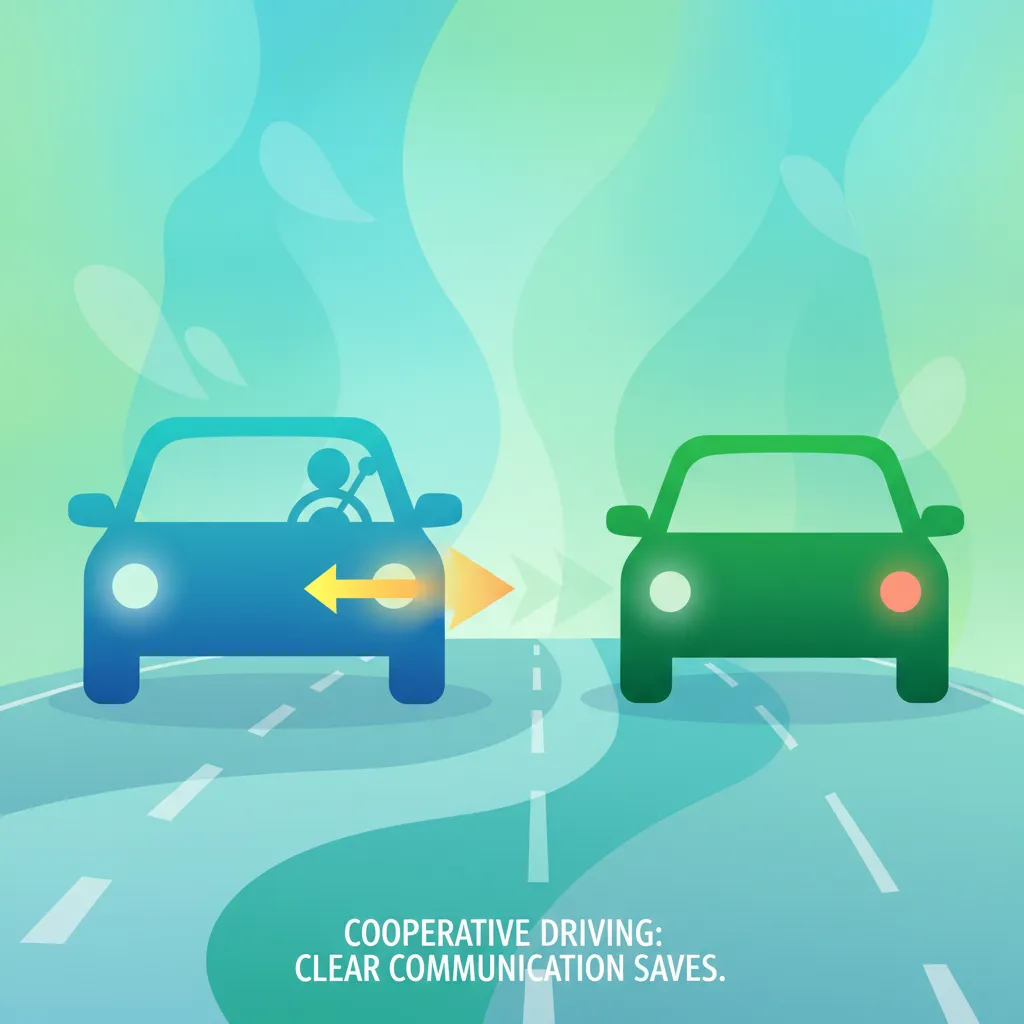
This lesson emphasizes the importance of clear communication and cooperative behavior among all road users to prevent conflicts and enhance safety. It details the proper and legal use of vehicle signals, such as turn indicators and hazard lights, as well as the appropriate use of the horn. The content also explores the role of non-verbal cues like eye contact and courtesy gestures in creating a predictable and safe driving environment.
This lesson provides detailed instruction on performing effective shoulder checks to supplement mirror use, ensuring a clear path before turning or changing lanes. It covers the proper and timely use of electronic indicators and hand signals to communicate your intentions to other drivers. Correct signaling is crucial for preventing misunderstandings and collisions on the road.
This lesson provides a comprehensive guide to riding on high-speed motorways, or autostrade. It details the correct procedures for safely merging into traffic from an entry ramp and exiting via a deceleration lane. The content reinforces strict lane discipline, rules for overtaking, and the importance of maintaining a significantly larger following distance to compensate for higher speeds and potential wind gusts.
This lesson equips riders to safely manage the challenges posed by road construction zones. It explains how to interpret temporary signage, navigate lane closures or diversions, and maintain heightened awareness for surface hazards like gravel or steel plates. The content emphasizes the need to reduce speed and increase following distances to safely share the road with large construction vehicles and workers.

This lesson teaches the fundamental observation techniques required for proactive and defensive riding. It details a systematic approach to scanning the road environment, using mirrors effectively, and performing shoulder checks to cover blind spots before any maneuver. Developing strong situational awareness is presented as a key skill for anticipating potential hazards and reacting to them in a timely manner.

This lesson details the proper and legal application of a vehicle's horn, lights, and signals as primary communication tools. It explains the specific circumstances for using high beams, low beams, and fog lights to maximize visibility without dazzling other drivers. The content also clarifies the rules for using the horn, turn indicators, and hazard lights to signal intentions, warn of danger, or indicate an emergency situation.

This lesson addresses the increased complexity of overtaking in urban environments with dense traffic and frequent intersections. It stresses the importance of thorough observation, including mirror and blind spot checks, to ensure a safe gap is available. The content covers judging speed differentials and the necessity of clear signalling to execute the maneuver without causing conflict with other road users.

This lesson addresses the specific challenges of sharing the road with two-wheeled motor vehicles like motorcycles and scooters. It highlights their reduced visibility and stability compared to cars, requiring drivers to double-check blind spots and maintain a greater following distance. The content also discusses common behaviors like lane filtering and the need for drivers to be predictable and signal intentions clearly.
Identify and learn to correct frequent errors in motorcycle signalling and body language for the Italian theory test. Understand how to avoid miscommunication and improve safety through proper technique.
This lesson focuses on the vital systems for visibility and communication: mirrors, lighting, and signals. It provides instruction on the proper adjustment of mirrors to minimize blind spots and the correct use of headlamps, indicators, and brake lights as per Italian regulations. The content underscores how maintaining these systems in full working order is crucial for being seen and signalling intentions clearly in traffic.
This lesson details the proper and legal application of a vehicle's horn, lights, and signals as primary communication tools. It explains the specific circumstances for using high beams, low beams, and fog lights to maximize visibility without dazzling other drivers. The content also clarifies the rules for using the horn, turn indicators, and hazard lights to signal intentions, warn of danger, or indicate an emergency situation.
This lesson provides detailed instruction on performing effective shoulder checks to supplement mirror use, ensuring a clear path before turning or changing lanes. It covers the proper and timely use of electronic indicators and hand signals to communicate your intentions to other drivers. Correct signaling is crucial for preventing misunderstandings and collisions on the road.
This lesson emphasizes the importance of clear communication and cooperative behavior among all road users to prevent conflicts and enhance safety. It details the proper and legal use of vehicle signals, such as turn indicators and hazard lights, as well as the appropriate use of the horn. The content also explores the role of non-verbal cues like eye contact and courtesy gestures in creating a predictable and safe driving environment.
This lesson explains how to execute left turns, right turns, and U-turns safely while maintaining correct lane discipline. It covers interpreting road markings and arrows, selecting the proper vehicle position, and using signals in a timely manner. Performing shoulder checks to monitor blind spots before and during a turn is a key focus for preventing collisions.
This lesson focuses on non-verbal communication techniques essential for safe riding. It covers how to use eye contact, headlights, and hand signals to convey intentions to drivers, pedestrians, and cyclists. Understanding how to interact and negotiate space in traffic through clear communication helps prevent accidents and promotes a smoother traffic flow.
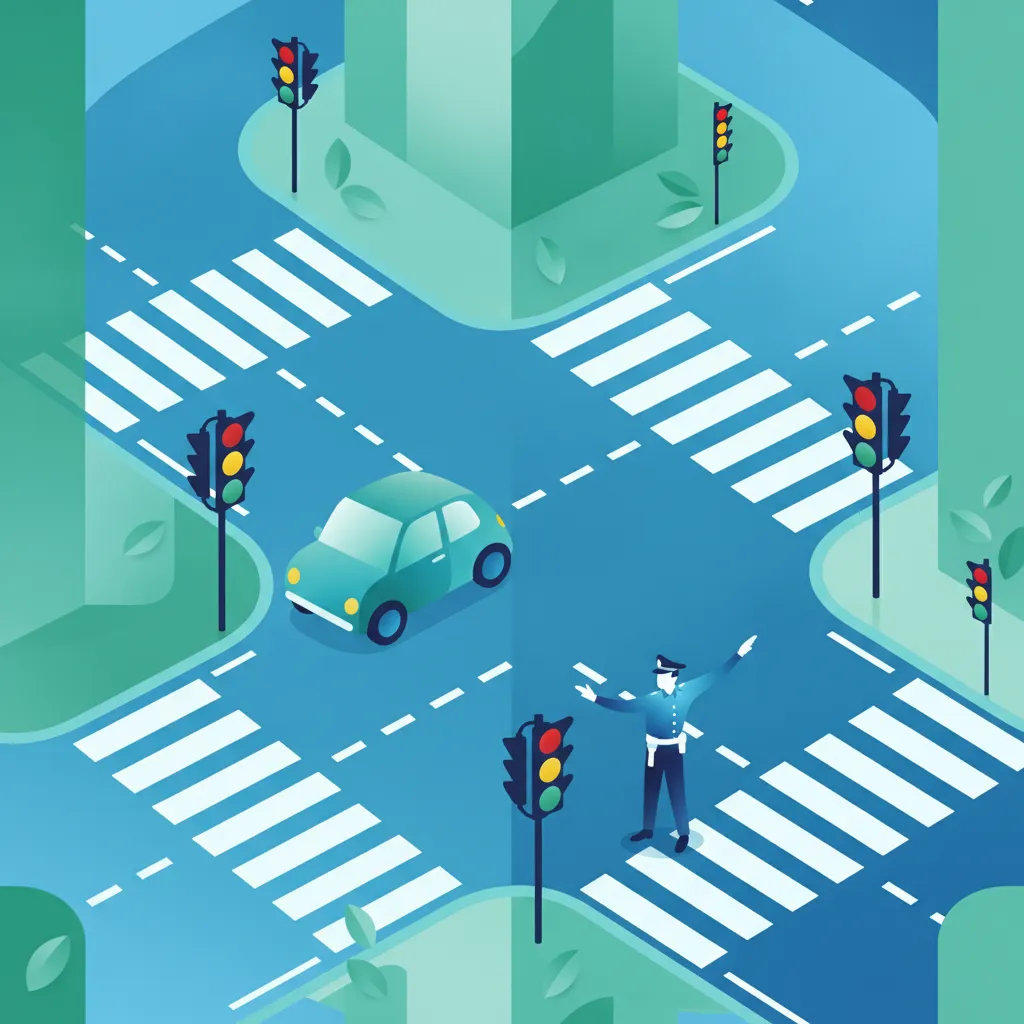
This lesson explains the function of Italian traffic light systems and the meaning of various road markings. You will learn the rules for red, amber, and green signals, including flashing lights and directional arrows. It also covers how to interpret lane lines, stop lines, and other surface markings that dictate correct vehicle positioning and movement.
This lesson delivers a comprehensive explanation of right-of-way regulations at Italian intersections. It covers the interpretation of traffic light signals, the absolute requirement to stop at stop signs, and yielding at give-way signs. Furthermore, it details the default priority rules for unmarked intersections and the specific obligations a rider has towards pedestrians on crossings.
This lesson focuses on the specific regulatory and warning signs that Patente AM riders must understand and obey. It details signs related to speed limits, no-entry zones, and mandatory directions that directly impact moped operation. You will also learn to recognize warning signs for potential hazards like sharp curves, slippery surfaces, and pedestrian areas.
This lesson provides detailed instructions on how to correctly execute various turning maneuvers, including right turns, left turns, and U-turns where permitted. It emphasizes the importance of early signaling to communicate intentions, selecting the correct lane in advance, and adjusting speed before entering the turn. The content also covers the visual checks required before and during the maneuver to ensure it is safe to proceed.
Find clear answers to common questions learners have about Body Language and Signalling Intentions. Learn how the lesson is structured, which driving theory objectives it supports, and how it fits into the overall learning path of units and curriculum progression in Italy. These explanations help you understand key concepts, lesson flow, and exam focused study goals.
While indicators are the primary way to signal, Italian road law allows for supplementary hand signals to increase visibility, especially in heavy traffic or when indicators are difficult to see. It is a sign of a skilled rider to use all available methods to be clearly understood.
Eye contact confirms that a driver has acknowledged your presence, which is vital when navigating intersections or merging. Never assume a driver has seen you just because you are in their lane; always look for that confirmation.
By positioning yourself towards the side of the lane you intend to turn towards, you naturally inform vehicles behind you of your path before you even reach the turning point. This is a crucial element of proactive defensive riding.
Yes, understanding the standard signals and the rules of communication is part of the broader safety and hazard perception requirements of the Italian motorcycle theory syllabus.
Start searching now to pinpoint exactly which Italian driving theory topics, road signs, or traffic rules you need to master. Use our advanced filters to build a custom practice session and ensure you're fully prepared for every aspect of your official driving licence exam.