
This lesson details the critical safety procedures for handling a mechanical breakdown on Italian roads. It provides a step-by-step guide to keeping yourself and others safe, ensuring you meet the requirements for the Italian motorcycle theory exam for A1, A2, and A licenses.
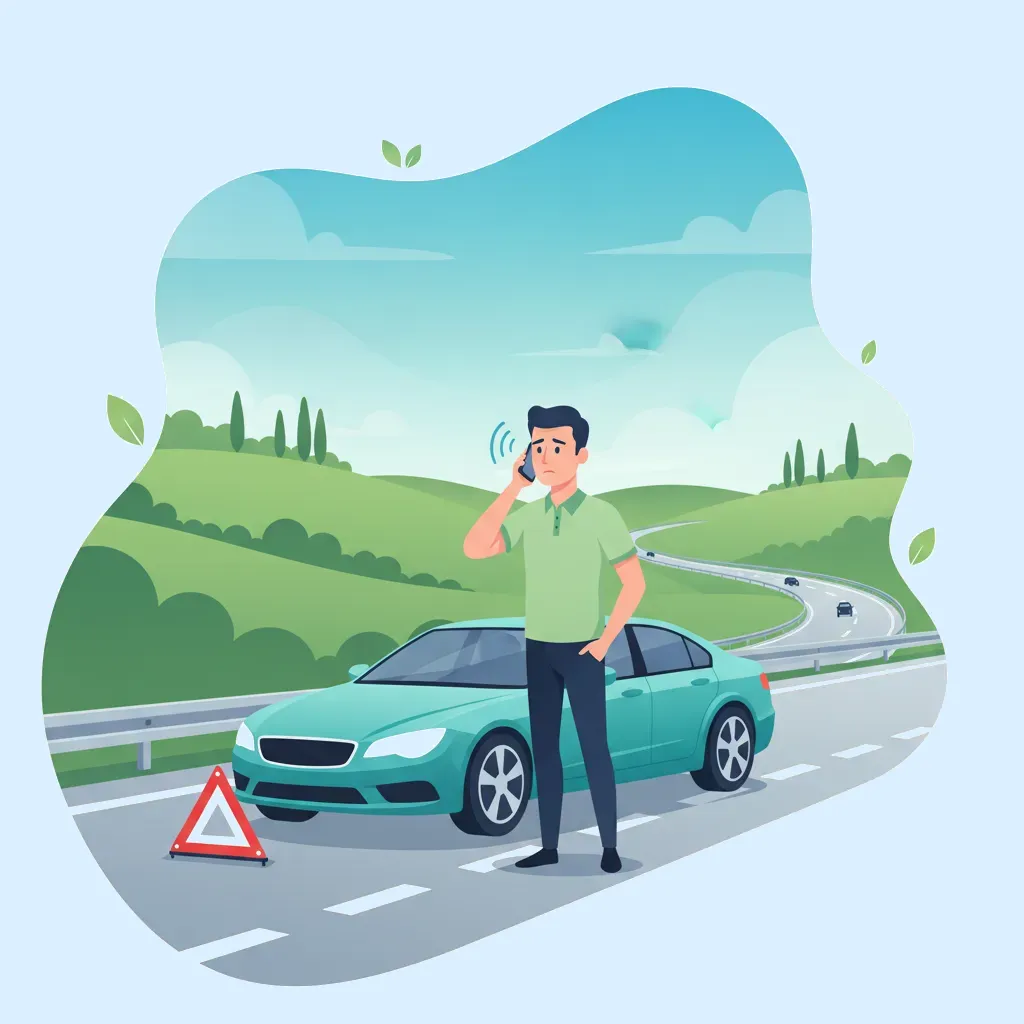
Lesson content overview
Encountering a mechanical breakdown while riding your motorcycle can be a stressful and potentially dangerous experience. Knowing the correct procedures to follow is crucial for your safety, the safety of other road users, and compliance with Italian traffic laws. This lesson provides a comprehensive guide to effectively manage a motorcycle breakdown, from immediate actions to contacting emergency services, ensuring you are prepared for unexpected vehicle failures.
A motorcycle breakdown isn't just an inconvenience; it can pose a significant hazard, especially if your vehicle becomes stationary in a dangerous position on the road. The primary goal during any breakdown situation is to ensure the safety of yourself and those around you, minimizing the risk of secondary accidents. This involves a series of calculated and swift actions designed to make your presence known and remove your vehicle from the immediate path of traffic.
When your motorcycle experiences a sudden mechanical failure, your immediate response can dictate the outcome. The very first step is to bring your motorcycle to a controlled stop safely. This means decelerating smoothly and looking for the safest possible location to pull over. Avoid abrupt braking unless absolutely necessary for safety. Once stopped, your focus must shift to making yourself and your motorcycle visible to oncoming traffic.
The overarching principle in any breakdown scenario is "safety first." A stationary motorcycle, particularly on a busy road or in low visibility, is a vulnerable object and a severe hazard. Prioritizing your personal safety means getting yourself and your motorcycle out of harm's way as quickly and safely as possible. This also extends to protecting other road users by clearly signaling your presence and removing obstructions from the carriageway. Neglecting these initial steps significantly increases the risk of further incidents.
One of the most critical aspects of breakdown management is ensuring you are seen by other drivers. Poor visibility is a leading cause of secondary collisions involving stopped vehicles. Utilizing both your motorcycle's equipment and your personal protective gear can dramatically reduce this risk.
Hazard warning lights, often referred to simply as "hazard lights," are flashing amber or red lights on your motorcycle designed to signal that your vehicle is stopped and may pose a danger to traffic. Their purpose is to warn other drivers to proceed with extreme caution and to expect an obstruction ahead.
Activating your hazard lights should be one of your very first actions once your motorcycle is safely stopped or in the process of stopping due to a breakdown. They serve as a universal signal for distress and caution. While hazard lights are mandatory in many jurisdictions for specific situations, their use during any breakdown, regardless of the explicit legal requirement, is a fundamental safety measure. They alert drivers from a distance, giving them more time to react, slow down, and change lanes if necessary.
Beyond your motorcycle's lights, your personal visibility is paramount, especially when you need to dismount and move around the vehicle. A high-visibility vest, also known as a reflective vest, is a garment typically made of fluorescent yellow or orange material with retroreflective strips. Its purpose is to make you, the rider, significantly more visible to other road users, particularly in low-light conditions, at dusk, dawn, or in adverse weather.
In Italy, the use of a high-visibility vest is not merely a recommendation; it is a legal requirement for motorcyclists. According to Article 165 of the Italian Codice della Strada (Highway Code), motorcyclists are mandatory to wear a high-visibility vest when moving off a vehicle that is stopped on a public road or roadside, outside of built-up areas, or in situations of poor visibility. This means that as soon as you dismount your motorcycle after a breakdown on a public road, you must put on your vest. Failing to do so can result in penalties and, more importantly, puts your life at serious risk.
Where you stop your motorcycle after a breakdown is as critical as being visible. An improperly positioned vehicle can exacerbate the danger, creating a greater risk of collision.
When you realize your motorcycle is breaking down, begin to assess your surroundings immediately for a safe place to stop. Look for areas completely off the main carriageway, such as an emergency lane (hard shoulder) on a motorway, a wide road shoulder on a rural road, or a designated parking area in an urban environment.
Consider your current speed and the road conditions (wet, dry, gravel) to estimate the safe stopping distance needed. Your goal is to not only stop the motorcycle but also to position it in a way that minimizes obstruction and provides a safe zone for you while you await assistance.
The carriageway is the part of the road intended for the passage of vehicles. Your ultimate objective after stopping should be to move your motorcycle entirely off this area if it's safe and possible to do so. Even if it's just a few meters, getting your bike completely onto the hard shoulder or a safe lay-by makes a significant difference.
If you are unable to move the motorcycle due to its condition or your physical inability, and it remains on the carriageway, it becomes an obstruction. In such cases, the importance of hazard lights and your high-visibility vest is amplified, and contacting emergency services immediately becomes even more urgent to ensure traffic management.
Once you and your motorcycle are in the safest possible position and you've activated your hazard lights and donned your high-visibility vest, the next crucial step is to call for help.
Assess the Situation and Your Location: Be aware of your exact location. Note any specific landmarks, road numbers, kilometer markers (especially on motorways), or street names. Check for injuries to yourself or others.
Contact Roadside Assistance: If you have roadside assistance coverage (often through your insurance, motorcycle manufacturer, or a dedicated service), call their designated number first. Be prepared to provide your location, a brief description of the breakdown (e.g., "flat tire," "engine stalled," "electrical issue"), and confirmation that you are in a safe position.
Contact Emergency Services (if necessary): If the breakdown occurs on a motorway (autostrada) or a high-speed road, or if your motorcycle poses an immediate and unavoidable danger to traffic (e.g., blocking a lane, near a blind bend), you must also contact the police (Polizia Stradale). The general emergency number in Italy is 112. They can dispatch appropriate units to manage traffic and ensure your safety.
Remain Safe While Waiting: After making the call, move away from the immediate vicinity of your motorcycle and the flow of traffic. Wait behind a barrier if available, or as far off the road as possible. Stay visible with your high-visibility vest.
When speaking to roadside assistance or emergency services, clarity and accuracy are vital. State your exact location, the nature of your breakdown, and whether there are any injuries. Inform them about any specific hazards, such as fuel leaks or the motorcycle being partially in the carriageway. Accurate information allows responders to dispatch the right kind of help more quickly and efficiently.
Italian law, specifically the Codice della Strada, outlines clear responsibilities for drivers and riders experiencing breakdowns. Adhering to these regulations is not only about avoiding penalties but also about upholding road safety.
Polizia Stradale (Traffic Police) to ensure road supervision and traffic management.Ignoring the correct procedures can lead to legal consequences. Common violations include:
Being prepared is key to handling breakdowns effectively. Carrying certain items can make a significant difference.
While you might not be able to perform complex repairs roadside, a basic emergency kit is invaluable:
The actions you take during a breakdown must adapt to the specific environment and conditions.
On motorways (autostrade) or other high-speed roads, the risks associated with a breakdown are significantly amplified due to the speed and volume of traffic.
Polizia Stradale: On motorways, it is crucial to notify the Polizia Stradale (Traffic Police) in addition to your roadside assistance. They are equipped to manage traffic flow, set up temporary warnings, and ensure your safety.Rain, fog, snow, or darkness dramatically reduce visibility, making breakdowns even more hazardous.
Understanding what not to do is as important as knowing the correct procedures.
Following the correct breakdown procedures has far-reaching benefits, extending beyond immediate safety.
Statistics show that secondary collisions, occurring after an initial vehicle breakdown, are a significant cause of injuries and fatalities, especially on high-speed roads. By implementing the steps outlined in this lesson – ensuring visibility, safe positioning, and prompt communication – you dramatically reduce the likelihood of yourself or your motorcycle becoming involved in another incident. Your personal safety should always be your top priority, and these procedures are designed to protect you in a vulnerable situation.
Adhering to the Codice della Strada and other relevant regulations regarding breakdowns demonstrates responsible riding. It ensures you avoid legal penalties and contribute to overall road safety. As a motorcycle rider in Italy, you have a duty to manage breakdowns in a way that minimizes risk to all road users.
A motorcycle breakdown can be unpredictable, but your response doesn't have to be. By understanding and practicing the correct procedures – safely pulling over, maximizing your visibility with hazard lights and a high-visibility vest, securing your motorcycle, and promptly contacting roadside assistance and emergency services – you can transform a potentially dangerous situation into a manageable one. Always carry essential emergency equipment and tailor your actions to the specific road and weather conditions. Preparedness is your best defense against the unexpected.
This lesson covers the critical safety and legal procedures motorcyclists must follow when experiencing a breakdown on Italian roads. Key actions include safely pulling over, activating hazard lights immediately, and wearing a high-visibility vest as required by Article 165 of the Codice della Strada. On motorways, contacting Polizia Stradale (emergency number 112) is mandatory in addition to roadside assistance. The lesson also details proper positioning away from traffic flow, safe waiting locations behind barriers, and specific adaptations for urban, rural, and adverse weather conditions. Common errors include failing to use hazard lights, not wearing the vest promptly, and attempting repairs in dangerous locations.
A short set of high-value points that capture the most important learning from this lesson.
When a motorcycle breaks down, immediately activate hazard lights and move the bike off the carriageway to a safe position.
Wearing a high-visibility vest is legally mandatory in Italy under Article 165 of the Codice della Strada when you dismount on any public road outside built-up areas.
On motorways (autostrade), you must contact both roadside assistance and Polizia Stradale (Traffic Police) to manage traffic and ensure safety.
Stay behind a safety barrier or as far from traffic as possible while waiting for professional help.
Tailor your breakdown response to the road type and conditions, with extra caution required on motorways and in adverse weather.
Explore all units and lessons included in this driving theory course.
High-visibility vest requirement applies the moment you dismount on a public road, not after assessing the damage.
The general emergency number in Italy is 112, which contacts Polizia Stradale and other emergency services.
Hazard lights are only for stationary vehicles; do not use them while moving.
Your goal is to get the motorcycle completely off the carriageway, not just to the edge of a lane.
When contacting emergency services, provide your exact location, breakdown type, and any specific hazards like fuel leaks or lane obstruction.
Failing to activate hazard lights immediately, depriving other drivers of crucial warning time.
Delaying or omitting the high-visibility vest, which is both a safety risk and a legal violation.
Stopping in a live traffic lane or narrow shoulder instead of finding a safe area completely off the carriageway.
Attempting roadside repairs on the carriageway or narrow shoulder, exposing yourself to fast-moving traffic.
Using hazard lights while moving slowly, which confuses other drivers about the nature and location of the danger.
Lesson content overview
A short set of high-value points that capture the most important learning from this lesson.
When a motorcycle breaks down, immediately activate hazard lights and move the bike off the carriageway to a safe position.
Wearing a high-visibility vest is legally mandatory in Italy under Article 165 of the Codice della Strada when you dismount on any public road outside built-up areas.
On motorways (autostrade), you must contact both roadside assistance and Polizia Stradale (Traffic Police) to manage traffic and ensure safety.
Stay behind a safety barrier or as far from traffic as possible while waiting for professional help.
Tailor your breakdown response to the road type and conditions, with extra caution required on motorways and in adverse weather.
Explore all units and lessons included in this driving theory course.
High-visibility vest requirement applies the moment you dismount on a public road, not after assessing the damage.
The general emergency number in Italy is 112, which contacts Polizia Stradale and other emergency services.
Hazard lights are only for stationary vehicles; do not use them while moving.
Your goal is to get the motorcycle completely off the carriageway, not just to the edge of a lane.
When contacting emergency services, provide your exact location, breakdown type, and any specific hazards like fuel leaks or lane obstruction.
Failing to activate hazard lights immediately, depriving other drivers of crucial warning time.
Delaying or omitting the high-visibility vest, which is both a safety risk and a legal violation.
Stopping in a live traffic lane or narrow shoulder instead of finding a safe area completely off the carriageway.
Attempting roadside repairs on the carriageway or narrow shoulder, exposing yourself to fast-moving traffic.
Using hazard lights while moving slowly, which confuses other drivers about the nature and location of the danger.
Explore search topics learners often look for when studying Breakdown Procedures and Emergency Contact. These topics reflect common questions about road rules, driving situations, safety guidance, and lesson level theory preparation for learners in Italy.
Browse additional driving theory lessons that cover connected traffic rules, road signs, and common driving situations related to this topic. Improve your understanding of how different rules interact across everyday traffic scenarios.
Understand your legal responsibilities when your motorcycle breaks down in Italy. This lesson details relevant articles of the Codice della Strada, including mandatory vest usage and penalties for dangerous stopping or obstruction.
This lesson equips riders with the correct procedures to follow in the event of a breakdown or accident. It covers how to move the vehicle to a safe location, alert other traffic, and contact emergency services using the universal 112 number. You will also learn the basics of accident scene management and the necessary steps for reporting the incident to police and insurance.
This lesson outlines the mandatory legal procedures a rider must follow after being involved in a traffic accident. It covers the obligation to stop, render aid if necessary, and report the incident to the appropriate authorities. The content explains the process of exchanging information with other parties, documenting the scene for insurance purposes, and the potential legal and financial liabilities that may arise.
This lesson focuses on the comprehensive duties of a motorcyclist, from ensuring vehicle and equipment legality to following traffic regulations. It covers key obligations mandated by the Codice della Strada, such as mandatory insurance coverage and adherence to environmental rules. The material reinforces the importance of responsible road conduct and the legal consequences of non-compliance.
This lesson delivers a comprehensive explanation of right-of-way regulations at Italian intersections. It covers the interpretation of traffic light signals, the absolute requirement to stop at stop signs, and yielding at give-way signs. Furthermore, it details the default priority rules for unmarked intersections and the specific obligations a rider has towards pedestrians on crossings.
This lesson provides a step-by-step guide for managing a vehicle breakdown safely. It reinforces the procedure for stopping on the hard shoulder, activating hazard lights, and placing a warning triangle at the correct distance. The lesson emphasizes the importance of wearing high-visibility clothing, exiting the vehicle from the side away from traffic, and waiting in a safe location before contacting a roadside assistance service.
This lesson provides a clear overview of the legal penalties for traffic violations in Italy. It explains the structure of fines and the penalty point system that can lead to license suspension or revocation. The content also touches on more severe consequences, including criminal liability for incidents causing injury, to emphasize the importance of lawful riding.
This lesson equips riders to safely manage the challenges posed by road construction zones. It explains how to interpret temporary signage, navigate lane closures or diversions, and maintain heightened awareness for surface hazards like gravel or steel plates. The content emphasizes the need to reduce speed and increase following distances to safely share the road with large construction vehicles and workers.

This lesson addresses the increased complexity of overtaking in urban environments with dense traffic and frequent intersections. It stresses the importance of thorough observation, including mirror and blind spot checks, to ensure a safe gap is available. The content covers judging speed differentials and the necessity of clear signalling to execute the maneuver without causing conflict with other road users.
This lesson provides a comprehensive guide to riding on high-speed motorways, or autostrade. It details the correct procedures for safely merging into traffic from an entry ramp and exiting via a deceleration lane. The content reinforces strict lane discipline, rules for overtaking, and the importance of maintaining a significantly larger following distance to compensate for higher speeds and potential wind gusts.
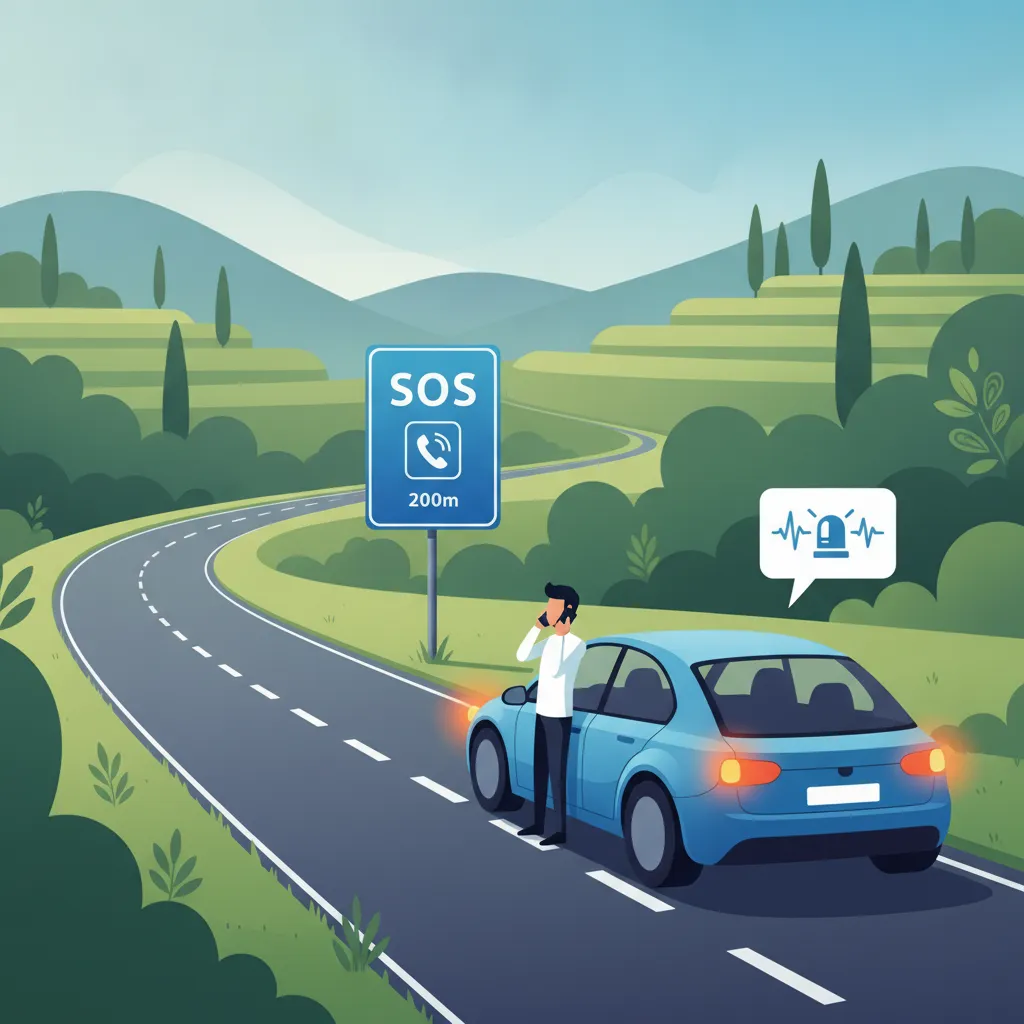
This lesson outlines the proper conduct when encountering emergency vehicles on the road or interacting with responders at an incident. It details the rules for yielding the right-of-way to ambulances, police, and fire services, ensuring they have a clear path. You will also learn how to provide clear and concise information to authorities to facilitate an effective emergency response.
Learn essential steps for motorcycle breakdowns in Italy. This lesson covers immediate safety actions, using hazard lights, mandatory high-visibility vest usage, and contacting roadside assistance or emergency services according to Italian law.
This lesson equips riders with the correct procedures to follow in the event of a breakdown or accident. It covers how to move the vehicle to a safe location, alert other traffic, and contact emergency services using the universal 112 number. You will also learn the basics of accident scene management and the necessary steps for reporting the incident to police and insurance.
This lesson provides a step-by-step guide for managing a vehicle breakdown safely. It reinforces the procedure for stopping on the hard shoulder, activating hazard lights, and placing a warning triangle at the correct distance. The lesson emphasizes the importance of wearing high-visibility clothing, exiting the vehicle from the side away from traffic, and waiting in a safe location before contacting a roadside assistance service.
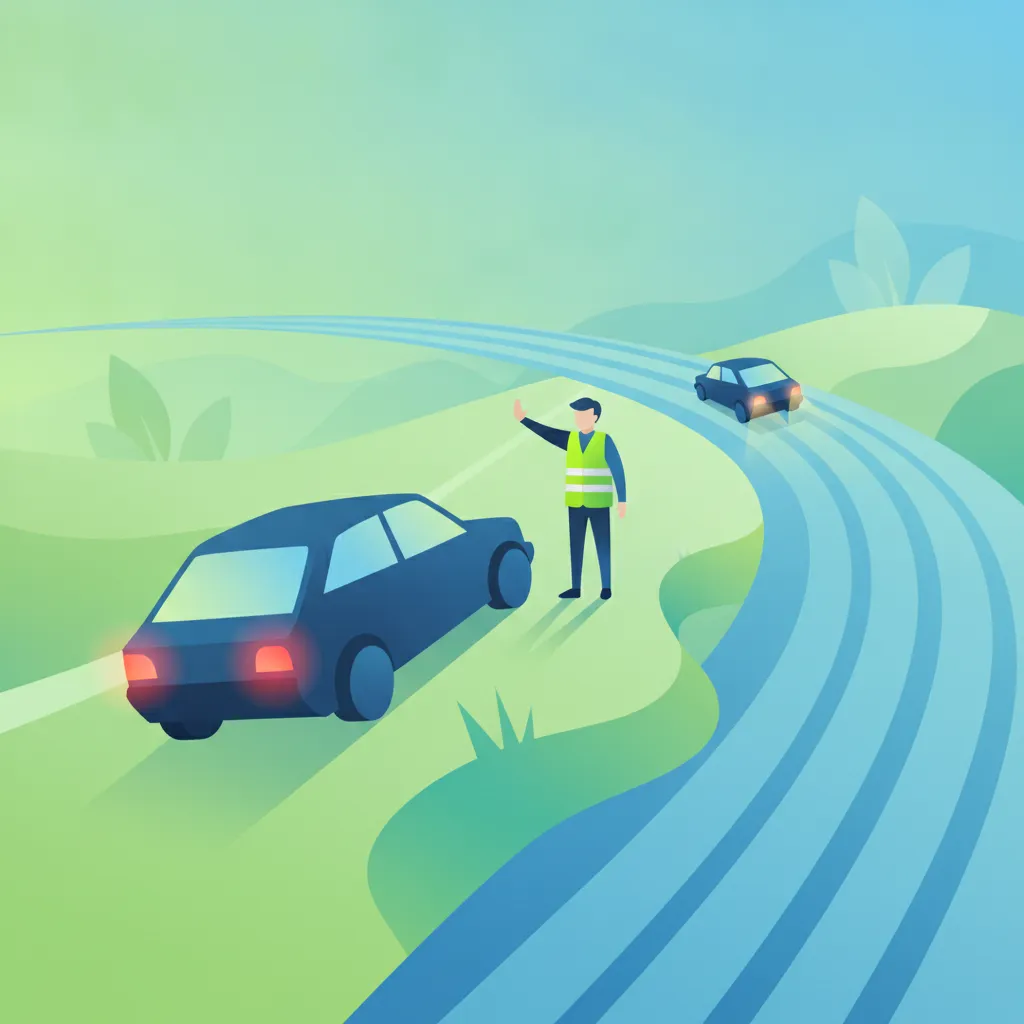
This lesson prepares drivers for unexpected emergencies that may occur far from base. It provides a clear, step-by-step guide on what to do in the event of a breakdown on a motorway, including how to stop safely on the hard shoulder, make the vehicle visible, and call for assistance. Basic procedures for dealing with a vehicle fire or being the first at an accident scene are also covered, prioritizing personal safety at all times.
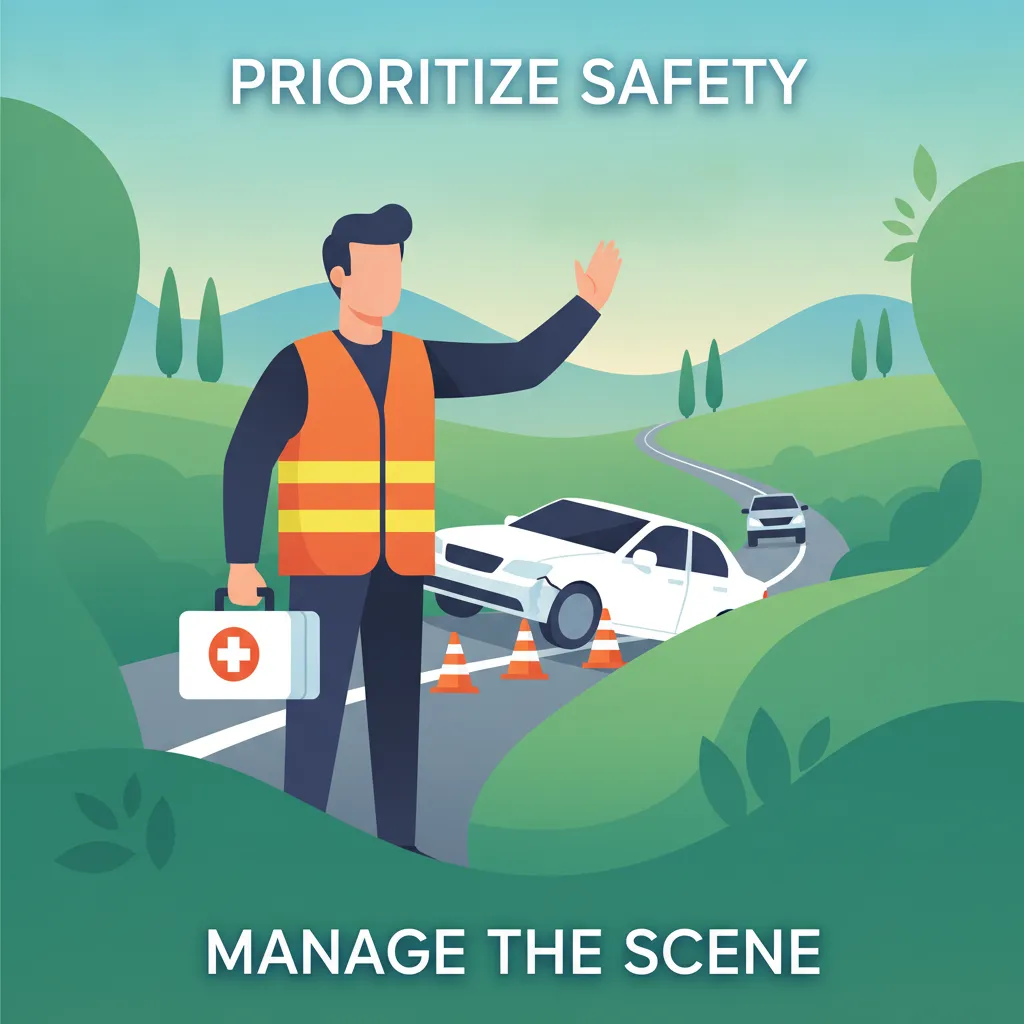
This lesson provides essential knowledge for managing the immediate aftermath of an accident before professional help arrives. It covers the critical first step of securing the scene to prevent further incidents. The content then introduces basic first aid principles, such as assessing a casualty's condition and controlling severe bleeding, while also explaining the critical considerations regarding when and when not to remove a rider's helmet.
This lesson outlines the mandatory legal procedures a rider must follow after being involved in a traffic accident. It covers the obligation to stop, render aid if necessary, and report the incident to the appropriate authorities. The content explains the process of exchanging information with other parties, documenting the scene for insurance purposes, and the potential legal and financial liabilities that may arise.
This lesson outlines the proper conduct when encountering emergency vehicles on the road or interacting with responders at an incident. It details the rules for yielding the right-of-way to ambulances, police, and fire services, ensuring they have a clear path. You will also learn how to provide clear and concise information to authorities to facilitate an effective emergency response.
This lesson provides a comprehensive guide to riding on high-speed motorways, or autostrade. It details the correct procedures for safely merging into traffic from an entry ramp and exiting via a deceleration lane. The content reinforces strict lane discipline, rules for overtaking, and the importance of maintaining a significantly larger following distance to compensate for higher speeds and potential wind gusts.

This lesson establishes a crucial routine for every rider: the pre-ride technical inspection. It presents a systematic checklist, often remembered by acronyms, to verify the condition of essential components before starting a journey. Learners will understand how to check tyre pressures, brake function, fluid levels, lights, and final drive systems to prevent mechanical issues and enhance safety on the road.
This lesson focuses on the vital systems for visibility and communication: mirrors, lighting, and signals. It provides instruction on the proper adjustment of mirrors to minimize blind spots and the correct use of headlamps, indicators, and brake lights as per Italian regulations. The content underscores how maintaining these systems in full working order is crucial for being seen and signalling intentions clearly in traffic.
This lesson delivers a comprehensive explanation of right-of-way regulations at Italian intersections. It covers the interpretation of traffic light signals, the absolute requirement to stop at stop signs, and yielding at give-way signs. Furthermore, it details the default priority rules for unmarked intersections and the specific obligations a rider has towards pedestrians on crossings.
Find clear answers to common questions learners have about Breakdown Procedures and Emergency Contact. Learn how the lesson is structured, which driving theory objectives it supports, and how it fits into the overall learning path of units and curriculum progression in Italy. These explanations help you understand key concepts, lesson flow, and exam focused study goals.
You must pull over to the hard shoulder (corsia di emergenza) if possible, switch on your hazard lights, and wear your high-visibility vest before dismounting from the right side away from traffic.
You should never abandon your vehicle. If you must leave it to seek help, ensure it is parked as far off the carriageway as possible and, if it is a major road, call emergency services or an official breakdown provider immediately.
It makes you significantly more visible to other road users, especially in low-light conditions, fog, or heavy traffic, which is a key safety requirement in the Italian theory exam.
The theory exam includes situational questions regarding safety equipment and emergency management. Understanding the legal obligations for breakdowns ensures you can select the correct, safest answer in various road scenarios.
Start searching now to pinpoint exactly which Italian driving theory topics, road signs, or traffic rules you need to master. Use our advanced filters to build a custom practice session and ensure you're fully prepared for every aspect of your official driving licence exam.