
This lesson teaches you the essential rules for interacting with emergency services while riding your moped or scooter. Understanding these regulations is critical for your safety and success in the Italian Patente AM theory exam.
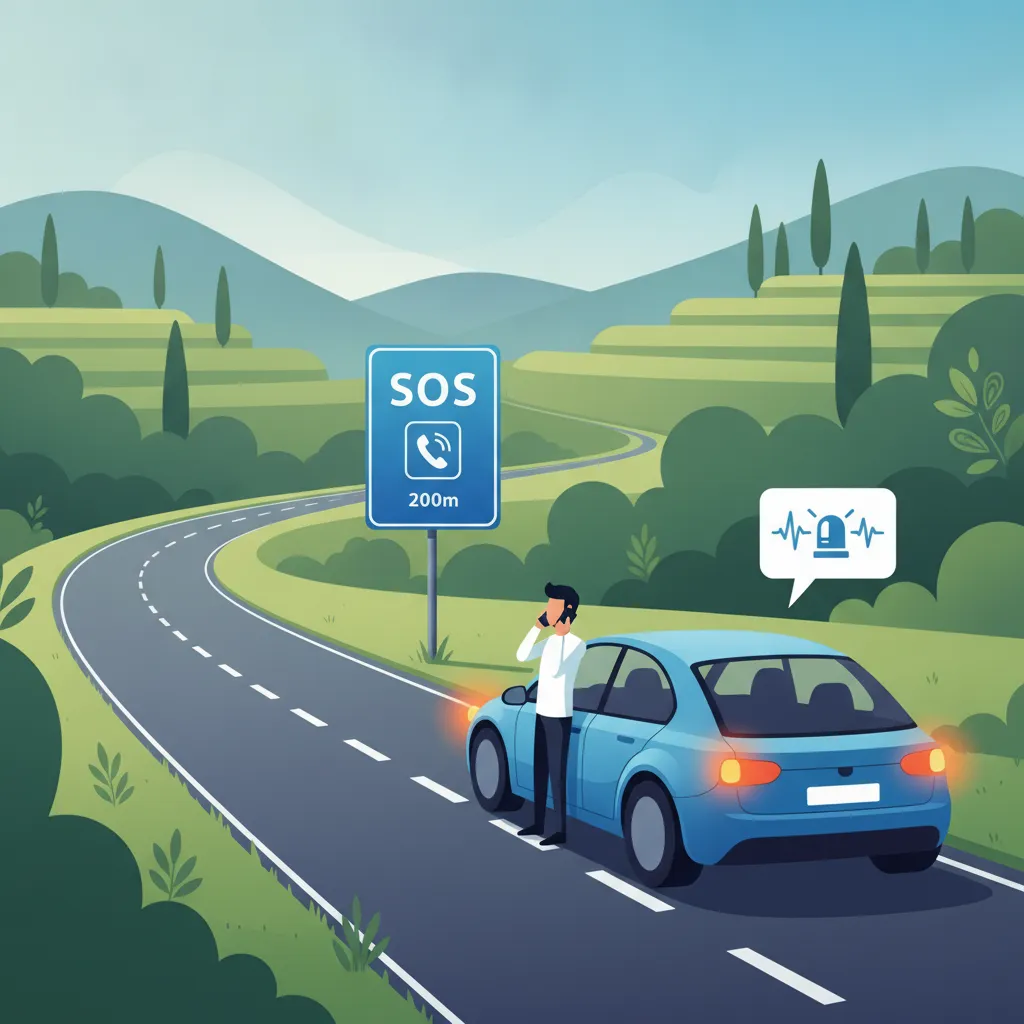
Lesson content overview
Navigating Italy's roads requires a thorough understanding of traffic laws, especially when encountering emergency vehicles or arriving at an incident scene. For riders seeking the Italian Patente AM Specialization, mastering proper conduct in emergencies is not just a matter of compliance; it is crucial for ensuring public safety, enabling swift emergency response, and preventing legal repercussions. This lesson delves into the specific responsibilities of all drivers, particularly those on mopeds and scooters, when interacting with police, ambulances, and fire services.
Emergency vehicles are specially designated vehicles equipped for urgent public safety, law enforcement, or medical missions. Their prompt arrival at an incident can often be a matter of life or death, which is why they are granted special privileges on the road.
In Italy, several types of vehicles are classified as emergency vehicles when they are on an active mission. These typically include:
It's important to recognize these vehicles not just by their type, but also by their active signals.
Emergency vehicles communicate their urgent status through distinct audible and visual signals. Recognizing and responding correctly to these signals is paramount.
High-pitched, fluctuating sounds emitted by emergency vehicles, mandatory for indicating immediate priority and requiring other road users to yield.
Distinctive colored lights (typically blue for police, red for fire, and green for medical in Italy) that flash to indicate an emergency vehicle is on duty. These lights may be used alone or in conjunction with sirens.
Drivers must respond to an emergency vehicle if any of these signals are active. A common misunderstanding is believing that only vehicles with sirens require yielding. However, an emergency vehicle displaying only flashing lights, even without a siren, still demands that other drivers give way. For example, a fire engine with flashing lights but no siren approaching on a city street requires immediate action from other drivers to move aside.
The presence of an emergency vehicle with active signals fundamentally alters the standard right-of-way hierarchy on the road. This priority is grounded in the principle of priority of life-saving missions over ordinary traffic flows.
The general hierarchy shifts as follows:
This means that emergency vehicles may use any lane or part of the road needed for safe passage. This overriding priority ensures they can reach their destination without delay, which is critical for effective emergency response. For instance, an ambulance approaching an intersection on a main road will have priority over vehicles on side streets, regardless of standard intersection rules.
Effective emergency conduct is built upon three core principles: yielding, non-interference, and communication. Adhering to these principles ensures you are not only compliant with the law but also actively contributing to public safety.
The requirement for drivers to give way, move aside, or stop to allow an approaching or stationary emergency vehicle with active signals to proceed without obstruction.
The primary purpose of yielding is to ensure a clear path for emergency services, minimizing their response times. This can significantly impact the outcome of an emergency. As a driver, you must constantly assess the situation, adjust your speed, change lanes, or stop as needed, always prioritizing safety. For example, if an ambulance approaches from behind on a multi-lane road, you should safely move to the rightmost available lane to clear its path.
The obligation for drivers not to impede the work of emergency responders at an incident site, which includes maintaining a safe distance and not blocking access routes.
At the scene of an accident or emergency, emergency personnel require unhindered access and a safe working environment. Drivers must guarantee responders have safe egress and ingress, preventing secondary accidents or hindering rescue efforts. This requires an awareness of the incident’s perimeter and proactive lane positioning to ensure you do not become an obstacle. Pulling over too close to an accident, for instance, can create a bottleneck and delay vital assistance.
The act of providing clear, concise, and factual information to emergency personnel when required, such as details about location, road conditions, or observed hazards.
In certain situations, you may be asked to provide information to police, fire brigade, or medical personnel. Your cooperation assists responders in planning and executing their actions efficiently. This might involve stopping, identifying yourself, and following specific instructions. Providing accurate information, rather than speculation, helps responders coordinate operations effectively. For example, if you witness an accident, police may ask for your account of events or details about involved vehicles.
When an emergency vehicle with active signals approaches, knowing the correct yielding strategy is crucial. Your actions must be prompt, predictable, and safe for all road users.
The specific method of yielding can vary depending on the road type and traffic conditions.
Never attempt to overtake an emergency vehicle that is displaying active signals and is moving in the same direction as you. This is extremely dangerous and illegal.
When an emergency vehicle approaches, drivers need to anticipate its presence and react in good time. The distance required to bring your moped or scooter to a complete stop depends on your speed, the road conditions, and your reaction time.
The total distance a vehicle travels from the moment a driver perceives a hazard to the moment the vehicle comes to a complete stop. It comprises reaction distance (the distance traveled during the driver's reaction time) and braking distance (the distance traveled while braking).
At 50 km/h, a typical scooter or moped might need approximately 25-30 metres to stop safely in ideal conditions. This distance increases significantly at higher speeds or in adverse weather. Therefore, as soon as you detect an emergency vehicle, begin to reduce your speed and assess your options for yielding. Early detection and reaction prevent sudden braking, which can be hazardous to you and other road users.
Encountering an accident or breakdown scene requires careful and responsible conduct to ensure your safety and that of responders and victims.
If you come across an incident, your first priority is to ensure your own safety and avoid becoming part of the problem.
Assess the Situation: Before reaching the scene, try to understand the nature of the incident and the presence of emergency services (hazard lights, warning triangles, police vehicles).
Maintain Safe Distance: Stop your vehicle at a safe distance from the incident. This means at least 5 meters behind any hazard warning triangle or the last emergency vehicle present. This space is crucial for responders to work, deploy equipment, and ensure maneuverability.
Do Not Obstruct: Ensure your vehicle does not block access routes for additional emergency vehicles or personnel. Keep lanes clear if possible, especially emergency lanes on highways.
Use Hazard Warning Lights: If you need to stop to render assistance or because of traffic buildup due to the incident, activate your hazard warning lights to alert other drivers.
Common mistakes include pulling over too close to the incident, causing unnecessary bottlenecks, or stopping in a way that creates a further hazard for oncoming traffic. Always prioritize creating a safe perimeter around the incident.
Should you be involved in an incident or are a witness, you may need to communicate with emergency responders.
Identify Yourself: If approached, clearly state your name, and if you were involved, provide your vehicle registration.
Answer Questions Promptly and Factually: Respond to questions from police, firefighters, or medical personnel with precise and truthful information. Avoid speculation or guesswork.
Follow Instructions: Strictly adhere to any instructions given by emergency personnel, whether it's regarding moving your vehicle, staying in a certain area, or providing specific details.
Do Not Interfere: Do not touch or move anything at the scene unless specifically instructed to do so, especially in accident investigations.
Police officers, in particular, may request to see your driver’s license and vehicle documents. It is a legal obligation to comply with these requests promptly. Refusing to provide identification or giving false statements can lead to severe penalties.
The orange/yellow blinking lights on a vehicle, which flash simultaneously, used to warn other road users that the vehicle is stationary and potentially posing a danger, typically due to a breakdown or accident.
Hazard warning lights are a crucial safety feature, but their use is strictly regulated:
When stopping on a road due to a breakdown or accident, especially outside of urban areas or at night, remember to also place a mandatory warning triangle at a suitable distance behind your vehicle (usually at least 50 metres) to provide advance warning to other drivers.
The rules governing interaction with emergency services are enshrined in Italian law, primarily the Codice della Strada (Italian Highway Code). Compliance is not optional; it is a legal requirement designed to protect lives and ensure the efficiency of emergency operations.
The Codice della Strada contains specific articles that address the obligations of drivers when encountering emergency vehicles and at incident scenes. These provisions mandate specific behaviors and establish penalties for non-compliance.
The core principle is that emergency vehicles on active duty, utilizing their audible and visual signals, have absolute priority over all other road users, including pedestrians, regardless of traffic lights or signs. Drivers are explicitly required to move to the right and, if necessary, stop to facilitate their passage.
Failure to adhere to these rules can result in significant legal consequences, including fines, points deducted from your license, and in some cases, more severe penalties if the violation leads to an accident or serious obstruction.
Penalties for traffic violations in Italy, including those related to emergency conduct, can be substantial and may also affect your ability to obtain or maintain your driving license. Always be aware of the specific articles of the Codice della Strada that apply.
The principles of emergency conduct remain constant, but their application requires adaptation based on various external factors.
Mastering emergency conduct is a vital part of responsible driving, particularly for Patente AM riders who often navigate urban environments. By understanding and applying these principles, you contribute directly to public safety and ensure the efficient operation of emergency services.
By integrating these behaviors into your everyday riding, you demonstrate a commitment to road safety and responsible citizenship.
This lesson covers the essential rules for interacting with emergency services on Italian roads, required for the Patente AM theory exam. It explains how to identify emergency vehicles by their sirens and flashing lights, and establishes the mandatory hierarchy where emergency vehicles with active signals have absolute priority over all other road users. The lesson provides specific yielding strategies for different road types (urban streets, highways, single-lane roads), emphasizes maintaining safe distances at incident scenes, and details the correct use of hazard warning lights. Key legal obligations under the Codice della Strada are highlighted, including penalties for failing to yield, blocking emergency access, or overtaking stopped emergency vehicles. Practical guidance covers communication with responders, stopping distances, and adaptations for weather, traffic density, and vulnerable road users.
A short set of high-value points that capture the most important learning from this lesson.
Yielding to emergency vehicles with active sirens or flashing lights is mandatory in Italy, regardless of traffic lights or road signs.
When an emergency vehicle approaches, move as far right as safely possible and stop if necessary; never attempt to overtake or pass an emergency vehicle displaying active signals.
At incident scenes, maintain a safe distance (at least 5 metres behind the last emergency vehicle or warning triangle) and never block access routes for responders.
Use hazard warning lights only when stationary and posing a danger; they must never be used while driving.
Providing accurate identification and factual information to emergency personnel is both a legal obligation and essential for effective emergency response.
Explore all units and lessons included in this driving theory course.
Emergency vehicles include ambulances, police (Carabinieri, Polizia di Stato, Polizia Locale), fire engines (Vigili del Fuoco), and civil protection vehicles when on active duty.
Flashing lights alone, without a siren, still require full yielding compliance in Italy.
On multi-lane roads, move to the rightmost lane to allow emergency vehicles to pass on the left; in Italy, traffic keeps to the right.
At 50 km/h, a typical moped or scooter needs approximately 25-30 metres to stop safely in ideal conditions.
The Codice della Strada governs all emergency conduct rules, with penalties including fines and points deducted from your Patente AM.
Believing that flashing lights alone do not require yielding; emergency vehicles with visual signals only still demand full compliance.
Sudden braking when yielding to an emergency vehicle on highways, which risks rear-end collisions from following traffic.
Blocking intersections by entering them before an emergency vehicle approaches, causing gridlock that impedes response.
Using hazard warning lights while driving, which can confuse other drivers about your intentions.
Pulling over too close to an incident scene, creating bottlenecks and obstructing emergency vehicle access.
Lesson content overview
A short set of high-value points that capture the most important learning from this lesson.
Yielding to emergency vehicles with active sirens or flashing lights is mandatory in Italy, regardless of traffic lights or road signs.
When an emergency vehicle approaches, move as far right as safely possible and stop if necessary; never attempt to overtake or pass an emergency vehicle displaying active signals.
At incident scenes, maintain a safe distance (at least 5 metres behind the last emergency vehicle or warning triangle) and never block access routes for responders.
Use hazard warning lights only when stationary and posing a danger; they must never be used while driving.
Providing accurate identification and factual information to emergency personnel is both a legal obligation and essential for effective emergency response.
Explore all units and lessons included in this driving theory course.
Emergency vehicles include ambulances, police (Carabinieri, Polizia di Stato, Polizia Locale), fire engines (Vigili del Fuoco), and civil protection vehicles when on active duty.
Flashing lights alone, without a siren, still require full yielding compliance in Italy.
On multi-lane roads, move to the rightmost lane to allow emergency vehicles to pass on the left; in Italy, traffic keeps to the right.
At 50 km/h, a typical moped or scooter needs approximately 25-30 metres to stop safely in ideal conditions.
The Codice della Strada governs all emergency conduct rules, with penalties including fines and points deducted from your Patente AM.
Believing that flashing lights alone do not require yielding; emergency vehicles with visual signals only still demand full compliance.
Sudden braking when yielding to an emergency vehicle on highways, which risks rear-end collisions from following traffic.
Blocking intersections by entering them before an emergency vehicle approaches, causing gridlock that impedes response.
Using hazard warning lights while driving, which can confuse other drivers about your intentions.
Pulling over too close to an incident scene, creating bottlenecks and obstructing emergency vehicle access.
Explore search topics learners often look for when studying Emergency Conduct and Interaction with Emergency Services. These topics reflect common questions about road rules, driving situations, safety guidance, and lesson level theory preparation for learners in Italy.
Browse additional driving theory lessons that cover connected traffic rules, road signs, and common driving situations related to this topic. Improve your understanding of how different rules interact across everyday traffic scenarios.
Understand the legal requirements for giving way to ambulances, police, and fire services in Italy. This lesson covers correct procedures for clearing paths for emergency vehicles with active signals, based on the Codice della Strada.

This lesson reinforces the correct procedures for interacting with emergency vehicles that are responding to a call with sirens and lights active. It explains the legal obligation to yield the right-of-way by safely moving to the side of the road and stopping if necessary. The content emphasizes making smooth, predictable movements to create a clear path, allowing emergency responders to proceed without delay.

This lesson clarifies the special priority rules for emergency vehicles and public transport. It explains the legal obligation to safely pull over and clear a path for any vehicle with active sirens and flashing lights. The content also details the absolute right-of-way that trams have in most situations and the requirement to yield to public buses signaling to pull out from a stop.
This lesson details how to safely approach and enter intersections by correctly interpreting traffic lights, stop signs, and give-way rules. It emphasizes the importance of scanning for hazards, checking blind spots, and anticipating the actions of other road users. You will learn to adjust your speed and position your vehicle correctly to navigate crossings without incident.

This lesson details the proper and legal application of a vehicle's horn, lights, and signals as primary communication tools. It explains the specific circumstances for using high beams, low beams, and fog lights to maximize visibility without dazzling other drivers. The content also clarifies the rules for using the horn, turn indicators, and hazard lights to signal intentions, warn of danger, or indicate an emergency situation.
This lesson explains the function of Italian traffic light systems and the meaning of various road markings. You will learn the rules for red, amber, and green signals, including flashing lights and directional arrows. It also covers how to interpret lane lines, stop lines, and other surface markings that dictate correct vehicle positioning and movement.
This lesson provides a step-by-step guide to navigating roundabouts safely and efficiently. It focuses on the critical rule of yielding to traffic already circulating within the roundabout before entering. You will also learn how to select the correct lane based on your intended exit and how to use your indicators to signal your maneuvers clearly.
This lesson covers the general principles of priority at intersections governed by traffic signs and signals. It explains how to identify a priority road and the obligation to yield to traffic when encountering a 'dare la precedenza' (yield) or stop sign. The content also reviews the hierarchy of authority, where signals from a traffic officer override all other signs and lights.

This lesson provides a detailed explanation of the priority rules that govern Italian intersections and roundabouts. You will learn to identify priority roads and correctly apply the rules for stop and give way signs. It also covers the specific procedures for entering, navigating, and exiting roundabouts, emphasizing when to yield to circulating traffic.
This lesson explains how to execute left turns, right turns, and U-turns safely while maintaining correct lane discipline. It covers interpreting road markings and arrows, selecting the proper vehicle position, and using signals in a timely manner. Performing shoulder checks to monitor blind spots before and during a turn is a key focus for preventing collisions.
This lesson delivers a comprehensive explanation of right-of-way regulations at Italian intersections. It covers the interpretation of traffic light signals, the absolute requirement to stop at stop signs, and yielding at give-way signs. Furthermore, it details the default priority rules for unmarked intersections and the specific obligations a rider has towards pedestrians on crossings.
Learn how to act responsibly at accident scenes, safely position your vehicle, and communicate effectively with police, fire, and medical personnel. Essential theory for all Italian Patente AM license holders.
This lesson equips riders with the correct procedures to follow in the event of a breakdown or accident. It covers how to move the vehicle to a safe location, alert other traffic, and contact emergency services using the universal 112 number. You will also learn the basics of accident scene management and the necessary steps for reporting the incident to police and insurance.
This lesson reinforces the correct procedures for interacting with emergency vehicles that are responding to a call with sirens and lights active. It explains the legal obligation to yield the right-of-way by safely moving to the side of the road and stopping if necessary. The content emphasizes making smooth, predictable movements to create a clear path, allowing emergency responders to proceed without delay.
This lesson provides critical guidance on how to respond in the event of a traffic accident. It outlines the immediate steps to take, such as securing the scene with a warning triangle and hazard lights, and calling the emergency services. The content also covers the legal obligation to assist the injured and provides an introduction to basic first aid principles that can be applied until professional help arrives.
This lesson details how to safely approach and enter intersections by correctly interpreting traffic lights, stop signs, and give-way rules. It emphasizes the importance of scanning for hazards, checking blind spots, and anticipating the actions of other road users. You will learn to adjust your speed and position your vehicle correctly to navigate crossings without incident.
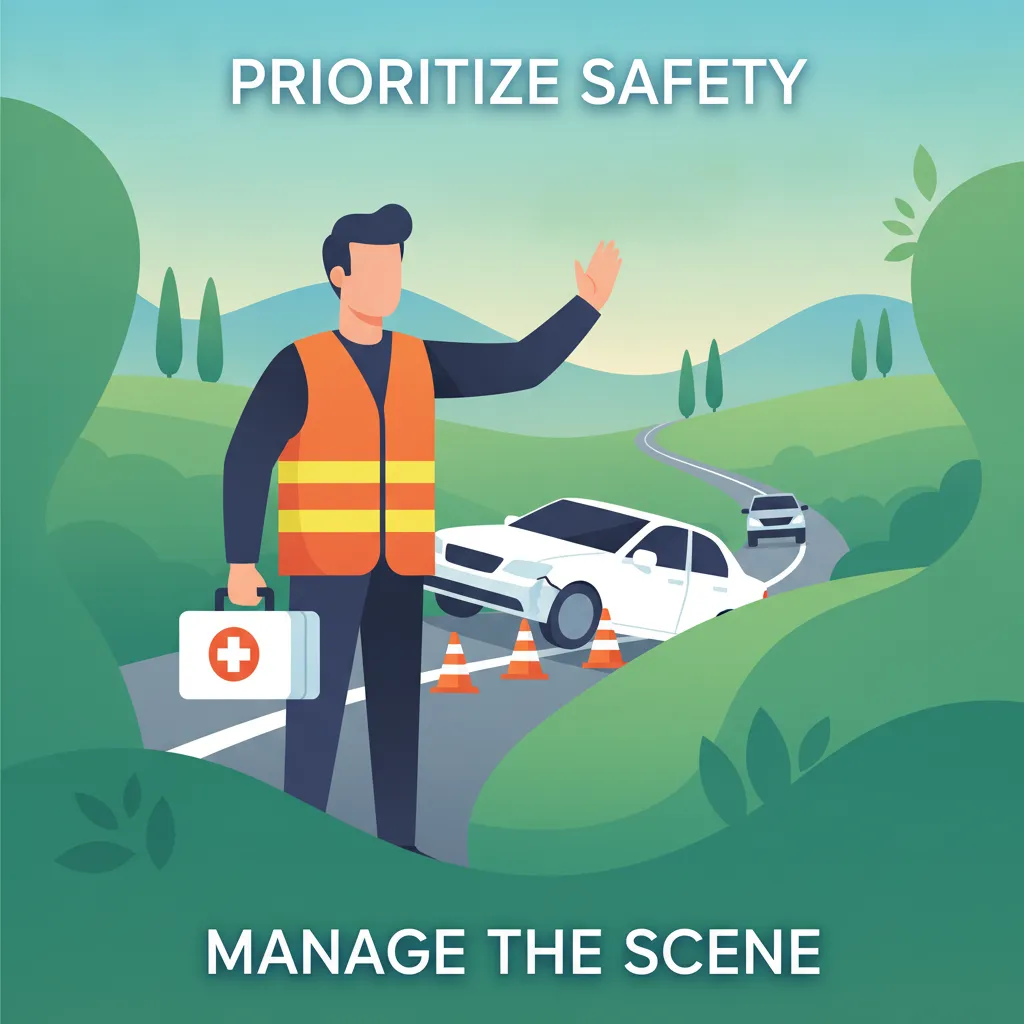
This lesson provides essential knowledge for managing the immediate aftermath of an accident before professional help arrives. It covers the critical first step of securing the scene to prevent further incidents. The content then introduces basic first aid principles, such as assessing a casualty's condition and controlling severe bleeding, while also explaining the critical considerations regarding when and when not to remove a rider's helmet.
This lesson provides critical guidance on how to safely share the road with vulnerable users, including pedestrians, cyclists, motorcyclists, and children. It highlights the importance of increased awareness in specific areas like school zones and crosswalks. The content teaches techniques for maintaining a safe lateral distance when overtaking, checking blind spots thoroughly, and anticipating the often unpredictable movements of these users.

This lesson focuses on non-verbal communication techniques essential for safe riding. It covers how to use eye contact, headlights, and hand signals to convey intentions to drivers, pedestrians, and cyclists. Understanding how to interact and negotiate space in traffic through clear communication helps prevent accidents and promotes a smoother traffic flow.

This lesson teaches riders how to maintain a safe following distance using the two-second rule, which accounts for reaction time and braking distance. It covers grip management, explaining how tire condition and road surfaces like wet asphalt affect traction. Mastering these concepts is essential for anticipating hazards and preventing rear-end collisions.
This lesson addresses high-risk behaviors often associated with young and inexperienced riders. It highlights the dangers of distractions like mobile phone use, the influence of peer pressure, and the severe consequences of speeding or riding under the influence of substances. Understanding these risks is the first step toward developing a mature and responsible approach to riding.
This lesson outlines the mandatory legal procedures a rider must follow after being involved in a traffic accident. It covers the obligation to stop, render aid if necessary, and report the incident to the appropriate authorities. The content explains the process of exchanging information with other parties, documenting the scene for insurance purposes, and the potential legal and financial liabilities that may arise.
Find clear answers to common questions learners have about Emergency Conduct and Interaction with Emergency Services. Learn how the lesson is structured, which driving theory objectives it supports, and how it fits into the overall learning path of units and curriculum progression in Italy. These explanations help you understand key concepts, lesson flow, and exam focused study goals.
You must pull over and yield if the vehicle is using its emergency blue lights and siren. You do not necessarily have to stop completely, but you must free the path, ensuring you do not create a hazard for yourself or others.
If you are safely able to move slightly forward or to the side without entering the intersection illegally, do so. If the intersection is blocked, wait for the light to change while keeping a clear path for the emergency vehicle.
Under the Italian Codice della Strada, you have a legal obligation to stop and provide assistance if you are involved in an accident. If you are a witness, you should call emergency services immediately if help hasn't arrived yet.
Start searching now to pinpoint exactly which Italian driving theory topics, road signs, or traffic rules you need to master. Use our advanced filters to build a custom practice session and ensure you're fully prepared for every aspect of your official driving licence exam.