
This lesson guides you through the complex logistical requirements for professional heavy goods vehicle drivers in Italy. You will learn to effectively plan your routes, adhere to legal driving and rest time regulations, and utilize proper rest areas to ensure safety and compliance.

Lesson content overview
Navigating the roads with heavy goods vehicles (HGVs) over long distances requires meticulous planning and adherence to strict regulations. This comprehensive guide, vital for professional drivers in the Italian Goods Vehicle License Theory Course, delves into the logistical aspects of long-haul driving, focusing on legal driving hours, mandatory rest periods, tachograph usage, strategic fuel stops, and the selection of secure overnight parking locations. Mastering these elements ensures compliance, minimizes driver fatigue, enhances operational efficiency, and significantly contributes to overall road safety.
Professional heavy goods vehicle drivers operate under a stringent framework of rules designed to prevent fatigue, which is a major contributor to road accidents. These regulations, primarily derived from EU Regulation 561/2006 and incorporated into the Italian Codice della Strada (Highway Code), define the maximum permissible driving durations and necessary breaks. Adhering to these limits is not merely a legal obligation but a cornerstone of safe and responsible driving.
The daily driving limit specifies the maximum amount of time a driver can spend behind the wheel within a 24-hour period. Generally, a driver may not exceed 9 hours of driving per day. However, this limit can be extended to 10 hours twice per week. This flexibility is intended to accommodate unforeseen circumstances or specific journey requirements, but it must be used judiciously and recorded accurately.
It is crucial to understand that these daily limits pertain to the cumulative driving time, not continuous driving. Within the daily limit, a driver must also observe mandatory breaks. For instance, after 4.5 hours of continuous driving, a driver must take an uninterrupted break of at least 45 minutes. This break can also be split into two parts: an initial break of at least 15 minutes, followed by a second break of at least 30 minutes, ensuring the total 45 minutes are taken within the 4.5-hour driving period. Failing to adhere to these break requirements, even if within the daily driving limit, constitutes a violation.
Beyond daily limits, professional drivers must also manage their driving time over longer periods to ensure adequate recovery and prevent cumulative fatigue.
Properly managing these limits requires foresight and careful journey planning. Drivers must consider not only the immediate trip but also their recent driving history to avoid inadvertent violations.
Rest periods are just as critical as driving limits. They are legally mandated intervals designed to provide sufficient physical and mental recovery for drivers. Understanding the different types of rest and how they can be taken is fundamental for long-distance HGV operations.
A daily rest period is the minimum uninterrupted rest a driver must take within a 24-hour period.
When planning split daily rests, ensure the 9-hour segment is taken after the 3-hour segment and that both are completed within the 24-hour cycle. The longer period must be dedicated to quality rest.
Weekly rest periods are longer intervals intended for more substantial recovery.
It is important to note that any weekly rest of 45 hours or more taken in a vehicle must be in appropriate and secure parking, often at a designated truck stop with proper facilities.
The tachograph is a fundamental device for enforcing driving time and rest regulations. It records critical information about a vehicle's speed, distance traveled, and driver activities, ensuring transparency and accountability. All professional drivers of heavy goods vehicles in Italy must be proficient in its use, as mandated by EU Regulation 165/2014 and national legislation.
Historically, analog tachographs used wax-coated paper charts to graphically record speed, distance, and activity (driving, other work, availability, rest). These circular charts needed to be inserted daily and manually marked for activity changes. While some older vehicles may still use them, they are largely replaced by digital systems.
Digital tachographs are the modern standard. They store data electronically in the unit's memory and on a driver card. This system offers greater accuracy, security, and ease of data retrieval. Every professional driver must possess a personal driver card, which is inserted into the tachograph at the start of their shift. This card stores all individual driving and rest data for up to 28 days, while the tachograph unit itself stores data for 365 days.
Digital tachographs offer advanced security features to prevent tampering, and any attempt to alter data is considered a serious criminal offense, carrying severe penalties.
Proper tachograph usage involves several steps:
Insert Driver Card: At the start of a shift, the driver inserts their personal driver card into the tachograph unit. If there is a co-driver, their card is also inserted into the second slot.
Select Activity: The driver must manually select the appropriate activity mode:
Record Breaks: When taking a mandatory break, the driver selects the 'rest' mode. The tachograph will automatically record the duration.
Printouts (if needed): In case of digital tachograph malfunction, drivers may need to make manual entries on printouts from the tachograph or on the back of tachograph charts.
Remove Card: At the end of the shift, the driver removes their card. All data from the shift is recorded on the card and in the unit.
Drivers are legally required to carry their driver card, along with any manual records and printouts, for the current day and the preceding 28 calendar days. This allows enforcement officers to verify compliance during roadside checks. Regular checks of the tachograph unit's calibration and functionality are also essential.
Efficient long-distance driving extends beyond managing driving hours; it also involves smart logistical planning, especially concerning fuel. Strategic fuel stop planning prevents unnecessary delays, ensures continuous operation, and can even contribute to cost savings.
Effective fuel planning starts with understanding your vehicle's fuel consumption rate and tank capacity.
To plan, calculate your estimated range: (Tank Capacity / Fuel Consumption Rate) * 100. Always build in a safety margin—an additional reserve of fuel, often 10-15% of your estimated range, to account for unforeseen detours, traffic, or higher-than-expected consumption.
Once you know your vehicle's range, plan fuel stops strategically along your route.
The choice of rest area is critical for both driver safety and compliance with rest period regulations. Not all parking areas are suitable or legal for extended HGV rests.
In Italy, Motorway Service Areas (Aree di Servizio) are common along the autostrade. These facilities typically offer fuel, food, restrooms, and general parking for all vehicles. While convenient for short breaks and refueling, they are not always ideal or legally designated for extended HGV overnight parking. Parking spaces can be limited, security may vary, and often they do not offer the specific amenities (e.g., showers, dedicated HGV services) that professional drivers require for quality rest.
Dedicated Truck Stops (sometimes referred to as aree di sosta per mezzi pesanti or specialized parcheggi per camion) are specifically designed for heavy goods vehicles. These facilities typically offer:
Choosing a dedicated truck stop, especially for daily or weekly rests, provides greater security for the vehicle and its cargo, and a more comfortable, restorative environment for the driver.
When planning an overnight stay to fulfill a daily or weekly rest requirement, consider the following:
Long-distance journey planning is dynamic and must adapt to various external and internal factors. The condition of the road, prevailing weather, light conditions, and the state of the vehicle itself all necessitate adjustments to driving strategy and rest planning.
Weather significantly impacts driving safety and efficiency:
Never attempt to 'push through' severe weather. If conditions become too hazardous, find a safe and legal place to stop and wait until conditions improve. Your safety and the safety of other road users are paramount.
The vehicle's internal state also influences journey planning:
Failing to comply with long-distance driving regulations carries serious legal penalties and, more importantly, poses significant safety risks. Understanding common violations can help professional drivers avoid them.
Effective long-distance planning for heavy goods vehicles is a multi-faceted discipline that integrates legal compliance, operational efficiency, and driver well-being. By diligently managing driving time limits and mandatory rest periods, utilizing tachographs accurately, planning fuel stops strategically, and selecting appropriate rest areas, professional drivers contribute significantly to road safety and the seamless flow of goods. Adherence to these principles, as outlined in the Italian Goods Vehicle License Theory Course, ensures drivers operate safely, legally, and professionally on Italy's roads and beyond.
This lesson covers the legal framework for long-distance HGV operations under EU Regulation 561/2006 and Italian Codice della Strada, detailing daily driving limits of 9-10 hours, mandatory 45-minute breaks after 4.5 hours, and weekly/fortnightly caps. Rest requirements include regular 11-hour daily rest (reducible or splittable), and 45-hour weekly rest (reducible to 24 with compensation). Digital tachograph operation requires selecting correct activity modes and maintaining driver cards. Effective journey planning integrates fuel stops with rest periods, selects secure truck stops for overnight parking, and adapts to weather, terrain, and vehicle load conditions.
A short set of high-value points that capture the most important learning from this lesson.
HGV drivers may drive a maximum of 9 hours daily, extendable to 10 hours twice weekly, with mandatory 45-minute breaks after 4.5 hours of continuous driving
Weekly driving is capped at 56 hours and fortnightly at 90 hours; exceeding these limits combined with daily limits results in serious violations
Daily rest must be at least 11 consecutive hours, reducible to 9 hours three times between weekly rests, or split into 3 hours plus 9 hours totaling 12 hours
Digital tachographs record driving, work, availability, and rest modes on a driver card storing 28 days of data; all professional HGV drivers must carry their card and 28 days of records
Fuel planning requires calculating vehicle range based on consumption rate and load, integrating fuel stops with mandatory rest periods for efficiency
Explore all units and lessons included in this driving theory course.
After 4.5 hours driving, take a 45-minute break (either continuous or split as 15 + 30 minutes)
Reduced weekly rest of 24 hours requires compensatory rest added to another rest period before the end of the third week following the reduction
Tachograph activity modes: driving (volante), other work (martelli incrociati), availability (quadrato con sbarra), rest (letto)
Dedicated truck stops (aree di sosta per mezzi pesanti) are preferred over motorway service areas for overnight HGV parking due to security and compliance
Loaded HGVs have higher fuel consumption, longer braking distances, and different handling characteristics than empty vehicles
Confusing reduced daily rest (9 hours) with split daily rest (3 + 9 hours) — they are different options with different conditions
Believing breaks can be shorter if taken frequently — only the 45-minute block after 4.5 hours satisfies the legal requirement
Parking overnight at undesignated laybys (piazzole di sosta) or regular motorway service areas instead of approved truck stops
Failing to adjust fuel planning for load weight, terrain, and weather conditions, leading to fuel shortages on motorways
Taking reduced weekly rest without scheduling compensatory rest within the required three-week window
Lesson content overview
A short set of high-value points that capture the most important learning from this lesson.
HGV drivers may drive a maximum of 9 hours daily, extendable to 10 hours twice weekly, with mandatory 45-minute breaks after 4.5 hours of continuous driving
Weekly driving is capped at 56 hours and fortnightly at 90 hours; exceeding these limits combined with daily limits results in serious violations
Daily rest must be at least 11 consecutive hours, reducible to 9 hours three times between weekly rests, or split into 3 hours plus 9 hours totaling 12 hours
Digital tachographs record driving, work, availability, and rest modes on a driver card storing 28 days of data; all professional HGV drivers must carry their card and 28 days of records
Fuel planning requires calculating vehicle range based on consumption rate and load, integrating fuel stops with mandatory rest periods for efficiency
Explore all units and lessons included in this driving theory course.
After 4.5 hours driving, take a 45-minute break (either continuous or split as 15 + 30 minutes)
Reduced weekly rest of 24 hours requires compensatory rest added to another rest period before the end of the third week following the reduction
Tachograph activity modes: driving (volante), other work (martelli incrociati), availability (quadrato con sbarra), rest (letto)
Dedicated truck stops (aree di sosta per mezzi pesanti) are preferred over motorway service areas for overnight HGV parking due to security and compliance
Loaded HGVs have higher fuel consumption, longer braking distances, and different handling characteristics than empty vehicles
Confusing reduced daily rest (9 hours) with split daily rest (3 + 9 hours) — they are different options with different conditions
Believing breaks can be shorter if taken frequently — only the 45-minute block after 4.5 hours satisfies the legal requirement
Parking overnight at undesignated laybys (piazzole di sosta) or regular motorway service areas instead of approved truck stops
Failing to adjust fuel planning for load weight, terrain, and weather conditions, leading to fuel shortages on motorways
Taking reduced weekly rest without scheduling compensatory rest within the required three-week window
Explore search topics learners often look for when studying Long-Distance Planning and Rest Area Utilization. These topics reflect common questions about road rules, driving situations, safety guidance, and lesson level theory preparation for learners in Italy.
Browse additional driving theory lessons that cover connected traffic rules, road signs, and common driving situations related to this topic. Improve your understanding of how different rules interact across everyday traffic scenarios.
Learn the essential principles for planning long-distance heavy goods vehicle journeys. This lesson covers optimizing routes, scheduling mandatory rest stops according to Italian and EU regulations, and understanding the role of the tachograph in ensuring driver compliance and safety.

This lesson addresses one of the biggest risks in professional driving: fatigue. It explains the physiological effects of fatigue on reaction time and decision-making and details the EU regulations on driving hours, breaks, and daily/weekly rest periods that are legally mandated to prevent it. Learners will understand how to use the tachograph to record their activity and the importance of taking all required breaks to maintain safety.

This lesson focuses on the specific regulations and techniques for operating a heavy vehicle on high-speed motorways. It covers mandatory lane discipline for trucks, the rules governing overtaking other heavy vehicles, and the specific speed limits that apply. Best practices for merging onto and exiting the motorway, maintaining safe following distances, and using the hard shoulder only in genuine emergencies are also detailed.

This lesson bridges the gap between general traffic laws and their specific application to heavy goods vehicles. It examines how rules regarding speed limits, lane discipline, overtaking, and priority are modified or have special considerations for trucks due to their size, weight, and reduced maneuverability. Drivers will learn to correctly interpret road signs and signals within the context of operating a large vehicle, ensuring safe and compliant integration with other traffic.
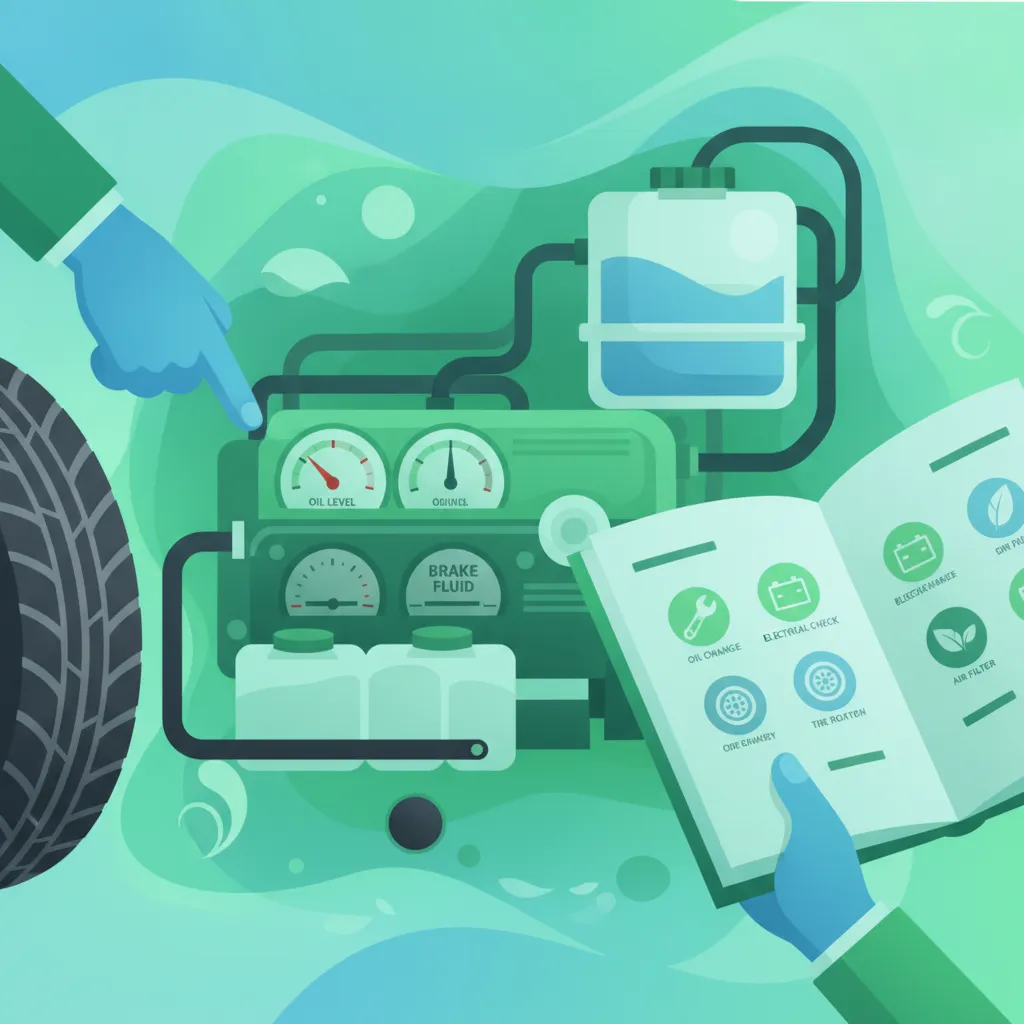
This lesson explains the difference between daily checks and long-term scheduled maintenance. It covers the legal requirement for periodic technical inspections ('revisione') to certify a vehicle's roadworthiness and the importance of adhering to manufacturer-recommended service intervals. Learners will understand their crucial role in reporting any mechanical defects promptly to ensure issues are rectified, maintaining the vehicle's safety and reliability over its service life.
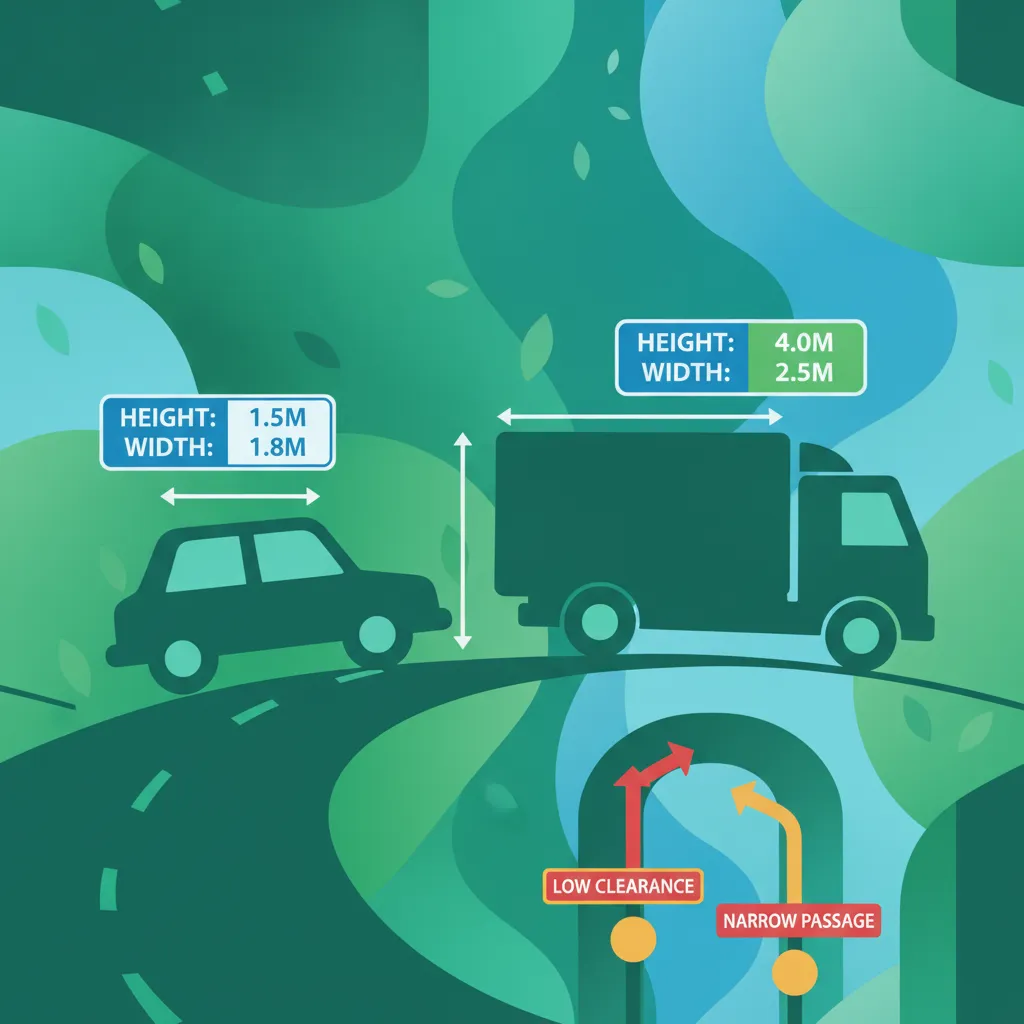
This lesson focuses on the specific dimensional limits that heavy goods vehicles must adhere to on Italian roads, as stipulated by the Codice della Strada. It covers the maximum permissible length, width, and height, explaining how these restrictions impact navigation through tunnels, under bridges, and within urban environments. Learners will also understand the conditions under which special permits for exceptional or oversized transport are required.

This lesson delves into the specific articles of the Italian Codice della Strada that apply to heavy goods vehicles. It outlines the core legal and professional obligations of a driver, including the heightened duty of care owed to other road users and the responsibility for the vehicle's roadworthiness and load. Learners will understand the legal consequences of non-compliance, such as fines and sanctions, reinforcing the importance of adhering to all traffic regulations.

This lesson focuses on the importance of meticulous pre-journey planning for urban deliveries. It teaches drivers how to use maps and digital tools to plan routes that avoid physical restrictions (low bridges, narrow streets), legal restrictions (ZTLs, weight limits), and temporary disruptions. Effective route planning saves time, reduces stress, and ensures that all deliveries can be made legally and safely.
This lesson provides a clear overview of the legal consequences for failing to comply with road transport regulations in Italy. It covers the system of fines for common offenses like speeding, overloading, and violations of driving hours. The lesson also explains the penalty point system that can lead to license suspension and touches upon the responsibilities and potential liability of the transport company.

This lesson covers the complete set of lighting, reflective equipment, and protective guards mandated for heavy vehicles. It explains the function of each light, from headlights to side markers, and the importance of keeping them clean and operational to ensure the vehicle is visible to others. The lesson also details the legal requirements and safety purpose of side guards and rear underrun protection, which are designed to protect vulnerable road users in a collision.
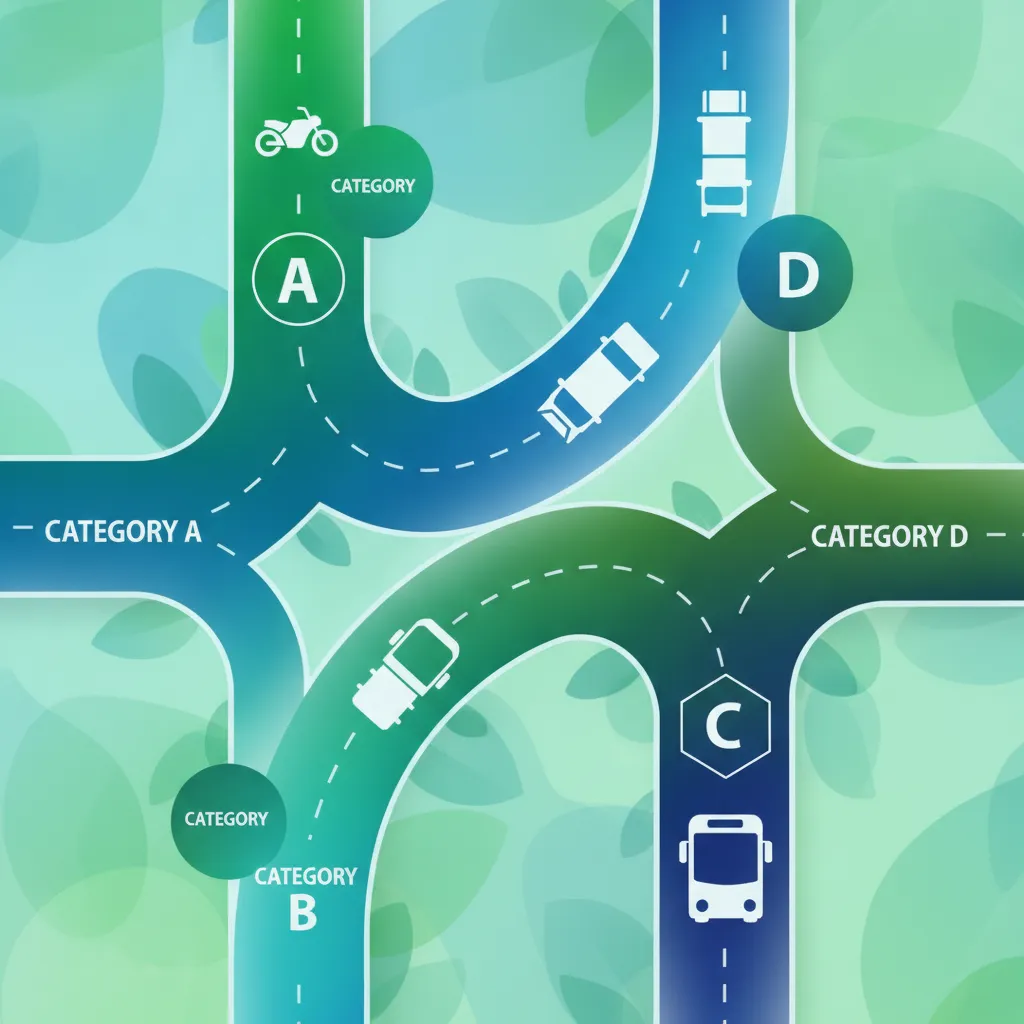
This lesson provides a detailed breakdown of the Italian goods vehicle licence categories, explaining the criteria that define each one. It covers the maximum authorized mass (MAM), vehicle configurations such as rigid trucks and articulated combinations, and the specific permissions granted by the C1, C1E, C, and CE licenses. Understanding these distinctions is fundamental to ensuring legal operation and choosing the correct qualification for specific transport tasks and vehicle types.
Explore the crucial aspects of selecting safe and compliant rest areas for heavy goods vehicles during long-distance journeys in Italy. Understand the differences between service areas and dedicated truck stops, focusing on security, amenities, and legal requirements for overnight parking.

This lesson outlines the correct protocols for stopping to make a delivery in a public area. It covers the legal use of designated loading bays, the importance of making the vehicle highly visible with hazard lights, and ensuring that the parking brake is securely applied. The lesson stresses the need to conduct loading and unloading activities efficiently and safely, without causing undue obstruction or danger to other road users and pedestrians.
This lesson covers the complete set of lighting, reflective equipment, and protective guards mandated for heavy vehicles. It explains the function of each light, from headlights to side markers, and the importance of keeping them clean and operational to ensure the vehicle is visible to others. The lesson also details the legal requirements and safety purpose of side guards and rear underrun protection, which are designed to protect vulnerable road users in a collision.
This lesson focuses on the specific regulations and techniques for operating a heavy vehicle on high-speed motorways. It covers mandatory lane discipline for trucks, the rules governing overtaking other heavy vehicles, and the specific speed limits that apply. Best practices for merging onto and exiting the motorway, maintaining safe following distances, and using the hard shoulder only in genuine emergencies are also detailed.
This lesson focuses on the specific dimensional limits that heavy goods vehicles must adhere to on Italian roads, as stipulated by the Codice della Strada. It covers the maximum permissible length, width, and height, explaining how these restrictions impact navigation through tunnels, under bridges, and within urban environments. Learners will also understand the conditions under which special permits for exceptional or oversized transport are required.

This lesson provides a comprehensive overview of the essential documentation required for both the driver and the vehicle. It covers the driver's license (patente), CQC card, vehicle registration (carta di circolazione), insurance certificate, and transport-specific documents like the cargo manifest. Learners will understand the importance of ensuring all documents are valid and readily available for inspection by authorities to avoid legal penalties and operational delays.
This lesson addresses one of the biggest risks in professional driving: fatigue. It explains the physiological effects of fatigue on reaction time and decision-making and details the EU regulations on driving hours, breaks, and daily/weekly rest periods that are legally mandated to prevent it. Learners will understand how to use the tachograph to record their activity and the importance of taking all required breaks to maintain safety.

This lesson provides a step-by-step guide for managing a vehicle breakdown safely. It reinforces the procedure for stopping on the hard shoulder, activating hazard lights, and placing a warning triangle at the correct distance. The lesson emphasizes the importance of wearing high-visibility clothing, exiting the vehicle from the side away from traffic, and waiting in a safe location before contacting a roadside assistance service.
This lesson bridges the gap between general traffic laws and their specific application to heavy goods vehicles. It examines how rules regarding speed limits, lane discipline, overtaking, and priority are modified or have special considerations for trucks due to their size, weight, and reduced maneuverability. Drivers will learn to correctly interpret road signs and signals within the context of operating a large vehicle, ensuring safe and compliant integration with other traffic.
This lesson delves into the specific articles of the Italian Codice della Strada that apply to heavy goods vehicles. It outlines the core legal and professional obligations of a driver, including the heightened duty of care owed to other road users and the responsibility for the vehicle's roadworthiness and load. Learners will understand the legal consequences of non-compliance, such as fines and sanctions, reinforcing the importance of adhering to all traffic regulations.

This lesson covers the specific environment of logistics hubs and distribution centers. It explains common site layouts, traffic flow systems, and the safety protocols drivers must follow when on private property. Key skills addressed include safely maneuvering in busy yards, reversing accurately into loading bays, and communicating effectively with warehouse staff to ensure a safe and efficient loading or unloading process.
Find clear answers to common questions learners have about Long-Distance Planning and Rest Area Utilization. Learn how the lesson is structured, which driving theory objectives it supports, and how it fits into the overall learning path of units and curriculum progression in Italy. These explanations help you understand key concepts, lesson flow, and exam focused study goals.
The tachograph is the primary tool for verifying compliance with EU and Italian driving time regulations. Understanding its operation is essential to avoid fines and ensure the safety of the driver and other road users.
Drivers must adhere to strict time limits for continuous driving. After a set period, a mandatory break is required to combat fatigue, as specified in the Codice della Strada and relevant professional transport regulations.
Yes, drivers should prioritize designated secure truck stops or motorway rest areas that offer appropriate facilities, lighting, and safety measures to protect both the cargo and the driver during mandatory rest.
Effective planning allows for realistic schedules, avoiding the need to rush or exceed driving limits. This reduces stress, prevents fatigue, and helps maintain vehicle stability and safety throughout the journey.
Start searching now to pinpoint exactly which Italian driving theory topics, road signs, or traffic rules you need to master. Use our advanced filters to build a custom practice session and ensure you're fully prepared for every aspect of your official driving licence exam.