
This lesson focuses on the vital skill of continuous visual scanning and correct mirror adjustment, which are fundamental for safe driving in Italy. By integrating interior and exterior mirror checks with direct observation, you will learn how to maintain 360-degree situational awareness. This knowledge is essential for passing the Patente B theory test and developing proactive habits for real-world road safety.

Lesson content overview
Driving safely requires more than just knowing how to operate a vehicle; it demands constant, comprehensive awareness of your surroundings. In the comprehensive Italian Patente B Theory course, understanding visual scanning techniques and the correct use of mirrors is fundamental. This lesson delves into how a continuous, systematic visual scan, combined with precise mirror usage and essential shoulder checks, allows you to maintain 360-degree awareness around your vehicle, detect hazards early, and execute maneuvers safely on Italian roads.
Maintaining a complete mental map of everything around your vehicle at all times is known as 360-degree awareness. This concept is the cornerstone of defensive driving, enabling you to anticipate potential dangers and plan your actions proactively. It means integrating what you see directly through your windows with information from your mirrors, always being mindful of areas you cannot easily see – the dreaded blind spots. Relying solely on one source of information, such as looking only straight ahead, dramatically increases the risk of accidents, especially in busy urban environments or on fast-moving motorways.
This continuous observation skill builds upon earlier lessons concerning general observation and vehicle positioning. It serves as a vital foundation for mastering complex maneuvers like turning, changing lanes, and overtaking, all of which demand precise knowledge of your immediate surroundings.
Your vehicle is equipped with several mirrors, each designed to provide a view of specific zones around your car. Proper adjustment and frequent use of these mirrors are essential for safe driving, as they extend your field of vision beyond what is possible with direct sight alone.
The interior rear-view mirror is positioned inside the vehicle, typically in the center of the windshield. Its primary function is to show you traffic directly behind your vehicle. This mirror provides a clear, stable view of vehicles approaching from the rear, helping you monitor following distances and anticipate potential braking situations or overtaking attempts.
When driving at night, many interior rear-view mirrors have an anti-glare setting (often a small lever or button). Adjusting this setting can significantly reduce the blinding effect of headlights from vehicles behind you, preserving your night vision.
Your vehicle also has two exterior mirrors, one on the driver's side (left) and one on the passenger's side (right). These mirrors are critical for viewing traffic to the sides and rear of your vehicle, covering zones that the interior mirror cannot.
Before you start driving, it is mandatory and paramount to correctly adjust all your mirrors. Improperly adjusted mirrors can create significant blind spots, compromising your safety.
Interior Rear-View Mirror: Sit in your normal driving position. Adjust the interior mirror so that you can see the entire rear window, centered. You should not have to move your head to see a clear view directly behind your vehicle.
Left Exterior Mirror: Lean slightly towards the driver's side window. Adjust the left exterior mirror so that you can just barely see the rear quarter panel of your own vehicle. This positioning helps to minimize the blind spot on your left side.
Right Exterior Mirror: Lean slightly towards the center of the vehicle (towards the passenger seat). Adjust the right exterior mirror so that you can just barely see the rear quarter panel of your own vehicle. This helps minimize the blind spot on your right side.
Avoid adjusting exterior mirrors too far outward, where you can't see any part of your own vehicle. While this might seem to reduce blind spots, it often creates "double blind spots" where a vehicle can disappear from your interior mirror and not yet appear in your exterior mirror, or vice-versa. A slight overlap of vision between your mirrors and direct vision is ideal.
Even with perfectly adjusted mirrors, there are still areas around your vehicle that remain hidden from view. These are known as blind spots. Blind spots are inherent to vehicle design and human visual perception, making them a significant safety challenge for drivers.
A blind spot is an area to the side and slightly behind your vehicle that cannot be seen in your interior or exterior mirrors, nor can it be seen directly through your side windows without turning your head. These zones are particularly dangerous because other vehicles, cyclists, or pedestrians can easily disappear into them, especially just before you make a lateral maneuver.
To counteract the danger of blind spots, drivers must perform a shoulder check, also known as a "glance over the shoulder." This is a brief, deliberate turn of the head to physically look into the blind spot area before making any lateral movement.
The shoulder check is not optional; it is a mandatory safety action before:
Signal Your Intent: Activate your turn signal well in advance.
Check Mirrors: Scan your interior and relevant exterior mirrors for traffic.
Quick Head Turn: Turn your head briefly but decisively in the direction of your intended maneuver (e.g., left shoulder check for a left lane change). Your eyes should sweep the blind spot area.
Confirm Clear: If the area is clear, proceed with your maneuver. If not, wait until it is safe.
Maintain Control: Ensure you keep the steering wheel steady and maintain vehicle control during the brief head turn. Avoid oversteering or swerving.
A common mistake is an incomplete shoulder check – a mere flick of the eyes. Your head must turn enough to genuinely see the blind spot. Remember, even at low speeds, a blind spot can hide a vulnerable road user like a cyclist or motorcyclist.
Visual scanning is the continuous process of moving your eyes and sometimes your head to systematically check different zones around your vehicle: forward view, mirrors, side views, and blind spots. It's a dynamic and ongoing activity, not something you do just once before starting.
A systematic visual scan pattern ensures that no area around your vehicle is consistently overlooked. While driving, your eyes should constantly be moving, never fixating on a single point for too long.
A common pattern involves:
Think of your visual scan as a continuous cycle: look ahead, check mirrors, check ahead, glance left, check ahead, glance right, check ahead. This rhythmic movement helps maintain awareness without overwhelming your focus.
The speed and complexity of your driving environment dictate how frequently you should repeat your visual scan cycle. Faster speeds and more challenging conditions require more frequent updates.
In Italy, the Codice della Strada (Road Code) mandates several requirements related to vehicle visibility and driver behavior, reinforcing the principles of continuous visual scanning and correct mirror use. While specific article numbers for scan intervals may not be explicitly listed, the general obligation for drivers to maintain control and situational awareness is clear.
Even experienced drivers can fall into bad habits regarding visual scanning and mirror use. Being aware of these common pitfalls can help you avoid them and enhance your safety.
Neglecting the Shoulder Check:
Improper Mirror Adjustment:
Overreliance on the Interior Mirror:
Insufficient Scan Frequency at High Speed:
Fixating on a Single Point:
Obstructed Mirrors:
Ignoring Blind Spots Around Large Vehicles:
Driving conditions are rarely static. Your visual scanning and mirror use must adapt to various environmental factors and vehicle states.
Let's look at how these principles apply in practical Italian driving situations.
The systematic visual scan and proper mirror use are not just techniques; they are fundamental safety practices rooted in the limitations of human perception and the dynamics of driving.
By consistently applying these principles, you not only improve your chances of passing the Italian Patente B theory and practical driving tests but, more importantly, you become a safer, more responsible driver on the road.
Effective visual scanning requires continuous, systematic observation combining forward view, mirrors, and physical checks. Proper mirror adjustment is essential: the interior mirror should show the entire rear window, while exterior mirrors should barely reveal your vehicle's side panel to minimize blind spots without creating coverage gaps. Shoulder checks are legally mandated before any lateral movement because blind spots are inherent to vehicle design. Scan frequency must adapt to conditions—at higher speeds on autostrade, checks every 3–5 seconds compensate for reduced reaction time. Special attention to vulnerable road users, particularly cyclists and pedestrians, is critical in Italian urban driving environments.
A short set of high-value points that capture the most important learning from this lesson.
360-degree awareness combines direct vision, mirror checks, and shoulder checks to maintain continuous situational awareness around your vehicle.
Each mirror serves a specific purpose: interior mirror shows traffic directly behind, left exterior covers the left lane, and right exterior covers the right lane.
Shoulder checks are mandatory before any lateral maneuver because blind spots cannot be eliminated by mirrors alone.
Scan frequency must increase with speed—at 130 km/h on an autostrada, check surroundings every 3–5 seconds versus every 5–8 seconds in urban traffic.
Vulnerable road users like cyclists and pedestrians frequently occupy vehicle blind spots, requiring extra vigilance during turns and lane changes.
Explore all units and lessons included in this driving theory course.
Mirrors must show a slight overlap of your own vehicle to avoid creating 'double blind spots' where vehicles disappear between mirror views.
Always signal first, check mirrors, then perform a decisive shoulder check before changing lanes, turning, merging, or overtaking.
Anti-glare settings on the interior mirror help maintain night vision when vehicles behind you have bright headlights.
If you cannot see a large vehicle's mirrors, the driver likely cannot see you—increase awareness and adjust your position accordingly.
Vehicles with blind spot monitoring systems still require manual shoulder checks as electronic aids can have limitations or failures.
Performing only a quick eye flick instead of a full head turn during shoulder checks, failing to actually see the blind spot area.
Adjusting exterior mirrors too far outward so they show no part of your own vehicle, creating gaps in coverage between mirrors.
Relying solely on the interior rear-view mirror and neglecting exterior mirrors, missing vehicles in side blind spots.
Maintaining a slow, infrequent scan rhythm (every 10 seconds) on motorways where events unfold too quickly for safe reaction.
Opening car doors without checking for approaching cyclists—a dangerous mistake in urban areas with significant cyclist traffic.
Lesson content overview
A short set of high-value points that capture the most important learning from this lesson.
360-degree awareness combines direct vision, mirror checks, and shoulder checks to maintain continuous situational awareness around your vehicle.
Each mirror serves a specific purpose: interior mirror shows traffic directly behind, left exterior covers the left lane, and right exterior covers the right lane.
Shoulder checks are mandatory before any lateral maneuver because blind spots cannot be eliminated by mirrors alone.
Scan frequency must increase with speed—at 130 km/h on an autostrada, check surroundings every 3–5 seconds versus every 5–8 seconds in urban traffic.
Vulnerable road users like cyclists and pedestrians frequently occupy vehicle blind spots, requiring extra vigilance during turns and lane changes.
Explore all units and lessons included in this driving theory course.
Mirrors must show a slight overlap of your own vehicle to avoid creating 'double blind spots' where vehicles disappear between mirror views.
Always signal first, check mirrors, then perform a decisive shoulder check before changing lanes, turning, merging, or overtaking.
Anti-glare settings on the interior mirror help maintain night vision when vehicles behind you have bright headlights.
If you cannot see a large vehicle's mirrors, the driver likely cannot see you—increase awareness and adjust your position accordingly.
Vehicles with blind spot monitoring systems still require manual shoulder checks as electronic aids can have limitations or failures.
Performing only a quick eye flick instead of a full head turn during shoulder checks, failing to actually see the blind spot area.
Adjusting exterior mirrors too far outward so they show no part of your own vehicle, creating gaps in coverage between mirrors.
Relying solely on the interior rear-view mirror and neglecting exterior mirrors, missing vehicles in side blind spots.
Maintaining a slow, infrequent scan rhythm (every 10 seconds) on motorways where events unfold too quickly for safe reaction.
Opening car doors without checking for approaching cyclists—a dangerous mistake in urban areas with significant cyclist traffic.
Explore search topics learners often look for when studying Visual Scan and Mirror Use. These topics reflect common questions about road rules, driving situations, safety guidance, and lesson level theory preparation for learners in Italy.
Browse additional driving theory lessons that cover connected traffic rules, road signs, and common driving situations related to this topic. Improve your understanding of how different rules interact across everyday traffic scenarios.
Explore complex driving scenarios and how to apply advanced visual scanning and mirror techniques. Learn to master blind spots and maintain 360-degree awareness in challenging Italian traffic situations.

This lesson teaches the fundamental observation techniques required for proactive and defensive riding. It details a systematic approach to scanning the road environment, using mirrors effectively, and performing shoulder checks to cover blind spots before any maneuver. Developing strong situational awareness is presented as a key skill for anticipating potential hazards and reacting to them in a timely manner.

This lesson explains the function of the different classes of mirrors required on a heavy goods vehicle, including the main, wide-angle, and close-proximity (kerb) mirrors. It provides a systematic method for adjusting each mirror correctly from the driver's seating position to create the widest possible field of vision and minimize blind spots. Proper mirror setup is the foundation of safe observation and maneuvering.

This lesson addresses the increased complexity of overtaking in urban environments with dense traffic and frequent intersections. It stresses the importance of thorough observation, including mirror and blind spot checks, to ensure a safe gap is available. The content covers judging speed differentials and the necessity of clear signalling to execute the maneuver without causing conflict with other road users.

This lesson provides an in-depth focus on sharing the road with the most vulnerable users. It teaches drivers to be acutely aware of pedestrians at crossings, cyclists filtering through traffic, and motorcyclists who may be in blind spots. The lesson emphasizes the importance of leaving extra space, signaling intentions clearly, and exercising extreme caution at junctions, where the majority of serious incidents occur.

This lesson focuses on the vital systems for visibility and communication: mirrors, lighting, and signals. It provides instruction on the proper adjustment of mirrors to minimize blind spots and the correct use of headlamps, indicators, and brake lights as per Italian regulations. The content underscores how maintaining these systems in full working order is crucial for being seen and signalling intentions clearly in traffic.

This lesson focuses on the correct use of mirrors to maintain situational awareness and the techniques required to manage blind spots. It explains how to adjust mirrors for the best possible view of surrounding traffic. You will also learn why shoulder checks are critical before changing lanes or turning to detect vehicles hidden in blind zones.

This lesson teaches the correct and safe technique for reversing a vehicle. It emphasizes the importance of performing a full 360-degree check for hazards before starting and maintaining slow, controlled movement. The content covers how to use mirrors and direct observation effectively, how to steer accurately while looking backward, and the increased need for caution regarding pedestrians and cyclists in the vehicle's blind areas.

This lesson introduces the various electronic driver aids designed to improve visibility and safety during low-speed maneuvering. It covers the use of reversing cameras, blind-spot monitoring systems, and ultrasonic proximity sensors that provide visual and audible warnings. Learners will understand that while these technologies are valuable tools, they are aids to—not replacements for—the driver's own diligent observation and skill.
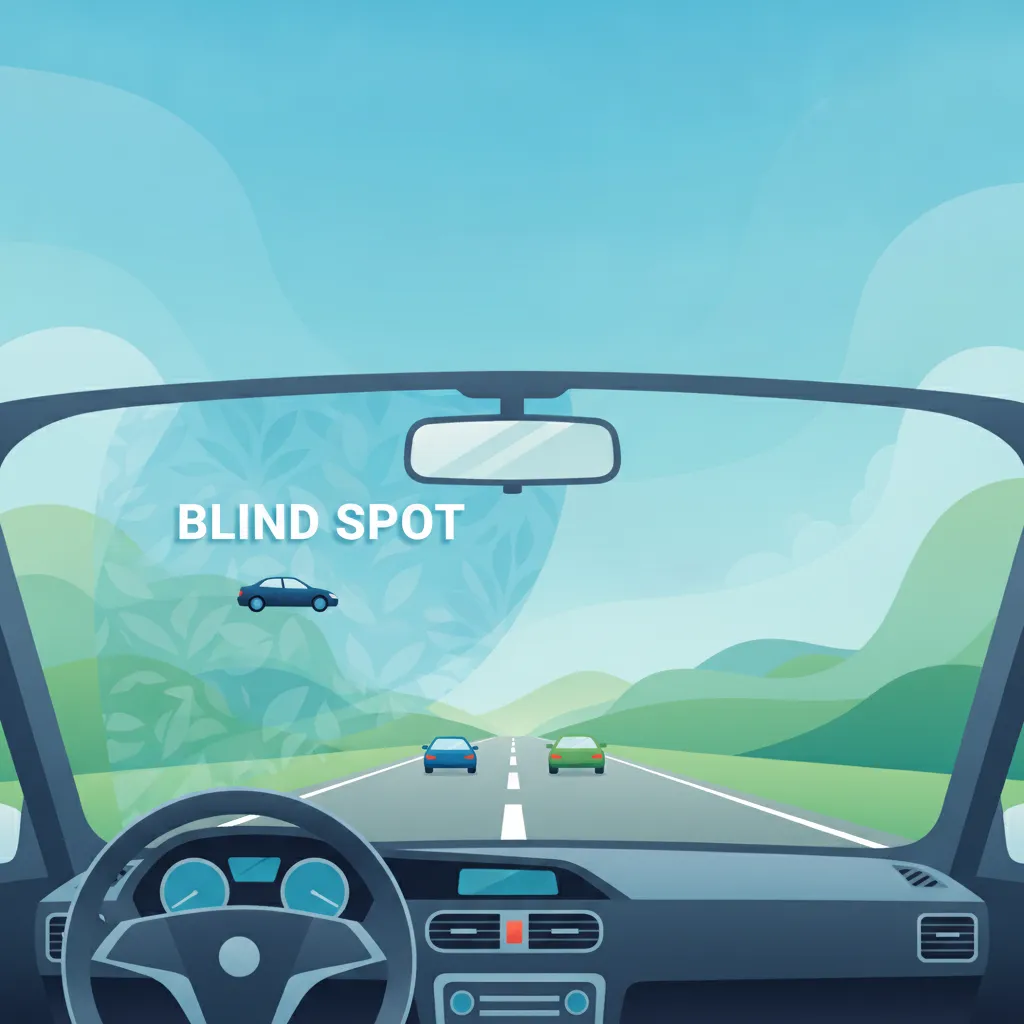
This lesson highlights the large blind spots—or 'no-zones'—that exist to the front, back, and sides of a heavy vehicle, where smaller vehicles, cyclists, and pedestrians can disappear from view. It teaches proactive scanning techniques, the importance of anticipating hazards, and how to use mirrors and direct vision effectively to manage these high-risk areas. Awareness and mitigation of blind spots are crucial for preventing collisions, especially in urban traffic.

This lesson introduces the philosophy and techniques of defensive driving, a proactive approach focused on anticipating and mitigating potential hazards. It teaches drivers to maintain constant situational awareness by scanning the road ahead, behind, and to the sides. The content covers how to manage the space around the vehicle, identify potential escape routes, and predict the actions of other road users to prevent dangerous situations from developing.
Understand how systematic visual scanning and effective mirror usage form the core of defensive driving. Learn to anticipate and avoid hazards by maintaining constant situational awareness, crucial for Italian theory.
This lesson introduces the philosophy and techniques of defensive driving, a proactive approach focused on anticipating and mitigating potential hazards. It teaches drivers to maintain constant situational awareness by scanning the road ahead, behind, and to the sides. The content covers how to manage the space around the vehicle, identify potential escape routes, and predict the actions of other road users to prevent dangerous situations from developing.
This lesson teaches the correct and safe technique for reversing a vehicle. It emphasizes the importance of performing a full 360-degree check for hazards before starting and maintaining slow, controlled movement. The content covers how to use mirrors and direct observation effectively, how to steer accurately while looking backward, and the increased need for caution regarding pedestrians and cyclists in the vehicle's blind areas.
This lesson provides critical guidance on how to safely share the road with vulnerable users, including pedestrians, cyclists, motorcyclists, and children. It highlights the importance of increased awareness in specific areas like school zones and crosswalks. The content teaches techniques for maintaining a safe lateral distance when overtaking, checking blind spots thoroughly, and anticipating the often unpredictable movements of these users.
This lesson teaches the fundamental observation techniques required for proactive and defensive riding. It details a systematic approach to scanning the road environment, using mirrors effectively, and performing shoulder checks to cover blind spots before any maneuver. Developing strong situational awareness is presented as a key skill for anticipating potential hazards and reacting to them in a timely manner.
This lesson focuses on the correct use of mirrors to maintain situational awareness and the techniques required to manage blind spots. It explains how to adjust mirrors for the best possible view of surrounding traffic. You will also learn why shoulder checks are critical before changing lanes or turning to detect vehicles hidden in blind zones.
This lesson emphasizes the importance of clear communication and cooperative behavior among all road users to prevent conflicts and enhance safety. It details the proper and legal use of vehicle signals, such as turn indicators and hazard lights, as well as the appropriate use of the horn. The content also explores the role of non-verbal cues like eye contact and courtesy gestures in creating a predictable and safe driving environment.

This lesson teaches the safe and systematic procedure for changing lanes. It covers the essential sequence of actions: signaling the intention, checking mirrors, performing a shoulder check to cover the blind spot, and then executing a smooth maneuver into the adjacent lane. The content stresses the need to judge the speed and distance of other vehicles to ensure a safe gap before initiating the lane change.

This lesson provides detailed instruction on performing effective shoulder checks to supplement mirror use, ensuring a clear path before turning or changing lanes. It covers the proper and timely use of electronic indicators and hand signals to communicate your intentions to other drivers. Correct signaling is crucial for preventing misunderstandings and collisions on the road.

This lesson is dedicated to warning signs, which are designed to alert drivers to potential dangers or changes in road conditions ahead. It covers the interpretation of signs indicating sharp bends, steep inclines or declines, slippery surfaces, and the potential presence of animals or pedestrians. Understanding these signs allows drivers to anticipate hazards and adjust their speed and driving style accordingly for safety.
This lesson introduces the various electronic driver aids designed to improve visibility and safety during low-speed maneuvering. It covers the use of reversing cameras, blind-spot monitoring systems, and ultrasonic proximity sensors that provide visual and audible warnings. Learners will understand that while these technologies are valuable tools, they are aids to—not replacements for—the driver's own diligent observation and skill.
Find clear answers to common questions learners have about Visual Scan and Mirror Use. Learn how the lesson is structured, which driving theory objectives it supports, and how it fits into the overall learning path of units and curriculum progression in Italy. These explanations help you understand key concepts, lesson flow, and exam focused study goals.
Even with perfectly adjusted mirrors, every vehicle has blind spots—areas where objects cannot be seen in the reflection. A quick shoulder check is the only way to ensure the area beside you is clear before changing lanes or turning.
You should check your mirrors frequently and systematically, especially before every change in speed, direction, or position. Developing a rhythm of checking mirrors every 5 to 10 seconds is a recommended safe practice.
Yes, the theory exam covers the fundamental principles of vehicle safety, including the correct adjustment of mirrors to minimize blind spots and the importance of checking them before any maneuver.
The principle remains the same, but the frequency and range increase on motorways due to higher speeds. You must scan further ahead and check your mirrors more frequently to account for faster-approaching traffic.
Start searching now to pinpoint exactly which Italian driving theory topics, road signs, or traffic rules you need to master. Use our advanced filters to build a custom practice session and ensure you're fully prepared for every aspect of your official driving licence exam.