
This lesson focuses on the critical skills required to share Italian urban roads safely with vulnerable road users and public transport. By understanding these specific interaction rules, you will be prepared to handle complex city traffic scenarios effectively during your practical riding and the theory exam.

Lesson content overview
As an Italian Driving License Theory Course for Motorcycle Categories A1, A2, & A rider, mastering safe interaction with vulnerable road users and public transport is paramount. Urban environments, in particular, present a complex mix of traffic, where pedestrians, cyclists, and trams often share the same spaces as motorcycles. This lesson delves into the specific rules, hazards, and best practices essential for navigating these interactions safely and in accordance with the Codice della Strada, ultimately reducing accident risks and fostering responsible riding habits.
Vulnerable road users, such as pedestrians and cyclists, lack the protective enclosure of a vehicle, making them significantly more susceptible to serious injury in the event of a collision. Motorcycle riders, while more exposed than car drivers, also share a degree of vulnerability compared to larger vehicles like buses or trams. Understanding their specific rights, behaviors, and the challenges they face on the road is not merely a matter of courtesy but a legal requirement aimed at enhancing overall road safety. This knowledge is fundamental for passing your Italian motorcycle theory test and becoming a confident rider.
Pedestrians are among the most vulnerable road users, and Italian traffic law grants them specific rights, particularly at designated crossings. As a motorcyclist, it is your responsibility to anticipate pedestrian movements and always yield when required.
Zebra crossings, or strisce pedonali, are marked with distinct white stripes across the road. At these crossings, pedestrians have absolute priority over all vehicles, regardless of whether there are traffic lights present or their current state. This means that if a pedestrian is on the crossing or clearly indicating their intention to cross, you must stop and allow them to pass safely.
You must stop behind the designated stop line, ensuring you do not obstruct the crossing itself. Failing to yield to pedestrians at a zebra crossing is a serious offense that carries fines and penalty points, in addition to the significant risk of causing an accident. This rule emphasizes the law's commitment to protecting those most at risk.
At signal-controlled crossings, pedestrians typically cross when they receive a green signal, while vehicles obey the traffic lights. However, even at these crossings, particular vigilance is required. Sometimes, a green light for vehicles might coincide with pedestrians starting to cross if signals are not perfectly synchronized or if pedestrians disregard their red light. In such cases, while pedestrians are technically crossing against a red light, a responsible motorcyclist will still prioritize their safety and avoid a collision if possible. Always anticipate the unexpected, especially near schools or busy areas.
The Codice della Strada (Italian Highway Code) is clear on the legal precedence of pedestrians. Article 149-bis specifically mandates that motorcyclists must yield to pedestrians at zebra crossings, stopping to allow for their safe passage. This rule also extends to situations where a pedestrian may be crossing in an undesignated area but it is clear they are attempting to cross the road. While they may not have the legal right-of-way in such a scenario, the moral and practical responsibility of avoiding a collision falls heavily on the motorcyclist, who operates a vehicle capable of causing significant harm.
Always scan the road ahead for pedestrians, especially when approaching crossings, intersections, and areas with high foot traffic. Reduce your speed and be prepared to stop suddenly.
Cyclists, like pedestrians, are highly vulnerable. They are exposed to traffic, less stable than motor vehicles, and can be unpredictable. When overtaking a cyclist on your motorcycle, it is crucial to provide ample space to ensure their safety and prevent a side-swipe collision.
In urban settings, Italian law (Codice della Strada Art. 148) strongly recommends, and in many situations requires, a minimum lateral clearance of 1.5 metres when overtaking a cyclist. This distance allows the cyclist sufficient room to maneuver, react to road imperfections, or be affected by crosswinds without swerving into your path. It also gives you a buffer zone should the cyclist unexpectedly deviate from their line.
This 1.5-metre rule is a guideline; in some cases, a greater distance might be necessary depending on speed, road conditions, and the cyclist's behavior. For example, if you are traveling at a higher speed, the effective "safe" distance increases. Always use your judgment to determine the appropriate safe distance, ensuring the cyclist is not endangered.
There are specific situations where overtaking a cyclist may be prohibited or highly risky:
The minimum side-to-side distance a motorcyclist must maintain when passing another road user, especially a cyclist, to ensure safety. In Italy, this is often set at a minimum of 1.5 metres for cyclists in urban areas.
Cyclists may not always be as visible as larger vehicles. They can blend into surroundings, especially during dusk or dawn. Always check your mirrors and blind spots carefully before initiating an overtake. Be aware that cyclists might suddenly brake, swerve to avoid potholes, or signal a turn late. Anticipating these actions by observing their body language and direction of gaze can help you predict their next move. Remember, your motorcycle's speed and mass pose a significant threat to a cyclist, so extreme caution is warranted.
Urban areas in Italy, particularly cities with established public transport networks, often feature tram tracks embedded in the roadways. These tracks present a unique set of hazards for motorcyclists that demand special attention and riding techniques.
Tram tracks are essentially steel rails set into the road surface. While they are usually flush or nearly flush with the tarmac, they create several distinct dangers for two-wheeled vehicles:
Crossing tram tracks safely requires a specific approach:
Reduce Speed: Slow down significantly before reaching the tracks. A lower speed gives you more control and allows the tires to maintain better contact.
Cross at an Angle: Attempt to cross the tracks at as wide an angle as possible, ideally close to 90 degrees. This minimizes the chance of your tire getting caught in the groove or sliding along the rail. Avoid crossing them parallel or at a very shallow angle.
Maintain Steady Course: Once you begin to cross, maintain a steady speed and avoid sudden braking, acceleration, or steering inputs. Let the bike roll over the tracks smoothly.
Look Ahead: Focus on your intended path beyond the tracks, not directly at the tracks themselves. This helps maintain balance and direction.
Be Aware of Conditions: Exercise extreme caution in wet, icy, or dirty conditions, as these will drastically reduce traction on the rails.
Trams operate on fixed rails and cannot swerve to avoid obstacles. Therefore, vehicles must give way to trams in almost all situations, as stipulated by Codice della Strada Art. 150. Always assume a tram has the right-of-way unless specifically indicated otherwise by traffic signals or a traffic officer. Pay attention to tram bells, lights, and designated tram stop areas. Never overtake a tram on the side it is loading or unloading passengers unless specific road markings indicate it is safe and legal to do so, as this can endanger passengers crossing the road.
Buses and taxis are common features of urban landscapes. While they are fellow road users, their size, operational patterns, and specific legal rights demand increased vigilance from motorcyclists.
Buses and other large public transport vehicles have significant blind zones – areas around the vehicle that are not visible to the driver, even with mirrors. These zones are particularly large directly behind, immediately in front, and along the sides. When riding near a bus, always assume you are in a blind zone unless you can clearly see the bus driver's face in their mirror.
Additionally, large vehicles have much wider turning radii than motorcycles. They often need to swing wide to make turns, sometimes encroaching into adjacent lanes. Never attempt to "undertake" or pass a bus on the inside if it appears to be preparing for a turn, as you could be crushed against the curb or another object. Maintain a safe following distance to react to their movements.
Buses make frequent stops at designated bus stops to load and unload passengers. It is generally prohibited and extremely dangerous to overtake a bus that is stationary at a bus stop, especially if it is displaying a signal to pull away or is actively loading/unloading. Passengers may step into the road unexpectedly.
Codice della Strada Art. 154 prohibits overtaking when a vehicle signals to merge or change lanes, a rule particularly relevant to buses pulling out from stops. Always wait for the bus to fully re-enter the flow of traffic and ensure sufficient space before considering an overtake.
Taxis also frequently stop to pick up or drop off passengers, often in busy, unpredictable locations. Be alert for sudden stops, doors opening, and passengers entering or exiting the vehicle. Avoid overtaking taxis in areas where they are likely to stop, and if you must, do so with ample lateral clearance and reduced speed.
Some urban areas have dedicated bus lanes. Generally, these lanes are restricted to buses, taxis, and sometimes emergency vehicles. Motorcycles are often prohibited from using bus lanes unless specific signage permits it (e.g., corsia preferenziale with motorcycle symbol). Always check local signage. Even if permitted, be extra cautious, as bus lanes are designed for high-frequency public transport and may have different road surface conditions or dedicated bus stops. Overtaking within a bus lane, even if permitted to be in it, still requires extreme caution and adherence to general overtaking rules.
Understanding the specific articles of the Codice della Strada is crucial for complying with Italian traffic law.
Article 149-bis – Pedestrian Priority: This article mandates that motorists must stop and allow pedestrians to cross safely at zebra crossings. It underpins the principle of vulnerability priority, ensuring the safety of those on foot.
Article 148 – Overtaking: This article states that overtaking must always be performed safely, without endangering the overtaken party. This applies directly to cyclists, reinforcing the need for adequate lateral clearance and careful execution.
Article 150 – Giving Way to Trams: Vehicles must give way to trams, recognizing their fixed routes and inability to deviate. This article also implicitly covers the need for special attention to tram tracks due to their inherent hazard.
Article 154 – Overtaking and Lane Changes: This article prohibits overtaking when a vehicle signals an intention to merge or change lanes. This is critical when dealing with buses pulling out from stops or taxis preparing to move.
Article 157 – Limitations on Overtaking: This article specifies areas where overtaking is prohibited or severely restricted, such as at intersections, railway crossings, or in zones with limited visibility. Many of these conditions can apply when interacting with vulnerable users or public transport.
The way you interact with pedestrians, cyclists, and public transport must adapt to varying environmental and road conditions. Safety is always paramount, and flexibility in your riding approach is key.
If your motorcycle is carrying a passenger or heavy luggage, your braking distance will increase, and your acceleration will be slower. This affects your ability to react to sudden pedestrian movements or to safely overtake cyclists. Adjust your speed and following distances accordingly.
Ignoring the rules and principles discussed can lead to serious consequences, ranging from legal penalties to severe accidents.
Always prioritize safety over speed. A few extra seconds of patience can prevent a lifetime of regret.
Successfully interacting with pedestrians, cyclists, and public transport vehicles is a fundamental aspect of safe motorcycling in Italy. It requires a combination of legal knowledge, hazard perception, and a protective mindset.
By internalizing these principles and applying them consistently, you will significantly reduce risks for yourself and other road users, contributing to safer Italian roads and ensuring your success in the Italian Driving License Theory Course for Motorcycle Categories A1, A2, & A.
This lesson covers the critical skills needed to share Italian urban roads safely with vulnerable road users. Pedestrians at zebra crossings have absolute legal priority under Art. 149-bis, requiring motorcyclists to always stop behind the stop line. Cyclists must be given at least 1.5 metres of lateral clearance when overtaking, with no overtaking permitted if this distance cannot be guaranteed. Tram tracks present unique hazards due to reduced traction and the risk of tire entrapment; they should always be crossed at close to 90 degrees with reduced speed. When sharing space with buses and taxis, riders must be aware of large blind zones and wide turning radii, never passing a bus at a stop while it is signalling to pull away. These rules, derived from the Codice della Strada, form essential knowledge for both the Italian motorcycle theory exam and safe daily riding.
A short set of high-value points that capture the most important learning from this lesson.
Pedestrians have absolute priority at zebra crossings (strisce pedonali) under Art. 149-bis, regardless of traffic light state
Maintain a minimum 1.5-metre lateral clearance when overtaking cyclists in urban areas as required by Art. 148
Always cross tram tracks at the widest possible angle (approaching 90 degrees) and reduce speed significantly
Trams have priority over all vehicles on fixed rails and cannot swerve to avoid obstacles
Large vehicles like buses have extensive blind zones and wide turning radii; never attempt to pass a bus that is signalling to move from a stop
Explore all units and lessons included in this driving theory course.
Art. 149-bis mandates stopping for pedestrians at zebra crossings; Art. 148 governs cyclist overtaking clearance
The 1.5-metre rule applies in urban settings; greater distance may be needed at higher speeds or in adverse conditions
Tram tracks reduce traction dramatically when wet and can trap motorcycle tires if crossed at shallow angles
Art. 154 prohibits overtaking vehicles that are signalling to change lanes or merge, critical near bus stops
If the road is too narrow to guarantee safe cyclist clearance, you must not overtake and must wait for a wider section
Proceeding through a zebra crossing without stopping when a pedestrian is present, violating Art. 149-bis
Cutting too close to cyclists during an overtake, failing to maintain the required lateral clearance
Crossing tram tracks too quickly or at a shallow angle, risking tire slippage or getting caught in the rails
Attempting to overtake a bus that is stopped at a bus stop while it is loading or unloading passengers
Remaining in a bus's blind zone without establishing eye contact with the driver, risking a collision during lane changes
Lesson content overview
A short set of high-value points that capture the most important learning from this lesson.
Pedestrians have absolute priority at zebra crossings (strisce pedonali) under Art. 149-bis, regardless of traffic light state
Maintain a minimum 1.5-metre lateral clearance when overtaking cyclists in urban areas as required by Art. 148
Always cross tram tracks at the widest possible angle (approaching 90 degrees) and reduce speed significantly
Trams have priority over all vehicles on fixed rails and cannot swerve to avoid obstacles
Large vehicles like buses have extensive blind zones and wide turning radii; never attempt to pass a bus that is signalling to move from a stop
Explore all units and lessons included in this driving theory course.
Art. 149-bis mandates stopping for pedestrians at zebra crossings; Art. 148 governs cyclist overtaking clearance
The 1.5-metre rule applies in urban settings; greater distance may be needed at higher speeds or in adverse conditions
Tram tracks reduce traction dramatically when wet and can trap motorcycle tires if crossed at shallow angles
Art. 154 prohibits overtaking vehicles that are signalling to change lanes or merge, critical near bus stops
If the road is too narrow to guarantee safe cyclist clearance, you must not overtake and must wait for a wider section
Proceeding through a zebra crossing without stopping when a pedestrian is present, violating Art. 149-bis
Cutting too close to cyclists during an overtake, failing to maintain the required lateral clearance
Crossing tram tracks too quickly or at a shallow angle, risking tire slippage or getting caught in the rails
Attempting to overtake a bus that is stopped at a bus stop while it is loading or unloading passengers
Remaining in a bus's blind zone without establishing eye contact with the driver, risking a collision during lane changes
Explore search topics learners often look for when studying Interaction with Pedestrians, Cyclists, and Trams. These topics reflect common questions about road rules, driving situations, safety guidance, and lesson level theory preparation for learners in Italy.
Browse additional driving theory lessons that cover connected traffic rules, road signs, and common driving situations related to this topic. Improve your understanding of how different rules interact across everyday traffic scenarios.
Learn the specific Italian traffic laws and best practices for safely interacting with pedestrians, cyclists, buses, and trams. Essential knowledge for motorcycle riders to ensure safety and legal compliance in urban areas.

This lesson provides an in-depth focus on sharing the road with the most vulnerable users. It teaches drivers to be acutely aware of pedestrians at crossings, cyclists filtering through traffic, and motorcyclists who may be in blind spots. The lesson emphasizes the importance of leaving extra space, signaling intentions clearly, and exercising extreme caution at junctions, where the majority of serious incidents occur.
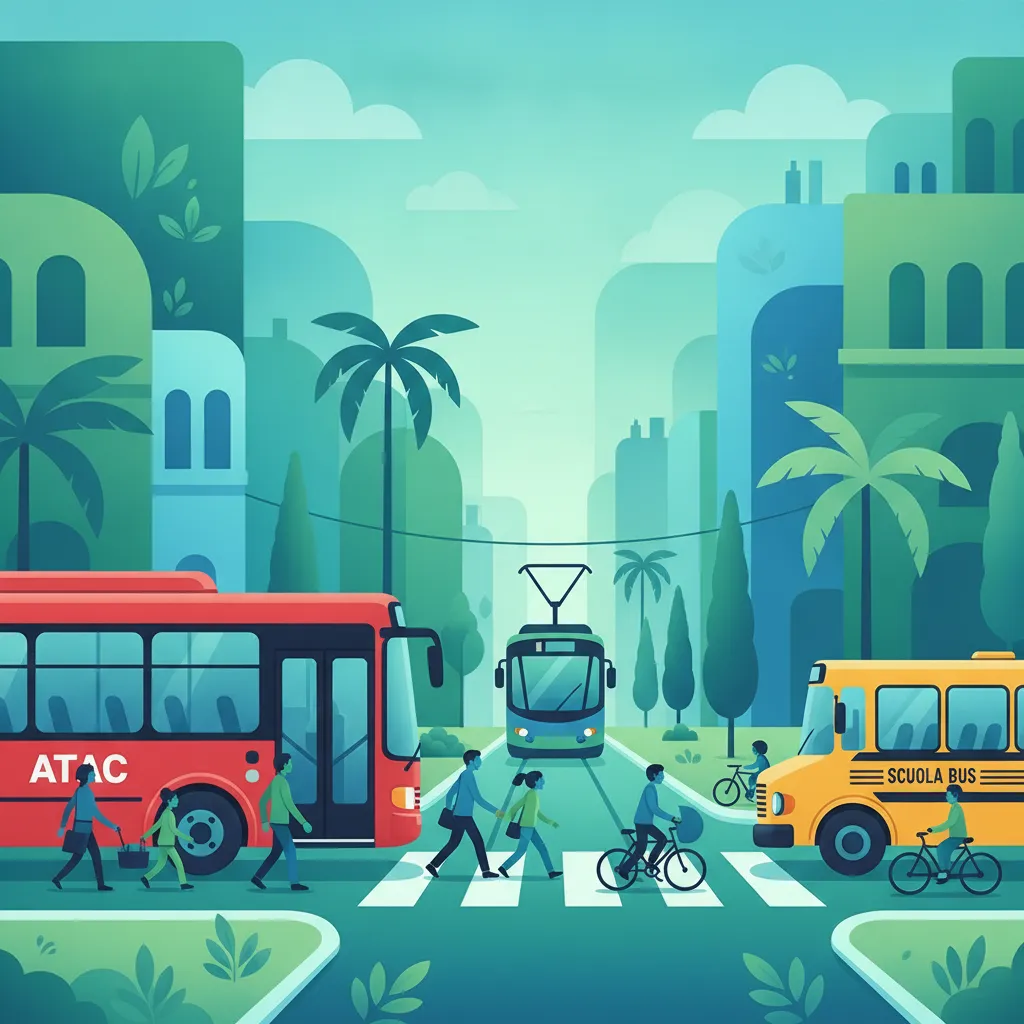
This lesson details the correct procedures for interacting with public transport and school buses. It explains the rules for dedicated bus lanes, the absolute priority of trams, and the legal requirement to yield to buses pulling out from a stop. The content also covers the specific laws requiring drivers to stop when a school bus is loading or unloading passengers, to ensure child safety.
This lesson provides critical guidance on how to safely share the road with vulnerable users, including pedestrians, cyclists, motorcyclists, and children. It highlights the importance of increased awareness in specific areas like school zones and crosswalks. The content teaches techniques for maintaining a safe lateral distance when overtaking, checking blind spots thoroughly, and anticipating the often unpredictable movements of these users.

This lesson focuses on the driver's responsibility to protect pedestrians, especially at designated crossings (strisce pedonali). It reinforces the legal requirement to yield to pedestrians who are on or about to enter a crosswalk. The content also covers the importance of reducing speed and increasing vigilance in urban areas, school zones, and other places with high pedestrian activity.
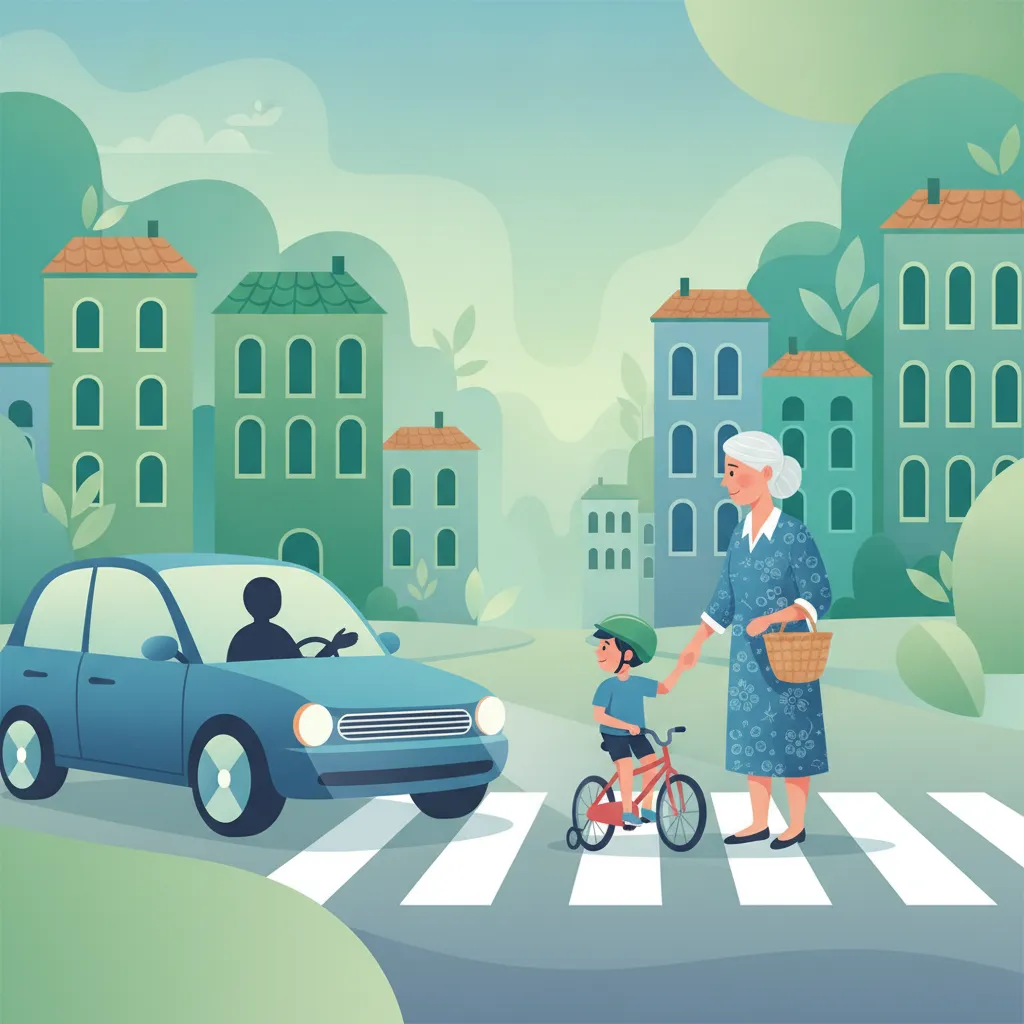
This lesson addresses the critical responsibility of protecting vulnerable road users, such as pedestrians, cyclists, and motorcyclists, who are most at risk in a collision with a heavy vehicle. It teaches drivers to be hyper-aware in urban settings, to anticipate the unpredictable movements of VRUs, and to provide ample space, especially when turning at junctions. A key focus is on scanning for VRUs in blind spots before moving off or making any maneuver.
This lesson details how to safely approach and enter intersections by correctly interpreting traffic lights, stop signs, and give-way rules. It emphasizes the importance of scanning for hazards, checking blind spots, and anticipating the actions of other road users. You will learn to adjust your speed and position your vehicle correctly to navigate crossings without incident.

This lesson explains the rules and best practices for safely sharing the road with cyclists. It covers the importance of respecting dedicated bike lanes and maintaining a safe lateral distance (at least 1.5 meters) when overtaking. The content also teaches drivers to be vigilant for cyclists, especially at intersections and when opening car doors, to prevent common types of collisions.

This lesson explains the fundamental principles of right of way that govern interactions between different types of road users in Italy. It clarifies the legal precedence at intersections, pedestrian crossings, and when interacting with public transport like buses and trams. The content also details the absolute priority given to emergency vehicles and how to safely yield in accordance with the Codice della Strada.
This lesson delivers a comprehensive explanation of right-of-way regulations at Italian intersections. It covers the interpretation of traffic light signals, the absolute requirement to stop at stop signs, and yielding at give-way signs. Furthermore, it details the default priority rules for unmarked intersections and the specific obligations a rider has towards pedestrians on crossings.
This lesson introduces the official classification of road users as defined by the Italian Codice della Strada. It distinguishes between various categories, including pedestrians, two-wheeled vehicles, passenger cars, public transport, and heavy goods vehicles. Understanding these classifications is crucial for anticipating behavior and applying the correct traffic rules and safety precautions for each group, especially for vulnerable road users.
Understand the unique dangers of tram tracks and bus lanes in Italian cities. Learn essential techniques for crossing rails safely and navigating around buses and taxis to avoid common urban hazards.
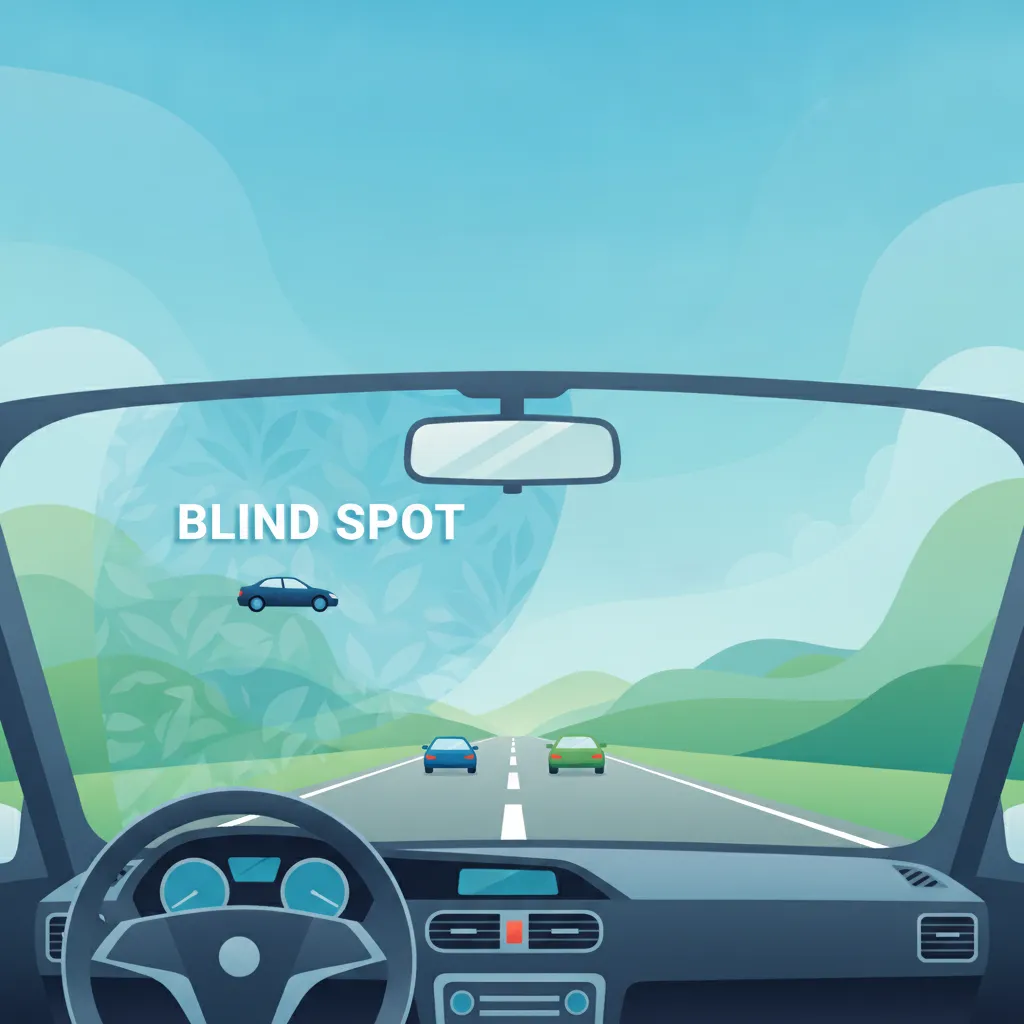
This lesson highlights the large blind spots—or 'no-zones'—that exist to the front, back, and sides of a heavy vehicle, where smaller vehicles, cyclists, and pedestrians can disappear from view. It teaches proactive scanning techniques, the importance of anticipating hazards, and how to use mirrors and direct vision effectively to manage these high-risk areas. Awareness and mitigation of blind spots are crucial for preventing collisions, especially in urban traffic.
This lesson provides an in-depth focus on sharing the road with the most vulnerable users. It teaches drivers to be acutely aware of pedestrians at crossings, cyclists filtering through traffic, and motorcyclists who may be in blind spots. The lesson emphasizes the importance of leaving extra space, signaling intentions clearly, and exercising extreme caution at junctions, where the majority of serious incidents occur.
This lesson teaches riders how to strategically position their vehicle within a lane for maximum visibility to others. It explains how to avoid riding in the blind spots of larger vehicles and how to maintain a safe buffer zone. Proper positioning enhances a rider's presence on the road and is a key component of defensive driving in mixed traffic.

This lesson addresses the specific challenges of sharing the road with two-wheeled motor vehicles like motorcycles and scooters. It highlights their reduced visibility and stability compared to cars, requiring drivers to double-check blind spots and maintain a greater following distance. The content also discusses common behaviors like lane filtering and the need for drivers to be predictable and signal intentions clearly.

This lesson trains riders to recognize and safely negotiate common road surface hazards that can suddenly reduce traction. It covers the risks posed by elements like loose gravel, wet leaves, painted lines, and manhole covers, especially when wet. The content provides strategies for scanning the road ahead to identify these dangers early and using smooth control inputs to maintain stability when crossing them.
This lesson explains the principles of maintaining proper lane discipline and strategic positioning in an urban context. It covers how to adapt your position within the lane to enhance visibility, avoid road surface hazards, and prepare for turns or lane changes. The content also provides awareness of specific urban features like restricted traffic zones (ZTL) and how to navigate them legally and safely.
This lesson focuses on the vital systems for visibility and communication: mirrors, lighting, and signals. It provides instruction on the proper adjustment of mirrors to minimize blind spots and the correct use of headlamps, indicators, and brake lights as per Italian regulations. The content underscores how maintaining these systems in full working order is crucial for being seen and signalling intentions clearly in traffic.
This lesson equips riders to safely manage the challenges posed by road construction zones. It explains how to interpret temporary signage, navigate lane closures or diversions, and maintain heightened awareness for surface hazards like gravel or steel plates. The content emphasizes the need to reduce speed and increase following distances to safely share the road with large construction vehicles and workers.
This lesson addresses the critical responsibility of protecting vulnerable road users, such as pedestrians, cyclists, and motorcyclists, who are most at risk in a collision with a heavy vehicle. It teaches drivers to be hyper-aware in urban settings, to anticipate the unpredictable movements of VRUs, and to provide ample space, especially when turning at junctions. A key focus is on scanning for VRUs in blind spots before moving off or making any maneuver.

This lesson addresses the increased complexity of overtaking in urban environments with dense traffic and frequent intersections. It stresses the importance of thorough observation, including mirror and blind spot checks, to ensure a safe gap is available. The content covers judging speed differentials and the necessity of clear signalling to execute the maneuver without causing conflict with other road users.
Find clear answers to common questions learners have about Interaction with Pedestrians, Cyclists, and Trams. Learn how the lesson is structured, which driving theory objectives it supports, and how it fits into the overall learning path of units and curriculum progression in Italy. These explanations help you understand key concepts, lesson flow, and exam focused study goals.
While the law requires sufficient space, you should always aim for at least 1.5 meters of lateral distance whenever possible to account for unexpected wobbles or sudden movements by the cyclist.
Yes, they are highly slippery, especially when wet, and they can trap your front tyre. You should always cross them at as close to a 90-degree angle as possible to avoid sliding.
Yes, if a pedestrian is on or clearly intending to enter a marked zebra crossing, you must yield and allow them to finish crossing safely. Never overtake a vehicle that has stopped to let pedestrians cross.
In urban areas, buses have priority when exiting a marked bus stop if they signal their intent. You should slow down, allow them to enter the traffic flow, and remain vigilant for passengers alighting.
Start searching now to pinpoint exactly which Italian driving theory topics, road signs, or traffic rules you need to master. Use our advanced filters to build a custom practice session and ensure you're fully prepared for every aspect of your official driving licence exam.