
This lesson provides an in-depth look at regulatory signs, which are the cornerstone of traffic law in Italy. By understanding these mandates, you will gain the ability to navigate intersections and urban zones safely while meeting the specific requirements of the Patente B theory examination.
Lesson content overview
Navigating the roads of Italy safely and legally requires a thorough understanding of traffic signs. Among the most critical are regulatory signs, which impose legal obligations, prohibitions, or restrictions on drivers. These signs are not mere suggestions; they are direct commands from the Italian Road Code (Codice della Strada) designed to ensure orderly traffic flow, prevent accidents, and protect all road users.
This comprehensive lesson will delve into the various types of regulatory signs encountered during your Italian Patente B driving journey. We will explore their visual characteristics, interpret their precise meanings, and discuss the mandatory actions or prohibitions they convey. Mastering these signs is paramount not only for passing your theory exam but, more importantly, for safe and responsible driving in Italy.
Regulatory road signs serve as the backbone of traffic control, providing immediate and legally binding instructions to drivers. Unlike warning signs, which indicate potential hazards, or informational signs, which offer guidance, regulatory signs demand specific actions or restrict certain behaviors. Their primary purpose is to enhance road safety by standardizing driver responses at critical points on the road network.
Understanding these signs is a fundamental requirement for anyone preparing for the Italian Patente B theory test. Incorrect interpretation or non-compliance can lead to traffic infringements, penalties, and, most critically, dangerous situations on the road. This lesson aims to equip you with the knowledge to correctly identify and react to every major regulatory sign.
Regulatory signs operate under specific principles that define their purpose and implications for drivers. Recognizing these foundational concepts will help you interpret new or unfamiliar signs more effectively and understand the reasoning behind their strict enforcement.
Obligation signs require drivers to perform a specific action. These are typically encountered at points demanding immediate attention for safety, such as intersections or pedestrian crossings. Ignoring an obligation sign can have severe consequences, as it directly contravenes a mandatory safety procedure. For instance, stopping at a stop sign is an obligation designed to prevent dangerous collisions.
Prohibition signs forbid certain actions. They are crucial for preventing dangerous or disruptive behaviors in unsuitable environments, such as overtaking on a blind curve or parking in a no-stopping zone. These signs often indicate areas where particular maneuvers would pose a risk to other road users or impede traffic flow.
Restriction signs set limits on driver actions, ensuring that vehicles operate within safe parameters for prevailing road conditions. Speed limits are the most common example, but restrictions can also apply to vehicle dimensions or weights. These signs aim to control vehicle behavior to match the road's design and ensure safety for all users.
Directionality signs mandate a particular direction of travel. These are essential for maintaining orderly traffic flow, especially on one-way streets, at complex intersections, or when navigating roundabouts. Violating a directionality sign can lead to head-on collisions or severe traffic disruption.
These signs are critical for managing priority at intersections, directly impacting right-of-way and preventing collisions. They are among the first signs drivers learn and are fundamental to safe driving.
The Stop Sign is one of the most unambiguous regulatory signs, demanding a complete halt before proceeding.
Upon encountering a Stop Sign (Sign B2), you must bring your vehicle to a complete standstill before the white stop line painted on the road. If no line is visible, you must stop at the edge of the intersecting roadway where you have clear visibility, without obstructing cross-traffic. After stopping, you are legally obliged to give way (dare precedenza) to all traffic on the intersecting road, including pedestrians and cyclists, regardless of their direction of approach. You may only proceed when it is entirely safe to do so and your maneuver will not cause other vehicles to slow down or change direction.
A common misconception is treating the Stop Sign as a 'slow down' or 'rolling stop' sign. A full, verifiable halt is legally required. Failure to stop completely is a serious infringement.
The Give Way Sign indicates that you must yield priority to traffic on the intersecting road, but unlike a Stop Sign, a full stop is not always mandatory.
When you see a Give Way Sign (Sign B1), you must reduce your speed and be prepared to stop if necessary. Your primary obligation is to yield to any vehicle or pedestrian already on, or approaching, the intersecting road from either direction, whose path you would cross. If the intersecting road is completely clear, you may proceed without stopping, as long as you do so safely and without impeding other road users. This sign is frequently found at T-junctions, merging lanes, or before roundabouts where you do not have priority.
Speed is a critical factor in road safety. Regulatory signs manage speed to match road conditions, urban environments, and specific hazards.
Maximum Speed Limit Signs are perhaps the most frequently encountered regulatory signs, indicating the highest permissible speed for a given stretch of road.
These signs (Sign C31) display a number indicating the maximum speed in kilometers per hour (km/h) that you are allowed to travel. These limits are mandatory and must not be exceeded, even if you feel the conditions allow for faster travel. Speed limits are determined by various factors, including road design, the presence of vulnerable road users, and the potential for hazards. General speed limits apply in urban areas (typically 50 km/h), secondary roads, and motorways, but these signs override general rules for specific sections.
Always adjust your speed not just to the posted limit, but also to prevailing conditions such as weather, visibility, traffic density, and the state of the road surface. The posted limit is the maximum under ideal conditions.
Less common than maximum limits, Minimum Speed Limit Signs require drivers to maintain a certain speed to ensure smooth traffic flow, typically on multi-lane roads or motorways.
When you see a Minimum Speed Limit Sign (Sign C32), you are required to travel at or above the indicated speed in km/h. This is to prevent slower vehicles from disrupting traffic flow, especially in fast-moving environments like motorways where significant speed differences can be dangerous. Exceptions are made for situations where a slower speed is unavoidable due to traffic congestion, road works, or adverse weather conditions.
The termination of a speed restriction is clearly indicated by a dedicated sign.
An End of Speed Limit Sign (Sign C33) signifies that the previously enforced maximum speed limit for that section of road is no longer in effect. Beyond this sign, the general speed limits for the type of road you are on will apply, unless a new speed limit sign is posted. Similar signs exist for the end of minimum speed limits and other restrictions.
These regulatory signs prevent specific maneuvers that could lead to danger, obstruction, or traffic violations.
No Overtaking Signs are crucial for preventing dangerous maneuvers where visibility is poor, or traffic conditions make passing unsafe.
This sign (Sign C13a) prohibits all drivers from overtaking other motor vehicles in the zone it governs. This restriction is commonly imposed on sections of road with limited visibility (e.g., bends, hillcrests), at intersections, railway crossings, or in tunnels. There are variations of this sign that prohibit overtaking specifically for heavy vehicles (e.g., C13b). You must not attempt to overtake until an "End of No Overtaking" sign (Sign C34a) is displayed.
The No Parking Sign restricts where and when you can leave your vehicle.
This sign (Sign C24) means that you are forbidden to park your vehicle in the designated area. However, it generally permits a brief stop (fermata) for the purpose of picking up or dropping off passengers, or loading/unloading goods, provided the driver remains with the vehicle and does not cause obstruction. If the sign is accompanied by a supplementary panel indicating specific times, the parking prohibition only applies during those hours.
A 'brief stop' (fermata) is defined as the temporary immobilization of a vehicle to allow passengers to get on or off, or for loading/unloading goods, provided it lasts for the time strictly necessary for these operations and does not obstruct traffic.
The No Stopping Sign is a stricter prohibition, forbidding even brief stops.
This sign (Sign C25) imposes a complete prohibition: you are forbidden from both parking and stopping your vehicle in the area where it is posted. The only exception is when traffic conditions force an unavoidable stop, such as being caught in a traffic jam or waiting at a traffic light. Even momentarily pulling over to drop off a passenger is illegal in a "No Stopping" zone.
The No Entry Sign prohibits vehicles from entering a road or area from a specific direction.
This sign (Sign C1) is commonly found at the end of one-way streets or at the entrance to private roads or restricted zones. It prohibits all vehicles from entering the road or area beyond the sign. It is crucial for preventing head-on conflicts, especially on one-way systems. Ignoring this sign can lead to severe accidents and penalties.
These signs are critical for controlling the flow of traffic, particularly at intersections and on specific road networks.
One-Way Signs indicate that traffic may only flow in the direction specified, preventing vehicles from traveling against the designated flow.
While technically an indication sign (Sign F18a), its effect is regulatory. This sign mandates that traffic on the road or lane where it is placed must only proceed in the direction indicated by the white arrow. Driving against the direction indicated by this sign is a serious offense and can lead to dangerous head-on collisions. These signs are often paired with a "No Entry" sign (Sign C1) at the opposite end of the street to reinforce the one-way regulation.
Mandatory Turn Signs dictate that drivers must take a specific turn at an intersection.
These signs (e.g., C5 for right, C6 for left) instruct drivers that they must take the indicated turn. Proceeding straight, or turning in any other direction, is prohibited. These are commonly placed before intersections to guide traffic into specific lanes or directions, often to avoid conflicts or guide traffic flow efficiently. Failure to comply can lead to dangerous situations and traffic violations.
The Roundabout Sign indicates that drivers are approaching a roundabout and must follow the prescribed direction of travel and yielding rules.
Upon seeing this sign (Sign C8), drivers must enter the roundabout by turning right (circulating clockwise in Italy) and give way (dare precedenza) to vehicles already circulating within the roundabout. You must only enter when it is safe to do so, without forcing circulating traffic to brake or swerve. Roundabouts are designed to improve traffic flow and reduce accident severity by eliminating direct cross-traffic.
Many regulatory signs can have their meaning or applicability modified by supplementary panels (pannelli integrativi). These rectangular panels are typically placed directly below the primary sign.
Always observe supplementary panels. They provide crucial context and can significantly alter the meaning or applicability of the main regulatory sign. Ignoring them can lead to incorrect actions or violations.
Non-compliance with regulatory signs is a significant cause of accidents and traffic infringements. Here are some common violations and their implications:
While regulatory signs are absolute, their interpretation and your driving behavior must always consider prevailing conditions.
Regulatory signs indicate the legal limit or requirement, but safe driving always demands adapting to conditions. Never assume that simply obeying the sign is sufficient if conditions demand greater caution.
Regulatory signs are the backbone of the Italian Road Code, providing clear, legally binding instructions for all drivers. From the mandatory halt at a Stop sign to the nuanced rules of parking, speed, and direction, each sign plays a vital role in ensuring road safety and efficient traffic flow.
By diligently studying and understanding the visual cues and legal implications of each regulatory sign, you equip yourself not only to successfully pass the Italian Patente B theory test but also to become a responsible, confident, and safe driver. Always remember that compliance with these signs is not just about avoiding penalties; it is about protecting lives and maintaining order on the roads.
This lesson covers Italian regulatory signs which impose legal obligations, prohibitions, and restrictions essential for the Patente B theory test and safe driving. The Stop sign (B2) demands a complete halt before a stop line, while the Give Way sign (B1) requires slowing and yielding but allows proceeding without stopping when the road is clear. Speed limit signs include both maximum limits (C31, white with red border) and minimum limits (C32, blue), with termination indicated by C33. The distinction between No Parking (C24, which allows brief fermata) and No Stopping (C25, which prohibits any pause) is a common exam topic. Supplementary panels modify sign applicability by specifying times, vehicle types, distances, or affected directions. Always adapt your response to regulatory signs based on current weather, visibility, traffic density, and presence of vulnerable road users, as the posted limit represents the maximum under ideal conditions.
A short set of high-value points that capture the most important learning from this lesson.
Regulatory signs in Italy are legally binding commands from the Codice della Strada, not suggestions, and non-compliance carries penalties and accident risk.
The Stop sign (B2) requires a complete mandatory halt before proceeding, while the Give Way sign (B1) requires slowing and yielding but not necessarily stopping.
No Parking (C24) permits a brief fermata (stop for passenger loading/unloading), whereas No Stopping (C25) prohibits even momentary pauses except when forced by traffic.
Supplementary panels below signs modify their scope by specifying applicable times, vehicle categories, distances, or directions.
Regulatory sign interpretation must always be adapted to prevailing conditions including weather, time of day, road type, and presence of vulnerable road users.
Explore all units and lessons included in this driving theory course.
B2 Stop = full halt mandatory; proceed only when giving way to all intersecting traffic is safe.
B1 Give Way = slow down, be prepared to stop, yield to all oncoming traffic; proceed without stopping if path is clear.
C24 No Parking = fermata (brief stop) permitted for passenger drop-off or goods loading if driver remains present.
C25 No Stopping = complete prohibition; only exception is unavoidable forced stop in traffic.
Minimum speed limits (C32, blue circle) require maintaining a minimum speed for traffic flow, typically on motorways.
Treating the Stop sign as a 'slow down' or rolling stop instead of a mandatory complete halt.
Confusing No Parking (C24) with No Stopping (C25) and believing brief stops are allowed in No Stopping zones.
Ignoring supplementary panels that specify time restrictions, vehicle categories, or the direction the regulation applies to.
Forgetting that minimum speed limits exist, creating dangerous speed differentials on motorways.
Entering a roundabout without yielding to circulating traffic, or failing to circulate clockwise (right-hand rule in Italy).
Lesson content overview
A short set of high-value points that capture the most important learning from this lesson.
Regulatory signs in Italy are legally binding commands from the Codice della Strada, not suggestions, and non-compliance carries penalties and accident risk.
The Stop sign (B2) requires a complete mandatory halt before proceeding, while the Give Way sign (B1) requires slowing and yielding but not necessarily stopping.
No Parking (C24) permits a brief fermata (stop for passenger loading/unloading), whereas No Stopping (C25) prohibits even momentary pauses except when forced by traffic.
Supplementary panels below signs modify their scope by specifying applicable times, vehicle categories, distances, or directions.
Regulatory sign interpretation must always be adapted to prevailing conditions including weather, time of day, road type, and presence of vulnerable road users.
Explore all units and lessons included in this driving theory course.
B2 Stop = full halt mandatory; proceed only when giving way to all intersecting traffic is safe.
B1 Give Way = slow down, be prepared to stop, yield to all oncoming traffic; proceed without stopping if path is clear.
C24 No Parking = fermata (brief stop) permitted for passenger drop-off or goods loading if driver remains present.
C25 No Stopping = complete prohibition; only exception is unavoidable forced stop in traffic.
Minimum speed limits (C32, blue circle) require maintaining a minimum speed for traffic flow, typically on motorways.
Treating the Stop sign as a 'slow down' or rolling stop instead of a mandatory complete halt.
Confusing No Parking (C24) with No Stopping (C25) and believing brief stops are allowed in No Stopping zones.
Ignoring supplementary panels that specify time restrictions, vehicle categories, or the direction the regulation applies to.
Forgetting that minimum speed limits exist, creating dangerous speed differentials on motorways.
Entering a roundabout without yielding to circulating traffic, or failing to circulate clockwise (right-hand rule in Italy).
Explore search topics learners often look for when studying Regulatory Signs and Their Meanings. These topics reflect common questions about road rules, driving situations, safety guidance, and lesson level theory preparation for learners in Italy.
Browse additional driving theory lessons that cover connected traffic rules, road signs, and common driving situations related to this topic. Improve your understanding of how different rules interact across everyday traffic scenarios.
Explore advanced Italian regulatory signs not covered in basic lessons. Learn about specific prohibitions, mandatory directions, and restrictions for different vehicle types and situations, enhancing your understanding of traffic law.
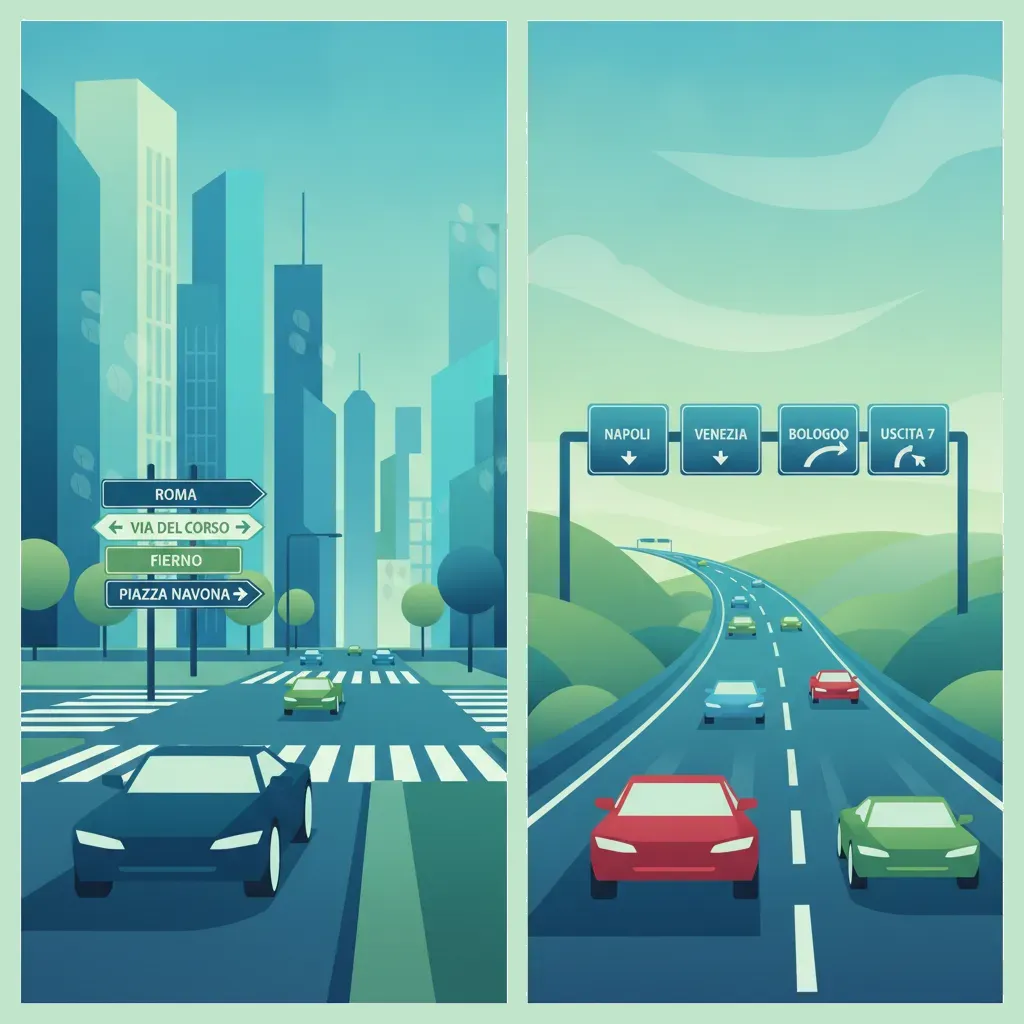
This lesson explains the function of informational and directional signs used for navigation and guidance on Italian roads. It covers how to read signs indicating upcoming cities, motorway exits, and the location of services like fuel stations, parking, and rest areas. The content also details the color-coding system used to differentiate between motorways (green), state roads (blue), and urban roads (white).
This lesson explains the function of Italian traffic light systems and the meaning of various road markings. You will learn the rules for red, amber, and green signals, including flashing lights and directional arrows. It also covers how to interpret lane lines, stop lines, and other surface markings that dictate correct vehicle positioning and movement.
This lesson provides a detailed guide to understanding road markings and pavement symbols in Italy. It explains the critical difference between continuous and broken lane lines regarding overtaking, the function of stop lines and yield markings at intersections, and the meaning of directional arrows painted in lanes. The content also covers markings for pedestrian crossings, bus lanes, and designated parking areas.
This lesson is dedicated to warning signs, which are designed to alert drivers to potential dangers or changes in road conditions ahead. It covers the interpretation of signs indicating sharp bends, steep inclines or declines, slippery surfaces, and the potential presence of animals or pedestrians. Understanding these signs allows drivers to anticipate hazards and adjust their speed and driving style accordingly for safety.
This lesson focuses on the specific regulatory and warning signs that Patente AM riders must understand and obey. It details signs related to speed limits, no-entry zones, and mandatory directions that directly impact moped operation. You will also learn to recognize warning signs for potential hazards like sharp curves, slippery surfaces, and pedestrian areas.
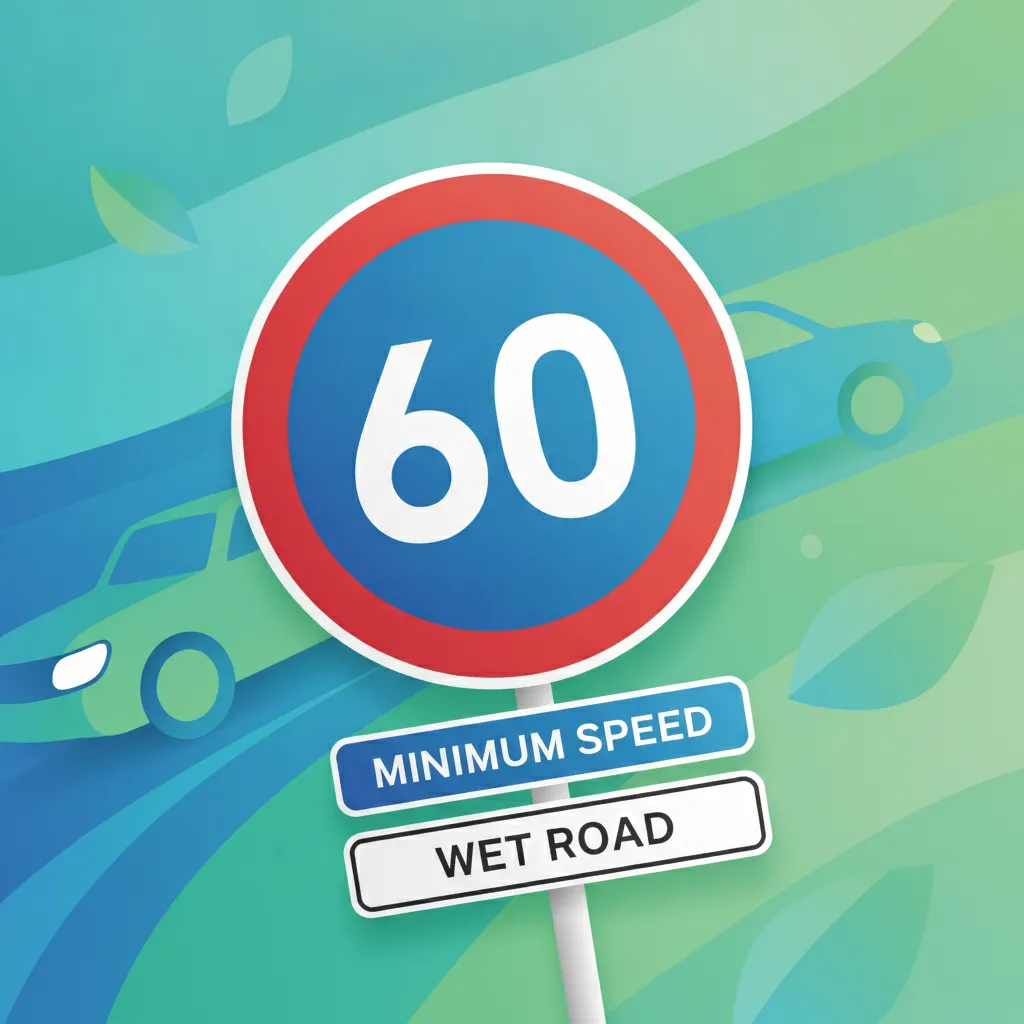
This lesson focuses on supplementary panels (pannelli integrativi) placed below primary road signs to provide additional context or modify their meaning. Learners will understand how these panels specify the distance to a hazard, the length over which a rule applies, or the specific times and vehicle types affected by a regulation. Correct interpretation of these panels is essential for full compliance with traffic laws.
This lesson delivers a comprehensive explanation of right-of-way regulations at Italian intersections. It covers the interpretation of traffic light signals, the absolute requirement to stop at stop signs, and yielding at give-way signs. Furthermore, it details the default priority rules for unmarked intersections and the specific obligations a rider has towards pedestrians on crossings.

This lesson details the proper and legal application of a vehicle's horn, lights, and signals as primary communication tools. It explains the specific circumstances for using high beams, low beams, and fog lights to maximize visibility without dazzling other drivers. The content also clarifies the rules for using the horn, turn indicators, and hazard lights to signal intentions, warn of danger, or indicate an emergency situation.
This lesson covers the general principles of priority at intersections governed by traffic signs and signals. It explains how to identify a priority road and the obligation to yield to traffic when encountering a 'dare la precedenza' (yield) or stop sign. The content also reviews the hierarchy of authority, where signals from a traffic officer override all other signs and lights.
This lesson focuses on the specific signage and regulations for low-speed zones, such as "Zone 30" areas common in Italian towns. You will learn to recognize the signs that indicate reduced speed limits in residential areas, school zones, and other pedestrian-heavy environments. The content also explains various traffic calming measures and the priority rules that apply within these designated zones.
See how Italian regulatory signs are applied in common driving scenarios. This lesson connects mandatory actions, prohibitions, and restrictions from theory to practical road situations for better comprehension.
This lesson explains the function of informational and directional signs used for navigation and guidance on Italian roads. It covers how to read signs indicating upcoming cities, motorway exits, and the location of services like fuel stations, parking, and rest areas. The content also details the color-coding system used to differentiate between motorways (green), state roads (blue), and urban roads (white).
This lesson is dedicated to warning signs, which are designed to alert drivers to potential dangers or changes in road conditions ahead. It covers the interpretation of signs indicating sharp bends, steep inclines or declines, slippery surfaces, and the potential presence of animals or pedestrians. Understanding these signs allows drivers to anticipate hazards and adjust their speed and driving style accordingly for safety.
This lesson explains the function of Italian traffic light systems and the meaning of various road markings. You will learn the rules for red, amber, and green signals, including flashing lights and directional arrows. It also covers how to interpret lane lines, stop lines, and other surface markings that dictate correct vehicle positioning and movement.
This lesson provides a detailed guide to understanding road markings and pavement symbols in Italy. It explains the critical difference between continuous and broken lane lines regarding overtaking, the function of stop lines and yield markings at intersections, and the meaning of directional arrows painted in lanes. The content also covers markings for pedestrian crossings, bus lanes, and designated parking areas.
This lesson provides a practical guide to parking regulations in Italian urban areas. It explains the meaning of different colored parking lines (blue for paid, white for free, yellow for reserved), the use of the parking disc (disco orario) for time-limited zones, and how to operate pay-and-display machines. The content also covers how to identify no-parking zones to avoid fines and towing.
This lesson focuses on the specific signage and regulations for low-speed zones, such as "Zone 30" areas common in Italian towns. You will learn to recognize the signs that indicate reduced speed limits in residential areas, school zones, and other pedestrian-heavy environments. The content also explains various traffic calming measures and the priority rules that apply within these designated zones.
This lesson details the proper and legal application of a vehicle's horn, lights, and signals as primary communication tools. It explains the specific circumstances for using high beams, low beams, and fog lights to maximize visibility without dazzling other drivers. The content also clarifies the rules for using the horn, turn indicators, and hazard lights to signal intentions, warn of danger, or indicate an emergency situation.
This lesson focuses on the specific regulatory and warning signs that Patente AM riders must understand and obey. It details signs related to speed limits, no-entry zones, and mandatory directions that directly impact moped operation. You will also learn to recognize warning signs for potential hazards like sharp curves, slippery surfaces, and pedestrian areas.
This lesson focuses on supplementary panels (pannelli integrativi) placed below primary road signs to provide additional context or modify their meaning. Learners will understand how these panels specify the distance to a hazard, the length over which a rule applies, or the specific times and vehicle types affected by a regulation. Correct interpretation of these panels is essential for full compliance with traffic laws.
This lesson explains the concept of 'Zone a Traffico Limitato' (ZTL), common in Italian city centers, which restricts vehicle access at certain times. It covers how to identify ZTL boundaries, understand the operating hours, and the procedures for obtaining permits for commercial deliveries. The lesson also touches on environmental zones that may restrict access based on a vehicle's emission standards.
Find clear answers to common questions learners have about Regulatory Signs and Their Meanings. Learn how the lesson is structured, which driving theory objectives it supports, and how it fits into the overall learning path of units and curriculum progression in Italy. These explanations help you understand key concepts, lesson flow, and exam focused study goals.
Regulatory signs include a broad category that mandates actions, such as 'stop' or 'turn right', while prohibition signs specifically forbid an action, like 'no entry' or 'no overtaking'. Both are legally binding and non-compliance results in penalties.
Most regulatory signs are circular with a white background and red border, but there are important exceptions. The 'Stop' sign is octagonal, and the 'Yield' sign is triangular, so it is vital to learn these specific shapes for your exam.
Yes, unless a supplementary panel specifies a distance or a time frame. Always be aware of signs that indicate the start of a restricted zone, as the rules apply from the point of the sign onwards.
Remember that a single slash in a red circle prohibits parking (sosta), while an 'X' indicates that both stopping and parking (fermata e sosta) are forbidden. The 'X' represents a stricter restriction.
Start searching now to pinpoint exactly which Italian driving theory topics, road signs, or traffic rules you need to master. Use our advanced filters to build a custom practice session and ensure you're fully prepared for every aspect of your official driving licence exam.