
This lesson guides you through the specific regulatory signage used for Zone 30 and other low-speed areas in Italian towns. You will learn how to identify these zones, understand the mandatory speed restrictions, and apply the correct priority rules to ensure safety in residential and school environments.
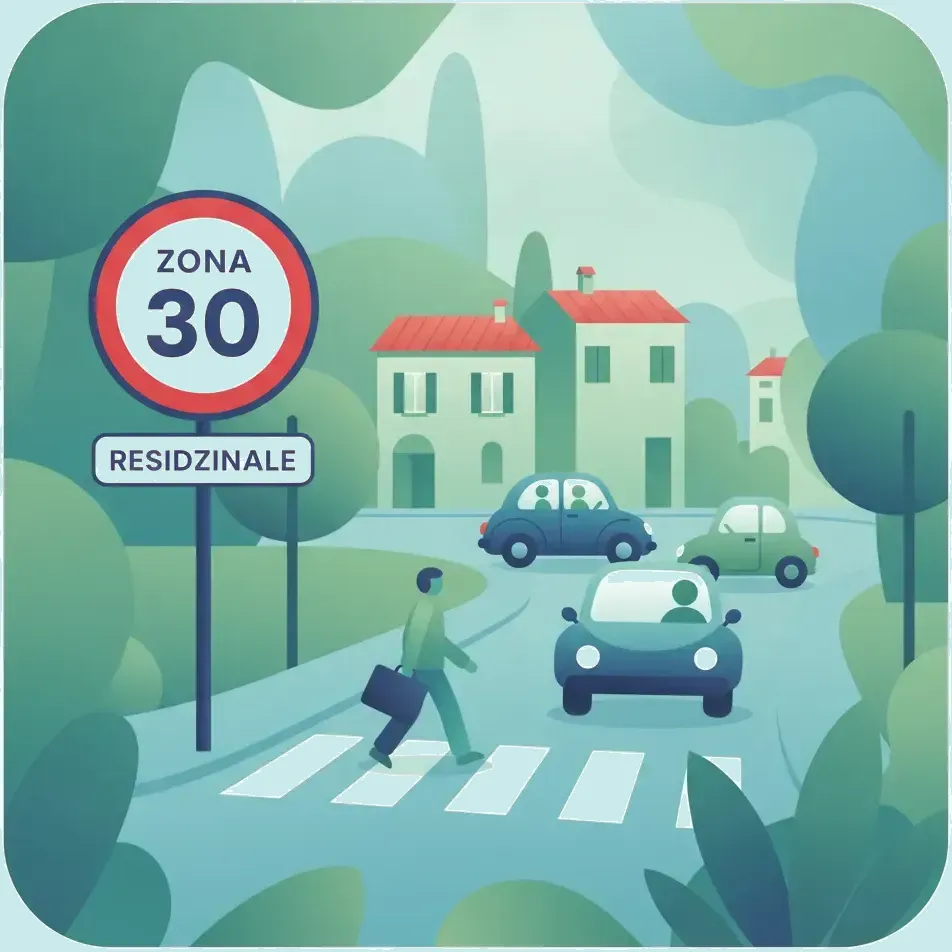
Lesson content overview
Navigating Italy's diverse road network requires a keen understanding of specific signage and regulations, especially within urban environments. This lesson focuses on crucial aspects of low-speed zones, commonly known as "Zone 30" areas, which are prevalent in Italian towns and cities. For Patente AM license holders, mastering the recognition of these signs and the associated rules is fundamental for safe and responsible riding in residential areas, school zones, and other environments densely populated by pedestrians and cyclists.
Understanding these specialized zones goes beyond simply observing a speed limit; it involves a shift in awareness and anticipation, crucial for protecting vulnerable road users. This chapter will delve into the distinct signage, the underlying principles of these zones, and the specific traffic calming measures employed to enhance safety.
Low-speed zones are thoughtfully designated areas where specific speed limits and traffic behaviors are rigorously enforced. Their primary aim is to safeguard vulnerable road users, most notably pedestrians and cyclists, who are at significantly higher risk in collisions with motorized vehicles. The strategic logic behind implementing these zones is multifaceted, focusing on reducing potential harm and improving overall road safety.
At the core of low-speed zones is the speed limitation principle, which mandates a maximum permissible speed significantly lower than the standard urban speed limit. In Italy, this is frequently set at 30 km/h, as indicated by specific road signs. The purpose of this reduction is clear: lower speeds drastically mitigate the severity of accidents, as kinetic energy is directly related to the square of speed. Reduced speed also improves a rider's maneuverability and increases their reaction time, allowing more opportunity to perceive and respond to hazards. For Patente AM riders, this means consciously adjusting vehicle speed regardless of how open the road may appear, always prioritizing safety.
Within low-speed zones, the priority insertion principle often grants specific road users, such as pedestrians and cyclists, heightened priority over motorized traffic. This is particularly evident at designated crossings, shared spaces, and sometimes even at certain types of intersections. The rationale is to explicitly protect these vulnerable users by ensuring they have the right-of-way, thereby reducing conflict points. Riders must be prepared to stop or yield, even in situations where they might not typically expect to based on general traffic rules, always maintaining a high level of vigilance.
The traffic calming measures principle involves the physical and visual modification of the road environment itself to reinforce reduced speeds. These measures are not merely suggestions; they are tangible elements designed to compel drivers and riders to decelerate. Examples include speed bumps, chicanes (artificial curves), and narrowed lanes. Their purpose is to provide immediate, physical feedback that a lower speed is required. For Patente AM riders, this means anticipating and responding to these physical changes, understanding that they are integral to the zone's safety design, even if speed signs are not immediately visible.
Specific road signs are critical in communicating the regulations of low-speed zones. Recognizing and correctly interpreting these signs is paramount for Patente AM riders to comply with the law and ensure safety.
The "Zone 30" sign is one of the most important indicators of a low-speed area.
The actual sign for a "Zone 30" (Zona a velocità limitata 30 km/h) in Italy is typically a rectangular blue sign with a white border. Inside this blue rectangle, there is a smaller circular white sign with a red border, displaying the number "30" in black. This comprehensive sign clearly marks the start of an area where the maximum speed for all motor vehicles is limited to 30 km/h. This limit applies to the entire road segment or network of streets indicated, from the point where the sign is encountered until an "End of Zone 30" sign is displayed. Failing to observe this speed limit can result in fines and demerit points. It is a common misunderstanding to believe this sign only applies to certain vehicle categories; it mandates reduced speed for all motorized traffic unless specific exemptions are explicitly stated. For example, in a historic town center, you would see this sign at entry points, signaling that all vehicles, including mopeds and scooters, must travel at 30 km/h.
Within low-speed zones, pedestrian safety is a primary concern, and specific signs and road markings emphasize their priority.
The warning sign F1 (triangular with a white background and black border, featuring a stylized pedestrian) alerts drivers to the presence of a pedestrian crossing. More specifically, zebra crossings, marked by parallel white stripes on the road surface, explicitly grant pedestrians priority. At these crossings, vehicles are legally required to yield to pedestrians who are present on or are about to step onto the crossing. This means a driver must stop at the line before the crossing if a pedestrian is present, waiting to cross or already crossing. A common misunderstanding is assuming one can proceed if no vehicle is directly behind; the priority is for the pedestrian, regardless of traffic flow. For instance, near a park, pedestrians using a clearly marked zebra crossing within a Zone 30 area have priority over all vehicular traffic, and riders must stop to let them pass safely.
School zones are particularly sensitive areas where extreme caution is required due to the presence of children.
The A5 warning sign (triangular with a white background and a black border, featuring stylized figures of children crossing a road) alerts riders to the proximity of schools, playgrounds, or other areas where children are frequently present. These zones often combine with temporary speed limit signs, which may reduce the speed further (e.g., to 20 km/h) during specified hours (e.g., school opening and closing times). It is crucial not to assume that the reduced speed applies at all times; a supplementary rectangular plate often indicates the active hours. Riders must exercise heightened vigilance and be prepared for unpredictable movements from children. For example, a school zone sign posted near an elementary school might have a supplementary plate indicating a reduced speed limit of 20 km/h between 7:30-9:00 a.m. and 3:00-4:30 p.m., requiring riders to adjust their speed accordingly during those times.
Beyond signage, physical alterations to the road infrastructure, known as traffic calming measures, are implemented to physically encourage or enforce reduced speeds. These features are designed to provide tangible feedback to riders, prompting them to decelerate.
Riders must always slow down significantly to navigate these features safely, not only to prevent damage to their vehicle but also to maintain control, especially on two-wheeled vehicles. Associated rules include respecting any supplementary speed limits posted in conjunction with these measures. Ignoring traffic calming measures can lead to discomfort, loss of control, vehicle damage, and penalties. For instance, approaching a speed hump near a residential entrance requires a significant reduction in speed to cross it smoothly and safely, particularly on a moped.
Even within the controlled environment of low-speed zones, standard intersection priority rules remain active and must be strictly observed. While the overall speed is lower, the potential for collisions at intersections is still high if rules are not followed.
Unless otherwise explicitly signposted, the general rule of yielding to the right applies at intersections within low-speed zones. This means that a vehicle approaching from the right at an unmarked intersection has priority. However, many intersections within these zones will have specific signage to clarify priority.
A Yield sign (D1), a white inverted triangle with a red border, indicates that you must give way to traffic on the intersecting road before proceeding. This may mean stopping if necessary to allow other vehicles to pass safely.
A Stop sign (B2), an octagonal red sign with white lettering, requires a mandatory full stop before the white stop line. This is crucial for assessing traffic from all directions before safely proceeding. A common misunderstanding in low-speed zones is assuming that because speeds are low, a full stop isn't always necessary; this is incorrect and highly dangerous. Even a "rolling stop" (not coming to a complete halt) is a violation. For example, at an intersection within a Zone 30 area that is clearly marked with a "Yield to the Right" sign, Patente AM riders must be prepared to stop and give way to any vehicles approaching from their right.
Adhering to the specific rules and regulations governing low-speed zones is not merely about avoiding penalties; it is about actively contributing to a safer road environment for everyone.
Applicability: This rule applies throughout the entire defined Zone 30 area, starting from the "Zone 30" sign and ending only when an "End of Zone 30" sign is encountered. Legal Status: Mandatory. Rationale: The reduced speed limit is designed to improve a rider's reaction time and significantly reduce the severity of accidents in densely populated urban settings, where conflicts with pedestrians and cyclists are more likely. Example: Upon seeing a "Zone 30" sign, a Patente AM rider must immediately reduce their speed to a maximum of 30 km/h. Continuing at 50 km/h within the zone is a violation.
Applicability: At any marked pedestrian crossing (such as a zebra crossing) within a Zone 30 or other low-speed area. Legal Status: Mandatory. Rationale: Pedestrians are inherently more vulnerable than motorized vehicles. Yielding ensures their safety in areas with higher foot traffic, preventing serious injuries. Example: If a pedestrian is at or steps onto a zebra crossing, the rider must stop completely before the pedestrian crossing line, allowing them to cross safely. Passing the crossing without stopping is a serious offense.
Applicability: From the time a school zone sign, particularly one indicating active hours, is visible until the zone's end. Legal Status: Mandatory during specified school hours; otherwise, the standard Zone 30 limit may apply. Rationale: Children's movements can be unpredictable. Reduced speed in these zones minimizes the risk of accidents by giving riders more time to react to sudden actions. Example: During school recess, if a school zone sign indicates a temporary speed limit of 20 km/h, a rider must comply, even if the general Zone 30 limit is 30 km/h.
Applicability: At every stop sign encountered, irrespective of the surrounding speed limit or type of zone. Legal Status: Mandatory. Rationale: A full stop is required to allow riders to thoroughly assess traffic from all directions (left, right, and straight ahead) before proceeding safely, eliminating collision risks at intersections. Example: Approaching a stop sign in a Zone 30 area, a rider must bring their moped to a complete halt before the stop line, look carefully, and only then proceed when safe. Rolling through the sign is a violation.
Applicability: At all physical traffic calming features, including speed bumps, humps, chicanes, and narrowings. Legal Status: Mandatory. Rationale: These measures are intentionally designed to physically enforce speed reduction. Disregarding them can lead to loss of control, vehicle damage, and endanger other road users. Example: When encountering a speed hump, a rider must reduce speed significantly to navigate it smoothly, protecting their vehicle and maintaining stability. Ignoring it and traveling at high speed is dangerous and non-compliant.
Even with clear signage and regulations, certain violations are frequently observed in low-speed zones. Understanding these common mistakes can help Patente AM riders practice safer driving habits.
While low-speed zones have established rules, effective riding requires adaptability based on prevailing conditions. Patente AM riders must learn to adjust their behavior even further to ensure maximum safety.
The regulations and features of low-speed zones are not arbitrary; they are meticulously designed based on scientific principles and safety research.
Mastering the rules and understanding the rationale behind low-speed areas, particularly "Zone 30" in Italy, is an indispensable skill for every Patente AM rider. These zones are engineered to transform urban spaces into safer, more harmonious environments for all road users.
Compliance with these concepts not only ensures you avoid penalties but, more importantly, enhances your safety and the safety of everyone sharing the road. By riding responsibly and adhering to the specific regulations of low-speed zones, Patente AM holders contribute significantly to safer Italian roads.
Zone 30 areas in Italy are designated low-speed zones where the maximum speed is reduced to 30 km/h for all vehicles, marked by specific rectangular blue signs with a circular red-bordered 30. Within these zones, pedestrians have absolute priority at zebra crossings and traffic calming measures like speed bumps, humps, chicanes, and narrowings physically enforce speed reduction. School zones often impose additional time-specific speed limits during school hours, requiring riders to watch for supplementary plates. Standard priority rules including yielding to the right and obeying stop and yield signs remain fully in effect, and a complete stop is mandatory at all stop signs regardless of the low-speed environment. Riders must also adapt to contextual factors such as adverse weather, reduced visibility at night, and increased pedestrian density by further reducing speed beyond posted limits when necessary.
A short set of high-value points that capture the most important learning from this lesson.
Zone 30 areas impose a mandatory 30 km/h speed limit on all motorized traffic, starting from the rectangular blue sign with white border and circular red-bordered 30, until an end-of-zone sign is displayed
Pedestrians have absolute priority at zebra crossings within low-speed zones; you must stop completely before the crossing line if a pedestrian is present or approaching
Traffic calming measures like speed bumps (2-4 cm high) and humps (5-7 cm high) are physical enforcement tools that require significant speed reduction to navigate safely
School zone signs often include supplementary plates specifying active hours; during those times, speed may be further reduced (e.g., to 20 km/h) beyond the standard Zone 30 limit
Standard priority rules including 'yield to the right' at unmarked intersections and obedience to stop/yield signs remain fully active within low-speed zones despite reduced speeds
Explore all units and lessons included in this driving theory course.
Zone 30 start sign: rectangular blue with white border containing a red-bordered white circle with '30' in black; end sign marks the zone's termination
F1 triangular warning sign indicates pedestrian crossing ahead; zebra crossings (parallel white stripes) grant pedestrians mandatory priority over vehicles
A5 triangular sign with stylized children indicates school zones; always check for supplementary time plates indicating when additional speed reductions apply
Speed bumps are 2-4 cm high and short; speed humps are 5-7 cm high and longer; chicanes create alternating curves; narrowings reduce lane width physically
A full complete stop is mandatory at every B2 Stop sign, regardless of low speeds; a rolling stop is a violation even within Zone 30 areas
Assuming the 30 km/h limit only applies to certain vehicle types; it is mandatory for all motorized traffic within the designated Zone 30 area
Failing to stop at zebra crossings when pedestrians are waiting or approaching, believing you can proceed if no other traffic is present
Not reducing speed sufficiently for speed bumps and humps, which can cause loss of vehicle control, damage, and discomfort on two-wheeled vehicles
Overlooking supplementary time plates on school zone signs and therefore not applying temporary speed reductions during active hours
Continuing at Zone 30 speeds after passing the end-of-zone sign, which can disrupt traffic flow and is non-compliant
Lesson content overview
A short set of high-value points that capture the most important learning from this lesson.
Zone 30 areas impose a mandatory 30 km/h speed limit on all motorized traffic, starting from the rectangular blue sign with white border and circular red-bordered 30, until an end-of-zone sign is displayed
Pedestrians have absolute priority at zebra crossings within low-speed zones; you must stop completely before the crossing line if a pedestrian is present or approaching
Traffic calming measures like speed bumps (2-4 cm high) and humps (5-7 cm high) are physical enforcement tools that require significant speed reduction to navigate safely
School zone signs often include supplementary plates specifying active hours; during those times, speed may be further reduced (e.g., to 20 km/h) beyond the standard Zone 30 limit
Standard priority rules including 'yield to the right' at unmarked intersections and obedience to stop/yield signs remain fully active within low-speed zones despite reduced speeds
Explore all units and lessons included in this driving theory course.
Zone 30 start sign: rectangular blue with white border containing a red-bordered white circle with '30' in black; end sign marks the zone's termination
F1 triangular warning sign indicates pedestrian crossing ahead; zebra crossings (parallel white stripes) grant pedestrians mandatory priority over vehicles
A5 triangular sign with stylized children indicates school zones; always check for supplementary time plates indicating when additional speed reductions apply
Speed bumps are 2-4 cm high and short; speed humps are 5-7 cm high and longer; chicanes create alternating curves; narrowings reduce lane width physically
A full complete stop is mandatory at every B2 Stop sign, regardless of low speeds; a rolling stop is a violation even within Zone 30 areas
Assuming the 30 km/h limit only applies to certain vehicle types; it is mandatory for all motorized traffic within the designated Zone 30 area
Failing to stop at zebra crossings when pedestrians are waiting or approaching, believing you can proceed if no other traffic is present
Not reducing speed sufficiently for speed bumps and humps, which can cause loss of vehicle control, damage, and discomfort on two-wheeled vehicles
Overlooking supplementary time plates on school zone signs and therefore not applying temporary speed reductions during active hours
Continuing at Zone 30 speeds after passing the end-of-zone sign, which can disrupt traffic flow and is non-compliant
Explore search topics learners often look for when studying Specific Signage for Low-Speed Areas and Zones 30. These topics reflect common questions about road rules, driving situations, safety guidance, and lesson level theory preparation for learners in Italy.
Browse additional driving theory lessons that cover connected traffic rules, road signs, and common driving situations related to this topic. Improve your understanding of how different rules interact across everyday traffic scenarios.
Understand the specific Italian road signs and regulations for low-speed zones like Zone 30. Learn about traffic calming measures, pedestrian priority, and intersection rules for safe urban driving with Patente AM.
This lesson explores the specific speed limits applicable to AM vehicles across various zones, including urban, residential, and rural roads. Emphasis is placed on understanding the signage that indicates both permanent and temporary speed restrictions. Learners will also examine the rationale behind these limits and the importance of adapting speed to road conditions and traffic density.
This lesson details the legal speed limits applicable to different road classifications in Italy. It covers the standard limits for urban centers, extra-urban secondary roads, main extra-urban roads, and motorways (autostrade). The content also highlights the lower speed limits that apply to beginner drivers and in specific conditions such as adverse weather or road construction zones.
This lesson explains the rules for special urban traffic situations common in Italy. It provides a detailed explanation of Limited Traffic Zones (ZTL), including how to recognize the signage and understand the access restrictions to avoid fines. The content also offers guidance on navigating the narrow and complex streets of historic centers and safely maneuvering around frequently stopping delivery vehicles.
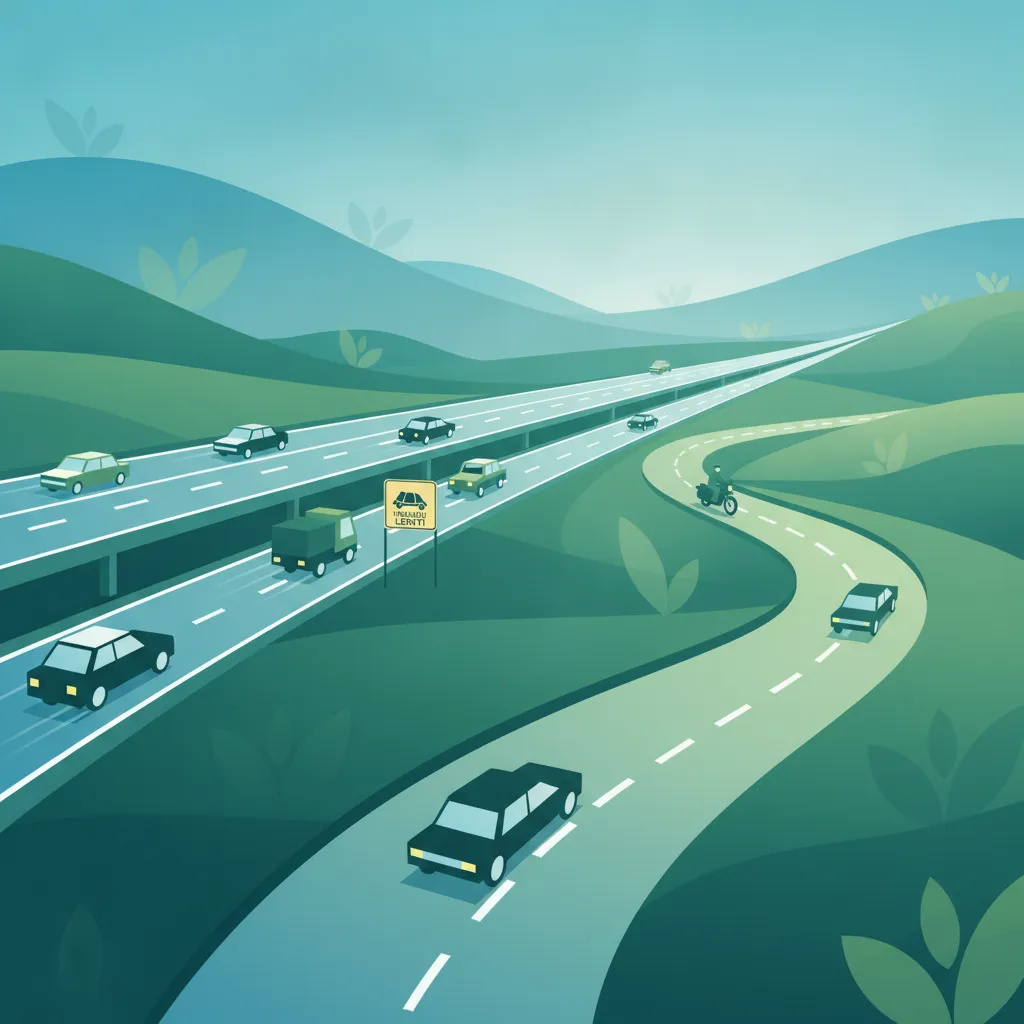
This lesson provides essential rules and techniques for driving on Italian motorways (autostrade) and major extra-urban roads. It explains how to safely merge onto the motorway from an entry ramp, the strict lane discipline required (drive right, overtake left), and how to exit correctly. The content also covers speed regulations, maintaining a safe following distance at high speed, and procedures for using service areas and handling emergencies.
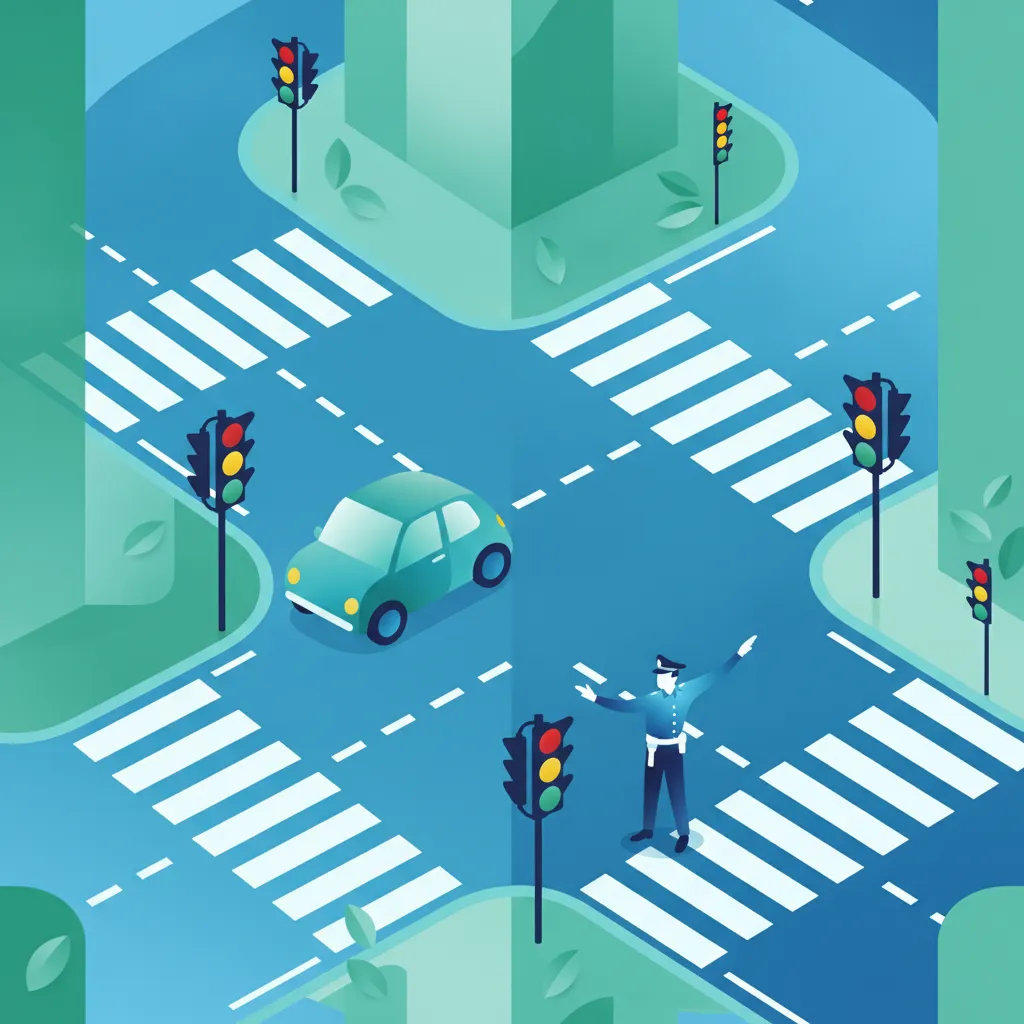
This lesson explains the function of Italian traffic light systems and the meaning of various road markings. You will learn the rules for red, amber, and green signals, including flashing lights and directional arrows. It also covers how to interpret lane lines, stop lines, and other surface markings that dictate correct vehicle positioning and movement.
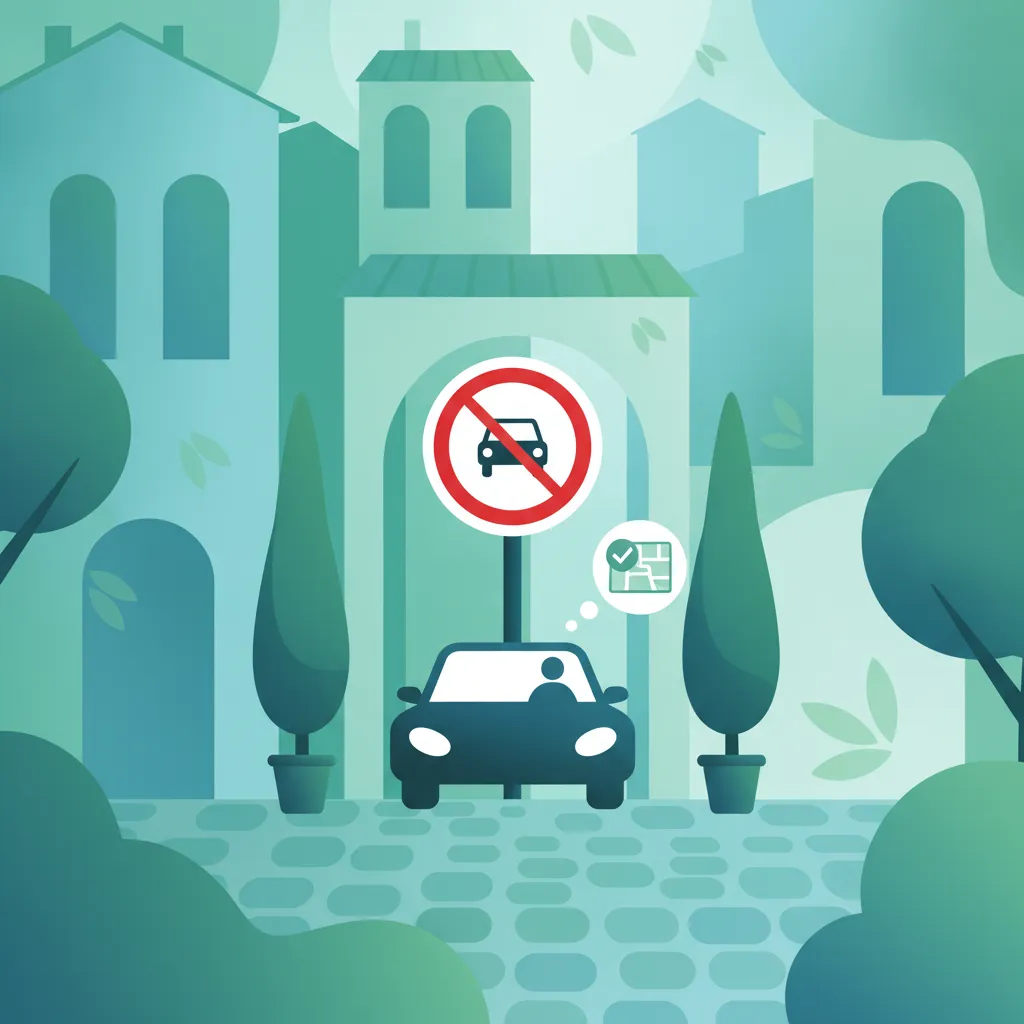
This lesson explains the concept of 'Zone a Traffico Limitato' (ZTL), common in Italian city centers, which restricts vehicle access at certain times. It covers how to identify ZTL boundaries, understand the operating hours, and the procedures for obtaining permits for commercial deliveries. The lesson also touches on environmental zones that may restrict access based on a vehicle's emission standards.
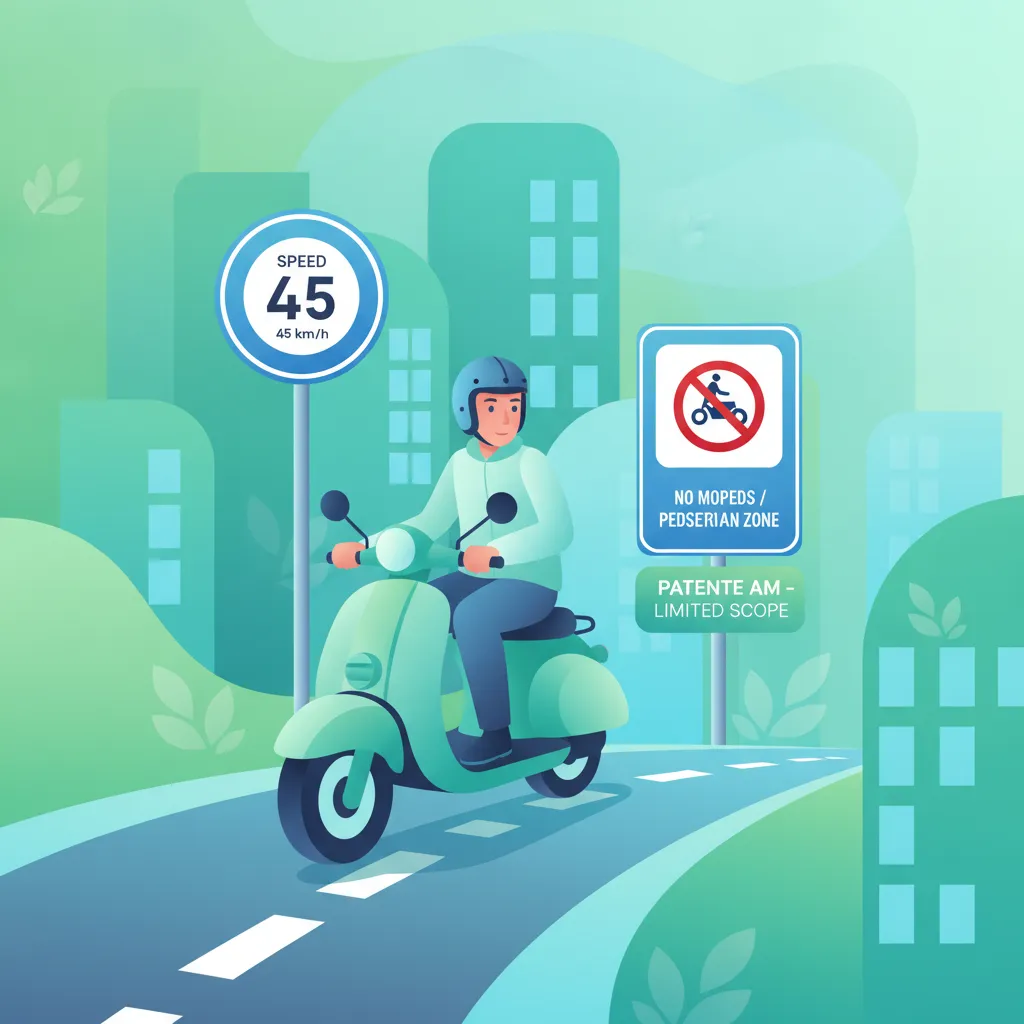
This lesson clarifies the precise scope of the Patente AM license, defining the vehicle categories it permits based on technical specifications. It details the legal limits on power, engine displacement, and maximum speed for mopeds and similar vehicles. You will also learn about the minimum age, registration process, and mandatory insurance needed to operate on public roads.

This lesson focuses on the principle of 'appropriate speed' in urban environments, which often means driving slower than the legal maximum. It explains how to assess the environment for potential hazards—such as schools, parked cars, and busy intersections—and adjust speed accordingly to allow for adequate reaction time. Maintaining a safe, consistent speed reduces the need for harsh braking and contributes to a safer environment for everyone.
This lesson provides a practical guide to parking regulations in Italian urban areas. It explains the meaning of different colored parking lines (blue for paid, white for free, yellow for reserved), the use of the parking disc (disco orario) for time-limited zones, and how to operate pay-and-display machines. The content also covers how to identify no-parking zones to avoid fines and towing.
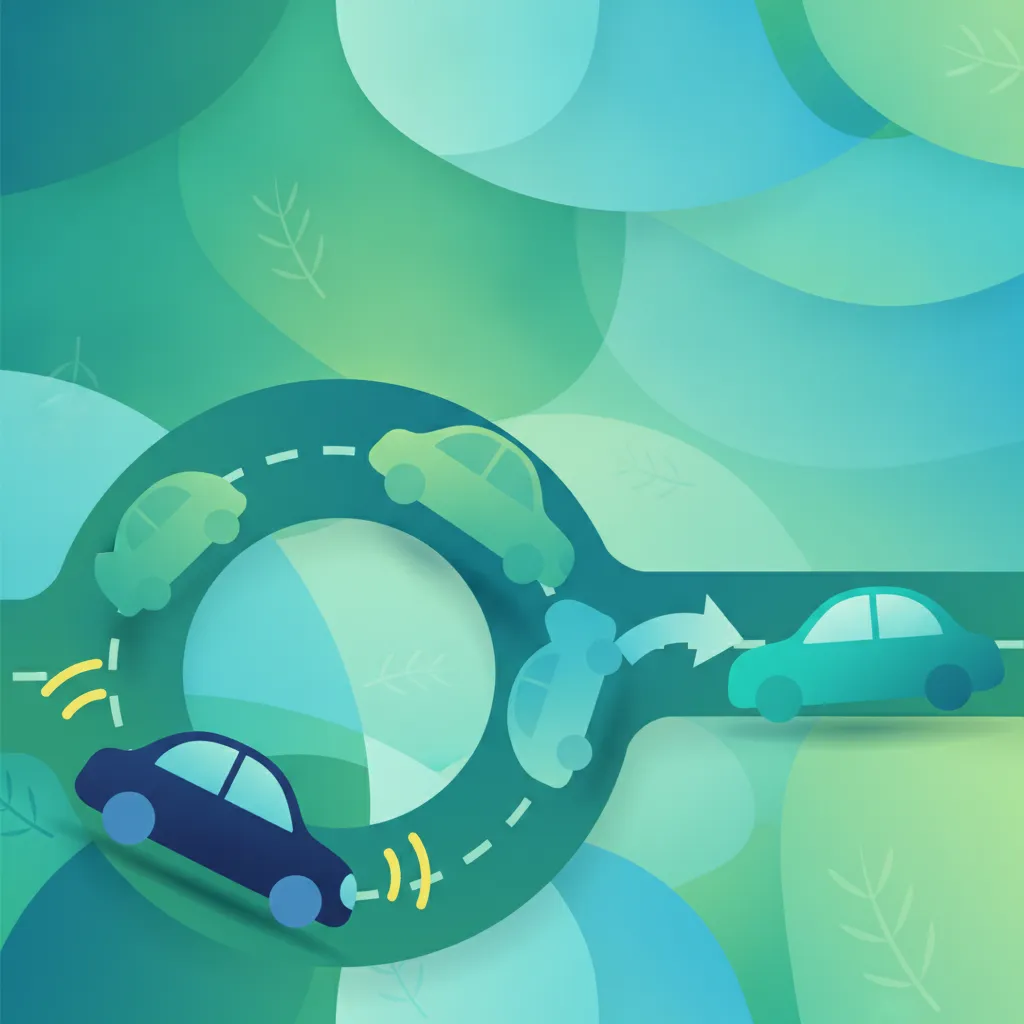
This lesson provides a step-by-step guide to navigating roundabouts safely and efficiently. It focuses on the critical rule of yielding to traffic already circulating within the roundabout before entering. You will also learn how to select the correct lane based on your intended exit and how to use your indicators to signal your maneuvers clearly.
Learn the specific rules for yielding to pedestrians and cyclists in Italy, especially in residential areas, school zones, and low-speed environments. Essential theory for Patente AM riders protecting vulnerable road users.

This lesson is dedicated to fostering awareness and safe interaction with vulnerable road users commonly found in cities. It details the legal priority of pedestrians at crossings and the importance of giving ample space to cyclists. Additionally, it covers the specific hazards associated with tram tracks and the need to be vigilant around public transport vehicles like buses and taxis.

This lesson provides an in-depth focus on sharing the road with the most vulnerable users. It teaches drivers to be acutely aware of pedestrians at crossings, cyclists filtering through traffic, and motorcyclists who may be in blind spots. The lesson emphasizes the importance of leaving extra space, signaling intentions clearly, and exercising extreme caution at junctions, where the majority of serious incidents occur.
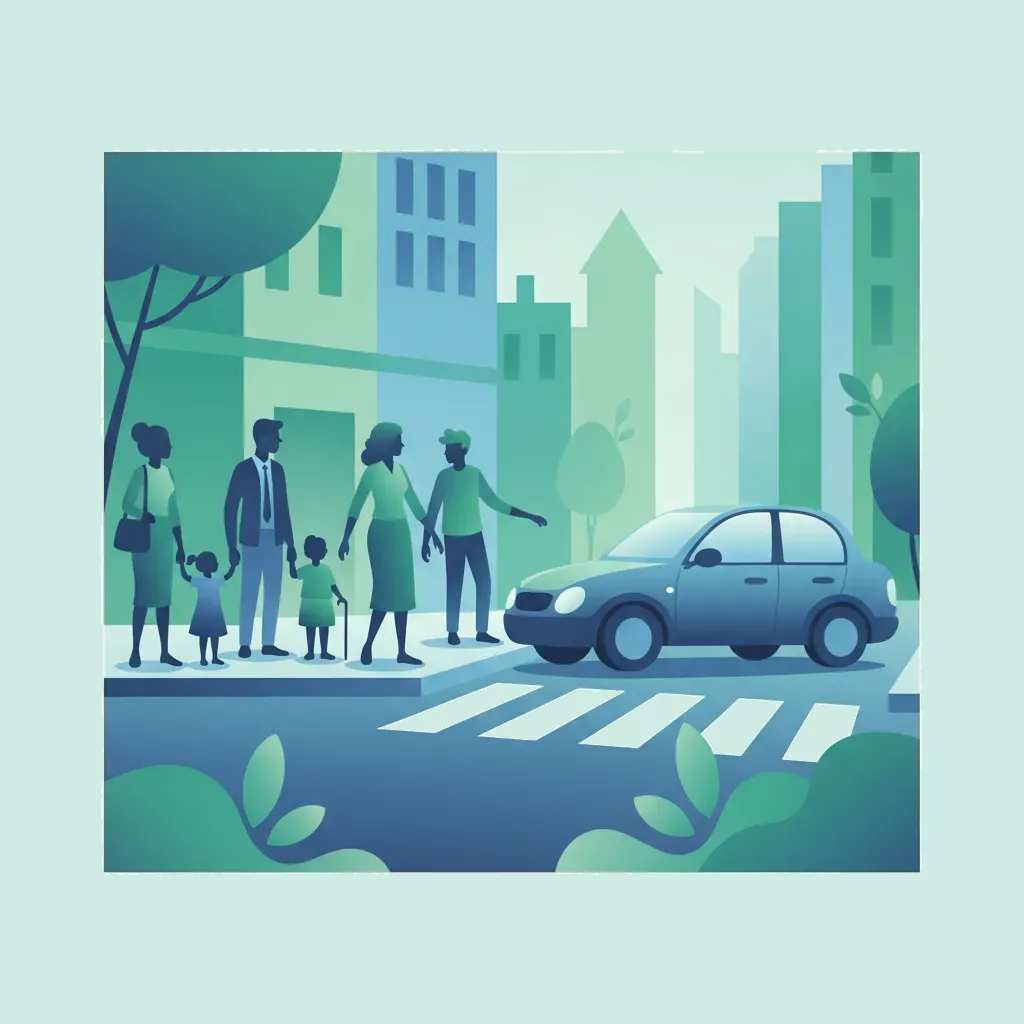
This lesson focuses on the driver's responsibility to protect pedestrians, especially at designated crossings (strisce pedonali). It reinforces the legal requirement to yield to pedestrians who are on or about to enter a crosswalk. The content also covers the importance of reducing speed and increasing vigilance in urban areas, school zones, and other places with high pedestrian activity.
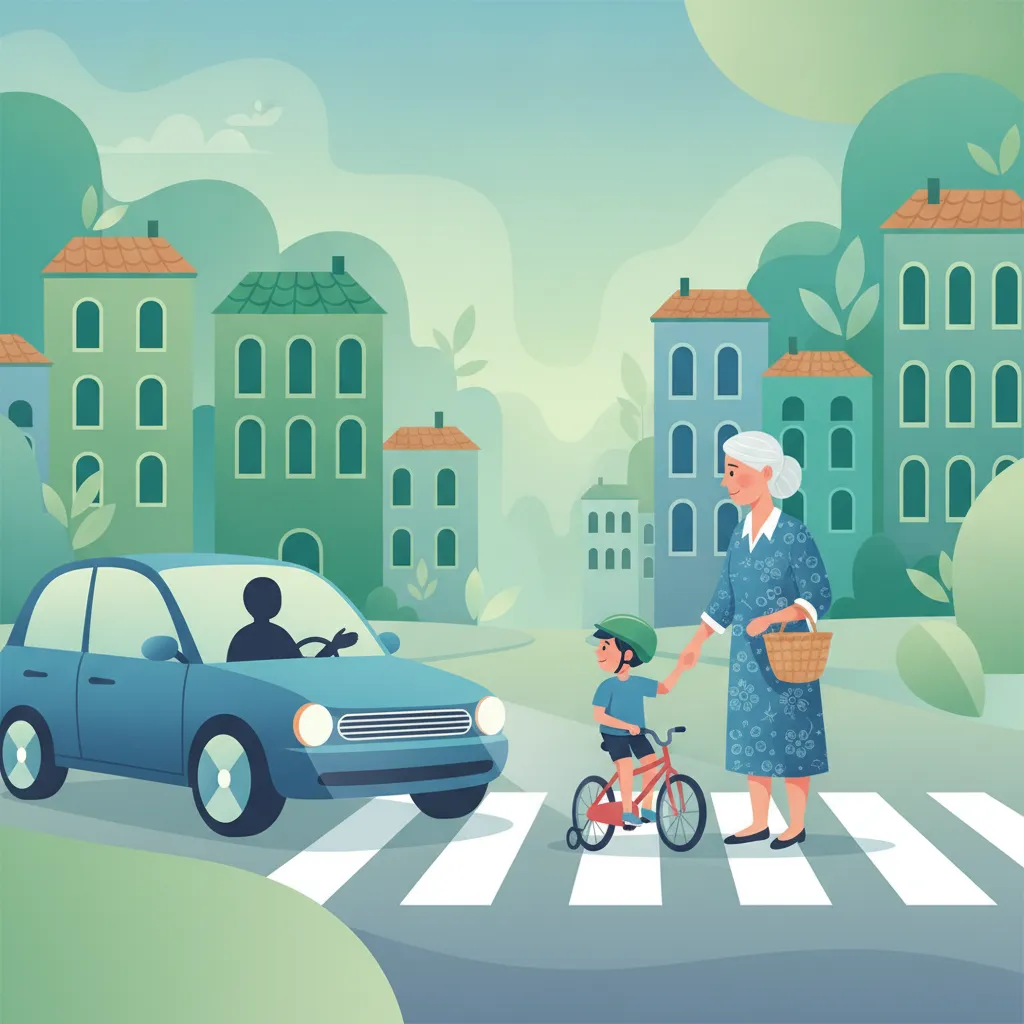
This lesson addresses the critical responsibility of protecting vulnerable road users, such as pedestrians, cyclists, and motorcyclists, who are most at risk in a collision with a heavy vehicle. It teaches drivers to be hyper-aware in urban settings, to anticipate the unpredictable movements of VRUs, and to provide ample space, especially when turning at junctions. A key focus is on scanning for VRUs in blind spots before moving off or making any maneuver.
This lesson provides critical guidance on how to safely share the road with vulnerable users, including pedestrians, cyclists, motorcyclists, and children. It highlights the importance of increased awareness in specific areas like school zones and crosswalks. The content teaches techniques for maintaining a safe lateral distance when overtaking, checking blind spots thoroughly, and anticipating the often unpredictable movements of these users.
This lesson delivers a comprehensive explanation of right-of-way regulations at Italian intersections. It covers the interpretation of traffic light signals, the absolute requirement to stop at stop signs, and yielding at give-way signs. Furthermore, it details the default priority rules for unmarked intersections and the specific obligations a rider has towards pedestrians on crossings.
This lesson focuses on the principle of 'appropriate speed' in urban environments, which often means driving slower than the legal maximum. It explains how to assess the environment for potential hazards—such as schools, parked cars, and busy intersections—and adjust speed accordingly to allow for adequate reaction time. Maintaining a safe, consistent speed reduces the need for harsh braking and contributes to a safer environment for everyone.
This lesson details the correct procedures for interacting with public transport and school buses. It explains the rules for dedicated bus lanes, the absolute priority of trams, and the legal requirement to yield to buses pulling out from a stop. The content also covers the specific laws requiring drivers to stop when a school bus is loading or unloading passengers, to ensure child safety.
This lesson covers the general principles of priority at intersections governed by traffic signs and signals. It explains how to identify a priority road and the obligation to yield to traffic when encountering a 'dare la precedenza' (yield) or stop sign. The content also reviews the hierarchy of authority, where signals from a traffic officer override all other signs and lights.

This lesson explains the rules and best practices for safely sharing the road with cyclists. It covers the importance of respecting dedicated bike lanes and maintaining a safe lateral distance (at least 1.5 meters) when overtaking. The content also teaches drivers to be vigilant for cyclists, especially at intersections and when opening car doors, to prevent common types of collisions.
Find clear answers to common questions learners have about Specific Signage for Low-Speed Areas and Zones 30. Learn how the lesson is structured, which driving theory objectives it supports, and how it fits into the overall learning path of units and curriculum progression in Italy. These explanations help you understand key concepts, lesson flow, and exam focused study goals.
A Zone 30 is designed to increase road safety by limiting speeds to 30 km/h, which protects pedestrians and cyclists. It is common near schools, hospitals, and residential streets where interaction with vulnerable users is high.
You are no longer in the zone when you see the sign indicating the end of the 30 km/h limit, often a black-on-white sign with a red slash or a sign indicating the general urban speed limit is reinstated.
Inside a Zone 30, traffic laws still apply, but you must be prepared for traffic calming devices like speed bumps or raised crossings. Always check for specific signs at intersections as the standard priority rules may be modified by signage.
No, if a Zone 30 sign is present, the 30 km/h limit applies to all vehicles within that zone, including mopeds and scooters covered by the Patente AM license.
Start searching now to pinpoint exactly which Italian driving theory topics, road signs, or traffic rules you need to master. Use our advanced filters to build a custom practice session and ensure you're fully prepared for every aspect of your official driving licence exam.