This lesson guides you through the system of informational and directional signs used on Italian roads. It is a vital part of your Patente B training, helping you navigate motorways, state roads, and urban environments by understanding how to read signs and locate essential services.
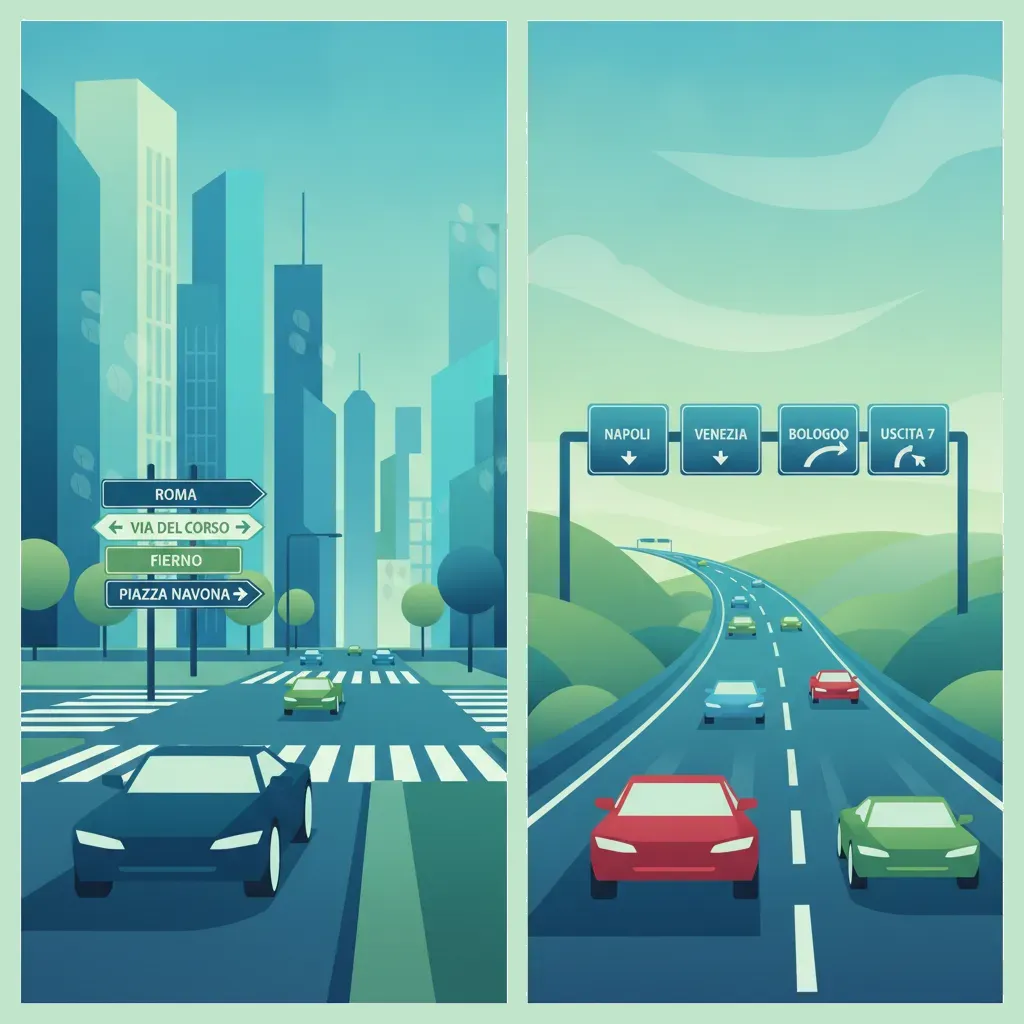
Lesson content overview
Understanding informational and directional signs is fundamental for safe and efficient navigation on Italian roads. Unlike regulatory or warning signs, these signs do not impose obligations or indicate dangers, but rather provide essential guidance, helping drivers plan their routes, anticipate maneuvers, and locate necessary services. For anyone preparing for their Italian Patente B theory test, mastering these signs is crucial for confident driving across Italy's diverse road network.
Informational and directional signs are designed to reduce driver uncertainty and enhance road safety by providing clear, concise guidance. They assist in route anticipation, enabling drivers to make timely decisions about lane selection, exit planning, and where to find facilities. This proactive approach to navigation is vital for maintaining smooth traffic flow and preventing abrupt, dangerous maneuvers.
These signs are strategically placed to give drivers ample time to react and adjust their driving, whether approaching a city, a motorway exit, or a service area. By offering non-regulatory information, they empower drivers with the knowledge needed to travel efficiently and safely, minimizing stress and the risk of navigation errors.
One of the most immediate pieces of information conveyed by Italian road signs is the type of road they pertain to, indicated by their background color. This color-coding system allows drivers to instantly recognize the class of road they are on or are being directed towards, influencing expectations about speed limits, driving conditions, and available services. Adhering to this system is a core principle of Italian road signage.
Signs with a green background are exclusively used for motorways (Autostrade). These are high-speed, multi-lane roads designed for long-distance travel, often requiring a toll. Green signs provide information related to motorway exits, connections to other motorways, and services located directly on the motorway network. Seeing a green sign immediately indicates you are either on a motorway or being directed to one.
A blue background signifies signs related to state roads (Strade Statali) and other primary non-motorway roads. These roads connect cities and towns, often serving as alternatives to motorways or as main arteries within regions. Blue signs typically guide drivers to cities, towns, and major intersections on the national road network. They generally have lower speed limits than motorways and may pass through urban areas or small villages.
Signs with a white background are used for urban roads (Strade Urbane) and local roads. These are found within city limits, residential areas, and smaller towns. White signs direct drivers to specific streets, local attractions, parking areas, and amenities within built-up areas. On white signs, distances are typically shorter, and the information is more localized, reflecting the lower speeds and higher density of intersections characteristic of urban driving.
Always pay attention to the background color of a directional sign. It provides instant context about the type of road you are on or being directed to, helping you anticipate appropriate speed limits and driving conditions.
Directional signs in Italy are designed to provide clear and unambiguous guidance, often incorporating arrows and distance indicators to assist drivers in route planning. These visual cues are essential for preparing for upcoming turns, exits, or the continuation of a route.
Arrows on informational signs clearly indicate the required direction of travel for a given destination or exit. These arrows are designed to match the actual geometry of the road ahead, preventing confusion and ensuring safe lane positioning.
Misinterpreting directional arrows can lead to sudden, unsafe maneuvers or missing a turn. Drivers must ensure the arrow corresponds to their intended route and the road they are currently on, especially in areas with complex junctions or parallel roads.
Informational signs frequently include indicators of distance to a specified destination or facility. This information is crucial for drivers to gauge how much time they have to prepare for a maneuver or to reach their destination.
Distance indicators should always be displayed on the same informational sign as the destination name to ensure a clear association. This helps drivers avoid errors and plan their speed and lane changes effectively.
Signs directing drivers to cities and towns are among the most common informational signs. They typically feature the name of the city or town, its distance, and often a directional arrow. These signs are vital for inter-city travel and for finding specific locations within a region. On state and urban roads, these signs help navigate through a network of smaller roads leading to a final destination. The color of the sign (blue for state roads, white for urban roads) informs the driver about the type of road they are on or being directed to.
Navigating Italy's extensive motorway network requires specific attention to green-background signs, particularly those related to exit numbering and advance directional information. These systems are designed to make high-speed navigation clear and safe.
Motorway exits in Italy are typically assigned a sequential number. This exit numbering system facilitates quick identification of the correct exit, which is particularly useful when traveling at high speeds or following GPS instructions. The exit number is prominently displayed on green directional signs, often alongside the destination accessible from that exit and a directional arrow. Drivers should familiarize themselves with their planned exit number well in advance.
Do not confuse motorway exit numbers with kilometre markers. Kilometre markers indicate the distance from the start of the motorway or a specific reference point, while exit numbers specifically identify junctions. Always follow the exit number for your intended destination.
On motorways, directional information is provided sequentially, giving drivers ample warning before an exit. Typically, multiple green signs will appear leading up to an exit:
This sequential placement ensures that drivers receive clear, progressive guidance, allowing sufficient time for safe lane changes and deceleration without causing disruption to traffic flow.
Informational signs also play a critical role in helping drivers locate essential services and facilities along their journey. These signs often use universally recognized symbols or iconography, making them easy to understand regardless of language.
Service facility signs prominently feature icons to represent different amenities:
To ensure drivers have sufficient time to plan a stop, service facility signs are placed at mandated distances before the actual service area. On motorways, for instance, these signs are typically placed several kilometers in advance. This allows drivers to safely move into the correct lane, slow down, and exit without last-minute braking or hazardous maneuvers. For long journeys, anticipating service stops is crucial for managing fuel levels and preventing driver fatigue.
Italian road signage is governed by strict regulations to ensure clarity, consistency, and safety. Understanding these rules is vital for correct interpretation and compliance.
R1: Directional signs must be placed at a minimum distance of 200 metres before an exit or junction on motorways. This ensures drivers have sufficient time to react and safely change lanes.
R2: Service facility signs must be placed at least 5 km before the facility on motorways. This allows for adequate planning of stops, especially for fuel or rest.
R3: Directional arrow signs must accurately reflect the road geometry. The direction indicated by an arrow must precisely match the actual curve or turn of the road or exit ramp.
R4: Distance indicators must be displayed on the same informational sign as the destination name. This prevents misassociation and ensures drivers understand which distance applies to which destination.
R5: Color coding must correspond to the road category. Green for motorways, blue for state and primary roads, and white for urban and local roads must be consistently applied to all informational signs.
R6: Supplementary panels indicating distance must be placed below the main sign and cannot be used alone. These panels provide additional details and are always subordinate to the primary directional information.
Even with clear signage, drivers can sometimes misinterpret or fail to react appropriately to informational and directional signs. Being aware of these common pitfalls can help improve driving safety.
The effectiveness and interpretation of informational signs can vary significantly depending on the driving context. Adapting your driving behavior and attention levels based on these variations is crucial.
The meticulous design and placement of informational and directional signs are rooted in core safety principles. Compliance with the guidance they provide translates directly into safer roads for everyone.
This lesson teaches the Italian system of informational and directional road signs, which is essential for the Patente B theory exam and safe driving. The core principle is the color-coding system: green signs indicate motorways, blue signs indicate state roads, and white signs indicate urban roads. Directional arrows and distance indicators (both numerical and horizontal bars representing 500 metres each) help drivers prepare for upcoming exits and maneuvers. Service facility signs use standardized icons and are strategically placed well in advance of actual facilities. Key pitfalls include confusing exit numbers with kilometre markers, making late lane changes, and misinterpreting signs in complex junctions or on the wrong road type.
A short set of high-value points that capture the most important learning from this lesson.
Italian directional signs use three colors: green for motorways (Autostrade), blue for state roads (Strade Statali), and white for urban roads (Strade Urbane)
Horizontal lines on motorway signs indicate 500 metres each; three lines means 1.5 km to the exit
Motorway exit numbers (Uscita) are sequential identifiers and must not be confused with kilometre markers
Service facility signs appear at least 5 km before the facility on motorways, using standardized icons for fuel, food, parking, and rest
Directional arrows on signs must accurately reflect the road geometry ahead to prevent navigation errors
Explore all units and lessons included in this driving theory course.
Green signs = motorways only; blue signs = state/primary roads; white signs = urban/local roads
Each horizontal bar below a green sign represents 500 metres to the exit or destination
Service signs use universal icons: fuel pump, fork and knife (restaurant), bed (hotel), P (parking), H (hospital)
On motorways, directional signs must be placed at least 200 metres before an exit or junction
White signs never apply on motorways; only green signs provide relevant motorway information
Confusing motorway exit numbers with kilometre markers and taking the wrong exit
Waiting too late to change lanes by ignoring advance directional signs
Following an arrow on a sign intended for a parallel or adjacent road in complex junctions
Assuming white directional signs encountered on a motorway apply to the motorway itself
Missing service area signs in heavy traffic and running low on fuel or rest breaks
Lesson content overview
A short set of high-value points that capture the most important learning from this lesson.
Italian directional signs use three colors: green for motorways (Autostrade), blue for state roads (Strade Statali), and white for urban roads (Strade Urbane)
Horizontal lines on motorway signs indicate 500 metres each; three lines means 1.5 km to the exit
Motorway exit numbers (Uscita) are sequential identifiers and must not be confused with kilometre markers
Service facility signs appear at least 5 km before the facility on motorways, using standardized icons for fuel, food, parking, and rest
Directional arrows on signs must accurately reflect the road geometry ahead to prevent navigation errors
Explore all units and lessons included in this driving theory course.
Green signs = motorways only; blue signs = state/primary roads; white signs = urban/local roads
Each horizontal bar below a green sign represents 500 metres to the exit or destination
Service signs use universal icons: fuel pump, fork and knife (restaurant), bed (hotel), P (parking), H (hospital)
On motorways, directional signs must be placed at least 200 metres before an exit or junction
White signs never apply on motorways; only green signs provide relevant motorway information
Confusing motorway exit numbers with kilometre markers and taking the wrong exit
Waiting too late to change lanes by ignoring advance directional signs
Following an arrow on a sign intended for a parallel or adjacent road in complex junctions
Assuming white directional signs encountered on a motorway apply to the motorway itself
Missing service area signs in heavy traffic and running low on fuel or rest breaks
Explore search topics learners often look for when studying Informational and Directional Signs. These topics reflect common questions about road rules, driving situations, safety guidance, and lesson level theory preparation for learners in Italy.
Browse additional driving theory lessons that cover connected traffic rules, road signs, and common driving situations related to this topic. Improve your understanding of how different rules interact across everyday traffic scenarios.
Understand how to use informational and directional signs on Italian roads for effective navigation. This lesson covers signs for destinations, services, and motorway information, including color coding for different road types.
This lesson provides a detailed guide to understanding road markings and pavement symbols in Italy. It explains the critical difference between continuous and broken lane lines regarding overtaking, the function of stop lines and yield markings at intersections, and the meaning of directional arrows painted in lanes. The content also covers markings for pedestrian crossings, bus lanes, and designated parking areas.
This lesson is dedicated to warning signs, which are designed to alert drivers to potential dangers or changes in road conditions ahead. It covers the interpretation of signs indicating sharp bends, steep inclines or declines, slippery surfaces, and the potential presence of animals or pedestrians. Understanding these signs allows drivers to anticipate hazards and adjust their speed and driving style accordingly for safety.
This lesson focuses on regulatory signs, which impose legal obligations and prohibitions on drivers. It explains the meaning of critical signs such as 'Stop', 'Yield' (dare la precedenza), and various speed limit signs. The content also covers signs that prohibit certain actions like overtaking, parking, or entry, as well as those that mandate a specific direction of travel or lane usage.
This lesson explains the function of Italian traffic light systems and the meaning of various road markings. You will learn the rules for red, amber, and green signals, including flashing lights and directional arrows. It also covers how to interpret lane lines, stop lines, and other surface markings that dictate correct vehicle positioning and movement.

This lesson details the proper and legal application of a vehicle's horn, lights, and signals as primary communication tools. It explains the specific circumstances for using high beams, low beams, and fog lights to maximize visibility without dazzling other drivers. The content also clarifies the rules for using the horn, turn indicators, and hazard lights to signal intentions, warn of danger, or indicate an emergency situation.
This lesson provides a step-by-step guide to safely and efficiently navigating roundabouts (rotatorie). It explains the primary rule of yielding to traffic already circulating within the roundabout before entering. The content covers correct lane positioning based on the intended exit, the proper use of turn signals when entering and exiting, and how to handle multi-lane roundabouts.
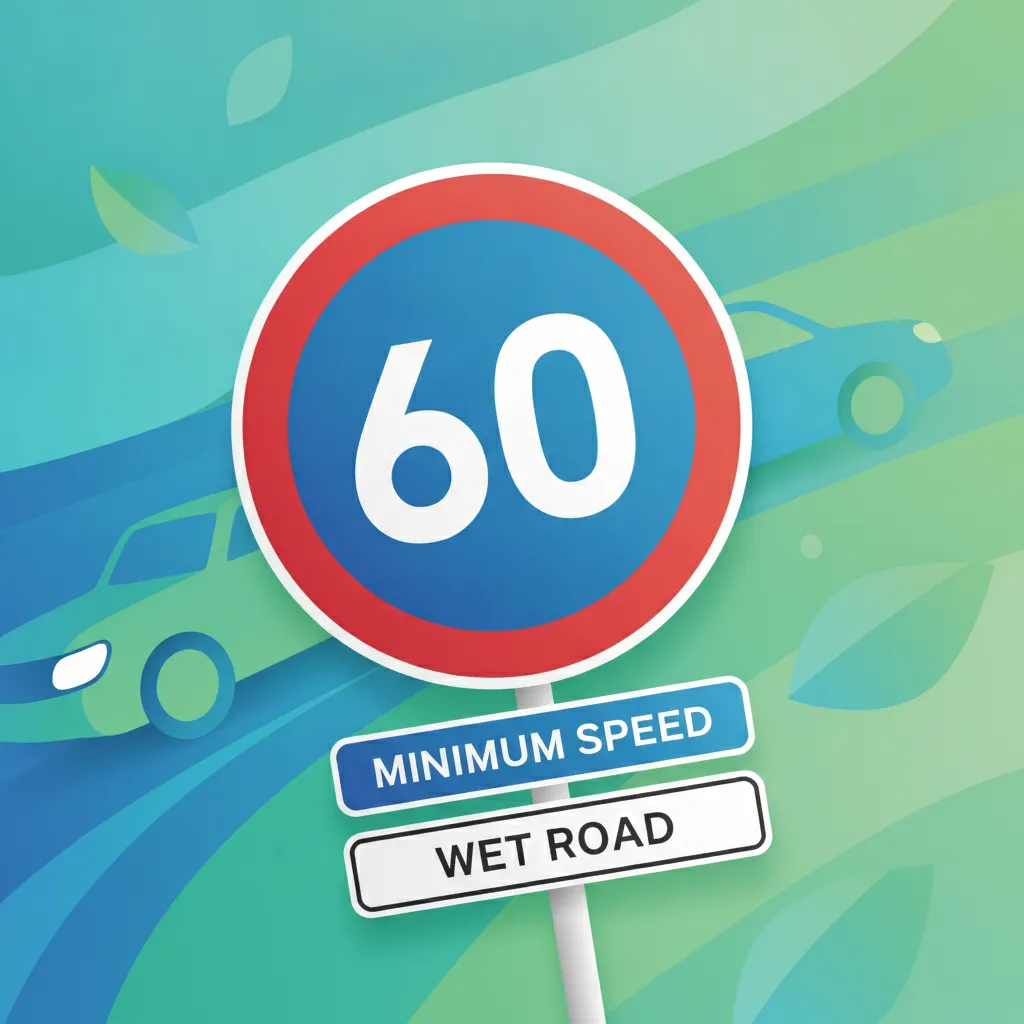
This lesson focuses on supplementary panels (pannelli integrativi) placed below primary road signs to provide additional context or modify their meaning. Learners will understand how these panels specify the distance to a hazard, the length over which a rule applies, or the specific times and vehicle types affected by a regulation. Correct interpretation of these panels is essential for full compliance with traffic laws.
This lesson emphasizes the importance of clear communication and cooperative behavior among all road users to prevent conflicts and enhance safety. It details the proper and legal use of vehicle signals, such as turn indicators and hazard lights, as well as the appropriate use of the horn. The content also explores the role of non-verbal cues like eye contact and courtesy gestures in creating a predictable and safe driving environment.

This lesson focuses on the unique characteristics and challenges of driving on rural and mountain roads. It covers how to safely navigate sharp curves, steep inclines, and narrow lanes with limited visibility, often requiring the use of the horn to signal presence. The content also prepares drivers for potential hazards such as slow-moving agricultural vehicles, unexpected animal crossings, and variable road surface quality.
This lesson focuses on the specific regulatory and warning signs that Patente AM riders must understand and obey. It details signs related to speed limits, no-entry zones, and mandatory directions that directly impact moped operation. You will also learn to recognize warning signs for potential hazards like sharp curves, slippery surfaces, and pedestrian areas.
Learn the meaning behind the color coding of Italian road signs, differentiating between motorways, state roads, and urban routes. This knowledge is crucial for understanding traffic flow and sign relevance in various driving environments.
This lesson provides a detailed guide to understanding road markings and pavement symbols in Italy. It explains the critical difference between continuous and broken lane lines regarding overtaking, the function of stop lines and yield markings at intersections, and the meaning of directional arrows painted in lanes. The content also covers markings for pedestrian crossings, bus lanes, and designated parking areas.
This lesson explains the function of Italian traffic light systems and the meaning of various road markings. You will learn the rules for red, amber, and green signals, including flashing lights and directional arrows. It also covers how to interpret lane lines, stop lines, and other surface markings that dictate correct vehicle positioning and movement.
This lesson is dedicated to warning signs, which are designed to alert drivers to potential dangers or changes in road conditions ahead. It covers the interpretation of signs indicating sharp bends, steep inclines or declines, slippery surfaces, and the potential presence of animals or pedestrians. Understanding these signs allows drivers to anticipate hazards and adjust their speed and driving style accordingly for safety.
This lesson focuses on regulatory signs, which impose legal obligations and prohibitions on drivers. It explains the meaning of critical signs such as 'Stop', 'Yield' (dare la precedenza), and various speed limit signs. The content also covers signs that prohibit certain actions like overtaking, parking, or entry, as well as those that mandate a specific direction of travel or lane usage.
This lesson focuses on supplementary panels (pannelli integrativi) placed below primary road signs to provide additional context or modify their meaning. Learners will understand how these panels specify the distance to a hazard, the length over which a rule applies, or the specific times and vehicle types affected by a regulation. Correct interpretation of these panels is essential for full compliance with traffic laws.

This lesson provides a practical guide to parking regulations in Italian urban areas. It explains the meaning of different colored parking lines (blue for paid, white for free, yellow for reserved), the use of the parking disc (disco orario) for time-limited zones, and how to operate pay-and-display machines. The content also covers how to identify no-parking zones to avoid fines and towing.
This lesson details the proper and legal application of a vehicle's horn, lights, and signals as primary communication tools. It explains the specific circumstances for using high beams, low beams, and fog lights to maximize visibility without dazzling other drivers. The content also clarifies the rules for using the horn, turn indicators, and hazard lights to signal intentions, warn of danger, or indicate an emergency situation.
This lesson introduces the official classification of road users as defined by the Italian Codice della Strada. It distinguishes between various categories, including pedestrians, two-wheeled vehicles, passenger cars, public transport, and heavy goods vehicles. Understanding these classifications is crucial for anticipating behavior and applying the correct traffic rules and safety precautions for each group, especially for vulnerable road users.
This lesson focuses on the specific regulatory and warning signs that Patente AM riders must understand and obey. It details signs related to speed limits, no-entry zones, and mandatory directions that directly impact moped operation. You will also learn to recognize warning signs for potential hazards like sharp curves, slippery surfaces, and pedestrian areas.
Find clear answers to common questions learners have about Informational and Directional Signs. Learn how the lesson is structured, which driving theory objectives it supports, and how it fits into the overall learning path of units and curriculum progression in Italy. These explanations help you understand key concepts, lesson flow, and exam focused study goals.
Green signs indicate motorways (autostrade), which follow specific high-speed rules. Blue signs are used for main extra-urban roads (strade extraurbane principali) and other state roads, while white signs are generally for local or urban destinations.
Yes, you must observe these signs well in advance to position your vehicle in the correct lane for your exit. Once you pass the final exit sign, reversing or stopping on the motorway to correct a mistake is strictly prohibited and dangerous.
Yes, you may encounter questions identifying signs for fuel stations, areas for rest (aree di sosta), or emergency points. Knowing these symbols helps you manage long-distance trips effectively.
Urban road signs are primarily white with black lettering. They often indicate historical centers or specific zones within a city, such as a ZTL (Limited Traffic Zone), which you must be able to identify to avoid penalties.
Start searching now to pinpoint exactly which Italian driving theory topics, road signs, or traffic rules you need to master. Use our advanced filters to build a custom practice session and ensure you're fully prepared for every aspect of your official driving licence exam.