
This lesson guides you through the essential world of Italian warning signs, helping you identify dangers such as sharp bends, steep slopes, and slippery surfaces. By understanding these visual signals, you will develop the ability to anticipate hazards before they occur, ensuring a safer driving experience and success in your Patente B exam.
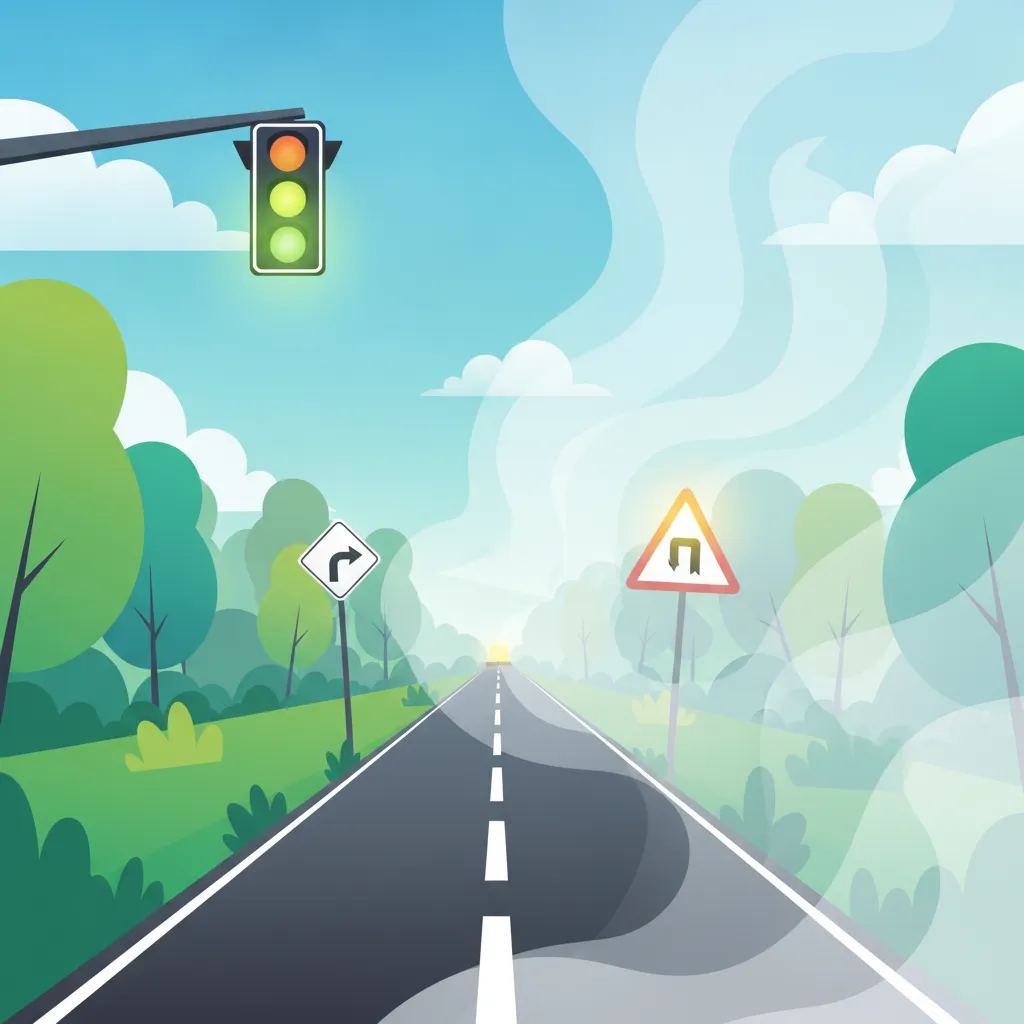
Lesson content overview
Driving on Italian roads requires not only an understanding of traffic rules but also a keen awareness of potential dangers ahead. This comprehensive lesson is dedicated to warning signs, known in Italian as segnaletica di pericolo. These signs are crucial components of the Italian Patente B theory curriculum, designed to alert drivers to upcoming hazards, changes in road conditions, and situations that demand extra caution. Mastering their interpretation allows you to anticipate risks and adjust your driving for optimal safety.
Warning signs serve as advance notice, empowering drivers to react proactively rather than reactively. They provide critical information that enables you to modify your speed, trajectory, and overall driving behaviour well before you encounter a hazard. This anticipatory approach is fundamental to preventing accidents and ensuring the smooth flow of traffic across Italy's diverse road network, from winding mountain passes to busy urban centers.
The primary function of warning signs is safety anticipation. They are placed strategically to give you sufficient time to process information and make appropriate adjustments. Imagine approaching a sharp bend or a steep downhill slope: without prior warning, you might enter these sections at an unsafe speed, risking loss of control. Warning signs eliminate this guesswork, allowing you to gradually reduce speed, select the correct gear, and prepare for altered road dynamics. This preemptive action significantly reduces the probability of accidents by providing adequate reaction time.
The Italian Highway Code, known as the Codice della Strada, explicitly mandates that drivers respect and respond to the indications provided by warning signs. Failure to adjust driving behaviour in accordance with these signs is not merely a safety oversight; it constitutes a violation with potential legal consequences, including fines and penalty points. This legal framework underscores the non-advisory nature of warning signs; they are directives that demand compliance for the collective safety of all road users.
Understanding warning signs is not an isolated topic. It integrates directly with several core driving principles and other lessons within the Italian Patente B theory curriculum. For instance, the need to adjust speed and maintain safe stopping distances (Lesson 5) is frequently triggered by warning signs. Similarly, handling your vehicle effectively on different road surfaces (Lesson 10) or interacting safely with vulnerable road users (Lesson 7) often begins with interpreting an appropriate warning sign. These signs are a foundational element that ties together many aspects of safe and responsible driving.
Italian warning signs are primarily triangular in shape with a red border and a black symbol on a white background. This universal design helps drivers quickly identify them as warnings of danger. Let's delve into the specific types of warning signs you will encounter.
Roads are rarely perfectly straight. Horizontal curves (bends) are common, and warning signs are used to indicate curves that require a significant reduction in speed due to their sharpness.
These signs feature a curved arrow, indicating the direction of the bend. When you see such a sign, you must reduce speed before entering the curve. Maintaining your original speed can lead to a loss of control, as centrifugal force can push your vehicle outwards, causing it to understeer or leave the road. The appropriate speed reduction depends on the sharpness of the curve, your vehicle's condition, and prevailing weather. For multi-curve sections, you might see signs indicating a winding road.
These signs indicate successive bends, often requiring progressive speed reduction throughout the section. It is a common mistake to assume these signs are merely advisory; they are critical alerts demanding immediate speed and trajectory adjustment.
Changes in road elevation are indicated by gradient warning signs, which alert drivers to steep uphill (inclines) or downhill (declines) slopes.
The percentage displayed on these signs (e.g., 10%) indicates the gradient, meaning a 10-meter change in elevation over 100 meters of horizontal distance.
When descending a steep slope, choose a gear that would be appropriate if you were climbing the same slope. This maximizes engine braking and minimizes wear on your service brakes.
A common misunderstanding is to coast downhill in neutral or with the clutch disengaged, which is highly dangerous as it removes engine braking control and can quickly lead to excessive speed and brake fade.
This sign indicates that the road surface may have reduced traction due to various factors such as rain, oil spills, mud, loose gravel, or even fallen leaves. When you see this sign, you must reduce your speed significantly, increase your following distance, and avoid sudden steering movements or harsh braking.
In specific conditions, you might encounter a more specific warning:
This sign demands extreme caution. On icy or snowy roads, braking distances increase dramatically, and steering control is severely compromised. Even vehicles equipped with ABS (Anti-lock Braking System) are not immune to skidding if speed is too high for the available traction. A common mistake is assuming that modern vehicle safety systems fully compensate for slippery conditions. While helpful, these systems cannot defy the laws of physics; speed adaptation remains paramount.
Rural and semi-rural areas frequently feature warning signs for animal crossings. These signs prepare drivers for the potential sudden appearance of animals on the road.
When you encounter these signs, especially during dawn, dusk, or nighttime, you must reduce your speed and be highly vigilant. Be prepared to stop or take evasive action. While a collision with a smaller animal can be damaging, striking larger animals like deer or wild boar can cause severe injury or even be fatal for vehicle occupants. Avoid sudden swerving, as this can lead to loss of control and collisions with other vehicles or obstacles. Instead, brake firmly and steer only if it is safe to do so without endangering yourself or others.
Never ignore animal crossing signs, even if you don't immediately see animals. Wildlife behaviour can be unpredictable, and their presence is often dictated by factors like time of day and season.
This sign alerts you to an upcoming designated pedestrian crossing, often a zebra crossing, where pedestrians have the right of way. Upon seeing this sign, you must reduce speed and be prepared to stop to yield to any pedestrians who are crossing or intending to cross.
Other signs may warn of general pedestrian activity:
These signs are common in urban and residential areas, particularly near schools, parks, or shopping districts. They indicate a pedestrian zone where you should expect a higher volume of foot traffic and potentially unpredictable movements. Drivers must exercise extreme caution, reduce speed significantly, and be ready to stop at any moment. Failing to yield to pedestrians at a crossing is a serious violation and a major cause of accidents involving vulnerable road users.
Many warning signs are accompanied by supplementary panels (pannelli integrativi). These rectangular panels are placed directly below the main warning sign and provide additional, crucial information that refines the meaning of the primary sign.
Common types of supplementary panels include:
The principle of anticipating adjustment applies here with even greater precision. You must adjust your speed or behaviour according to the exact distance or hazard type specified by the supplementary panel. Ignoring these panels means missing vital information that could affect your safety.
Compliance with warning signs is not just a matter of good driving practice; it is legally binding under the Codice della Strada. Understanding these regulations is essential for safe and lawful driving.
Article 91 of the Codice della Strada broadly states that drivers must adjust their speed and driving behaviour in accordance with the indications provided by warning signs. This applicability extends to all road users, regardless of vehicle type, whenever a warning sign is visible.
Article 149 specifically addresses vehicle speed, stating that it must be reduced to a level that allows safe negotiation of a curve or gradient without leaving the carriageway or endangering other users. This applies particularly when horizontal curve warning signs or gradient warning signs are present.
When a warning sign is accompanied by a distance panel, the indicated distance specifies the point at which the driver must begin appropriate actions. This provision adds precision to the general duty of care.
Understanding warning signs goes beyond memorizing their meanings. It involves applying this knowledge dynamically to real-world driving situations, considering various factors.
The meaning and required response to a warning sign can be amplified or diminished by prevailing conditions:
The relationship between following warning signs and road safety is a clear cause-and-effect:
This simple principle underscores the importance of every warning sign encountered on the road.
These scenarios illustrate how to apply your knowledge of warning signs in real-life Italian driving situations.
Scenario: Mountain road with a "Discesa pericolosa" sign (12%) followed by a distance panel indicating "500m."
Scenario: Rural road at dawn with an "Attraversamento animali selvatici" sign (P.19) before a wooded area.
Scenario: Urban street approaching a "Attraversamento pedonale" sign (P.20) near a bustling market.
Scenario: Approaching a hairpin turn indicated by a "Curva pericolosa a sinistra" sign (P.2) with a "250m" distance panel and a "Strada sdrucciolevole" sign (P.12) due to recent rain.
To summarise, a responsible driver in Italy must adhere to these core principles when encountering warning signs:
Adherence to these principles will significantly enhance your safety and that of others on Italian roads, preparing you for the diverse challenges you might encounter as a licensed driver.
Italian warning signs (segnaletica di pericolo) use a standard triangular design with red border, white background, and black symbol to alert drivers of upcoming hazards. Key sign categories cover horizontal curves (P.1-P.4), steep gradients (P.6-P.7) where engine braking is essential on descents, slippery surfaces (P.12-P.13) requiring reduced speed and increased following distance, and vulnerable user crossings including pedestrians (P.20-P.22) and animals (P.18-P.19). Supplementary panels provide precise distance or hazard extent information that drivers must follow. Under Codice della Strada Articles 91 and 149, drivers are legally obligated to adjust speed and behavior according to warning signs; non-compliance carries fines and penalty points. The core principle is anticipation—adjusting speed, gear, and trajectory well before reaching the hazard zone.
A short set of high-value points that capture the most important learning from this lesson.
Italian warning signs are triangular with a red border and black symbol on a white background, instantly recognizable as hazard alerts
Sharp curve signs require speed reduction before entering the bend; maintaining original speed causes centrifugal force that can push the vehicle off the road
Steep downhill gradients demand gear reduction to use engine braking; relying solely on foot brakes leads to dangerous brake fade
Slippery surface warnings require significant speed reduction, increased following distance, and smooth steering/braking inputs
Supplementary panels below warning signs provide precise distance or extent information that must be respected for proper hazard preparation
Explore all units and lessons included in this driving theory course.
Distance panels specify exactly when to begin adjusting speed; always start deceleration at or before the indicated distance
When descending steep slopes, select the same gear you would need to climb that slope to maximize engine braking
Animal crossing signs require reduced speed and heightened vigilance especially at dawn, dusk, and nighttime
Pedestrian crossing warning signs mean pedestrians have right of way; you must be prepared to stop completely
Coasting downhill in neutral removes engine braking and causes brake overheating, which is highly dangerous
Maintaining highway speed through curves because no specific speed limit is posted on the warning sign
Coasting downhill without gear reduction, eliminating engine braking and risking brake failure
Assuming ABS or modern safety systems fully compensate for slippery conditions; physics still requires speed adaptation
Waiting until directly at the hazard to brake, even when distance panels clearly indicate when to start slowing
Failing to yield to pedestrians at zebra crossings after seeing the warning sign, treating it as merely advisory
Lesson content overview
A short set of high-value points that capture the most important learning from this lesson.
Italian warning signs are triangular with a red border and black symbol on a white background, instantly recognizable as hazard alerts
Sharp curve signs require speed reduction before entering the bend; maintaining original speed causes centrifugal force that can push the vehicle off the road
Steep downhill gradients demand gear reduction to use engine braking; relying solely on foot brakes leads to dangerous brake fade
Slippery surface warnings require significant speed reduction, increased following distance, and smooth steering/braking inputs
Supplementary panels below warning signs provide precise distance or extent information that must be respected for proper hazard preparation
Explore all units and lessons included in this driving theory course.
Distance panels specify exactly when to begin adjusting speed; always start deceleration at or before the indicated distance
When descending steep slopes, select the same gear you would need to climb that slope to maximize engine braking
Animal crossing signs require reduced speed and heightened vigilance especially at dawn, dusk, and nighttime
Pedestrian crossing warning signs mean pedestrians have right of way; you must be prepared to stop completely
Coasting downhill in neutral removes engine braking and causes brake overheating, which is highly dangerous
Maintaining highway speed through curves because no specific speed limit is posted on the warning sign
Coasting downhill without gear reduction, eliminating engine braking and risking brake failure
Assuming ABS or modern safety systems fully compensate for slippery conditions; physics still requires speed adaptation
Waiting until directly at the hazard to brake, even when distance panels clearly indicate when to start slowing
Failing to yield to pedestrians at zebra crossings after seeing the warning sign, treating it as merely advisory
Explore search topics learners often look for when studying Warning Signs and Danger Indicators. These topics reflect common questions about road rules, driving situations, safety guidance, and lesson level theory preparation for learners in Italy.
Browse additional driving theory lessons that cover connected traffic rules, road signs, and common driving situations related to this topic. Improve your understanding of how different rules interact across everyday traffic scenarios.
Learn how supplementary panels refine the meaning of Italian warning signs. Understand distance, extent, and specific hazard details to improve your hazard perception and reaction time on Italian roads. Essential for Patente B theory.
This lesson focuses on supplementary panels (pannelli integrativi) placed below primary road signs to provide additional context or modify their meaning. Learners will understand how these panels specify the distance to a hazard, the length over which a rule applies, or the specific times and vehicle types affected by a regulation. Correct interpretation of these panels is essential for full compliance with traffic laws.
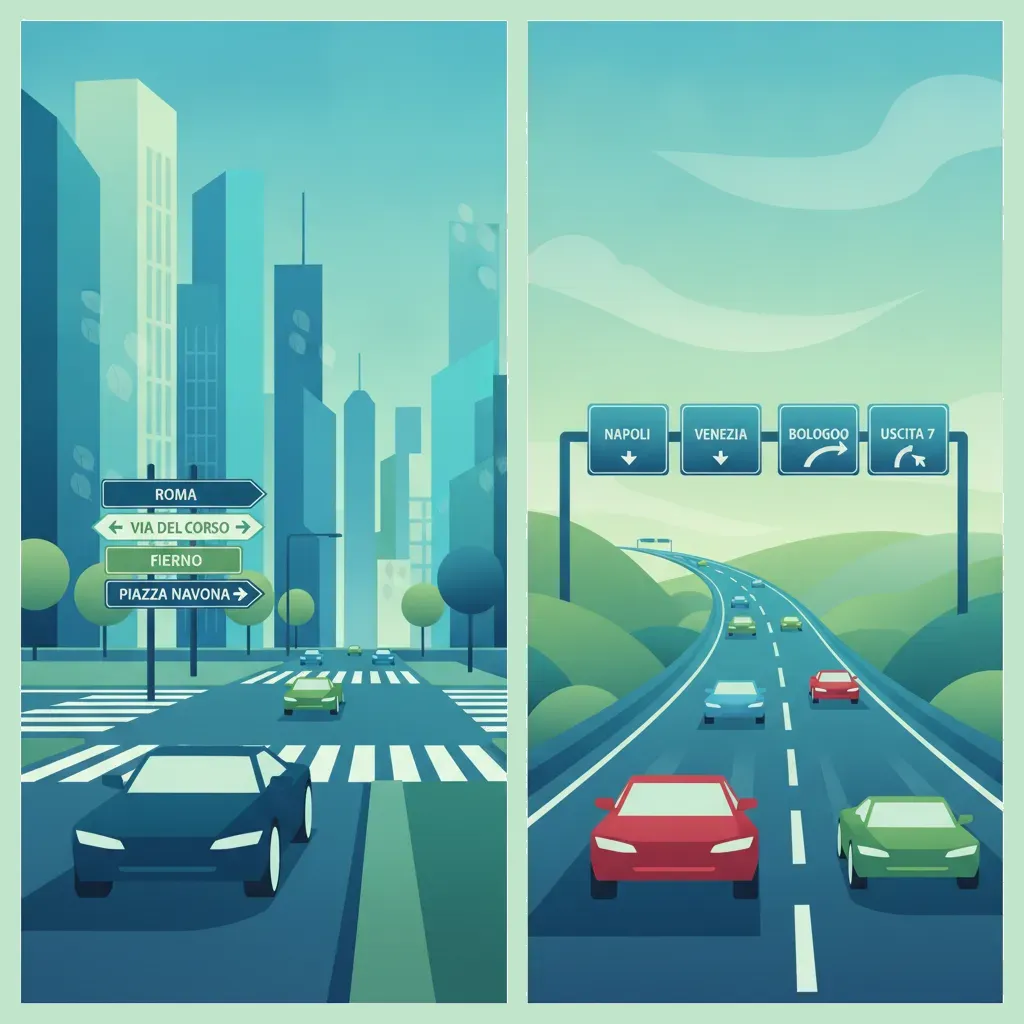
This lesson explains the function of informational and directional signs used for navigation and guidance on Italian roads. It covers how to read signs indicating upcoming cities, motorway exits, and the location of services like fuel stations, parking, and rest areas. The content also details the color-coding system used to differentiate between motorways (green), state roads (blue), and urban roads (white).
This lesson focuses on regulatory signs, which impose legal obligations and prohibitions on drivers. It explains the meaning of critical signs such as 'Stop', 'Yield' (dare la precedenza), and various speed limit signs. The content also covers signs that prohibit certain actions like overtaking, parking, or entry, as well as those that mandate a specific direction of travel or lane usage.
This lesson provides a detailed guide to understanding road markings and pavement symbols in Italy. It explains the critical difference between continuous and broken lane lines regarding overtaking, the function of stop lines and yield markings at intersections, and the meaning of directional arrows painted in lanes. The content also covers markings for pedestrian crossings, bus lanes, and designated parking areas.
This lesson explains the function of Italian traffic light systems and the meaning of various road markings. You will learn the rules for red, amber, and green signals, including flashing lights and directional arrows. It also covers how to interpret lane lines, stop lines, and other surface markings that dictate correct vehicle positioning and movement.
This lesson details the proper and legal application of a vehicle's horn, lights, and signals as primary communication tools. It explains the specific circumstances for using high beams, low beams, and fog lights to maximize visibility without dazzling other drivers. The content also clarifies the rules for using the horn, turn indicators, and hazard lights to signal intentions, warn of danger, or indicate an emergency situation.
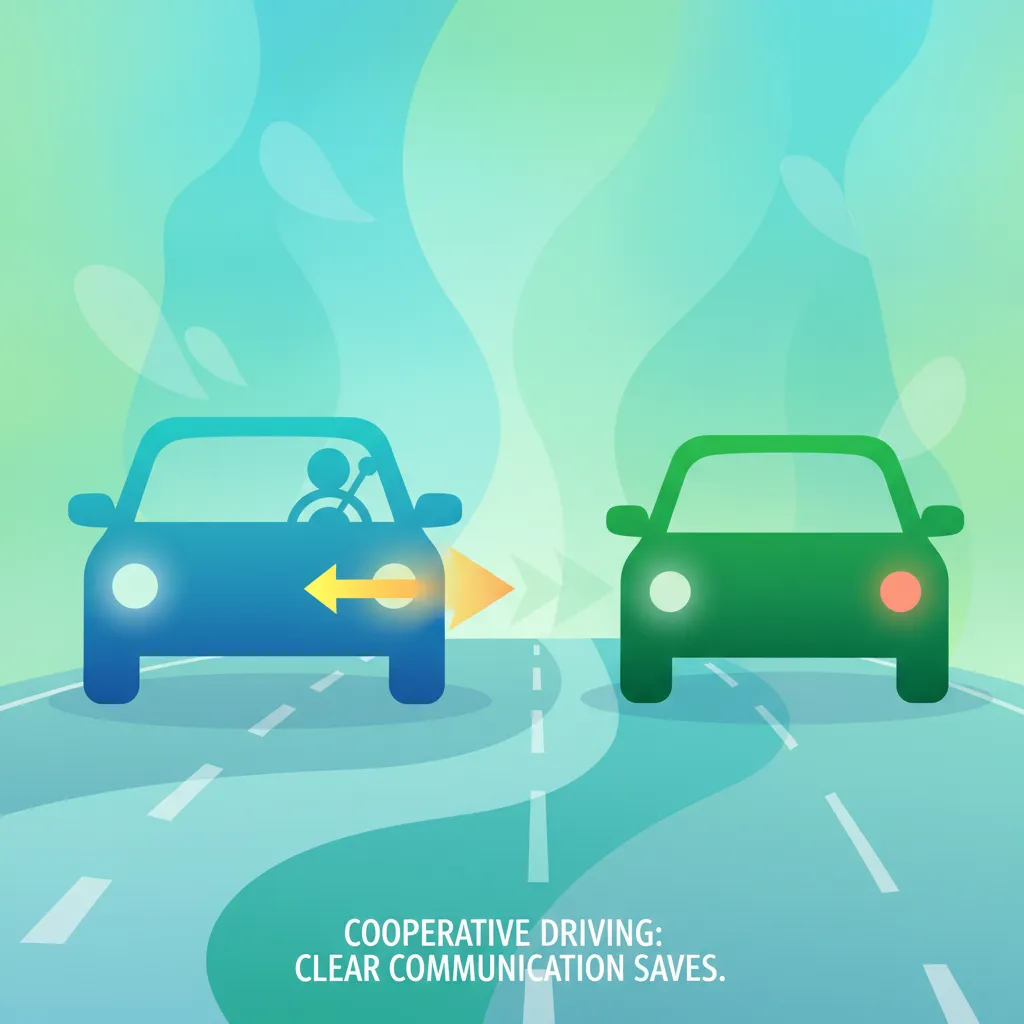
This lesson emphasizes the importance of clear communication and cooperative behavior among all road users to prevent conflicts and enhance safety. It details the proper and legal use of vehicle signals, such as turn indicators and hazard lights, as well as the appropriate use of the horn. The content also explores the role of non-verbal cues like eye contact and courtesy gestures in creating a predictable and safe driving environment.
This lesson focuses on the vital systems for visibility and communication: mirrors, lighting, and signals. It provides instruction on the proper adjustment of mirrors to minimize blind spots and the correct use of headlamps, indicators, and brake lights as per Italian regulations. The content underscores how maintaining these systems in full working order is crucial for being seen and signalling intentions clearly in traffic.
This lesson provides essential rules and techniques for driving on Italian motorways (autostrade) and major extra-urban roads. It explains how to safely merge onto the motorway from an entry ramp, the strict lane discipline required (drive right, overtake left), and how to exit correctly. The content also covers speed regulations, maintaining a safe following distance at high speed, and procedures for using service areas and handling emergencies.

This lesson focuses on the unique characteristics and challenges of driving on rural and mountain roads. It covers how to safely navigate sharp curves, steep inclines, and narrow lanes with limited visibility, often requiring the use of the horn to signal presence. The content also prepares drivers for potential hazards such as slow-moving agricultural vehicles, unexpected animal crossings, and variable road surface quality.
Understand frequent errors drivers make with Italian warning signs, such as curve speed, slippery roads, and animal crossings. Learn to avoid these mistakes to enhance safety and comply with Italian traffic laws for your Patente B exam.
This lesson details the proper and legal application of a vehicle's horn, lights, and signals as primary communication tools. It explains the specific circumstances for using high beams, low beams, and fog lights to maximize visibility without dazzling other drivers. The content also clarifies the rules for using the horn, turn indicators, and hazard lights to signal intentions, warn of danger, or indicate an emergency situation.
This lesson explains the function of informational and directional signs used for navigation and guidance on Italian roads. It covers how to read signs indicating upcoming cities, motorway exits, and the location of services like fuel stations, parking, and rest areas. The content also details the color-coding system used to differentiate between motorways (green), state roads (blue), and urban roads (white).
This lesson focuses on regulatory signs, which impose legal obligations and prohibitions on drivers. It explains the meaning of critical signs such as 'Stop', 'Yield' (dare la precedenza), and various speed limit signs. The content also covers signs that prohibit certain actions like overtaking, parking, or entry, as well as those that mandate a specific direction of travel or lane usage.
This lesson provides a detailed guide to understanding road markings and pavement symbols in Italy. It explains the critical difference between continuous and broken lane lines regarding overtaking, the function of stop lines and yield markings at intersections, and the meaning of directional arrows painted in lanes. The content also covers markings for pedestrian crossings, bus lanes, and designated parking areas.
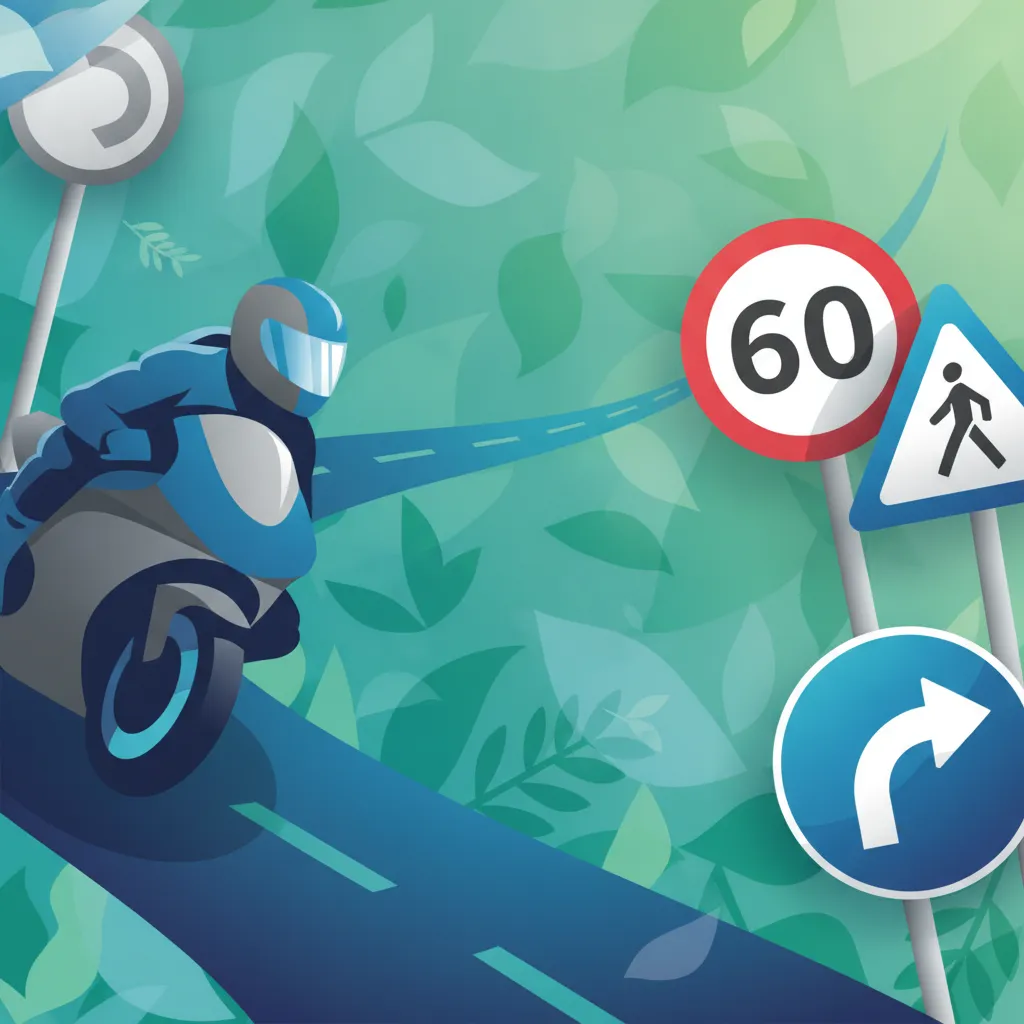
This lesson focuses on the specific regulatory and warning signs that Patente AM riders must understand and obey. It details signs related to speed limits, no-entry zones, and mandatory directions that directly impact moped operation. You will also learn to recognize warning signs for potential hazards like sharp curves, slippery surfaces, and pedestrian areas.
This lesson explains the function of Italian traffic light systems and the meaning of various road markings. You will learn the rules for red, amber, and green signals, including flashing lights and directional arrows. It also covers how to interpret lane lines, stop lines, and other surface markings that dictate correct vehicle positioning and movement.
This lesson focuses on the unique characteristics and challenges of driving on rural and mountain roads. It covers how to safely navigate sharp curves, steep inclines, and narrow lanes with limited visibility, often requiring the use of the horn to signal presence. The content also prepares drivers for potential hazards such as slow-moving agricultural vehicles, unexpected animal crossings, and variable road surface quality.
This lesson emphasizes the importance of clear communication and cooperative behavior among all road users to prevent conflicts and enhance safety. It details the proper and legal use of vehicle signals, such as turn indicators and hazard lights, as well as the appropriate use of the horn. The content also explores the role of non-verbal cues like eye contact and courtesy gestures in creating a predictable and safe driving environment.
This lesson equips riders to safely manage the challenges posed by road construction zones. It explains how to interpret temporary signage, navigate lane closures or diversions, and maintain heightened awareness for surface hazards like gravel or steel plates. The content emphasizes the need to reduce speed and increase following distances to safely share the road with large construction vehicles and workers.
This lesson focuses on supplementary panels (pannelli integrativi) placed below primary road signs to provide additional context or modify their meaning. Learners will understand how these panels specify the distance to a hazard, the length over which a rule applies, or the specific times and vehicle types affected by a regulation. Correct interpretation of these panels is essential for full compliance with traffic laws.
Find clear answers to common questions learners have about Warning Signs and Danger Indicators. Learn how the lesson is structured, which driving theory objectives it supports, and how it fits into the overall learning path of units and curriculum progression in Italy. These explanations help you understand key concepts, lesson flow, and exam focused study goals.
Most Italian warning signs are triangular with a red border and a white background. This specific shape is used across Europe to immediately alert drivers that a hazard or potential danger lies ahead.
No. Warning signs are designed to inform you of an upcoming hazard, such as a bend or slippery road. You must slow down and increase your observation, but you only stop if an additional sign, such as a Stop or Yield sign, is present.
Those are supplementary panels. They provide specific information, such as the exact distance to the hazard or the length of the road section where the danger persists.
Yes, there are symbols for slippery surfaces, uneven road surfaces, or gravel. These signs act as a vital prompt to adjust your speed and distance (distanza di sicurezza) immediately to maintain vehicle control.
Start searching now to pinpoint exactly which Italian driving theory topics, road signs, or traffic rules you need to master. Use our advanced filters to build a custom practice session and ensure you're fully prepared for every aspect of your official driving licence exam.