Supplementary panels (pannelli integrativi) are essential for understanding the specific scope of road signs in Italy. This lesson helps you interpret how these panels modify rules regarding distance, time, or vehicle categories, ensuring you can navigate road situations with full legal compliance.
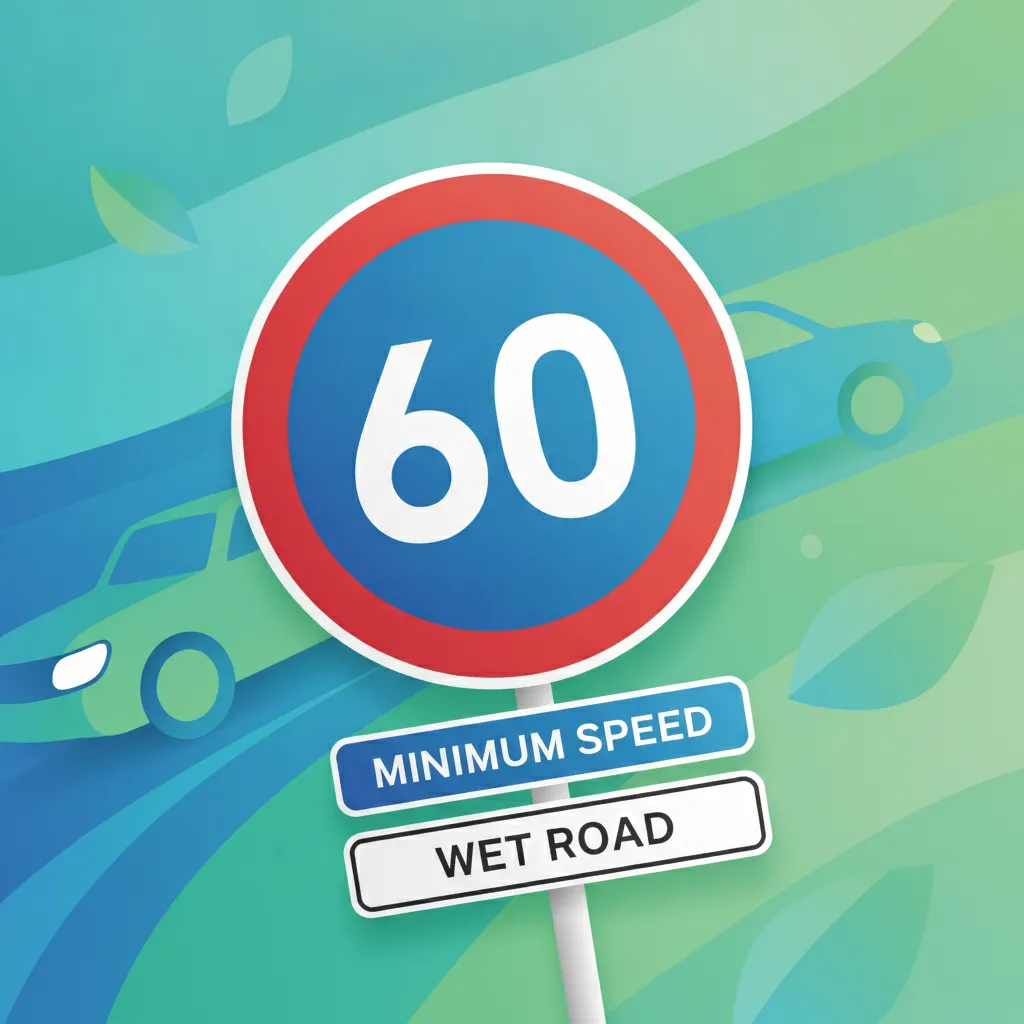
Lesson content overview
Navigating Italy's roads successfully requires more than just understanding primary road signs. Drivers preparing for their Italian Patente B theory test must also master the interpretation of supplementary panels, known in Italian as pannelli integrativi. These crucial additions to road signage provide essential context, modifying or clarifying the meaning of the main sign. Without correct interpretation, drivers risk misjudging hazards, violating traffic laws, and compromising road safety.
Supplementary panels are smaller signs strategically placed directly beneath a primary road sign. Their fundamental purpose is to refine the application of the primary sign's message. Instead of requiring countless unique primary signs for every conceivable scenario, supplementary panels allow a standard sign to convey highly specific instructions. This system enhances precision in traffic regulation, reduces sign clutter, and ultimately improves road safety by providing clear, tailored guidance to drivers.
These panels can indicate a variety of conditions, such as the distance over which a rule applies, the specific times of day or week a regulation is active, or the particular categories of vehicles affected by a sign. For instance, a "No Parking" sign might become a "No Parking between 8 AM and 8 PM" sign with the addition of a time panel. Understanding this layered approach to signage is a cornerstone of safe and lawful driving in Italy.
The importance of correctly interpreting supplementary panels cannot be overstated for Italian Patente B drivers. These panels often transform a general rule into a highly specific command, dictating whether you can park, overtake, or enter a particular zone. Misinterpreting a panel can lead to immediate safety hazards, such as mistakenly thinking you can overtake when a restriction is still active, or parking in a prohibited zone during specific hours.
Beyond immediate safety, failing to understand these panels also carries significant legal and financial consequences. Violations of traffic rules, even if due to misinterpretation, can result in fines, penalty points on your driving license, or even vehicle removal in certain circumstances. Therefore, comprehensive knowledge of pannelli integrativi is not merely an academic exercise but a practical necessity for every responsible driver.
The interpretation of road signs with supplementary panels follows a clear hierarchical logic within Italian traffic law.
The primary sign establishes the main rule or warning, while supplementary panels refine, limit, or specify its application, creating a composite instruction.
This principle ensures that a single primary sign can be adapted to numerous local conditions, preventing the need for an overwhelming number of distinct signs. Drivers must first identify the primary sign, then immediately assess any supplementary panels beneath it to understand the full scope of the regulation. All conditions specified by the panels must be considered together to form the complete instruction.
Many supplementary panels provide spatial context by indicating distances. These panels specify exactly how far a rule applies, or the distance to a hazard. For example, a "Dangerous Curve" warning sign combined with a "300 m" panel means the curve is 300 meters ahead, not that the danger extends for 300 meters. This precision helps drivers anticipate and react appropriately.
Time-based panels introduce a temporal dimension to road rules, limiting their applicability to specific hours or days. This is particularly common in urban areas to manage traffic flow, parking, or loading zones according to varying needs throughout the day or week. Drivers must adjust their behavior to comply only during the indicated periods.
Certain panels narrow the application of a primary sign to specific types of vehicles. This reflects the differing operational characteristics, sizes, and potential impacts of various vehicle categories (e.g., cars, motorcycles, trucks, buses). Drivers must confirm if their vehicle type is included or excluded by the panel's instruction.
It is common for multiple supplementary panels to be used together. When this occurs, all indicated conditions (distance, time, vehicle category, etc.) must be simultaneously met for the primary sign's regulation to apply. This allows for highly granular control over traffic, but also requires careful and comprehensive interpretation from the driver.
Distance panels are among the most common types of supplementary panels. They provide crucial spatial information, indicating either the length of a restricted zone or the distance to an upcoming hazard.
Distance panels typically feature a numeric value, almost always expressed in meters (e.g., "300", "500"). The absence of a unit usually implies meters by default in Italian road signage.
The distance indicated on a panel is always measured along the roadway axis from the point where the sign is erected. Drivers must mentally (or by odometer) track this distance to know the precise extent of a rule or the location of a hazard.
When encountering a warning sign with a distance panel, drivers should begin to anticipate the hazard at the indicated distance. For regulatory signs with distance panels, strict compliance is required until the specified distance has been covered.
A common misunderstanding is to confuse the "distance to a hazard" with the "length of a restriction." For instance, a "Falling Rocks" warning sign with a "500" panel means falling rocks are a hazard ahead at 500 meters, not that the risk of falling rocks extends for 500 meters from the sign. Conversely, a "Minimum Speed" sign with a "2 km" panel (or "2000" meters) means that minimum speed applies for two kilometers after the sign. Careful attention to the type of primary sign (warning vs. regulatory) is key to correct interpretation.
Time panels are frequently used to apply traffic regulations only during specific periods, acknowledging that road conditions and needs vary throughout the day or week.
Time panels display specific hours, often using a 24-hour clock format (e.g., "08–20").
The practical meaning is straightforward: the primary sign's restriction is active only during the times indicated. Outside those hours, the restriction is lifted, and drivers must comply with general traffic rules or any other signs that might be present.
Always verify local holidays, as these might alter the applicability of time-based rules, especially those related to weekdays. The 24-hour clock is standard; "20" means 8:00 PM, not 8:00 AM.
A common misunderstanding is assuming a restriction applies 24/7 if a time panel is present but overlooked. Conversely, some drivers might mistakenly believe a restriction ends exactly at the stated minute (e.g., parking at 7:59 PM when a "No Parking 08–20" sign is present). It's crucial to understand that "08–20" means starting from 8:00 AM and ending at 8:00 PM. Parking at 7:45 PM would still fall within the restricted period, leading to a potential fine.
Vehicle category panels ensure that a primary sign's rule is applied specifically to certain types of vehicles, recognizing their different operational characteristics, dimensions, and potential impact on traffic flow or road infrastructure.
These panels display letters or symbols representing various vehicle classifications as defined by the Codice della Strada (Italian Highway Code).
Here are some common symbols:
When a primary sign is accompanied by a vehicle category panel, only drivers of the specified vehicle type must comply with the restriction. Other vehicle types are exempt, assuming no other signs or general rules apply to them.
For example, a "No Entry" sign combined with a "B" panel means only passenger cars (B category) are prohibited from entering that road or area. A truck driver (category T or C) would still be permitted to enter, provided no other "No Entry" sign for trucks is present.
Never assume a restriction is universal if a vehicle category panel is present. Always identify your vehicle's classification and match it against the panel's symbol.
A common misunderstanding is to ignore the category letter, assuming the restriction applies to all vehicles, or, conversely, that it applies only to the specified category when in fact the primary sign might implicitly apply to a broader range, and the panel is exempting the specified category (less common, but possible depending on context). Always interpret the panel as modifying the primary sign's reach.
In complex traffic situations, two or more supplementary panels may be used together to create a highly specific regulation. This combination provides granular control over traffic flow and safety.
When multiple panels are present, the rule conveyed by the primary sign applies only if all the conditions indicated by the supplementary panels are simultaneously met. This is a critical principle of interpretation. It's not enough for just one condition to be satisfied; they must all be true for the restriction to be active for your vehicle.
For example, imagine a "No Overtaking" sign (segno di divieto di sorpasso) with two panels beneath it: one indicating "300" (meters) and another showing "B" (for passenger cars). The complete instruction would be: "Passenger cars are prohibited from overtaking for the next 300 meters."
Always apply logical conjunction: "AND" not "OR". All conditions must be met for the rule to be active.
Drivers must develop the habit of scanning all panels beneath a primary sign to form a complete and accurate understanding of the regulation. Overlooking even one panel can lead to incorrect behavior and potential violations.
The use and interpretation of supplementary panels are strictly governed by the Codice della Strada (Italian Highway Code). These regulations provide the legal framework for their mandatory observance.
Several articles within the Codice della Strada specifically address supplementary panels:
The rules outlined in these articles are mandatory. Ignoring or misinterpreting supplementary panels is a direct violation of the Codice della Strada, carrying the same legal weight as disregarding a primary sign itself. The rationale behind these detailed regulations is to provide clear, unambiguous, and flexible traffic control, enhancing both safety and efficiency on Italian roads. Compliance with these articles is fundamental for every driver seeking an Italian Patente B.
Even experienced drivers can sometimes misinterpret supplementary panels. Being aware of common pitfalls can help Patente B learners avoid violations and ensure safer driving.
While the rules for supplementary panels are clear, real-world driving conditions can sometimes complicate their interpretation.
In areas with time-restricted panels for school zones or pedestrian crossings, drivers must remain extra vigilant, even when the restriction is technically lifted. Children or other vulnerable users may still be present. Anticipatory and defensive driving is always recommended, regardless of the explicit rules on a panel.
Supplementary panels are an indispensable part of Italian road signage, modifying and clarifying the meaning of primary signs. Mastering their interpretation is fundamental for all drivers, especially those preparing for the Italian Patente B theory test.
By diligently applying these principles, drivers can navigate Italy's roads with confidence, ensuring they comply with all regulations and contribute to a safer driving environment for everyone.
Supplementary panels (pannelli integrativi) are smaller signs placed beneath primary road signs to specify conditions such as distance, time, or vehicle type. Distance panels indicate either the length of a restriction or the distance to a hazard depending on the primary sign type. Time panels restrict rules to specific hours using the 24-hour clock, with '08-20' meaning the restriction is active from 8 AM through 8 PM. Vehicle category panels display letters like B, A, or T to limit rules to specific vehicle classifications. When multiple panels are present, all conditions must be met together—overlooking any panel results in incomplete understanding of the regulation. These panels are legally binding under the Codice della Strada and are essential for both passing the Patente B exam and safe, compliant driving in Italy.
A short set of high-value points that capture the most important learning from this lesson.
Supplementary panels modify primary road signs by adding distance, time, or vehicle-type conditions to refine their application.
Distance panels under warning signs indicate how far ahead a hazard is, while distance panels under regulatory signs show how long a restriction lasts.
Time panels use the 24-hour clock and specify hours when a restriction is active; '08-20' means from 8 AM to 8 PM inclusive.
Vehicle category panels restrict rules to specific types (B for cars, A for motorcycles, T for trucks), and only those vehicles must comply.
When multiple panels appear together, all conditions must be simultaneously met for the rule to apply—this is logical AND, not OR.
Explore all units and lessons included in this driving theory course.
Distance on panels is always measured in meters along the roadway from where the sign stands.
A 'No Parking 08-20' sign prohibits parking throughout the entire 08-20 period, not just at those exact times.
Vehicle category letters (B, A, R, T) refer to classifications defined by the Codice della Strada, not general vehicle descriptions.
Overlooking any single panel when multiple are present leads to incomplete interpretation and potential violations.
Always read the primary sign first, then scan all panels beneath it to form the complete instruction.
Assuming a distance panel on a warning sign indicates how long a hazard lasts rather than how far away it begins.
Believing a time restriction ends the moment it reaches the end time (parking at 7:59 PM on a '08-20' restriction still results in a fine).
Ignoring vehicle category panels and assuming restrictions apply universally to all vehicle types.
Treating multiple panels as alternatives (OR logic) when they must all be satisfied simultaneously.
Disregarding distance panels and assuming restrictions apply indefinitely or until another sign is seen.
Lesson content overview
A short set of high-value points that capture the most important learning from this lesson.
Supplementary panels modify primary road signs by adding distance, time, or vehicle-type conditions to refine their application.
Distance panels under warning signs indicate how far ahead a hazard is, while distance panels under regulatory signs show how long a restriction lasts.
Time panels use the 24-hour clock and specify hours when a restriction is active; '08-20' means from 8 AM to 8 PM inclusive.
Vehicle category panels restrict rules to specific types (B for cars, A for motorcycles, T for trucks), and only those vehicles must comply.
When multiple panels appear together, all conditions must be simultaneously met for the rule to apply—this is logical AND, not OR.
Explore all units and lessons included in this driving theory course.
Distance on panels is always measured in meters along the roadway from where the sign stands.
A 'No Parking 08-20' sign prohibits parking throughout the entire 08-20 period, not just at those exact times.
Vehicle category letters (B, A, R, T) refer to classifications defined by the Codice della Strada, not general vehicle descriptions.
Overlooking any single panel when multiple are present leads to incomplete interpretation and potential violations.
Always read the primary sign first, then scan all panels beneath it to form the complete instruction.
Assuming a distance panel on a warning sign indicates how long a hazard lasts rather than how far away it begins.
Believing a time restriction ends the moment it reaches the end time (parking at 7:59 PM on a '08-20' restriction still results in a fine).
Ignoring vehicle category panels and assuming restrictions apply universally to all vehicle types.
Treating multiple panels as alternatives (OR logic) when they must all be satisfied simultaneously.
Disregarding distance panels and assuming restrictions apply indefinitely or until another sign is seen.
Explore search topics learners often look for when studying Supplementary Panels and Their Interpretations. These topics reflect common questions about road rules, driving situations, safety guidance, and lesson level theory preparation for learners in Italy.
Browse additional driving theory lessons that cover connected traffic rules, road signs, and common driving situations related to this topic. Improve your understanding of how different rules interact across everyday traffic scenarios.
Understand the specific ways supplementary panels alter the meaning of primary road signs in Italy. This lesson covers interpretations for distance, time, and vehicle type restrictions, crucial for driving compliance.
This lesson is dedicated to warning signs, which are designed to alert drivers to potential dangers or changes in road conditions ahead. It covers the interpretation of signs indicating sharp bends, steep inclines or declines, slippery surfaces, and the potential presence of animals or pedestrians. Understanding these signs allows drivers to anticipate hazards and adjust their speed and driving style accordingly for safety.
This lesson focuses on regulatory signs, which impose legal obligations and prohibitions on drivers. It explains the meaning of critical signs such as 'Stop', 'Yield' (dare la precedenza), and various speed limit signs. The content also covers signs that prohibit certain actions like overtaking, parking, or entry, as well as those that mandate a specific direction of travel or lane usage.
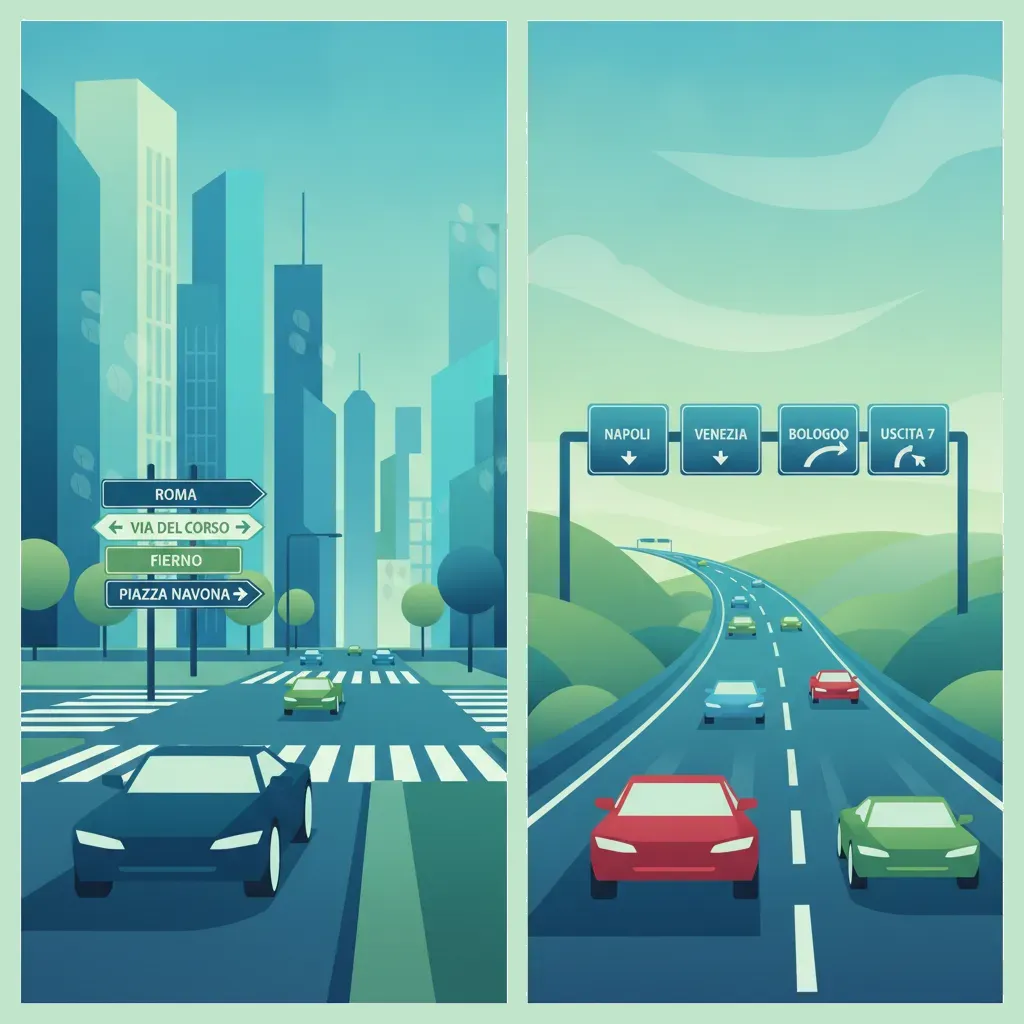
This lesson explains the function of informational and directional signs used for navigation and guidance on Italian roads. It covers how to read signs indicating upcoming cities, motorway exits, and the location of services like fuel stations, parking, and rest areas. The content also details the color-coding system used to differentiate between motorways (green), state roads (blue), and urban roads (white).
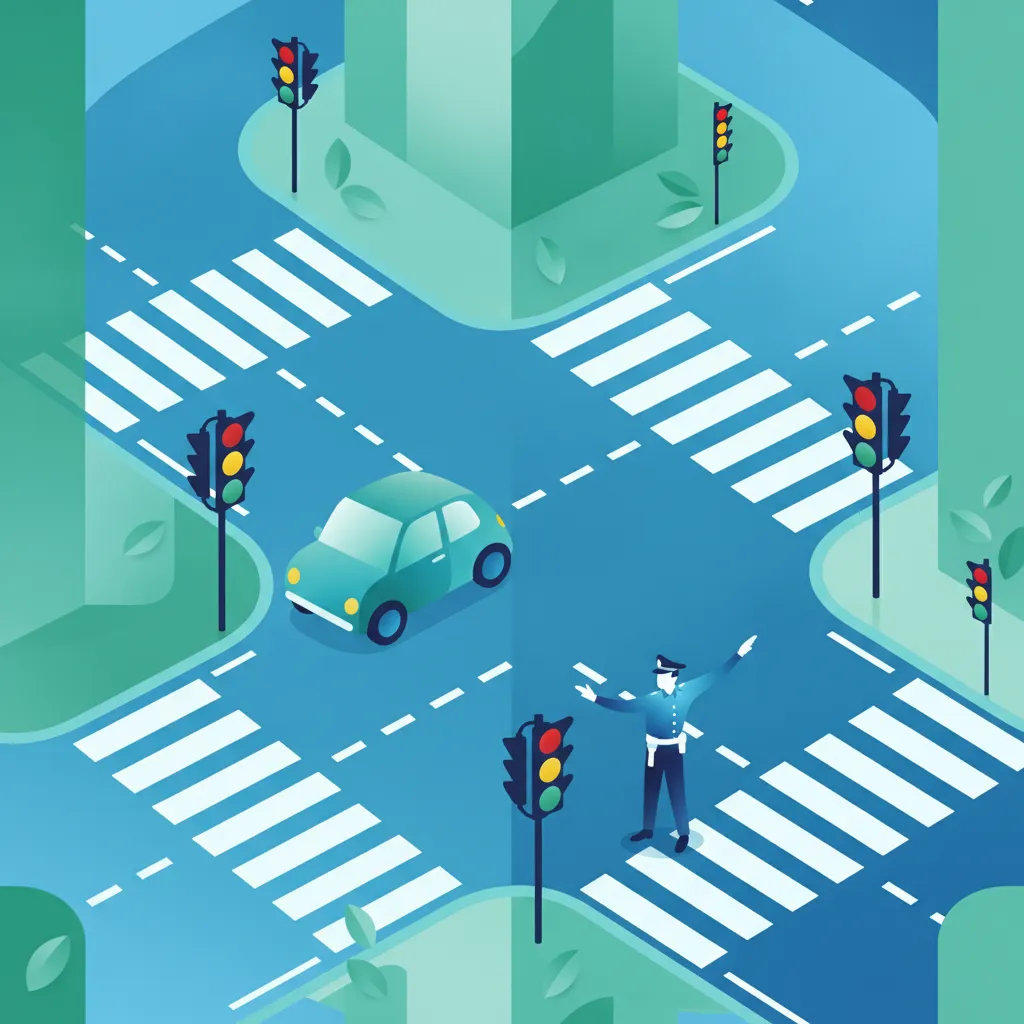
This lesson explains the function of Italian traffic light systems and the meaning of various road markings. You will learn the rules for red, amber, and green signals, including flashing lights and directional arrows. It also covers how to interpret lane lines, stop lines, and other surface markings that dictate correct vehicle positioning and movement.
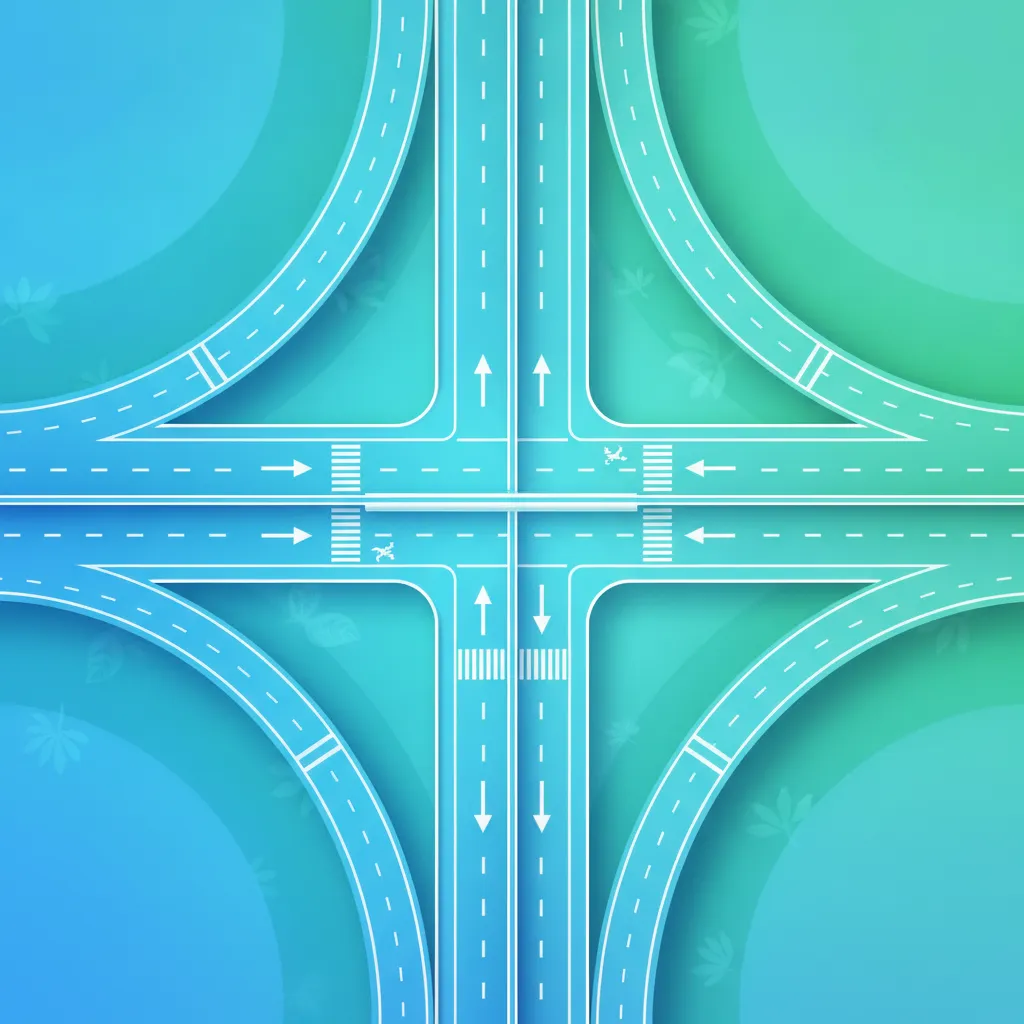
This lesson provides a detailed guide to understanding road markings and pavement symbols in Italy. It explains the critical difference between continuous and broken lane lines regarding overtaking, the function of stop lines and yield markings at intersections, and the meaning of directional arrows painted in lanes. The content also covers markings for pedestrian crossings, bus lanes, and designated parking areas.

This lesson details the proper and legal application of a vehicle's horn, lights, and signals as primary communication tools. It explains the specific circumstances for using high beams, low beams, and fog lights to maximize visibility without dazzling other drivers. The content also clarifies the rules for using the horn, turn indicators, and hazard lights to signal intentions, warn of danger, or indicate an emergency situation.
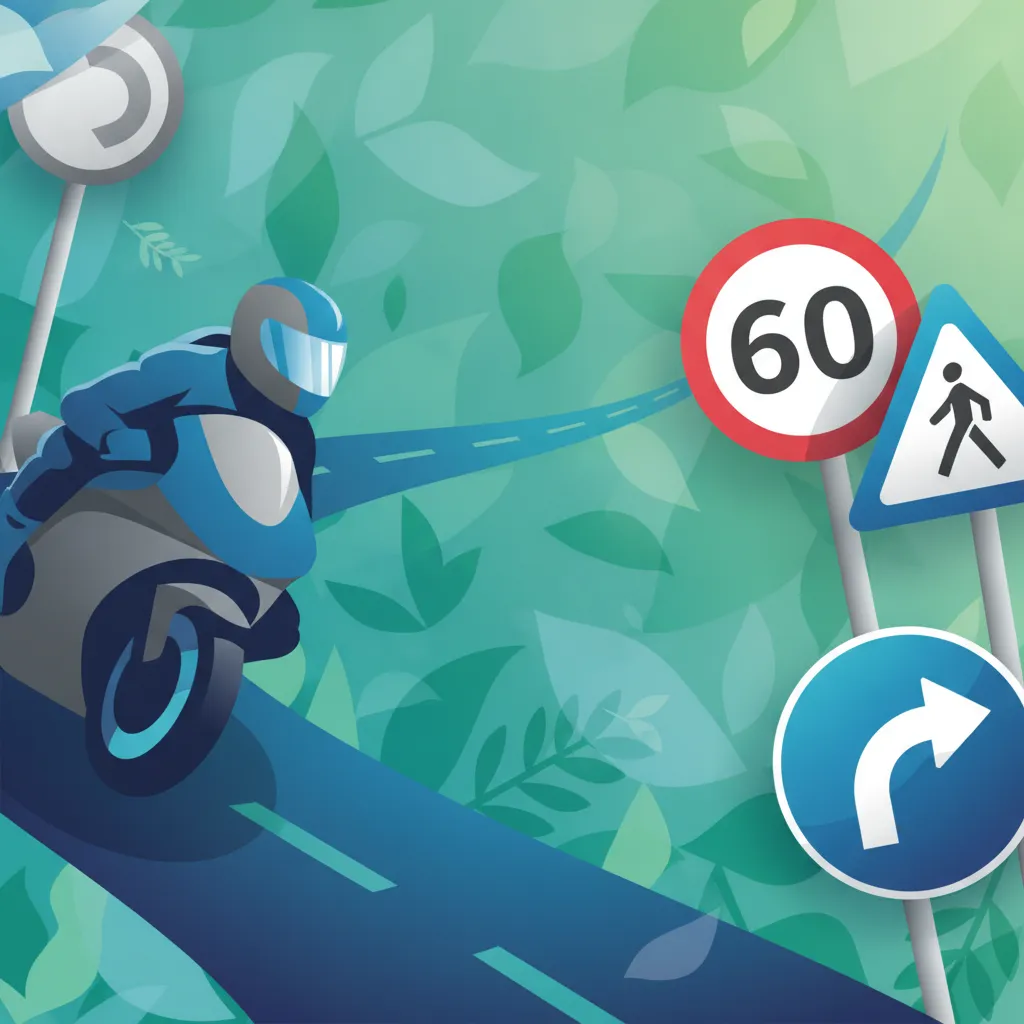
This lesson focuses on the specific regulatory and warning signs that Patente AM riders must understand and obey. It details signs related to speed limits, no-entry zones, and mandatory directions that directly impact moped operation. You will also learn to recognize warning signs for potential hazards like sharp curves, slippery surfaces, and pedestrian areas.
This lesson focuses on the specific signage and regulations for low-speed zones, such as "Zone 30" areas common in Italian towns. You will learn to recognize the signs that indicate reduced speed limits in residential areas, school zones, and other pedestrian-heavy environments. The content also explains various traffic calming measures and the priority rules that apply within these designated zones.

This lesson provides a practical guide to parking regulations in Italian urban areas. It explains the meaning of different colored parking lines (blue for paid, white for free, yellow for reserved), the use of the parking disc (disco orario) for time-limited zones, and how to operate pay-and-display machines. The content also covers how to identify no-parking zones to avoid fines and towing.
This lesson equips riders to safely manage the challenges posed by road construction zones. It explains how to interpret temporary signage, navigate lane closures or diversions, and maintain heightened awareness for surface hazards like gravel or steel plates. The content emphasizes the need to reduce speed and increase following distances to safely share the road with large construction vehicles and workers.
Explore the full spectrum of Italian road signs, including regulatory, warning, informational, and the supplementary panels covered in this lesson. Gain a complete understanding of traffic sign communication on Italian roads.
This lesson focuses on regulatory signs, which impose legal obligations and prohibitions on drivers. It explains the meaning of critical signs such as 'Stop', 'Yield' (dare la precedenza), and various speed limit signs. The content also covers signs that prohibit certain actions like overtaking, parking, or entry, as well as those that mandate a specific direction of travel or lane usage.
This lesson is dedicated to warning signs, which are designed to alert drivers to potential dangers or changes in road conditions ahead. It covers the interpretation of signs indicating sharp bends, steep inclines or declines, slippery surfaces, and the potential presence of animals or pedestrians. Understanding these signs allows drivers to anticipate hazards and adjust their speed and driving style accordingly for safety.
This lesson explains the function of informational and directional signs used for navigation and guidance on Italian roads. It covers how to read signs indicating upcoming cities, motorway exits, and the location of services like fuel stations, parking, and rest areas. The content also details the color-coding system used to differentiate between motorways (green), state roads (blue), and urban roads (white).
This lesson provides a detailed guide to understanding road markings and pavement symbols in Italy. It explains the critical difference between continuous and broken lane lines regarding overtaking, the function of stop lines and yield markings at intersections, and the meaning of directional arrows painted in lanes. The content also covers markings for pedestrian crossings, bus lanes, and designated parking areas.
This lesson details the proper and legal application of a vehicle's horn, lights, and signals as primary communication tools. It explains the specific circumstances for using high beams, low beams, and fog lights to maximize visibility without dazzling other drivers. The content also clarifies the rules for using the horn, turn indicators, and hazard lights to signal intentions, warn of danger, or indicate an emergency situation.
This lesson explains the function of Italian traffic light systems and the meaning of various road markings. You will learn the rules for red, amber, and green signals, including flashing lights and directional arrows. It also covers how to interpret lane lines, stop lines, and other surface markings that dictate correct vehicle positioning and movement.
This lesson focuses on the specific regulatory and warning signs that Patente AM riders must understand and obey. It details signs related to speed limits, no-entry zones, and mandatory directions that directly impact moped operation. You will also learn to recognize warning signs for potential hazards like sharp curves, slippery surfaces, and pedestrian areas.
This lesson emphasizes the importance of clear communication and cooperative behavior among all road users to prevent conflicts and enhance safety. It details the proper and legal use of vehicle signals, such as turn indicators and hazard lights, as well as the appropriate use of the horn. The content also explores the role of non-verbal cues like eye contact and courtesy gestures in creating a predictable and safe driving environment.
This lesson focuses on the vital systems for visibility and communication: mirrors, lighting, and signals. It provides instruction on the proper adjustment of mirrors to minimize blind spots and the correct use of headlamps, indicators, and brake lights as per Italian regulations. The content underscores how maintaining these systems in full working order is crucial for being seen and signalling intentions clearly in traffic.
Find clear answers to common questions learners have about Supplementary Panels and Their Interpretations. Learn how the lesson is structured, which driving theory objectives it supports, and how it fits into the overall learning path of units and curriculum progression in Italy. These explanations help you understand key concepts, lesson flow, and exam focused study goals.
A distance panel, often showing a number without arrows, indicates the distance from the sign to the start of the restriction. A length panel usually has arrows on the sides, indicating the total distance over which the regulation or danger continues.
No, if a sign has a supplementary panel showing a specific vehicle silhouette (e.g., a truck or motorbike), the rule only applies to those specific vehicles. If it says 'ECCETTO' followed by a symbol, those specific vehicles are exempt from the primary rule.
Time panels show specific hours or days of the week. If you see '08:00-20:00', the rule on the primary sign is only valid during that window. Outside these hours, the sign does not apply unless other restrictions exist.
ZTL (Limited Traffic Zones) in Italian historic centers rely heavily on supplementary panels to define restricted hours and authorized vehicle types. Ignoring these panels can lead to heavy fines, even if the main sign seems general.
Start searching now to pinpoint exactly which Italian driving theory topics, road signs, or traffic rules you need to master. Use our advanced filters to build a custom practice session and ensure you're fully prepared for every aspect of your official driving licence exam.