
Understanding the consequences of traffic violations is crucial for responsible driving and passing your Polish Category B theory test. This lesson breaks down the Polish system of fines, demerit points (punkty karne), and the legal responsibilities you hold as a driver. Mastering these concepts ensures you drive lawfully and confidently.
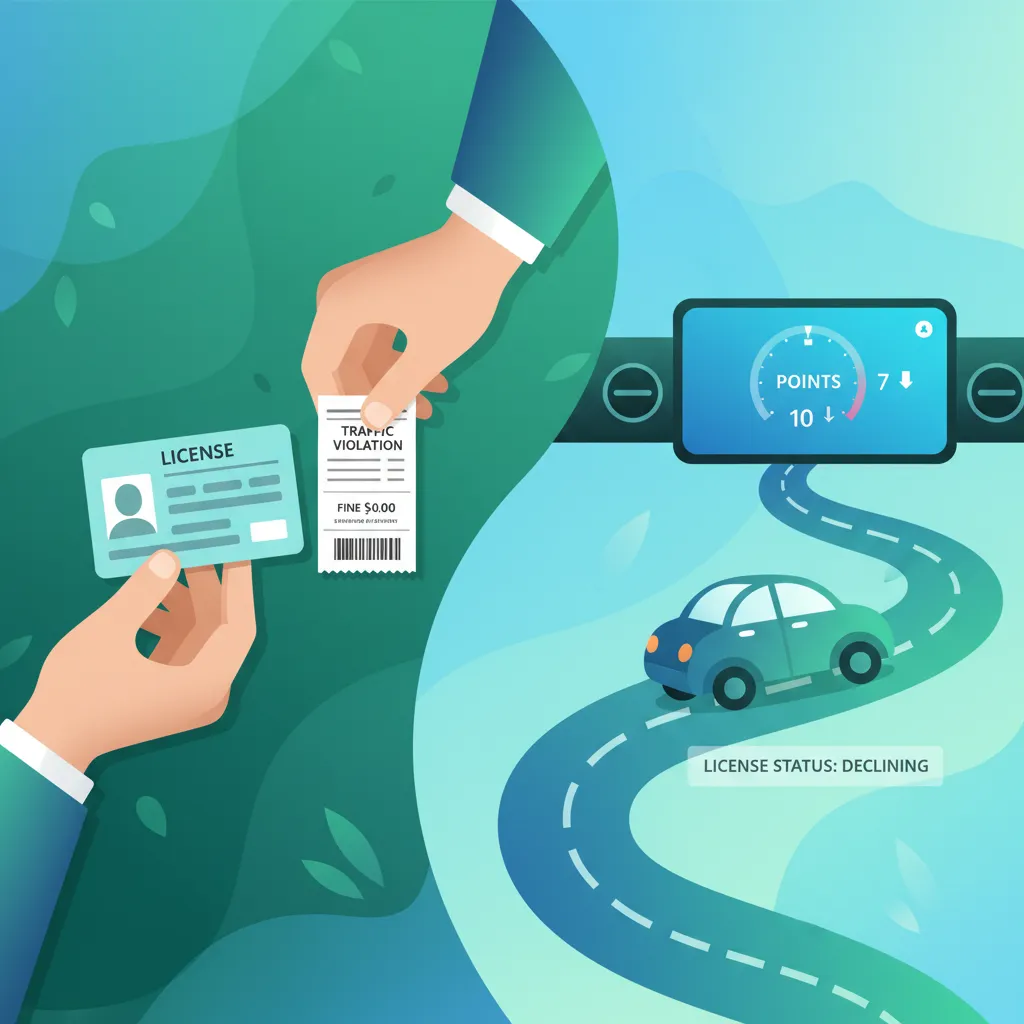
Lesson content overview
Navigating the roads of Poland requires a thorough understanding of not just traffic rules, but also the consequences of violating them. For anyone preparing for their Polish Category B licence, a deep dive into the penalty framework, including monetary fines, the demerit points system (punkty karne), and a driver's legal responsibilities, is crucial. This comprehensive lesson is designed to equip you with the knowledge needed to maintain a clean driving record and ensure lawful behavior on the road.
The Polish traffic penalty system is a structured framework designed to deter unsafe driving practices and ensure accountability. It translates unsafe behaviors into quantifiable consequences, primarily through financial penalties and the accumulation of demerit points. Understanding this system is not merely about avoiding punishment; it's about fostering a culture of safety and responsibility among all road users.
The core purpose of traffic penalties extends beyond simple retribution. Financial penalties provide an immediate punitive effect, deterring high-risk actions and generating funds that can be reinvested into road safety programs. The demerit points system, known as punkty karne in Polish, serves a different but equally vital role. It creates a cumulative risk profile for each driver, aggregating offences over time. This long-term tracking mechanism can lead to limitations or even the removal of driving privileges for repeat offenders, thereby reinforcing long-term compliance and protecting public safety. The entire system is legally codified in the Ustawa o ruchu drogowym (Road Traffic Act) and its supporting regulations, such as the Rozporządzenie Ministra Infrastruktury (Regulation of the Minister of Infrastructure).
Monetary fines are the most immediate and common consequence of committing a traffic violation in Poland. These financial charges, expressed in złoty (PLN), are imposed for specific infractions and serve as a direct deterrent against unsafe driving.
Polish traffic fines can be categorized into two main types: fixed fines and variable fines. Fixed fines are set amounts for particular infractions, such as the misuse of a mobile phone while driving. These penalties are straightforward and applied uniformly when the specified violation occurs.
Variable fines, on the other hand, can change based on the severity of the offence or specific contextual factors. A common example is speeding, where the fine amount increases incrementally with how much the driver exceeded the speed limit. The type of vehicle or location of the offense (e.g., urban vs. rural areas) can also influence the final fine amount. These differentiations ensure that penalties are proportional to the risk posed by the violation.
Once a monetary fine is issued, the driver is legally obligated to pay it within a statutory period. Typically, this period is 30 days from the date of issuance or as otherwise ordered by a court. Failure to pay a fine within this timeframe can lead to further enforcement procedures, including additional charges, collection fees, and potential legal action. It is a common misunderstanding that paying a fine somehow erases any associated demerit points; this is incorrect. While the financial obligation is met, any punkty karne incurred remain on the driver's record, impacting their cumulative total.
Always pay traffic fines promptly to avoid escalating charges and enforcement actions. Remember, paying the fine does not remove any demerit points from your record.
Beyond monetary penalties, the Polish demerit points system, known as punkty karne, plays a critical role in tracking driver behavior and promoting long-term road safety. This system assigns numerical points to a driver's record for each traffic violation, reflecting the severity of the offense.
Demerit points (literally "penalty points") are numerical points added to a driver's record for each traffic violation in Poland, used to track repeat offenses and aggregate risk over time.
Punkty karne are a cumulative measure of a driver's history of infractions. Unlike fines, which are immediate financial consequences, points accumulate over time, building a profile of a driver's adherence to traffic laws. The number of points assigned to an offence varies significantly based on its potential danger. Minor offences might incur 1-2 points, moderate offences 3-5 points, and serious offences 6 or more points.
The primary practical meaning of punkty karne is their cumulative effect. As points add up, they move a driver closer to a critical threshold that can result in the temporary suspension of their driving licence. This system is designed to identify and address patterns of unsafe driving behavior, rather than just isolated incidents. The specific point values for each violation are enumerated in various articles of the Ustawa o ruchu drogowym and accompanying regulations.
Understanding the point values associated with different offences is key to appreciating the severity of various traffic violations. For instance, failing to stop at a red signal is considered a serious infraction, resulting in a significant number of points in addition to a fine. Similarly, driving significantly over the speed limit will accrue more points than a minor speed infraction. These distinctions are clearly laid out in the official point allocation table.
Here are some examples of common violations and their typical point values:
These point allocations reflect the direct correlation between specific behaviors and increased accident risk, aiming to deter the most dangerous practices.
An important aspect of the punkty karne system is the concept of point expiration. Points are not added indefinitely to a driver's record. Instead, they are automatically removed after a set period without new offenses. In Poland, points typically expire after two years from the date of the violation, provided the driver does not commit any new traffic infractions during that time.
The automatic removal of demerit points (punkty karne) from a driver's record after a two-year period without committing any new traffic offences.
This mechanism is designed to encourage sustained safe driving and offers a path for rehabilitation. If a driver maintains a clean record for two years, their accumulated points are reset to zero, effectively giving them a "clean slate." The Central Registry of Drivers updates these records, and drivers can often inquire about their current point balance.
Regularly checking your demerit point balance can help you stay aware of your driving record and avoid approaching the suspension threshold.
The cumulative nature of punkty karne leads to a critical consequence for drivers who repeatedly violate traffic laws: driving licence suspension. This measure is implemented to remove high-risk drivers from the road and protect public safety.
The legal limit, or threshold for suspension, in Poland is 24 demerit points within a 12-month period. If a driver accumulates 24 or more points within this timeframe, their driving licence is automatically and temporarily revoked. This threshold applies to experienced drivers. New drivers, typically those within the first year of receiving their licence, face an even stricter limit.
The point limit (24 demerit points within 12 months for experienced drivers) that automatically triggers the temporary revocation of a driving licence in Poland.
The process for licence suspension typically involves notification from the relevant authorities. Once suspended, the driver is prohibited from operating any vehicle for which the licence was valid. The suspension period is a minimum of three months.
After a driving licence has been suspended, merely waiting out the suspension period is not always enough for reinstatement. In many cases, drivers must undergo a medical-psychological assessment to confirm their fitness to drive. This assessment evaluates physical and mental capabilities relevant to safe driving.
Serve the full licence suspension period (minimum 3 months).
Undergo a mandatory medical examination to confirm physical fitness to drive.
Complete a psychological assessment to evaluate driving-related personality traits and reaction capabilities.
Potentially re-take the theory and practical driving exams, especially if the suspension was for a longer duration or due to serious offenses.
Submit all required documentation and certificates of completed assessments to the local communication department (Wydział Komunikacji).
Upon successful completion of all requirements, the driving licence will be reinstated, and the driver will start with zero demerit points.
Upon successful completion of all required assessments and the minimum suspension period, the driver's licence can be reinstated. Crucially, after reinstatement, the driver starts with a clean record, meaning their demerit points are reset to zero. This allows for a fresh start, albeit with the understanding that future infractions will once again lead to point accumulation.
Beyond understanding fines and points, every driver in Poland has a set of statutory duties that must be fulfilled. These legal responsibilities cover various aspects of driving, from carrying correct documentation to specific procedures following an accident.
One of the most fundamental responsibilities of a driver is to carry specific documents at all times while operating a vehicle. This includes a valid driving licence, the vehicle's registration certificate (dowód rejestracyjny), and proof of mandatory motor liability insurance (OC). Failure to produce these documents upon request by law enforcement can result in fines and potentially demerit points.
Always ensure your driving licence, vehicle registration, and insurance certificate are valid and present in your vehicle. Driving without these essential documents can lead to penalties.
Maintaining vehicle roadworthiness is another critical legal duty. This involves ensuring the vehicle complies with all technical inspection and emissions standards. Passenger cars typically require an annual technical inspection. Driving a vehicle with expired inspection or known technical defects that compromise safety can lead to fines and demerit points, as well as being stopped from driving until repairs are made.
In the unfortunate event of a traffic accident, drivers have specific legal responsibilities. Immediate reporting to the police is mandatory for any accident causing injury, death, or material damage exceeding a specified financial threshold (currently 5000 PLN). Even if damages are less than this amount and only property is involved, it is still advisable to secure an official accident report (oświadczenie o zdarzeniu drogowym) between parties or notify police if there is disagreement or suspicion of foul play.
Providing accurate statements to the police and cooperating fully with authorities is also essential. Fleeing the scene of an accident, or providing false information, can lead to severe penalties, including significant fines, numerous demerit points, and even criminal liability.
Drivers are legally obliged to cooperate with law enforcement officers. This includes stopping when signalled, providing requested documents, and following instructions. Failure to comply can result in additional fines and demerit points. Obstruction of justice or resisting arrest can lead to more serious legal consequences, including criminal charges.
For example, neglecting to replace a missing headlamp is not just a safety hazard but a technical defect that could lead to a 4-point penalty and a fine. Incorrectly reporting an accident, such as deliberately omitting minor damages, could be interpreted as obstructing law enforcement and result in 6 points and a higher fine. These examples highlight the broad scope of a driver's legal responsibilities.
Understanding specific traffic rules and their corresponding penalties is fundamental for safe and legal driving in Poland. The following outlines key regulations and their implications for punkty karne and fines.
Adhering to posted speed limits is paramount for road safety. Limits differ significantly across various zones:
Exceeding these limits reduces a driver's reaction time and increases stopping distances, making collisions more likely. Penalties for speeding escalate with the degree of excess speed. For instance, driving 65 km/h in a 50 km/h zone is a 3-point offence and incurs a fine.
Failing to stop before the stop line at a red traffic signal or a stop sign (Road Sign B-2) is a serious offense. This violation directly contributes to side-impact collisions, which are often severe. Crossing on red or failing to stop at a stop sign typically results in 6 demerit points and a significant fine.
All occupants in a moving vehicle must wear seatbelts. Children must be secured in appropriate child restraints suitable for their age, weight, and height. Non-compliance significantly increases the risk and severity of injuries in a crash. Failing to use a seatbelt for any occupant can lead to 5 demerit points and a fine for the driver.
The use of a handheld mobile phone while driving is strictly prohibited in Poland. This rule is in place to prevent visual, manual, and cognitive distraction, which are major factors in accidents. Hands-free devices are permitted, allowing drivers to communicate without physically holding their phone. Holding a phone to text or make a call while driving can result in 2-5 demerit points and a fine.
Driving under the influence of alcohol or drugs is one of the most serious traffic offenses. Poland has a very strict blood alcohol concentration (BAC) limit of 0.2‰ (0.02%). Any BAC above this level is illegal and incurs severe penalties, including 12 demerit points, substantial fines, and potential criminal charges or imprisonment, along with a lengthy licence suspension. Alcohol impairs judgment, reaction time, and coordination, making driving extremely dangerous.
Other crucial regulations include:
Certain driving scenarios and conditions introduce specific risks or nuances to traffic regulations. Understanding these common violations and contextual variations is crucial for comprehensive road safety.
The Polish penalty system is not merely a collection of rules; it's a carefully constructed framework designed with clear cause-and-effect relationships aimed at enhancing road safety.
At its most fundamental level, compliance with traffic laws directly reduces the risk of collisions. When drivers adhere to speed limits, use seatbelts, maintain safe distances, and avoid prohibited behaviors like mobile phone use or driving under the influence, the road environment becomes safer for everyone. This responsible behavior naturally leads to fewer fines, no demerit points, and an uninterrupted driving licence status. A clean driving record is a testament to safe and responsible habits, often resulting in lower insurance premiums and greater peace of mind.
The penalty framework acts as a powerful deterrent. Monetary fines provide an immediate, tangible consequence for violations, discouraging drivers from repeating risky actions. The demerit points system offers a cumulative behavioral feedback loop. Each breach adds points, and the accumulation beyond the 24-point threshold triggers a licence suspension. This serves as a significant disincentive, as licence suspension can have profound personal and professional repercussions, potentially impacting employment (especially for professional drivers) and leading to significantly higher insurance premiums upon reinstatement. Ultimately, these measures are in place to modify driver behavior, reduce accident rates, and promote a safer driving culture across Poland.
Mastering the intricacies of Polish traffic penalties, the demerit points system (punkty karne), and legal responsibilities is indispensable for any driver in Poland. This knowledge is not only vital for passing the Polish Category B theory exam but also for maintaining a responsible and safe presence on the road throughout your driving career.
punkty karne), which accumulate over time.punkty karne, reflecting its severity. These points accumulate over a 12-month rolling period.punkty karne within a year (for experienced drivers) leads to a mandatory driving licence suspension for a minimum of three months.Punkty karne automatically expire after a two-year period of clean driving, resetting the driver's record.This lesson is deeply connected to other modules within the Polish Driving Theory – Comprehensive Category B License Preparation curriculum. It builds directly upon foundational knowledge from "Legal Foundations and Licence Requirements," particularly regarding licence categories and required documentation. Furthermore, the principles and rules discussed here lay essential groundwork for understanding advanced topics like "Accident Procedures" (where legal responsibilities and reporting are critical) and "Adverse Weather and Environmental Conditions" (where conditional adjustments to driving behavior are paramount). By understanding the consequences, you gain a deeper appreciation for the importance of every traffic rule.
This lesson covers Poland's comprehensive traffic penalty framework, which combines monetary fines with the demerit points system (punkty karne) to monitor and modify driver behavior. The 24-point threshold within 12 months triggers automatic licence suspension for experienced drivers, while points automatically expire after two years of clean driving. Specific violations carry specific consequences — from 2-5 points for mobile phone use to 12 points for DUI — with penalties calibrated to the danger posed by each offense. Beyond fines and points, drivers must understand their legal obligations regarding documentation, vehicle roadworthiness, accident reporting, and cooperation with authorities, as failing to meet these duties compounds penalties and creates additional legal exposure.
A short set of high-value points that capture the most important learning from this lesson.
Poland uses a dual penalty system combining immediate monetary fines with cumulative demerit points (punkty karne) that track driving behavior over time.
Accumulating 24 demerit points within any 12-month period triggers automatic driving licence suspension for a minimum of three months.
Demerit points are severity-weighted: minor offences earn 1-2 points, moderate 3-5 points, and serious offences like DUI can earn 12 points.
Points automatically expire after two years of maintaining a clean driving record, providing a rehabilitation pathway for drivers.
Serious violations like DUI carry the harshest penalties with 12 demerit points, substantial fines, and potential criminal charges including imprisonment.
Explore all units and lessons included in this driving theory course.
The legal BAC limit in Poland is 0.2‰ (0.02%) — one of the strictest limits, with any exceedance triggering severe consequences.
Paying a fine does NOT remove demerit points — these remain on your record independently until they expire after two years.
Police notification is mandatory for any accident causing injury, death, or property damage exceeding 5000 PLN.
New drivers (within first year of holding a licence) face stricter suspension thresholds than experienced drivers.
Upon licence reinstatement after suspension, drivers start with zero demerit points — a complete reset.
Assuming that paying a fine eliminates the associated demerit points, when in fact points and fines are recorded and managed separately.
Believing points are permanent — failing to understand that points expire after two years of clean driving, leading to anxiety about minor past infractions.
Not adjusting speed for adverse weather conditions, thinking that staying within posted limits is always sufficient when visibility or road grip is reduced.
Overlooking documentation requirements, particularly driving without proof of mandatory OC insurance, which can result in fines and points.
Underestimating the severity of hands-free phone use confusion — only handheld mobile phone use is prohibited, hands-free devices are permitted.
Lesson content overview
A short set of high-value points that capture the most important learning from this lesson.
Poland uses a dual penalty system combining immediate monetary fines with cumulative demerit points (punkty karne) that track driving behavior over time.
Accumulating 24 demerit points within any 12-month period triggers automatic driving licence suspension for a minimum of three months.
Demerit points are severity-weighted: minor offences earn 1-2 points, moderate 3-5 points, and serious offences like DUI can earn 12 points.
Points automatically expire after two years of maintaining a clean driving record, providing a rehabilitation pathway for drivers.
Serious violations like DUI carry the harshest penalties with 12 demerit points, substantial fines, and potential criminal charges including imprisonment.
Explore all units and lessons included in this driving theory course.
The legal BAC limit in Poland is 0.2‰ (0.02%) — one of the strictest limits, with any exceedance triggering severe consequences.
Paying a fine does NOT remove demerit points — these remain on your record independently until they expire after two years.
Police notification is mandatory for any accident causing injury, death, or property damage exceeding 5000 PLN.
New drivers (within first year of holding a licence) face stricter suspension thresholds than experienced drivers.
Upon licence reinstatement after suspension, drivers start with zero demerit points — a complete reset.
Assuming that paying a fine eliminates the associated demerit points, when in fact points and fines are recorded and managed separately.
Believing points are permanent — failing to understand that points expire after two years of clean driving, leading to anxiety about minor past infractions.
Not adjusting speed for adverse weather conditions, thinking that staying within posted limits is always sufficient when visibility or road grip is reduced.
Overlooking documentation requirements, particularly driving without proof of mandatory OC insurance, which can result in fines and points.
Underestimating the severity of hands-free phone use confusion — only handheld mobile phone use is prohibited, hands-free devices are permitted.
Explore search topics learners often look for when studying Penalties, Points System, and Legal Responsibilities. These topics reflect common questions about road rules, driving situations, safety guidance, and lesson level theory preparation for learners in Poland.
Browse additional driving theory lessons that cover connected traffic rules, road signs, and common driving situations related to this topic. Improve your understanding of how different rules interact across everyday traffic scenarios.
Explore essential legal duties for Polish drivers, including mandatory documentation, vehicle roadworthiness, and specific procedures to follow after a traffic accident. Understand reporting obligations and cooperation with law enforcement for a clean driving record.

This lesson deals with the administrative aftermath of an accident. It explains the legal requirements for reporting a collision to the police and the process for notifying insurance companies. The content details what information must be exchanged between involved parties, including insurance details and contact information, to facilitate a smooth claims process.
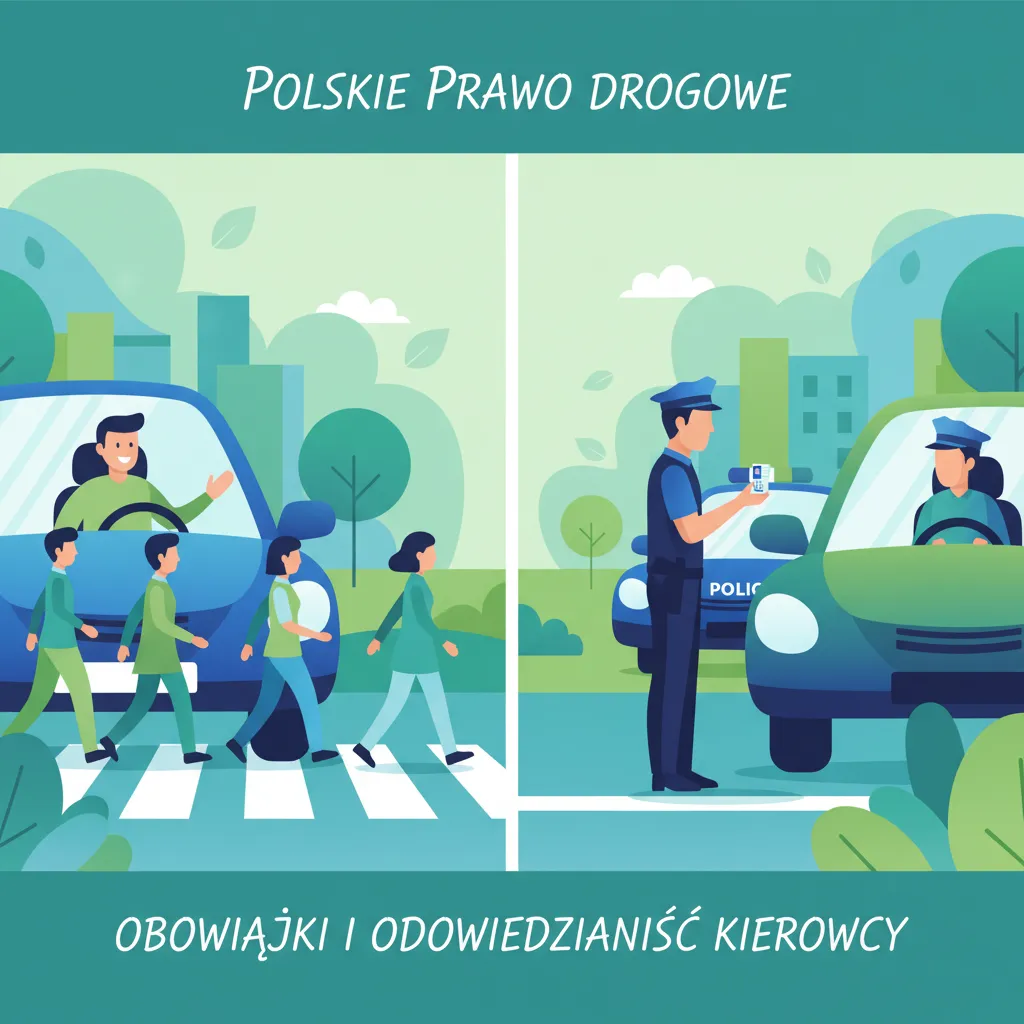
This lesson outlines the legal responsibilities of tractor drivers as stipulated by Polish traffic law, emphasizing the duty to comply with all rules of the road. It discusses the liability framework for accidents involving agricultural vehicles, including the need for appropriate insurance and potential penalties. The lesson also explains the importance of maintaining accurate documentation, such as registration papers and a driver’s licence.

This lesson details the documentation required for a Category B licence application and vehicle operation. It explains the function of the vehicle registration certificate (dowód rejestracyjny), the mandatory civil liability insurance (OC), and the certificate of technical inspection. Learners will understand the verification process and the importance of keeping these documents current and accessible.
In this lesson, learners examine the core legal obligations that apply to motorcyclists operating on Polish roads, including the mandatory use of helmets, periodic vehicle inspections, and the necessity of valid insurance and registration. The content details the classification of traffic offences and explains the associated penalty system, including fines, demerit points, and potential licence suspension. Additionally, the lesson outlines procedural requirements for accident reporting and interaction with law enforcement, providing a comprehensive view of a rider’s legal responsibilities.
Delve into the Polish demerit points system (punkty karne), its impact on driving privileges, and the critical 24-point suspension threshold. Learn about point expiration and the process for licence reinstatement after a ban.
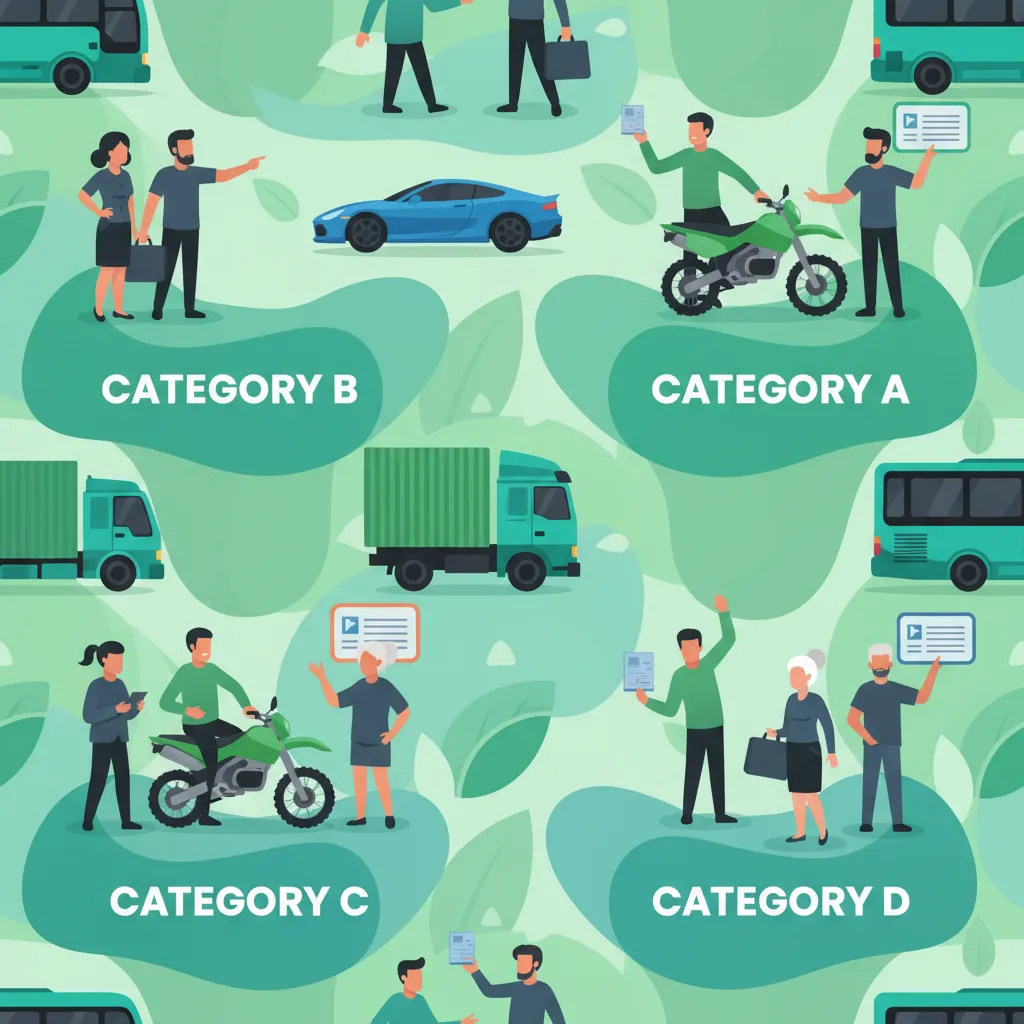
This lesson provides a detailed overview of Polish driving licence classifications, focusing on the privileges and limitations of Category B. It clarifies the minimum age requirement, the necessity of a medical certificate, and the process of enrolling in a driving school. The content outlines the steps to pass both the theory and practical exams to obtain a full licence, ensuring candidates understand all prerequisites.

This lesson details the exact requirements to qualify for a Category D driving licence. It covers the minimum age, the mandatory medical examinations for health fitness, and the hierarchy of prerequisite licences like Category B and C. You will also learn about the accredited training process and the necessary documentation for certification.

This lesson addresses the critical importance of the driver's physical and mental state. It details the dangers of driving under the influence of alcohol or drugs, explaining the legal blood alcohol concentration limit in Poland. The content also covers the subtle but significant risks of fatigue and distractions, advocating for full attentiveness behind the wheel.

This lesson delineates each motorcycle licence category defined in Polish law, explaining the technical specifications of vehicles allowed under AM, A1, A2, and A. It clarifies the age limits and competency criteria required for each category, highlighting how riders can progress from a light two-wheel vehicle to high-performance motorcycles. The content also outlines the mandatory training modules that must be completed to obtain each licence tier, ensuring learners understand the legal framework governing their riding privileges.

This lesson prepares drivers for the event of a vehicle breakdown on a motorway or expressway. It details the correct procedure: pulling over to the emergency lane, activating hazard lights, and placing the warning triangle at the legally required distance. The importance of wearing a reflective vest when outside the vehicle is also a key safety point.
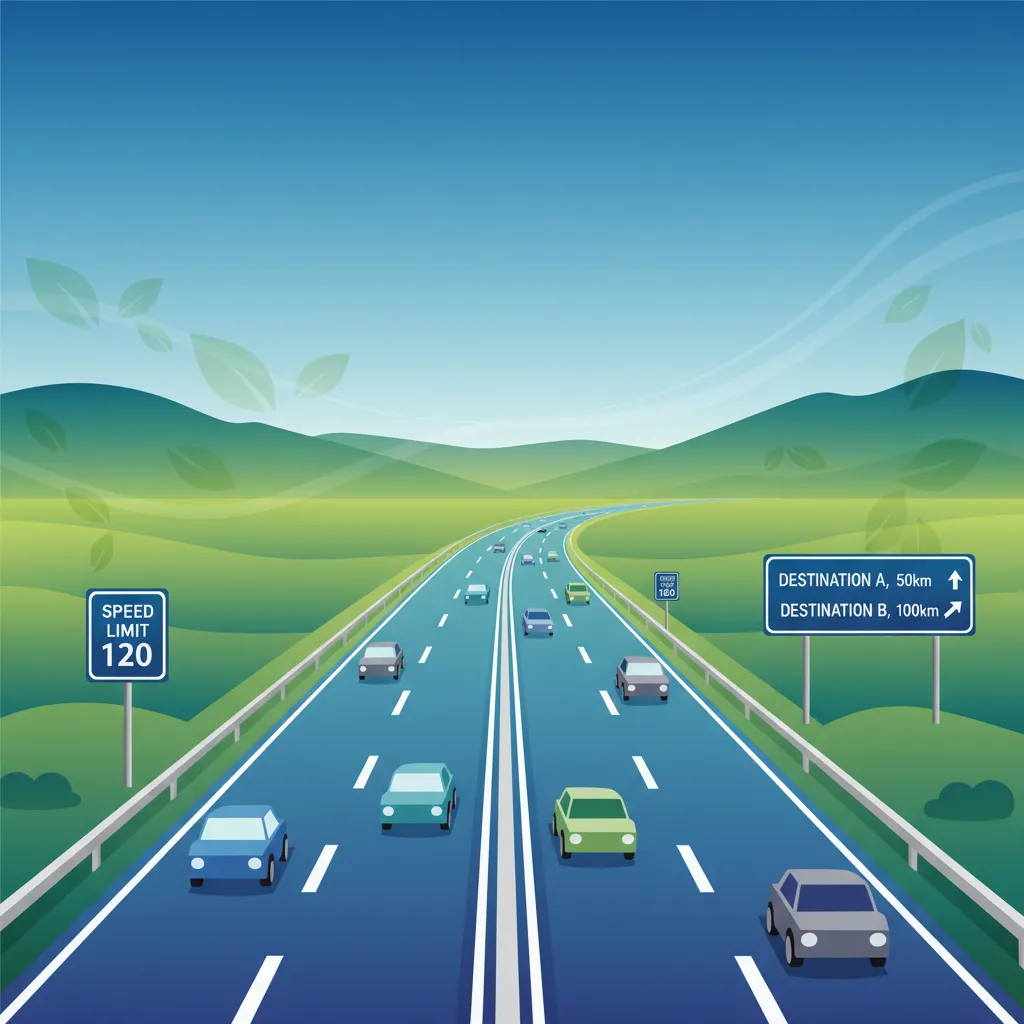
This lesson details the rules and best practices for driving on Poland's fastest roads. It covers the higher speed limits, the strict lane discipline of keeping right except to overtake, and prohibitions on stopping. The aim is to ensure drivers can handle the demands of sustained high-speed travel safely and efficiently.
This lesson details the documentation required for a Category B licence application and vehicle operation. It explains the function of the vehicle registration certificate (dowód rejestracyjny), the mandatory civil liability insurance (OC), and the certificate of technical inspection. Learners will understand the verification process and the importance of keeping these documents current and accessible.
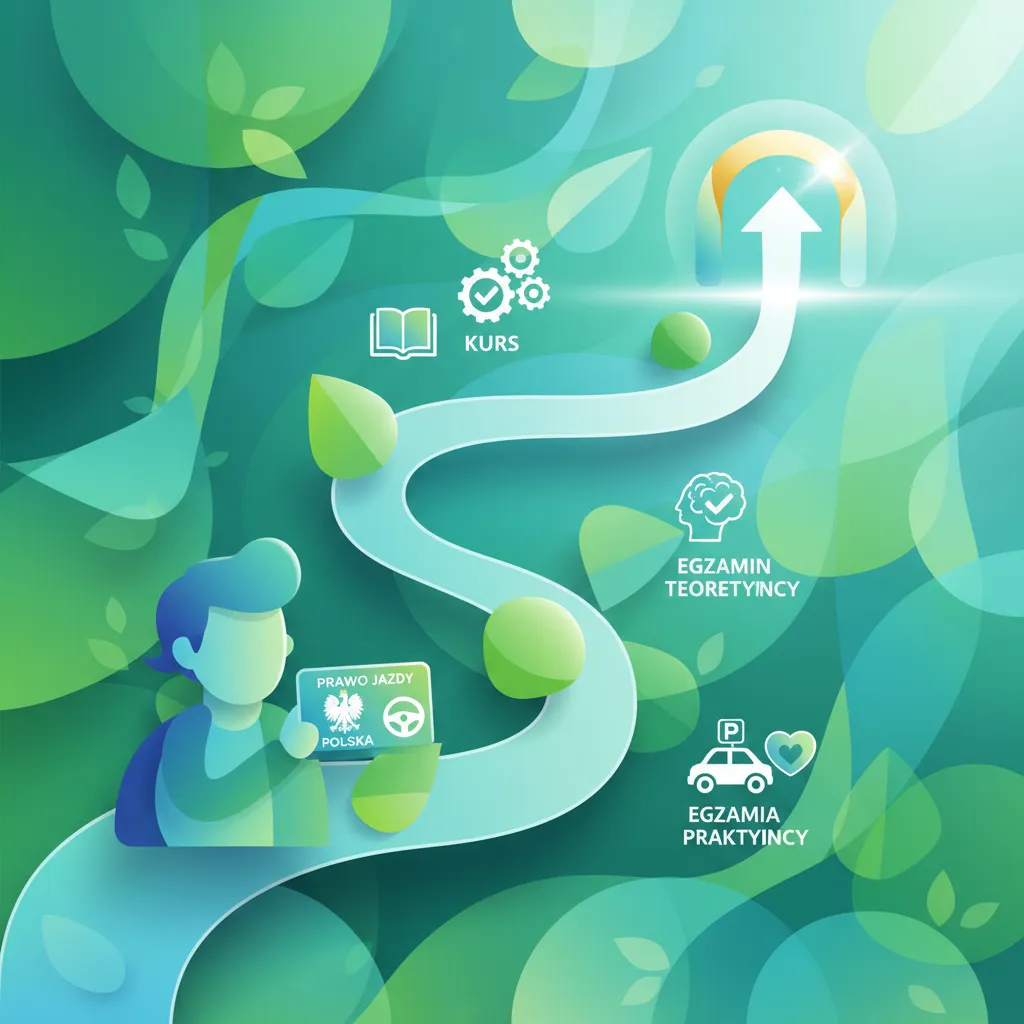
This lesson details the structured pathway to acquiring a Polish Category C driving licence. It explains the necessary eligibility criteria, such as holding a valid Category B licence and meeting the minimum age requirement. Learners will understand the sequence of the licensing process, from submitting the initial application to passing both the theoretical and practical examinations, ensuring full awareness of the regulatory journey to becoming a professional HGV driver.
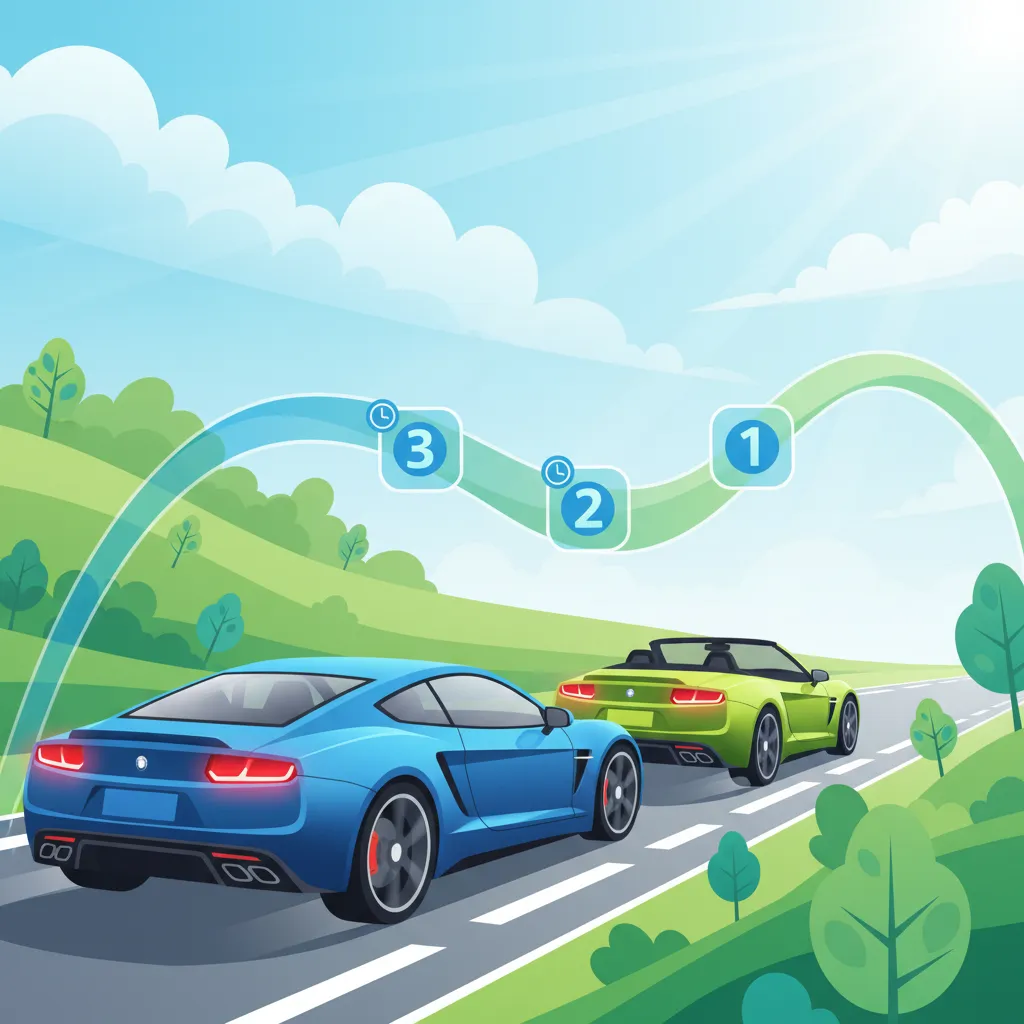
This lesson provides practical methods for maintaining a safe buffer zone behind the vehicle in front. It explains the 'two-second rule' as a minimum following distance in good conditions and how to increase it to three or more seconds in adverse weather. This skill is critical for allowing enough time to react and brake safely to avoid rear-end collisions.

This lesson examines the internal factors that can impact a driver's performance. It explains how fatigue, distractions (like mobile phones), and the influence of alcohol or drugs significantly increase reaction time and impair judgment. Understanding these risks is fundamental to making responsible decisions before and during every journey.
Find clear answers to common questions learners have about Penalties, Points System, and Legal Responsibilities. Learn how the lesson is structured, which driving theory objectives it supports, and how it fits into the overall learning path of units and curriculum progression in Poland. These explanations help you understand key concepts, lesson flow, and exam focused study goals.
'Punkty karne' are demerit points assigned to a driver's record for traffic violations in Poland. Each offense carries a specific number of points. Accumulating too many points within a certain period can lead to licence suspension or revocation. The system is designed to deter repeated offenses and promote safer driving habits.
For drivers holding a Category B license for less than one year, accumulating 20 points within this period results in licence disqualification. For drivers with more than a year of experience, the threshold is 24 points within a year. Exceeding these limits triggers a mandatory re-examination.
If your licence is suspended due to accumulating too many demerit points, you will typically need to retake both the theory and practical driving tests to have your licence reinstated, provided you meet all other legal requirements and the suspension period has ended.
Yes, Polish traffic law categorises violations based on severity. Minor infractions may result in a fine only, while more serious offenses incur both a fine and demerit points. Extremely dangerous actions can lead to immediate licence seizure and potential court proceedings in addition to points and fines.
When stopped, you are legally obligated to present your driving licence and vehicle registration documents. You must cooperate with the officer's instructions, which may include providing explanations for the alleged violation. You have the right to be treated with respect and to understand the charges against you, and you can contest the penalty later if you believe it is unjust.
Build custom practice sessions tailored precisely to your needs. Focus on areas requiring improvement, review specific Polish road signs, or master complex traffic rules to ensure full preparation for your official driving license exam.