
In Poland, a safe vehicle is as important as a knowledgeable driver. This lesson covers the essential equipment every car must carry and the crucial safety checks you should perform before every journey. Understanding these requirements is vital for both passing your Category B theory test and ensuring your safety on the road.
Lesson content overview
Driving safely and legally in Poland requires more than just knowing how to operate a vehicle; it also demands a thorough understanding of mandatory equipment and regular safety checks. This lesson, part of your Polish Driving Theory – Comprehensive Category B License Preparation, will guide you through the essential items every vehicle must carry, their proper use and storage, and the routine inspections you should perform before every journey. Adhering to these regulations and safety practices is crucial for ensuring your vehicle's roadworthiness, preventing accidents, and avoiding legal penalties.
Ensuring a vehicle is properly equipped and functional is not merely a recommendation; it is a fundamental pillar of road safety and a strict legal requirement under Polish law. The proactive approach of preventive safety, through consistent checks and readiness, significantly reduces the likelihood of accidents caused by equipment failure or driver oversight. This commitment to vehicle integrity forms the bedrock of responsible driving, protecting not only yourself and your passengers but also other road users.
Understanding the principles behind mandatory equipment and safety checks provides context for why these rules are in place. These principles combine legal obligations with practical safety measures designed to enhance overall road security.
A predefined set of items that Polish law requires every motor vehicle to carry at all times. This ensures a minimum standard of safety and preparedness for unforeseen events on the road.
A systematic visual and functional check of key vehicle systems performed by the driver before departure. Its purpose is to detect any defects that could compromise safety or lead to an accident during the trip.
The strict observance of statutory requirements concerning vehicle equipment and condition, primarily derived from the Polish Road Traffic Act (Ustawa Prawo o Ruchu Drogowym) and related regulations. Non-compliance can lead to fines, penalties, and even vehicle immobilization.
The state where all mandatory equipment is not only present in the vehicle but also fully operational, in good condition, and correctly stored for immediate use. For instance, a warning triangle is functionally ready only if it can be easily deployed and is not broken.
The use of specific equipment and vehicle functions to enhance a vehicle’s presence and communicate its intentions to other road users, especially in emergencies or low-visibility conditions. This reduces the risk of secondary collisions.
These principles are interconnected. Legal compliance mandates certain equipment, while functional readiness ensures that equipment serves its purpose. Pre-journey inspections verify both presence and readiness, contributing to overall visibility and signaling, all of which are critical for preventive safety.
Polish law stipulates several items that must be present in every motor vehicle. These are not optional accessories but vital safety tools that can make a critical difference in an emergency.
The warning triangle is a critically important safety device designed to alert other drivers to a stationary vehicle that may be obstructing traffic or posing a hazard. It is an orange isosceles triangle with reflective sides, making it highly visible both day and night.
Practical Meaning and Use: In the event of a breakdown, accident, or any situation where your vehicle is stopped and impeding traffic, the warning triangle must be placed on the road behind your vehicle. This provides an early warning to approaching drivers, allowing them ample time to react and maneuver safely around the obstruction.
Associated Rules for Placement: The placement distance of the warning triangle is crucial and varies depending on the type of road:
It is important to deploy the triangle quickly and safely, always being mindful of your own safety from passing traffic.
Drivers often place the warning triangle too close to their vehicle or, incorrectly, on the vehicle's roof or bonnet. This significantly reduces its effectiveness as a warning device, especially on high-speed roads where reaction times are minimal.
A reflective vest, also known as a high-visibility safety vest, is a fluorescent garment with reflective stripes. Its primary purpose is to dramatically increase the visibility of anyone exiting a vehicle on the roadside, particularly in low-light conditions or on busy roads.
Practical Meaning and Use: If you need to exit your vehicle after a breakdown or accident, especially on roads with higher speed limits, wearing a reflective vest ensures that other drivers can see you from a greater distance. This significantly reduces the risk of you being hit by passing traffic.
Associated Rules: In Poland, wearing a reflective vest is mandatory for anyone exiting a vehicle on a road where the speed limit exceeds 50 km/h. While it is optional for roads with speed limits of 50 km/h or less, it is highly recommended in all situations where you might be walking near traffic, regardless of the speed limit, to maximize your personal safety. Keep the vest in an easily accessible location, such as the glove compartment or under the seat, not buried in the boot.
A fire extinguisher is a portable device containing a fire-suppressing agent, typically ABC powder, designed to extinguish small vehicle fires.
Practical Meaning and Use: Although a fire extinguisher is not strictly mandatory for private passenger cars in Poland, it is highly recommended. It is, however, a legal requirement for vehicles used for the transport of hazardous goods. Having one available provides the immediate capability to quell a small fire, such as an engine fire, before it escalates, potentially saving lives and property.
Associated Rules: If you do carry a fire extinguisher, it should have a minimum rating of 1 kg powder and must be inspected annually to ensure its pressure is correct and it has not expired. Check the gauge for pressure and the expiry date on the label.
Even though it's only recommended for private cars, carrying a fire extinguisher is a smart safety decision. Place it in an easily accessible but secure spot, such as under the front passenger seat.
The ability to address a punctured tire is a key aspect of vehicle preparedness. This can be achieved either by carrying a spare tire or a tire repair kit.
Practical Meaning and Use: A functional spare tire allows you to replace a damaged wheel and continue your journey to the nearest service station. Alternatively, a tire repair kit, usually consisting of a sealant and a portable air compressor, offers a temporary fix for minor punctures, enabling you to drive a short distance for professional repair.
Associated Rules: While not always explicitly mandatory for new cars (which may come with run-flat tires or a repair kit as standard), if your vehicle is equipped with a spare tire, it must be in good, usable condition and correctly inflated. If your vehicle does not have a spare tire, a functional tire repair kit should be available. Always ensure your spare tire is properly inflated and that any repair kit components are not expired or damaged.
Beyond carrying mandatory equipment, a responsible driver performs routine pre-journey inspections. These checks are designed to identify potential problems before they lead to dangerous situations on the road.
Lights and Signaling Devices: Confirm all external lights (headlights, tail lights, brake lights, turn signals, hazard lights) are functional and clean.
Tires: Check tire pressure, tread depth (legal minimum 1.6 mm), and for any visible damage.
Fluid Levels: Verify engine oil, coolant, brake fluid, and windshield washer fluid levels.
Seatbelts and Child Restraints: Ensure all seatbelts are functional and child restraint systems are correctly installed and used.
Mirrors: Adjust all mirrors (rear-view and side-view) for optimal visibility.
Brakes: Test brake pedal feel for proper resistance and ensure the handbrake works.
Your vehicle's lighting system is fundamental for both your visibility and for communicating your intentions to other road users.
Practical Meaning and Use: Functional headlights (low and high beam), position lights, brake lights, turn signals, and hazard warning lights are essential for safe driving, especially in low light or adverse weather conditions. They allow you to see the road and ensure you are seen by others.
Associated Rules: All lights must be operational, clean, and correctly adjusted. Using high-beam headlights is prohibited when approaching another vehicle within 150 metres or when following closely behind. Hazard lights should only be used when your vehicle is stopped due to an emergency or an obstruction, never while moving.
Relying solely on Daytime Running Lights (DRL) at dusk, in fog, or at night is a common and dangerous mistake. DRLs are not sufficient for full visibility in these conditions as they often do not illuminate the rear of the vehicle. Always switch to proper low-beam headlights when visibility is reduced.
Tires are the sole contact points between your vehicle and the road. Their condition and proper inflation are paramount for safety, handling, and fuel efficiency.
Practical Meaning and Use: Correct tire pressure ensures optimal grip, steering response, and even wear, extending tire life and improving fuel economy. Adequate tread depth (the pattern on the tire) is vital for expelling water and maintaining traction, especially on wet or slippery surfaces.
Associated Rules: Drivers must maintain tire pressure according to the vehicle manufacturer's specifications (usually found on a sticker inside the driver's door jamb, fuel filler flap, or in the owner's manual). The legal minimum tread depth in Poland is 1.6 mm. Tires with tread below this limit must be replaced immediately. Remember that tire pressure changes with temperature, typically dropping by approximately 0.1 bar for every 10°C decrease in ambient temperature. Always check pressure when tires are "cold" (driven less than 2-3 km).
Various fluids are critical for the proper functioning and longevity of your vehicle's components. Regularly checking their levels is a simple yet effective way to prevent costly repairs and dangerous malfunctions.
Practical Meaning and Use:
Associated Rules: While specific intervals are outlined in your vehicle's service manual, drivers should routinely check these fluid levels, particularly before long journeys. Low levels of critical fluids like brake fluid can compromise safety and may lead to a vehicle being deemed unroadworthy.
Seatbelts and child restraint systems are arguably the most important safety features in any vehicle, designed to protect occupants in the event of a collision.
Practical Meaning and Use: Correctly worn seatbelts distribute crash forces across the strongest parts of the body, significantly reducing the risk of severe injury or ejection. Child restraint systems (car seats, booster seats) are specifically designed to protect younger, smaller occupants who are not adequately protected by adult seatbelts alone.
Associated Rules: In Poland, it is mandatory for all occupants of a vehicle to wear seatbelts, both in the front and rear seats. Children up to 150 cm in height must use an appropriate child restraint system (e.g., rear-facing seat, forward-facing seat, booster seat) that is suitable for their age, weight, and height, and complies with EU safety regulations.
Your vehicle's mirrors provide crucial visibility of traffic behind and to the sides, helping you make informed decisions while driving.
Practical Meaning and Use: Properly adjusted interior rear-view and exterior side-view mirrors allow you to monitor traffic, check blind spots, and execute maneuvers like lane changes or turns safely.
Associated Rules: Before starting any journey, ensure all mirrors are correctly adjusted to give you the best possible view. Mirrors must be intact and free from significant damage. A broken or missing mirror constitutes a vehicle defect that impairs safe operation.
The requirements for mandatory equipment and safety checks are enshrined in Polish law, primarily the Polish Road Traffic Act (Ustawa Prawo o Ruchu Drogowym) and its executive regulations. These legal frameworks define the standards and obligations for all drivers operating vehicles on public roads.
Generally, Polish regulations stipulate:
Failure to comply with these regulations can result in fines (mandaty), the assessment of penalty points, or even the temporary detention of the vehicle by law enforcement.
Drivers often make mistakes regarding mandatory equipment and checks, leading to unnecessary risks and legal penalties. Awareness of these common pitfalls can help you avoid them.
The importance and frequency of certain checks, as well as the immediate need for specific equipment, can vary greatly depending on the prevailing conditions. A vigilant driver adapts their routine to the context.
Every action (or inaction) related to vehicle equipment and safety checks has a direct consequence. Recognizing these cause-and-effect relationships reinforces the importance of diligence.
This lesson builds foundational knowledge crucial for understanding more advanced topics such as "Emergency Situations, Accident Procedures, and Eco-Driving" and "Adverse Weather and Environmental Conditions," where the correct use of equipment under stress is paramount.
Let's explore practical scenarios to see how these rules and principles apply in real-life driving situations.
Setting: Your car stalls on the hard shoulder of the A4 motorway near Kraków during rush hour. Rule: The warning triangle must be placed 100 metres behind the vehicle, and the driver must wear a reflective vest when exiting the vehicle on a motorway (where speeds exceed 50 km/h). Hazard lights must be activated. Correct Behavior: You immediately activate your hazard warning lights. Safely exiting the vehicle, you retrieve your reflective vest and put it on. Then, cautiously walking along the shoulder, you place the warning triangle approximately 100 metres behind your car, ensuring it is clearly visible to oncoming high-speed traffic. You then move to a safe location, behind the guardrail if possible. Incorrect Behavior: You only turn on the hazard lights, neglect to use the warning triangle, and walk around your car or attempt repairs on the shoulder without wearing a reflective vest. This puts you at extreme risk of being hit by passing vehicles. Explanation: On a motorway, drivers have very little time to react. The early warning from a correctly placed triangle and your enhanced visibility from a reflective vest are critical for preventing a potential catastrophe.
Setting: It's evening, dark, and the city streets are wet after a rainstorm. You are driving through the city centre. Rule: Low-beam headlights are required. All brake lights and turn signals must be operational. Tire tread depth and pressure are crucial for wet conditions. Correct Behavior: Before setting off, you ensure your low-beam headlights are switched on and functional, not just your DRLs. You quickly check that your brake lights illuminate when you apply the brake pedal and that your turn signals flash correctly. You activate your windshield wipers to maintain clear visibility and are confident that your tires have sufficient tread and are correctly inflated for optimal grip on the wet surfaces. Incorrect Behavior: You mistakenly rely on your DRLs for illumination, failing to activate your proper headlights. Your brake lights are partially obscured by dirt or one is burnt out. You drive with under-inflated or worn tires, significantly increasing your braking distance on the slippery, wet road. Explanation: Insufficient lighting reduces your ability to see and be seen, increasing the risk of collision with other vehicles or pedestrians. Worn or under-inflated tires severely compromise your vehicle's traction and braking capability on wet roads, making an accident far more likely.
Setting: You are embarking on a long journey from Warsaw to the Tatra Mountains with your two children, aged 4 and 8. Rule: Children up to 150 cm in height must use an appropriate child restraint system that matches their age, weight, and height. All occupants must wear seatbelts. Correct Behavior: You meticulously install a rear-facing child seat for your 4-year-old in the back seat, ensuring it is securely anchored and the child is properly buckled in. For your 8-year-old, who is still under 150 cm, you use a booster seat, ensuring the vehicle's seatbelt fits across their shoulder and lap correctly. Both children are comfortably and safely restrained for the entire journey. Incorrect Behavior: You allow the 4-year-old to sit in a forward-facing seat too early or simply use an adult seatbelt. The 8-year-old is allowed to sit directly on the rear bench with just the adult seatbelt, which may not position correctly across their body. Explanation: Child restraint systems are specifically engineered to provide optimal protection for children in a crash. Adult seatbelts are designed for larger bodies and can cause severe injuries to children if used without a proper booster or car seat. Correct use significantly reduces the risk of injury in an accident.
Setting: You are driving on a rural road in eastern Poland during a cold winter day with snow on the ground and temperatures well below freezing. Rule: Check tire pressure (adjusting for cold temperatures), verify antifreeze levels, and use a reflective vest if you need to stop and exit the vehicle. Correct Behavior: Before starting your journey, you proactively check your tire pressure, knowing that cold weather can cause it to drop. You inflate the tires to the recommended cold pressure. You also ensure your coolant reservoir has adequate antifreeze to prevent engine damage. If you were to pull over due to an emergency, you would immediately put on your reflective vest. Incorrect Behavior: You neglect to check tire pressure, leading to under-inflated tires that provide poor grip on snow. You fill your tires when they are warm after a short drive, resulting in them being under-inflated once they cool down. You are unprepared to stop safely or make necessary checks in the cold, harsh conditions. Explanation: Under-inflated tires reduce traction and control, which is particularly dangerous on snowy and icy roads, increasing the risk of skidding. Proper antifreeze levels prevent engine components from freezing and cracking. Being prepared for emergencies with a reflective vest is paramount for visibility in challenging winter conditions.
This lesson covers mandatory safety equipment required in Polish vehicles, including the warning triangle, reflective vest, and fire extinguisher, along with their correct use and storage requirements. It provides a systematic pre-journey inspection checklist covering lights, tires, fluid levels, seatbelts, and mirrors. Key legal requirements include specific triangle placement distances, mandatory seatbelt use for all occupants, and child restraint systems for passengers under 150 cm. Understanding these requirements ensures legal compliance, roadworthiness, and enhanced safety for both the driver and other road users.
A short set of high-value points that capture the most important learning from this lesson.
The warning triangle must be placed at specific distances depending on road type: 30m in urban areas, 50m on rural roads, and 100m on motorways.
A reflective vest is mandatory for anyone exiting a vehicle on roads with a speed limit above 50 km/h.
All external lights must be functional; Daytime Running Lights (DRL) are insufficient at night, in tunnels, or during poor visibility.
Children up to 150 cm in height must use an appropriate child restraint system, not an adult seatbelt.
The legal minimum tread depth for tires in Poland is 1.6 mm, and tire pressure should be checked when tires are cold.
Explore all units and lessons included in this driving theory course.
Triangle placement distance: urban 30m, rural 50m, motorway/expressway 100m.
Reflective vest is mandatory when exiting a vehicle on roads above 50 km/h.
Fire extinguisher is legally required for hazardous goods transport; recommended 1 kg minimum with annual inspection.
Hazard lights are for stationary emergencies only; never use while driving.
Tire pressure drops approximately 0.1 bar for every 10°C decrease in temperature; check when cold.
Placing the warning triangle too close to the vehicle, especially on high-speed roads where reaction times are minimal.
Relying on Daytime Running Lights (DRL) at dusk, in fog, or at night instead of switching to low-beam headlights.
Neglecting to wear a reflective vest when exiting a vehicle on rural roads or motorways, significantly increasing vulnerability to passing traffic.
Using hazard lights while driving instead of only when stationary due to an emergency or obstruction.
Driving with tires below the legal minimum tread depth of 1.6 mm or with incorrect tire pressure, especially in changing weather conditions.
Lesson content overview
A short set of high-value points that capture the most important learning from this lesson.
The warning triangle must be placed at specific distances depending on road type: 30m in urban areas, 50m on rural roads, and 100m on motorways.
A reflective vest is mandatory for anyone exiting a vehicle on roads with a speed limit above 50 km/h.
All external lights must be functional; Daytime Running Lights (DRL) are insufficient at night, in tunnels, or during poor visibility.
Children up to 150 cm in height must use an appropriate child restraint system, not an adult seatbelt.
The legal minimum tread depth for tires in Poland is 1.6 mm, and tire pressure should be checked when tires are cold.
Explore all units and lessons included in this driving theory course.
Triangle placement distance: urban 30m, rural 50m, motorway/expressway 100m.
Reflective vest is mandatory when exiting a vehicle on roads above 50 km/h.
Fire extinguisher is legally required for hazardous goods transport; recommended 1 kg minimum with annual inspection.
Hazard lights are for stationary emergencies only; never use while driving.
Tire pressure drops approximately 0.1 bar for every 10°C decrease in temperature; check when cold.
Placing the warning triangle too close to the vehicle, especially on high-speed roads where reaction times are minimal.
Relying on Daytime Running Lights (DRL) at dusk, in fog, or at night instead of switching to low-beam headlights.
Neglecting to wear a reflective vest when exiting a vehicle on rural roads or motorways, significantly increasing vulnerability to passing traffic.
Using hazard lights while driving instead of only when stationary due to an emergency or obstruction.
Driving with tires below the legal minimum tread depth of 1.6 mm or with incorrect tire pressure, especially in changing weather conditions.
Explore search topics learners often look for when studying Mandatory Equipment and Safety Checks. These topics reflect common questions about road rules, driving situations, safety guidance, and lesson level theory preparation for learners in Poland.
Browse additional driving theory lessons that cover connected traffic rules, road signs, and common driving situations related to this topic. Improve your understanding of how different rules interact across everyday traffic scenarios.
Learn about legally required safety equipment like the warning triangle and fire extinguisher. Understand essential pre-drive safety checks for vehicle roadworthiness and compliance with Polish driving law for Category B.
This lesson introduces routine vehicle safety checks that every driver should perform. It covers how to check tire pressure and tread depth, verify essential fluid levels like oil and coolant, and ensure all lights are operational. Performing these simple inspections regularly helps prevent breakdowns and enhances overall road safety for everyone.
This lesson details the documentation required for a Category B licence application and vehicle operation. It explains the function of the vehicle registration certificate (dowód rejestracyjny), the mandatory civil liability insurance (OC), and the certificate of technical inspection. Learners will understand the verification process and the importance of keeping these documents current and accessible.
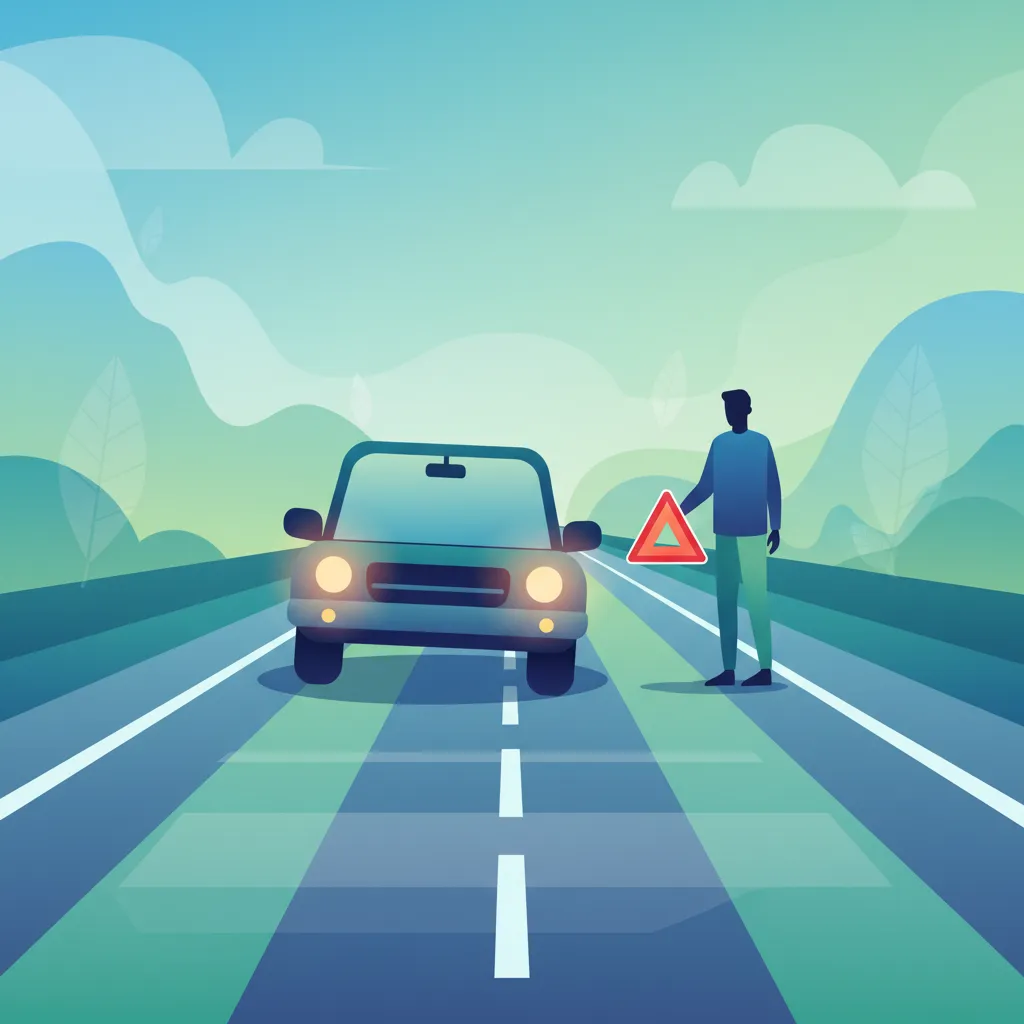
This lesson prepares drivers for the event of a vehicle breakdown on a motorway or expressway. It details the correct procedure: pulling over to the emergency lane, activating hazard lights, and placing the warning triangle at the legally required distance. The importance of wearing a reflective vest when outside the vehicle is also a key safety point.
This lesson details the critical pre-trip inspection routine that every professional driver must perform. It provides a step-by-step checklist for visually inspecting essential components such as tires, brakes, lights, and fluid levels to identify potential safety hazards. Learners will understand the importance of verifying that mirrors are correctly adjusted, emergency equipment is present, and cargo securing points are intact, thereby ensuring the vehicle's roadworthiness and preventing roadside failures.
This lesson provides practical methods for maintaining a safe buffer zone behind the vehicle in front. It explains the 'two-second rule' as a minimum following distance in good conditions and how to increase it to three or more seconds in adverse weather. This skill is critical for allowing enough time to react and brake safely to avoid rear-end collisions.
In this lesson, learners examine the core legal obligations that apply to motorcyclists operating on Polish roads, including the mandatory use of helmets, periodic vehicle inspections, and the necessity of valid insurance and registration. The content details the classification of traffic offences and explains the associated penalty system, including fines, demerit points, and potential licence suspension. Additionally, the lesson outlines procedural requirements for accident reporting and interaction with law enforcement, providing a comprehensive view of a rider’s legal responsibilities.
This lesson provides a systematic approach to pre-use inspections, covering essential components that must be checked before operating a tractor. Learners will learn how to assess tire pressure, test brakes, verify the operation of all lights and beacons, and examine hitch conditions. Performing these checks ensures vehicle roadworthiness and reduces the risk of mechanical failure during operation.
In this lesson, learners focus on the essential maintenance tasks required to keep a motorcycle in optimal condition across seasonal changes. The content outlines a comprehensive pre-ride checklist that includes tyre pressure verification, brake fluid inspection, battery performance checks, and chain lubrication. Learners will also study the selection of appropriate seasonal tyres and oil viscosity adjustments, helping prevent mechanical failures and enhance rider safety.

In this lesson, learners explore riding on rural and countryside roads, where road markings may be sparse and surface conditions varied. The content covers safe overtaking in single-lane sections, interaction with agricultural vehicles and animals, and the handling of gravel or uneven surfaces. Learners will also study the importance of anticipating curves and adjusting speed to light conditions, equipping them with the skills needed for safe countryside travel.
Focuses on essential safety equipment for emergencies, including warning triangles and reflective vests. Explains vital pre-journey checks and procedures to ensure vehicle readiness and driver safety in breakdown situations.
This lesson prepares drivers for the event of a vehicle breakdown on a motorway or expressway. It details the correct procedure: pulling over to the emergency lane, activating hazard lights, and placing the warning triangle at the legally required distance. The importance of wearing a reflective vest when outside the vehicle is also a key safety point.
This lesson provides practical methods for maintaining a safe buffer zone behind the vehicle in front. It explains the 'two-second rule' as a minimum following distance in good conditions and how to increase it to three or more seconds in adverse weather. This skill is critical for allowing enough time to react and brake safely to avoid rear-end collisions.
This lesson outlines the emergency procedures a tractor driver must follow in case of a breakdown, trailer detachment, or accident. It covers immediate actions such as pulling over safely, deploying warning triangles, and using hazard lights to alert other road users. The lesson details the steps for reporting the incident, providing first aid, and securing the scene to prevent further hazards.
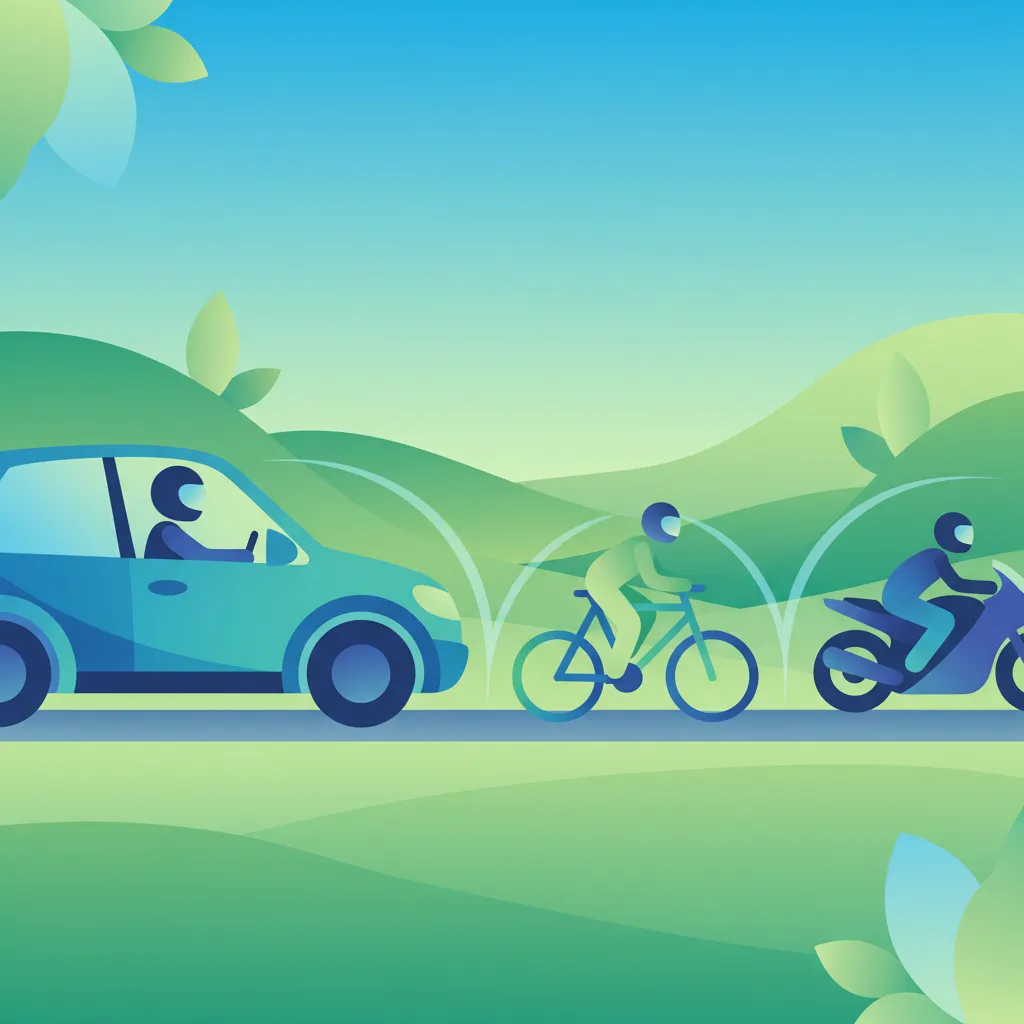
This lesson is dedicated to the safe overtaking of two-wheeled vehicles. It explains the legal requirement to leave a sufficient lateral distance (at least 1 meter) when passing cyclists. The content highlights the vulnerability of these road users and the need for patience, reduced speed, and careful judgment.
In this lesson, learners explore riding on rural and countryside roads, where road markings may be sparse and surface conditions varied. The content covers safe overtaking in single-lane sections, interaction with agricultural vehicles and animals, and the handling of gravel or uneven surfaces. Learners will also study the importance of anticipating curves and adjusting speed to light conditions, equipping them with the skills needed for safe countryside travel.
This lesson equips drivers with knowledge of emergency procedures, including how to conduct a rapid evacuation. Learners will identify the location and use of fire extinguishers and first-aid kits and learn to guide passengers to emergency exits. The content also covers legal reporting obligations and coordination with emergency services following an incident.
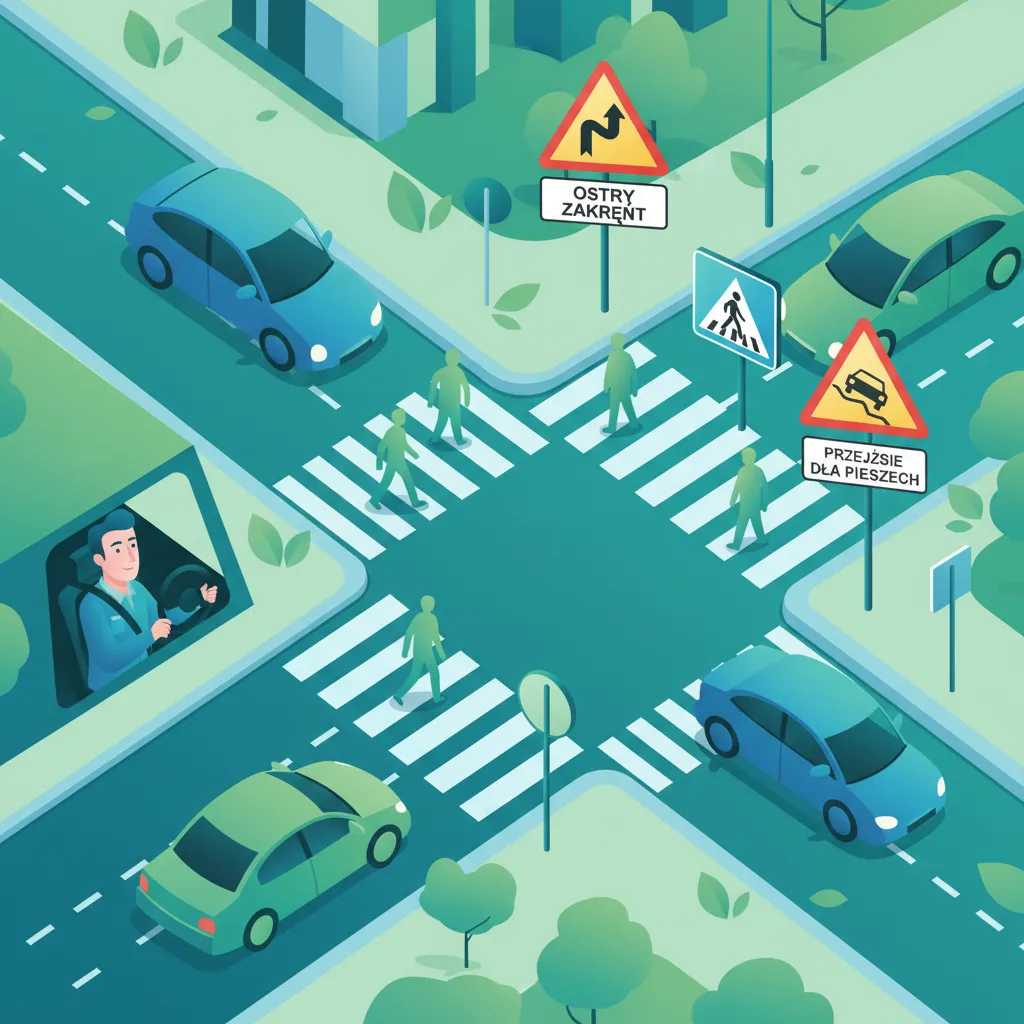
This lesson focuses on triangular warning signs, which are designed to alert drivers to upcoming hazards on the road. It covers the interpretation of various pictograms that indicate dangers like sharp turns, animal crossings, or road construction. Understanding these signs allows a driver to anticipate conditions and adjust their driving proactively.

This lesson provides a comprehensive breakdown of the right-of-way rules that govern intersections. It explains the clear directives given by traffic lights, stop signs, and yield signs, and clarifies the procedures at unmarked or uncontrolled intersections, where the 'priority to the right' rule often applies. Learners will understand the legal hierarchy of these rules to make correct, safe, and predictable decisions when navigating through any junction, reducing the risk of conflict with other traffic.
This lesson introduces routine vehicle safety checks that every driver should perform. It covers how to check tire pressure and tread depth, verify essential fluid levels like oil and coolant, and ensure all lights are operational. Performing these simple inspections regularly helps prevent breakdowns and enhances overall road safety for everyone.
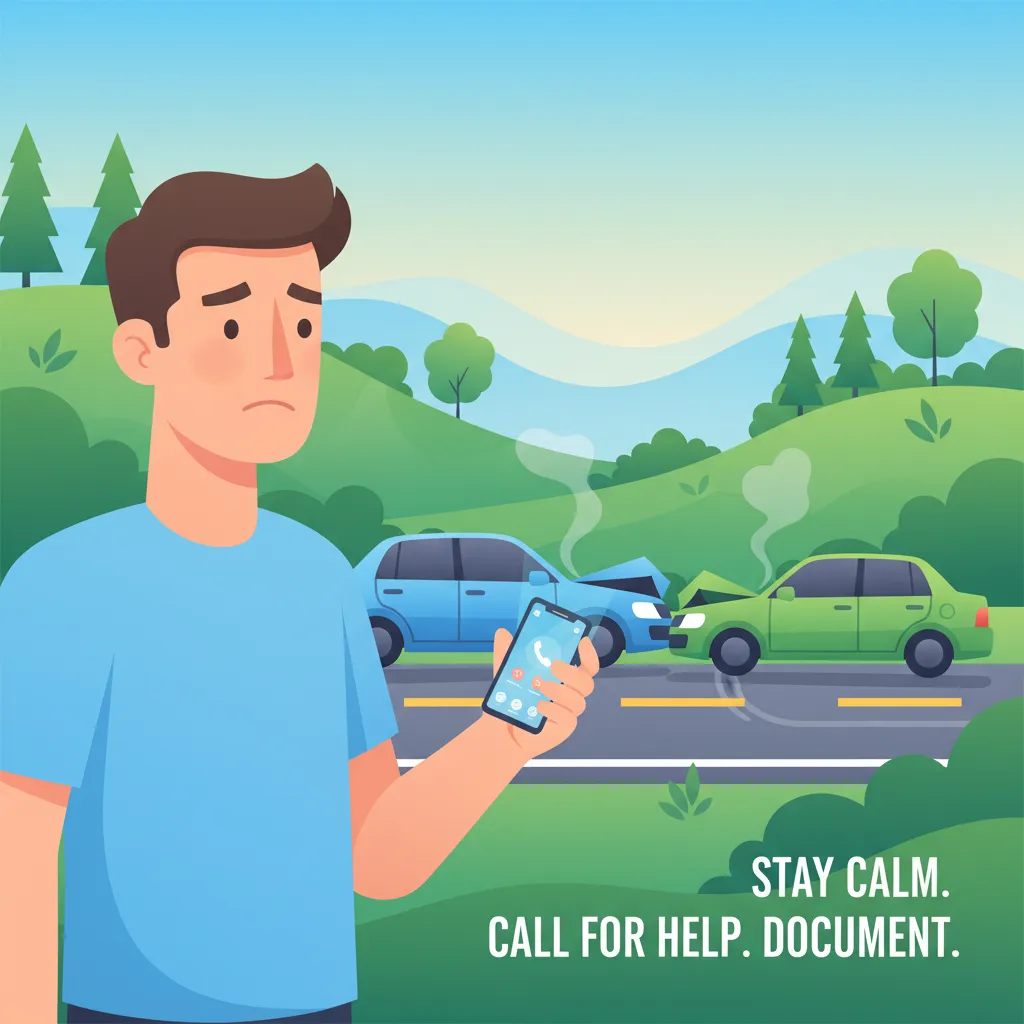
This lesson provides a clear, procedural guide for the moments following a road accident. It prioritizes safety, instructing on how to secure the scene with a warning triangle and hazard lights to prevent further incidents. The lesson also covers assessing for injuries and when it is necessary to call emergency services.
Find clear answers to common questions learners have about Mandatory Equipment and Safety Checks. Learn how the lesson is structured, which driving theory objectives it supports, and how it fits into the overall learning path of units and curriculum progression in Poland. These explanations help you understand key concepts, lesson flow, and exam focused study goals.
In Poland, mandatory safety equipment for a Category B vehicle typically includes a warning triangle, a first-aid kit, and a fire extinguisher. It's crucial to know the specific types and standards required for the Polish market and to ensure these items are easily accessible and in good condition.
The warning triangle should be stored in a place where it is immediately accessible from the passenger compartment. For most vehicles, this means it cannot be stored solely in the boot unless the boot has easy access from the inside. Its purpose is to be deployed quickly in case of a breakdown or emergency.
Before driving, you should perform a visual check of your vehicle's lights (headlights, indicators, brake lights), tires (pressure and tread wear), mirrors (clean and correctly positioned), and check fluid levels if necessary. A quick walk-around to ensure no obvious issues like leaks is also recommended.
Yes, a fire extinguisher is considered mandatory safety equipment for Category B vehicles in Poland. You should be prepared to answer questions about its location, type, and how to use it in an emergency during your theory test.
Tire pressure should ideally be checked at least once a month and before long journeys. Underinflated or overinflated tires can affect handling, fuel efficiency, and safety. Always check tires when they are cold.
Build custom practice sessions tailored precisely to your needs. Focus on areas requiring improvement, review specific Polish road signs, or master complex traffic rules to ensure full preparation for your official driving license exam.