
Navigate Polish intersections with confidence by mastering uncontrolled junctions and yield signs. This lesson builds on basic road understanding to prepare you for critical right-of-way scenarios on the road and in your Category B theory exam.
Lesson content overview
Navigating intersections is a fundamental skill for any driver, and those without traffic signals or explicit priority signs present unique challenges. This lesson, part of your comprehensive Polish Driving Theory – Comprehensive Category B License Preparation, delves into the rules governing these "uncontrolled intersections," with a particular focus on the Yield sign (ustąp pierwszeństwa) and the crucial "priority to the right" rule (prawo drogi). Understanding these principles is not just about passing your exam; it's about ensuring safety and fluid traffic flow on Polish roads.
An uncontrolled intersection is a junction where the flow of traffic is not regulated by traffic lights, Stop signs, or Priority Road (droga z pierwszeństwem) signs. Instead, drivers must rely on a set of default rules and their own careful observation to determine who has the right-of-way. These types of intersections are common in urban residential areas, smaller towns, and rural settings across Poland.
Mastery of these rules is vital for safe decision-making and accident prevention. Misunderstandings at uncontrolled junctions are a significant cause of collisions, highlighting the importance of clear knowledge and predictable driver behavior. This lesson will equip you with the legal framework and practical strategies to confidently approach and navigate these common scenarios.
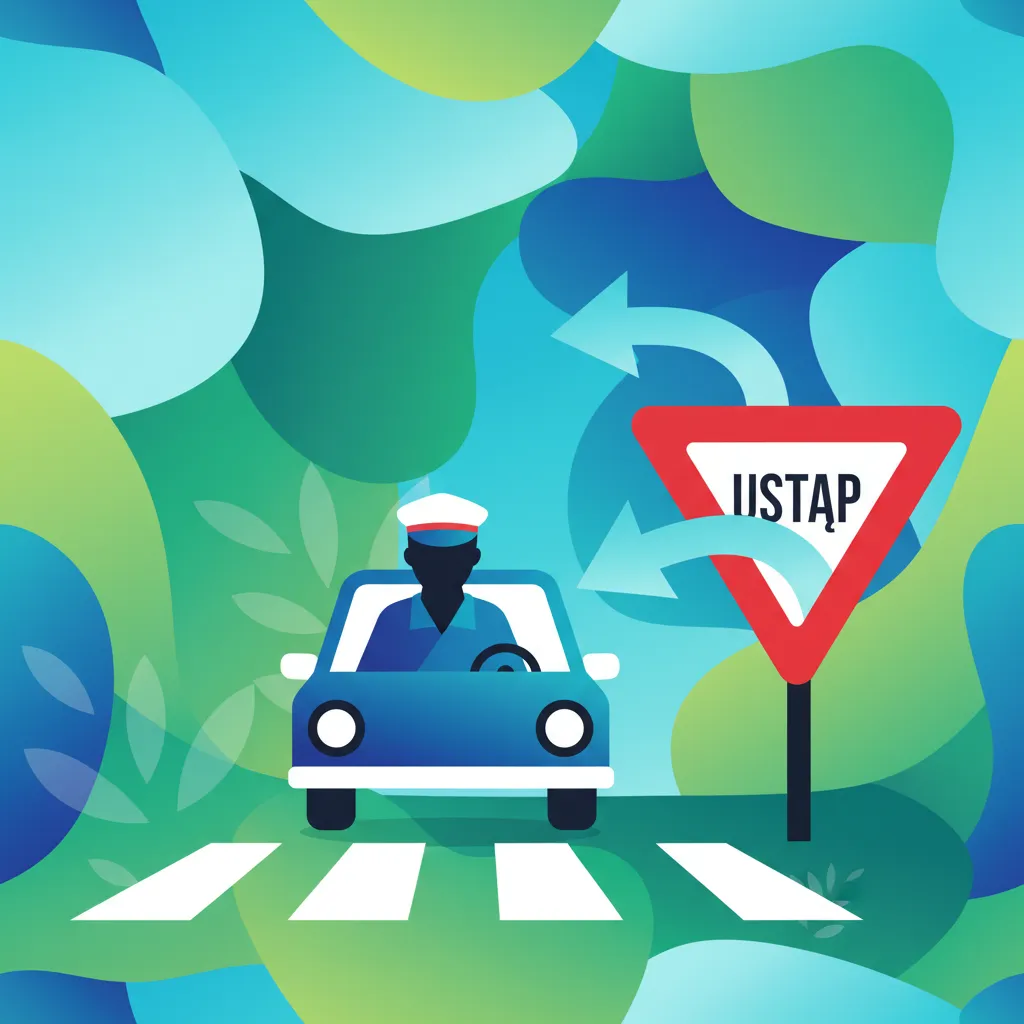
A-7)The Yield sign (ustąp pierwszeństwa) is a regulatory traffic sign that commands drivers to give way to all other vehicles approaching or already within the intersection. Its distinctive triangular shape, white background, and red border make it easily recognizable.
Yield Sign Means for DriversWhen you encounter an Ustąp Pierwszeństwa sign, it means that your approach to the intersection has lower priority than traffic on the intersecting road(s). You must be prepared to reduce your speed, and if necessary, come to a complete stop before entering the intersection. The objective is to allow any vehicles, cyclists, or pedestrians on the intersecting road to proceed first without requiring them to slow down or change their course.
The obligation to yield applies to all road users on the sign-bearing approach, whether they intend to proceed straight, turn left, or turn right. The presence of a Yield sign overrides the default "priority to the right" rule for that specific intersection approach, making the right-of-way explicitly clear.
When required to yield, you must stop before the stop line (a solid white line across your lane) if one is marked. If there is no stop line, you must stop before the actual entry point of the intersection, ensuring that you have a clear view of intersecting traffic without obstructing it. Failing to stop when necessary or forcing your way into the intersection is a serious violation of Polish traffic law.
A frequent error drivers make is assuming that a Yield sign only applies to traffic coming from a specific direction, or that it’s merely a suggestion to slow down. It is critical to understand that the sign demands you be ready to stop and only proceed when it is safe and clear to do so, without causing other road users to take evasive action. Another misconception is believing that if you arrive first, you have priority, even with a Yield sign present. This is incorrect; the sign explicitly assigns priority away from you.
Prawo Drogi)When an intersection lacks traffic lights, Stop signs, Yield signs, or Priority Road signs, it is considered an uncontrolled intersection where the general rule of "priority to the right" (prawo drogi) applies. This rule is fundamental to Polish traffic law and governs countless junctions across the country.
Equal Roads (Równorzędne Drogi)The "priority to the right" rule specifically applies when two or more equal roads (równorzędne drogi) intersect. Equal roads are generally defined as roads of the same classification – for example, two residential streets or two rural lanes – where neither has been designated as a priority road through signage. In such a scenario, no road inherently holds higher status, and the default right-of-way rule becomes active.
Priority to the Right Rule in PracticeThe rule states that at an uncontrolled intersection of equal roads, a driver must yield to any vehicle approaching from their right-hand side. Conversely, if no vehicle is approaching from your right, or if the vehicles to your right are yielding to someone else, you may proceed when it is safe. This rule creates a consistent, predictable hierarchy that prevents multiple vehicles from entering the intersection simultaneously, thereby reducing conflict points.
For instance, at a four-way crossroads without signs:
Priority to the Right Apply To?This rule applies equally to all types of road users: cars, motorcycles, mopeds, and even bicycles. Pedestrians, however, often have a specific right-of-way at marked crosswalks, regardless of the priority to the right rule for vehicles. Always be vigilant for vulnerable road users.
While knowing the rules is paramount, safe navigation of uncontrolled intersections also heavily relies on excellent observation skills, anticipation of other drivers' actions, and making sound decisions. These cognitive processes are crucial for preventing accidents, especially when right-of-way might be ambiguous or other drivers make mistakes.
Observation is the active and continuous scanning of your environment, including all traffic, road markings, signs, and potential hazards, before and during your approach to an intersection. You should check to your left, right, and ahead, assessing the speed and distance of any approaching traffic.
Anticipation involves predicting the likely actions of other road users based on their speed, position, signals, and your understanding of the right-of-way rules. For example, if you see a vehicle approaching rapidly from your right at an uncontrolled intersection, you should anticipate that they might not yield, even if they are legally obligated to. This allows you to prepare to stop or take evasive action if necessary.
Safe decision-making is the cognitive process of choosing a maneuver that satisfies your legal obligations while minimizing risk. At an uncontrolled intersection, this means:
Yield, Stop, Priority Road) or if it's an equal roads scenario.priority to the right rule.Your ability to combine these elements ensures predictable and safe driving behavior, which is a cornerstone of collision prevention.
Polish road traffic law (Prawo o ruchu drogowym) explicitly defines the rules for uncontrolled intersections and the Yield sign. Adherence to these regulations is mandatory, and violations carry legal penalties.
priority to the right.Yield sign. It states that when this sign is present, the driver must stop and give way to all road users on the intersecting road(s). This emphasizes the strict requirement to stop if necessary.Understanding these legal requirements is not merely academic; it forms the foundation of responsible driving and directly impacts your liability in the event of an accident.
Even experienced drivers can make mistakes at uncontrolled intersections. Being aware of these common pitfalls can help you avoid them.
Priority Road signs, the priority to the right rule applies, regardless of road size or perceived importance.Yield with Stop: While a Yield sign requires you to be prepared to stop, you only need to come to a complete halt if there is traffic to which you must yield. A Stop sign, however, requires a full stop regardless of traffic. Misinterpreting this can cause unnecessary delays or, conversely, unsafe entry.priority to the right.As you approach, scan for any traffic signs (Yield, Stop, Priority Road). If none, assume priority to the right applies.
Reduce your speed significantly. Be prepared to stop comfortably.
Perform a comprehensive visual check: left, right, and straight ahead. Look for vehicles, cyclists, and pedestrians.
If a Yield sign is present, stop if necessary, and only proceed when the intersecting road is completely clear.
If priority to the right applies, check your right for approaching traffic. Yield to them.
Before proceeding, double-check one last time. Ensure your path is clear and you will not cause another road user to brake or swerve.
The principles of yielding and priority to the right remain constant, but their application requires greater caution and adjustment under different environmental and traffic conditions.
priority to the right is crucial here, as reaction times are reduced.Priority Road sign can override the priority to the right rule for an otherwise uncontrolled intersection. Failing to observe these temporary changes is a serious error.Mastering uncontrolled intersections and Yield signs is fundamental for safe and legal driving in Poland. Remember these core principles:
Yield sign (Ustąp Pierwszeństwa) always demands you give way. Be prepared to stop completely if other traffic is present on the intersecting road(s).Priority to the Right (Prawo Drogi) is the default rule at uncontrolled intersections of equal roads (równorzędne drogi) when no other signs dictate priority. You must yield to traffic approaching from your right.Observation and Anticipation are non-negotiable. Always scan your surroundings, predict potential conflicts, and be ready to react.Safe Decisions. Your maneuvers must comply with the law and minimize risk, ensuring smooth and predictable traffic flow.Vulnerable Road Users. Pedestrians and cyclists often have specific priorities or require extra caution, especially at uncontrolled junctions.Conditions. Poor weather, darkness, or heavy vehicles demand increased caution and earlier yielding.Temporary Signs, as they override default rules.By integrating these rules and practices into your driving, you will navigate uncontrolled intersections safely, confidently, and in full compliance with Polish traffic law, setting a strong foundation for your Category B license and a lifetime of safe driving.
To deepen your understanding and prepare for your Polish Category B theory test, explore these related topics and practice scenarios.
This lesson covers the essential rules for navigating uncontrolled intersections in Poland, focusing on the Yield sign (Ustąp pierwszeństwa) and the priority to the right rule (prawo drogi). Drivers must understand that the Yield sign demands giving way to all intersecting traffic and being ready to stop, while priority to the right applies at uncontrolled junctions of equal roads without other signage. Safe navigation requires continuous observation, anticipation of other drivers' actions, and methodical decision-making following a five-step assessment process. The lesson also addresses adjustments for weather, lighting, road types, and vulnerable road users, all governed by relevant articles of the Polish Road Traffic Act.
A short set of high-value points that capture the most important learning from this lesson.
The Yield sign (Ustąp pierwszeństwa, A-7) requires you to give way to ALL traffic on the intersecting road and be prepared to stop completely.
Priority to the right (prawo drogi) is the default rule at uncontrolled intersections where equal roads meet with no other signs dictating priority.
The priority to the right rule specifically means yielding to vehicles approaching from your right, not simply driving on the right side of the road.
Continuous observation and anticipation are essential: scan left, right, and ahead, and assume other drivers may make mistakes.
Temporary signs always override default rules like priority to the right, so check for construction or event-based signage.
Explore all units and lessons included in this driving theory course.
Yield sign means be prepared to stop and only proceed when the intersecting road is completely clear of all traffic, cyclists, and pedestrians.
At uncontrolled equal roads, yield to traffic coming from your right; if no traffic from your right, you may proceed.
A wider or busier-looking road does NOT automatically have priority without explicit Priority Road signage.
Pedestrians at uncontrolled crosswalks always have priority under Polish traffic law (Art. 72), regardless of vehicle right-of-way rules.
Heavy vehicles and trailers have longer braking distances, requiring earlier anticipation when approaching intersections to yield.
Assuming larger or busier roads have inherent priority—without a Priority Road sign, priority to the right still applies.
Confusing Yield with Stop: a Yield sign requires stopping only when necessary, while a Stop sign always requires a full stop.
Yielding to the left instead of the right due to inattention; the rule specifically targets traffic from your right.
Tunnel vision at intersections—focusing only on vehicles from one direction while missing cyclists, pedestrians, or others.
Proceeding into an intersection without sufficient time or space, causing other road users to brake or take evasive action.
Lesson content overview
A short set of high-value points that capture the most important learning from this lesson.
The Yield sign (Ustąp pierwszeństwa, A-7) requires you to give way to ALL traffic on the intersecting road and be prepared to stop completely.
Priority to the right (prawo drogi) is the default rule at uncontrolled intersections where equal roads meet with no other signs dictating priority.
The priority to the right rule specifically means yielding to vehicles approaching from your right, not simply driving on the right side of the road.
Continuous observation and anticipation are essential: scan left, right, and ahead, and assume other drivers may make mistakes.
Temporary signs always override default rules like priority to the right, so check for construction or event-based signage.
Explore all units and lessons included in this driving theory course.
Yield sign means be prepared to stop and only proceed when the intersecting road is completely clear of all traffic, cyclists, and pedestrians.
At uncontrolled equal roads, yield to traffic coming from your right; if no traffic from your right, you may proceed.
A wider or busier-looking road does NOT automatically have priority without explicit Priority Road signage.
Pedestrians at uncontrolled crosswalks always have priority under Polish traffic law (Art. 72), regardless of vehicle right-of-way rules.
Heavy vehicles and trailers have longer braking distances, requiring earlier anticipation when approaching intersections to yield.
Assuming larger or busier roads have inherent priority—without a Priority Road sign, priority to the right still applies.
Confusing Yield with Stop: a Yield sign requires stopping only when necessary, while a Stop sign always requires a full stop.
Yielding to the left instead of the right due to inattention; the rule specifically targets traffic from your right.
Tunnel vision at intersections—focusing only on vehicles from one direction while missing cyclists, pedestrians, or others.
Proceeding into an intersection without sufficient time or space, causing other road users to brake or take evasive action.
Explore search topics learners often look for when studying Uncontrolled Intersections and Yield Signs. These topics reflect common questions about road rules, driving situations, safety guidance, and lesson level theory preparation for learners in Poland.
Browse additional driving theory lessons that cover connected traffic rules, road signs, and common driving situations related to this topic. Improve your understanding of how different rules interact across everyday traffic scenarios.
Explore advanced scenarios and less common priority situations at intersections beyond the basic right-of-hand rule. Understand how to handle junctions with multiple lanes, tram lines, and complex traffic flows according to Polish driving regulations. This lesson builds upon fundamental intersection knowledge.
This lesson addresses advanced scenarios, including multi-lane intersections and interactions with vulnerable road users. It reinforces the legal obligation to give absolute priority to pedestrians at marked crossings (zebra crossings). The content also covers navigating around traffic islands and using dedicated turning lanes in complex urban environments.
This lesson provides strategies for safely navigating the numerous intersections typical of urban environments. It reinforces the application of priority rules in situations with limited visibility and high traffic volume. Techniques for making turns in narrow streets and being aware of pedestrians and cyclists at junctions are central to the instruction.
In this lesson, learners investigate complex junctions and intersections found across urban, rural, and highway environments, focusing on multi-lane configurations, traffic light coordination, and roundabout navigation. The content emphasizes priority rules, blind-spot assessment when merging, and safe lane selection for turning maneuvers. Learners will also consider interactions with cyclists and pedestrians, and the importance of adjusting approach speed for safe navigation.
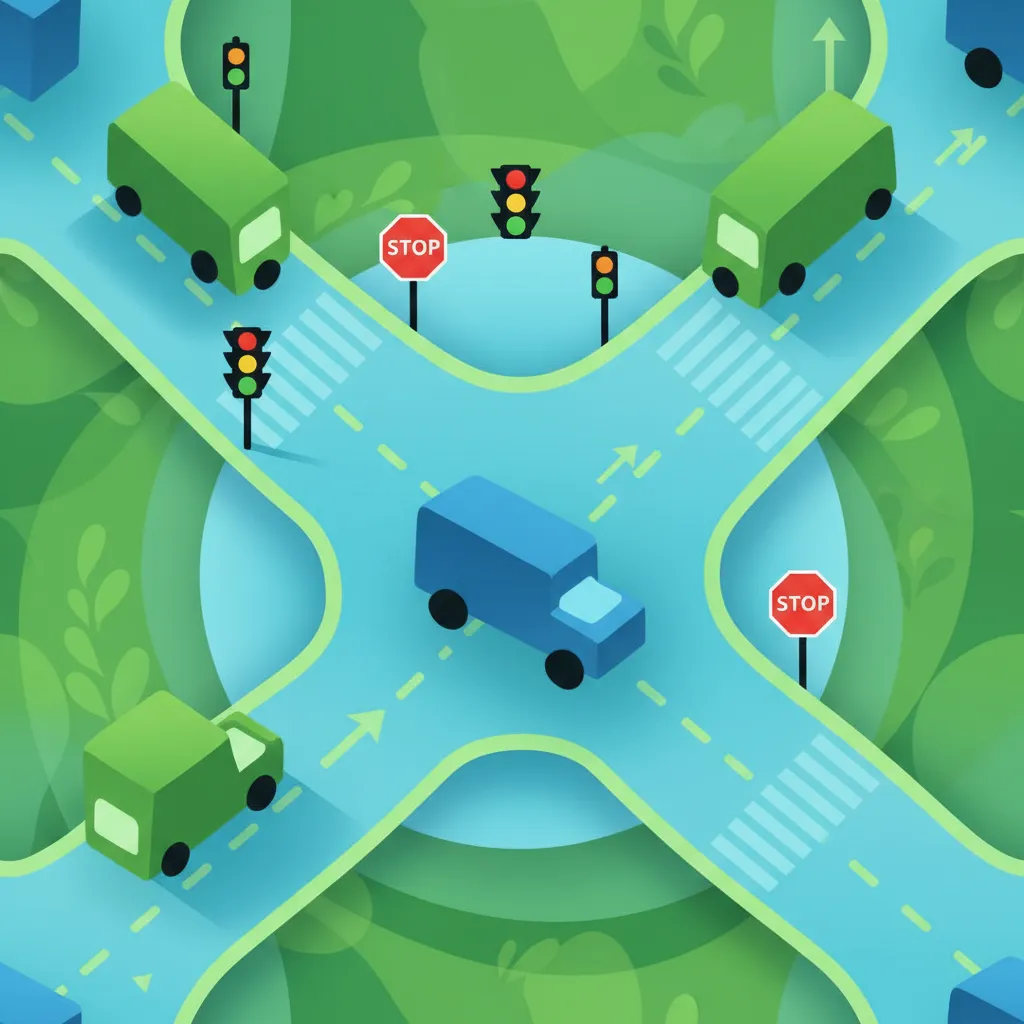
This lesson provides a comprehensive breakdown of the right-of-way rules that govern intersections. It explains the clear directives given by traffic lights, stop signs, and yield signs, and clarifies the procedures at unmarked or uncontrolled intersections, where the 'priority to the right' rule often applies. Learners will understand the legal hierarchy of these rules to make correct, safe, and predictable decisions when navigating through any junction, reducing the risk of conflict with other traffic.
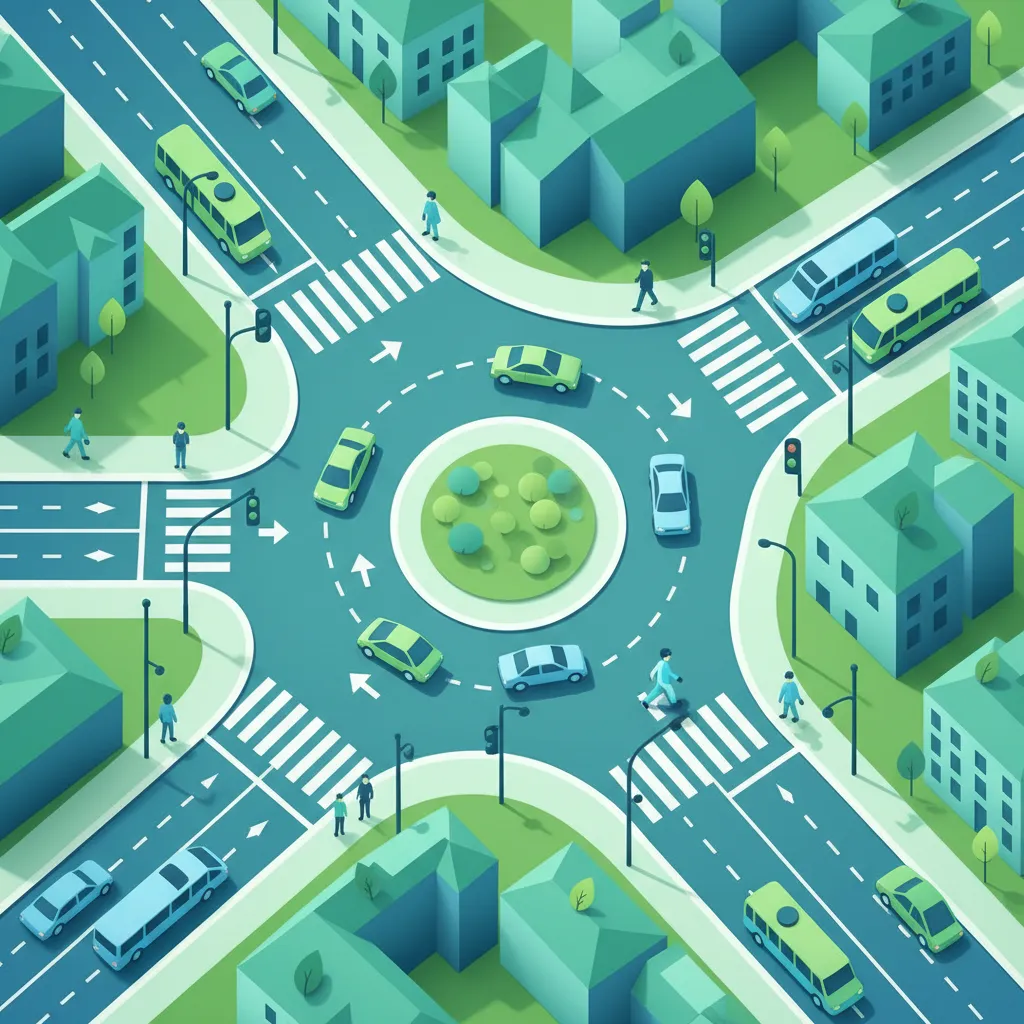
This lesson explores the priority hierarchy for buses at different intersections, roundabouts, and pedestrian crossings. Learners will understand how traffic signals and signs affect their approach and how to safely navigate roundabouts with correct lane discipline. Special attention is given to yielding to pedestrians, especially near bus stops.
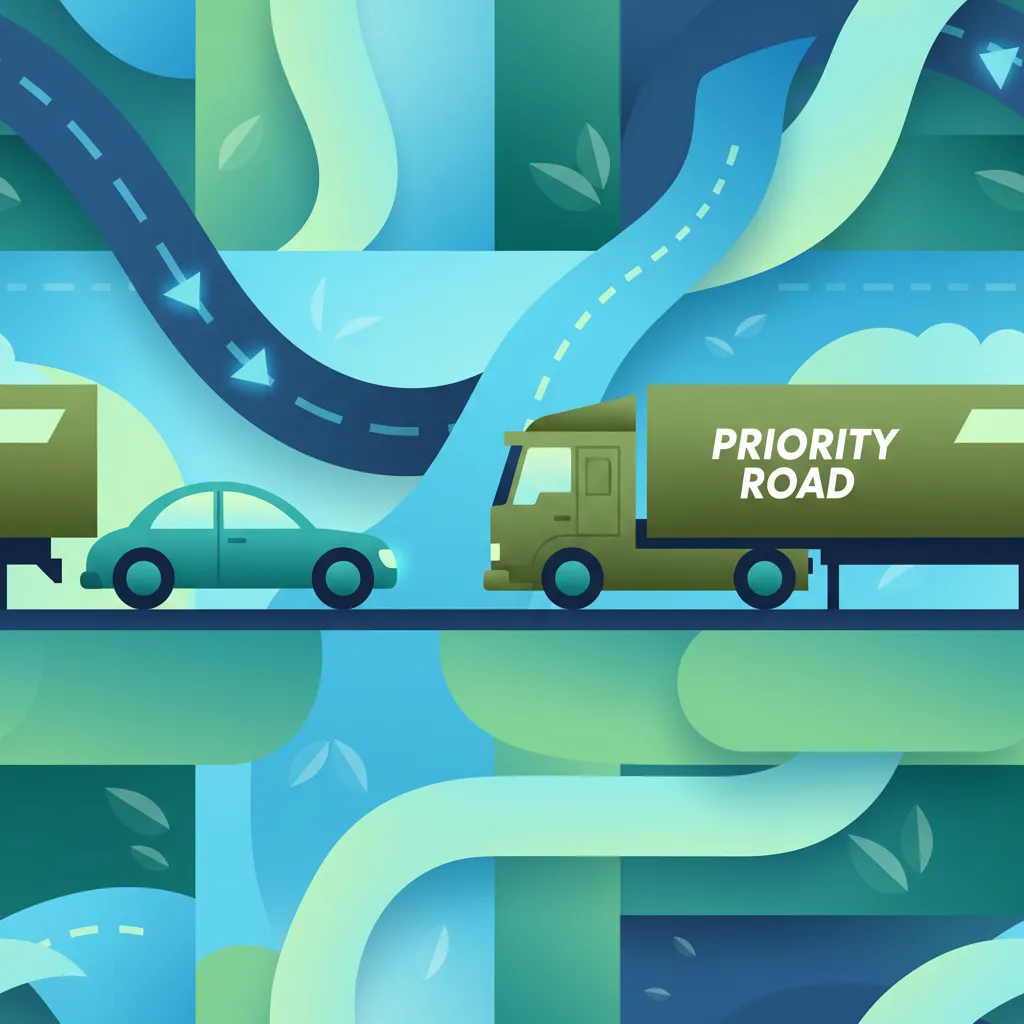
This lesson introduces the fundamental principles of right-of-way on Polish roads, explaining how priority road signs determine the flow of traffic at intersections. Learners will explore the hierarchy of vehicle classes and the specific obligations that arise when approaching a yield line or a give-way sign. The content details the legal precedence of main road traffic over secondary road traffic, helping riders safely navigate intersections and avoid right-of-way infractions.
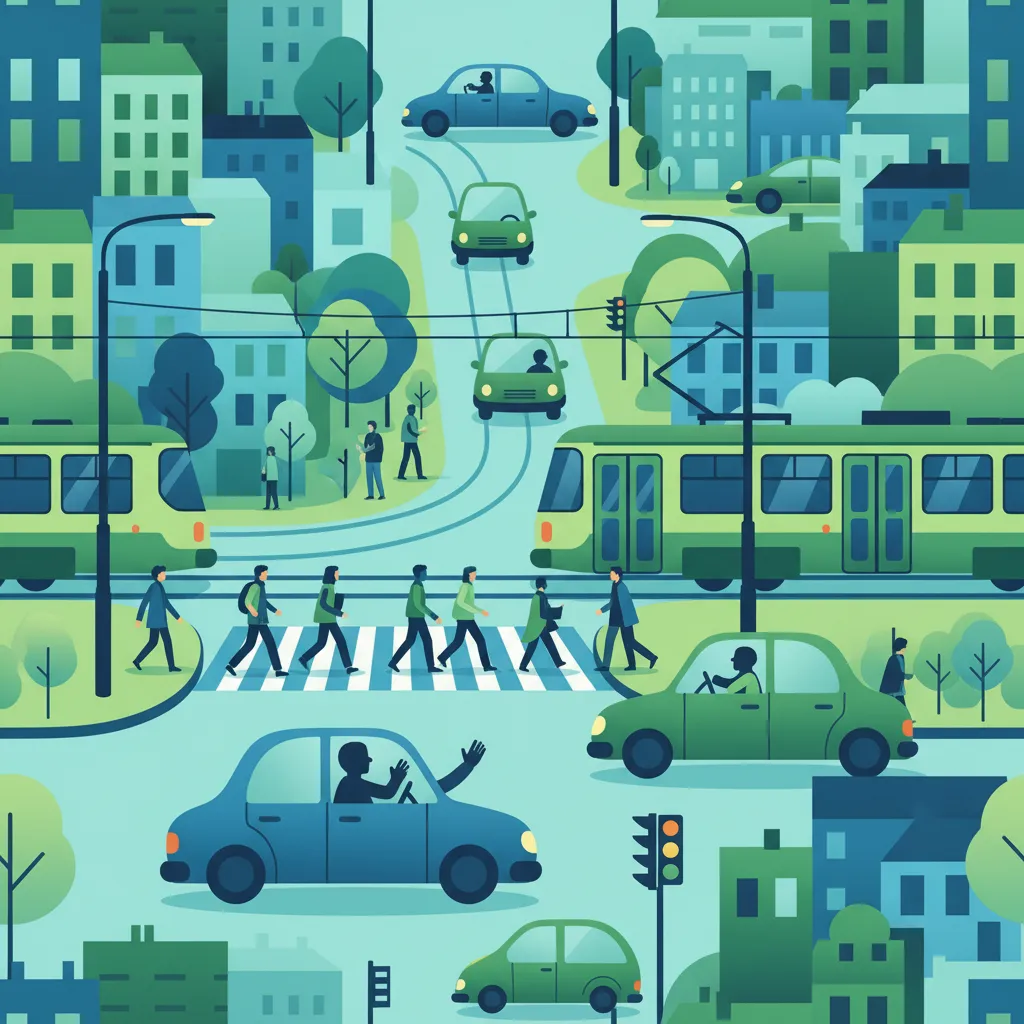
This lesson introduces the core concept of priority, or 'pierwszeństwo przejazdu,' in Polish traffic law. It explains the general rule of yielding to traffic from the right at intersections of equal status. This principle forms the foundation for navigating uncontrolled junctions and is a critical piece of knowledge for all drivers.
This lesson provides a detailed breakdown of traffic light operations in Poland. It explains the sequence of red, amber, and green lights, and the specific rules for turning when a green arrow signal is displayed. The meaning of a flashing amber light and the rules for pedestrian crossings at signalized intersections are also covered.
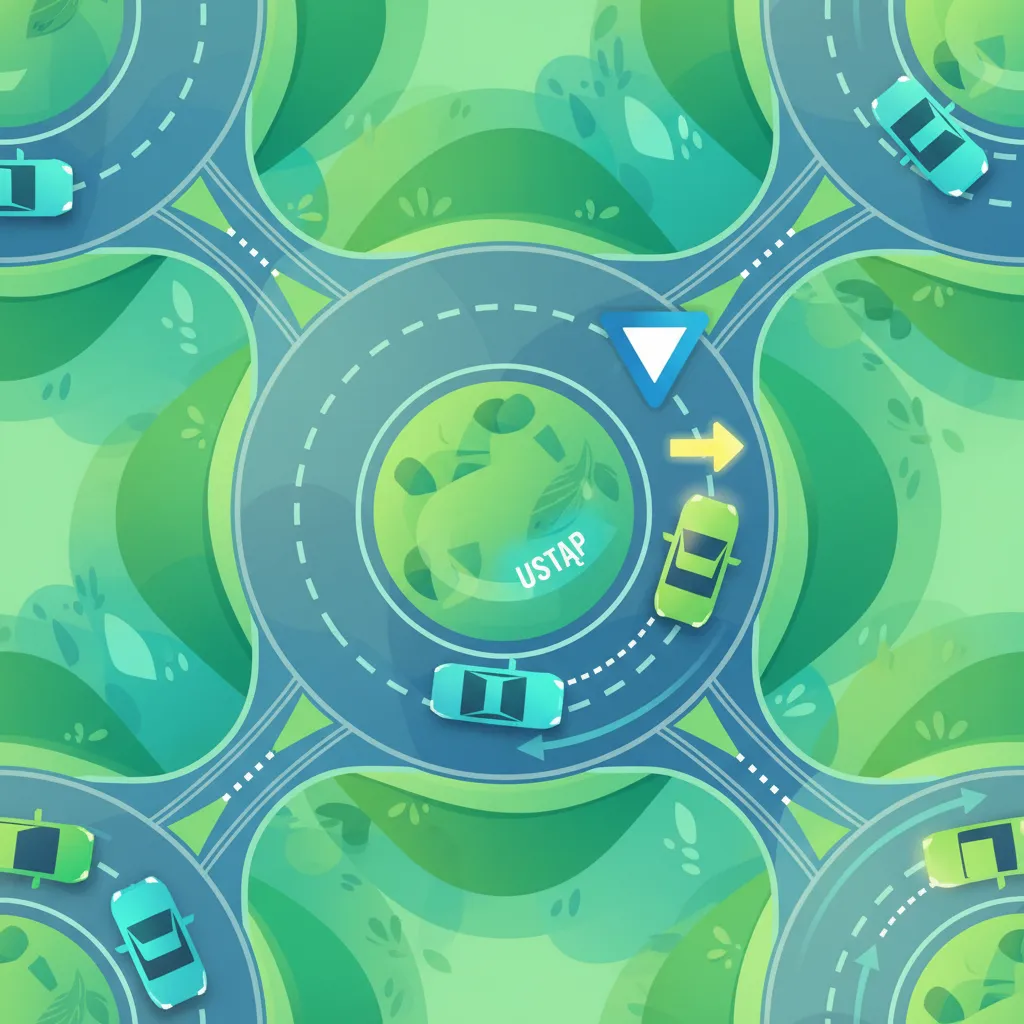
This lesson explains the specific rules for navigating roundabouts, a common feature on Polish roads. It emphasizes the primary rule of yielding to traffic already circulating within the roundabout before entering. The content also covers correct lane positioning for different exits and the proper use of indicators when exiting.
This lesson details the rules and best practices for driving on Poland's fastest roads. It covers the higher speed limits, the strict lane discipline of keeping right except to overtake, and prohibitions on stopping. The aim is to ensure drivers can handle the demands of sustained high-speed travel safely and efficiently.
Identify and learn to avoid typical errors drivers make at uncontrolled intersections and when dealing with yield signs. This lesson focuses on observation, anticipation, and safe decision-making to prevent accidents and ensure compliance with Polish traffic rules. Essential for understanding real-world driving challenges.
This lesson addresses advanced scenarios, including multi-lane intersections and interactions with vulnerable road users. It reinforces the legal obligation to give absolute priority to pedestrians at marked crossings (zebra crossings). The content also covers navigating around traffic islands and using dedicated turning lanes in complex urban environments.
This lesson provides strategies for safely navigating the numerous intersections typical of urban environments. It reinforces the application of priority rules in situations with limited visibility and high traffic volume. Techniques for making turns in narrow streets and being aware of pedestrians and cyclists at junctions are central to the instruction.
This lesson provides a comprehensive breakdown of the right-of-way rules that govern intersections. It explains the clear directives given by traffic lights, stop signs, and yield signs, and clarifies the procedures at unmarked or uncontrolled intersections, where the 'priority to the right' rule often applies. Learners will understand the legal hierarchy of these rules to make correct, safe, and predictable decisions when navigating through any junction, reducing the risk of conflict with other traffic.
This lesson introduces the core concept of priority, or 'pierwszeństwo przejazdu,' in Polish traffic law. It explains the general rule of yielding to traffic from the right at intersections of equal status. This principle forms the foundation for navigating uncontrolled junctions and is a critical piece of knowledge for all drivers.
This lesson explores the priority hierarchy for buses at different intersections, roundabouts, and pedestrian crossings. Learners will understand how traffic signals and signs affect their approach and how to safely navigate roundabouts with correct lane discipline. Special attention is given to yielding to pedestrians, especially near bus stops.
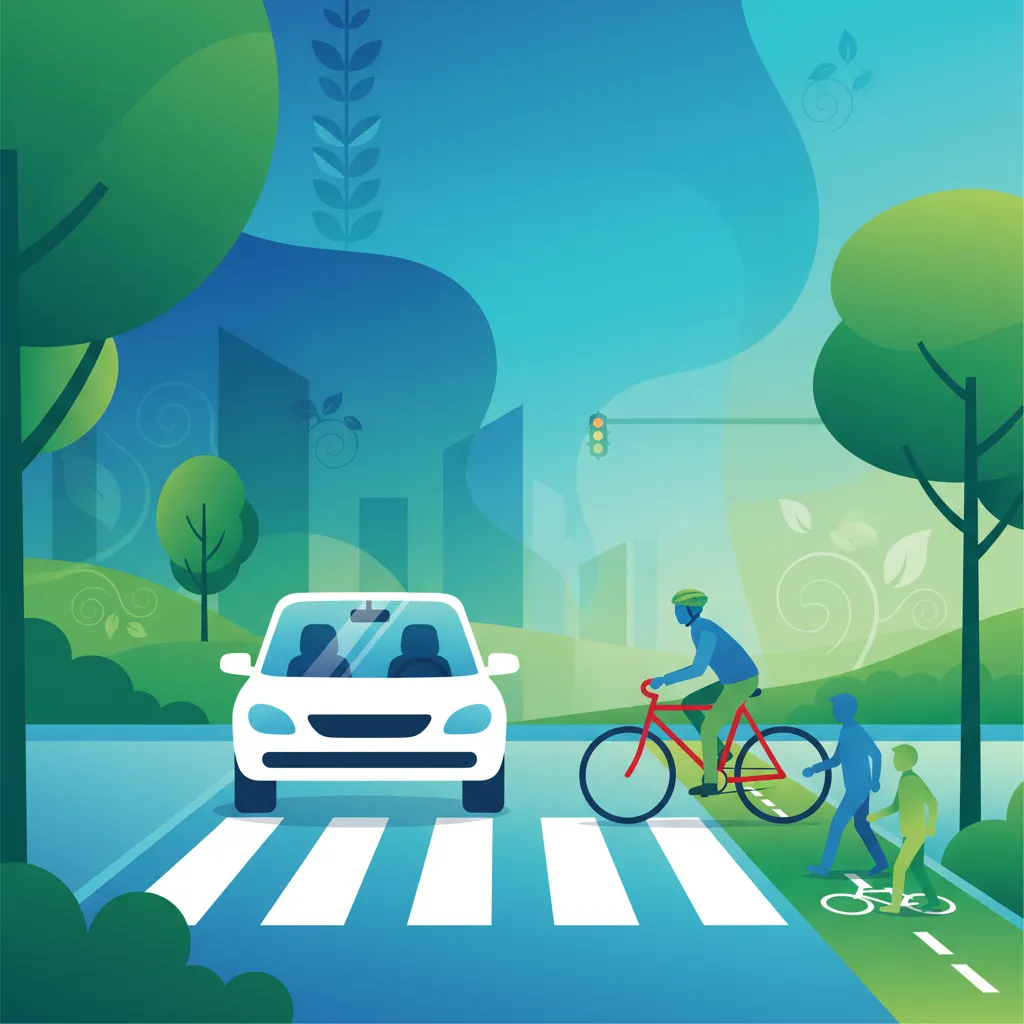
This lesson focuses on safe coexistence with cyclists and pedestrians, who are prevalent in urban areas. It covers the rules for driving alongside dedicated bicycle lanes and the legal requirement to yield to pedestrians at marked crossings. The content stresses the importance of constant awareness, especially when turning at intersections, to prevent conflicts with vulnerable road users.
This lesson introduces the fundamental principles of right-of-way on Polish roads, explaining how priority road signs determine the flow of traffic at intersections. Learners will explore the hierarchy of vehicle classes and the specific obligations that arise when approaching a yield line or a give-way sign. The content details the legal precedence of main road traffic over secondary road traffic, helping riders safely navigate intersections and avoid right-of-way infractions.
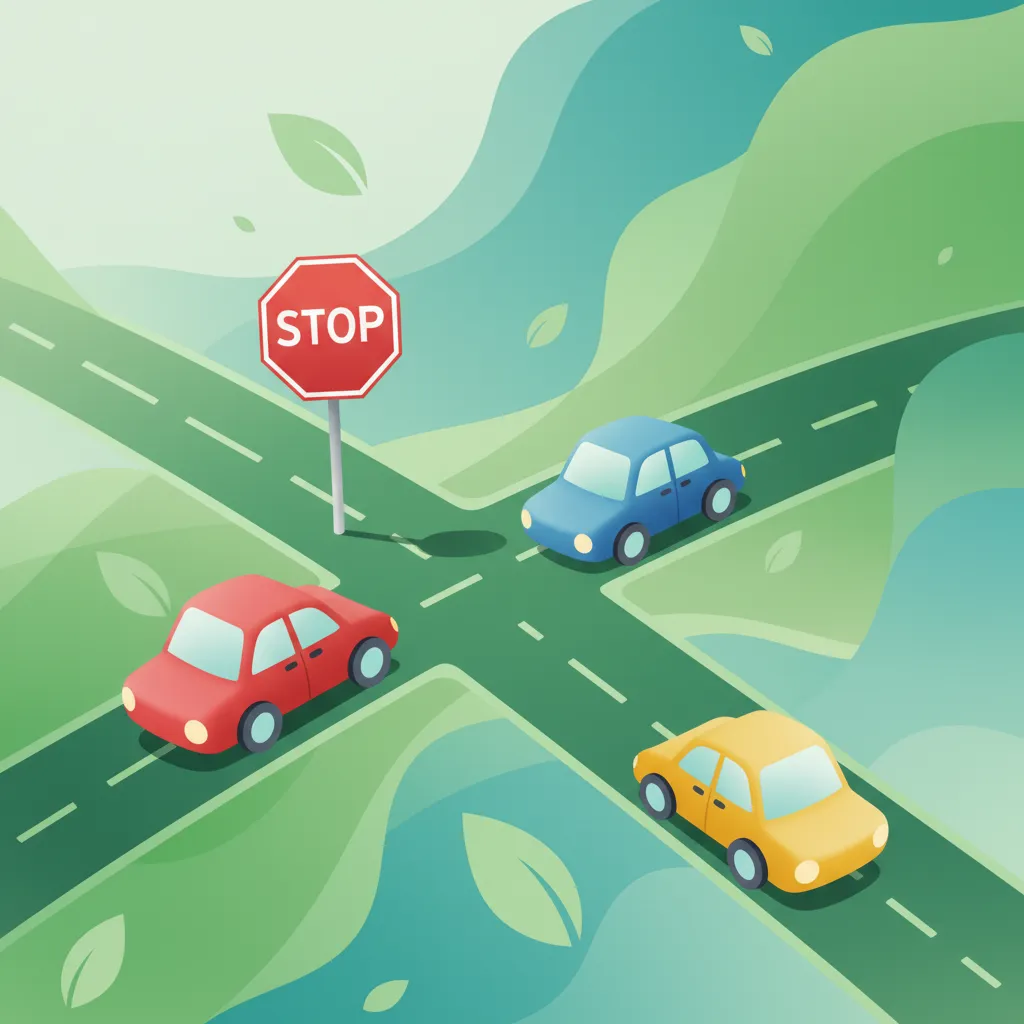
In this lesson, learners examine the specific actions required at stop signs and give-way intersections under Polish traffic regulations. The content explains the legal requirement for a full stop before the stop line, incorporating a visual scan of all directions before proceeding. It also covers the give-way protocol, where riders must yield to traffic already in the intersection or on the main road, emphasizing the need for correct positioning and observation.
In this lesson, learners investigate complex junctions and intersections found across urban, rural, and highway environments, focusing on multi-lane configurations, traffic light coordination, and roundabout navigation. The content emphasizes priority rules, blind-spot assessment when merging, and safe lane selection for turning maneuvers. Learners will also consider interactions with cyclists and pedestrians, and the importance of adjusting approach speed for safe navigation.
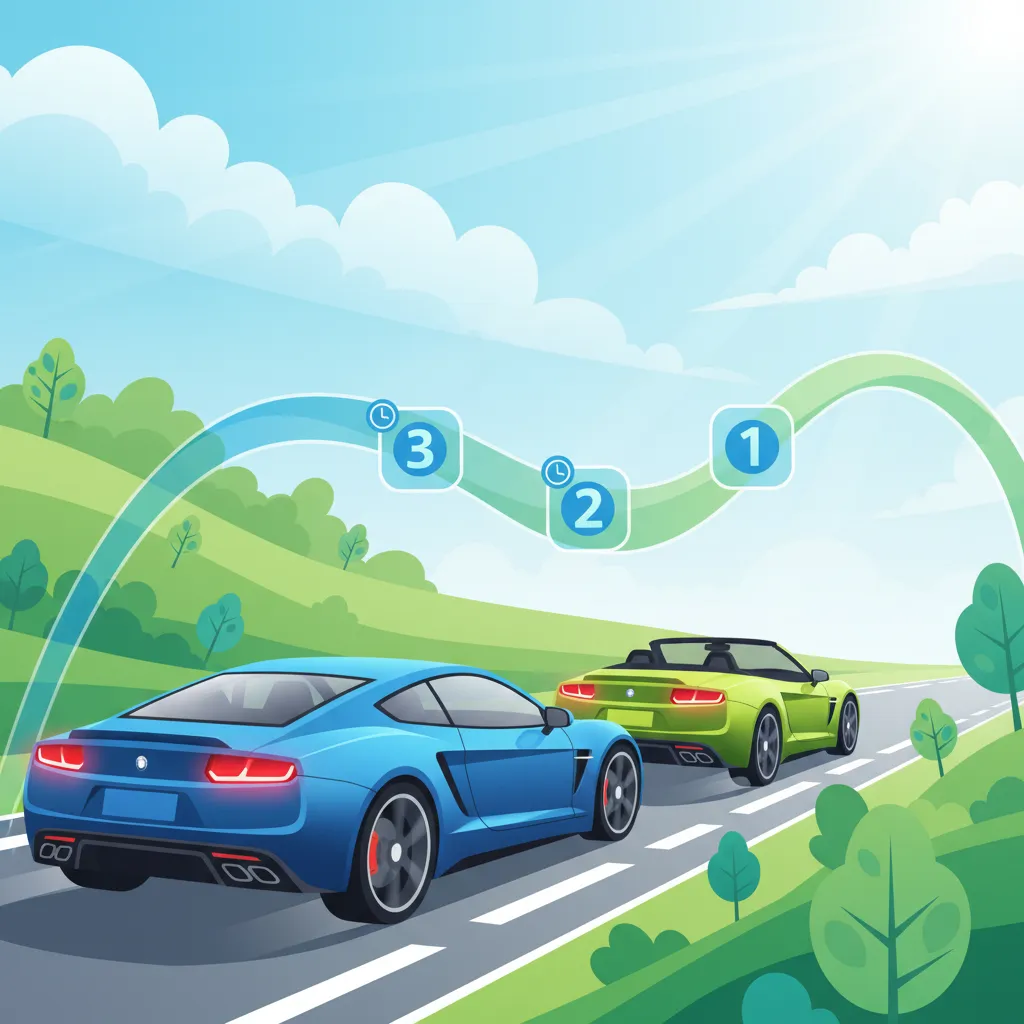
This lesson provides practical methods for maintaining a safe buffer zone behind the vehicle in front. It explains the 'two-second rule' as a minimum following distance in good conditions and how to increase it to three or more seconds in adverse weather. This skill is critical for allowing enough time to react and brake safely to avoid rear-end collisions.
Find clear answers to common questions learners have about Uncontrolled Intersections and Yield Signs. Learn how the lesson is structured, which driving theory objectives it supports, and how it fits into the overall learning path of units and curriculum progression in Poland. These explanations help you understand key concepts, lesson flow, and exam focused study goals.
In Poland, at an intersection of two roads where there are no traffic lights, signs, or other traffic controllers, vehicles approaching from the right have priority. You must always yield to vehicles coming from your right unless a sign indicates otherwise. This rule is fundamental to understanding uncontrolled junctions.
You must yield to the right whenever you approach an intersection where no specific priority is indicated by signs, signals, or road markings. This applies even if the road from the right appears smaller or less used. The key is to look right and be prepared to stop.
The 'Ustąp pierwszeństwa' sign (an inverted triangle) indicates that you must yield to other traffic on the main road or coming from the right if necessary, but you do not have to stop completely if the way is clear. A 'Stop' sign (an octagon) requires you to come to a complete stop before proceeding, regardless of traffic.
Yes, the 'priority to the right' rule is superseded by explicit traffic signs (like 'Stop' or 'Yield'), traffic light signals, directions from traffic controllers, and general principles like yielding to trams unless otherwise indicated. Always check for signs first.
Common mistakes include failing to check for traffic from the right, misinterpreting or ignoring yield signs, assuming priority when it's not granted, and proceeding too quickly into the intersection. Being aware of these pitfalls is key to exam success.
Build custom practice sessions tailored precisely to your needs. Focus on areas requiring improvement, review specific Polish road signs, or master complex traffic rules to ensure full preparation for your official driving license exam.