
This lesson is crucial for all Category A motorcycle riders in Poland. It introduces the fundamental principles of right-of-way on Polish roads, explaining how priority road signs determine the flow of traffic at intersections. You'll learn the hierarchy of vehicles and your specific obligations at yield lines and give-way signs, preparing you to confidently navigate crossroads and avoid common right-of-way infractions during your theory exam and on the road. This forms the foundation for safe intersection navigation covered in later lessons within this unit.
Lesson content overview
Mastering the rules of right-of-way, known in Polish as pierwszeństwo przejazdu, is fundamental for any motorcyclist on Polish roads. These rules dictate which road user has the legal right to proceed first at various conflict points, such as intersections, junctions, and crossings. A clear understanding of these regulations, enshrined in the Prawo o ruchu drogowym (Polish Road Traffic Act), ensures safety, maintains smooth traffic flow, and helps prevent dangerous collisions. For those preparing for the Polish Category A motorcycle theory exam, this lesson provides a comprehensive overview of how priority road signs, yield lines, and specific vehicle hierarchies determine traffic flow.
Right-of-way, or priority, is the legal principle that determines the order in which road users should proceed when their paths intersect. This system is crucial for managing traffic efficiently and safely, particularly in urban areas and at complex junctions. Without clear priority rules, every intersection would be a chaotic free-for-all, leading to frequent accidents and prolonged delays.
The primary purpose of priority rules in Poland is to reduce the risk of collisions by providing a predictable framework for driver behavior. By clearly assigning who has the right to proceed and who must yield, these rules eliminate ambiguity at conflict points. This predictability allows motorcyclists and other drivers to anticipate the actions of others, plan their maneuvers, and react safely, even under pressure. Effective priority management also optimizes the capacity of the road network, ensuring that traffic flows as smoothly as possible, especially on main routes.
All right-of-way rules in Poland are legally binding and are detailed within the Prawo o ruchu drogowym. This comprehensive act covers all aspects of road traffic, from signage and markings to specific conduct at intersections. Motorcyclists, like all drivers, are obligated to know and comply with these regulations. Violations can lead to significant penalties, including fines, penalty points, and in serious cases, license suspension, not to mention the increased risk of accidents. Adherence to these laws is a cornerstone of responsible and safe motorcycling.
Traffic signs are the primary means of communicating priority rules to drivers. Recognizing and understanding these signs instantly is vital for making correct and timely decisions on the road. For motorcyclists, quick identification of these signs allows for appropriate speed adjustments and preparations for yielding or proceeding.
The D-1 sign, commonly known as the Priority Road sign, is a yellow diamond with a white border. When you are traveling on a road marked with this sign, you have the right-of-way over traffic approaching from any intersecting roads or junctions, unless otherwise indicated by temporary signs or traffic lights. This means you can generally proceed through intersections without stopping or yielding, assuming it is safe to do so. This sign is instrumental in establishing major routes where traffic flow should remain uninterrupted, minimizing stops and enhancing overall road capacity.
The A-7 sign, or Give Way / Yield sign, is an inverted white triangle with a red border. This sign mandates that drivers approaching an intersection must give way to traffic on the intersecting road, which typically holds priority. This obligation requires you to slow down significantly, be prepared to stop, and only proceed when you are certain that no priority traffic is approaching or when a safe gap exists. Failing to yield at an A-7 sign is a serious traffic violation and a common cause of accidents at intersections.
The B-20 sign, or Stop sign, is a red octagon with the word "STOP" in white letters. This sign is the most stringent priority regulation, requiring drivers to bring their vehicle to a complete and undeniable halt before the stop line or, if no line is present, at the edge of the intersecting road. Unlike the A-7 sign, where you might proceed without stopping if the way is clearly safe, a B-20 sign always demands a full stop. After stopping, you must then assess the traffic situation and yield to all priority traffic before proceeding safely. This sign is typically used at intersections with limited visibility or unusually high accident risk.
Beyond vertical signs, road markings play an equally crucial role in conveying priority rules and guiding drivers on where to stop or yield. These horizontal markings complement the signs and provide precise points for action.
The P-13 marking, commonly referred to as a yield line or "linia warunkowego zatrzymania" (conditional stop line) of triangular form, consists of a series of white triangles painted across the lane, with their points facing the approaching driver. This line is always associated with an A-7 Give Way sign. It indicates the exact point behind which you must stop if necessary to yield to priority traffic. The line serves as a visual cue, ensuring that drivers stop at a safe distance from the intersection, allowing for clear visibility of oncoming traffic. You must stop behind this line, not on it or past it.
The P-12 marking, or solid stop line, is a thick, continuous white line painted across the entire width of the lane. This line is always paired with a B-20 Stop sign. It precisely indicates where you must bring your vehicle to a complete halt. Just like with the yield line, you must stop behind the solid stop line. Crossing this line before stopping is considered a traffic violation, even if no other vehicles are present. The purpose is to ensure maximum visibility and safety before entering the flow of priority traffic.
When multiple road users approach a conflict point, a clear hierarchy determines who has the right-of-way. This hierarchy is essential for resolving situations where signs or markings might not be explicitly present, or in complex scenarios involving different types of vehicles.
At the top of the hierarchy are emergency vehicles, such as ambulances, police cars, and fire engines, when they are operating with flashing blue lights and audible sirens. These vehicles have absolute priority over all other road users, regardless of existing signs, signals, or markings. Upon hearing or seeing an approaching emergency vehicle, all other drivers, including motorcyclists, must immediately yield by pulling over to the right side of the road (or to a position that provides a clear path) and stopping. Failure to yield to an emergency vehicle carries severe penalties due to the critical nature of their response.
Generally, traffic on a designated priority road (marked with a D-1 sign) has precedence over traffic entering from secondary roads. This fundamental rule simplifies navigation at countless intersections across Poland. Motorcyclists on a secondary road must always be prepared to yield to vehicles already on or approaching the priority road. This ensures that main arteries can maintain a consistent flow, while traffic entering these arteries does so safely and without causing disruption.
Vulnerable road users, including pedestrians and cyclists, often have specific protections and priority under Polish law, particularly at designated crossings.
For practical purposes, motorcycles (Category A) are generally treated on equal footing with cars and other motor vehicles in terms of priority rules, unless specific motorcycle-only regulations apply. This means a motorcyclist on a priority road has the same right-of-way as a car on that road. Conversely, a motorcyclist approaching a give-way or stop sign has the same obligations as any other driver.
However, there are motorcycle-specific considerations:
Intersections are the most common points where right-of-way rules come into play. Understanding how these rules apply to various intersection configurations is crucial for safe navigation.
At intersections without any signs, traffic lights, or road markings to indicate priority, the fundamental "right-hand rule" (zasada prawej ręki) applies. This rule dictates that any vehicle approaching from your right-hand side has priority. Therefore, you must yield to vehicles coming from your right, even if you arrive at the intersection simultaneously. This rule is a default mechanism to resolve conflicts in the absence of explicit guidance, common in residential areas or rural roads.
Traffic lights override all other priority signs and rules. When traffic lights are present and operational, their signals determine the right-of-way. A green light grants you the right to proceed, while a red light requires you to stop. A yellow light (amber) indicates that the signal is about to change to red, and you should prepare to stop, or clear the intersection if you are already in it or too close to stop safely. Even if you are on a priority road (D-1), a red light still means you must stop. Traffic lights simplify complex intersections by providing clear, time-based priority.
In Poland, the general rule for roundabouts (ronda) is that traffic already circulating within the roundabout has priority over vehicles entering it. This is typically reinforced by A-7 Give Way signs at each entry point. As a motorcyclist, you must approach the roundabout slowly, observe traffic already inside, and yield to them. You may only enter the roundabout when there is a safe gap in the circulating traffic. Exiting the roundabout usually requires indicating your intention with a turn signal.
Road works, construction zones, or special events can often temporarily alter the established priority rules. These temporary changes are communicated through specific signs and markings that override permanent signage.
When encountering road works or a detour, you may see temporary traffic signs that modify the usual right-of-way. For example, a temporary give-way sign, which might be generically referenced as U-6 (or more commonly, a standard A-7 sign with additional "temporary" context or a yellow background), could be erected on a road that is normally a priority road. In such cases, these temporary signs take precedence over any permanent signs for the duration of their display. It is critical to pay close attention to all signage in construction zones, as ignoring temporary changes can lead to dangerous situations and penalties.
Navigating construction zones requires heightened awareness and careful adherence to temporary rules. These areas often have reduced speed limits, narrow lanes, and altered priority flows to ensure the safety of both road users and workers. As a motorcyclist, reduce your speed, maintain extra vigilance for workers, uneven surfaces, and loose gravel, and strictly follow all temporary directions, even if they seem to contradict your normal understanding of the road's priority. Temporary signs are there for a reason – your safety and the safety of others.
Violating right-of-way rules is not only dangerous but also a frequent cause of traffic fines and penalty points. Understanding common infractions can help you avoid them.
One of the most common violations is failing to yield at an A-7 sign or a P-13 yield line. This occurs when a driver either doesn't slow down enough, or doesn't stop when necessary, and proceeds into the intersection without ensuring a clear path. This often leads to "T-bone" collisions, especially with motorcycles due to their smaller profile.
Another frequent violation is performing a "rolling stop" at a B-20 Stop sign. This means slowing down but not bringing the vehicle to a complete, undeniable halt. A full stop means the vehicle's wheels cease rotation for a brief moment, typically enough to glance left-right-left and confirm the intersection is clear. Rolling stops are illegal and dangerous, particularly at intersections with poor visibility.
Confusion at uncontrolled intersections, especially regarding the "right-hand rule," can lead to conflicts. Both drivers might assume they have priority, resulting in hesitation or a crash. Always assume the vehicle on your right has priority if no signs are present, and be prepared to yield if there's any ambiguity.
Motorcyclists sometimes attempt to overtake vehicles that are yielding or stopped at a priority junction. This can be extremely dangerous. For example, if a car is yielding to turn right, a motorcyclist attempting to overtake on the right could collide with the turning vehicle or other traffic. Always ensure overtaking is safe, legal, and clearly communicated, and never overtake when approaching a yield or stop line where other vehicles are preparing to stop or yield.
Violations of priority rules can lead to severe consequences:
Driving conditions are rarely ideal. Various environmental and situational factors can significantly impact how you perceive and react to priority rules.
Adverse weather conditions like heavy rain, fog, or snow, as well as night driving, severely reduce visibility. This makes it harder to spot road signs, markings (like P-13 yield lines), and other vehicles, especially motorcycles. In such conditions:
The weight of your motorcycle, whether you have a passenger, luggage, or are towing a trailer, directly impacts its braking performance. A heavier load increases your stopping distance.
The presence of vulnerable road users (pedestrians, cyclists, children, elderly individuals) demands extra caution, even when you have priority.
Understanding right-of-way rules is the first step; applying them safely requires defensive riding techniques and a proactive mindset.
A key aspect of defensive riding is anticipating potential hazards. When approaching an intersection, even if you have priority:
Motorcyclists must understand the physics of braking and maintain adequate stopping distances. Your braking distance is influenced by your speed, road conditions, tire grip, and your reaction time. Always ensure you have enough space to stop safely behind a yield line or stop line, especially given the dynamic nature of motorcycle braking. Early observation of signs and markings allows for gradual, controlled deceleration.
Drivers generally expect others to obey traffic laws, including priority rules. This "psychology of expectancy" makes traffic flow predictable. However, it also means that unexpected actions (e.g., someone running a red light or failing to yield) can cause surprise and delayed reactions. As a motorcyclist, never assume another driver will yield to you, even if you have priority. Always be prepared for the worst-case scenario and ride defensively.
This lesson covers the fundamental right-of-way rules (pierwszeństwo przejazdu) for motorcyclists in Poland as defined by the Prawo o ruchu drogowym. Key signs D-1 (priority road), A-7 (give way), and B-20 (stop) establish traffic hierarchy at intersections, while road markings P-13 and P-12 indicate where to yield or stop. At uncontrolled intersections, the right-hand rule applies. Emergency vehicles always have absolute priority. Common mistakes include incomplete stops at yield lines, rolling stops at stop signs, and misinterpreting priority at junctions. Defensive riding requires anticipating hazards and never assuming other road users will obey priority rules.
A short set of high-value points that capture the most important learning from this lesson.
The D-1 Priority Road sign gives you right-of-way over all intersecting roads, but temporary signs can override this.
The A-7 Give Way sign requires you to slow down and yield to priority traffic; the B-20 Stop sign always requires a complete halt.
At uncontrolled intersections without signs, the right-hand rule (zasada prawej ręki) applies: yield to vehicles approaching from your right.
Emergency vehicles with blue lights and sirens have absolute priority over all road users regardless of signs or markings.
Traffic lights always override priority road signs and road markings at intersections.
Explore all units and lessons included in this driving theory course.
D-1 (priority road), A-7 (give way), B-20 (stop) signs are the three key priority controlling signs.
P-13 is a triangular yield line associated with A-7 signs; P-12 is a solid stop line paired with B-20 signs.
You must stop behind the line (P-13 or P-12), not on it or past it.
At roundabouts, circulating traffic has priority over vehicles entering.
Temporary signs (such as those in construction zones) take precedence over permanent priority signs for their displayed duration.
Failing to stop fully at a P-13 yield line or A-7 sign by only slowing down without stopping.
Making a rolling stop at B-20 Stop signs instead of bringing the vehicle to a complete halt with wheels stopped.
Misapplying the right-hand rule at controlled intersections when signs or signals are already present.
Attempting to overtake a vehicle that is yielding or stopping at a priority junction, leading to collisions with turning traffic.
Assuming other drivers will yield even when holding priority; riding without defensive anticipation.
Lesson content overview
A short set of high-value points that capture the most important learning from this lesson.
The D-1 Priority Road sign gives you right-of-way over all intersecting roads, but temporary signs can override this.
The A-7 Give Way sign requires you to slow down and yield to priority traffic; the B-20 Stop sign always requires a complete halt.
At uncontrolled intersections without signs, the right-hand rule (zasada prawej ręki) applies: yield to vehicles approaching from your right.
Emergency vehicles with blue lights and sirens have absolute priority over all road users regardless of signs or markings.
Traffic lights always override priority road signs and road markings at intersections.
Explore all units and lessons included in this driving theory course.
D-1 (priority road), A-7 (give way), B-20 (stop) signs are the three key priority controlling signs.
P-13 is a triangular yield line associated with A-7 signs; P-12 is a solid stop line paired with B-20 signs.
You must stop behind the line (P-13 or P-12), not on it or past it.
At roundabouts, circulating traffic has priority over vehicles entering.
Temporary signs (such as those in construction zones) take precedence over permanent priority signs for their displayed duration.
Failing to stop fully at a P-13 yield line or A-7 sign by only slowing down without stopping.
Making a rolling stop at B-20 Stop signs instead of bringing the vehicle to a complete halt with wheels stopped.
Misapplying the right-hand rule at controlled intersections when signs or signals are already present.
Attempting to overtake a vehicle that is yielding or stopping at a priority junction, leading to collisions with turning traffic.
Assuming other drivers will yield even when holding priority; riding without defensive anticipation.
Explore search topics learners often look for when studying Understanding Right-of-Way and Priority Road Rules. These topics reflect common questions about road rules, driving situations, safety guidance, and lesson level theory preparation for learners in Poland.
Browse additional driving theory lessons that cover connected traffic rules, road signs, and common driving situations related to this topic. Improve your understanding of how different rules interact across everyday traffic scenarios.
Understand advanced right-of-way rules for complex intersections in Poland. This lesson details how to navigate multi-lane junctions, roundabouts with multiple exits, and situations with temporary traffic control, crucial for Category A exam preparation.
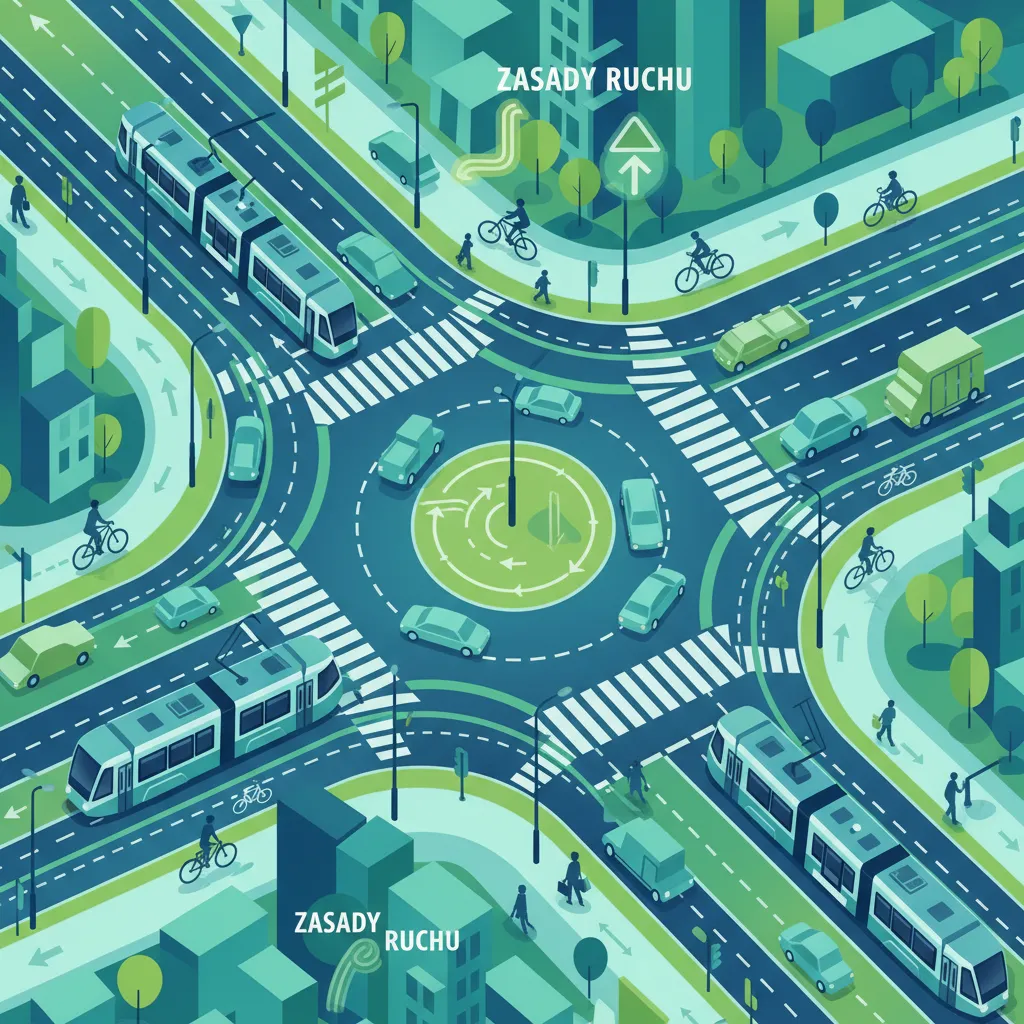
In this lesson, learners investigate complex junctions and intersections found across urban, rural, and highway environments, focusing on multi-lane configurations, traffic light coordination, and roundabout navigation. The content emphasizes priority rules, blind-spot assessment when merging, and safe lane selection for turning maneuvers. Learners will also consider interactions with cyclists and pedestrians, and the importance of adjusting approach speed for safe navigation.
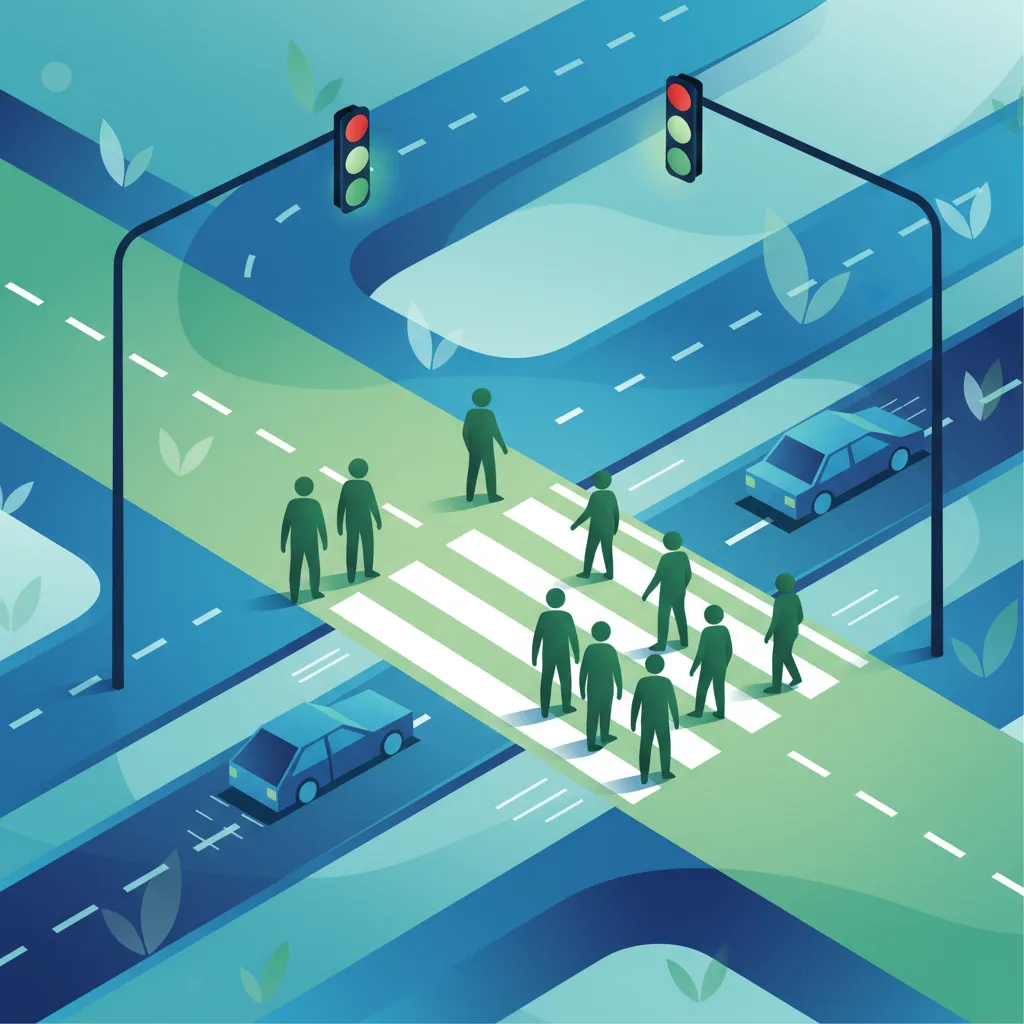
This lesson addresses advanced scenarios, including multi-lane intersections and interactions with vulnerable road users. It reinforces the legal obligation to give absolute priority to pedestrians at marked crossings (zebra crossings). The content also covers navigating around traffic islands and using dedicated turning lanes in complex urban environments.
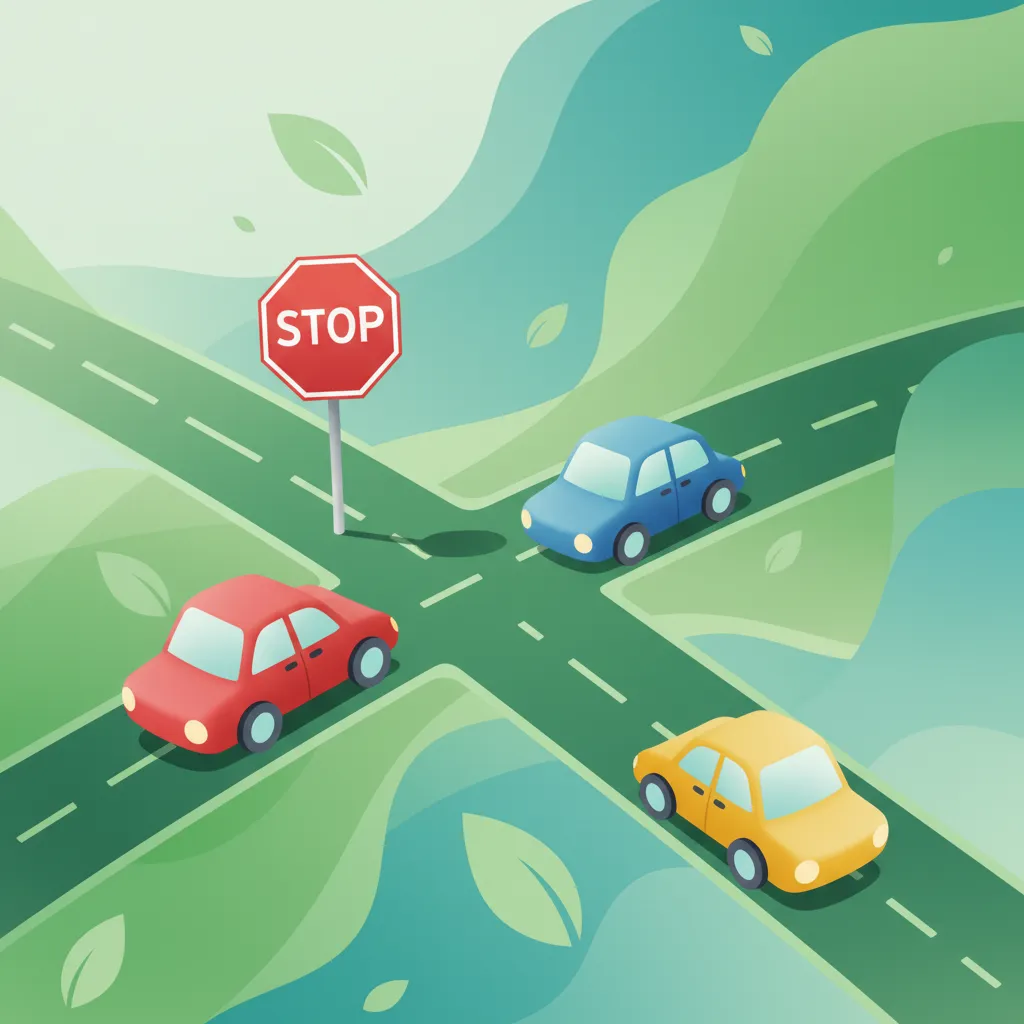
In this lesson, learners examine the specific actions required at stop signs and give-way intersections under Polish traffic regulations. The content explains the legal requirement for a full stop before the stop line, incorporating a visual scan of all directions before proceeding. It also covers the give-way protocol, where riders must yield to traffic already in the intersection or on the main road, emphasizing the need for correct positioning and observation.
This lesson provides a comprehensive breakdown of the right-of-way rules that govern intersections. It explains the clear directives given by traffic lights, stop signs, and yield signs, and clarifies the procedures at unmarked or uncontrolled intersections, where the 'priority to the right' rule often applies. Learners will understand the legal hierarchy of these rules to make correct, safe, and predictable decisions when navigating through any junction, reducing the risk of conflict with other traffic.
This lesson introduces the core concept of priority, or 'pierwszeństwo przejazdu,' in Polish traffic law. It explains the general rule of yielding to traffic from the right at intersections of equal status. This principle forms the foundation for navigating uncontrolled junctions and is a critical piece of knowledge for all drivers.
This lesson examines the responsibilities of motorcyclists when approaching pedestrian crossings and interacting with cyclists, emphasizing the marked right-of-way for pedestrians at zebra crossings. Learners will study how to determine safe passing distances, adjust speed, and use visual cues such as eye contact to ensure pedestrians have cleared the crossing. The content also covers interactions with cyclists sharing the road, highlighting the need for anticipation and adequate passing gaps.
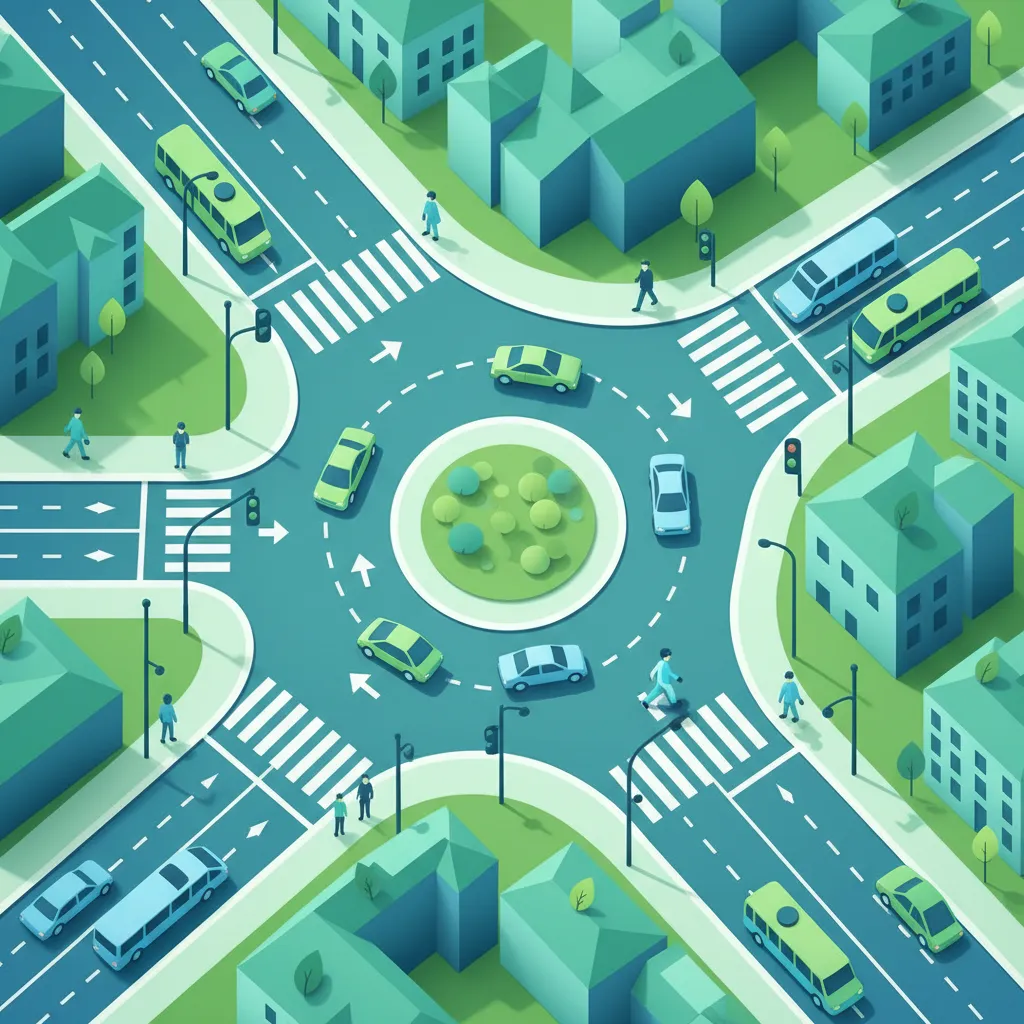
This lesson explores the priority hierarchy for buses at different intersections, roundabouts, and pedestrian crossings. Learners will understand how traffic signals and signs affect their approach and how to safely navigate roundabouts with correct lane discipline. Special attention is given to yielding to pedestrians, especially near bus stops.
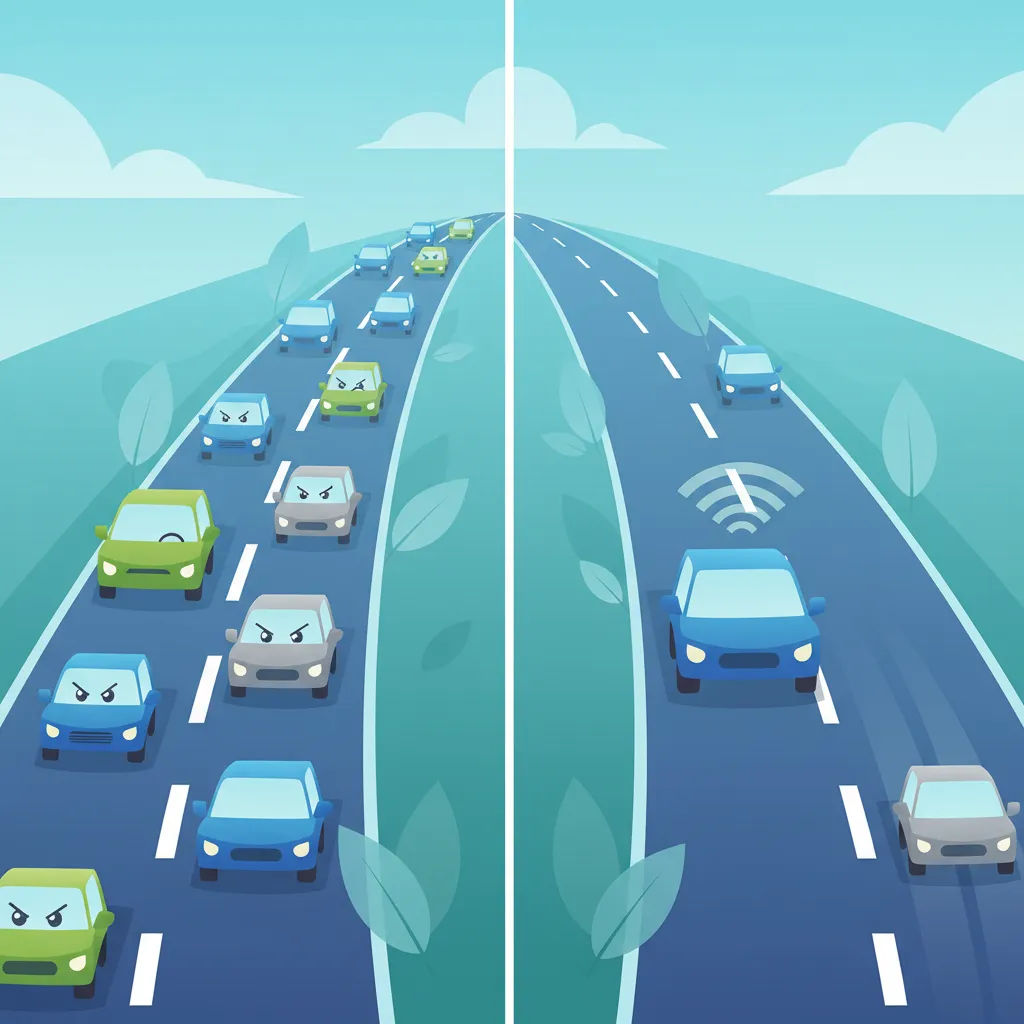
This lesson examines the specific rules and etiquette for riding on Polish motorways and high-speed highways, focusing on proper lane positioning, entry via acceleration lanes, and maintaining appropriate following distances. Learners will study overtaking protocols at high speeds, proper use of deceleration lanes for exits, and techniques for aerodynamic positioning. The content also covers safe lane changes and emergency lane usage to ensure efficient travel.
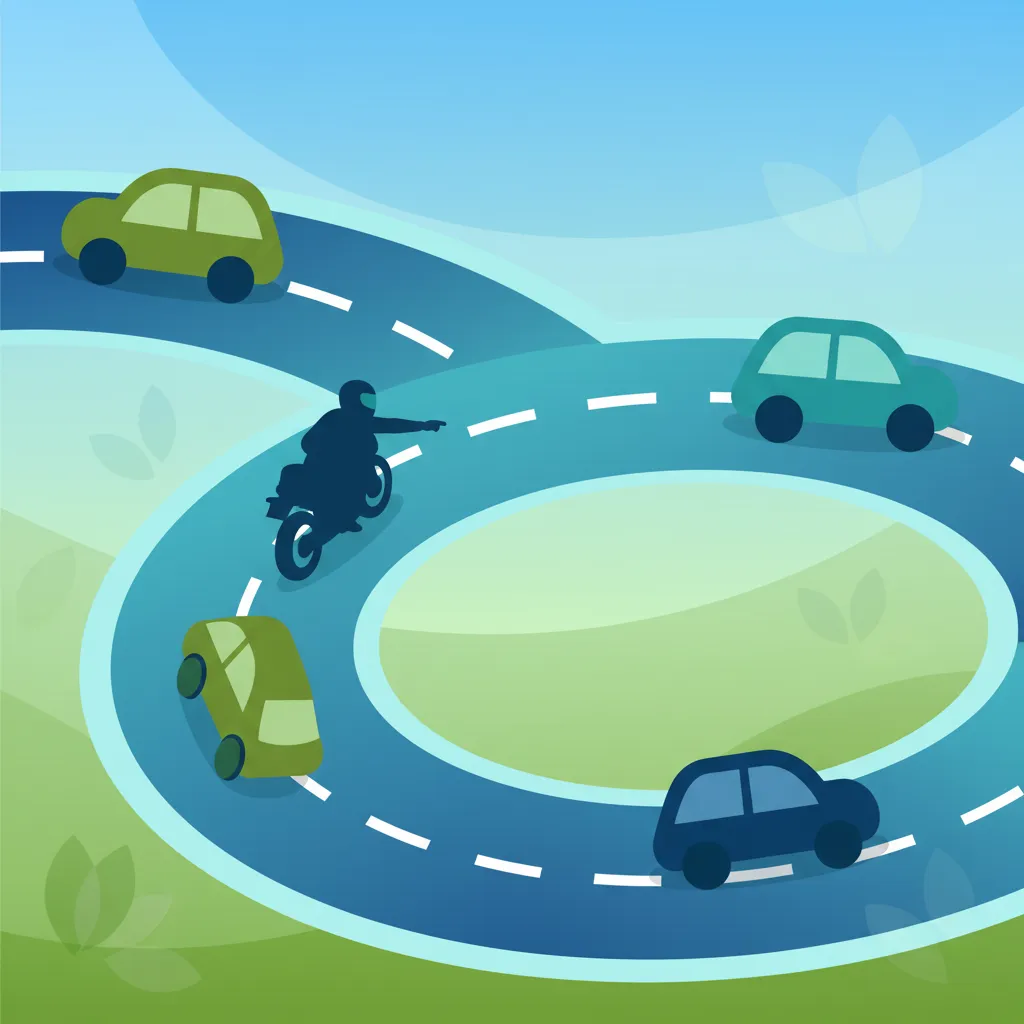
This lesson focuses on the proper techniques for negotiating roundabouts, which are common in Polish urban environments. Learners will learn the correct approach to entering a roundabout, yielding to circulating traffic, selecting the appropriate lane, and signaling intentions when exiting. The lesson also discusses speed adaptation for safe circulation and blind-spot checks before changing lanes within the roundabout, ensuring smooth and legal navigation.
This lesson examines the variety of pavement markings that define lane structures, traffic flow, and special zones on Polish roads. Learners will study solid and broken lines, lane division markings, and the distinct symbols for bicycle lanes, bus lanes, and tram tracks, all of which affect motorcyclist positioning. The lesson also addresses surface texture indicators that signal changing road conditions, enabling riders to maintain correct lane discipline.
Learn about frequent right-of-way violations for motorcyclists in Poland. This lesson explains typical errors at intersections, roundabouts, and with priority signs, offering insights on how to avoid them and ensure safe navigation through Polish road traffic.
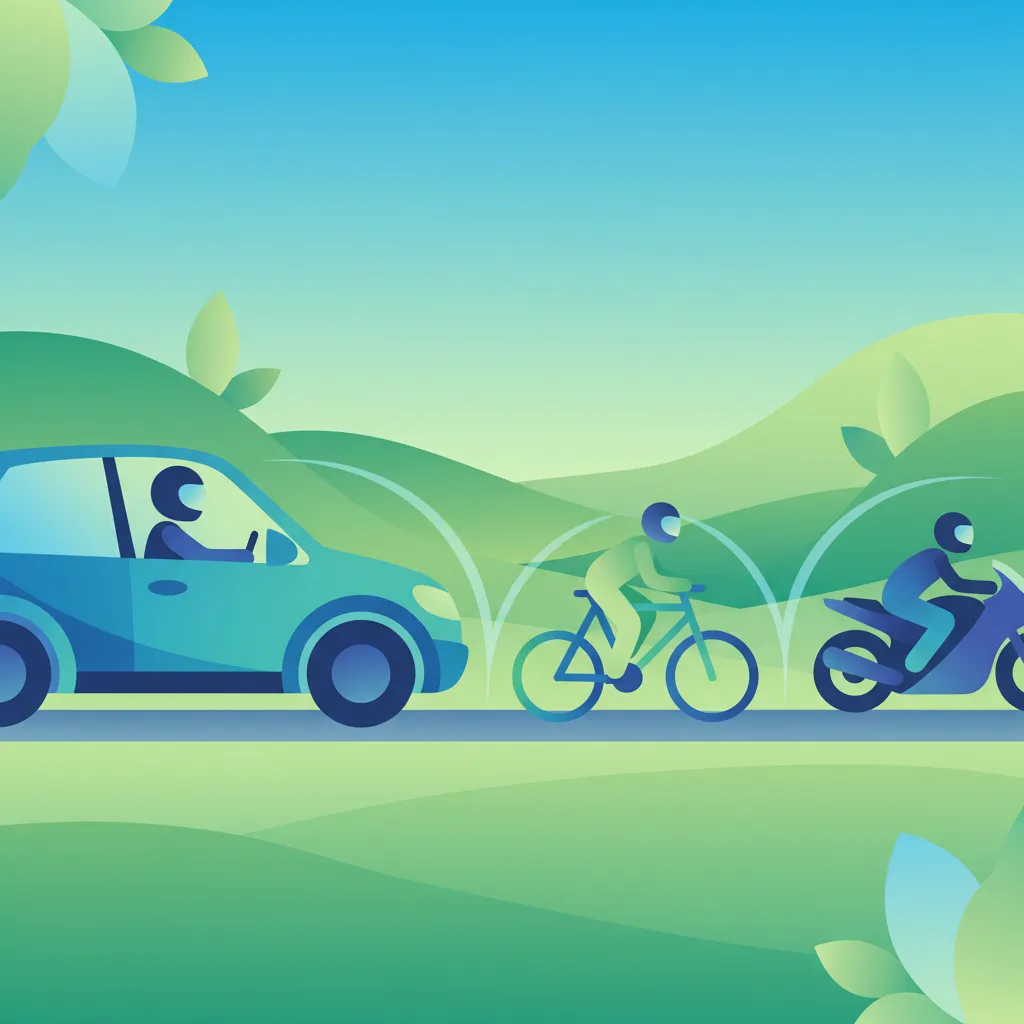
This lesson is dedicated to the safe overtaking of two-wheeled vehicles. It explains the legal requirement to leave a sufficient lateral distance (at least 1 meter) when passing cyclists. The content highlights the vulnerability of these road users and the need for patience, reduced speed, and careful judgment.
This lesson examines the responsibilities of motorcyclists when approaching pedestrian crossings and interacting with cyclists, emphasizing the marked right-of-way for pedestrians at zebra crossings. Learners will study how to determine safe passing distances, adjust speed, and use visual cues such as eye contact to ensure pedestrians have cleared the crossing. The content also covers interactions with cyclists sharing the road, highlighting the need for anticipation and adequate passing gaps.
This lesson outlines strategies for planning escape routes and adopting protective positioning to avoid potential collisions. Learners will study the concept of a defensive riding line that maximizes visibility and provides an optimal safety corridor. The content emphasizes maintaining adequate distance buffers, choosing lanes that reduce exposure to hazards, and preparing for emergency maneuvers such as swift swerves, allowing riders to react quickly in critical situations.
This lesson focuses on the proper techniques for negotiating roundabouts, which are common in Polish urban environments. Learners will learn the correct approach to entering a roundabout, yielding to circulating traffic, selecting the appropriate lane, and signaling intentions when exiting. The lesson also discusses speed adaptation for safe circulation and blind-spot checks before changing lanes within the roundabout, ensuring smooth and legal navigation.
This lesson examines the variety of pavement markings that define lane structures, traffic flow, and special zones on Polish roads. Learners will study solid and broken lines, lane division markings, and the distinct symbols for bicycle lanes, bus lanes, and tram tracks, all of which affect motorcyclist positioning. The lesson also addresses surface texture indicators that signal changing road conditions, enabling riders to maintain correct lane discipline.

In this lesson, learners focus on the identification and management of blind spots that affect motorcyclists, particularly when sharing the road with larger vehicles such as trucks and buses. The content covers the use of side mirrors, head-turn techniques, and optimal rider positioning to minimize blind-spot exposure. Learners will also study the characteristics of blind spots at intersections and during overtaking maneuvers to reduce collision risk.
In this lesson, learners investigate complex junctions and intersections found across urban, rural, and highway environments, focusing on multi-lane configurations, traffic light coordination, and roundabout navigation. The content emphasizes priority rules, blind-spot assessment when merging, and safe lane selection for turning maneuvers. Learners will also consider interactions with cyclists and pedestrians, and the importance of adjusting approach speed for safe navigation.
This lesson examines the specific rules and etiquette for riding on Polish motorways and high-speed highways, focusing on proper lane positioning, entry via acceleration lanes, and maintaining appropriate following distances. Learners will study overtaking protocols at high speeds, proper use of deceleration lanes for exits, and techniques for aerodynamic positioning. The content also covers safe lane changes and emergency lane usage to ensure efficient travel.
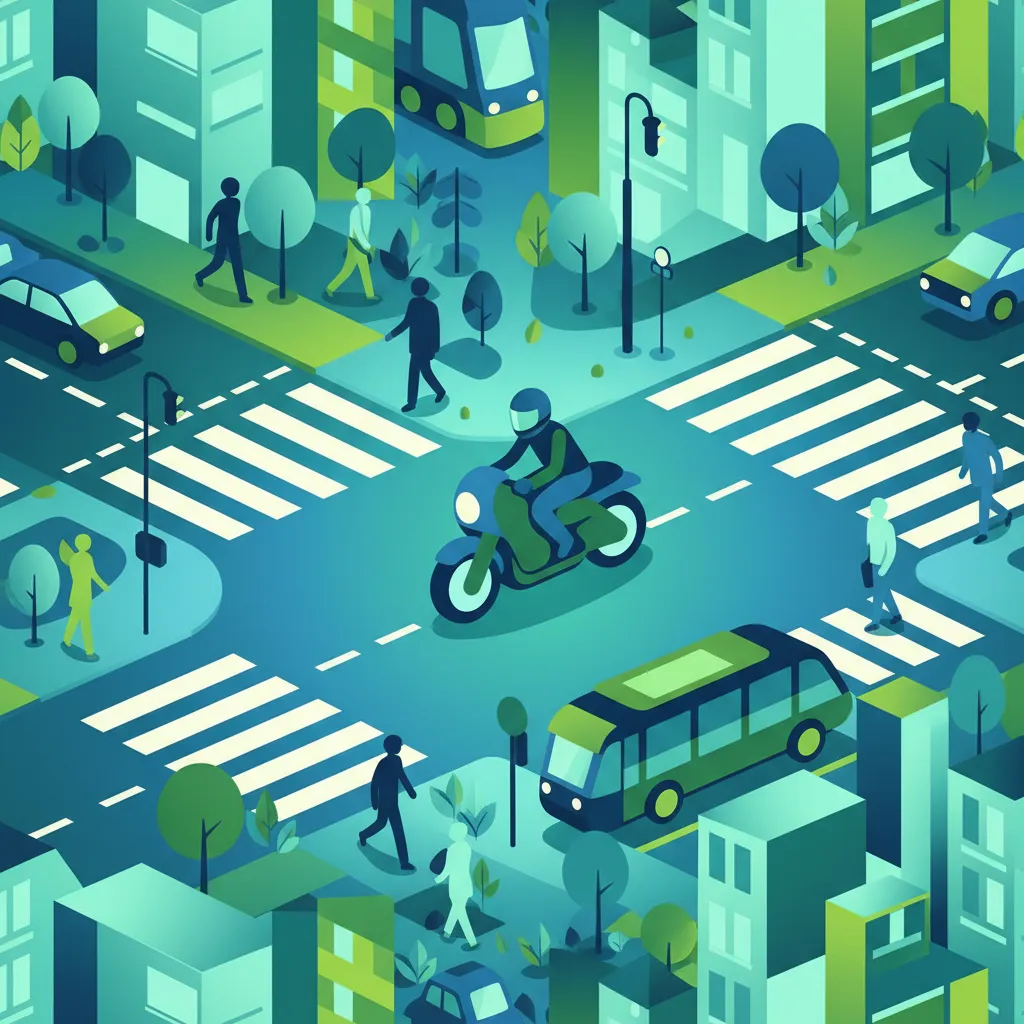
This lesson focuses on the unique demands of urban riding within Polish cities, addressing traffic lights, pedestrian zones, one-way streets, and the presence of tram tracks. Learners will study safe lane positioning on narrow roads, blind-spot management, and how to share the road with buses and cyclists. The content also covers strategies for navigating stop-and-go traffic, anticipating signal changes, and maintaining visibility in dense urban environments.
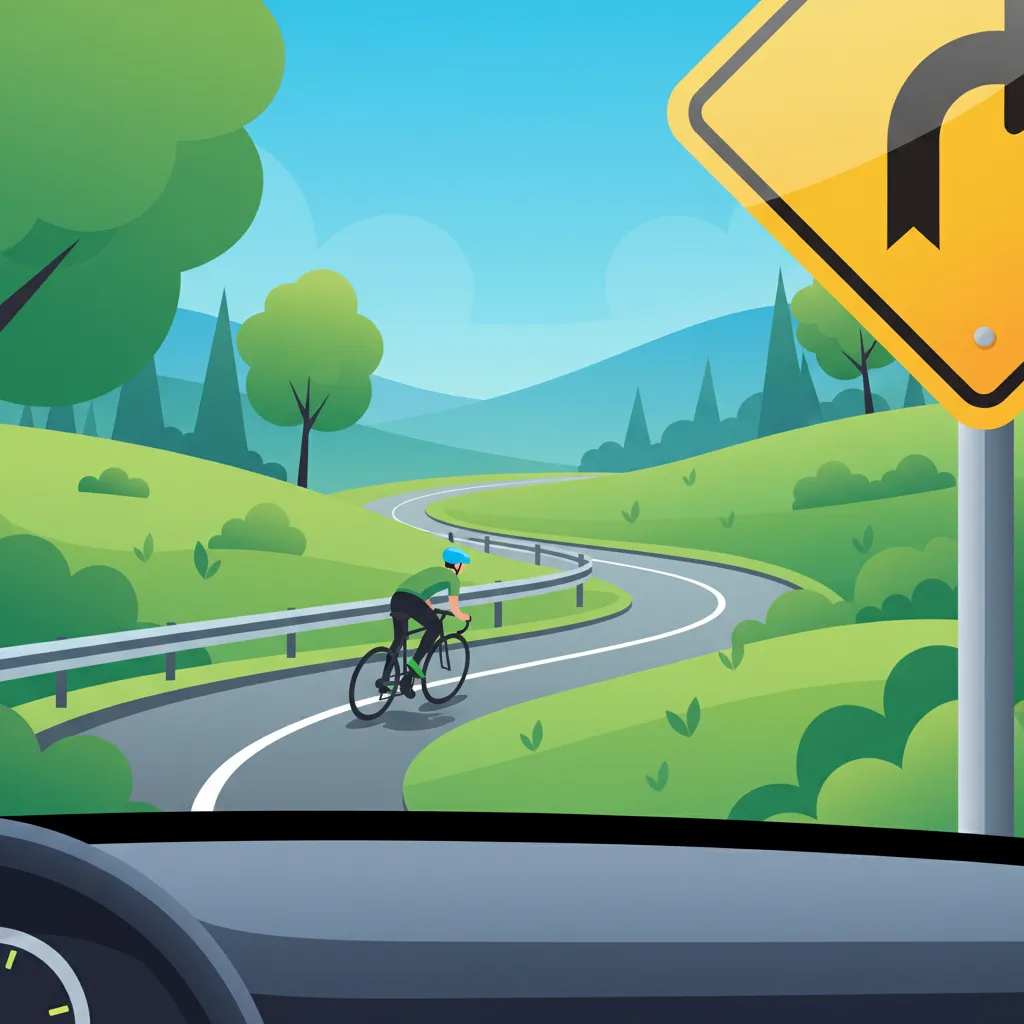
In this lesson, learners study warning signs that alert drivers to potential hazards, focusing on those that are particularly relevant to motorcyclists. The content includes signs indicating curves, slippery surfaces, animal crossings, tram tracks, and construction zones, each requiring specific riding adjustments. The lesson teaches riders how to interpret these signs to anticipate hazards, adjust speed appropriately, and maintain a safe distance from potential dangers.
Find clear answers to common questions learners have about Understanding Right-of-Way and Priority Road Rules. Learn how the lesson is structured, which driving theory objectives it supports, and how it fits into the overall learning path of units and curriculum progression in Poland. These explanations help you understand key concepts, lesson flow, and exam focused study goals.
In Poland, if no signs or traffic lights dictate priority, the general rule is 'right-hand priority' (zasada prawej ręki). This means vehicles approaching from the right typically have the right-of-way, unless otherwise specified by road markings or signs, applying equally to Category A motorcyclists.
Priority road signs override the general 'right-hand priority' rule. If you see a priority road sign (e.g., D-1 'Droga z pierwszeństwem' - main road, or A-7 'Ustąp pierwszeństwa' - give way), you must follow the instruction of the sign, even if a vehicle is approaching from your right. This applies fully to Category A motorcycle riders.
Generally, no. Motorcyclists follow the same right-of-way rules as other vehicles in Poland. However, due to their smaller size, Category A motorcyclists must be extra vigilant and ensure other drivers clearly see them and acknowledge their priority or intention to yield, which is crucial for safety.
Both signs require you to give way to traffic on the intersecting road. The key difference is that with a yield sign (A-7), you must slow down and be prepared to stop if necessary to give way. With a stop sign (B-20), you *must* come to a complete stop before the stop line, even if there is no traffic, before proceeding when safe.
Trams generally have priority in many situations in Poland, especially when starting from a stop at an intersection or moving straight through. However, there are exceptions, particularly at intersections regulated by traffic lights or specific signs where the tram may need to yield. As a Category A rider, always check the specific signage and signals.
Build custom practice sessions tailored precisely to your needs. Focus on areas requiring improvement, review specific Polish road signs, or master complex traffic rules to ensure full preparation for your official driving license exam.