
Navigating roundabouts, or 'rondo', is a crucial skill on Polish roads. This lesson focuses on the specific priority rules and techniques required to safely enter and traverse them. Understanding these principles is essential for both passing your Category B theory test and for confident, safe driving in everyday traffic situations.
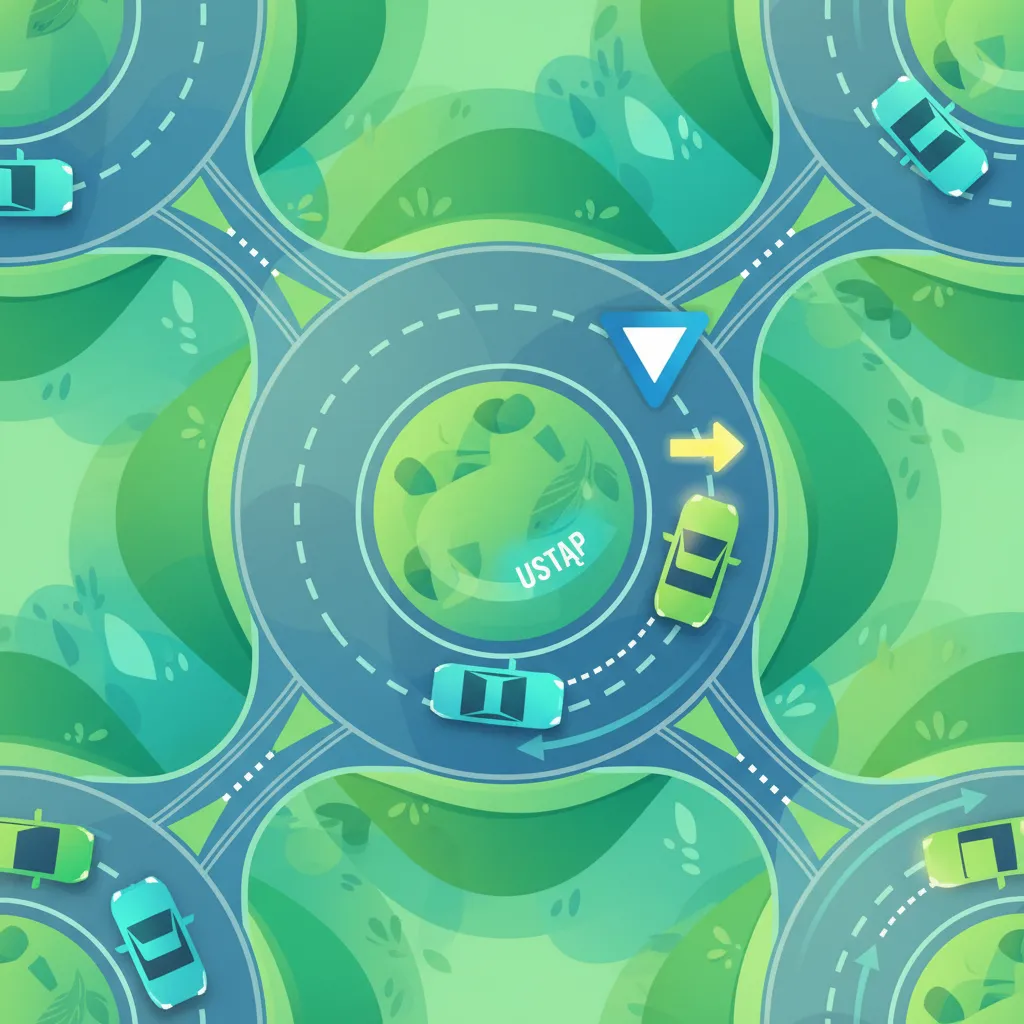
Lesson content overview
Roundabouts, known as rondo in Poland, are a fundamental part of the road network, designed to improve traffic flow and safety at intersections. For anyone preparing for the Polish Category B driving theory exam, a thorough understanding of how to approach, enter, circulate within, and exit these junctions is absolutely critical. This lesson details the specific rules and best practices under Polish law, ensuring you can navigate roundabouts confidently and correctly.
Roundabouts are circular intersections where traffic flows in one direction around a central island. Unlike traditional intersections with stop signs or traffic lights, roundabouts generally reduce conflict points and keep traffic moving, provided drivers understand and apply the correct priority rules.
Mastery of roundabout navigation is essential because rondo are extremely common on Polish roads, ranging from single-lane designs in urban areas to complex multi-lane junctions on bypasses. Correct behavior at these intersections prevents collisions, reduces congestion, and is a significant component of the Polish Category B theory exam. Misunderstanding even basic rules, such as yielding or lane selection, can lead to dangerous situations and immediate failure on a practical driving test.
The central principle guiding roundabout navigation in Poland is yielding to traffic already circulating within the roundabout. This rule establishes a predictable and continuous flow, minimizing stop-and-go situations and reducing the severity of potential accidents. Vehicles already inside the roundabout are considered to be on the priority road, and entering vehicles must give way.
This lesson connects directly to fundamental Priority Rules and Intersections (such as general right-of-way concepts), Traffic Signs and Road Markings, and Lane Management, all crucial for safe driving in Poland.
The most important rule when approaching any roundabout in Poland is to ustąpić pierwszeństwa, or yield right-of-way, to all vehicles already moving within the circular intersection. This rule is universally applied at rondo entries unless specific traffic lights override it.
When you see a roundabout, you must anticipate the yield requirement. This means you are legally obligated to slow down, and if necessary, stop your vehicle before the entry line. You may only proceed into the roundabout when there is a safe and sufficient gap in the circulating traffic, ensuring that your entry does not force any vehicle already inside to brake or change speed or direction.
The A-7 "Ustąp pierwszeństwa" (Yield right-of-way) sign is almost always present at the entry point of roundabouts in Poland. It reinforces the primary rule that circulating traffic has priority. You must respect this sign regardless of whether the roundabout itself is signposted as a specific type of junction.
The entry line, often a solid white line, marks the point where you must stop if yielding is required. Approaching a roundabout, you should begin to reduce your speed well in advance. This allows you ample time to observe the circulating traffic from both your left and ahead, identify a safe gap, and if necessary, come to a complete stop smoothly.
A safe gap is crucial; it refers to the time and space interval that allows you to enter the roundabout without posing a hazard to circulating vehicles. Generally, a gap of at least 2-3 seconds to the nearest approaching vehicle within the roundabout is considered safe for a typical passenger car.
A frequent error drivers make is accelerating toward the roundabout with the expectation that they can merge without stopping. This often leads to cutting off circulating vehicles, which can cause sudden braking, near-misses, or actual collisions. Another mistake is yielding but then entering without confirming a truly safe gap, causing another vehicle to take evasive action. Always remember: the onus is on the entering driver to ensure safety.
Failing to yield to traffic already in the roundabout is a serious violation and a common cause of accidents. It will result in points on your license and a fine.
Once you have understood the yielding principle, the next critical aspect is lane selection before entering the roundabout. Your choice of lane on approach dictates your path within the roundabout and determines which exits are permissible. This is particularly important for multi-lane roundabouts.
In a single-lane roundabout, the rules are simpler. You typically use the available lane for all exits, maintaining your position. Indicators are still crucial for signaling your exit. While the concept of lane choice is less complex here, anticipating your exit and slowing down are still paramount.
Multi-lane roundabouts (wielopasmowe rondo) require careful lane planning. Road markings and signage on the approach will indicate which lane to use for your intended exit.
first exit or turning right.straight ahead (the second exit) or sometimes the third exit, depending on the roundabout's specific layout and lane arrows.later exits (e.g., the third or fourth exit), or for turning left or making a U-turn (circling back).It is crucial to choose your lane before entering the roundabout. Once inside, Polish regulations generally prohibit changing lanes unless explicitly indicated by broken lane markings or specific signage. This ensures a predictable flow and minimizes side-impact collisions.
In most Polish roundabouts, lane changes within the circulating lanes are prohibited. This rule is enforced by solid white lines between lanes inside the roundabout. If you find yourself in the wrong lane, you must continue in that lane and exit where it naturally leads, even if it means taking a later exit and finding an alternative route. Attempting to force a lane change by crossing a solid line is a traffic violation and highly dangerous.
If you miss your exit, the safest and correct procedure is to continue circulating around the roundabout until you reach your intended exit again. Do not make sudden lane changes or stops.
Signaling your intentions is a cornerstone of safe driving, and it is especially critical at roundabouts to communicate with other road users, including drivers, cyclists, and pedestrians.
According to Polish law (Art. 65 of Prawo o ruchu drogowym), drivers must activate the appropriate turn signal before beginning to change direction or leave the roundabout. This means you should turn on your indicator as you approach the exit you intend to take, ideally when you are passing the exit immediately before your chosen one, or at least one lane prior to your exit point.
right as you pass the exit immediately preceding your intended exit. This informs following drivers and those waiting to enter that you are about to leave the roundabout.Timely signaling offers several benefits:
Failure to signal, or signaling too late (e.g., after you have already started to leave the roundabout), can cause confusion, sudden braking, and increase the risk of collisions.
Appropriate speed management is fundamental to navigating roundabouts safely and effectively. Drivers must adjust their speed both on approach and while circulating.
Most roundabouts have a design speed that is significantly lower than the speed limit on the approaching road, typically ranging between 30-50 km/h. Look for posted speed limit signs on approach or within the roundabout. You must decelerate before entering the roundabout, reaching a speed that allows you to safely navigate its curvature and react to changing traffic conditions.
Maintaining a suitable speed ensures you can:
Excessive speed in a roundabout increases the risk of skidding, losing control, or failing to take your intended exit.
Just like on any road, it is crucial to maintain a safe following distance from the vehicle ahead of you within the roundabout. This allows for adequate reaction time if the vehicle ahead brakes suddenly or encounters a hazard. Remember that braking distances increase significantly in adverse weather conditions.
Roundabouts, especially in urban settings, often have provisions for vulnerable road users such as pedestrians and cyclists. Drivers must be particularly vigilant for these users at roundabout exits.
In Poland, pedestrian crossings (przejście dla pieszych) are frequently located at the exits of roundabouts. When approaching an exit with a marked pedestrian crossing, you must yield to pedestrians who are already on the crossing or are clearly intending to cross. This means you must stop your vehicle before the crossing line to allow them to pass safely.
Some roundabouts include dedicated cyclist lanes or shared paths that may traverse the roundabout's entries and exits. Drivers must always be aware of cyclists and yield to them when their path crosses yours, particularly when exiting. Cyclists often travel at different speeds and may be less visible, requiring extra caution.
Understanding common mistakes helps in avoiding them and promoting safer driving habits.
Driving conditions and the type of roundabout can influence the rules and require adjustments to your driving behavior.
In conditions like rain, fog, or snow, visibility is reduced, and road grip decreases.
Some larger or more complex roundabouts in Poland are equipped with traffic lights. In such cases, the traffic lights take precedence over the general yield rule. You must obey the signals (red means stop, green means go), even if there are no vehicles circulating in the roundabout when the light is red for you. Once the light turns green and you enter, the standard roundabout rules apply until the next set of lights, if any.
Heavy vehicles, vehicles with trailers, or articulated vehicles have a longer turning radius and increased braking distances.
straddle two lanes on approach to make the turn safely, especially in multi-lane roundabouts. Drivers of smaller vehicles should be aware of this and give them space.To help with your Polish Category B driving theory preparation, here are some key terms related to roundabouts:
Successful navigation of Polish roundabouts hinges on a clear understanding of priority, disciplined lane management, and effective communication through signaling. Remember these core principles for your Polish Category B License:
By applying these rules, you will not only pass your theory exam but also become a safer, more confident driver on Polish roads.
Polish roundabouts (rondo) require drivers to yield to all circulating traffic before entering, with the A-7 sign reinforcing this priority rule. Lane selection must be made before entry: right lane for the first exit, middle for subsequent straight exits, and left for later exits—lane changes are prohibited inside the roundabout except where broken lines permit. Proper signaling involves activating the right indicator as you pass the exit immediately before your intended exit, and you must always yield to pedestrians at marked crossings on exits. In poor visibility or adverse weather, reduce speed and increase following distance to maintain safety.
A short set of high-value points that capture the most important learning from this lesson.
Always yield to traffic already circulating within the rondo; vehicles inside have priority regardless of approach direction.
Choose your entry lane before entering based on your intended exit—right lane for first exit, middle for straight/ahead exits, left for later exits.
Do not change lanes inside a Polish roundabout; solid white lines prohibit this, and you must exit where your lane leads.
Signal your exit by activating the right indicator as you pass the exit immediately before your intended one.
Obey traffic lights at signal-controlled roundabouts; they override the general yielding rule.
Explore all units and lessons included in this driving theory course.
The A-7 'Ustąp pierwszeństwa' sign at entries means circulating traffic has absolute priority.
A safe gap for entering is typically at least 2-3 seconds to the nearest circulating vehicle.
If you miss your exit, continue around the roundabout—never make sudden lane changes or stops.
At exits with marked pedestrian crossings (przejście dla pieszych), you must stop for pedestrians.
In adverse weather (rain, fog, snow), reduce speed further and increase following distance significantly.
Accelerating toward the roundabout expecting to merge without stopping, cutting off circulating vehicles.
Entering the wrong lane and then attempting to change lanes inside the roundabout to reach the correct exit.
Failing to signal or signaling too late—after already beginning to leave the roundabout.
Ignoring the pedestrian crossing at the exit and not yielding to pedestrians who are already crossing.
Driving at the approach speed instead of decelerating to the 30-50 km/h design speed of the roundabout.
Lesson content overview
A short set of high-value points that capture the most important learning from this lesson.
Always yield to traffic already circulating within the rondo; vehicles inside have priority regardless of approach direction.
Choose your entry lane before entering based on your intended exit—right lane for first exit, middle for straight/ahead exits, left for later exits.
Do not change lanes inside a Polish roundabout; solid white lines prohibit this, and you must exit where your lane leads.
Signal your exit by activating the right indicator as you pass the exit immediately before your intended one.
Obey traffic lights at signal-controlled roundabouts; they override the general yielding rule.
Explore all units and lessons included in this driving theory course.
The A-7 'Ustąp pierwszeństwa' sign at entries means circulating traffic has absolute priority.
A safe gap for entering is typically at least 2-3 seconds to the nearest circulating vehicle.
If you miss your exit, continue around the roundabout—never make sudden lane changes or stops.
At exits with marked pedestrian crossings (przejście dla pieszych), you must stop for pedestrians.
In adverse weather (rain, fog, snow), reduce speed further and increase following distance significantly.
Accelerating toward the roundabout expecting to merge without stopping, cutting off circulating vehicles.
Entering the wrong lane and then attempting to change lanes inside the roundabout to reach the correct exit.
Failing to signal or signaling too late—after already beginning to leave the roundabout.
Ignoring the pedestrian crossing at the exit and not yielding to pedestrians who are already crossing.
Driving at the approach speed instead of decelerating to the 30-50 km/h design speed of the roundabout.
Explore search topics learners often look for when studying Roundabouts (rondo) and Entry Rules. These topics reflect common questions about road rules, driving situations, safety guidance, and lesson level theory preparation for learners in Poland.
Browse additional driving theory lessons that cover connected traffic rules, road signs, and common driving situations related to this topic. Improve your understanding of how different rules interact across everyday traffic scenarios.
Learn complex lane selection and strategic maneuvering within multi-lane roundabouts in Poland. This lesson builds on basic entry rules, focusing on choosing the correct path for various exits and avoiding common lane discipline errors.
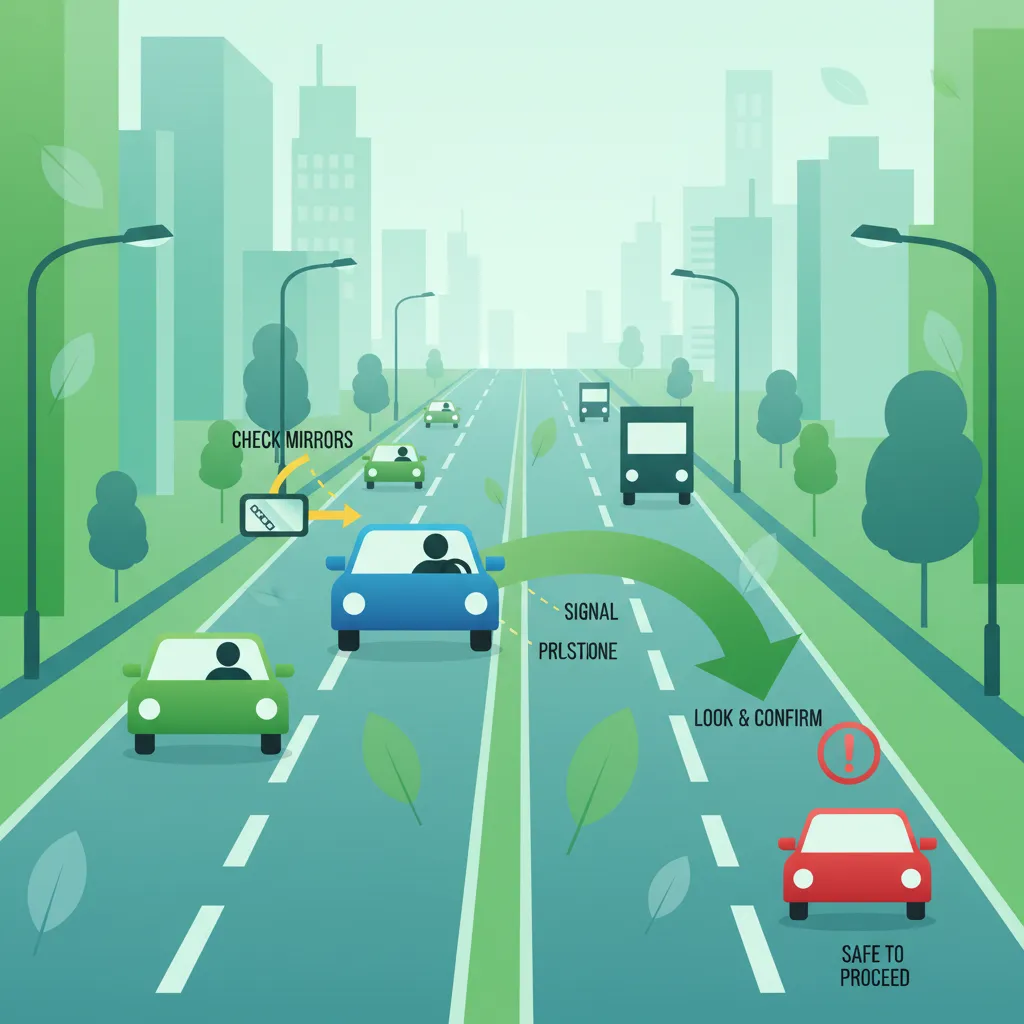
This lesson adapts lane-changing principles for the challenging environment of dense city traffic. It reinforces the critical 'mirror, signal, maneuver' sequence, with a strong focus on checking blind spots immediately before moving. The content advises on judging gaps in traffic and executing the lane change smoothly and decisively.

This lesson focuses on the rules of lane usage for maintaining safe and efficient traffic flow. It covers the meaning of different lane markings, such as solid versus broken lines, and the general principle of keeping to the rightmost lane unless overtaking. Proper lane discipline is crucial for predictability and preventing conflicts on multi-lane roads.
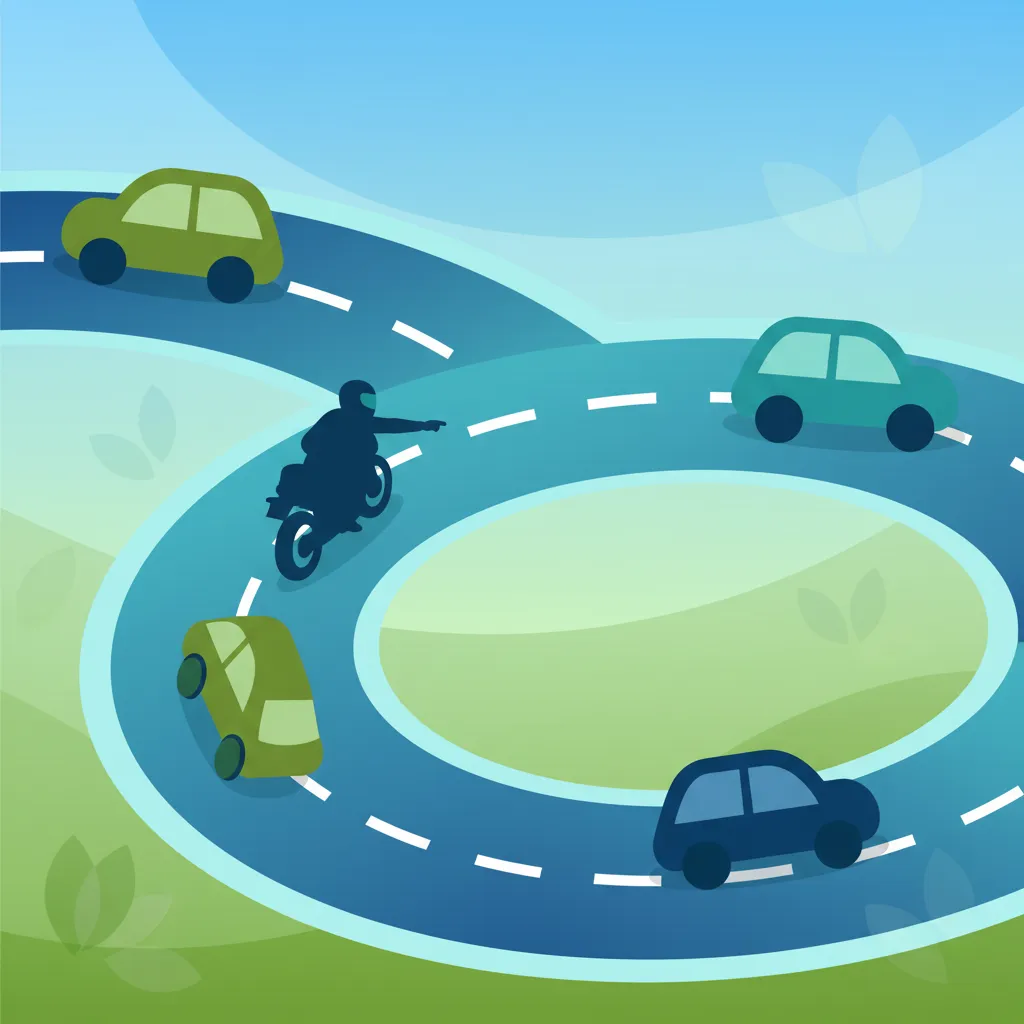
This lesson focuses on the proper techniques for negotiating roundabouts, which are common in Polish urban environments. Learners will learn the correct approach to entering a roundabout, yielding to circulating traffic, selecting the appropriate lane, and signaling intentions when exiting. The lesson also discusses speed adaptation for safe circulation and blind-spot checks before changing lanes within the roundabout, ensuring smooth and legal navigation.
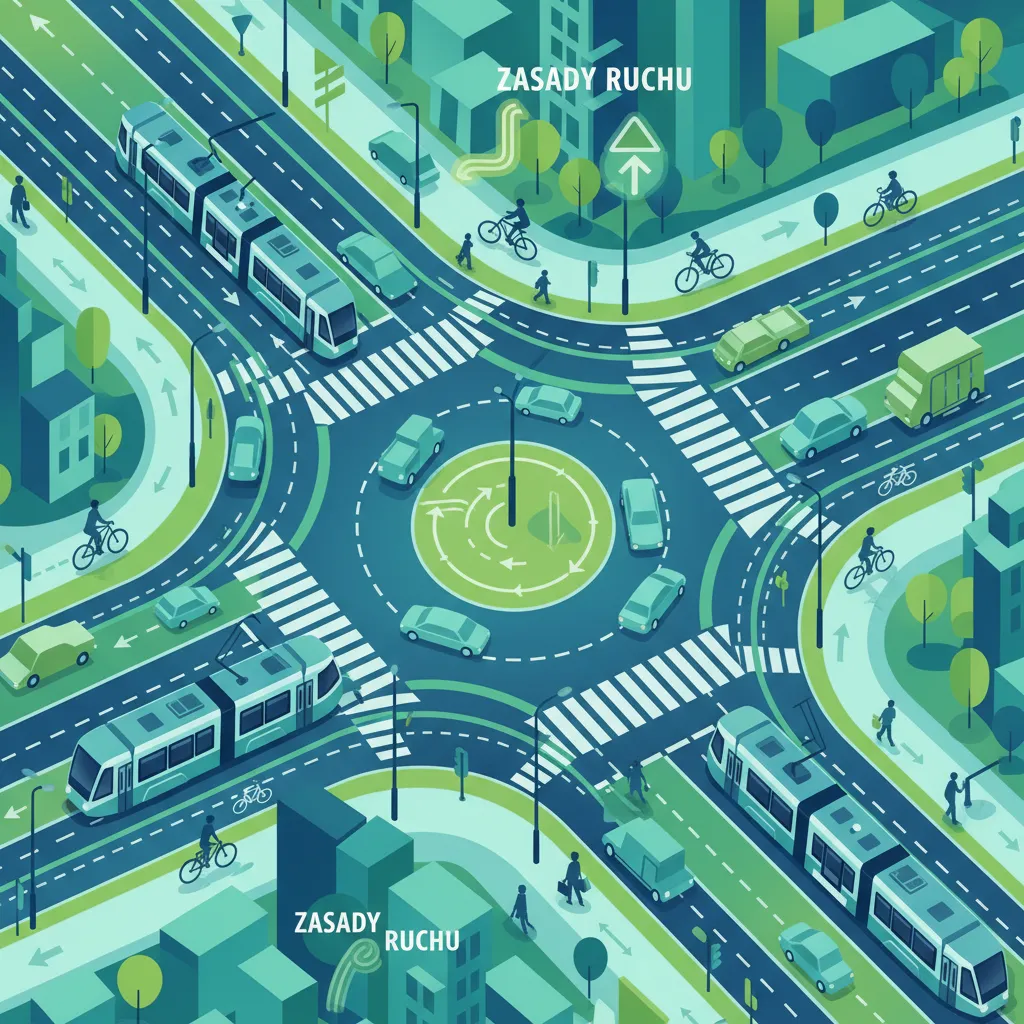
In this lesson, learners investigate complex junctions and intersections found across urban, rural, and highway environments, focusing on multi-lane configurations, traffic light coordination, and roundabout navigation. The content emphasizes priority rules, blind-spot assessment when merging, and safe lane selection for turning maneuvers. Learners will also consider interactions with cyclists and pedestrians, and the importance of adjusting approach speed for safe navigation.
This lesson provides a focused guide on the techniques for entering and exiting high-speed roads. It explains the purpose of acceleration lanes for getting up to speed and deceleration lanes for slowing down safely away from the main traffic flow. Correct observation, signaling, and speed adjustment are emphasized for seamless transitions.
This lesson provides strategies for safely navigating the numerous intersections typical of urban environments. It reinforces the application of priority rules in situations with limited visibility and high traffic volume. Techniques for making turns in narrow streets and being aware of pedestrians and cyclists at junctions are central to the instruction.
This lesson provides a guide to safely entering high-speed roads. It explains the function of the acceleration lane, where drivers must increase their speed to match the flow of traffic on the main carriageway. The importance of signaling, checking mirrors, and looking over the shoulder for blind spots before merging is heavily emphasized.
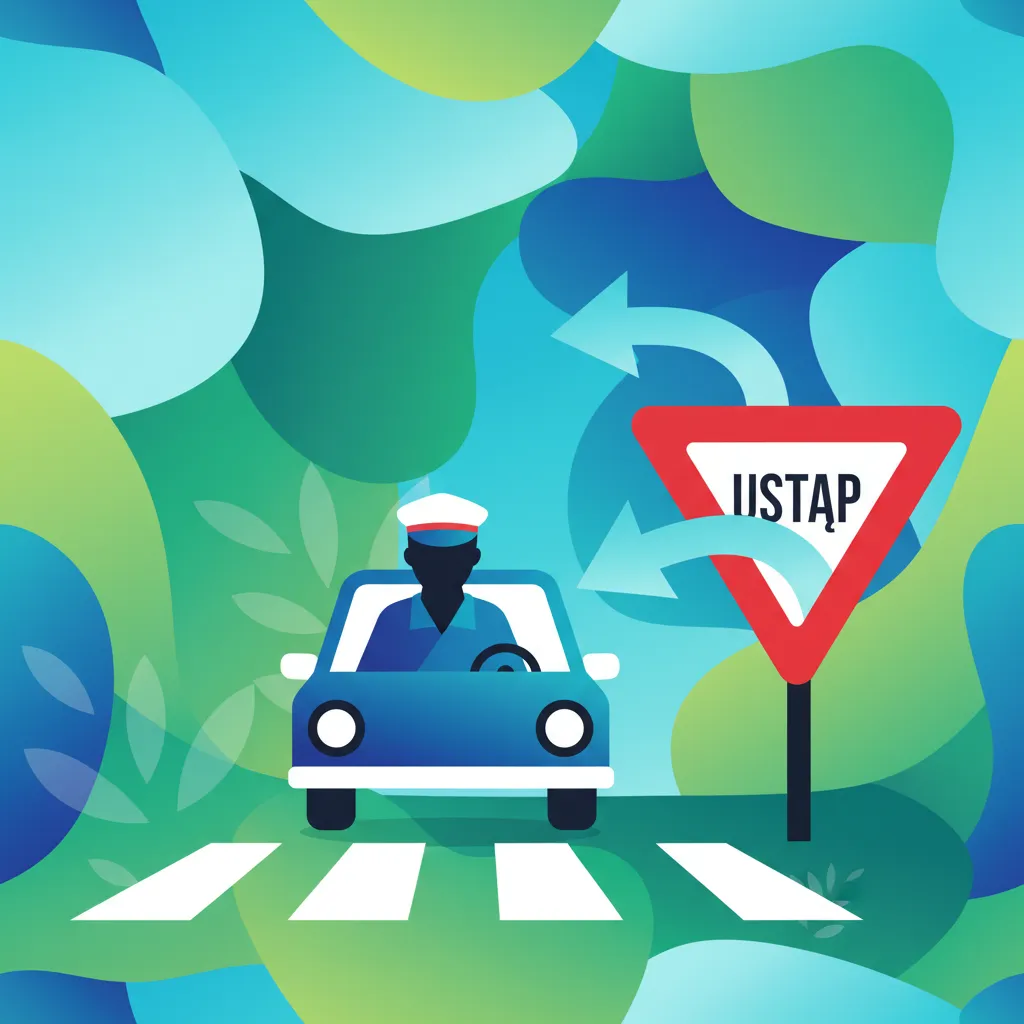
This lesson focuses on navigating intersections that are not controlled by traffic signals. It covers the interpretation of the 'Yield' sign (ustąp pierwszeństwa) and the application of the 'priority to the right' rule at junctions of equal roads. Safe decision-making and proper observation techniques are emphasized for these common scenarios.
This lesson addresses advanced scenarios, including multi-lane intersections and interactions with vulnerable road users. It reinforces the legal obligation to give absolute priority to pedestrians at marked crossings (zebra crossings). The content also covers navigating around traffic islands and using dedicated turning lanes in complex urban environments.
This lesson focuses on the specific challenges HGVs face when navigating roundabouts. It details the correct procedure for approach, including selecting the appropriate lane based on the intended exit and yielding to traffic already circulating. The content emphasizes the need to account for the vehicle's large turning radius and off-tracking to avoid encroaching on adjacent lanes or mounting curbs, ensuring a smooth and safe passage through the roundabout.
Understand the most frequent errors drivers make at Polish roundabouts and the associated dangers. This lesson focuses on typical violations, such as improper yielding or signaling, and how to avoid critical hazards for safer driving.
This lesson focuses on the proper techniques for negotiating roundabouts, which are common in Polish urban environments. Learners will learn the correct approach to entering a roundabout, yielding to circulating traffic, selecting the appropriate lane, and signaling intentions when exiting. The lesson also discusses speed adaptation for safe circulation and blind-spot checks before changing lanes within the roundabout, ensuring smooth and legal navigation.
This lesson focuses on navigating intersections that are not controlled by traffic signals. It covers the interpretation of the 'Yield' sign (ustąp pierwszeństwa) and the application of the 'priority to the right' rule at junctions of equal roads. Safe decision-making and proper observation techniques are emphasized for these common scenarios.
This lesson provides strategies for safely navigating the numerous intersections typical of urban environments. It reinforces the application of priority rules in situations with limited visibility and high traffic volume. Techniques for making turns in narrow streets and being aware of pedestrians and cyclists at junctions are central to the instruction.
This lesson prepares drivers for the event of a vehicle breakdown on a motorway or expressway. It details the correct procedure: pulling over to the emergency lane, activating hazard lights, and placing the warning triangle at the legally required distance. The importance of wearing a reflective vest when outside the vehicle is also a key safety point.
In this lesson, learners investigate complex junctions and intersections found across urban, rural, and highway environments, focusing on multi-lane configurations, traffic light coordination, and roundabout navigation. The content emphasizes priority rules, blind-spot assessment when merging, and safe lane selection for turning maneuvers. Learners will also consider interactions with cyclists and pedestrians, and the importance of adjusting approach speed for safe navigation.
This lesson focuses on triangular warning signs, which are designed to alert drivers to upcoming hazards on the road. It covers the interpretation of various pictograms that indicate dangers like sharp turns, animal crossings, or road construction. Understanding these signs allows a driver to anticipate conditions and adjust their driving proactively.
This lesson focuses on the specific challenges HGVs face when navigating roundabouts. It details the correct procedure for approach, including selecting the appropriate lane based on the intended exit and yielding to traffic already circulating. The content emphasizes the need to account for the vehicle's large turning radius and off-tracking to avoid encroaching on adjacent lanes or mounting curbs, ensuring a smooth and safe passage through the roundabout.

This lesson defines what constitutes a 'built-up area' in Poland, marked by specific informational signs. It explains the default speed limit of 50 km/h that applies within these zones unless otherwise indicated. The content highlights the need for increased vigilance due to higher traffic density and the frequent presence of pedestrians.
In this lesson, learners explore riding on rural and countryside roads, where road markings may be sparse and surface conditions varied. The content covers safe overtaking in single-lane sections, interaction with agricultural vehicles and animals, and the handling of gravel or uneven surfaces. Learners will also study the importance of anticipating curves and adjusting speed to light conditions, equipping them with the skills needed for safe countryside travel.

This lesson explores the unique characteristics of driving on rural roads. It highlights potential hazards such as sharp, unbanked curves, poor road surfaces, and limited visibility due to hills and vegetation. The content teaches drivers to anticipate these conditions and adjust their speed and position to navigate safely.
Find clear answers to common questions learners have about Roundabouts (rondo) and Entry Rules. Learn how the lesson is structured, which driving theory objectives it supports, and how it fits into the overall learning path of units and curriculum progression in Poland. These explanations help you understand key concepts, lesson flow, and exam focused study goals.
The primary rule is to yield to all traffic already circulating within the roundabout. You must wait until there is a safe gap in the traffic before entering. This applies regardless of the direction you intend to take.
For exits to the right (usually the first exit), you should generally approach in the right-hand lane. For exits to the left or straight ahead, you should typically use the left-hand lane. Always observe road signs and lane markings, as they may specify lane usage.
You must signal left before exiting the roundabout. If you are taking an exit to the left or going straight ahead (and thus moving across lanes within the roundabout), you should signal right when you pass the exit before your intended one, and then switch to a left signal as you approach your actual exit.
Yes, multi-lane roundabouts require extra attention. Lane choice is critical, and you must signal correctly to indicate your intentions to other drivers. Priority rules remain the same: always yield to traffic already on the roundabout.
Roundabouts with traffic lights function like normal traffic lights. You must obey the signals: stop at a red light, proceed with caution on a green light, and always yield to traffic already in the roundabout if the lights permit entry. Pedestrian crossings near roundabouts also have specific rules to follow.
Build custom practice sessions tailored precisely to your needs. Focus on areas requiring improvement, review specific Polish road signs, or master complex traffic rules to ensure full preparation for your official driving license exam.