
This lesson is crucial for mastering advanced priority rules in dynamic urban environments. You'll learn how to safely navigate complex multi-lane intersections, utilize dedicated turning lanes, and understand your absolute legal obligation to pedestrians at crossings in Poland. Building on general right-of-way principles, this module prepares you for challenging exam questions and real-world driving scenarios, ensuring you can anticipate and react correctly at busy junctions.

Lesson content overview
Mastering complex junctions and understanding the absolute priority of pedestrians are critical skills for any driver, particularly for those preparing for their Polish Category B driving theory exam. This lesson delves into advanced traffic scenarios, including multi-lane intersections, traffic islands, and dedicated turning lanes, while reinforcing the legal obligations towards pedestrians at marked crossings. Safe navigation through these environments requires keen observation, adherence to specific rules, and a deep understanding of right-of-way principles to minimize risks and ensure smooth traffic flow.
This knowledge builds upon foundational concepts of traffic signs, road markings, and basic right-of-way rules, preparing you for the multifaceted challenges of urban driving.
One of the most crucial aspects of Polish road traffic law, particularly at junctions, is the absolute priority given to pedestrians at marked crossings. These are commonly known as "zebra crossings" due to their distinctive white longitudinal stripes on the road surface.
At a zebra crossing, pedestrians have unconditional right-of-way, meaning drivers must stop before the stop line and allow pedestrians to complete their crossing before proceeding. This rule applies regardless of whether there are traffic lights present or what colour they might be. Even if you have a green light, if a pedestrian steps onto a zebra crossing, you are legally obligated to stop and yield to them.
This absolute priority is designed to protect vulnerable road users and eliminate any ambiguity about who has the right to proceed. Failing to yield can lead to severe consequences, including fines, penalty points, and, most importantly, a high risk of collision with pedestrians. Drivers must always be prepared to stop when approaching a zebra crossing, especially in areas with high pedestrian traffic or poor visibility.
Always assume pedestrians may step onto a zebra crossing. Slow down, be prepared to stop, and make eye contact if possible to confirm their intentions. Their right-of-way is absolute.
Multi-lane intersections are complex areas where several traffic lanes from multiple roadways converge, often featuring dedicated turn lanes, traffic islands, and sometimes multiple sets of traffic lights. These intersections are common in urban environments and require a high degree of attentiveness and precise lane discipline from drivers.
The primary challenge at a multi-lane intersection is selecting the correct lane well in advance of the junction. Road markings, such as arrows painted on the road surface, and overhead or roadside signs will indicate which movements are permitted from each lane (e.g., straight, left turn, right turn).
It is essential to identify your intended direction of travel (straight, left, or right) and merge into the appropriate lane safely and early. Changing lanes impulsively or at the last moment when already in the intersection can cause confusion, disrupt traffic flow, and lead to dangerous situations, including side-swipe collisions.
Drivers must strictly adhere to the lane markings and road signs. For instance, using a lane designated for through traffic to execute a left turn, or attempting to go straight from a dedicated right-turn lane, constitutes a violation of lane discipline. This behaviour not only breaks traffic law but also significantly increases the risk of accidents by creating unexpected movements for other road users.
When approaching a complex multi-lane intersection, look far ahead for road signs and markings. Plan your lane changes early and use your turn signals to communicate your intentions clearly to other drivers.
Dedicated turning lanes are specifically designed to streamline traffic flow at busy intersections by providing a separate space for vehicles intending to turn left or right. These lanes are clearly marked with arrows on the road surface and often accompanied by specific traffic signs.
When using a dedicated turning lane, drivers must merge into it well before the junction, ensuring they do not cut across other lanes. Once in the dedicated turn lane, you must commit to the turn. These lanes often have their own dedicated traffic signals, typically in the form of a green arrow. A green arrow indicates a protected turn, meaning you can proceed in the direction of the arrow while other conflicting traffic flows are held by a red light.
It is crucial to wait for the green arrow before making your turn, even if the main traffic light for your direction is green. The green arrow explicitly grants you priority for the turn. Failing to obey these signals, or using a dedicated turn lane to bypass slower straight-through traffic, is illegal and highly dangerous.
Traffic islands are raised or painted areas within the carriageway designed to manage traffic flow, separate opposing directions of travel, or provide safe waiting areas for pedestrians. Understanding how to interact with these islands is vital for safety, especially in urban environments.
When approaching a central traffic island, vehicles already occupying the island generally have the right of way. This means you must yield to any vehicle that is already navigating the island or exiting it, before you proceed onto it. This rule prevents gridlock and ensures continuous movement on the island itself.
For pedestrians, traffic islands serve as a crucial safety feature. Drivers must be extremely vigilant for pedestrians stepping onto or waiting on an island. If a pedestrian is on an island, preparing to cross your lane, you must be prepared to stop and yield to them, treating it as an extension of the pedestrian crossing. You should not proceed if a pedestrian is stepping onto the island from either side.
Never "cut across" a traffic island unless specifically permitted by road markings or signs. These are structural elements designed for safety and traffic organization.
In Poland, a specific rule permits drivers to turn right at a red traffic light under certain conditions, a practice known as "right-turn on red" (warunkowy skręt w prawo). This is allowed to improve traffic flow but comes with strict requirements and crucial safety precautions.
Drivers are permitted to turn right on a red light only if:
Even when performing a right-turn on red, the absolute priority of pedestrians at any marked zebra crossing remains paramount. You must scrutinize the crossing for pedestrians and only proceed with the turn when it is entirely clear. Ignoring pedestrians in this situation is a common violation and a significant cause of accidents. Always stop, look, and confirm safety before executing the turn.
The privilege of turning right on red is conditional. Your primary responsibility is to ensure the safety of all other road users, especially pedestrians, before proceeding.
While many complex junctions feature traffic lights, some sections or merging points within them may operate under yield signs or even be entirely uncontrolled. It is crucial to understand how to apply right-of-way rules in these specific contexts.
A yield sign (znak "ustąp pierwszeństwa") requires drivers to give way to traffic on the main road, or to traffic already on the intersection, before proceeding. When a yield sign is present within a complex junction, such as at a merge point onto a larger road or when entering a central island, you must carefully assess the traffic flow and only proceed when there is a safe gap. You may need to stop completely if necessary, even if there is no stop line.
An uncontrolled intersection is one without traffic lights or explicit priority signs (like a yield sign). Within a larger complex junction, there might be smaller, uncontrolled crossings or intersections that form part of the overall layout. At such crossings, the general rule of right-of-way applies: typically, traffic approaching from the right has priority.
However, for pedestrian crossings without traffic lights (but still marked, e.g., a zebra crossing without signals, or an unmarked but established crossing point), drivers must still give way to pedestrians who are already on the crossing or clearly intending to cross. Your awareness of pedestrians is critical in all situations, regardless of traffic control devices.
Navigating complex junctions and pedestrian crossings correctly is essential for safety and legal compliance. Many accidents occur due to common misunderstandings or violations of established rules.
Remember that every mistake you make at a complex junction or pedestrian crossing can have severe consequences, from minor fines and penalty points to serious collisions and injuries.
Safe navigation through complex junctions and pedestrian crossings requires drivers to adapt their behaviour to various environmental and contextual factors.
Cyclists, like pedestrians, are vulnerable road users. At junctions and crossings, they often share space with pedestrians or have dedicated lanes. Treat cyclists with similar caution and respect for priority as you would pedestrians, especially when they are crossing your path or making turns. Always anticipate their movements and be prepared to yield.
The rules governing complex junctions and pedestrian crossings are enshrined in the Polish Road Traffic Act (Ustawa Prawo o ruchu drogowym). These regulations are not arbitrary; they are meticulously designed to ensure the safety of all road users, particularly the most vulnerable.
Compliance with these regulations is not just a legal obligation but a moral one. Responsible driving means understanding the 'why' behind each rule, internalizing the safety principles, and applying them consistently in every driving situation.
By diligently applying these principles, you will be well-equipped to navigate complex junctions and pedestrian crossings safely, ensuring your own well-being and that of others on the road, contributing to your success in the Polish Driving Theory – Comprehensive Category B License Preparation.
This lesson covers the advanced rules for navigating complex multi-lane junctions and pedestrian crossings in Poland, with particular emphasis on the absolute priority pedestrians enjoy at zebra crossings. You will learn proper lane discipline for multi-lane intersections, how to use dedicated turning lanes with their specific signal phases, and the correct procedures for navigating traffic islands and pedestrian refuges. The lesson also details the conditional right-turn on red rule in Poland, including strict safety requirements. Key exam-relevant knowledge includes understanding that pedestrian priority at marked crossings overrides traffic lights, mastering traffic island yielding rules, and recognizing the dangers of lane misuse at complex junctions.
A short set of high-value points that capture the most important learning from this lesson.
Pedestrian priority at zebra crossings is absolute in Poland and overrides any traffic light indication - you must stop and yield even with a green light.
Lane discipline at multi-lane intersections is critical - select your intended lane early based on road markings and signs before entering the junction.
Dedicated turning lanes (exclusive turn lanes) can only be used for their designated movement and often have their own green arrow signal phases.
Traffic islands require you to yield to vehicles already on or exiting the island, and pedestrians using the island as a refuge must be treated with the same priority as those on crossings.
Right-turn on red in Poland is conditional - it requires a full stop, yielding to all traffic and pedestrians, and no prohibiting sign.
Explore all units and lessons included in this driving theory course.
Zebra crossing (zebra) rule: pedestrians have unconditional right-of-way regardless of traffic signals - stop before the stop line and wait for them to clear.
Traffic islands: vehicles already navigating or on the island have priority over those attempting to enter.
Green arrow signal: grants protected turn priority while conflicting traffic is held by red - wait for it before proceeding in a dedicated turn lane.
Right-turn on red requires: complete stop, yield to cross-traffic and pedestrians, and no prohibiting sign displayed.
Lane markings and signs at complex junctions indicate permitted movements - changing lanes impulsively within the intersection violates lane discipline.
Driving through a zebra crossing while pedestrians are present, believing a green traffic light overrides pedestrian priority.
Entering a multi-lane intersection from the wrong lane for the intended movement, such as trying to turn left from a straight-through lane.
Attempting to go straight or turn from a lane not marked for that movement in complex junctions.
Failing to yield at traffic islands by not waiting for vehicles already navigating or exiting the island.
Not stopping fully before making a right-turn on red, or failing to check for pedestrians at the crossing being entered.
Lesson content overview
A short set of high-value points that capture the most important learning from this lesson.
Pedestrian priority at zebra crossings is absolute in Poland and overrides any traffic light indication - you must stop and yield even with a green light.
Lane discipline at multi-lane intersections is critical - select your intended lane early based on road markings and signs before entering the junction.
Dedicated turning lanes (exclusive turn lanes) can only be used for their designated movement and often have their own green arrow signal phases.
Traffic islands require you to yield to vehicles already on or exiting the island, and pedestrians using the island as a refuge must be treated with the same priority as those on crossings.
Right-turn on red in Poland is conditional - it requires a full stop, yielding to all traffic and pedestrians, and no prohibiting sign.
Explore all units and lessons included in this driving theory course.
Zebra crossing (zebra) rule: pedestrians have unconditional right-of-way regardless of traffic signals - stop before the stop line and wait for them to clear.
Traffic islands: vehicles already navigating or on the island have priority over those attempting to enter.
Green arrow signal: grants protected turn priority while conflicting traffic is held by red - wait for it before proceeding in a dedicated turn lane.
Right-turn on red requires: complete stop, yield to cross-traffic and pedestrians, and no prohibiting sign displayed.
Lane markings and signs at complex junctions indicate permitted movements - changing lanes impulsively within the intersection violates lane discipline.
Driving through a zebra crossing while pedestrians are present, believing a green traffic light overrides pedestrian priority.
Entering a multi-lane intersection from the wrong lane for the intended movement, such as trying to turn left from a straight-through lane.
Attempting to go straight or turn from a lane not marked for that movement in complex junctions.
Failing to yield at traffic islands by not waiting for vehicles already navigating or exiting the island.
Not stopping fully before making a right-turn on red, or failing to check for pedestrians at the crossing being entered.
Explore search topics learners often look for when studying Complex Junctions and Pedestrian Crossings. These topics reflect common questions about road rules, driving situations, safety guidance, and lesson level theory preparation for learners in Poland.
Browse additional driving theory lessons that cover connected traffic rules, road signs, and common driving situations related to this topic. Improve your understanding of how different rules interact across everyday traffic scenarios.
Understand how to safely navigate multi-lane intersections, traffic islands, and understand the absolute priority of pedestrians at zebra crossings according to Polish driving theory. Learn essential rules for urban driving.

This lesson provides strategies for safely navigating the numerous intersections typical of urban environments. It reinforces the application of priority rules in situations with limited visibility and high traffic volume. Techniques for making turns in narrow streets and being aware of pedestrians and cyclists at junctions are central to the instruction.
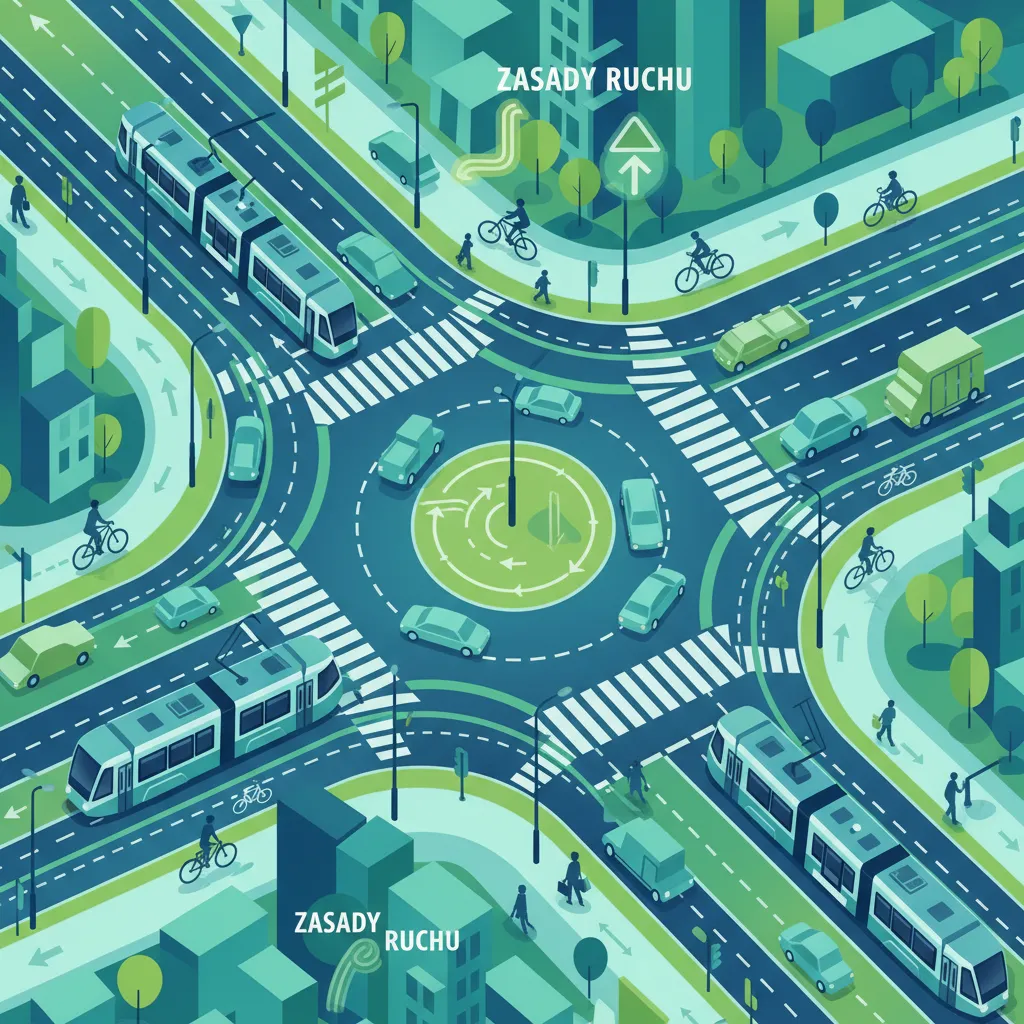
In this lesson, learners investigate complex junctions and intersections found across urban, rural, and highway environments, focusing on multi-lane configurations, traffic light coordination, and roundabout navigation. The content emphasizes priority rules, blind-spot assessment when merging, and safe lane selection for turning maneuvers. Learners will also consider interactions with cyclists and pedestrians, and the importance of adjusting approach speed for safe navigation.
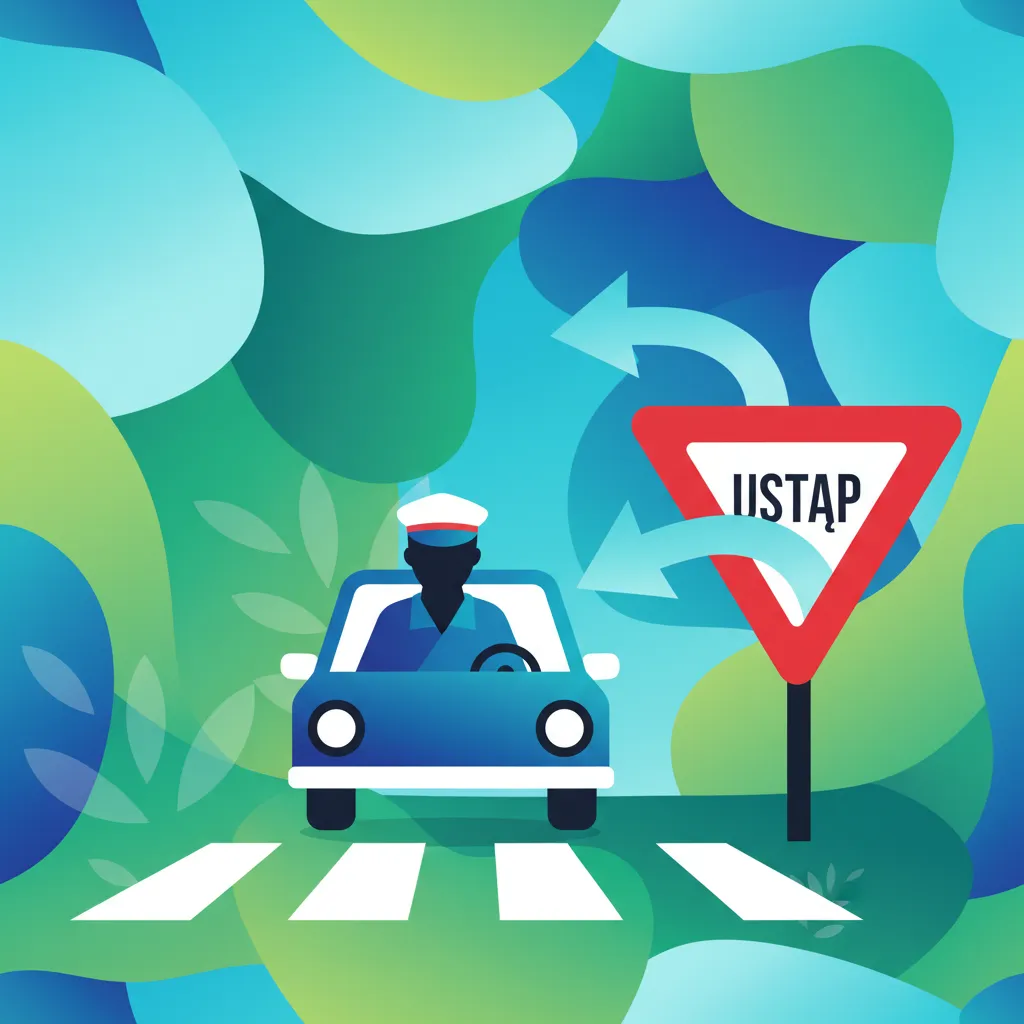
This lesson focuses on navigating intersections that are not controlled by traffic signals. It covers the interpretation of the 'Yield' sign (ustąp pierwszeństwa) and the application of the 'priority to the right' rule at junctions of equal roads. Safe decision-making and proper observation techniques are emphasized for these common scenarios.
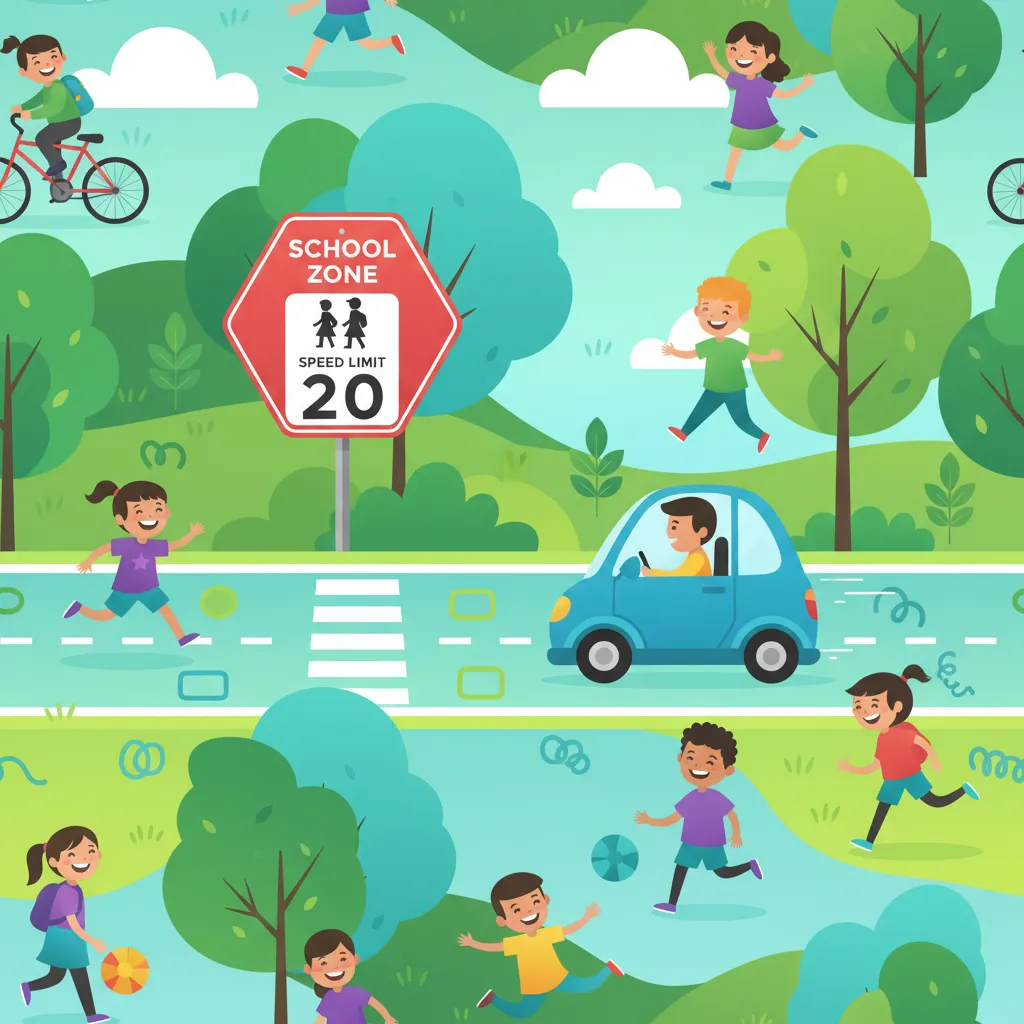
This lesson focuses on areas with high pedestrian activity, requiring special caution. It covers the rules for 'living zones' (strefa zamieszkania), where pedestrians have priority and the speed limit is 20 km/h. The content also addresses regulations for school zones and other designated pedestrian areas to ensure the safety of the most vulnerable road users.
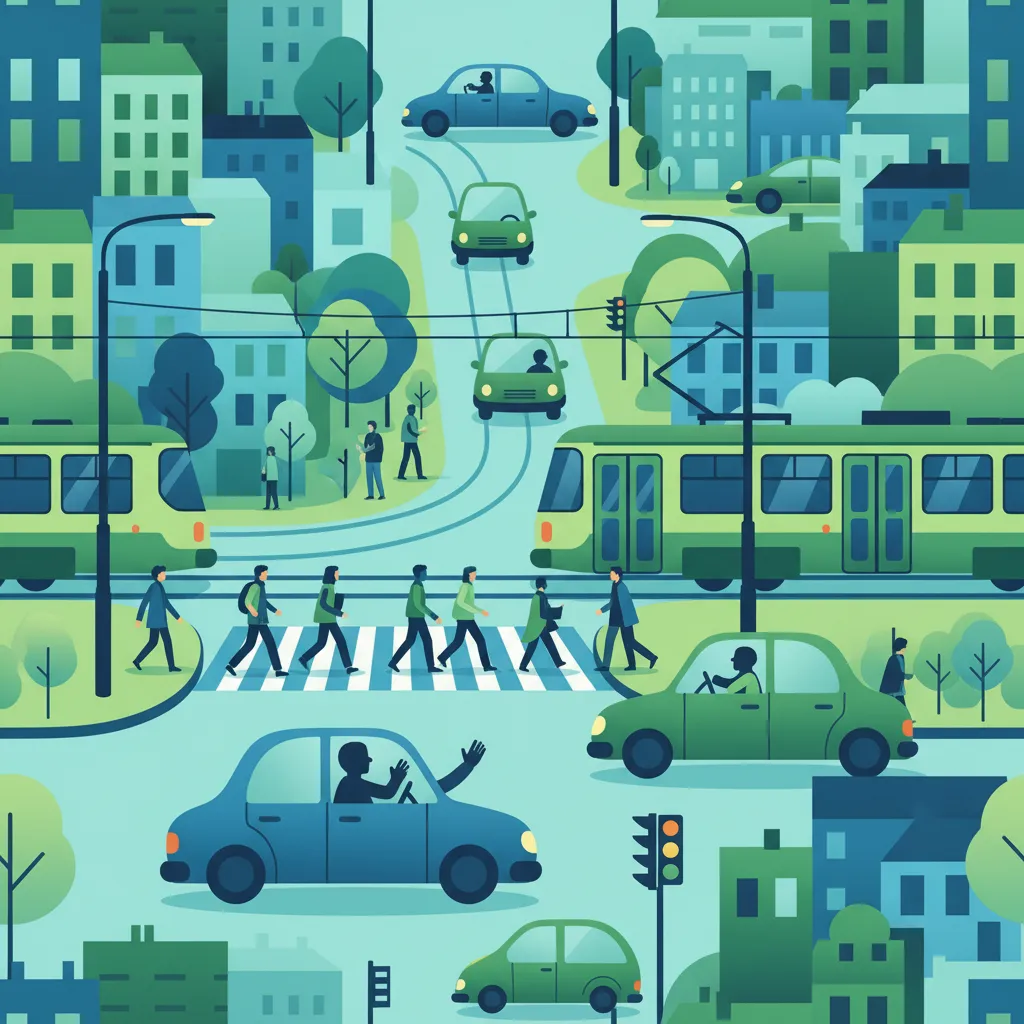
This lesson introduces the core concept of priority, or 'pierwszeństwo przejazdu,' in Polish traffic law. It explains the general rule of yielding to traffic from the right at intersections of equal status. This principle forms the foundation for navigating uncontrolled junctions and is a critical piece of knowledge for all drivers.

This lesson explores the priority hierarchy for buses at different intersections, roundabouts, and pedestrian crossings. Learners will understand how traffic signals and signs affect their approach and how to safely navigate roundabouts with correct lane discipline. Special attention is given to yielding to pedestrians, especially near bus stops.
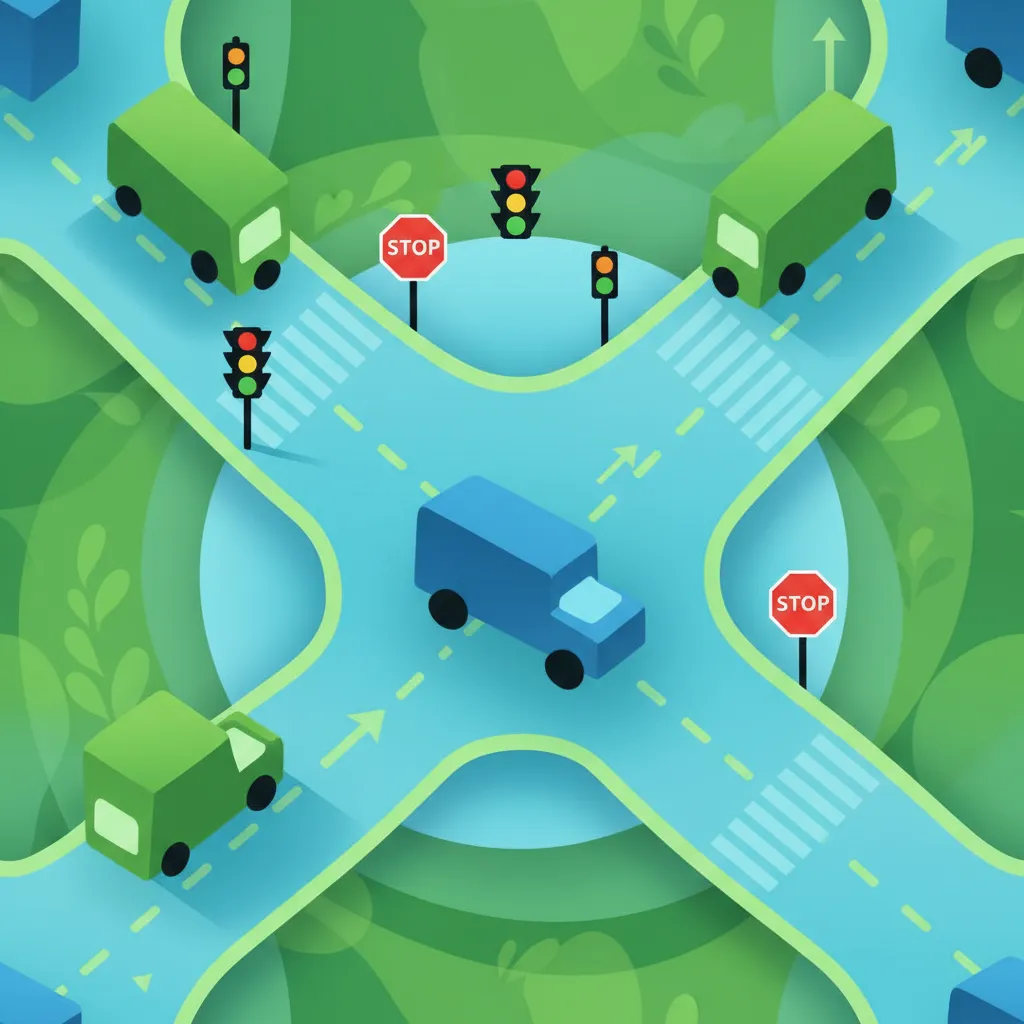
This lesson provides a comprehensive breakdown of the right-of-way rules that govern intersections. It explains the clear directives given by traffic lights, stop signs, and yield signs, and clarifies the procedures at unmarked or uncontrolled intersections, where the 'priority to the right' rule often applies. Learners will understand the legal hierarchy of these rules to make correct, safe, and predictable decisions when navigating through any junction, reducing the risk of conflict with other traffic.
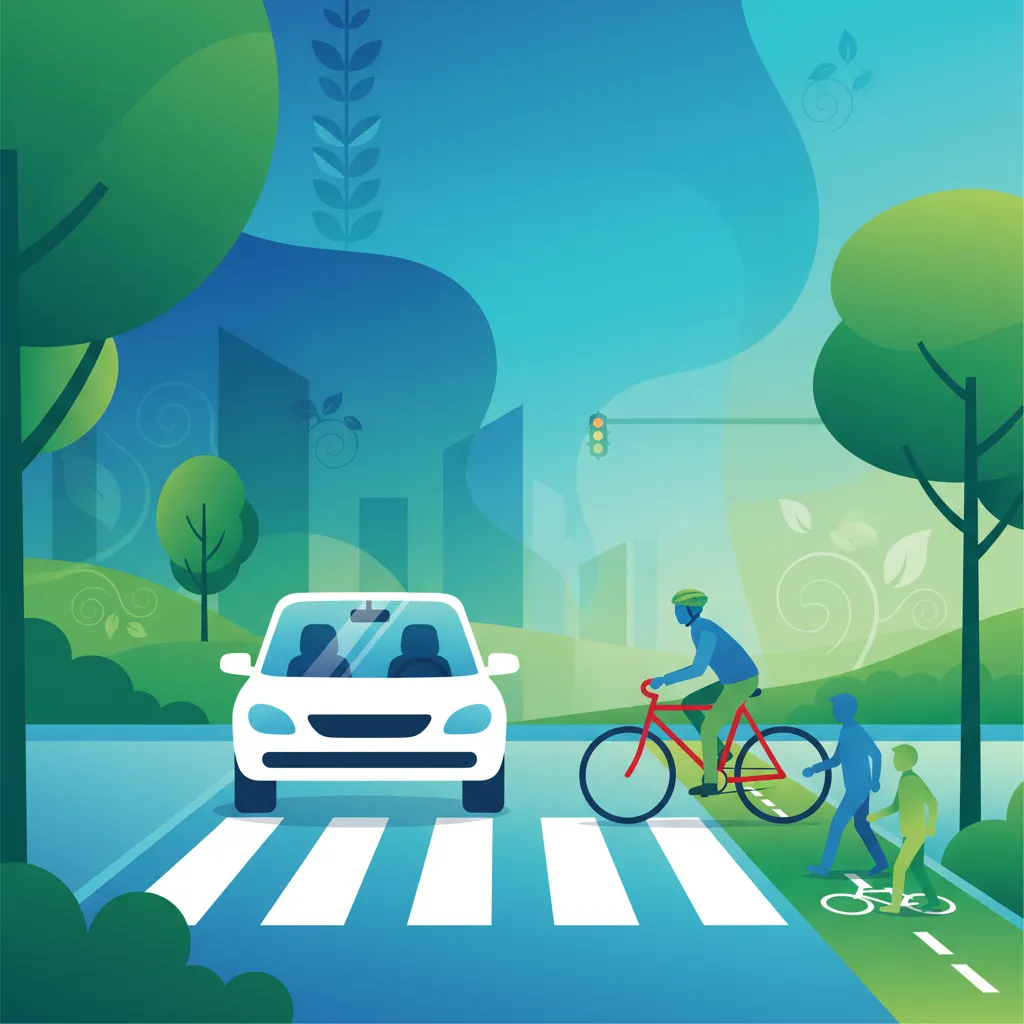
This lesson focuses on safe coexistence with cyclists and pedestrians, who are prevalent in urban areas. It covers the rules for driving alongside dedicated bicycle lanes and the legal requirement to yield to pedestrians at marked crossings. The content stresses the importance of constant awareness, especially when turning at intersections, to prevent conflicts with vulnerable road users.

This lesson introduces the fundamental principles of right-of-way on Polish roads, explaining how priority road signs determine the flow of traffic at intersections. Learners will explore the hierarchy of vehicle classes and the specific obligations that arise when approaching a yield line or a give-way sign. The content details the legal precedence of main road traffic over secondary road traffic, helping riders safely navigate intersections and avoid right-of-way infractions.
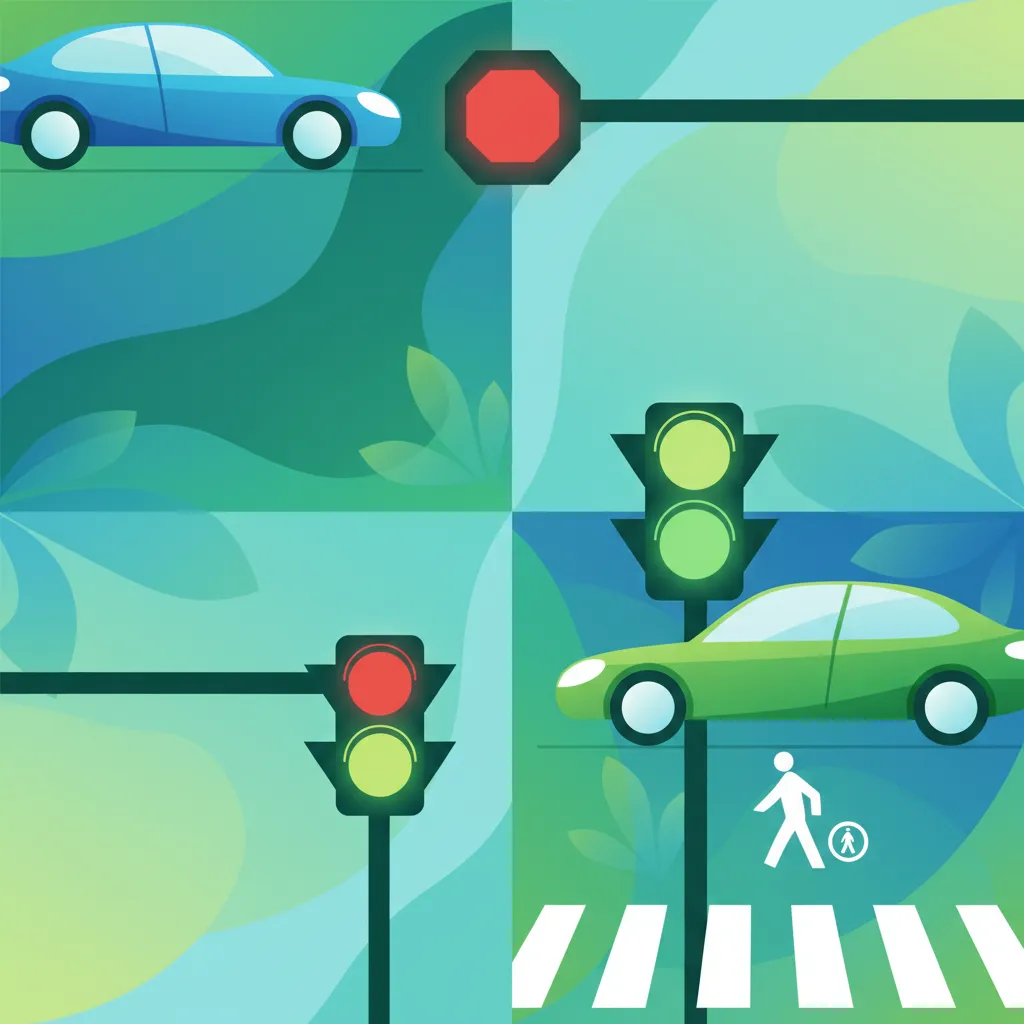
This lesson provides a detailed breakdown of traffic light operations in Poland. It explains the sequence of red, amber, and green lights, and the specific rules for turning when a green arrow signal is displayed. The meaning of a flashing amber light and the rules for pedestrian crossings at signalized intersections are also covered.
Learn the specific conditions and safety precautions required for executing a right-turn on red in Poland, including yielding to all traffic and pedestrians. Essential knowledge for navigating intersections.
This lesson focuses on navigating intersections that are not controlled by traffic signals. It covers the interpretation of the 'Yield' sign (ustąp pierwszeństwa) and the application of the 'priority to the right' rule at junctions of equal roads. Safe decision-making and proper observation techniques are emphasized for these common scenarios.
This lesson provides a comprehensive breakdown of the right-of-way rules that govern intersections. It explains the clear directives given by traffic lights, stop signs, and yield signs, and clarifies the procedures at unmarked or uncontrolled intersections, where the 'priority to the right' rule often applies. Learners will understand the legal hierarchy of these rules to make correct, safe, and predictable decisions when navigating through any junction, reducing the risk of conflict with other traffic.
This lesson provides strategies for safely navigating the numerous intersections typical of urban environments. It reinforces the application of priority rules in situations with limited visibility and high traffic volume. Techniques for making turns in narrow streets and being aware of pedestrians and cyclists at junctions are central to the instruction.
This lesson provides a detailed breakdown of traffic light operations in Poland. It explains the sequence of red, amber, and green lights, and the specific rules for turning when a green arrow signal is displayed. The meaning of a flashing amber light and the rules for pedestrian crossings at signalized intersections are also covered.
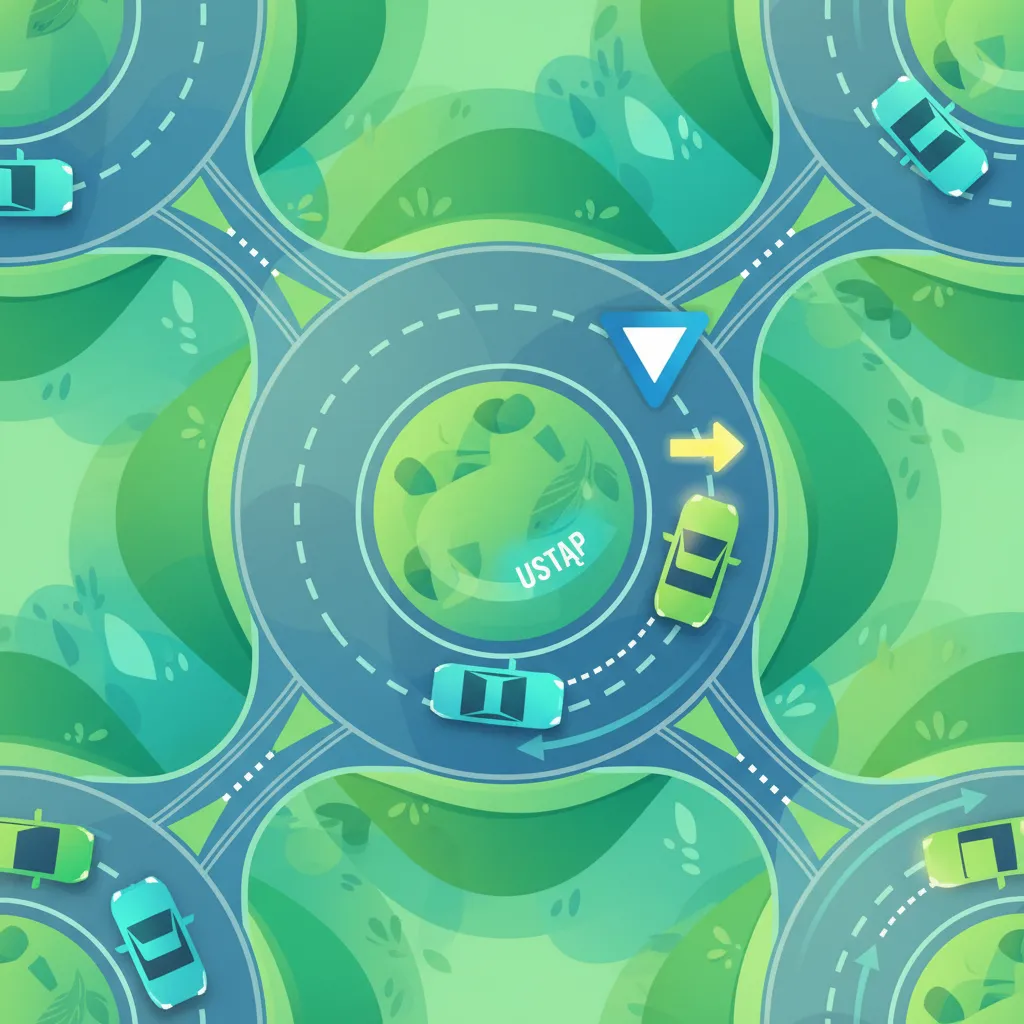
This lesson explains the specific rules for navigating roundabouts, a common feature on Polish roads. It emphasizes the primary rule of yielding to traffic already circulating within the roundabout before entering. The content also covers correct lane positioning for different exits and the proper use of indicators when exiting.
In this lesson, learners examine the specific actions required at stop signs and give-way intersections under Polish traffic regulations. The content explains the legal requirement for a full stop before the stop line, incorporating a visual scan of all directions before proceeding. It also covers the give-way protocol, where riders must yield to traffic already in the intersection or on the main road, emphasizing the need for correct positioning and observation.
This lesson introduces the core concept of priority, or 'pierwszeństwo przejazdu,' in Polish traffic law. It explains the general rule of yielding to traffic from the right at intersections of equal status. This principle forms the foundation for navigating uncontrolled junctions and is a critical piece of knowledge for all drivers.
This lesson introduces the fundamental principles of right-of-way on Polish roads, explaining how priority road signs determine the flow of traffic at intersections. Learners will explore the hierarchy of vehicle classes and the specific obligations that arise when approaching a yield line or a give-way sign. The content details the legal precedence of main road traffic over secondary road traffic, helping riders safely navigate intersections and avoid right-of-way infractions.

This lesson focuses on traffic control signals, primarily traffic lights. It details the meaning of each color in the sequence—red, amber, and green—as well as flashing signals and arrows for specific turns. The content also covers lane control signals and pedestrian signals to ensure safe and compliant navigation through controlled intersections.

This lesson focuses on the rules of lane usage for maintaining safe and efficient traffic flow. It covers the meaning of different lane markings, such as solid versus broken lines, and the general principle of keeping to the rightmost lane unless overtaking. Proper lane discipline is crucial for predictability and preventing conflicts on multi-lane roads.
Find clear answers to common questions learners have about Complex Junctions and Pedestrian Crossings. Learn how the lesson is structured, which driving theory objectives it supports, and how it fits into the overall learning path of units and curriculum progression in Poland. These explanations help you understand key concepts, lesson flow, and exam focused study goals.
In Poland, drivers must give absolute priority to pedestrians entering or already on a marked pedestrian crossing (zebra crossing). This means you must slow down or stop to allow them to cross safely, even if they haven't stepped onto the crossing yet but are clearly intending to. Failing to do so is a serious offense and heavily penalised in theory and practical exams.
When approaching a multi-lane junction with a traffic island and planning to turn left, you typically need to position your vehicle in the leftmost turning lane well in advance. Pay close attention to lane markings and signs, as some islands might guide you around, while others might require you to give way to oncoming traffic or traffic from other lanes before completing your turn. Proper observation and signaling are key.
While marked pedestrian crossings (zebra crossings) demand absolute priority, at unmarked crossings, drivers still have a general duty of care towards pedestrians, especially in built-up areas. However, pedestrians do not have automatic priority unless a specific rule (like a turning maneuver where they have green light) grants it. Always be prepared to stop if a pedestrian unexpectedly steps into the road, but the absolute priority rule only applies to *marked* crossings.
If a traffic light at a complex junction is out of order, you must revert to the general priority rules. This typically means treating it as an uncontrolled intersection, where the right-hand rule applies, or observing any supplementary signs (like yield or stop signs) that would then take precedence. Extreme caution is advised, and you should proceed only when it is safe to do so, communicating intentions clearly with other drivers.
Dedicated turning lanes, often indicated by arrows on the road surface or overhead signs, are designed to streamline traffic flow. While in a dedicated turning lane, your primary priority consideration is for traffic already in the intersection or pedestrians crossing your path. They do not automatically grant you priority over other vehicles or pedestrians; standard right-of-way rules still apply at the point of turning. Always follow the arrows and yield as necessary.
Build custom practice sessions tailored precisely to your needs. Focus on areas requiring improvement, review specific Polish road signs, or master complex traffic rules to ensure full preparation for your official driving license exam.