
This lesson focuses on your understanding and application of stop signs and give-way intersections, crucial elements for safe navigation on Polish roads. As part of the 'Priority Rules and Intersection Navigation' unit for your Category A licence, mastering these rules is essential for passing the theory exam and riding safely.
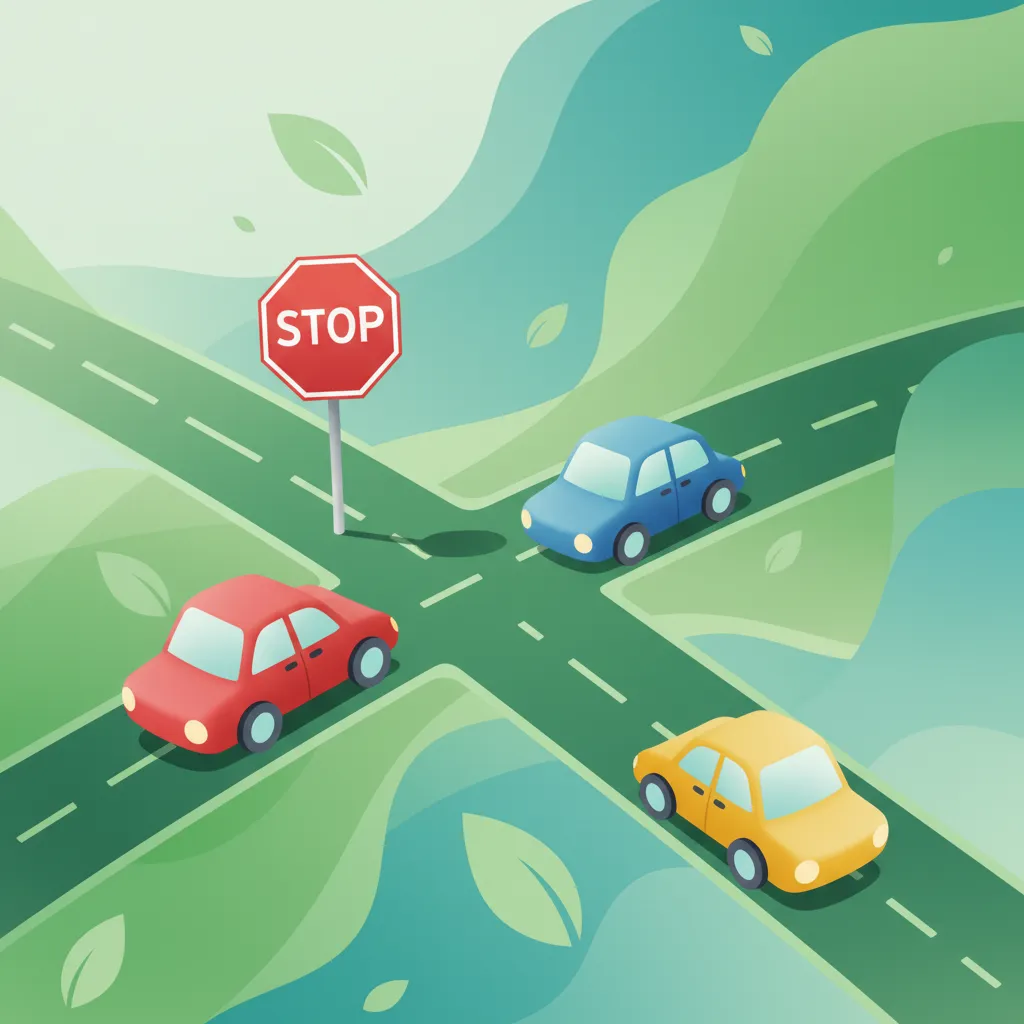
Lesson content overview
Mastering intersections controlled by stop signs and give-way signs is fundamental for safe and compliant motorcycle riding in Poland. These junctions represent common conflict points where the paths of various road users converge, demanding precise understanding and execution of priority rules. For Polish Motorcycle Theory – Comprehensive Licence Preparation for Category A, this lesson delves into the legal requirements, practical procedures, and safety considerations crucial for negotiating these intersections effectively.
Correctly responding to these signs not only prevents collisions and ensures smooth traffic flow but also fulfills mandatory legal obligations under Polish traffic law, specifically the Prawo o ruchu drogowym (Road Traffic Law). Misinterpreting or neglecting these rules is a frequent cause of accidents, particularly in urban environments.
Intersections are dynamic environments where decisions must be made swiftly and accurately. The core logic behind stop signs and give-way signs is to establish a predictable order of movement, thereby minimizing the risk of collisions. As a motorcyclist, your unique vehicle characteristics – such as lower visibility to other drivers, specific braking dynamics, and the need for balance – require an even greater degree of precision and caution at these points.
This lesson builds upon your understanding of basic right-of-way hierarchy and Polish road sign taxonomy, covered in earlier modules. Familiarity with signs like the priority road sign (Z-20) and road markings such as stop lines and give-way lines is essential.
A full stop at a designated stop sign forces the rider to halt the motorcycle's momentum completely. This momentary pause is critical, allowing ample time for a thorough visual scan of all approaching directions before proceeding. It eliminates the dangerous reliance on assumptions about traffic flow or gaps.
Yielding, or giving way, ensures that traffic already occupying the intersection or travelling on the main carriageway retains priority. This prevents you from disrupting established traffic flow and reduces the potential for right-of-way disputes. For motorcyclists, anticipating the need to yield and adjusting speed accordingly is vital for maintaining balance and control, especially when carrying a passenger or heavy load.
A stop sign in Poland, officially designated Z-31, is one of the most critical regulatory signs encountered on the road. It mandates a complete halt before entering an intersection or crossing.
The full stop requirement means your motorcycle must come to a complete standstill, with all forward motion ceased. This is not merely a "slow down and look" maneuver; it demands a definitive pause. The primary purpose is to guarantee that the rider has sufficient time to conduct a reliable visual assessment of all approaches to the intersection.
The stop must occur before the designated stop line. This is typically a solid white line painted across your lane. Stopping before the line ensures you do not inadvertently encroach upon the intersecting traffic's path or obstruct any adjacent pedestrian crossings. If no stop line is present, you must stop at a point where you have clear visibility of the intersecting road without obstructing traffic on that road.
There isn't a fixed number of seconds for the stop duration specified in Polish law. Instead, the legal requirement (Art. 18-3 of Prawo o ruchu drogowym) states that the driver must stop before the stop line and may only continue when it is safe. This implies the stop must be long enough to make a reliable and comprehensive visual assessment of the intersection.
At a Z-31 stop sign, you should:
Motorcyclists often make these errors at stop signs:
The give-way sign, known as "Ustąp pierwszeństwa" and designated Z-36, indicates that you must yield the right-of-way to traffic on the intersecting road or traffic already in the intersection.
Unlike a stop sign, a give-way sign does not always require a full stop. The duty is to allow vehicles on the main road or those already in the intersection to proceed first. You must adjust your speed, positioning, and potentially stop if necessary, to let others pass without forcing them to alter their speed or direction.
When approaching a Z-36 give-way sign:
Typical errors motorcyclists make at yield signs include:
Road markings play a vital role in reinforcing the instructions given by stop and give-way signs.
This is a solid white line painted across the lane. It is the definitive point before which you must bring your motorcycle to a complete stop at a Z-31 stop sign. Stopping beyond this line is a violation and can obstruct cross-traffic or pedestrians.
Never stop on or past a solid stop line. Your front wheel must be entirely behind it.
This is a broken white line painted across the lane, typically accompanying a Z-36 give-way sign. You should aim to stop before this line if you need to yield. However, unlike a solid stop line, you may stop on the broken line if it's the only place from which you can get a clear view of intersecting traffic, provided you do not obstruct traffic already in the intersection. The primary goal is to yield, stopping only if absolutely necessary.
After stopping at a stop sign or before proceeding from a give-way sign, a systematic visual scan is imperative. This procedure compensates for the limited peripheral vision of human eyes and the potential blind spots inherent to riding a motorcycle.
Look Left First: On right-hand traffic roads (like in Poland), traffic from your left will be the first to approach your path as you enter the intersection. This is usually the first and most critical direction to check.
Look Right: Immediately after checking left, scan to your right for any oncoming vehicles.
Look Ahead: Check the road you intend to enter for any hazards, pedestrians, or stationary vehicles.
Check Mirrors (and optionally, over shoulder): Briefly glance in your mirrors to be aware of any vehicles approaching from behind that might be turning into the intersection or in case you need to adjust your position. An optional quick over-the-shoulder check can cover blind spots, especially if making a turn.
Repeat Scan (if necessary): For complex or busy intersections, or those with limited visibility, repeat the left-right-ahead scan multiple times until you are confident it is safe to proceed.
The entire scan should be a smooth, deliberate process, typically taking 2-3 seconds for simple intersections, and longer for more complex junctions or in adverse conditions.
The concept of a priority road significantly influences right-of-way rules at intersections.
A road marked with the Z-20 "Droga z pierwszeństwem" sign indicates that traffic on this road has the right-of-way over traffic entering from intersecting non-priority roads. Conversely, if you are on a non-priority road, you must yield to traffic on the priority road at all intersections unless specific additional signs dictate otherwise (e.g., traffic lights that override priority rules).
For motorcyclists, this means:
Even when on a priority road, always observe approaching vehicles at intersections. Assume other drivers might not see you or might misinterpret the priority rules.
Intersections are rarely static; various conditions can modify how you should approach stop and give-way signs.
Some complex intersections may have stop or give-way signs on more than one approach, creating a coordinated priority system. In such scenarios, the driver on the approach with the most restrictive sign (STOP) generally yields to those with a less restrictive sign (Yield), unless additional priority signs or traffic lights dictate a different order. Always prioritize the most restrictive requirement.
If a marked pedestrian crossing (often indicated by the Z-45 sign or white 'zebra' stripes on the road) is located close to a stop or give-way sign, pedestrians always have priority at these crossings. As a motorcyclist, you must yield to any pedestrian who is on the crossing or is clearly about to step onto it, regardless of your stop or yield obligations at the intersection itself (Art. 27-1 of Prawo o ruchu drorogwym). This means you might need to stop twice: once for the stop/yield line, and again for pedestrians.
Understanding the specific articles of the Prawo o ruchu drogowym that govern stop and give-way intersections is crucial for your Category A licence preparation.
| Regulation | Statement (Summary) | Applicability | Legal Status | Rationale |
|---|---|---|---|---|
| Art. 18-3 (Stop Sign) | Driver must stop before the stop line and proceed only when the intersection is clear. | All Z-31 STOP signs. | Mandatory | Ensures thorough visual assessment and safety. |
| Art. 20-1 (Yield Sign) | Driver must give way to traffic on the intersecting road that has priority. | All Z-36 Yield signs unless overridden. | Mandatory | Prevents conflict, maintains traffic flow. |
| Art. 24-2 (Priority Road) | Vehicles on a priority road have right-of-way over those entering from non-priority roads. | Where a Z-20 priority road sign is present. | Mandatory | Simplifies decision-making on main routes. |
| Art. 27-1 (Pedestrian Priority) | Pedestrians at marked crossings have priority over vehicles. | At all Z-45 crossings. | Mandatory | Protects vulnerable road users. |
| Art. 15-1 (Road Markings) | Drivers must obey road markings (solid or broken lines) concerning stopping and yielding. | All road markings accompanying signs. | Mandatory | Provides clear visual cues for correct positioning. |
| Art. 93-2 (Safety Distance) | Vehicles must maintain a safe distance to allow adequate stopping; applies when approaching intersections. | At all intersections. | Mandatory | Ensures ability to stop safely if conditions change. |
Ignoring or misinterpreting stop and give-way rules can lead to serious consequences, from accidents to legal penalties.
Understanding the direct links between your actions and their outcomes is vital for developing safe riding habits.
Navigating stop signs and give-way intersections with precision is a cornerstone of safe motorcycle riding and crucial for your Polish Motorcycle Theory – Comprehensive Licence Preparation for Category A.
By diligently applying these principles, you will navigate Polish intersections confidently, safely, and in full compliance with traffic law.
This lesson covers the mandatory procedures for navigating stop signs (Z-31) and give-way signs (Z-36) under Polish traffic law. At a STOP sign, a complete halt before the stop line followed by a thorough visual scan (left-right-ahead-rear) is legally required, while a give-way sign demands yielding to priority traffic without necessarily requiring a full stop. The lesson clarifies road markings, explains how priority roads (Z-20) affect right-of-way, and emphasises that pedestrians on marked crossings (Z-45) always have absolute priority. Special considerations for weather, lighting conditions, and carrying passengers are also addressed, along with relevant articles of Prawo o ruchu drogowym governing these intersection rules.
A short set of high-value points that capture the most important learning from this lesson.
A Z-31 STOP sign requires a complete halt before the solid white stop line, followed by a thorough visual scan in all directions before proceeding.
A Z-36 Give-Way sign requires yielding to traffic on the intersecting priority road or already in the intersection, but does not always require stopping.
The visual scan sequence for motorcycles at intersections is: look left, look right, look ahead, check mirrors, and repeat if necessary for complex junctions.
Pedestrian crossings (Z-45) override stop and yield obligations—pedestrians on marked crossings always have absolute priority.
On non-priority roads, you must yield at every intersection unless signs or signals explicitly indicate otherwise.
Explore all units and lessons included in this driving theory course.
Art. 18-3 of Prawo o ruchu drogowym requires a full stop before the stop line at Z-31 signs; slowing without stopping violates the law.
A solid white stop line requires stopping behind it completely; a broken white give-way line allows stopping on the line if needed for visibility.
At a give-way sign, you must adjust speed to yield to priority traffic and may need to stop if no safe gap exists.
Roads marked with Z-20 Droga z pierwszeństwem grant right-of-way to their traffic at all intersections unless additional signs override this.
In reduced visibility (rain, fog, snow), treat give-way signs more conservatively and increase scanning time significantly.
Rolling through a Z-31 stop sign without coming to a complete standstill, which violates Art. 18-3 and eliminates the required visual scan.
Stopping past the solid white stop line, encroaching on the intersection and potentially obstructing cross-traffic or pedestrians.
Assuming priority based on speed or perceived distance of other vehicles when approaching a give-way sign.
Making only a quick glance instead of a systematic visual scan, missing fast-approaching vehicles or vulnerable road users.
Overrunning the give-way line when visibility is poor, entering the intersection without confirming priority traffic has cleared.
Lesson content overview
A short set of high-value points that capture the most important learning from this lesson.
A Z-31 STOP sign requires a complete halt before the solid white stop line, followed by a thorough visual scan in all directions before proceeding.
A Z-36 Give-Way sign requires yielding to traffic on the intersecting priority road or already in the intersection, but does not always require stopping.
The visual scan sequence for motorcycles at intersections is: look left, look right, look ahead, check mirrors, and repeat if necessary for complex junctions.
Pedestrian crossings (Z-45) override stop and yield obligations—pedestrians on marked crossings always have absolute priority.
On non-priority roads, you must yield at every intersection unless signs or signals explicitly indicate otherwise.
Explore all units and lessons included in this driving theory course.
Art. 18-3 of Prawo o ruchu drogowym requires a full stop before the stop line at Z-31 signs; slowing without stopping violates the law.
A solid white stop line requires stopping behind it completely; a broken white give-way line allows stopping on the line if needed for visibility.
At a give-way sign, you must adjust speed to yield to priority traffic and may need to stop if no safe gap exists.
Roads marked with Z-20 Droga z pierwszeństwem grant right-of-way to their traffic at all intersections unless additional signs override this.
In reduced visibility (rain, fog, snow), treat give-way signs more conservatively and increase scanning time significantly.
Rolling through a Z-31 stop sign without coming to a complete standstill, which violates Art. 18-3 and eliminates the required visual scan.
Stopping past the solid white stop line, encroaching on the intersection and potentially obstructing cross-traffic or pedestrians.
Assuming priority based on speed or perceived distance of other vehicles when approaching a give-way sign.
Making only a quick glance instead of a systematic visual scan, missing fast-approaching vehicles or vulnerable road users.
Overrunning the give-way line when visibility is poor, entering the intersection without confirming priority traffic has cleared.
Explore search topics learners often look for when studying Navigating Stop Signs and Give-Way Intersections. These topics reflect common questions about road rules, driving situations, safety guidance, and lesson level theory preparation for learners in Poland.
Browse additional driving theory lessons that cover connected traffic rules, road signs, and common driving situations related to this topic. Improve your understanding of how different rules interact across everyday traffic scenarios.
Explore how weather, pedestrian crossings, and vehicle load affect stop and give-way rules for Polish Category A motorcycle theory. Understand specific legal requirements and safety adjustments needed in challenging conditions.
This lesson introduces the fundamental principles of right-of-way on Polish roads, explaining how priority road signs determine the flow of traffic at intersections. Learners will explore the hierarchy of vehicle classes and the specific obligations that arise when approaching a yield line or a give-way sign. The content details the legal precedence of main road traffic over secondary road traffic, helping riders safely navigate intersections and avoid right-of-way infractions.
In this lesson, learners investigate complex junctions and intersections found across urban, rural, and highway environments, focusing on multi-lane configurations, traffic light coordination, and roundabout navigation. The content emphasizes priority rules, blind-spot assessment when merging, and safe lane selection for turning maneuvers. Learners will also consider interactions with cyclists and pedestrians, and the importance of adjusting approach speed for safe navigation.
This lesson examines the responsibilities of motorcyclists when approaching pedestrian crossings and interacting with cyclists, emphasizing the marked right-of-way for pedestrians at zebra crossings. Learners will study how to determine safe passing distances, adjust speed, and use visual cues such as eye contact to ensure pedestrians have cleared the crossing. The content also covers interactions with cyclists sharing the road, highlighting the need for anticipation and adequate passing gaps.
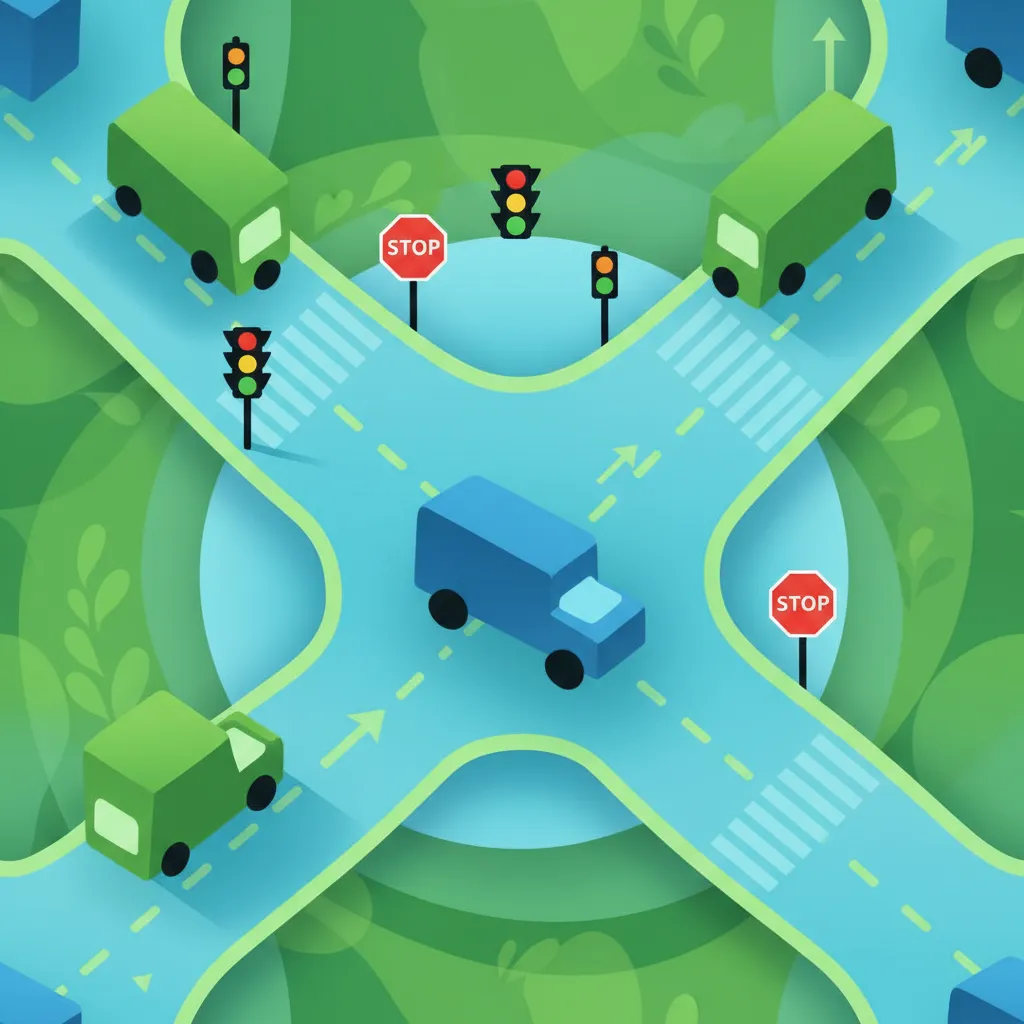
This lesson provides a comprehensive breakdown of the right-of-way rules that govern intersections. It explains the clear directives given by traffic lights, stop signs, and yield signs, and clarifies the procedures at unmarked or uncontrolled intersections, where the 'priority to the right' rule often applies. Learners will understand the legal hierarchy of these rules to make correct, safe, and predictable decisions when navigating through any junction, reducing the risk of conflict with other traffic.
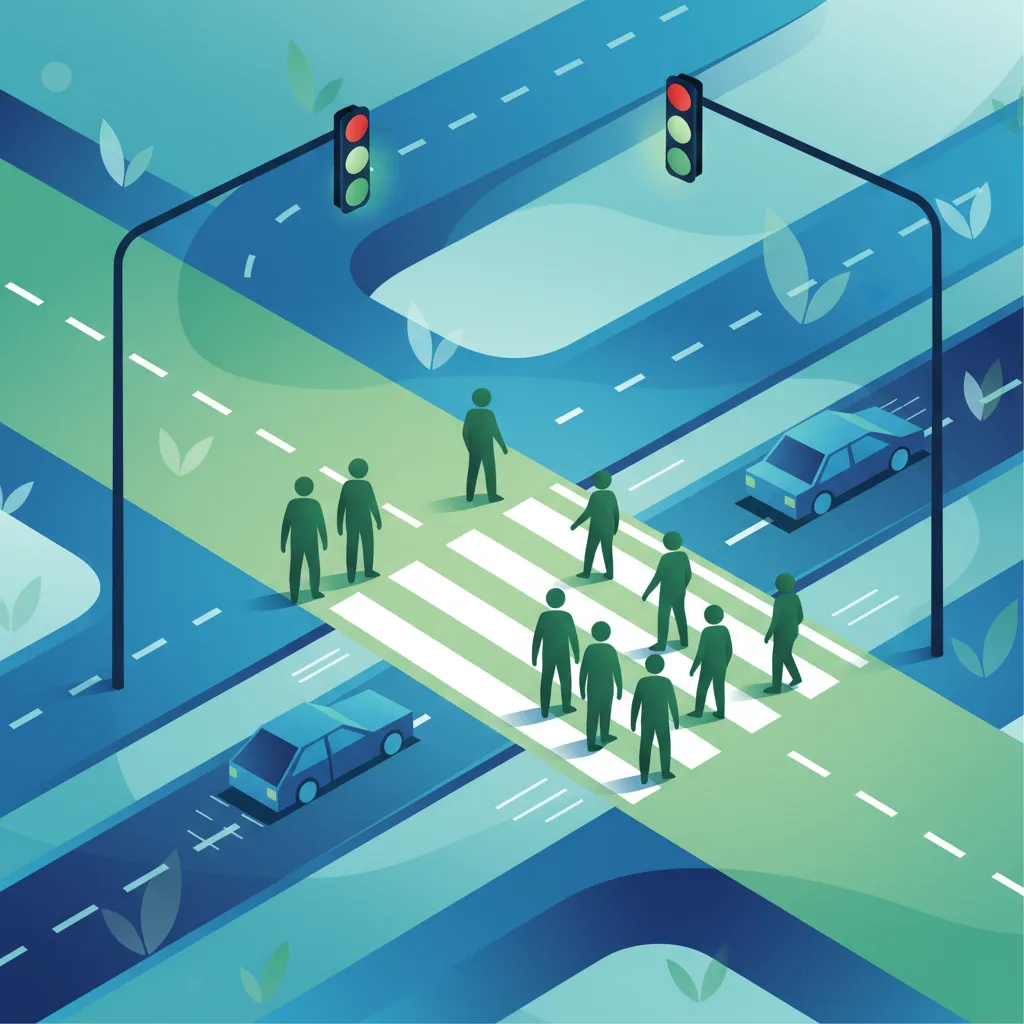
This lesson addresses advanced scenarios, including multi-lane intersections and interactions with vulnerable road users. It reinforces the legal obligation to give absolute priority to pedestrians at marked crossings (zebra crossings). The content also covers navigating around traffic islands and using dedicated turning lanes in complex urban environments.
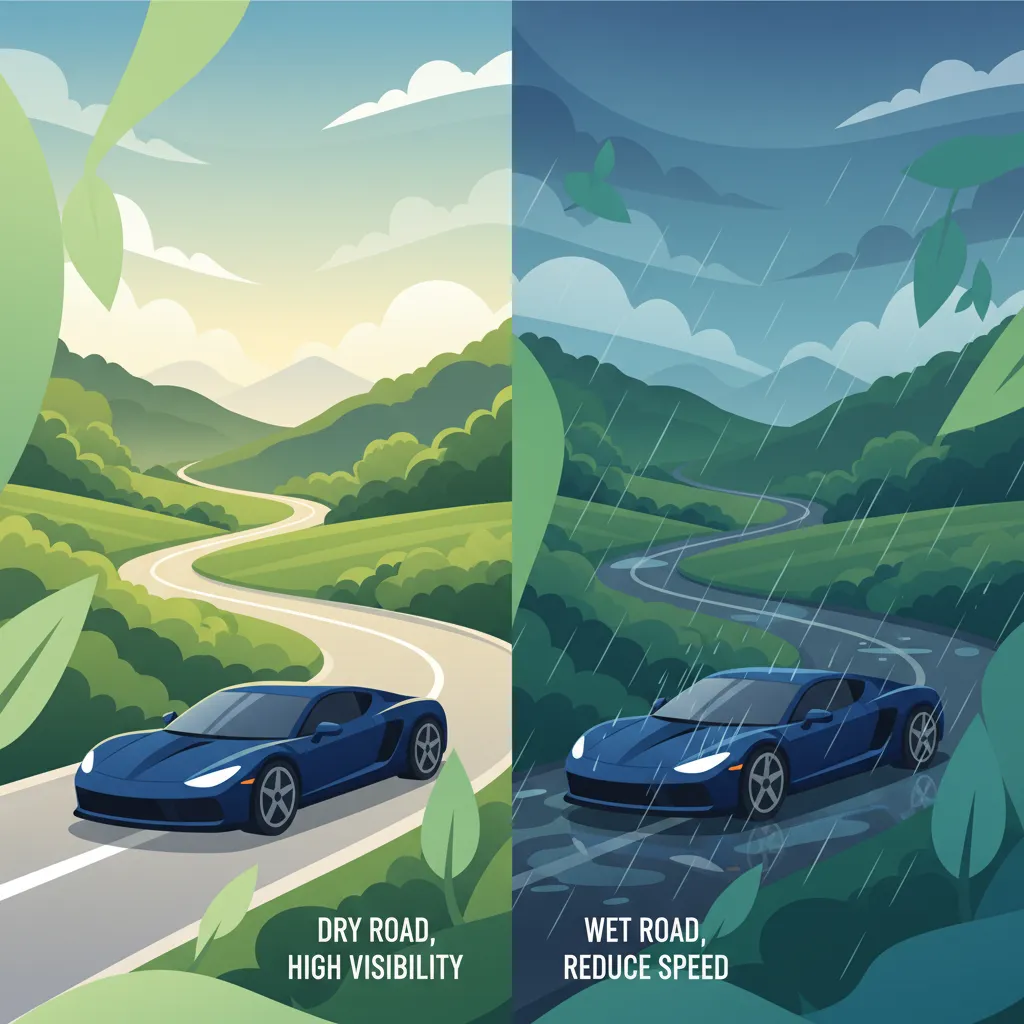
In this lesson, learners examine how environmental conditions such as rain, wind, ice, and reduced visibility necessitate adjustments in riding speed. The content provides guidelines for assessing road surfaces, judging appropriate cornering speeds, and reducing speed proactively in adverse weather. Learners will understand the impact of temperature on tyre performance and the need to increase safety margins, mastering adaptive speed management to maintain control.
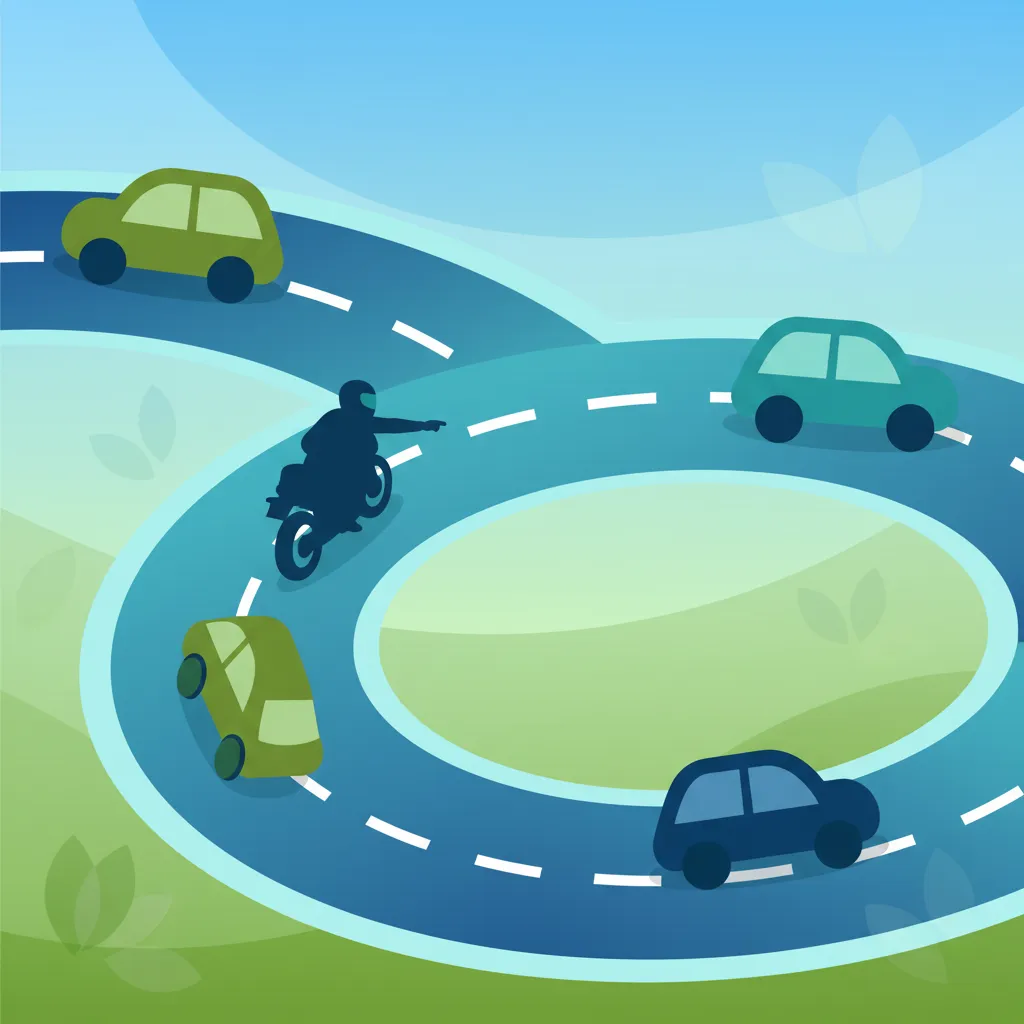
This lesson focuses on the proper techniques for negotiating roundabouts, which are common in Polish urban environments. Learners will learn the correct approach to entering a roundabout, yielding to circulating traffic, selecting the appropriate lane, and signaling intentions when exiting. The lesson also discusses speed adaptation for safe circulation and blind-spot checks before changing lanes within the roundabout, ensuring smooth and legal navigation.
In this lesson, learners study warning signs that alert drivers to potential hazards, focusing on those that are particularly relevant to motorcyclists. The content includes signs indicating curves, slippery surfaces, animal crossings, tram tracks, and construction zones, each requiring specific riding adjustments. The lesson teaches riders how to interpret these signs to anticipate hazards, adjust speed appropriately, and maintain a safe distance from potential dangers.
This lesson explores the priority hierarchy for buses at different intersections, roundabouts, and pedestrian crossings. Learners will understand how traffic signals and signs affect their approach and how to safely navigate roundabouts with correct lane discipline. Special attention is given to yielding to pedestrians, especially near bus stops.
This lesson examines the family of regulatory signs that dictate mandatory actions and prohibitions on Polish roads, emphasizing how each sign influences motorcyclist behaviour. Learners will explore the stop, give way, speed limit, and no overtaking signs, understanding the legal obligations they impose. The lesson also highlights signs that specifically affect motorcycles, such as lane restrictions, ensuring riders recognize and obey regulations unique to two-wheel traffic.
Understand the legal framework and practical execution of stop (Z-31) and give-way (Z-36) signs in Poland. Learn about common violations, the importance of road markings, and the systematic visual scan for safe motorcycle navigation.
This lesson introduces the fundamental principles of right-of-way on Polish roads, explaining how priority road signs determine the flow of traffic at intersections. Learners will explore the hierarchy of vehicle classes and the specific obligations that arise when approaching a yield line or a give-way sign. The content details the legal precedence of main road traffic over secondary road traffic, helping riders safely navigate intersections and avoid right-of-way infractions.
This lesson examines the family of regulatory signs that dictate mandatory actions and prohibitions on Polish roads, emphasizing how each sign influences motorcyclist behaviour. Learners will explore the stop, give way, speed limit, and no overtaking signs, understanding the legal obligations they impose. The lesson also highlights signs that specifically affect motorcycles, such as lane restrictions, ensuring riders recognize and obey regulations unique to two-wheel traffic.
This lesson focuses on navigating intersections that are not controlled by traffic signals. It covers the interpretation of the 'Yield' sign (ustąp pierwszeństwa) and the application of the 'priority to the right' rule at junctions of equal roads. Safe decision-making and proper observation techniques are emphasized for these common scenarios.
This lesson examines the variety of pavement markings that define lane structures, traffic flow, and special zones on Polish roads. Learners will study solid and broken lines, lane division markings, and the distinct symbols for bicycle lanes, bus lanes, and tram tracks, all of which affect motorcyclist positioning. The lesson also addresses surface texture indicators that signal changing road conditions, enabling riders to maintain correct lane discipline.
This lesson focuses on the proper techniques for negotiating roundabouts, which are common in Polish urban environments. Learners will learn the correct approach to entering a roundabout, yielding to circulating traffic, selecting the appropriate lane, and signaling intentions when exiting. The lesson also discusses speed adaptation for safe circulation and blind-spot checks before changing lanes within the roundabout, ensuring smooth and legal navigation.
This lesson examines the responsibilities of motorcyclists when approaching pedestrian crossings and interacting with cyclists, emphasizing the marked right-of-way for pedestrians at zebra crossings. Learners will study how to determine safe passing distances, adjust speed, and use visual cues such as eye contact to ensure pedestrians have cleared the crossing. The content also covers interactions with cyclists sharing the road, highlighting the need for anticipation and adequate passing gaps.
In this lesson, learners study warning signs that alert drivers to potential hazards, focusing on those that are particularly relevant to motorcyclists. The content includes signs indicating curves, slippery surfaces, animal crossings, tram tracks, and construction zones, each requiring specific riding adjustments. The lesson teaches riders how to interpret these signs to anticipate hazards, adjust speed appropriately, and maintain a safe distance from potential dangers.
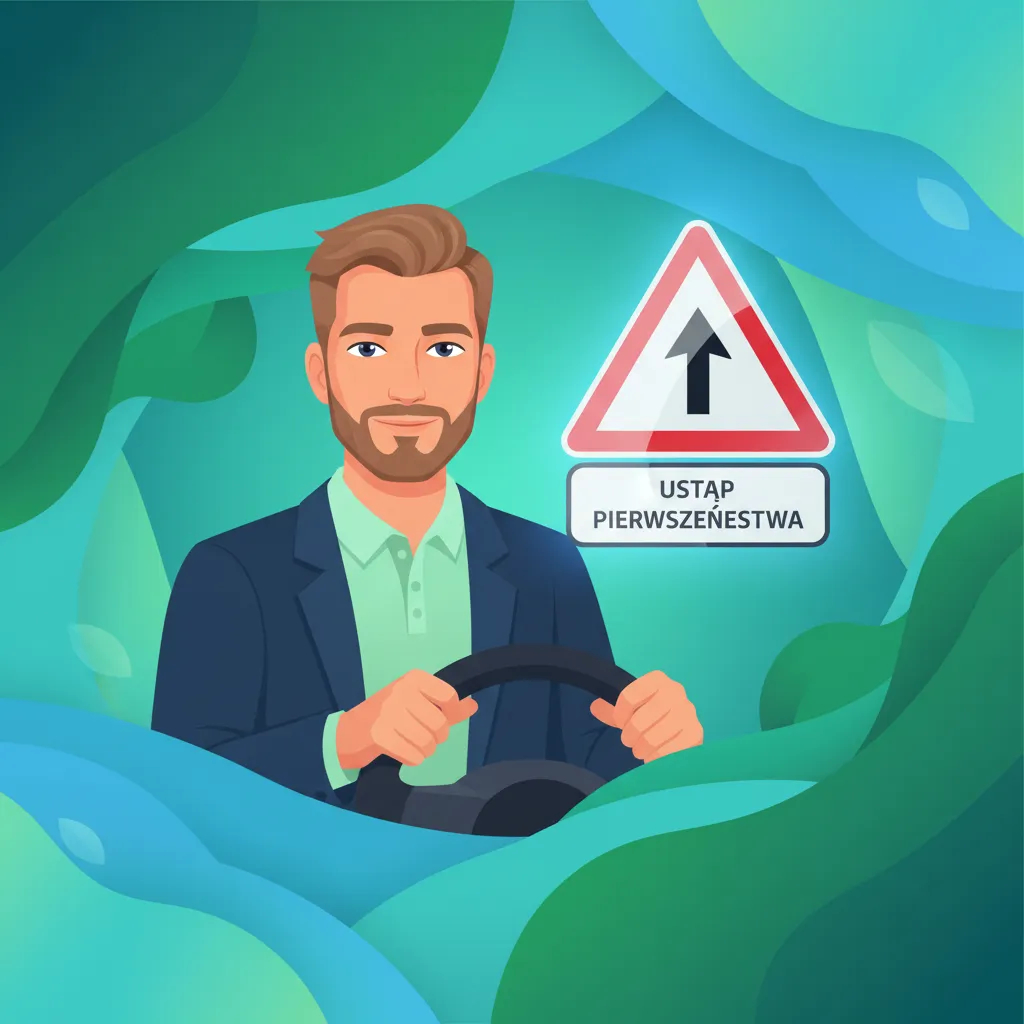
In this lesson, learners examine the core legal obligations that apply to motorcyclists operating on Polish roads, including the mandatory use of helmets, periodic vehicle inspections, and the necessity of valid insurance and registration. The content details the classification of traffic offences and explains the associated penalty system, including fines, demerit points, and potential licence suspension. Additionally, the lesson outlines procedural requirements for accident reporting and interaction with law enforcement, providing a comprehensive view of a rider’s legal responsibilities.
In this lesson, learners investigate complex junctions and intersections found across urban, rural, and highway environments, focusing on multi-lane configurations, traffic light coordination, and roundabout navigation. The content emphasizes priority rules, blind-spot assessment when merging, and safe lane selection for turning maneuvers. Learners will also consider interactions with cyclists and pedestrians, and the importance of adjusting approach speed for safe navigation.
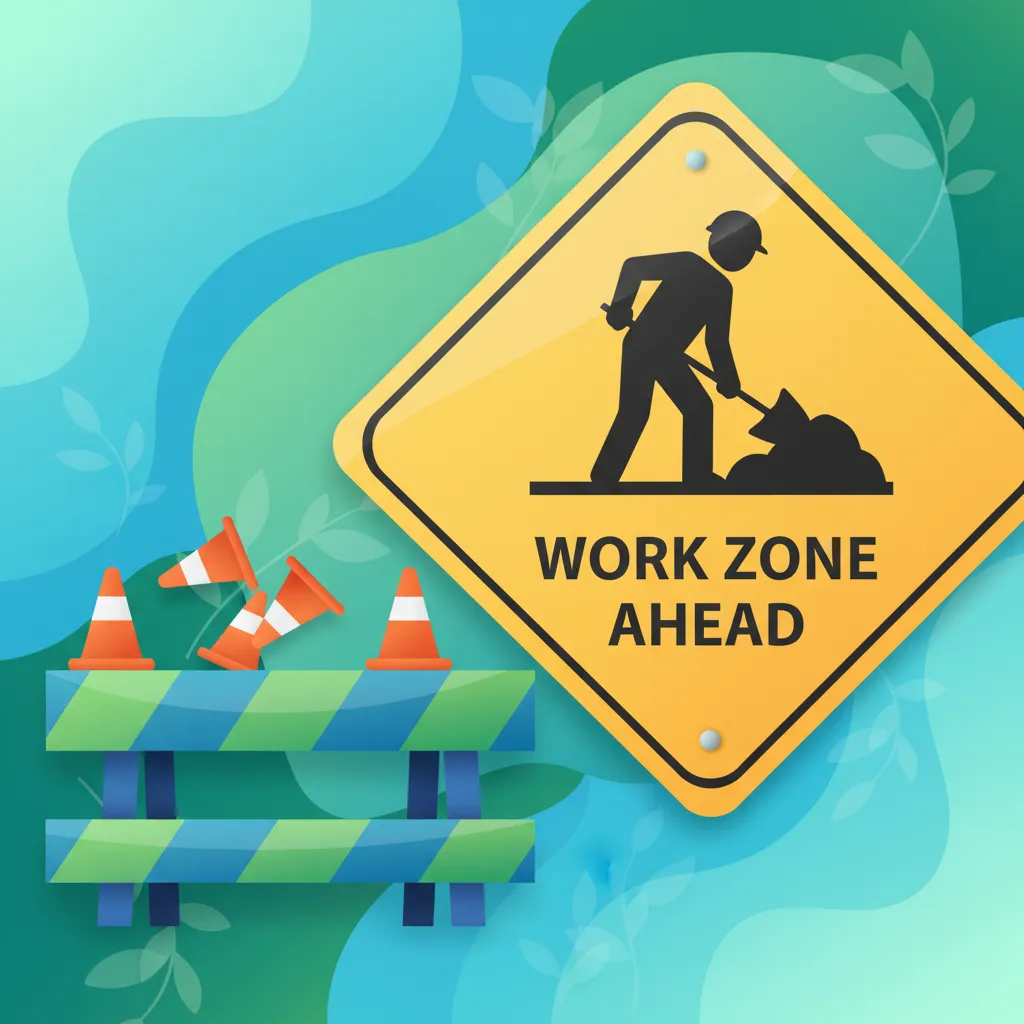
In this lesson, learners explore the temporary signs that appear during road construction or maintenance activities, focusing on how they alter normal traffic patterns. The content covers signs indicating lane shifts, temporary speed limits, detour routes, and equipment zones where workers are present. The lesson emphasizes the importance of slowing down, staying alert, and obeying temporary regulations to navigate safely through work zones while ensuring compliance.
Find clear answers to common questions learners have about Navigating Stop Signs and Give-Way Intersections. Learn how the lesson is structured, which driving theory objectives it supports, and how it fits into the overall learning path of units and curriculum progression in Poland. These explanations help you understand key concepts, lesson flow, and exam focused study goals.
When you see a stop sign (znak STOP), you must bring your motorcycle to a complete halt before the stop line or, if there is no line, before the nearest edge of the intersection. After stopping, you must check traffic in all directions and only proceed when it is safe and you do not endanger or obstruct other road users.
The fundamental rule of stopping completely and checking for traffic is the same for motorcyclists and car drivers. However, motorcyclists need to be particularly aware of their visibility and potential blind spots for other drivers when re-entering traffic after a stop.
You must yield to all traffic already on the priority road or already within the intersection. This includes vehicles, cyclists, and pedestrians. You must only proceed when it is safe to do so without causing any obstruction or danger to other road users.
Common mistakes include not stopping when required (especially if there's no clear traffic to yield to), misjudging the speed of oncoming vehicles, failing to check for traffic from all directions (particularly on multi-lane roads or complex junctions), and entering the intersection when it's not safe.
Yes, when approaching a give-way sign near tram tracks, be aware that trams have priority. Ensure you are not obstructing their path and that you can safely navigate around the tracks when clear. Also, remember that tram rails can be slippery, especially when wet.
Build custom practice sessions tailored precisely to your needs. Focus on areas requiring improvement, review specific Polish road signs, or master complex traffic rules to ensure full preparation for your official driving license exam.