
As a final step in your Category B preparation, this lesson focuses on sustainable driving practices and their environmental impact. Building on previous lessons about speed, distance, and vehicle operation, we’ll explore how economical driving habits can save you money and contribute to a healthier environment.
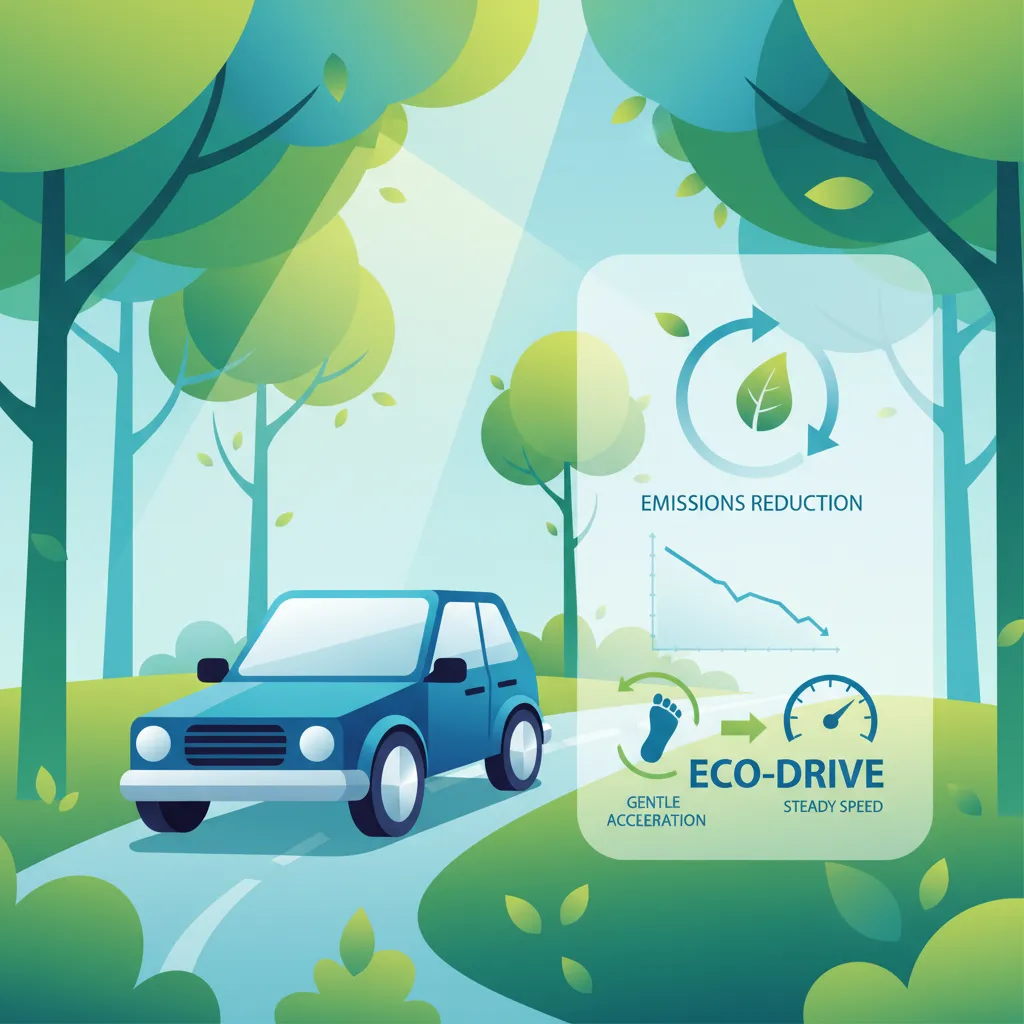
Lesson content overview
Driving is an everyday activity for many, but its environmental impact and operational costs can vary significantly based on driver behaviour. This lesson, part of your Polish Driving Theory – Comprehensive Category B License Preparation, explores sustainable driving practices, often called eco-driving or green driving. We will consolidate essential eco-driving techniques and place them within the broader context of environmental responsibility, highlighting how conscious choices behind the wheel can lead to substantial benefits for your wallet, your vehicle, and the planet.
Understanding and implementing these principles is crucial not only for personal savings but also for public health and compliance with Polish and European Union environmental legislation. By mastering these techniques, you will develop driving habits that are both economical and environmentally friendly, contributing to reduced pollution and the conservation of valuable resources.
Eco-driving encompasses a set of intelligent driving behaviours and vehicle maintenance practices designed to minimise fuel consumption and harmful emissions. Beyond the obvious benefit of saving money on fuel, sustainable driving significantly reduces your vehicle's carbon footprint and contributes to cleaner air, particularly in urban areas.
Every litre of fuel burned releases greenhouse gases, primarily carbon dioxide (CO₂), into the atmosphere, contributing to climate change. Additionally, vehicles emit other pollutants like nitrogen oxides (NOₓ) and particulate matter (PM), which have direct adverse effects on human respiratory health and local air quality. By reducing fuel consumption through eco-driving, you directly lessen your contribution to these environmental challenges. Furthermore, smoother driving reduces wear and tear on your vehicle's components, such as brakes and tires, leading to lower maintenance costs and extending the vehicle's lifespan.
This approach also aligns with Polish traffic law, which mandates vehicles to be in proper technical condition and drivers to operate them safely, implicitly encouraging practices that reduce unnecessary stress on the vehicle and its systems.
At its heart, eco-driving is about applying a scientific understanding of how vehicles consume energy to minimise waste. It integrates physics, vehicle dynamics, and behavioural strategies to achieve optimal efficiency while maintaining high standards of road safety.
When a vehicle moves, it expends energy to overcome several forms of resistance. The primary energy losses occur through:
Eco-driving strategies aim to reduce these energy losses. For instance, maintaining steady speeds minimises kinetic energy changes, while proper tire pressure reduces rolling resistance. Understanding these physical principles helps drivers make informed decisions that conserve energy.
Predictive driving, or anticipatory driving, is a cornerstone of eco-driving. It involves constantly scanning the road ahead and around you to anticipate traffic flow, potential hazards, and upcoming changes like traffic lights or pedestrian crossings. By predicting these events, you can adjust your speed early, allowing for gentle deceleration (often by simply lifting your foot off the accelerator and coasting) rather than abrupt braking.
This smooth approach avoids unnecessary acceleration, which is a major consumer of fuel. It also reduces the need for hard braking, saving wear on your brakes and tires. Predictive driving doesn't just save fuel; it also makes your driving safer by creating more time for reaction and reducing sudden movements that might surprise other road users. This concept builds directly on lessons learned in Speed Management and Stopping Distances.
A well-maintained vehicle operates more efficiently. Regular checks and servicing ensure that all components are working as designed, preventing excessive fuel consumption and emissions. Key aspects include:
Polish traffic law, specifically Article 84 of the Road Traffic Act, requires vehicles to be in proper technical condition, including meeting tire tread depth and pressure requirements. Neglecting maintenance not only harms the environment and your wallet but can also lead to legal penalties.
The total mass of your vehicle, including passengers, cargo, and any accessories, directly influences fuel consumption. More weight means more energy is required to accelerate and maintain speed. Similarly, anything that disrupts the vehicle's natural aerodynamic shape, such as roof racks or open windows at high speeds, increases air resistance.
To improve efficiency, remove unnecessary items from your vehicle, especially heavy ones. If you use roof racks or roof boxes, take them off when they are not needed. Keep windows closed at higher speeds to maintain aerodynamic efficiency. Overloading your vehicle beyond the manufacturer's specified mass is also illegal under Article 86 of the Polish Road Traffic Act and compromises safety by affecting braking distances and handling.
Engine idling occurs when the engine is running but the vehicle is stationary. During idling, your car burns fuel without moving, producing emissions needlessly. This is particularly wasteful in situations like waiting at long traffic lights, in congestion, or during extended stops (e.g., waiting for a passenger).
Modern vehicles often come equipped with automatic stop-start systems that turn off the engine when the vehicle comes to a halt and restart it automatically when you release the brake pedal or engage the clutch. If your vehicle doesn't have this feature, consider manually turning off the engine if you anticipate being stopped for longer than 30 seconds, where local regulations permit.
Every vehicle has an optimal speed range where it achieves the best fuel economy per distance travelled. For most cars, this "sweet spot" is typically between 50 km/h and 80 km/h. Driving significantly above this range drastically increases aerodynamic drag, while driving too slowly in a high gear can "lug" the engine, making it inefficient.
Maintaining a steady speed within this optimal range on motorways and expressways, when traffic conditions allow, will yield the best fuel efficiency. Use cruise control on flat terrain where appropriate to help maintain a constant speed and avoid unnecessary fluctuations.
Implementing eco-driving principles involves mastering specific techniques that can be applied in various driving situations.
One of the most effective ways to save fuel is to accelerate gently and decelerate smoothly.
In urban traffic, try to "read" the lights ahead. If you see a distant traffic light turning red, you can often lift off the accelerator and coast, arriving at the light just as it turns green, or requiring only a minimal stop. This avoids a complete stop-start cycle.
Article 45 of the Polish Road Traffic Act requires drivers to operate vehicles without causing danger to other road users, which includes avoiding abrupt accelerations or decelerations that could destabilize traffic flow or increase the risk of rear-end collisions.
For manual transmission vehicles, choosing the correct gear is paramount for eco-driving. The goal is to keep the engine operating in its optimal RPM (revolutions per minute) range, which is typically between 1500-3000 RPM for most gasoline engines.
Article 53a of the Polish Road Traffic Act implies that drivers should not "over-rev" or improperly use the engine, which can lead to excessive noise and emissions. Proper gear selection respects these principles by maintaining optimal engine load.
Tire pressure is one of the easiest and most impactful eco-driving adjustments.
Locate the manufacturer's recommended tire pressure (in bar or PSI) for your vehicle, typically on a sticker inside the driver's door jamb or in the owner's manual. Note different pressures for front/rear tires and for varying loads.
Ensure tires are cold. Remove the valve cap from one tire.
Press a tire pressure gauge firmly onto the valve stem. Read the pressure indicated on the gauge.
If the pressure is too low, add air using an air compressor (available at most petrol stations) until it matches the recommended level. If too high, release air by pressing the centre pin of the valve stem until it reaches the correct pressure.
Replace the valve cap. Repeat for all four tires, and don't forget the spare tire if applicable.
Under-inflated tires increase rolling resistance, leading to higher fuel consumption (up to 3% for every 0.2 bar below recommended pressure) and accelerated tire wear. They also compromise vehicle handling and increase the risk of tire blowouts due to excessive heat buildup.
Every extra kilogram your vehicle carries requires more energy to move. Similarly, anything that disrupts the smooth flow of air around your car increases drag.
Overloading your vehicle is not only inefficient but also dangerous. It can severely impact braking distance, vehicle handling, and the lifespan of suspension components. Polish law prohibits overloading a vehicle beyond its permissible maximum mass (DMC, dopuszczalna masa całkowita).
Minimising the time your engine spends idling is a key eco-driving practice.
Some Polish municipalities, such as Warsaw, may have local ordinances limiting or prohibiting engine idling for prolonged periods in certain zones, like residential areas or near schools, to reduce local air pollution. It's essential to be aware of and comply with such local regulations.
Choosing your route strategically can significantly impact fuel consumption by minimising distance, avoiding stop-and-go traffic, and reducing time spent idling.
Before starting a long journey, consider road conditions and potential diversions. Planning allows you to choose routes that prioritise steady speeds over sheer shortest distance.
Air conditioning (AC) and other electrical accessories (e.g., heated seats, defrosters) draw power from the engine, increasing its load and, consequently, fuel consumption.
While there are no specific laws in Poland governing AC usage for efficiency, conscious use is part of overall environmental stewardship. The AC system can increase fuel consumption by 5-10%, particularly in stop-and-go traffic.
Regular vehicle inspections are not just a legal requirement but also a crucial part of sustainable driving.
Article 118 of the Polish Road Traffic Act mandates these technical inspections. Failure to pass can result in fines and even suspension of vehicle registration, highlighting the importance of maintaining your vehicle in roadworthy and environmentally compliant condition.
Sustainable driving is not just a voluntary practice; it is increasingly supported by legal frameworks in Poland and the European Union.
Polish traffic law (Kodeks Drogowy) includes several articles that implicitly or explicitly support sustainable driving:
These regulations ensure that vehicles on Polish roads are maintained to a standard that minimises their environmental impact and ensures safety.
Beyond national laws, some Polish municipalities are implementing local ordinances to address specific environmental concerns:
As a member of the European Union, Poland adheres to EU regulations concerning vehicle emissions.
Adherence to these directives is crucial for manufacturers and indirectly for drivers, who are expected to maintain their vehicles in a condition that complies with these standards throughout their operational life.
Even with good intentions, drivers can unknowingly adopt habits that undermine fuel efficiency and environmental efforts.
Eco-driving isn't a one-size-fits-all approach. Your techniques need to adapt to changing conditions.
Predictive and smooth driving creates a safer environment for everyone. Anticipating the movements of pedestrians and cyclists reduces the need for sudden braking, which can be unsettling for them and increase the risk of rear-end collisions with other vehicles.
Embracing sustainable driving practices yields a multitude of benefits, extending far beyond individual savings.
Studies, including those from the European Environment Agency, consistently demonstrate that eco-driving can reduce fuel consumption by 5-15%, with a comparable reduction in CO₂ emissions. This collective effort has a substantial positive impact on public health and the environment.
Sustainable driving practices are an indispensable part of modern, responsible driving. As a future Category B license holder in Poland, integrating these techniques into your daily driving routine will not only benefit your personal finances and vehicle's lifespan but also contribute significantly to environmental protection and road safety. By understanding the physics behind fuel consumption, adopting predictive driving habits, maintaining your vehicle diligently, and being aware of both national and local regulations, you become a more skilled, economical, and environmentally conscious driver.
This lesson covers sustainable driving practices (eco-driving) essential for the Polish Category B theory exam, explaining how to reduce fuel consumption and environmental impact through smoother driving techniques. Key principles include predictive driving to anticipate traffic flow and coast early, maintaining correct tire pressure within manufacturer specifications, optimizing gear selection to keep the engine in its optimal RPM range, and reducing unnecessary vehicle weight and aerodynamic drag. The lesson also addresses Polish legal requirements, including vehicle technical inspections (Przegląd Techniczny) under Article 118 and local Low-Emission Zones in cities like Warsaw and Kraków. Understanding these eco-driving techniques prepares learners for exam questions while establishing habits that save money, extend vehicle lifespan, and protect the environment.
A short set of high-value points that capture the most important learning from this lesson.
Eco-driving reduces fuel consumption and harmful emissions by minimising aerodynamic drag, rolling resistance, and kinetic energy dissipation through smoother driving habits
Predictive driving based on road scanning and anticipation allows early coasting and avoids unnecessary acceleration and braking cycles
Proper vehicle maintenance—correct tire pressure, engine tune-up, and functional emission controls—is essential for optimal fuel economy and legal compliance
Vehicle load reduction and aerodynamic cleanliness directly impact fuel consumption by decreasing the energy required for acceleration and overcoming air resistance
Understanding the optimal RPM range and selecting gears appropriately prevents engine lugging and maintains efficient power delivery
Explore all units and lessons included in this driving theory course.
For most vehicles, the fuel-efficiency sweet spot is between 50–80 km/h; cruise control on flat motorways helps maintain constant speed within this range
Check tire pressure when cold (before driving or after 3+ hours stationary); under-inflated tires can increase fuel consumption by up to 3% per 0.2 bar below recommended pressure
Lift off the accelerator early when anticipating a stop—modern engines engage fuel cut-off during coasting in gear above certain RPMs, consuming no fuel
Article 84 of the Polish Road Traffic Act requires vehicles to be in proper technical condition, including tire tread depth minimum of 1.6 mm and correct pressure
Overloading a vehicle beyond its permissible maximum mass (DMC) is prohibited by Article 86 and negatively affects braking distances, handling, and fuel efficiency
Accelerating too aggressively from stops by flooring the accelerator, which dramatically increases fuel consumption and component wear
Failing to check tire pressure regularly or checking it after driving when tires are warm, resulting in inaccurate readings and reduced efficiency
Keeping roof racks, bike carriers, or roof boxes mounted when not in use, which can increase fuel consumption by 10–20% due to aerodynamic drag
Letting the engine idle for extended periods (more than 30 seconds) without necessity, wasting fuel and producing unnecessary emissions
Using cruise control on hilly terrain where it causes the engine to over-rev or lug as it struggles to maintain a set speed, making manual control more efficient
Lesson content overview
A short set of high-value points that capture the most important learning from this lesson.
Eco-driving reduces fuel consumption and harmful emissions by minimising aerodynamic drag, rolling resistance, and kinetic energy dissipation through smoother driving habits
Predictive driving based on road scanning and anticipation allows early coasting and avoids unnecessary acceleration and braking cycles
Proper vehicle maintenance—correct tire pressure, engine tune-up, and functional emission controls—is essential for optimal fuel economy and legal compliance
Vehicle load reduction and aerodynamic cleanliness directly impact fuel consumption by decreasing the energy required for acceleration and overcoming air resistance
Understanding the optimal RPM range and selecting gears appropriately prevents engine lugging and maintains efficient power delivery
Explore all units and lessons included in this driving theory course.
For most vehicles, the fuel-efficiency sweet spot is between 50–80 km/h; cruise control on flat motorways helps maintain constant speed within this range
Check tire pressure when cold (before driving or after 3+ hours stationary); under-inflated tires can increase fuel consumption by up to 3% per 0.2 bar below recommended pressure
Lift off the accelerator early when anticipating a stop—modern engines engage fuel cut-off during coasting in gear above certain RPMs, consuming no fuel
Article 84 of the Polish Road Traffic Act requires vehicles to be in proper technical condition, including tire tread depth minimum of 1.6 mm and correct pressure
Overloading a vehicle beyond its permissible maximum mass (DMC) is prohibited by Article 86 and negatively affects braking distances, handling, and fuel efficiency
Accelerating too aggressively from stops by flooring the accelerator, which dramatically increases fuel consumption and component wear
Failing to check tire pressure regularly or checking it after driving when tires are warm, resulting in inaccurate readings and reduced efficiency
Keeping roof racks, bike carriers, or roof boxes mounted when not in use, which can increase fuel consumption by 10–20% due to aerodynamic drag
Letting the engine idle for extended periods (more than 30 seconds) without necessity, wasting fuel and producing unnecessary emissions
Using cruise control on hilly terrain where it causes the engine to over-rev or lug as it struggles to maintain a set speed, making manual control more efficient
Explore search topics learners often look for when studying Sustainable Driving Practices and Environmental Impact. These topics reflect common questions about road rules, driving situations, safety guidance, and lesson level theory preparation for learners in Poland.
Browse additional driving theory lessons that cover connected traffic rules, road signs, and common driving situations related to this topic. Improve your understanding of how different rules interact across everyday traffic scenarios.
Explore advanced strategies for sustainable driving in Poland, focusing on minimising fuel consumption and environmental impact. Learn how predictive driving and vehicle maintenance further enhance eco-efficiency.
This lesson introduces the concept of eco-driving, a style that promotes fuel efficiency and reduces environmental impact. It teaches techniques such as maintaining a steady speed, anticipating traffic flow to avoid unnecessary braking, and ensuring the vehicle is well-maintained. These simple habits can lead to significant savings on fuel and reduce a driver's carbon footprint.
This lesson introduces the principles of eco-driving, a set of techniques designed to minimize fuel consumption and emissions. It explains how factors like smooth acceleration, maintaining a steady speed, and anticipating traffic flow can lead to significant fuel savings. Learners will understand the benefits of reducing unnecessary idling, using cruise control effectively on appropriate terrain, and planning routes to avoid congestion, contributing to both economic and environmental sustainability.
This lesson explores the environmental impact of HGV operations and the regulations designed to mitigate it. It covers modern emission control systems and standards (e.g., Euro 6), and the importance of compliance with rules governing noise pollution. The content reinforces eco-driving techniques as a primary method for reducing fuel consumption and emissions, promoting the driver's role in achieving more sustainable and environmentally friendly logistics operations.
This lesson provides practical methods for maintaining a safe buffer zone behind the vehicle in front. It explains the 'two-second rule' as a minimum following distance in good conditions and how to increase it to three or more seconds in adverse weather. This skill is critical for allowing enough time to react and brake safely to avoid rear-end collisions.
This lesson introduces defensive driving principles for rural settings, teaching learners how to continually scan the environment and anticipate potential hazards. It discusses the unique challenges posed by slow-moving agricultural traffic, field entrances, and unpredictable farm equipment maneuvers. The lesson emphasizes proactive decision-making and early brake application to avoid collisions in mixed traffic.
Understand the broader environmental consequences of driving and how eco-driving principles contribute to sustainability. Learn about Polish and EU regulations affecting vehicle emissions and responsible motoring.
This lesson introduces the concept of eco-driving, a style that promotes fuel efficiency and reduces environmental impact. It teaches techniques such as maintaining a steady speed, anticipating traffic flow to avoid unnecessary braking, and ensuring the vehicle is well-maintained. These simple habits can lead to significant savings on fuel and reduce a driver's carbon footprint.
This lesson introduces the principles of eco-driving, a set of techniques designed to minimize fuel consumption and emissions. It explains how factors like smooth acceleration, maintaining a steady speed, and anticipating traffic flow can lead to significant fuel savings. Learners will understand the benefits of reducing unnecessary idling, using cruise control effectively on appropriate terrain, and planning routes to avoid congestion, contributing to both economic and environmental sustainability.
This lesson explores the environmental impact of HGV operations and the regulations designed to mitigate it. It covers modern emission control systems and standards (e.g., Euro 6), and the importance of compliance with rules governing noise pollution. The content reinforces eco-driving techniques as a primary method for reducing fuel consumption and emissions, promoting the driver's role in achieving more sustainable and environmentally friendly logistics operations.
In this lesson, learners explore riding on rural and countryside roads, where road markings may be sparse and surface conditions varied. The content covers safe overtaking in single-lane sections, interaction with agricultural vehicles and animals, and the handling of gravel or uneven surfaces. Learners will also study the importance of anticipating curves and adjusting speed to light conditions, equipping them with the skills needed for safe countryside travel.
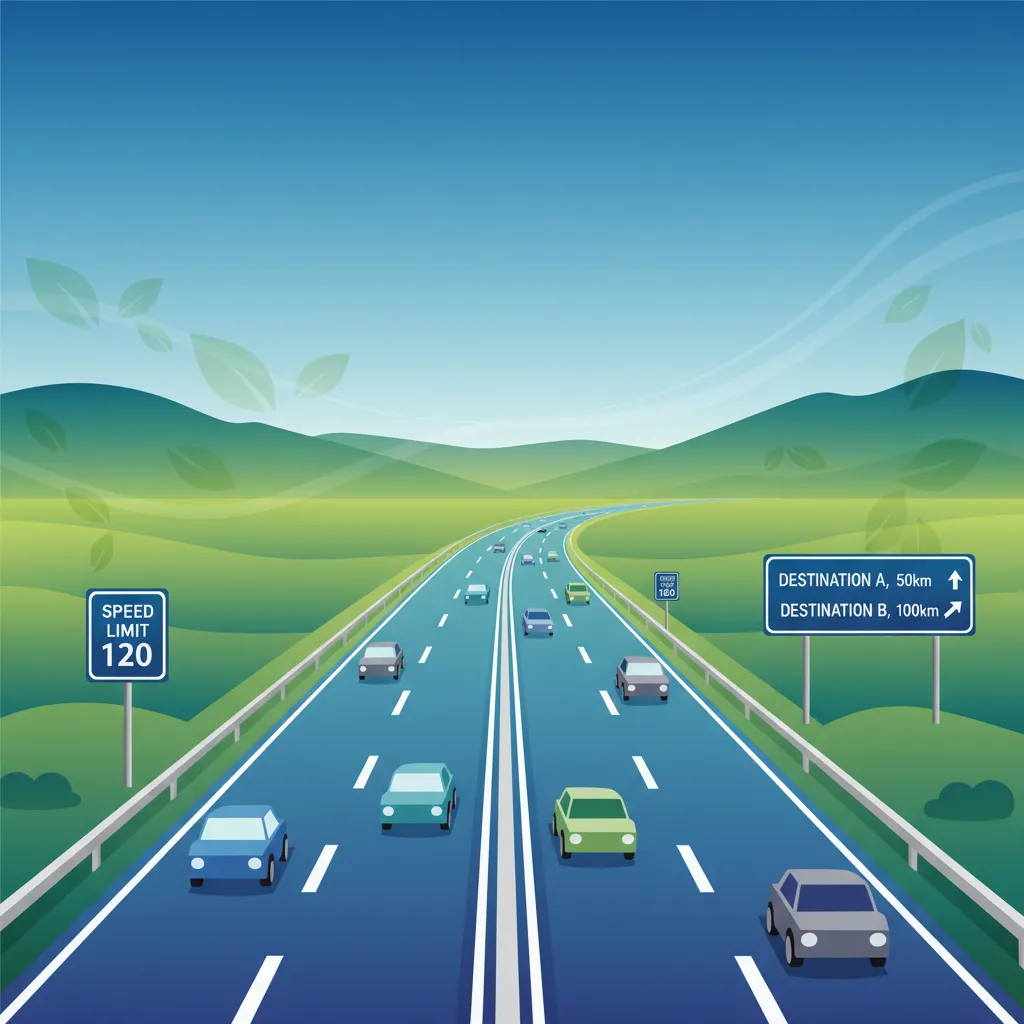
This lesson details the rules and best practices for driving on Poland's fastest roads. It covers the higher speed limits, the strict lane discipline of keeping right except to overtake, and prohibitions on stopping. The aim is to ensure drivers can handle the demands of sustained high-speed travel safely and efficiently.
This lesson explores the unique characteristics of driving on rural roads. It highlights potential hazards such as sharp, unbanked curves, poor road surfaces, and limited visibility due to hills and vegetation. The content teaches drivers to anticipate these conditions and adjust their speed and position to navigate safely.
Find clear answers to common questions learners have about Sustainable Driving Practices and Environmental Impact. Learn how the lesson is structured, which driving theory objectives it supports, and how it fits into the overall learning path of units and curriculum progression in Poland. These explanations help you understand key concepts, lesson flow, and exam focused study goals.
The core principles of eco-driving for the Polish theory test include smooth acceleration and braking, maintaining a steady speed, anticipating traffic to avoid unnecessary stops, and ensuring your vehicle is well-maintained. For the Category B exam, understanding how these techniques reduce fuel consumption and emissions is key.
Maintaining correct tyre pressure is crucial for fuel efficiency. Under-inflated tyres increase rolling resistance, meaning your engine has to work harder to move the vehicle, leading to higher fuel consumption and increased CO2 emissions. Always check your tyre pressure regularly according to your vehicle manufacturer's recommendations for optimal performance and economy, a common topic in Polish driving theory.
Yes, removing unnecessary weight from your vehicle is a simple yet effective eco-driving strategy. Extra weight requires more fuel to move, especially during acceleration. For the Category B theory exam, you might encounter questions asking about how to improve fuel economy; removing items you don't need from your boot or cabin is a valid answer.
On the Polish Category B theory test, expect questions that test your understanding of how driving habits affect fuel consumption and environmental pollution. This includes topics like speed, acceleration, vehicle maintenance (tyres, filters), and avoiding unnecessary idling. The focus is on promoting responsible and sustainable driving.
Eco-driving often correlates with safer driving. Techniques like smooth acceleration and braking, anticipating traffic, and maintaining a steady speed reduce sudden manoeuvres, making your driving more predictable for others. This smooth, consistent driving style, emphasised in Polish driving theory, generally leads to fewer risky situations and a lower chance of accidents.
Build custom practice sessions tailored precisely to your needs. Focus on areas requiring improvement, review specific Polish road signs, or master complex traffic rules to ensure full preparation for your official driving license exam.