
Safe driving in Poland hinges on constant observation. This lesson focuses on mastering the use of your mirrors and performing critical shoulder checks to eliminate blind spots. Understanding these fundamental techniques is key to safely navigating traffic, changing lanes, and turning, preparing you for the practical aspects of the Category B driving theory exam.

Lesson content overview
Driving safely requires constant awareness of your surroundings. This comprehensive guide, part of your Polish Driving Theory – Comprehensive Category B License Preparation, will equip you with the fundamental techniques of systematic observation, correct mirror use, and crucial shoulder checks. Mastering these skills is not only vital for passing your Category B driving test but also for maintaining situational awareness and preventing collisions on Polish roads.
Systematic observation forms the bedrock of safe driving. It involves a continuous, structured process of gathering visual information from various sources – your mirrors, direct line-of-sight through windows, and peripheral vision – to build a complete mental picture of the traffic environment around your vehicle. This continuous scanning allows you to anticipate hazards, make informed decisions, and execute maneuvers safely, thereby significantly reducing the risk of accidents.
Understanding your vehicle's limitations, particularly its blind spots, and actively compensating for them through proper mirror adjustment and shoulder checks, is a core safety principle. Polish traffic law, like many others, emphasizes the driver's responsibility to monitor traffic actively before any change in vehicle path or speed. This foundational knowledge ties into later lessons on vehicle controls, priority rules, speed management, and complex maneuvers like merging and lane changes.
Modern vehicles are equipped with several mirrors, each designed to provide a specific field of view. Proper understanding and adjustment of these mirrors are the first steps toward comprehensive observation.
The interior rear-view mirror is typically mounted on the windshield and provides a direct view of the traffic directly behind your vehicle through the rear window. It is crucial for monitoring vehicles directly following you, assessing their speed, and maintaining awareness of the overall traffic flow to your rear.
Mounted on the driver's side (Left Side-View Mirror – LSVM) and passenger's side (Right Side-View Mirror – RSVM) doors or pillars, these mirrors extend your field of vision to the sides and rear-quarter quadrants of your vehicle. The LSVM shows traffic to your left and slightly behind, while the RSVM covers the right side. In Poland, for left-hand drive vehicles, the RSVM often features a slightly wider or "fold-out" setting, designed to provide enhanced blind-spot coverage on that side.
All mirrors must be correctly positioned to provide an optimal field of view without requiring excessive head movement. Improper adjustment drastically reduces your observable area, creating larger blind spots and increasing the risk of missing critical hazards. Before every journey, and especially after anyone else has driven the vehicle or after adjusting your seat, you must verify and readjust all mirrors.
Correct mirror adjustment is fundamental for maximizing visibility and minimizing blind spots. This procedure should be performed before you start driving and after any changes to your seating position.
Adjust Your Driving Position: Sit comfortably in your normal driving position. Adjust your seat, steering wheel, and headrest until you have optimal control and visibility of the road ahead, ensuring you can reach all pedals and controls comfortably.
Set the Interior Rear-View Mirror (IRVM): Adjust the IRVM so that you can see the entire rear window with minimal blind spots. You should be able to see the full width and height of the road directly behind your vehicle without moving your head significantly.
Adjust the Left Side-View Mirror (LSVM): Lean slightly towards the left (towards the window). Adjust the LSVM so that you can just barely see the rear quarter panel of your own vehicle. The goal is to maximize the view of the lane immediately beside your vehicle and a portion of the lane behind it, while minimizing the overlap with the IRVM’s view.
Adjust the Right Side-View Mirror (RSVM): Lean slightly towards the right (towards the center of the vehicle). Adjust the RSVM so that you can just barely see the rear quarter panel of your own vehicle. Similar to the LSVM, this setup maximizes your view of the adjacent right lane and rear-right quadrant. Remember, for the right-hand side in left-hand drive countries like Poland, you might have a wide-angle setting to further enhance blind-spot coverage.
Verify Adjustment: Once adjusted, check that each mirror provides a clear view of the adjacent lane up to your vehicle’s rear bumper without significant overlap between the interior and side mirrors. You should be able to see continuous traffic flow transitioning from your IRVM to your side mirrors.
After making any adjustments to your seat position, always re-check your mirrors. Even slight shifts can impact your field of view and create new blind spots, compromising your situational awareness.
Despite correctly adjusted mirrors, every vehicle has areas that remain hidden from direct view. These are known as blind spots. Recognizing and actively compensating for these zones is critical to prevent collisions, especially with smaller vehicles like motorcycles or bicycles that can easily disappear from mirror view.
To structure your observation, it's helpful to think of the areas around your vehicle in distinct zones:
A structured approach to observation ensures you consistently check all critical areas before executing a maneuver. The ABC-D method provides a repeatable safety checklist that minimizes missed checks and reduces reliance on memory.
A – Mirrors: Begin with a quick, systematic glance at all three mirrors: the Interior Rear-View Mirror (IRVM), then the Left Side-View Mirror (LSVM), and finally the Right Side-View Mirror (RSVM). This provides an initial overview of traffic behind and to your sides, identifying potential hazards.
B – Blind Spot Check (Shoulder Check): Before any maneuver that changes your vehicle's lateral position (e.g., lane change, merging, turning), perform a brief, over-the-shoulder head turn to look directly into the blind spot on the side of your intended movement (Zone D). This is non-negotiable for safety.
C – Traffic Ahead: After checking your mirrors and blind spots, quickly scan the road ahead again for any immediate hazards, signals, or changes in traffic flow. Ensure your forward path remains clear and safe.
D – Decision: Based on the comprehensive information gathered from your mirrors, blind spot check, and forward scan, confirm that the intended maneuver can be executed safely. If it is safe, then proceed, using your turn signal appropriately to communicate your intentions.
Never substitute mirror checks for a shoulder check. Mirrors compensate for rearward visibility, but only a direct head turn can confirm the absence of vehicles in your immediate blind spots. Failing to do so is a common cause of side-swipe collisions.
The shoulder check is a brief, crucial head turn that allows you to directly view the area of the road not covered by any of your mirrors – the blind spot. It is indispensable for detecting hidden vehicles, especially smaller ones like motorcycles or bicycles, which are easily obscured.
While performing a shoulder check, avoid fixating on the blind spot for too long. Your forward view is still critical for maintaining control of your vehicle's path. The check should be a quick "glance and return."
Effective observation isn't just about what you check, but when and how often. The timing and frequency of your checks must adapt to your driving environment and speed.
Maintaining a continuous visual sweep of your surroundings is essential. In normal traffic conditions, aim to periodically check your mirrors and scan the road ahead every 5 to 8 seconds. This continuous scanning detects developing hazards that weren't present during your last check, such as a fast-approaching vehicle, a sudden braking situation ahead, or changes in road conditions.
For any planned maneuver that involves changing your vehicle's path or speed, a full observation sequence (mirrors + shoulder check) must be conducted at appropriate distances and speeds. For example, before a lane change, merge, or turn, you should perform your comprehensive checks at least 2 to 3 seconds before initiating the actual maneuver. This lead time allows for sufficient perception, decision-making, and execution, giving you enough time to react if the path isn't clear or to abort the maneuver if unsafe.
The faster you drive, the more frequently and further ahead you need to observe. At higher speeds, vehicles cover ground much quicker, significantly reducing your available reaction time.
Applying systematic observation to specific driving maneuvers is paramount for safety.
Changing lanes requires meticulous observation to avoid collisions and comply with traffic laws.
Turning, especially at intersections, also requires a precise observation routine to ensure right-of-way is respected and all hazards are detected.
Polish traffic law (Prawo o ruchu drogowym) places clear mandates on drivers regarding observation, emphasizing its importance for safety and legal compliance.
These regulations underscore that observation is not merely a recommendation but a legal obligation for drivers in Poland, carrying potential penalties for non-compliance.
Several common misconceptions can compromise a driver's observation effectiveness and lead to dangerous situations.
Effective observation is dynamic and must be adapted to changing environmental conditions, road types, and vehicle states. A static approach will not provide adequate safety.
The link between observation skills and driving safety is direct and undeniable. Understanding these cause-and-effect relationships reinforces why these techniques are so vital for preventing accidents and ensuring legal compliance.
To drive safely and pass your Polish Category B driving test, mastering observation is non-negotiable. Here's a recap of the essential principles:
Safe driving in Poland requires mastering systematic observation, which combines correctly adjusted mirrors, mandatory shoulder checks, and continuous visual scanning. The ABC-D method (Mirrors → Blind spot check → Check ahead → Decision) provides a structured routine for safe maneuvers like lane changes and turns. Proper mirror adjustment maximizes rear and side visibility, but blind spots remain—this is why shoulder checks are legally required and cannot be substituted. Polish traffic law mandates active observation before overtaking, changing lanes, or turning, with specific penalties for non-compliance. Observation frequency must adapt to speed, weather, and road type; higher speeds demand more frequent checks and earlier hazard detection to maintain safe reaction margins.
A short set of high-value points that capture the most important learning from this lesson.
Use the ABC-D observation sequence (All mirrors → Blind spot check → Check ahead → Decision) before every maneuver.
Shoulder checks are mandatory and non-negotiable—mirrors cannot reveal objects directly in your blind spot.
Polish traffic law (Prawo o ruchu drogowym) legally obliges drivers to observe surroundings before overtaking, turning, or changing lanes.
Adjust mirrors before every journey; recheck them after any significant steering input as your perspective and blind spots shift.
Observation frequency must increase with speed—at 120 km/h you cover 33 meters per second, leaving minimal reaction time if hazards are detected late.
Explore all units and lessons included in this driving theory course.
Zone D (direct blind spots) requires a shoulder check because vehicles here are completely invisible in mirrors.
All three mirrors (IRVM, LSVM, RSVM) must be checked—no single mirror provides complete coverage of surrounding traffic.
Motorcycles, cyclists, and pedestrians are easily hidden in blind spots due to their smaller profile; always assume they may be there.
Continuous scanning should occur every 5–8 seconds in normal conditions, with comprehensive checks at least 2–3 seconds before initiating any lateral maneuver.
Even with electronic blind-spot monitors installed, manual shoulder checks remain the primary verification method.
Relying on mirrors alone and skipping shoulder checks before lane changes, which leaves direct blind spots unchecked.
Failing to re-check mirrors after making steering adjustments—vehicle orientation changes, altering blind spot positions.
Not scanning thoroughly for smaller vehicles (motorcycles, bicycles) that can completely disappear from mirror view in blind spots.
Insufficient observation frequency at higher speeds, resulting in late detection of rapidly approaching vehicles.
Assuming electronic blind-spot detection systems replace the need for manual shoulder checks.
Lesson content overview
A short set of high-value points that capture the most important learning from this lesson.
Use the ABC-D observation sequence (All mirrors → Blind spot check → Check ahead → Decision) before every maneuver.
Shoulder checks are mandatory and non-negotiable—mirrors cannot reveal objects directly in your blind spot.
Polish traffic law (Prawo o ruchu drogowym) legally obliges drivers to observe surroundings before overtaking, turning, or changing lanes.
Adjust mirrors before every journey; recheck them after any significant steering input as your perspective and blind spots shift.
Observation frequency must increase with speed—at 120 km/h you cover 33 meters per second, leaving minimal reaction time if hazards are detected late.
Explore all units and lessons included in this driving theory course.
Zone D (direct blind spots) requires a shoulder check because vehicles here are completely invisible in mirrors.
All three mirrors (IRVM, LSVM, RSVM) must be checked—no single mirror provides complete coverage of surrounding traffic.
Motorcycles, cyclists, and pedestrians are easily hidden in blind spots due to their smaller profile; always assume they may be there.
Continuous scanning should occur every 5–8 seconds in normal conditions, with comprehensive checks at least 2–3 seconds before initiating any lateral maneuver.
Even with electronic blind-spot monitors installed, manual shoulder checks remain the primary verification method.
Relying on mirrors alone and skipping shoulder checks before lane changes, which leaves direct blind spots unchecked.
Failing to re-check mirrors after making steering adjustments—vehicle orientation changes, altering blind spot positions.
Not scanning thoroughly for smaller vehicles (motorcycles, bicycles) that can completely disappear from mirror view in blind spots.
Insufficient observation frequency at higher speeds, resulting in late detection of rapidly approaching vehicles.
Assuming electronic blind-spot detection systems replace the need for manual shoulder checks.
Explore search topics learners often look for when studying Mirror Use, Shoulder Checks, and Observation. These topics reflect common questions about road rules, driving situations, safety guidance, and lesson level theory preparation for learners in Poland.
Browse additional driving theory lessons that cover connected traffic rules, road signs, and common driving situations related to this topic. Improve your understanding of how different rules interact across everyday traffic scenarios.
Go beyond basic mirror use to understand critical blind spot detection and the correct execution of shoulder checks. This lesson is essential for safe lane changes, turns, and avoiding collisions, covering advanced observation techniques vital for Polish theory exams.

In this lesson, learners focus on the identification and management of blind spots that affect motorcyclists, particularly when sharing the road with larger vehicles such as trucks and buses. The content covers the use of side mirrors, head-turn techniques, and optimal rider positioning to minimize blind-spot exposure. Learners will also study the characteristics of blind spots at intersections and during overtaking maneuvers to reduce collision risk.

This lesson introduces defensive driving principles for rural settings, teaching learners how to continually scan the environment and anticipate potential hazards. It discusses the unique challenges posed by slow-moving agricultural traffic, field entrances, and unpredictable farm equipment maneuvers. The lesson emphasizes proactive decision-making and early brake application to avoid collisions in mixed traffic.
This lesson provides practical methods for maintaining a safe buffer zone behind the vehicle in front. It explains the 'two-second rule' as a minimum following distance in good conditions and how to increase it to three or more seconds in adverse weather. This skill is critical for allowing enough time to react and brake safely to avoid rear-end collisions.
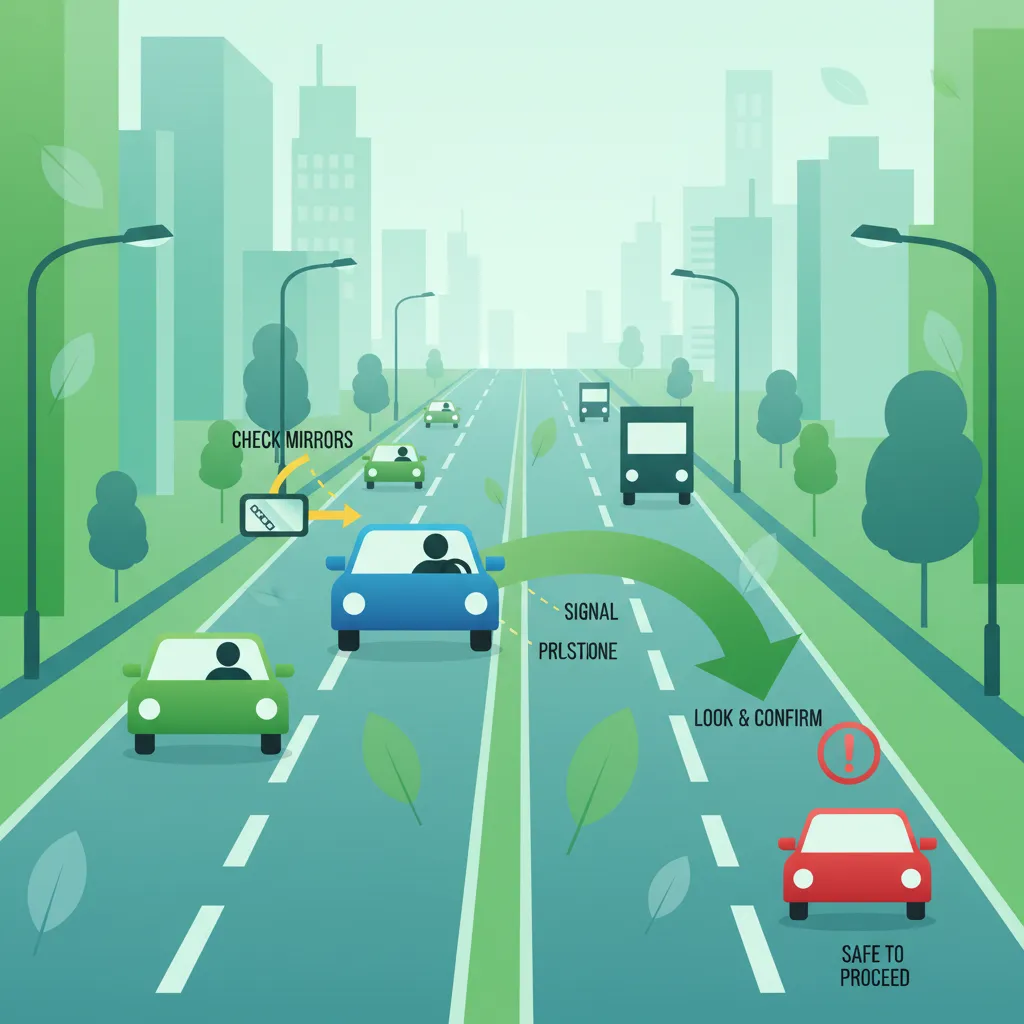
This lesson adapts lane-changing principles for the challenging environment of dense city traffic. It reinforces the critical 'mirror, signal, maneuver' sequence, with a strong focus on checking blind spots immediately before moving. The content advises on judging gaps in traffic and executing the lane change smoothly and decisively.

This lesson teaches fundamental maneuvering skills essential for everyday driving. It provides a step-by-step guide to reversing in a straight line and around a corner, emphasizing constant observation. The lesson also details the procedure for a three-point turn, a necessary skill for changing direction on a narrow road safely and efficiently.

This lesson explores the unique characteristics of driving on rural roads. It highlights potential hazards such as sharp, unbanked curves, poor road surfaces, and limited visibility due to hills and vegetation. The content teaches drivers to anticipate these conditions and adjust their speed and position to navigate safely.

This lesson teaches the crucial concept that drivers must always adapt their speed to the current conditions. It explains how factors like rain, fog, ice, heavy traffic, and poor visibility reduce safety margins and require a lower speed than the posted limit. This principle of defensive driving is essential for preventing accidents in challenging situations.
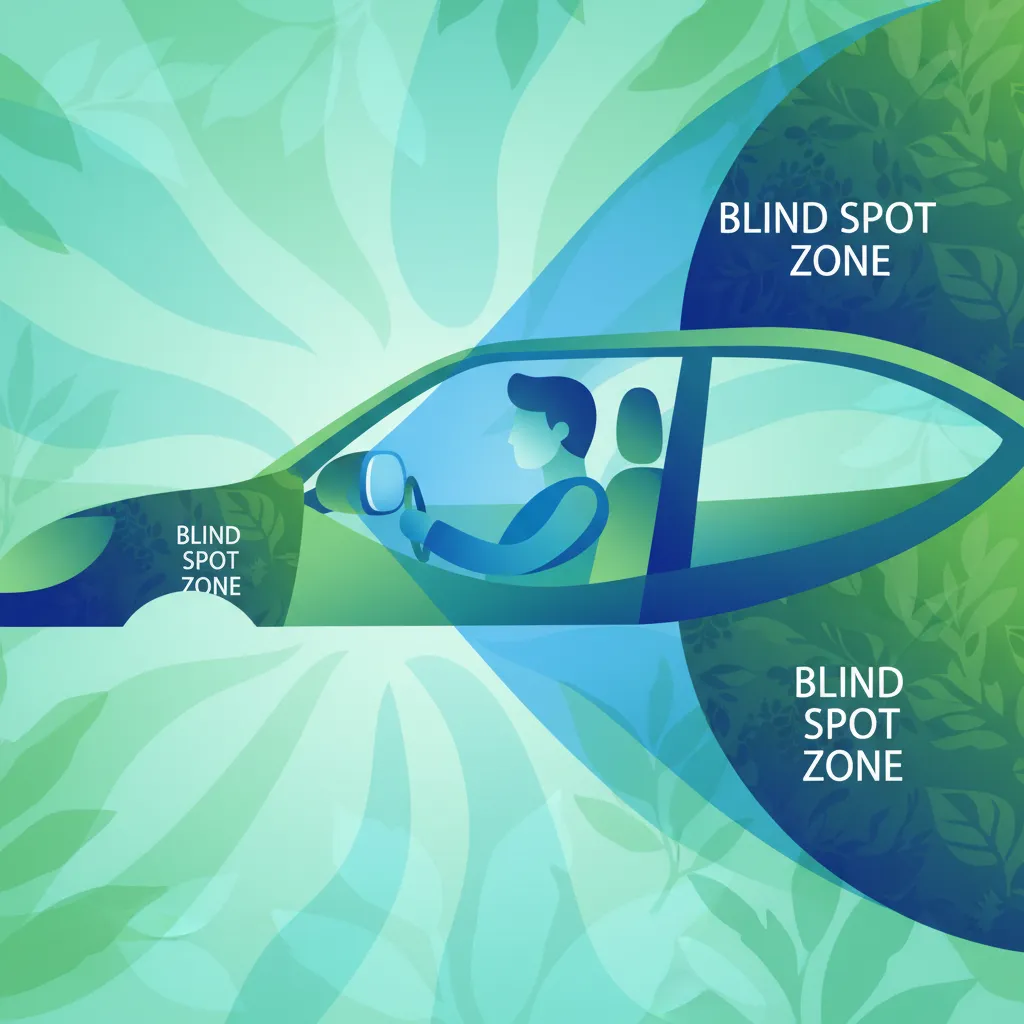
This lesson details the precise adjustment of interior and exterior mirrors to compensate for a bus's large blind spots. Learners will understand how to achieve maximum coverage of rear and side zones through proper mirror setup. It also addresses how passenger load and lighting conditions affect visibility and provides guidelines for maintaining clear sightlines.

This lesson provides essential guidance for driving in fog, one of the most dangerous conditions. It instructs on the correct use of low-beam headlights and fog lights to maximize visibility without causing glare. The core advice is to significantly reduce speed and use the edge of the road or markings as a guide.

This lesson addresses the challenges of driving after dark. It covers the correct use of high and low beam headlights to see and be seen, and techniques to avoid being dazzled by oncoming traffic. The content also touches on the increased risk of fatigue and reduced ability to judge speed and distance at night.
Learn how to dynamically adjust your observation techniques based on changing weather, lighting conditions, and specific road types like urban streets and motorways. Essential theory for safe driving and awareness in Poland.
This lesson teaches the crucial concept that drivers must always adapt their speed to the current conditions. It explains how factors like rain, fog, ice, heavy traffic, and poor visibility reduce safety margins and require a lower speed than the posted limit. This principle of defensive driving is essential for preventing accidents in challenging situations.
This lesson addresses the challenges of driving after dark. It covers the correct use of high and low beam headlights to see and be seen, and techniques to avoid being dazzled by oncoming traffic. The content also touches on the increased risk of fatigue and reduced ability to judge speed and distance at night.
This lesson explores the unique characteristics of driving on rural roads. It highlights potential hazards such as sharp, unbanked curves, poor road surfaces, and limited visibility due to hills and vegetation. The content teaches drivers to anticipate these conditions and adjust their speed and position to navigate safely.
This lesson adapts lane-changing principles for the challenging environment of dense city traffic. It reinforces the critical 'mirror, signal, maneuver' sequence, with a strong focus on checking blind spots immediately before moving. The content advises on judging gaps in traffic and executing the lane change smoothly and decisively.

This lesson details the specific driving adjustments needed for adverse weather. It focuses on how rain, snow, and ice affect vehicle dynamics and driver perception. Learners will study techniques to prevent hydroplaning, use winter tires effectively, and increase following distances on slippery surfaces while using safety systems like fog lights.

This lesson defines what constitutes a 'built-up area' in Poland, marked by specific informational signs. It explains the default speed limit of 50 km/h that applies within these zones unless otherwise indicated. The content highlights the need for increased vigilance due to higher traffic density and the frequent presence of pedestrians.
This lesson provides essential guidance for driving in fog, one of the most dangerous conditions. It instructs on the correct use of low-beam headlights and fog lights to maximize visibility without causing glare. The core advice is to significantly reduce speed and use the edge of the road or markings as a guide.

This lesson focuses on the specific challenges of driving in rainy conditions. It explains the phenomenon of hydroplaning, where tires lose contact with the road surface, and how to prevent it by reducing speed. The importance of good tire condition, effective windscreen wipers, and extending following distances is also covered in detail.
This lesson introduces defensive driving principles for rural settings, teaching learners how to continually scan the environment and anticipate potential hazards. It discusses the unique challenges posed by slow-moving agricultural traffic, field entrances, and unpredictable farm equipment maneuvers. The lesson emphasizes proactive decision-making and early brake application to avoid collisions in mixed traffic.

This lesson teaches drivers how to adapt their speed, following distance, and control inputs to safely navigate adverse conditions. It covers the challenges posed by rain, snow, and ice, explaining the loss of traction and the increased risk of skidding or aquaplaning. The content provides specific strategies for driving in fog, which reduces visibility, and strong crosswinds, which can affect the stability of a high-sided vehicle, promoting a proactive and defensive driving mindset.
Find clear answers to common questions learners have about Mirror Use, Shoulder Checks, and Observation. Learn how the lesson is structured, which driving theory objectives it supports, and how it fits into the overall learning path of units and curriculum progression in Poland. These explanations help you understand key concepts, lesson flow, and exam focused study goals.
Mirrors, while essential, cannot eliminate all blind spots – areas around your vehicle that are not visible through the mirrors alone. Performing a quick shoulder check directly behind you or to the side is crucial to detect any vehicles, cyclists, or pedestrians in these blind spots before changing direction or lane, a key safety requirement in Poland.
Regular mirror checks are vital for maintaining situational awareness. You should check your rearview mirror frequently, especially before braking or slowing down, and your side mirrors before changing lanes or turning. In Polish theory exams, questions often assess your understanding of appropriate mirror usage in various traffic scenarios.
Adjust your side mirrors so that you can see just a sliver of your own car's bodywork at the edge of the mirror. The majority of the mirror should show the road and traffic beside and behind you. This setup minimizes blind spots and maximizes your view of surrounding traffic, which is a common topic in the Polish driving theory test.
Yes, when approaching and navigating a roundabout, regular use of mirrors and signaling are critical. You must check mirrors for traffic joining or within the roundabout, especially before changing lanes or exiting. Understanding these specific applications is essential for passing the Polish Category B theory test.
Blind spots are a major hazard during overtaking. Before initiating an overtake, you must use your mirrors to check traffic behind and to the side, signal your intention, and then perform a shoulder check to ensure the lane you intend to move into is clear. Failing to check blind spots correctly can lead to dangerous situations and is frequently tested.
Build custom practice sessions tailored precisely to your needs. Focus on areas requiring improvement, review specific Polish road signs, or master complex traffic rules to ensure full preparation for your official driving license exam.