
Logo
Polish Driving Theory Courses

Lesson 4 of the Priority, Intersection, and Roundabout Navigation for Trucks unit

Polish Driving Theory C: Interaction with Vulnerable Road Users (Pedestrians, Cyclists)

This lesson in Unit 7 focuses on your crucial responsibility as a Category C driver to protect vulnerable road users like pedestrians and cyclists. Understanding the significant blind spots of large vehicles, especially during urban turns, is key to preventing accidents and passing your Polish theory exam.
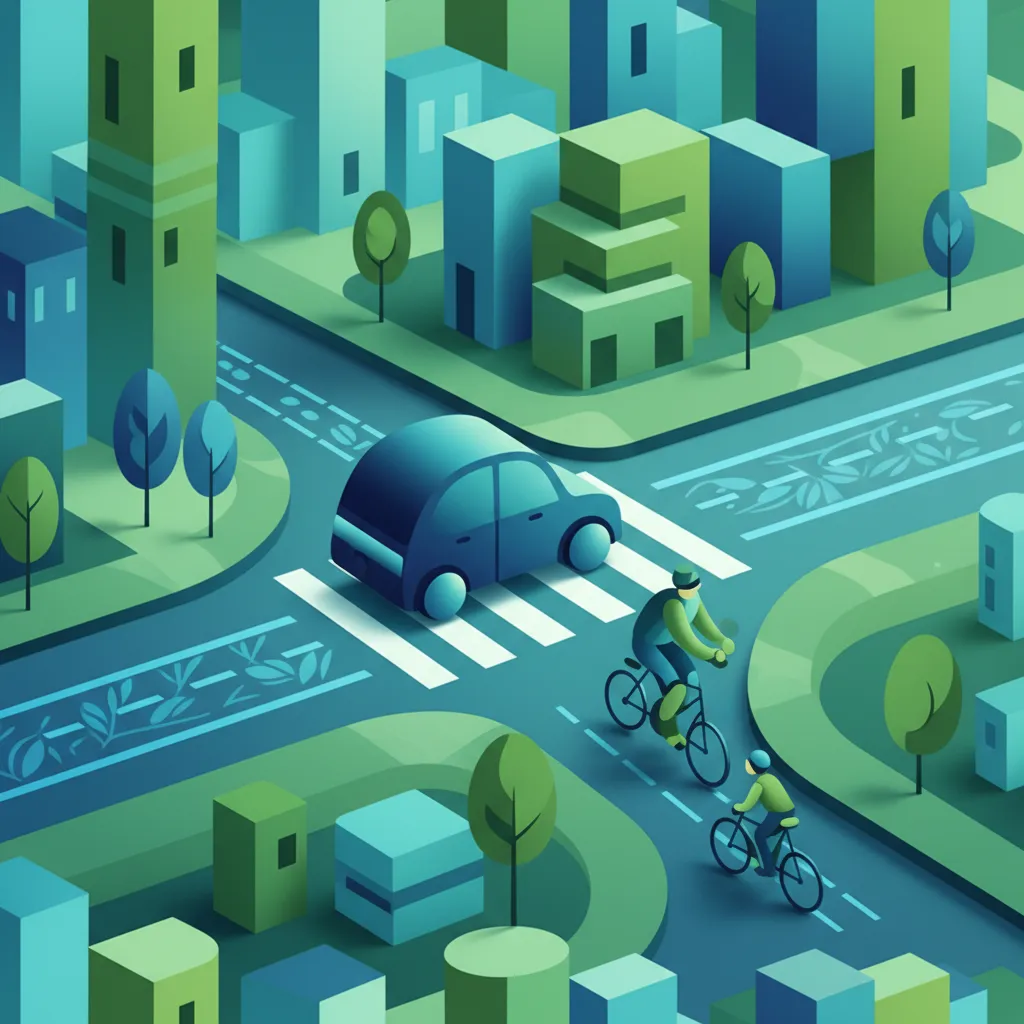
vulnerable road userspedestrianscycliststruck safetyblind spots
Polish Driving Theory C: Interaction with Vulnerable Road Users (Pedestrians, Cyclists)

Lesson content overview

Polish Driving Theory C

Interaction with Vulnerable Road Users: A Guide for Polish Category C Drivers

Operating a heavy goods vehicle (HGV) on Polish roads demands a heightened level of awareness and responsibility, especially when interacting with vulnerable road users such as pedestrians and cyclists. Due to their significant size, mass, and unique blind spots, HGVs pose a greater potential risk in collisions with these unprotected individuals. This lesson, crucial for success in the Polish Category C Heavy Goods Vehicle Theory exam, outlines the specific legal obligations and best practices for professional drivers to ensure safety for all road users.

Understanding Vulnerable Road Users and HGV Safety Risks

Vulnerable road users are individuals who lack the protection of an enclosed vehicle and are therefore at a higher risk of severe injury in the event of a collision. This category primarily includes pedestrians and cyclists, but also extends to motorcyclists, scooter users, and individuals using wheelchairs or mobility scooters. Their lower visibility, smaller size, and often unpredictable movements make them particularly susceptible to danger around large vehicles.

Heavy goods vehicles, by their very nature, introduce several challenges to road safety:

  • Mass and Momentum: The sheer weight of an HGV means it carries immense kinetic energy. Even at low speeds, a collision can have catastrophic consequences for a vulnerable user.
  • Extended Stopping Distances: The time and distance required to bring a fully loaded HGV to a complete stop are significantly greater than for a passenger car, especially in adverse conditions.
  • Limited Visibility: The elevated driving position and substantial dimensions of an HGV create extensive blind spots where pedestrians and cyclists can become completely invisible to the driver.
  • Wide Turning Radii: HGVs require a much wider arc to turn, often needing to swing out into adjacent lanes. This movement can easily sweep vulnerable users who are close to the vehicle.

For these reasons, Polish and EU traffic laws place a greater burden of responsibility on HGV drivers to anticipate and prevent potential hazards involving pedestrians and cyclists.

Critical HGV Blind Spots: Navigating Invisible Zones

A fundamental aspect of safe HGV operation, especially in urban areas, is a thorough understanding of vehicle blind spots. These are areas around the heavy goods vehicle that cannot be directly observed through the driver's line of sight or even with standard mirrors. For Category C drivers, failing to account for these zones is a leading cause of collisions with vulnerable road users.

Identifying the Main HGV Blind Spots

HGVs typically have three principal blind zones where pedestrians and cyclists are most likely to disappear from view:

  1. Front-Right Blind Spot: This area is directly in front of and to the immediate right-hand side of the cab. A pedestrian or cyclist walking or riding too close to the front-right bumper can be completely obscured by the vehicle's structure.
  2. Side-Right Blind Spot (Nearside): Extending along the entire length of the trailer on the passenger side, this is arguably the most dangerous blind spot. Cyclists riding alongside the truck, especially near the pivot points or towards the rear of the trailer, often fall within this zone. The driver may not see them until the vehicle is nearly alongside or, critically, during a right turn.
  3. Rear-Right Blind Spot: This zone covers the area directly behind and to the right of the trailer's end. Reversing maneuvers or situations where pedestrians approach the rear of a parked or slowly moving truck can be perilous.

Mitigating Blind Spot Dangers Through Vigilance

To overcome the challenges posed by these blind spots, professional drivers must employ proactive strategies:

  • Systematic Mirror Scanning: Regularly and methodically check all mirrors – not just the main rear-view mirrors, but also wide-angle, convex, and auxiliary mirrors. This continuous scanning should be part of the "look, signal, maneuver" routine.
  • Auxiliary Mirrors and Camera Systems: Many modern HGVs are equipped with additional mirrors or camera systems designed to reduce blind spots. Drivers must be proficient in using these tools.
  • Pre-Maneuver Checks: Before initiating any lane change, turn, or departure from a standstill, perform a comprehensive check for vulnerable users, especially on the right-hand side. This might involve briefly leaning forward or moving your head to gain a better angle.
  • Anticipating Presence: Assume that pedestrians and cyclists might be present in blind spots, particularly in busy urban environments. Never make a maneuver without confirming the area is clear.
  • Providing Space: Maintain ample distance from curbs and parked vehicles, allowing vulnerable users to be more visible and giving them space to move safely.

Warning

Never rely solely on one mirror or glance. A systematic check of all available visibility aids is crucial before any movement.

Maintaining Safe Passing Distances: Protecting Cyclists and Pedestrians

When overtaking pedestrians or cyclists, HGV drivers are legally obliged under Polish traffic law to maintain a specific minimum lateral clearance. This distance is vital to account for factors like vehicle sway, sudden movements by the vulnerable user, or even the effect of wind pressure created by a large vehicle passing close by.

Polish regulations specify the following minimum safe passing distances:

  • When Overtaking a Cyclist on the Left: A minimum lateral clearance of at least 1.5 meters must be maintained. This applies when the HGV passes a cyclist traveling in the same direction.
  • When Overtaking a Pedestrian: A minimum lateral clearance of at least 2 meters must be maintained, regardless of which side the pedestrian is being passed on.
  • When Overtaking a Cyclist on the Right: While less common and generally discouraged, if a lane configuration or specific road marking (e.g., a wide dedicated cycling lane) permits passing a cyclist on their right, a minimum of 2 meters clearance is also required. This scenario is rare for HGVs in normal traffic flow.
Definition

Safe Passing Distance

The minimum lateral space an HGV must provide when overtaking a vulnerable road user to ensure their safety and prevent collisions caused by vehicle proximity, wind, or sudden movements.

Practical Application of Safe Passing Distances

Adhering to these rules impacts speed selection, lane positioning, and overall overtaking strategy:

  • Adjust Speed: Reduce speed significantly when preparing to overtake a vulnerable user. Lower speeds allow more time to react and reduce the force of any potential impact.
  • Lane Positioning: Position the HGV as far away from the pedestrian or cyclist as safely possible within the confines of the lane. If the lane is too narrow to achieve the legal clearance, the driver must wait for an opportunity to pass safely, potentially by moving into an adjacent lane if conditions permit and it is safe to do so.
  • Consider External Factors: In adverse weather conditions such as strong winds, rain, or snow, increase the minimum safe passing distance even further, as these conditions can make vulnerable users less stable.

Yielding Priority: Understanding Pedestrian and Cyclist Right-of-Way

A cornerstone of safe interaction with vulnerable road users is recognizing and respecting their right-of-way. In Poland, specific rules dictate when pedestrians and cyclists have priority, and HGV drivers must be acutely aware of these to prevent dangerous situations.

Pedestrian Priority at Crossings

According to Article 61 of the Polish Road Traffic Act (Ustawa o ruchu drogowym), drivers must give way to pedestrians who are on a zebra crossing (marked pedestrian crossing) or are entering it. This means:

  • Stopping Before the Crossing: If a pedestrian is on the crossing or visibly intending to enter it, the HGV driver must stop before the crossing line, even if the traffic light is green for the vehicle.
  • Unmarked Crossings: While pedestrians primarily have priority at marked crossings, drivers must still exercise extreme caution at unmarked intersections where pedestrians may be crossing. The general principle of "do not endanger other road users" always applies.
  • Pedestrian Islands: When a road has a pedestrian island, each section of the crossing leading to or from the island is treated as a separate crossing. Drivers must yield to pedestrians on each section.

Cyclist Priority and Bike Lanes

Cyclists also have specific rights-of-way that HGV drivers must respect:

  • At Cyclist Crossings (Przejazd dla rowerzystów): Where dedicated cyclist crossings are marked, drivers must yield to cyclists who are on the crossing or entering it.
  • Turning Across a Cyclist's Path: When an HGV is turning (left or right) and a cyclist is proceeding straight ahead in a dedicated lane or alongside the vehicle, the HGV driver must yield to the cyclist. This is particularly critical during right turns where cyclists often position themselves on the right side of the truck.
  • Dedicated Bike Lanes: HGVs must not encroach onto dedicated cyclist lanes (drogi dla rowerów) unless absolutely necessary for a maneuver (e.g., turning) and only after ensuring it is safe and signaling appropriately. Even then, the HGV must not obstruct the cyclist's path.

Note

Even if a vulnerable user appears to be making an illegal maneuver or crossing against traffic, the HGV driver still has a legal and moral obligation to attempt to avoid a collision if possible.

Effective Communication and Warning Signals for HGV Drivers

Clear and timely communication is paramount to preventing incidents with vulnerable road users. Due to the significant size difference and potential for misinterpretation, HGV drivers must proactively signal their intentions. Polish traffic law mandates the appropriate use of various warning signals.

Mandatory Use of Turn Signals

Turn signals (kierunkowskazy) are the primary means of communicating an HGV's intended direction. Their correct and timely use is critical:

  • Urban Areas: According to Article 64 of the Polish Road Traffic Act, turn signals must be activated at least 3 seconds before initiating a turn or lane change in built-up areas. This provides ample time for pedestrians and cyclists to perceive the signal and react.
  • Outside Built-Up Areas/Highways: On faster roads, signals should be activated earlier, typically at least 100 meters before the maneuver.
  • Lane Changes and Overtaking: Always signal before changing lanes or initiating an overtaking maneuver to alert other road users, including those in blind spots.
  • Exiting Roundabouts: Signal your exit from a roundabout to indicate your intention to leave, especially when cyclists or pedestrians might be present.

Appropriate Use of the Horn

The horn (sygnał dźwiękowy) is an acoustic warning device that should be used judiciously:

  • Warning of Danger: The horn may be used to warn other road users of an immediate danger that they appear unaware of. For example, if a pedestrian is about to step into the path of the HGV from a blind spot.
  • Prohibited in Urban Areas (General Rule): In built-up areas, the use of the horn is generally prohibited unless it is necessary to avert an immediate threat. Unnecessary or aggressive use can startle vulnerable users and create further hazards.
  • Outside Urban Areas: Outside built-up areas, the horn may be used to signal an overtaking maneuver or to warn of an approaching vehicle, but still only when necessary.

Other Warning Cues

  • Brake Lights: Smooth, anticipatory braking allows brake lights to illuminate earlier, warning following vehicles and vulnerable users that the HGV is slowing down.
  • Hazard Warning Lights: These should be used only when the vehicle is stationary and poses a danger to traffic (e.g., roadside breakdown, obstruction). They are not a substitute for turn signals.
  • Eye Contact and Gestures (Cautiously): Where possible and safe, making eye contact with pedestrians or cyclists can help confirm mutual awareness. However, rely primarily on official signals and never use gestures that could be misinterpreted or distract from driving.

Tip

Early signaling is a proactive safety measure. It gives vulnerable users more time to react and significantly reduces the risk of sudden, dangerous maneuvers.

Impact of Cargo on HGV Maneuverability and Safety

The specific characteristics of the cargo being transported by a heavy goods vehicle profoundly influence its maneuverability, braking capability, and overall stability. For Category C drivers, understanding this load-impact on maneuverability is critical for safe interactions with vulnerable road users.

How Cargo Affects Vehicle Dynamics

  1. Weight and Stopping Distance: A heavier load directly translates to a longer stopping distance. The increased mass requires more time and space to overcome inertia, making it harder to stop quickly for a pedestrian who suddenly steps into the road.
  2. Load Distribution and Stability: The way cargo is distributed within the trailer affects the HGV's center of gravity.
    • High Center of Gravity: A load stacked high increases the risk of rollover, especially during sharp turns or evasive maneuvers. This can be dangerous if a driver must swerve to avoid a cyclist.
    • Uneven Distribution: If a load is unevenly distributed (e.g., too much weight on one side), it can cause the vehicle to pull, reduce steering control, and increase sway, making precise maneuvering around vulnerable users challenging.
  3. Cargo Movement and Blind Spots: Poorly secured cargo can shift during transit, particularly during braking, acceleration, or turns. This shift can:
    • Obstruct Visibility: Loose cargo or shifted tarpaulins might block mirrors or rear-view cameras, effectively enlarging existing blind spots or creating new ones.
    • Alter Vehicle Dynamics: A sudden load shift can destabilize the vehicle, potentially causing the trailer to swing unexpectedly, endangering cyclists or pedestrians nearby.

Article 35 of the Polish Load Securing Regulations (Rozporządzenie Ministra Infrastruktury 2007) mandates that cargo must be properly secured to prevent movement during transport. This is not only for the integrity of the goods but primarily for the safety of all road users.

  • Proper Securement: All cargo must be lashed, blocked, or otherwise secured in a way that prevents it from sliding, tipping, rolling, or shifting.
  • Regular Checks: Drivers must inspect their load securement before starting a journey and periodically during long trips, especially after hard braking or bumpy sections of road.

Warning

Always assume a fully loaded HGV requires greater braking distance and a wider turning radius. Adjust your speed and decision-making accordingly, especially in areas with high pedestrian and cyclist traffic.

Driving in Urban Environments: Special Considerations for HGVs

Urban areas present a unique set of challenges for HGV drivers due to their high density of traffic, frequent intersections, and the constant presence of vulnerable road users. Adapting driving behavior to these complex conditions is essential for safety and compliance with Polish traffic laws.

Characteristics of Urban Driving for HGVs

  • Narrow Streets and Lanes: Many city streets are not designed for large vehicles, making it difficult to maintain safe passing distances or execute turns without encroaching on other lanes or sidewalks.
  • Frequent Stops and Starts: Traffic lights, pedestrian crossings, and congestion lead to constant braking and acceleration, increasing the risk of rear-end collisions or failing to stop in time for vulnerable users.
  • Parked Vehicles and Obstructions: Parked cars can obscure sightlines, causing pedestrians (especially children) to emerge unexpectedly from between them.
  • Mixed Traffic: Urban environments often feature a mix of cars, buses, trams, motorcycles, cyclists, and pedestrians, all vying for limited road space.
  • Dedicated Infrastructure: Many cities have dedicated bus lanes, tram lines, and bicycle paths that HGVs must respect and navigate around.

Adapting Driving Behaviour in Cities

  1. Reduced Speed Limits: Adhere strictly to urban speed limits, which are typically 50 km/h in built-up areas and often 30 km/h in residential zones or near schools. Lower speeds significantly reduce stopping distances and increase reaction time.
  2. Increased Scanning Frequency: Continuously scan the environment far ahead, to the sides, and in all mirrors. Pay particular attention to sidewalks, building entrances, and gaps between parked cars for potential pedestrian emergence.
  3. Anticipate the Unexpected: Always assume a pedestrian or cyclist might make an unexpected move. Be prepared to stop or react at any moment.
  4. Careful Lane Positioning: Position the HGV defensively in the lane to provide as much space as possible to vulnerable users. Avoid hugging the curb, especially before making a right turn, to prevent "squeeze play" with cyclists.
  5. Turning with Caution: Before turning, perform comprehensive checks for vulnerable users on the side you are turning towards. Remember the wide turning radius of an HGV; sometimes, a slight swing to the left is necessary before a right turn (or vice versa), but this must be done with extreme care and proper signaling, ensuring no one is caught between the truck and the curb.
  6. Respecting Cycle Lanes: Never drive or park in dedicated cycle lanes (drogi dla rowerów) unless specifically permitted (e.g., for specific delivery access, and then only with extreme caution).
Definition

Urban Environment Adaptation

The process by which HGV drivers modify their driving behavior, speed, and vigilance to safely navigate dense city traffic, narrow streets, and the constant presence of vulnerable road users.

Key Polish Traffic Regulations for Protecting Vulnerable Users

The safe interaction between heavy goods vehicles and vulnerable road users is underpinned by specific regulations within Polish traffic law. Adherence to these rules is not only a legal obligation but a fundamental component of professional driving safety.

Summary of Key Regulations

  • Polish Road Traffic Act (Ustawa o ruchu drogowym):
    • Article 61 (Pedestrian Right-of-Way): Drivers must give way to pedestrians on a marked crossing or entering it.
    • Article 64 (Turn Signal Use): Mandates early and correct use of turn signals (at least 3 seconds before maneuver in urban areas, 100 meters outside).
    • Article 2a (Dedicated Cycle Lanes): Drivers must respect dedicated cycle lanes and not encroach upon them unless legally permitted and safe.
  • Regulation of the Minister of Infrastructure (Rozporządzenie Ministra Infrastruktury 1999, with updates):
    • § 71 (Safe Passing Distance): Specifies minimum lateral distances when overtaking cyclists (≥1.5 m on the left) and pedestrians (≥2 m).
  • Load Securing Regulations (Rozporządzenie Ministra Infrastruktury 2007):
    • Article 35: Requires cargo to be properly secured to prevent movement that could affect vehicle stability, visibility, or safety.

Common Violations and Consequences

Ignoring these regulations can lead to severe consequences, including fines, penalty points, license suspension, and, most importantly, serious injuries or fatalities.

  1. Failing to Yield to Pedestrians at Crossings: This is a serious offense, often resulting in significant fines and penalty points. In cases of collision, criminal charges are possible.
  2. Insufficient Passing Clearance: Overtaking a cyclist or pedestrian too closely is a direct violation of safe passing distance regulations, risking instability for the vulnerable user and potential collision.
  3. Late or Absent Turn Signals: Failing to signal intentions early enough creates confusion and forces vulnerable users into sudden reactions, increasing collision risk. This also carries a fine.
  4. Blind Spot Collisions: Caused by inadequate mirror checks, these often occur during turns or lane changes and can lead to severe injury to cyclists or pedestrians.
  5. Encroachment on Cycle Lanes: Driving or turning into a cycle lane without proper care or justification can force cyclists off their path or into dangerous situations.
  6. Exceeding Urban Speed Limits: Higher speeds in urban areas reduce reaction time and increase stopping distances, making it much harder to avoid vulnerable users.
  7. Unsecured Load Obstructing View: While not directly about vulnerable users, this violation can indirectly contribute to collisions by hindering the driver's ability to see and react.

Conditional Driving Scenarios and Advanced Safety Tips for HGVs

Driving conditions are rarely ideal, and an HGV driver's responsibility to vulnerable road users extends to adapting behavior based on environmental factors, vehicle state, and specific road layouts.

Adapting to Adverse Weather and Low Visibility

  • Rain, Snow, Ice:
    • Increase Stopping Distance: Wet or icy roads dramatically extend braking distances. Begin braking much earlier.
    • Reduce Speed: Drive significantly slower than the posted limit to increase reaction time and maintain control.
    • Enhanced Visibility: Use dipped beams (światła mijania) during the day and ensure all vehicle lights are clean and functional. Be extra vigilant for vulnerable users who may be wearing dark clothing or lack reflective gear.
  • Fog:
    • Hazard Lights: Use hazard warning lights (światła awaryjne) if visibility drops below 100 meters, but remember to switch them off before driving.
    • Fog Lights: Use front fog lights (światła przeciwmgłowe przednie) when visibility is below 50 meters, and rear fog lights (światła przeciwmgłowe tylne) when visibility is below 50 meters.
    • Extreme Caution: Reduce speed to a crawl if necessary. Assume blind spots are even larger and anticipate any movement from vulnerable users.
  • Nighttime/Low Light:
    • Dipped Beams: Always use dipped beams to avoid dazzling other drivers while still illuminating the road.
    • Reflective Gear: Be aware that pedestrians and cyclists without reflective clothing are extremely difficult to spot. Actively scan for movement at the edges of your headlights.
    • Increase Distances: Give extra space to vulnerable users, as their movements might be harder to judge in the dark.

Managing Heavy Loads and Vehicle Dynamics

  • Heavier Loads: Always extend stopping distance calculations. Avoid sharp turns, especially at higher speeds, as a heavy load increases the risk of rollover and significantly widens the turning radius, making it dangerous for nearby cyclists.
  • Load Distribution: Understand how an unevenly distributed load can affect steering and braking. This awareness helps in anticipating vehicle behavior when reacting to vulnerable users.

Specific Road Conditions

  • Narrow Rural Roads: These often lack sidewalks or dedicated cycle lanes. Be prepared to slow down significantly, and if necessary, gently use the shoulder (if safe and legal) to create sufficient passing clearance when overtaking a cyclist or pedestrian.
  • Roundabouts with Cyclist Lanes: In Poland, HGVs must yield to cyclists in dedicated lanes when entering or exiting a roundabout. Never cut across a cyclist's path. Signal clearly and early.
  • Construction Zones: Expect temporary changes to road layouts, speed limits, and pedestrian/cyclist paths. Obey all temporary signage and be extra vigilant for workers or detoured vulnerable users.

Tip

Always prioritize the safety of vulnerable road users. When in doubt, slow down, increase your safety margins, and yield the right-of-way.

Final Concept Summary for Professional HGV Drivers

Mastering the interaction with vulnerable road users is not just about passing the Polish Category C theory exam; it is a critical skill for responsible and safe professional heavy goods vehicle operation. By consistently applying the principles outlined in this lesson, HGV drivers can significantly reduce the risk of accidents and contribute to a safer road environment for everyone.

Key Responsibilities and Actions:

  • Blind Spot Awareness: Consistently check all mirrors and utilize auxiliary cameras to overcome the extensive blind spots of an HGV, especially before turning or changing lanes.
  • Safe Passing Distances: Always maintain a minimum of 1.5 meters when passing a cyclist on the left and 2 meters when passing a pedestrian (or a cyclist on the right).
  • Yielding Priority: Recognize and respect the right-of-way of pedestrians at crossings (Art. 61) and cyclists in dedicated lanes or when turning across their path.
  • Effective Communication: Use turn signals early (at least 3 seconds in urban areas) and appropriately. Use the horn only to warn of immediate danger.
  • Load Management: Ensure cargo is securely fastened (Art. 35) to prevent shifts that can obstruct visibility or alter vehicle dynamics.
  • Urban Adaptation: Adjust driving speed to urban limits (50 km/h, 30 km/h in residential zones), increase scanning frequency, and anticipate unpredictable movements in dense city environments.
  • Conditional Adjustments: Modify driving behavior and safety margins in adverse weather, at night, when carrying heavy loads, or in complex road situations like construction zones or roundabouts.

By integrating these practices, professional drivers of Category C vehicles will demonstrate the highest standards of road safety, protecting the most vulnerable members of the traffic system while complying with Polish and EU regulations.

Learn more with these articles

Check out these practice sets

Lesson recap

Quick summary before you move on

Fast revision

This lesson covers the critical safety responsibilities of Category C HGV drivers when sharing Polish roads with vulnerable users. It details the three principal blind spots around heavy vehicles, specific legal passing distances (1.5m for cyclists, 2m for pedestrians), and pedestrian priority rules at crossings under Article 61. Drivers learn systematic mirror scanning techniques, proper turn signal timing (3 seconds in urban areas per Article 64), and the importance of anticipating unpredictable cyclist and pedestrian movements in dense urban traffic. The content also addresses how cargo load affects vehicle dynamics and stability, and emphasizes adapting speed and safety margins in adverse weather conditions. These principles are essential for both passing the Polish Category C theory exam and ensuring road safety in real-world driving.


Core takeaways

Main ideas from this lesson

A short set of high-value points that capture the most important learning from this lesson.

HGVs have three critical blind spots: front-right, side-right (nearside along trailer), and rear-right, where cyclists and pedestrians become invisible to the driver

Polish law mandates a minimum 1.5-meter lateral clearance when passing a cyclist on the left and 2 meters when passing a pedestrian or cyclist on the right

Pedestrians have priority at zebra crossings under Article 61 of the Polish Road Traffic Act; drivers must stop even if traffic signals allow continued movement

Turn signals must be activated at least 3 seconds before any maneuver in urban areas to give vulnerable users time to react

Proper cargo securing under Article 35 prevents load shifts that can obstruct mirrors or alter vehicle stability, increasing danger to vulnerable road users

Remember this

Details worth keeping in mind

Point 1

Scan all mirrors systematically—main, wide-angle, convex, and auxiliary—before every turn, lane change, or departure from standstill

Point 2

Assume pedestrians and cyclists are always present in blind spots, especially in urban environments where they are most concentrated

Point 3

In urban areas, reduce speed to 50 km/h (or 30 km/h in residential zones) to account for extended HGV stopping distances

Point 4

Cyclists must be yielded when turning across their path or when they are on a dedicated cyclist crossing or lane

Point 5

In adverse weather, increase passing distances and braking margins substantially beyond legal minimums

Watch for this

Frequent learner mistakes

Relying on a single mirror check instead of systematically scanning all visibility aids before maneuvering, leading to blind spot collisions

Passing cyclists too closely because the lane appears wide enough, violating the mandatory 1.5-meter minimum clearance

Signaling too late or not at all, leaving pedestrians and cyclists insufficient time to perceive and react to the HGV's intentions

Encroaching on dedicated cycle lanes during turns without first confirming the lane is clear, forcing cyclists into dangerous situations

Underestimating the wide turning radius of an HGV and failing to account for the rear trailer swing during right-hand turns in urban areas

Search topics related to Interaction with Vulnerable Road Users (Pedestrians, Cyclists)

Explore search topics learners often look for when studying Interaction with Vulnerable Road Users (Pedestrians, Cyclists). These topics reflect common questions about road rules, driving situations, safety guidance, and lesson level theory preparation for learners in Poland.

Category C vulnerable road user interactiontruck blind spots pedestrians cyclists Polandhow to pass cyclists safely truck driverPolish driving theory exam truck rules pedestriansCategory C exam questions vulnerable road userssafe urban driving for HGVs pedestrians cycliststruck driver responsibility for cyclists Polandanticipating pedestrian movements with large vehicles

Related driving theory lessons for Interaction with Vulnerable Road Users (Pedestrians, Cyclists)

Browse additional driving theory lessons that cover connected traffic rules, road signs, and common driving situations related to this topic. Improve your understanding of how different rules interact across everyday traffic scenarios.

HGV Safety in Adverse Weather and Special Road Conditions

Explore how Polish Category C drivers must adapt their approach to vulnerable road users during adverse weather like fog, rain, or snow, and navigate challenging urban or rural road conditions. Learn crucial safety adjustments.

adverse weatherlow visibilityurban drivingrural roadsheavy goods vehicle safetyvulnerable road usersPolanddriving theory
Adaptation to Weather and Road Conditions lesson image

Adaptation to Weather and Road Conditions

This lesson teaches drivers how to adapt their speed, following distance, and control inputs to safely navigate adverse conditions. It covers the challenges posed by rain, snow, and ice, explaining the loss of traction and the increased risk of skidding or aquaplaning. The content provides specific strategies for driving in fog, which reduces visibility, and strong crosswinds, which can affect the stability of a high-sided vehicle, promoting a proactive and defensive driving mindset.
Polish Driving Theory CSpeed Management, Braking, and Stopping Distances
View lesson
Weather Impacts: Rain, Snow, Ice, and Low Visibility lesson image

Weather Impacts: Rain, Snow, Ice, and Low Visibility

This lesson details the specific driving adjustments needed for adverse weather. It focuses on how rain, snow, and ice affect vehicle dynamics and driver perception. Learners will study techniques to prevent hydroplaning, use winter tires effectively, and increase following distances on slippery surfaces while using safety systems like fog lights.
Polish Driving Theory DDriving in Adverse Conditions & Human Factors
View lesson
Fog, Reduced Visibility, and Headlight Use lesson image

Fog, Reduced Visibility, and Headlight Use

This lesson provides essential guidance for driving in fog, one of the most dangerous conditions. It instructs on the correct use of low-beam headlights and fog lights to maximize visibility without causing glare. The core advice is to significantly reduce speed and use the edge of the road or markings as a guide.

Polish Driving Theory BAdverse Weather and Environmental Conditions
View lesson
Seasonal Hazards: Mud, Snow, Fog, and Rain lesson image

Seasonal Hazards: Mud, Snow, Fog, and Rain

This lesson focuses on the specific hazards introduced by seasonal weather, such as mud, snow, ice, fog, and heavy rain. It explains how these conditions affect traction, braking, and driver visibility, and provides guidance on adjusting speed and using appropriate tires. The lesson also covers the proper use of lights and reflectors to improve visibility in low-light conditions.
Polish Driving Theory - Category TSafety, Hazard Perception, and Environmental Conditions
View lesson
Driving in Rain and Wet Roads lesson image

Driving in Rain and Wet Roads

This lesson focuses on the specific challenges of driving in rainy conditions. It explains the phenomenon of hydroplaning, where tires lose contact with the road surface, and how to prevent it by reducing speed. The importance of good tire condition, effective windscreen wipers, and extending following distances is also covered in detail.

Polish Driving Theory BAdverse Weather and Environmental Conditions
View lesson
Characteristics of Rural Roads and Visibility Issues lesson image

Characteristics of Rural Roads and Visibility Issues

This lesson explores the unique characteristics of driving on rural roads. It highlights potential hazards such as sharp, unbanked curves, poor road surfaces, and limited visibility due to hills and vegetation. The content teaches drivers to anticipate these conditions and adjust their speed and position to navigate safely.

Polish Driving Theory BRural Roads and Expressways
View lesson
Adjusting Speed to Conditions and Visibility lesson image

Adjusting Speed to Conditions and Visibility

This lesson teaches the crucial concept that drivers must always adapt their speed to the current conditions. It explains how factors like rain, fog, ice, heavy traffic, and poor visibility reduce safety margins and require a lower speed than the posted limit. This principle of defensive driving is essential for preventing accidents in challenging situations.

Polish Driving Theory BSpeed Management and Stopping Distances
View lesson
Managing Traffic Flow in Urban Constrained Environments lesson image

Managing Traffic Flow in Urban Constrained Environments

This lesson equips drivers with the skills to operate a large vehicle within the challenging confines of an urban environment. It addresses how to navigate narrow streets, deal with traffic calming measures, and manage frequent stop-and-go situations while being vigilant for pedestrians and other road users. The content also emphasizes the importance of meticulous route planning to avoid unsuitable roads and the use of anticipation to maintain smooth progress and minimize disruption in congested areas.
Polish Driving Theory CPriority, Intersection, and Roundabout Navigation for Trucks
View lesson
Speed Limits Specific to Category C Vehicles lesson image

Speed Limits Specific to Category C Vehicles

This lesson outlines the statutory speed limits that professional drivers of Category C vehicles must adhere to on Polish roads. It clearly distinguishes the maximum permitted speeds in built-up areas, on single carriageways, and on motorways. The content also explains how to interpret road signs that may indicate temporary or vehicle-specific speed restrictions, ensuring drivers remain compliant with the law and avoid penalties from speed enforcement measures.

Polish Driving Theory CSpeed Management, Braking, and Stopping Distances
View lesson
Snow, Ice, and Winter Road Conditions lesson image

Snow, Ice, and Winter Road Conditions

This lesson focuses on the skills needed for safe winter driving. It explains how to use gentle acceleration, steering, and braking to avoid losing traction on snow and ice. The lesson also discusses how to recognize and handle a skid, and the critical role that appropriate winter tires play in maintaining vehicle control.

Polish Driving Theory BAdverse Weather and Environmental Conditions
View lesson

Impact of Cargo Load on HGV Maneuverability and Safety

Understand how the weight, distribution, and securement of cargo in a Polish Category C HGV critically influence vehicle dynamics, braking distances, and the driver's ability to safely interact with vulnerable road users.

load securementvehicle dynamicsbraking distancescargo weightHGV safetyvulnerable road usersPolanddriving theory
Impact of Load on Braking and Handling lesson image

Impact of Load on Braking and Handling

This lesson explores the dynamic relationship between cargo weight and a vehicle's performance. It explains how increased mass raises kinetic energy, significantly lengthening braking distances and requiring earlier, more gradual brake application. Learners will also analyze how a heavy or poorly distributed load alters the vehicle's handling characteristics, particularly during cornering, and understand the necessity of adjusting speed and driving style to compensate for these effects.

Polish Driving Theory CLoad Management and Cargo Securement
View lesson
Speed Limits Specific to Category C Vehicles lesson image

Speed Limits Specific to Category C Vehicles

This lesson outlines the statutory speed limits that professional drivers of Category C vehicles must adhere to on Polish roads. It clearly distinguishes the maximum permitted speeds in built-up areas, on single carriageways, and on motorways. The content also explains how to interpret road signs that may indicate temporary or vehicle-specific speed restrictions, ensuring drivers remain compliant with the law and avoid penalties from speed enforcement measures.

Polish Driving Theory CSpeed Management, Braking, and Stopping Distances
View lesson
Starting and Stopping with Heavy Loads lesson image

Starting and Stopping with Heavy Loads

This lesson explains the specialized techniques required for initiating movement and bringing a heavy, loaded truck to a halt. It emphasizes fine clutch and throttle control to overcome inertia without causing driveline stress or cargo shift. Learners will also study methods for smooth, gradual braking that account for the vehicle's significant momentum, ensuring safety, passenger comfort, and the integrity of the cargo while minimizing wear on the braking system.

Polish Driving Theory CDriving Maneuvers and Vehicle Dynamics
View lesson
Vehicle Classification and Category Definitions lesson image

Vehicle Classification and Category Definitions

This lesson provides a detailed breakdown of vehicle classifications relevant to the Category C licence. It explains the concept of 'dopuszczalna masa całkowita' (permissible total weight) and how it defines a vehicle's category. Learners will identify different truck types, such as rigid vehicles, based on their axle configurations and understand the specific roadworthiness and registration requirements for each class, ensuring correct vehicle operation under the law.

Polish Driving Theory CFoundations of Category C Licensing and Vehicle Basics
View lesson
Adaptation to Weather and Road Conditions lesson image

Adaptation to Weather and Road Conditions

This lesson teaches drivers how to adapt their speed, following distance, and control inputs to safely navigate adverse conditions. It covers the challenges posed by rain, snow, and ice, explaining the loss of traction and the increased risk of skidding or aquaplaning. The content provides specific strategies for driving in fog, which reduces visibility, and strong crosswinds, which can affect the stability of a high-sided vehicle, promoting a proactive and defensive driving mindset.
Polish Driving Theory CSpeed Management, Braking, and Stopping Distances
View lesson
Load Types and Weight Limits lesson image

Load Types and Weight Limits

This lesson introduces the legal framework governing vehicle and axle weight limits in Poland and the EU. Learners will understand how to determine a vehicle's maximum permissible payload and interpret official load charts and documentation. The content covers the importance of correct weight distribution to avoid exceeding individual axle limits and explains the serious legal and safety consequences of operating an overloaded vehicle.
Polish Driving Theory CLoad Management and Cargo Securement
View lesson
Weight, Height, and Length Restrictions Signage lesson image

Weight, Height, and Length Restrictions Signage

This lesson concentrates on the specific road signs that are of utmost importance to HGV drivers. It details how to interpret signs indicating maximum permissible weight, axle load, vehicle height, and overall length. Understanding these restrictions is crucial for effective route planning to avoid bridges with low clearance, roads with weight limits, or tunnels that cannot accommodate the vehicle's dimensions, thus preventing accidents and infrastructure damage.

Polish Driving Theory CRoad Signs, Regulations, and Special Restrictions for Heavy Vehicles
View lesson
Center of Gravity and Stability Principles lesson image

Center of Gravity and Stability Principles

This lesson focuses on the crucial concept of the center of gravity (CoG) and its direct impact on truck stability. It explains how the height and lateral position of the load's CoG can affect the vehicle's susceptibility to rolling over, especially during cornering or sudden maneuvers. Learners will study principles for positioning and stacking cargo to maintain the lowest possible CoG, thereby enhancing dynamic stability and overall driving safety.

Polish Driving Theory CLoad Management and Cargo Securement
View lesson
Managing Traffic Flow in Urban Constrained Environments lesson image

Managing Traffic Flow in Urban Constrained Environments

This lesson equips drivers with the skills to operate a large vehicle within the challenging confines of an urban environment. It addresses how to navigate narrow streets, deal with traffic calming measures, and manage frequent stop-and-go situations while being vigilant for pedestrians and other road users. The content also emphasizes the importance of meticulous route planning to avoid unsuitable roads and the use of anticipation to maintain smooth progress and minimize disruption in congested areas.

Polish Driving Theory CPriority, Intersection, and Roundabout Navigation for Trucks
View lesson
Legal Obligations for Load Documentation lesson image

Legal Obligations for Load Documentation

This lesson outlines the essential legal paperwork associated with freight transport. It details the purpose and content of key documents like the load manifest, cargo declaration, and official weight certificates. Learners will understand their legal responsibility to verify that all documentation is accurate and complete before departure, and the importance of maintaining proper records for potential inspections by transport authorities or for cross-border customs procedures.

Polish Driving Theory CLoad Management and Cargo Securement
View lesson

Frequently asked questions about Interaction with Vulnerable Road Users (Pedestrians, Cyclists)

Find clear answers to common questions learners have about Interaction with Vulnerable Road Users (Pedestrians, Cyclists). Learn how the lesson is structured, which driving theory objectives it supports, and how it fits into the overall learning path of units and curriculum progression in Poland. These explanations help you understand key concepts, lesson flow, and exam focused study goals.

What are the main blind spots on a Category C truck that affect visibility of pedestrians and cyclists?

Category C trucks have significant blind spots directly in front of the cab (especially for shorter pedestrians and children), to the sides, and crucially, to the rear, particularly during turns (the 'off-tracking' area). Understanding these areas is vital for anticipating vulnerable road users.

How should I communicate my intentions to pedestrians and cyclists when driving a truck?

Always use your indicators well in advance for turns or lane changes. If you see pedestrians or cyclists nearby and are unsure of their path, slow down and make eye contact if possible. A brief flash of your headlights might be appropriate in some low-visibility conditions, but primarily rely on clear signaling and defensive driving.

What is the legal requirement for passing a cyclist on a Polish road with a Category C vehicle?

Polish law mandates a safe passing distance when overtaking cyclists. For HGVs, this means leaving ample space, generally at least 1.5 meters, and ensuring you have clear visibility and are not forcing the cyclist into a dangerous position. Always check for oncoming traffic and ensure you can complete the maneuver safely.

How does off-tracking affect vulnerable road users when a truck turns?

Off-tracking is the tendency of the rear wheels to follow a different path than the front wheels when turning. This means the space beside and behind the truck during a turn is often where pedestrians or cyclists might be, unaware of the danger. Always check your mirrors and consider this effect when turning, especially at junctions.

Are there specific exam questions related to truck drivers and vulnerable road users?

Yes, the Polish Category C theory exam includes questions testing your knowledge of HGVs' blind spots, safe passing distances for cyclists and pedestrians, and how to navigate urban environments safely when vulnerable road users are present. This lesson prepares you for these specific scenarios.

Refine Your Polish Driving Theory Knowledge with Targeted Practice

Build custom practice sessions tailored precisely to your needs. Focus on areas requiring improvement, review specific Polish road signs, or master complex traffic rules to ensure full preparation for your official driving license exam.

Find Polish Theory Practice Sets

Continue your Polish driving theory learning journey

Polish road signsPolish article topicsSearch Polish road signsPolish driving theory homePolish road sign categoriesPolish driving theory topicsSearch Polish theory articlesPolish driving theory coursesPolish Driving Theory D coursePolish Driving Theory C coursePolish Driving Theory B coursePolish driving theory articlesPolish driving theory practicePolish practice set categoriesPolish Motorcycle Theory A coursePolish driving licence proceduresSearch Polish driving theory practicePolish driving theory terminology A–ZPolish driving theory terms and glossaryPolish Driving Theory - Category T courseParking and Maneuvering unit in Polish Driving Theory BRural Roads and Expressways unit in Polish Driving Theory BVehicle Controls and Operation unit in Polish Driving Theory BVehicle Characteristics & Systems unit in Polish Driving Theory DDriver Position, Visibility & Mirrors unit in Polish Driving Theory DLicence Requirements & Legal Framework unit in Polish Driving Theory DMotorcycle Licensing and Legal Framework unit in Polish Motorcycle Theory ASpeed Management, Braking, and Stopping Distances unit in Polish Driving Theory CPractical Scenarios and Decision-Making unit in Polish Driving Theory - Category TLegal Foundations and Licence Requirements unit in Polish Driving Theory - Category TRight-of-Way Rules at Intersections lesson in Priority, Intersection, and Roundabout Navigation for TrucksMerging onto Motorways and Highway Entry Protocols lesson in Priority, Intersection, and Roundabout Navigation for TrucksManaging Traffic Flow in Urban Constrained Environments lesson in Priority, Intersection, and Roundabout Navigation for TrucksApproaching and Crossing Roundabouts with Heavy Vehicles lesson in Priority, Intersection, and Roundabout Navigation for TrucksInteraction with Vulnerable Road Users (Pedestrians, Cyclists) lesson in Priority, Intersection, and Roundabout Navigation for Trucks