
Welcome to the lesson on calculating stopping distances and reaction times for your Polish Category A motorcycle licence. This crucial topic, part of the 'Speed Management, Stopping Distances, and Braking' unit, builds on your understanding of legal speed limits. Mastering these calculations is vital for safe riding and for answering correctly on your theory exam.
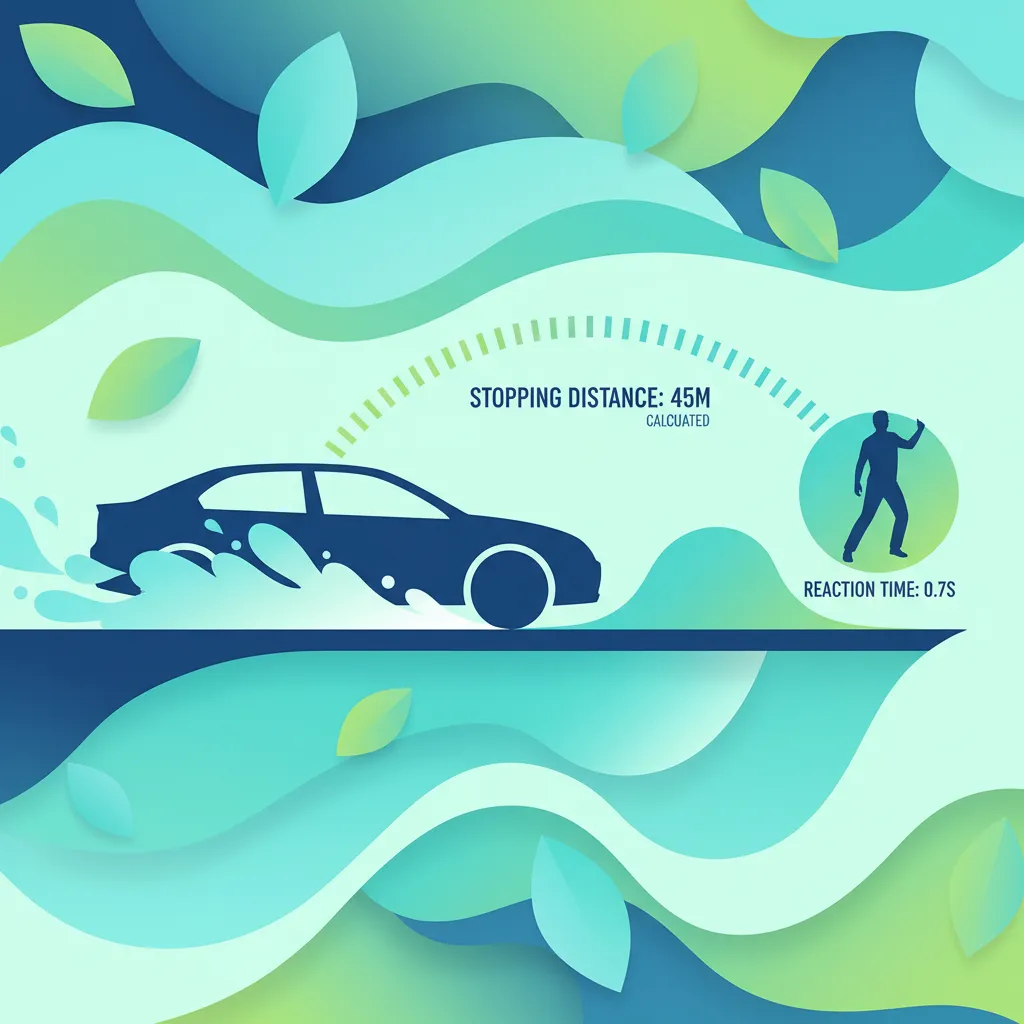
Lesson content overview
Mastering the calculation and estimation of stopping distances is a cornerstone of safe motorcycle riding, particularly for those preparing for their Polish Category A license. This lesson delves into the physics, legal requirements, and practical considerations that influence how quickly a motorcycle can come to a complete stop. By thoroughly understanding these principles, riders can make informed decisions about speed management, maintain appropriate following distances, and significantly enhance their safety on Polish roads.
For every motorcyclist, the ability to stop safely and predictably is paramount. Unlike cars, motorcycles require a more nuanced approach to braking due to their two-wheeled nature and the rider's active role in maintaining balance and traction. Accurate stopping distance estimation is not merely an academic exercise; it is an essential skill for hazard avoidance, preventing collisions, and ensuring full compliance with Polish traffic law. This knowledge underpins critical decisions such as when to reduce speed, how far to follow other vehicles, how to approach intersections, and how to execute emergency braking maneuvers effectively.
The Total Stopping Distance (TSD) is the complete distance a motorcycle travels from the moment a rider first perceives a hazard until the motorcycle comes to a complete halt. It is not a single, instantaneous event but rather a combination of two distinct phases: the Perception-Reaction Distance (PRD) and the Braking Distance (BD). Understanding each component individually is crucial for grasping the full picture of stopping performance.
Perception-Reaction Time (PRT) is the interval that elapses between a rider first detecting a hazard and their physical initiation of braking. This time accounts for the human cognitive and motor delays involved in recognizing a danger, deciding on an action, and then executing that action (such as squeezing the brake lever). In traffic, this means a rider might not begin to apply their brakes until after they have identified a sudden stop by the vehicle ahead or a pedestrian unexpectedly stepping into the road.
This perception-reaction time can be further categorized into:
Polish law implicitly assumes a perception-reaction time of at least 1 second for experienced drivers/riders when considering what constitutes a safe following distance. However, factors like fatigue, distraction, age, and adverse conditions can significantly extend this time.
The distance covered during this phase is the Perception-Reaction Distance (PRD). It is calculated by multiplying the motorcycle's speed by the perception-reaction time. For example, if a rider is traveling at 90 km/h (which is approximately 25 meters per second) and has a PRT of 1 second, the motorcycle will travel 25 meters before the brakes are even applied. This illustrates why hazard perception and rider attentiveness are so critical; a faster response means a shorter PRD, directly contributing to overall safety.
Once the brakes are applied, the motorcycle enters the Braking Distance (BD) phase. This is the distance the motorcycle travels from the moment the brakes are engaged until it comes to a complete stop. The braking distance is a direct reflection of the motorcycle's dynamics, the interaction between the tires and the road surface, and the effectiveness of the braking system.
In an idealized calculation, using a constant deceleration model, braking distance can be determined using a simple physics formula. However, in the real world, deceleration might vary due to factors like weight transfer, the engagement of an Anti-lock Braking System (ABS), or changes in the road surface as the motorcycle slows down. For instance, a rider applying full brakes at 90 km/h on dry asphalt might stop in roughly 25 meters, but this distance will change drastically under different conditions.
One of the most crucial concepts in understanding stopping distances is the relationship between speed and braking distance. Contrary to a common misunderstanding, braking distance does not increase linearly with speed; rather, it increases approximately with the square of the speed. This quadratic relationship means that even a small increase in speed can lead to a disproportionately large increase in the distance required to stop.
Doubling your speed does not double your braking distance—it quadruples it. For example, if you double your speed from 50 km/h to 100 km/h, your braking distance will be four times longer, assuming all other factors like road condition and braking efficiency remain constant. This powerful effect of speed underscores why even minor speed reductions yield significant safety gains.
This fundamental principle is why speed management is such a critical skill for motorcyclists. Higher speeds dramatically reduce the safety margin, demanding earlier hazard perception and more precise braking.
Beyond the rider's reaction time and the initial speed, several other factors play a significant role in determining both the Braking Distance and the Total Stopping Distance. These include the tire-road friction, the motorcycle's deceleration capability, its load, and the presence of advanced braking systems like ABS.
The Coefficient of Friction (μ) is a dimensionless value that quantifies the amount of grip or traction available between the motorcycle's tires and the road surface. It is a critical determinant of how effectively a motorcycle can decelerate. A higher coefficient means more grip and thus shorter braking distances for a given deceleration effort, while a lower coefficient means less grip and longer braking distances.
Typical values for the coefficient of friction can vary significantly depending on the road surface and its condition:
Riders must constantly assess road conditions and adjust their speed accordingly to maintain their ability to stop safely within legal limits. Ignoring changes in the road surface when estimating stopping distances is a common and dangerous mistake. A wet road, for instance, can require nearly double the stopping distance compared to a dry road at the same speed.
Deceleration (a) refers to the rate at which the motorcycle loses speed during braking, expressed in meters per second squared (m/s²). A higher deceleration value indicates more effective braking and a shorter braking distance. However, deceleration is always limited by the available coefficient of friction and the motorcycle's design, including its braking system (discs, calipers, master cylinder) and tire compound. Rider skill and comfort also play a role, as maximizing deceleration requires precise brake application without locking the wheels or losing control.
The weight of a motorcycle, including its rider, passenger, and any cargo, significantly affects its stopping performance. A heavier load means increased inertia, which is the tendency of an object to resist changes in its state of motion. To overcome this greater inertia and achieve the same rate of deceleration, the braking system must work harder, or more distance will be required. Heavily loaded motorcycles will generally have longer braking distances compared to an unloaded motorcycle at the same speed and on the same surface. This necessitates an adjustment in speed and an increase in the safety margin, especially when carrying a passenger or heavy luggage.
The Anti-lock Braking System (ABS) is an important safety feature recommended for motorcyclists, although not always legally compulsory. Its primary function is to prevent the wheels from locking up during hard braking, thereby allowing the rider to maintain steering control. While ABS significantly enhances safety by preventing skidding and loss of control, it does not inherently reduce the overall braking distance in all scenarios. On loose surfaces like gravel, an ABS-equipped motorcycle might even take slightly longer to stop than one braked skillfully without ABS. However, on most paved surfaces, especially for average riders, ABS can help achieve optimal braking performance by preventing wheel lock and allowing consistent, controlled deceleration.
Riders should never assume that ABS eliminates the need to adjust speed according to conditions or that it guarantees an instant stop. It is an aid to control, not a magic solution for stopping distance.
To accurately estimate Total Stopping Distance (TSD), we combine the Perception-Reaction Distance (PRD) and the Braking Distance (BD). While real-world scenarios involve numerous variables, a simplified formula can provide a solid foundation for understanding and estimation.
The simplified formula for Total Stopping Distance is:
TSD = PRD + BD
Where:
Combining these, the full formula becomes:
TSD = (v · t) + (v² / (2 · μ · g))
Let's break down the variables:
Let's apply this formula to a common scenario for a Polish Category A rider:
Scenario 1: Urban Riding on Dry Asphalt
Calculate PRD: PRD = v · t = 13.9 m/s · 1 s = 13.9 meters
Calculate BD: BD = v² / (2 · μ · g) = (13.9 m/s)² / (2 · 0.7 · 9.81 m/s²) BD = 193.21 / (13.734) ≈ 14.07 meters
Calculate TSD: TSD = PRD + BD = 13.9 m + 14.07 m ≈ 27.97 meters
So, at 50 km/h on dry asphalt, an alert rider would need approximately 28 meters to stop completely.
Scenario 2: Rural Road on Wet Asphalt
Now consider the same rider on a rural road but under wet conditions at a higher speed:
Calculate PRD: PRD = v · t = 19.44 m/s · 1.2 s = 23.33 meters
Calculate BD: BD = v² / (2 · μ · g) = (19.44 m/s)² / (2 · 0.4 · 9.81 m/s²) BD = 377.91 / (7.848) ≈ 48.16 meters
Calculate TSD: TSD = PRD + BD = 23.33 m + 48.16 m ≈ 71.49 meters
This example clearly demonstrates how increased speed and reduced friction (due to wet conditions) dramatically extend the total stopping distance. At 70 km/h on a wet road, the rider needs over 70 meters to stop, highlighting the importance of significant speed reduction and increased following distance in adverse weather.
Polish traffic regulations explicitly address the importance of maintaining a safe stopping distance, making it a legal obligation for all drivers and riders.
The Polish Road Traffic Act (Prawo o ruchu drogowym), specifically § 71, outlines the fundamental requirement for drivers:
Rule Statement: Drivers (and motorcyclists) must keep such a distance that they can stop safely without endangering other road users.
Correct Example: A motorcyclist traveling at 80 km/h on a dry road maintains a gap of at least two seconds behind the vehicle in front, which translates to approximately 45-50 meters. This distance allows for both perception-reaction time and adequate braking distance, including a safety margin.
Incorrect Example: A motorcyclist "tailgating" a truck with only a 5-meter gap while traveling at 100 km/h on wet pavement. In this scenario, the total stopping distance would be far greater than 5 meters, making a collision almost inevitable if the truck suddenly brakes.
Beyond general safe distance rules, Polish regulations on speed limits, such as those detailed in the Rozporządzenie Ministra Infrastruktury (2020), emphasize that:
Rule Statement: Speed must always be adjusted not only to posted limits but also to the prevailing road, traffic, and weather conditions. This adjustment is crucial to ensure the ability to stop safely.
While calculating the theoretical Total Stopping Distance is valuable, in practical riding, it's often more effective to use simpler rules of thumb and to always add a safety margin. This additional buffer distance accounts for the inherent variability in human reaction, road conditions, and equipment performance.
A widely accepted method for maintaining a safe following distance is the 2-second rule. This rule is simple to apply:
The 2-second rule works because it implicitly accounts for both perception-reaction time and a basic braking distance, adapting proportionally to your speed. At 50 km/h, a 2-second gap is approximately 28 meters. At 100 km/h, it doubles to around 56 meters.
The 2-second rule is a minimum. In many situations, motorcyclists should significantly increase their safety margin:
Relying solely on the calculated TSD without adding a safety margin, especially in dynamic traffic situations like city driving, is a common mistake that leaves no room for error or unforeseen circumstances.
Several common errors related to stopping distances can lead to dangerous situations for motorcyclists:
The environment in which you ride has a profound impact on the forces that govern stopping distances. Skilled motorcyclists continuously adapt their riding strategy, especially their speed and following distance, to account for these variations.
The ability to accurately estimate and manage Total Stopping Distance is a fundamental skill for every motorcyclist in Poland. It requires a comprehensive understanding of its two core components—Perception-Reaction Distance (PRD) and Braking Distance (BD)—and the numerous factors that influence them.
Remember these key insights:
By internalizing these principles and continuously applying them, you will make more informed decisions on the road, manage your speed effectively, maintain appropriate following distances, and ultimately ride more safely and confidently as a Category A motorcyclist.
This lesson covers the physics of motorcycle stopping distances, dividing total stopping distance (TSD) into perception-reaction distance (PRD) and braking distance (BD) components. The critical relationship between speed and braking distance is quadratic—doubling speed quadruples braking distance—making speed management the most effective safety tool. Polish traffic law under § 71 of Prawo o ruchu drogowym requires riders to maintain distances that enable safe stopping, with practical guidance provided through the 2-second rule and specific coefficient of friction values for different road conditions. Understanding these principles is essential for both safe real-world riding and correctly answering theory exam questions on braking performance.
A short set of high-value points that capture the most important learning from this lesson.
Total stopping distance is the sum of perception-reaction distance (PRD) and braking distance (BD)
Braking distance increases with the square of speed, meaning doubling speed quadruples braking distance
Road surface friction coefficient (μ) dramatically affects braking distance—wet roads can nearly double stopping distance compared to dry asphalt
The 2-second rule provides a practical minimum for safe following distance that adapts proportionally to speed
Polish traffic law (§ 71 of Prawo o ruchu drogowym) legally mandates maintaining a distance that allows safe stopping under prevailing conditions
Explore all units and lessons included in this driving theory course.
Convert speed from km/h to m/s by dividing by 3.6 before using the TSD formula
Typical coefficient of friction values: dry asphalt μ ≈ 0.7–0.9, wet asphalt μ ≈ 0.4–0.6, ice/snow μ ≈ 0.1–0.2
At 50 km/h on dry asphalt, total stopping distance is approximately 28 meters for an alert rider
Speed increases braking distance quadratically (v²), not linearly—small speed reductions yield significant safety gains
Always add a safety margin beyond calculated TSD to account for unexpected variables
Assuming braking distance increases only linearly with speed rather than quadratically, leading to dangerous underestimates at higher speeds
Failing to account for reduced friction on wet roads, resulting in following distances that are safe only on dry surfaces
Believing ABS always shortens stopping distance—ABS prevents wheel lock and maintains control but does not necessarily reduce overall stopping distance on all surfaces
Using a fixed 1-second perception-reaction time without considering that fatigue, distraction, or adverse conditions can extend this significantly
Relying solely on the calculated TSD without adding a safety margin, leaving no room for error or unforeseen circumstances
Lesson content overview
A short set of high-value points that capture the most important learning from this lesson.
Total stopping distance is the sum of perception-reaction distance (PRD) and braking distance (BD)
Braking distance increases with the square of speed, meaning doubling speed quadruples braking distance
Road surface friction coefficient (μ) dramatically affects braking distance—wet roads can nearly double stopping distance compared to dry asphalt
The 2-second rule provides a practical minimum for safe following distance that adapts proportionally to speed
Polish traffic law (§ 71 of Prawo o ruchu drogowym) legally mandates maintaining a distance that allows safe stopping under prevailing conditions
Explore all units and lessons included in this driving theory course.
Convert speed from km/h to m/s by dividing by 3.6 before using the TSD formula
Typical coefficient of friction values: dry asphalt μ ≈ 0.7–0.9, wet asphalt μ ≈ 0.4–0.6, ice/snow μ ≈ 0.1–0.2
At 50 km/h on dry asphalt, total stopping distance is approximately 28 meters for an alert rider
Speed increases braking distance quadratically (v²), not linearly—small speed reductions yield significant safety gains
Always add a safety margin beyond calculated TSD to account for unexpected variables
Assuming braking distance increases only linearly with speed rather than quadratically, leading to dangerous underestimates at higher speeds
Failing to account for reduced friction on wet roads, resulting in following distances that are safe only on dry surfaces
Believing ABS always shortens stopping distance—ABS prevents wheel lock and maintains control but does not necessarily reduce overall stopping distance on all surfaces
Using a fixed 1-second perception-reaction time without considering that fatigue, distraction, or adverse conditions can extend this significantly
Relying solely on the calculated TSD without adding a safety margin, leaving no room for error or unforeseen circumstances
Explore search topics learners often look for when studying Calculating Stopping Distances and Reaction Times. These topics reflect common questions about road rules, driving situations, safety guidance, and lesson level theory preparation for learners in Poland.
Browse additional driving theory lessons that cover connected traffic rules, road signs, and common driving situations related to this topic. Improve your understanding of how different rules interact across everyday traffic scenarios.
Explore the physics behind total stopping distance. Learn how speed, road conditions, and vehicle load impact braking distance and reaction time calculations for Polish Category A riders.

This lesson focuses on the principles of maintaining a safe following distance behind other road users, introducing the two-second and three-second rules as guidelines. Learners will learn how to estimate safe gaps based on speed, road conditions, and traffic density, and understand the importance of a reaction-time buffer to prevent rear-end collisions. The lesson also covers techniques for visual distance estimation, promoting safe tailgating avoidance.

This lesson breaks down the physics of stopping a vehicle. It defines reaction distance (the distance traveled before applying the brakes) and braking distance (the distance traveled while braking). The content explains how factors like speed, road condition, and tire grip influence the total stopping distance, and introduces proper braking techniques.
This lesson provides practical methods for maintaining a safe buffer zone behind the vehicle in front. It explains the 'two-second rule' as a minimum following distance in good conditions and how to increase it to three or more seconds in adverse weather. This skill is critical for allowing enough time to react and brake safely to avoid rear-end collisions.

This lesson covers the principles of motorcycle braking, differentiating between the front and rear brake systems and their respective contributions to stopping power. It explains how anti-lock braking system (ABS) works to prevent wheel lock-up and improve control on slippery surfaces. Learners will explore the optimal brake balance, techniques for progressive deceleration, and the factors influencing stopping distances under various road conditions, ensuring riders can maintain reliable braking performance.
This lesson teaches the essential skill of calculating a heavy vehicle's total stopping distance. It breaks the calculation into two key parts: the driver's perception-reaction distance and the vehicle's braking distance. Learners will understand how factors such as vehicle mass, speed, road gradient, and the friction coefficient of the road surface dramatically influence the distance required to come to a complete and safe stop, emphasizing the need for large safety margins.

In this lesson, learners explore riding on rural and countryside roads, where road markings may be sparse and surface conditions varied. The content covers safe overtaking in single-lane sections, interaction with agricultural vehicles and animals, and the handling of gravel or uneven surfaces. Learners will also study the importance of anticipating curves and adjusting speed to light conditions, equipping them with the skills needed for safe countryside travel.
This lesson explores how increasing speed amplifies kinetic energy, thereby affecting braking efficiency and required stopping distances. Learners will learn about brake fade due to heat, the differing contributions of front and rear brakes, and how ABS assists in maintaining stability on slippery surfaces. The lesson covers techniques for proper brake modulation, especially when decelerating from high speeds, to help riders apply appropriate braking techniques for safety.

This lesson outlines strategies for planning escape routes and adopting protective positioning to avoid potential collisions. Learners will study the concept of a defensive riding line that maximizes visibility and provides an optimal safety corridor. The content emphasizes maintaining adequate distance buffers, choosing lanes that reduce exposure to hazards, and preparing for emergency maneuvers such as swift swerves, allowing riders to react quickly in critical situations.
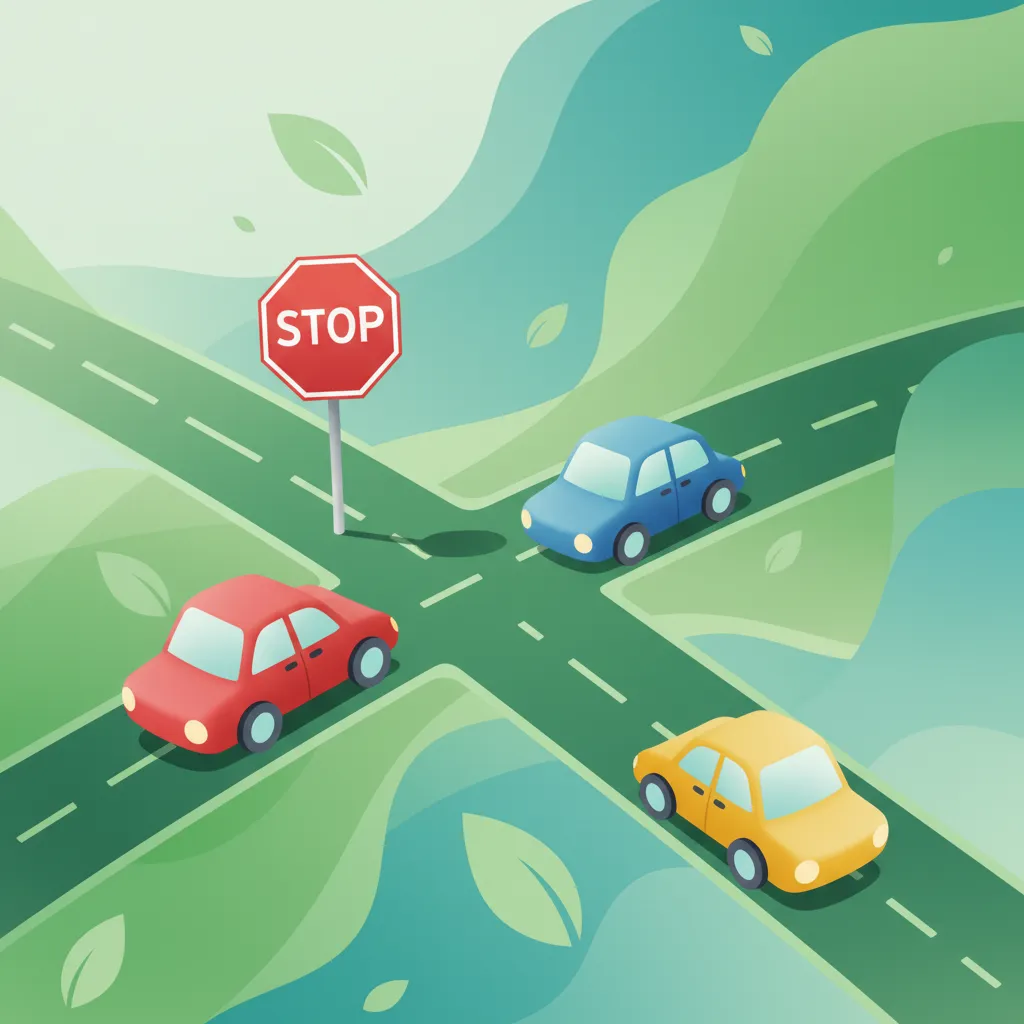
In this lesson, learners examine the specific actions required at stop signs and give-way intersections under Polish traffic regulations. The content explains the legal requirement for a full stop before the stop line, incorporating a visual scan of all directions before proceeding. It also covers the give-way protocol, where riders must yield to traffic already in the intersection or on the main road, emphasizing the need for correct positioning and observation.
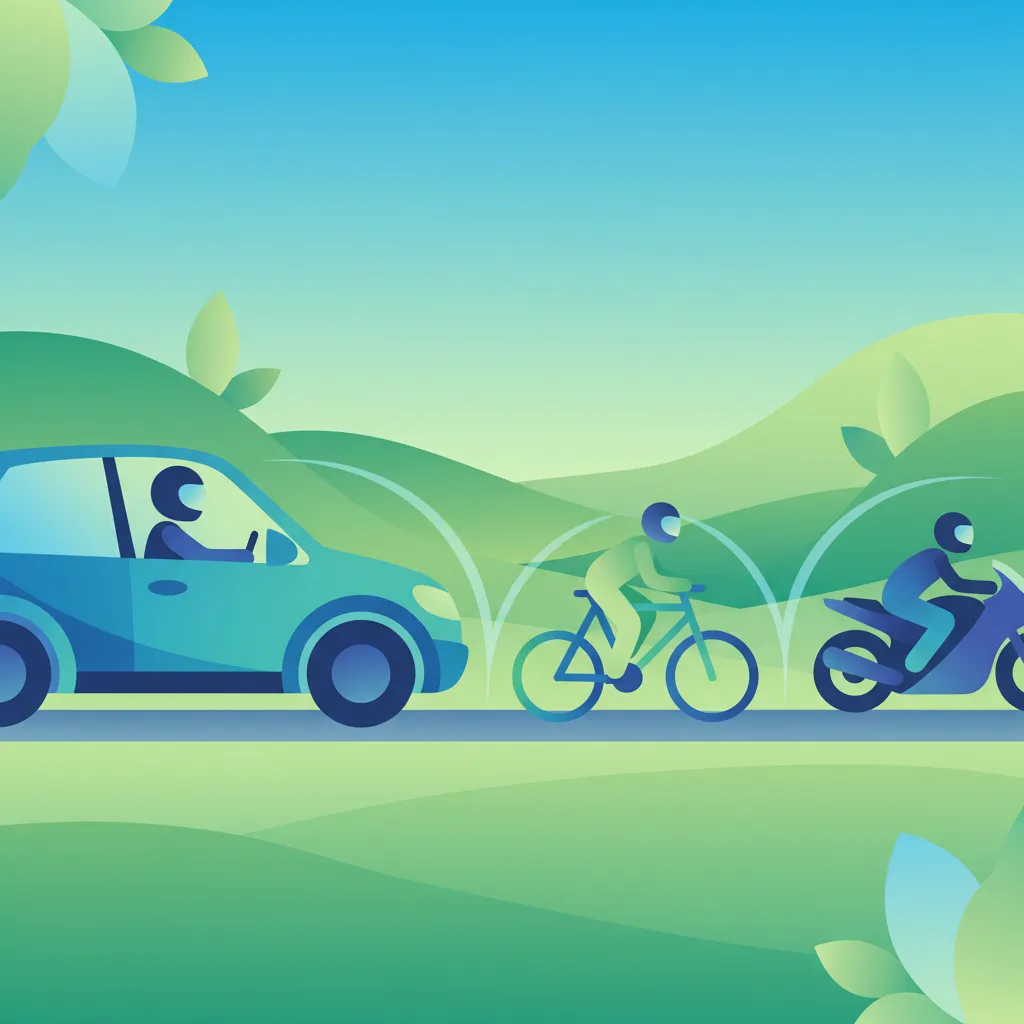
This lesson is dedicated to the safe overtaking of two-wheeled vehicles. It explains the legal requirement to leave a sufficient lateral distance (at least 1 meter) when passing cyclists. The content highlights the vulnerability of these road users and the need for patience, reduced speed, and careful judgment.
Understand Polish traffic law regarding safe following distances and adapting speed to conditions. Learn practical methods like the 2-second rule and when to increase safety margins for motorcyclists.
This lesson focuses on the principles of maintaining a safe following distance behind other road users, introducing the two-second and three-second rules as guidelines. Learners will learn how to estimate safe gaps based on speed, road conditions, and traffic density, and understand the importance of a reaction-time buffer to prevent rear-end collisions. The lesson also covers techniques for visual distance estimation, promoting safe tailgating avoidance.
This lesson provides practical methods for maintaining a safe buffer zone behind the vehicle in front. It explains the 'two-second rule' as a minimum following distance in good conditions and how to increase it to three or more seconds in adverse weather. This skill is critical for allowing enough time to react and brake safely to avoid rear-end collisions.
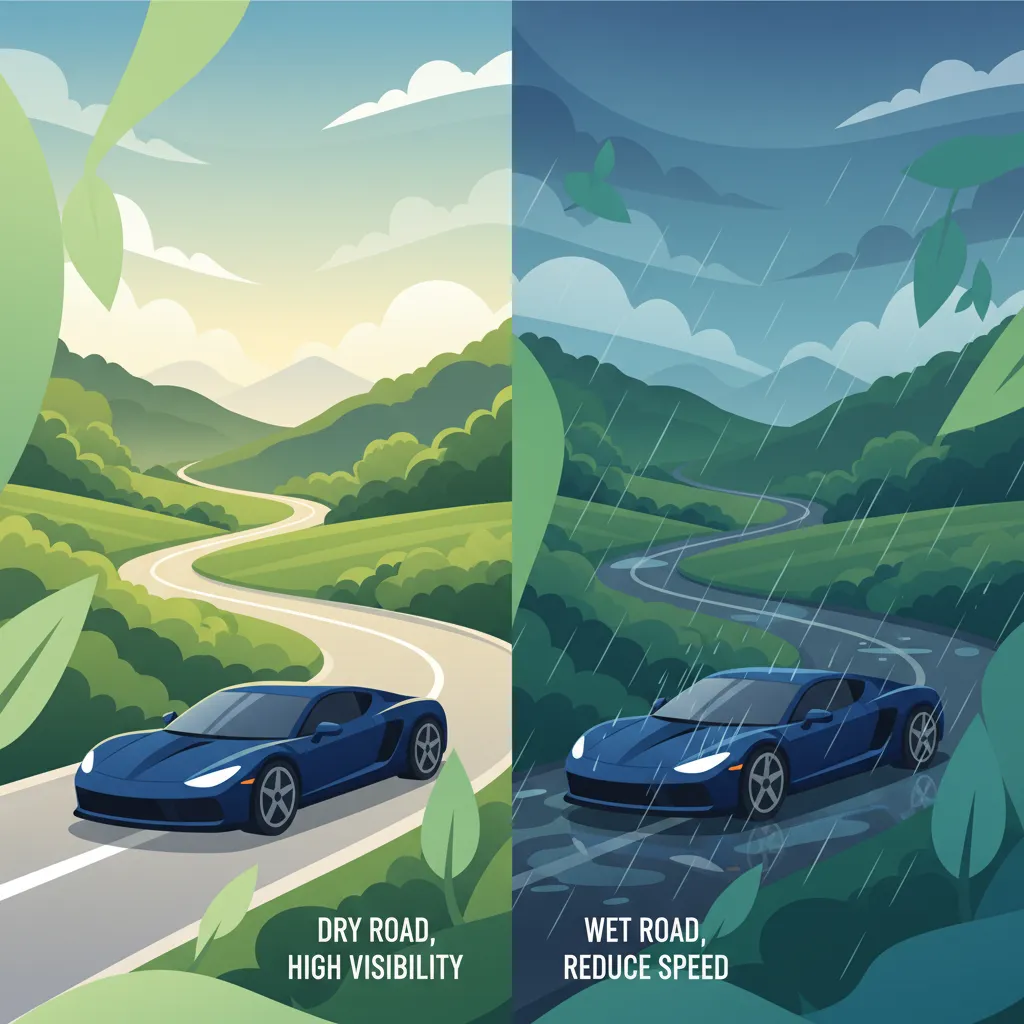
In this lesson, learners examine how environmental conditions such as rain, wind, ice, and reduced visibility necessitate adjustments in riding speed. The content provides guidelines for assessing road surfaces, judging appropriate cornering speeds, and reducing speed proactively in adverse weather. Learners will understand the impact of temperature on tyre performance and the need to increase safety margins, mastering adaptive speed management to maintain control.
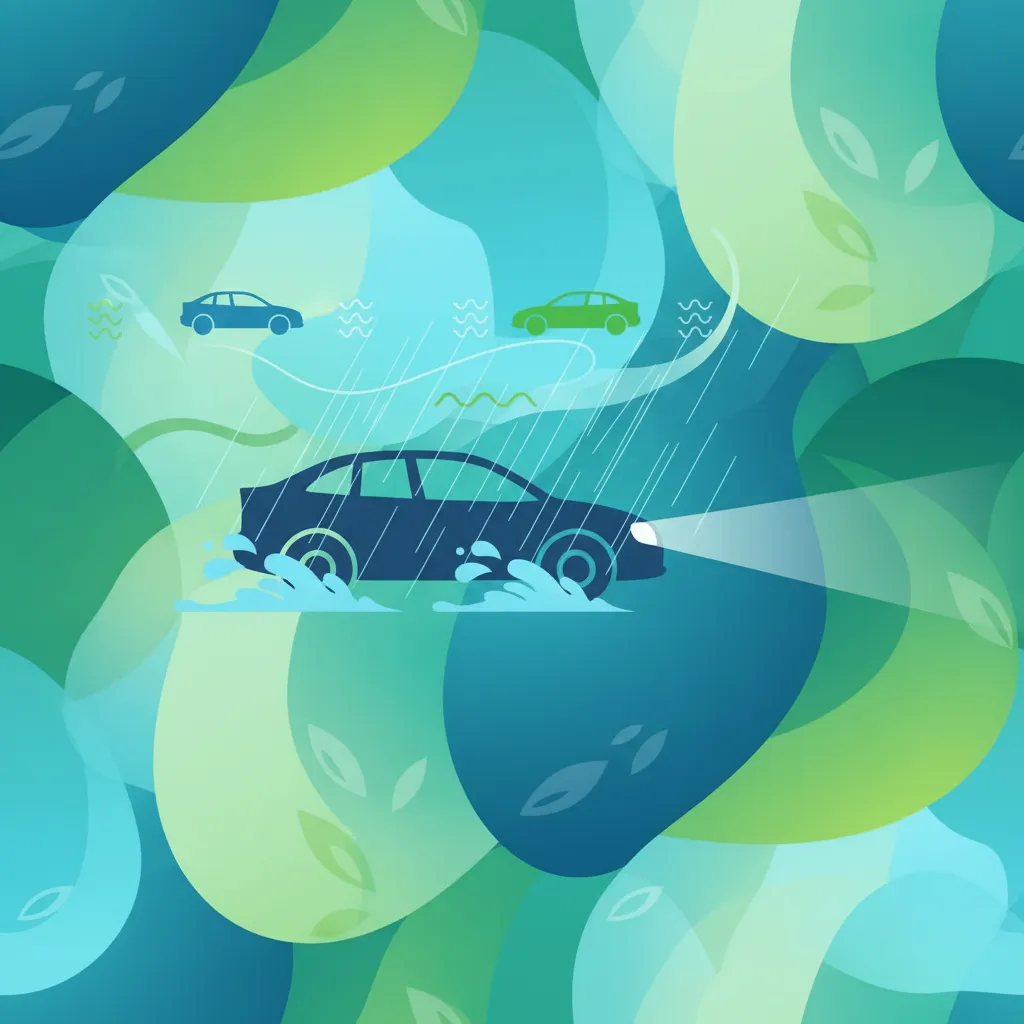
This lesson teaches the crucial concept that drivers must always adapt their speed to the current conditions. It explains how factors like rain, fog, ice, heavy traffic, and poor visibility reduce safety margins and require a lower speed than the posted limit. This principle of defensive driving is essential for preventing accidents in challenging situations.
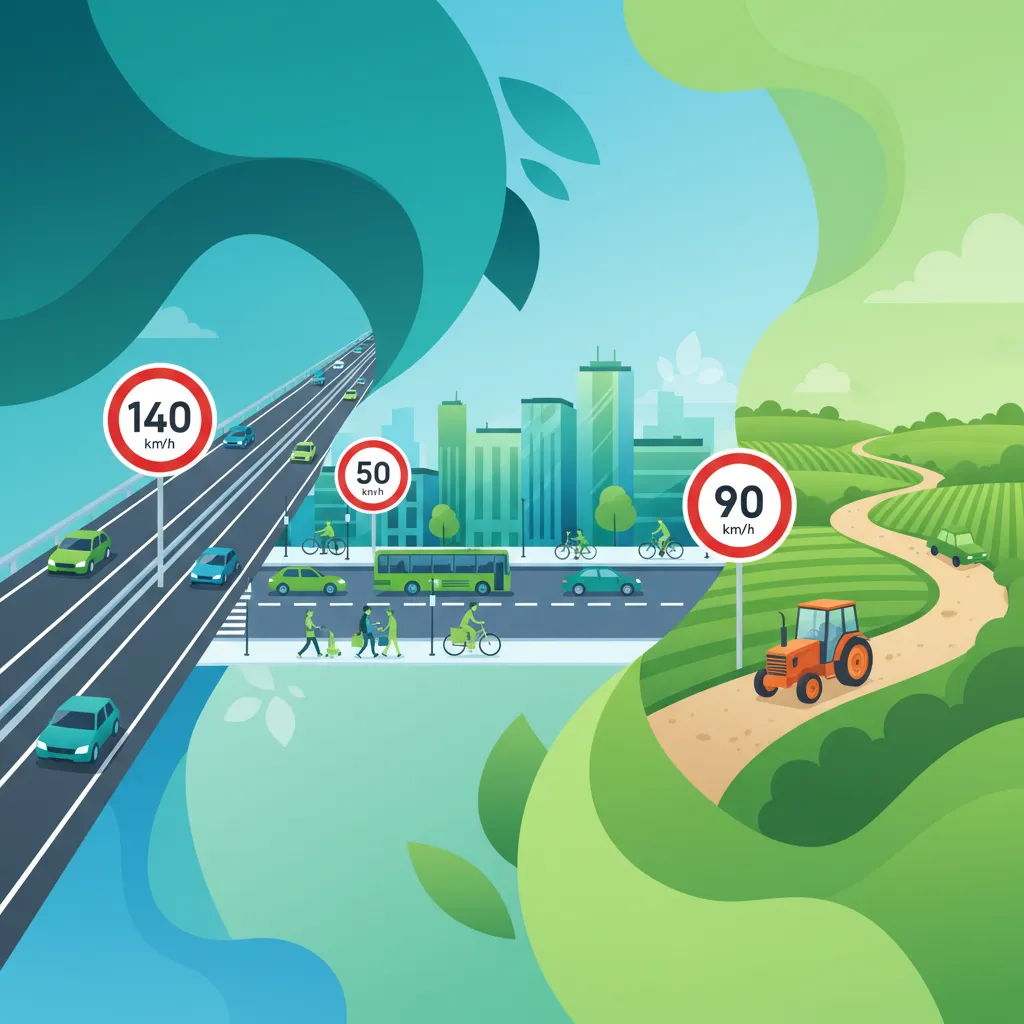
This lesson provides a comprehensive overview of the statutory speed limits applicable to different categories of Polish roads, including urban areas, residential zones, rural roads, highways, and motorways. Learners will examine the visual cues of speed limit signs and learn how speed limit transitions affect rider behavior. The content also covers how enforcement mechanisms impact compliance and the importance of real-time speed adaptation to remain within legal thresholds.

In this lesson, learners examine defensive overtaking practices, focusing on when and how to safely pass other road users. The content covers speed differential calculations, appropriate passing distances, and the importance of maintaining clear visibility during overtaking. Learners will also study the impact of road curvature, traffic flow, and lane selection on overtaking safety, allowing them to minimize risks associated with passing maneuvers.
This lesson outlines strategies for planning escape routes and adopting protective positioning to avoid potential collisions. Learners will study the concept of a defensive riding line that maximizes visibility and provides an optimal safety corridor. The content emphasizes maintaining adequate distance buffers, choosing lanes that reduce exposure to hazards, and preparing for emergency maneuvers such as swift swerves, allowing riders to react quickly in critical situations.
In this lesson, learners explore riding on rural and countryside roads, where road markings may be sparse and surface conditions varied. The content covers safe overtaking in single-lane sections, interaction with agricultural vehicles and animals, and the handling of gravel or uneven surfaces. Learners will also study the importance of anticipating curves and adjusting speed to light conditions, equipping them with the skills needed for safe countryside travel.
This lesson is dedicated to the safe overtaking of two-wheeled vehicles. It explains the legal requirement to leave a sufficient lateral distance (at least 1 meter) when passing cyclists. The content highlights the vulnerability of these road users and the need for patience, reduced speed, and careful judgment.
In this lesson, learners examine the core legal obligations that apply to motorcyclists operating on Polish roads, including the mandatory use of helmets, periodic vehicle inspections, and the necessity of valid insurance and registration. The content details the classification of traffic offences and explains the associated penalty system, including fines, demerit points, and potential licence suspension. Additionally, the lesson outlines procedural requirements for accident reporting and interaction with law enforcement, providing a comprehensive view of a rider’s legal responsibilities.
Find clear answers to common questions learners have about Calculating Stopping Distances and Reaction Times. Learn how the lesson is structured, which driving theory objectives it supports, and how it fits into the overall learning path of units and curriculum progression in Poland. These explanations help you understand key concepts, lesson flow, and exam focused study goals.
For the Polish theory exam, a standard perception-reaction time of approximately 2 seconds is generally used as a basis for calculations. However, it's crucial to remember that this can vary significantly in real-world conditions due to fatigue, distractions, or impairment. The lesson focuses on understanding this baseline and how it contributes to total stopping distance.
A heavier motorcycle, due to its greater kinetic energy, will require a longer distance to stop. While the basic calculation often simplifies friction and tyre force, in reality, increased mass means more force is needed to decelerate, thus increasing the braking distance. Always factor in your motorcycle's weight and any passenger or load into your stopping distance considerations.
Absolutely. A dry, grippy surface allows for maximum braking force, resulting in the shortest braking distance. Conversely, wet, icy, or loose surfaces drastically reduce the available friction, significantly increasing the braking distance. Understanding these conditions is key to adjusting your speed and following distance.
While the 2-second rule is a theoretical baseline, you can actively work to reduce your actual reaction time by staying alert, avoiding distractions (like mobile phones), and ensuring you are well-rested and sober. Practicing hazard perception also sharpens your ability to recognise dangers sooner, effectively shortening your reaction window.
The theory exam will likely present scenarios where you need to choose the correct answer regarding stopping distances based on speed, or identify factors that increase stopping distance. You might be asked about safe following distances or the consequences of travelling too fast. This lesson prepares you for these application-based questions.
Build custom practice sessions tailored precisely to your needs. Focus on areas requiring improvement, review specific Polish road signs, or master complex traffic rules to ensure full preparation for your official driving license exam.