
The T-6c plate is a crucial supplementary sign used with the A-7 (Yield) or B-20 (Stop) signs. It visually maps out the priority road, showing exactly where traffic on the main road will be coming from. As a driver facing this sign on a subordinate road, you must always yield to all vehicles travelling on the path indicated by the thick line, regardless of their direction. This sign helps prevent common accidents caused by misjudging priority at complex junctions.
The T-6c road sign meaning is crucial for safely approaching complex intersections, as it clearly indicates the path of priority traffic while you are on a subordinate road. Mastering this specific sign interpretation prevents common errors and is vital for your Polish driving theory test revision.
The T-6c plate is placed under A-7 (Yield) or B-20 (Stop) signs. It is the mirror image of T-6a. It shows you that the main road (thick line) is turning or crossing in a specific way. Since you are on a thin line, you MUST yield to all traffic traveling on the thick line, regardless of which way they are turning. This is one of the most common causes of accidents when drivers fail to identify which road is the priority one.
Warns you, the yielding driver, exactly where the priority traffic is coming from.
Get clear, practical answers to the most common questions about the T-6c - Actual Priority Path (on Subordinate Road) road sign. Learn how the sign works, what rules it represents, and how it affects real driving situations. This FAQ strengthens your understanding and supports accurate decision making for the Polish driving theory exam in Poland.
The T-6c plate's main purpose is to clarify the exact route of the priority road when it's not a straightforward straight crossing. Placed beneath a 'Yield' or 'Stop' sign, it graphically shows you where the main traffic flow is and from which direction vehicles will approach, ensuring you yield correctly.
The T-6c sign precisely dictates your yielding obligation. You must give way to ALL vehicles depicted on the thick line of the diagram, even if they are turning away from your path. Your thin line on the diagram represents the subordinate road, meaning you must wait for a safe gap in the priority traffic before proceeding.
A common mistake is assuming the right-hand rule still applies when it doesn't; the T-6c sign and its primary sign (A-7 or B-20) always override standard priority rules. Another error is not looking at the full arc of the priority road shown on the thick line, leading to dangerous attempts to pull out in front of approaching vehicles.
You'll encounter the T-6c sign at junctions where the priority road makes turns or crosses in a non-obvious way, often making it unclear which direction has priority. It's designed to simplify complex intersections and prevent collisions by clearly illustrating the priority path.
The T-6c sign itself doesn't command a stop; it clarifies the priority road's layout when placed under a 'Stop' (B-20) sign. If it's under a 'Yield' (A-7) sign, you must yield. In both cases, the T-6c helps you understand exactly which vehicles you need to let pass before you can safely enter the intersection or proceed.
A clear reference image of the T-6c - Actual Priority Path (on Subordinate Road) road sign used in Poland.

The T-6c - Actual Priority Path (on Subordinate Road) road sign may also be known by these alternative names or terms.
The T-6c - Actual Priority Path (on Subordinate Road) road sign is part of the Supplementary Plates (T) category, which groups together signs with similar rules and functions.
Reviewing related road signs like the T-6c helps solidify your understanding and prevent confusion, crucial for passing your theory test. Practicing traffic sign comparison and understanding sign recognition patterns are key steps in effective theory test revision.
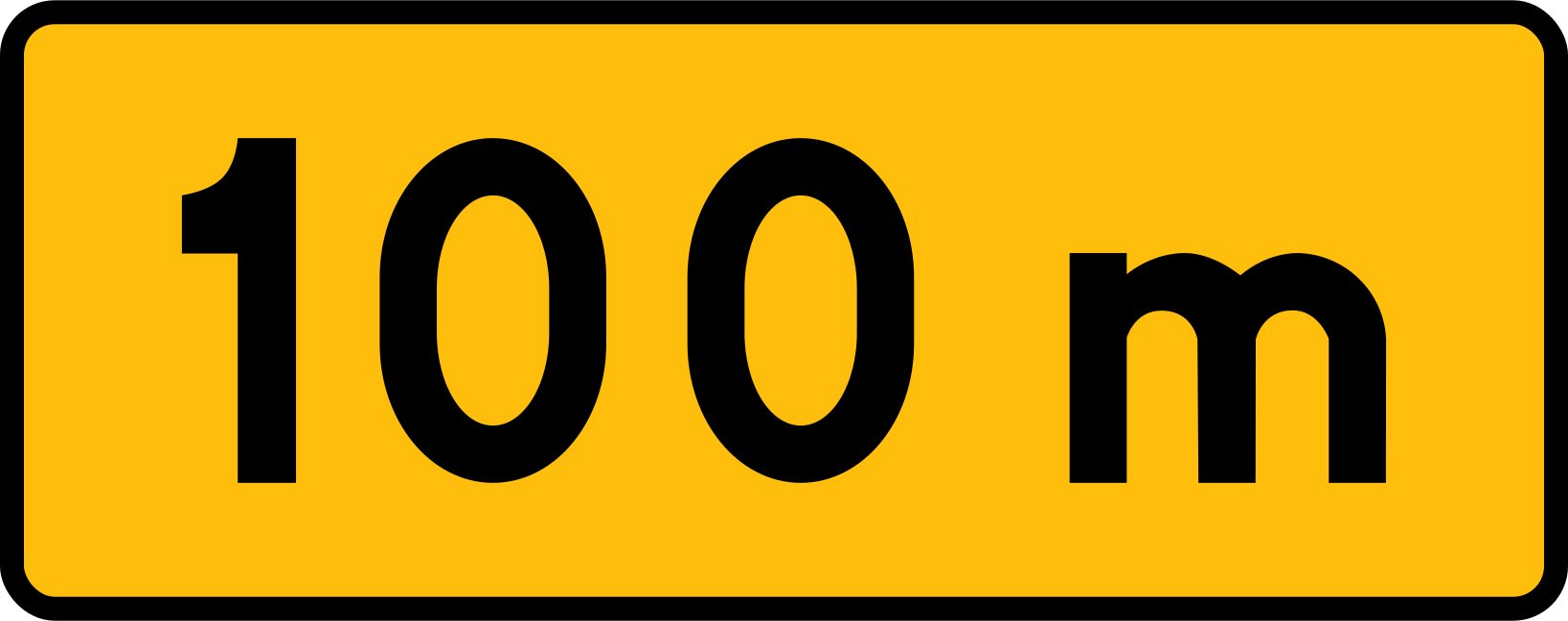
Understand the T-1 'Distance to Hazard' Plate for Safe Driving
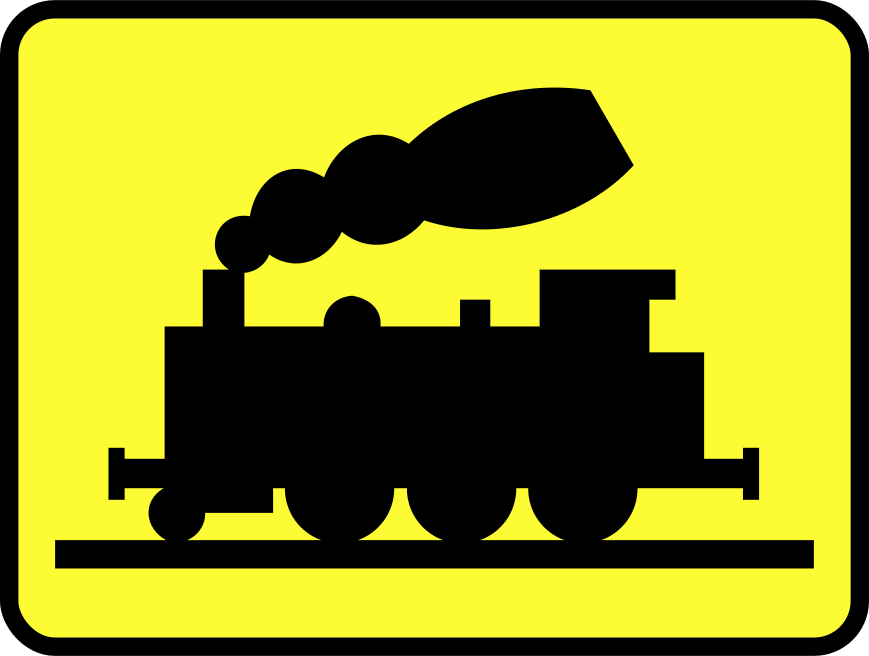
Beware of the T-10 sign: Industrial Railway Siding Ahead
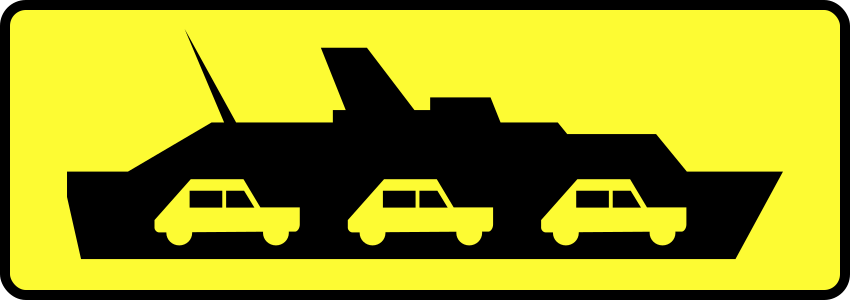
Prepare for a Ferry Crossing with the T-11 Warning Sign
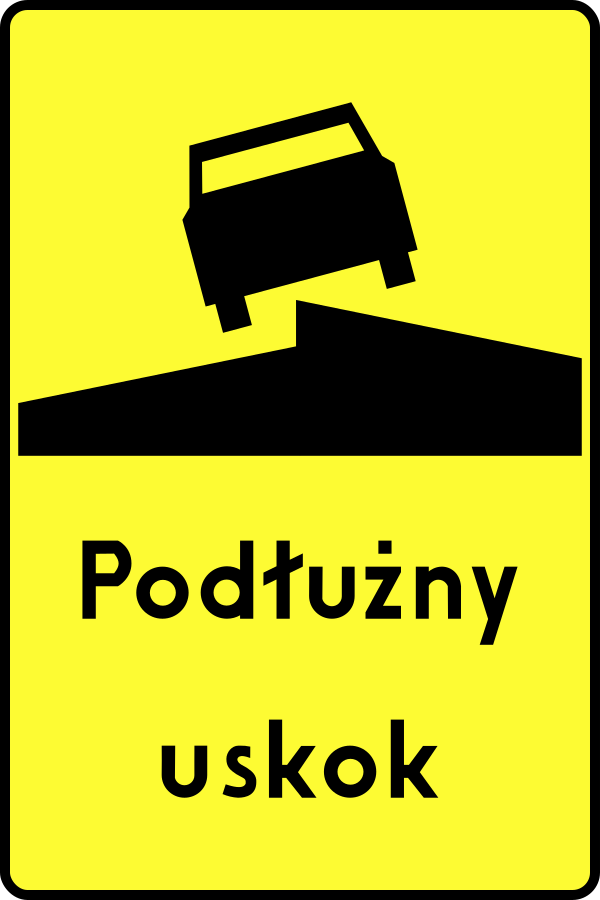
Watch out for the T-12 sign warning of a longitudinal step in the road surface!
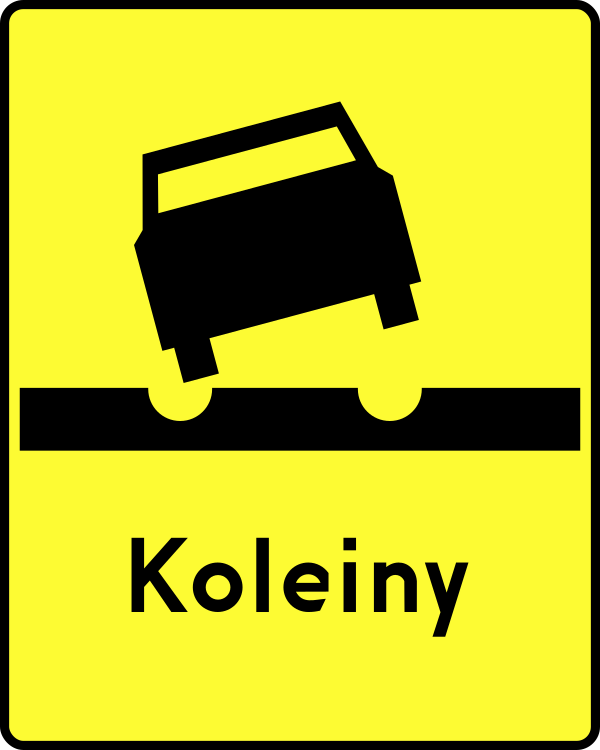
Warning: Deep Road Surface Ruts Ahead (T-13)
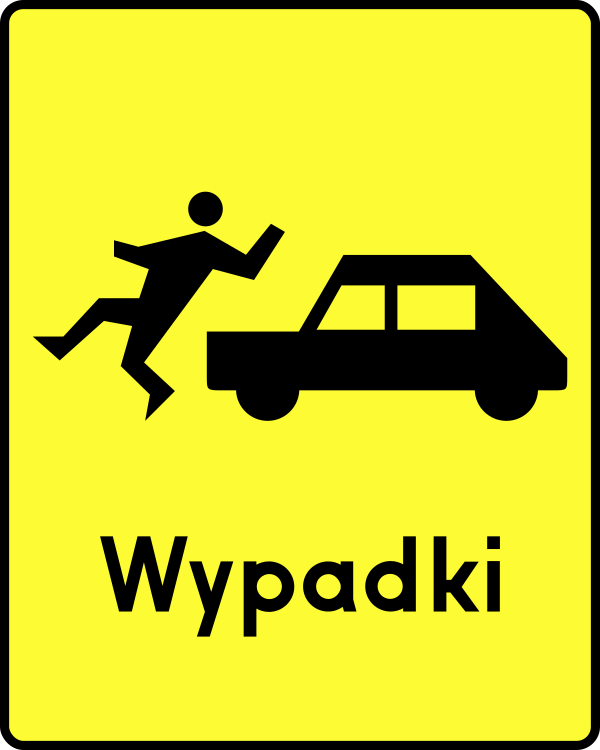
T-14: Beware of Frequent Pedestrian Accidents Ahead!
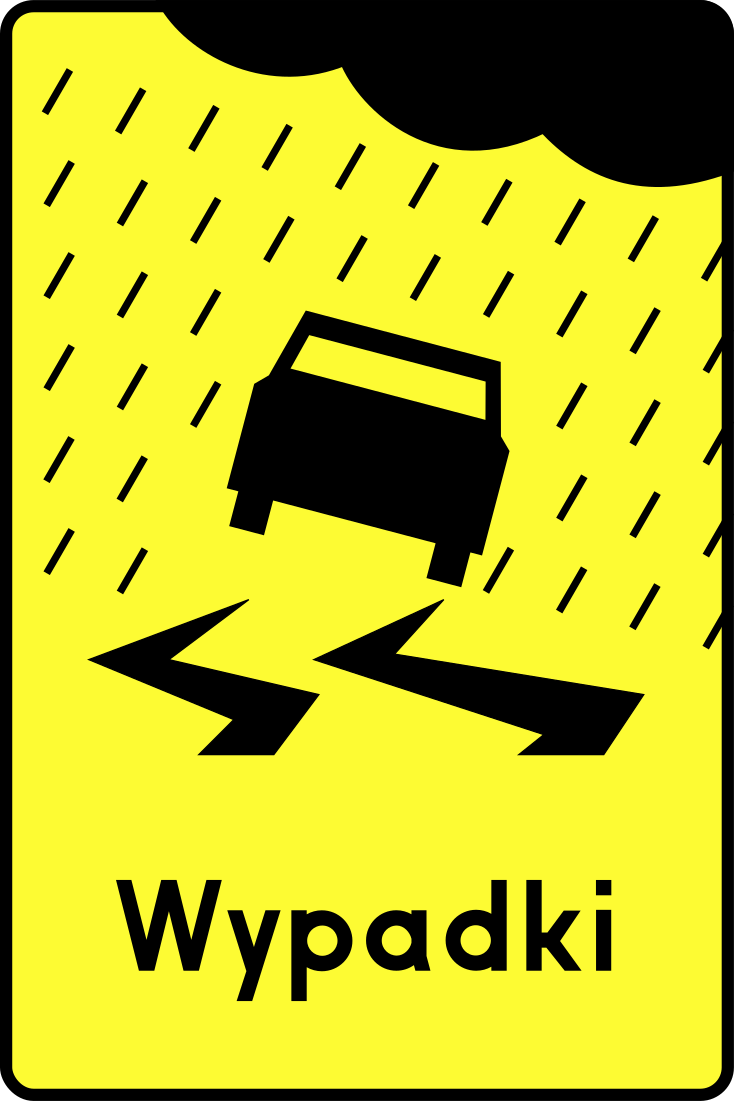
Beware: This Road Can Become Extremely Slippery When Wet!
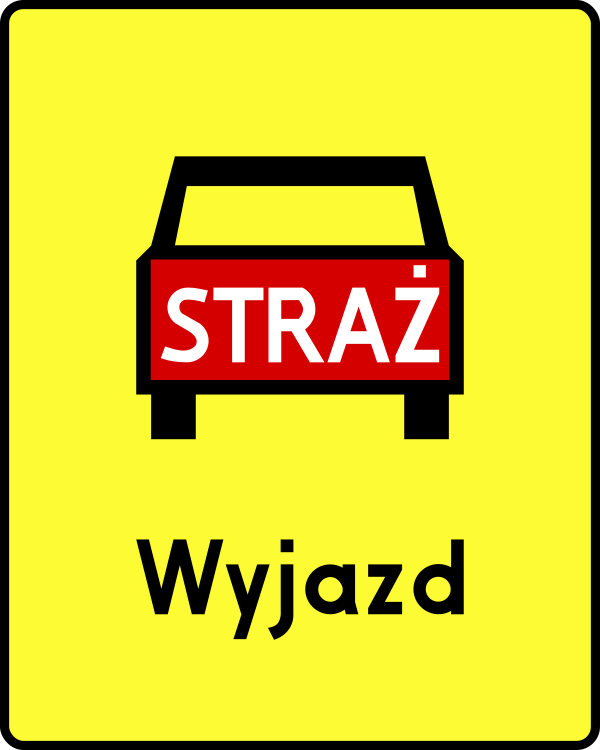
Prepare for sudden fire truck departures with the T-16 Fire Engine Exit sign.
Deepen your understanding of specific road signs by reviewing official Polish traffic rules and associated real-world driving scenarios. These expert-led resources help you bridge the gap between visual recognition and practical exam application.
This article provides a detailed explanation of how Polish traffic signs A-7 ('Ustąp Pierwszeństwa' - Yield), B-20 ('STOP'), and D-1 ('Droga z Pierwszeństwem' - Priority Road) dictate right-of-way at intersections. Understanding the nuances of these signs is a fundamental aspect of the Polish driving theory exam, and mastering them will significantly improve your preparedness for real-world driving scenarios.
Learn the precise regulations for towing trailers in Poland with a Category B driving license. This guide breaks down the differences between the standard B license, the enhanced Code 96, and the full B+E category, focusing on weight limits and when each is necessary. This knowledge is vital for safe driving and for correctly answering exam questions on vehicle combinations.
Know Your Obligations: What to Do After a Road Incident in Poland.
Master Vehicle Load Safety for a Confident Polish Driving Exam Pass
Learn the full process for obtaining a Category B driving licence in Poland, from getting your Profil Kandydata na Kierowcę (PKK) to passing theory and practical exams, and finally receiving your licence card. Understand key requirements and where to apply.
The D-40 sign marks the entrance to a 'Strefa Zamieszkania'. Inside this zone, pedestrians are allowed to use the entire width of the road and have absolute priority over vehicles. The speed limit is strictly 20 km/h. Drivers must be extremely vigilant as children are legally allowed to play on the street without adult supervision. Additionally, parking is only permitted in designated spaces, and all speed bumps are considered 'marked' by this entry sign.
After reviewing the full list of Polish road signs, explore specific sign categories for in-depth understanding. Challenge your knowledge with practice questions focused on sign recognition and interpretation to solidify your preparation for the driving theory exam.
Browse All Polish Road Signs