
The T-1 supplementary plate, often seen with warning signs from Group A, specifies the exact distance in meters to the start of a hazardous road section. While standard warning signs are usually placed at set distances (50-100m in built-up areas, 150-300m outside), this plate clarifies when the danger is closer or further away. Always pay close attention to this distance to ensure you have adequate time to prepare and adjust your speed appropriately, a crucial skill for both safety and passing your theory exam.
The T-1 'Distance to Hazard' plate modifies warning signs, indicating the exact meters to a road danger when it's not at a standard distance. Understanding this road sign meaning is vital for adjusting speed and preparing safely, ensuring your readiness for Polish traffic rules and theory test revision.
The T-1 plate is used in conjunction with warning signs (Group A) when the hazard is not located at the standard distance defined by traffic regulations. In built-up areas, warning signs are usually 50–100m before the danger, and 150–300m outside built-up areas. If the danger is closer or further away, this plate specifies the distance in meters (e.g., '200 m') to ensure the driver has adequate time to react and adjust their speed.
This plate indicates the exact distance from the warning sign to the beginning of the dangerous section of the road.
Get clear, practical answers to the most common questions about the T-1 - Distance to Hazard road sign. Learn how the sign works, what rules it represents, and how it affects real driving situations. This FAQ strengthens your understanding and supports accurate decision making for the Polish driving theory exam in Poland.
The T-1 sign is a supplementary plate used with warning signs. It tells you the exact distance, in meters, from where you see the warning sign to where the actual hazard begins. For example, if you see a bend warning sign with a T-1 plate showing '150 m', the dangerous bend starts 150 meters ahead.
When you see the T-1 sign, immediately start to anticipate the hazard indicated by the accompanying warning sign. Begin reducing your speed gradually so that by the time you have travelled the distance shown on the T-1 plate, you are at a safe speed to navigate the hazard. Increased alertness is key as you approach the specified distance.
The theory exam tests your understanding of how to react to road signs. The T-1 sign is important because it removes ambiguity about when a hazard will occur. Misinterpreting or ignoring this distance can lead to dangerous driving and is a common area where learners might make mistakes, so understanding its implication is vital for exam success.
Always trust the distance shown on the T-1 plate. Some road hazards, like slippery surfaces or dips, may not be immediately visible from a distance. Your reaction should be based on the information provided by the sign, not solely on what you can see, to ensure your safety.
Overtaking is generally not advised when a T-1 sign is present, especially if it accompanies a warning sign for a significant hazard like a sharp bend or a steep hill. The T-1 plate indicates you need to prepare for danger; overtaking would likely be unsafe as you approach the point of hazard.
A clear reference image of the T-1 - Distance to Hazard road sign used in Poland.
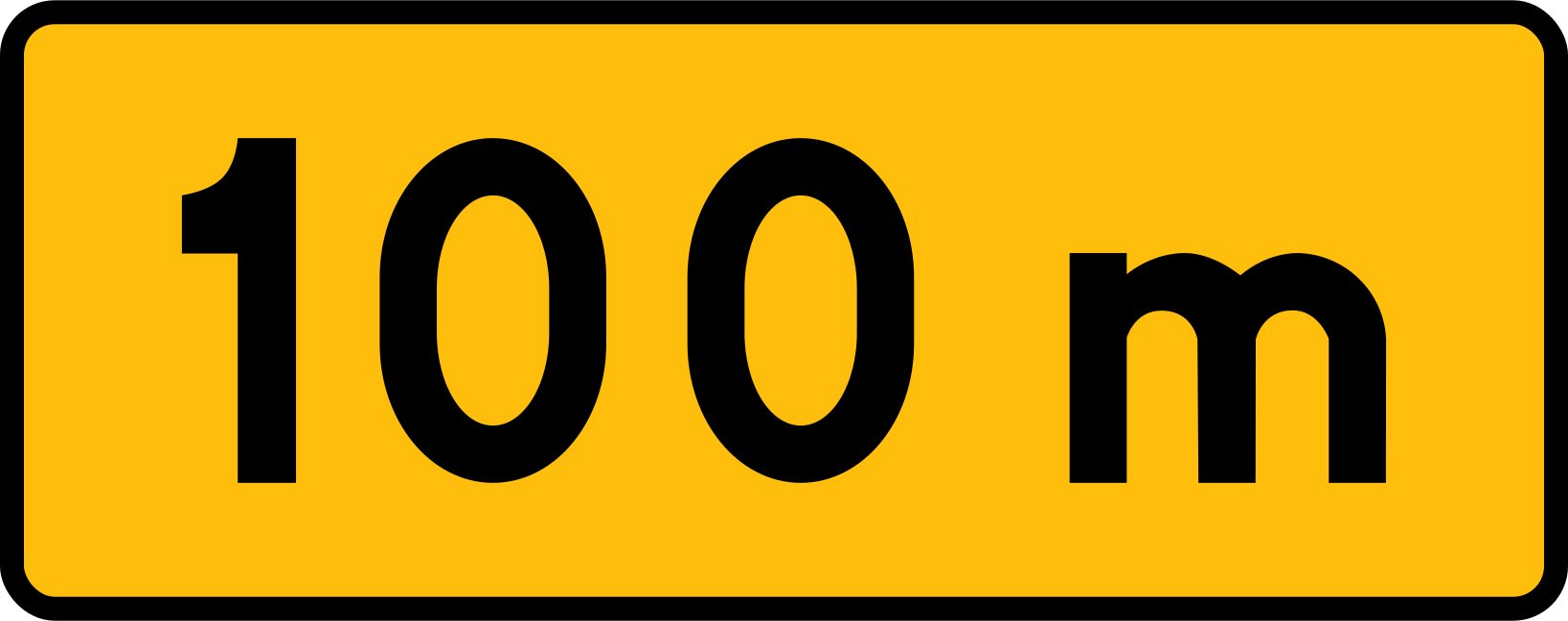
The T-1 - Distance to Hazard road sign may also be known by these alternative names or terms.
The T-1 - Distance to Hazard road sign is part of the Supplementary Plates (T) category, which groups together signs with similar rules and functions.
Reviewing related road signs like distance plates alongside warning signs sharpens recognition and reduces confusion. This comparative study aids memory recall and is crucial for effective theory test revision and safe driving.
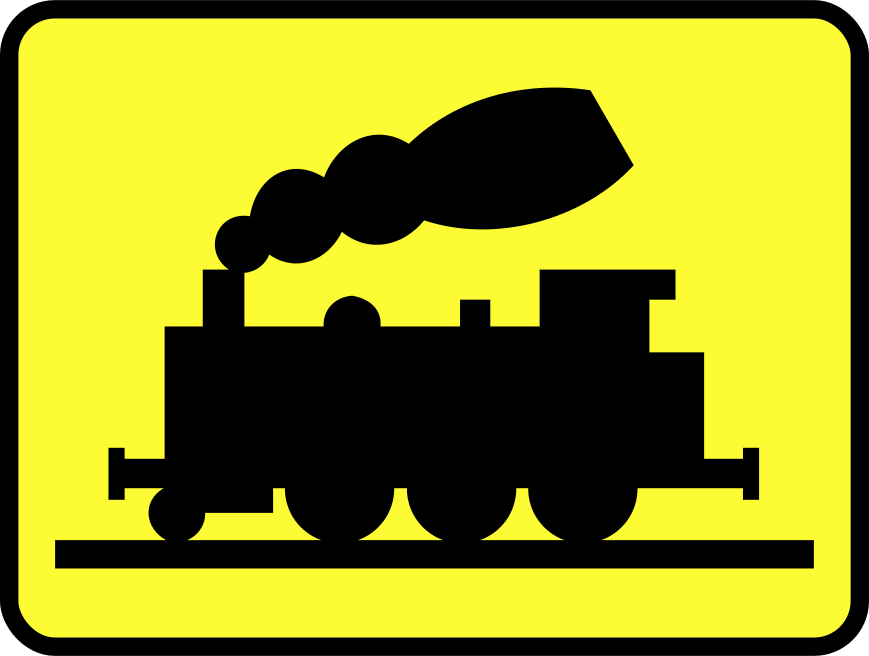
Beware of the T-10 sign: Industrial Railway Siding Ahead
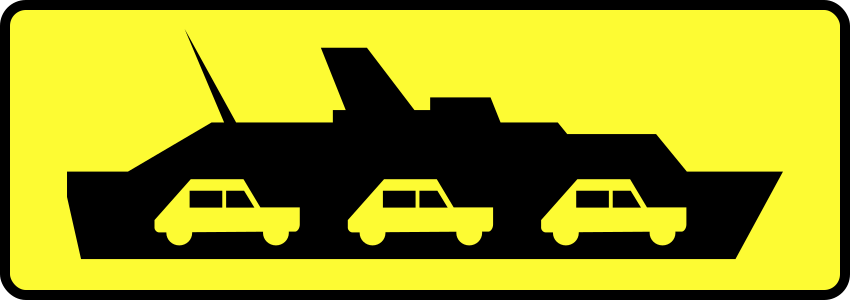
Prepare for a Ferry Crossing with the T-11 Warning Sign
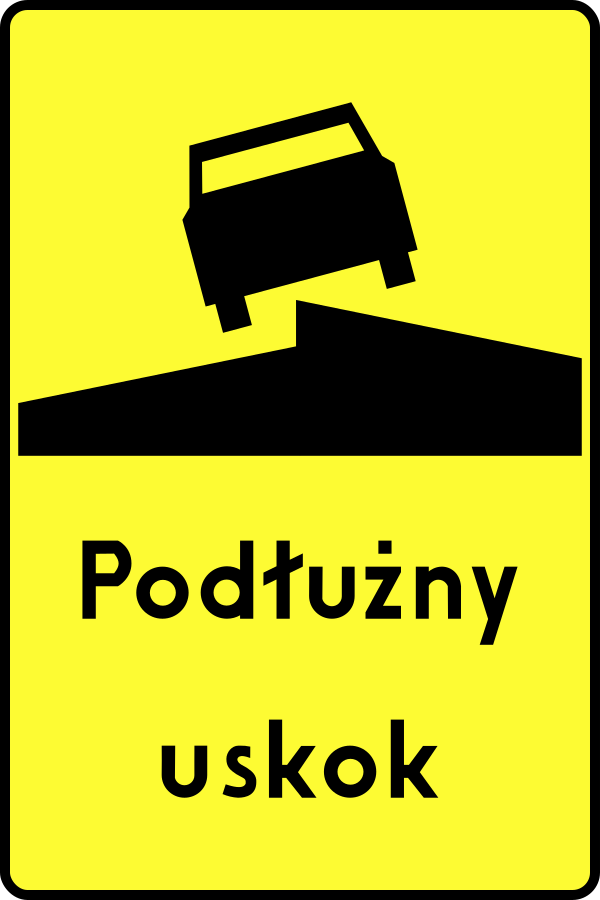
Watch out for the T-12 sign warning of a longitudinal step in the road surface!
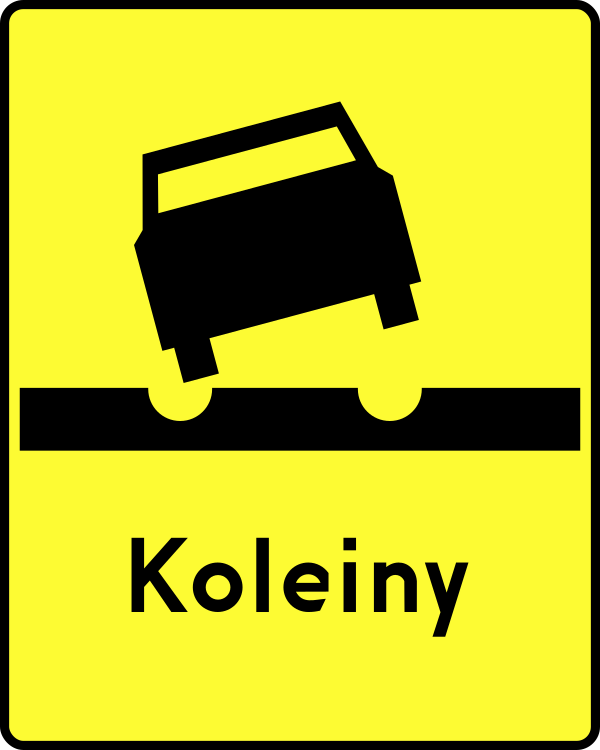
Warning: Deep Road Surface Ruts Ahead (T-13)
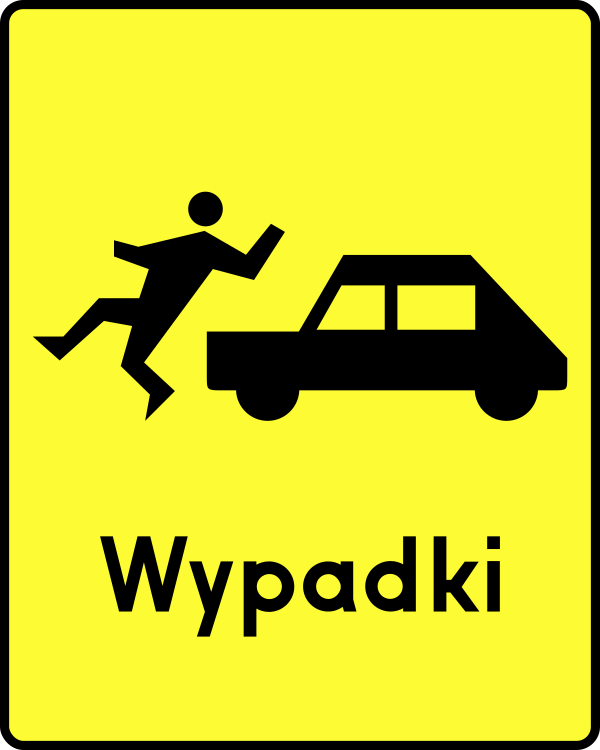
T-14: Beware of Frequent Pedestrian Accidents Ahead!
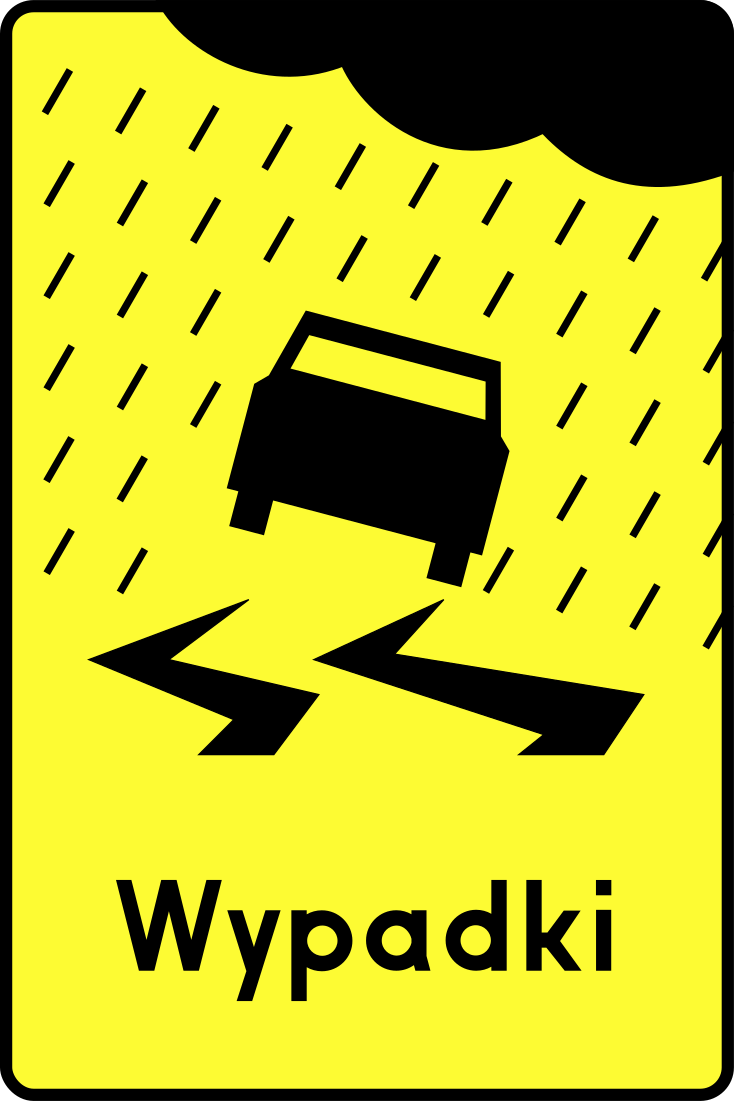
Beware: This Road Can Become Extremely Slippery When Wet!
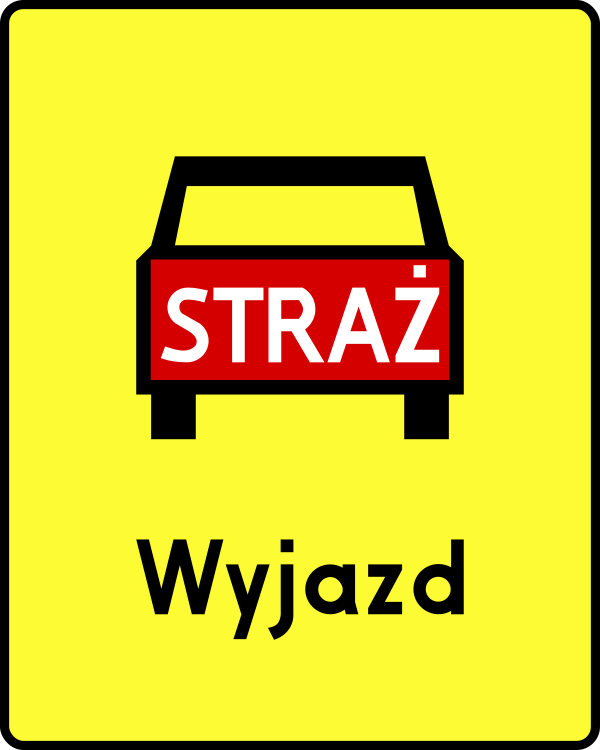
Prepare for sudden fire truck departures with the T-16 Fire Engine Exit sign.
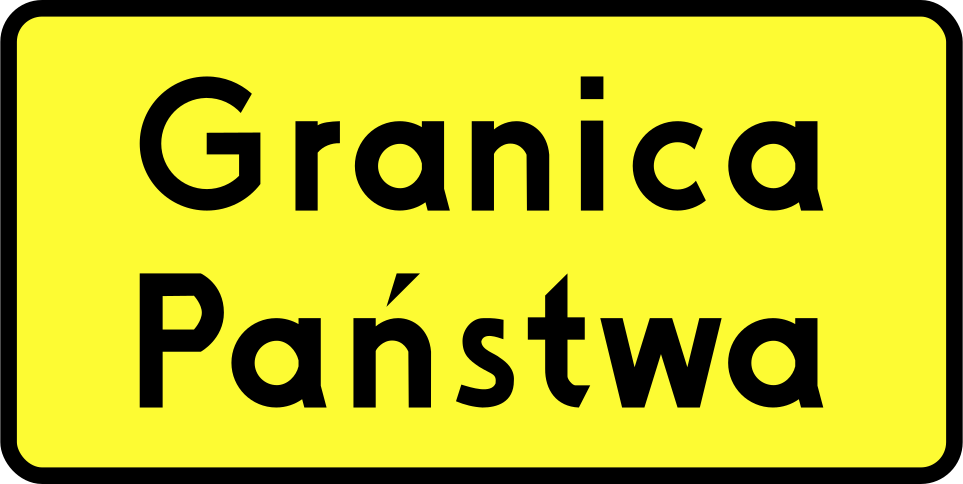
The T-17 State Border sign warns you that you are approaching an international boundary.
Deepen your understanding of specific road signs by reviewing official Polish traffic rules and associated real-world driving scenarios. These expert-led resources help you bridge the gap between visual recognition and practical exam application.
This article delves into the crucial meaning of the Polish D-42 'Obszar Zabudowany' (Built-up Area) sign, a key topic for your Polish driving theory exam. You will learn why this sign automatically enforces a 50 km/h speed limit and the severe penalties, including fines up to 5,000 PLN and potential license revocation, for violations. Understanding and respecting the D-42 sign is essential for safe driving and passing your theory test.
Master Roadworks: Prioritize Temporary Markings for a Safer Drive and Exam Pass.
Learning how to interact with law enforcement is a crucial part of your driver training in Poland, as it helps you understand the legal procedures governing roadside controls. This guide clarifies how officers identify themselves, what behaviors are expected of you as a driver, and how traffic enforcement impacts your penalty points and record. Mastery of these rules ensures you remain compliant with the law and prepared for any roadside situation you may encounter.
Master Urban Speed Limits and Drive Safely in Poland
The D-26d sign displays a black shower-head silhouette with water drops. These are typically located at motorway rest areas (MOP) or large truck stops. They are especially important for professional truck drivers who spend several days on the road, but they are also available to regular motorists and campers. Having access to a shower helps drivers stay refreshed and alert.
The BT-4 sign is placed before switches that are only operated from one side or are not fully automated. It requires the tram driver to come to a complete stop. The driver must then check (and if necessary, manually adjust) the switch point (iglica) to ensure it is flush against the rail and set for the correct track. Entering a poorly set switch can lead to immediate derailment.
After reviewing the full list of Polish road signs, explore specific sign categories for in-depth understanding. Challenge your knowledge with practice questions focused on sign recognition and interpretation to solidify your preparation for the driving theory exam.
Browse All Polish Road Signs