
The T-12 road sign warns you about a vertical height difference between adjacent lanes, often caused by roadworks. This 'step' requires careful handling, especially for motorcycles or vehicles with narrow tyres, as crossing it at a shallow angle can cause instability or loss of steering control. Always be prepared to adjust your steering and speed when encountering this warning, and if a lane change is unavoidable, perform it with a sharper angle. This sign is crucial for maintaining control and safety on Polish roads, and understanding it is vital for your theory exam.
This T-12 sign warns drivers of a significant height difference between road surfaces, often caused by resurfacing. Proper interpretation is crucial for safe navigation and theory test success, especially when preparing for your driving licence.
The T-12 plate indicates a 'podłużny uskok'. This happens when one lane has a new layer of asphalt and the other doesn't, creating a 'step' that runs parallel to the direction of travel. Crossing this step at a shallow angle can cause a vehicle—especially a motorcycle or a car with narrow tires—to lose stability or 'tramline' uncontrollably. It requires careful steering to cross safely.
Warns of a vertical height difference between lanes, usually due to roadworks.
Get clear, practical answers to the most common questions about the T-12 - Longitudinal Step in Surface road sign. Learn how the sign works, what rules it represents, and how it affects real driving situations. This FAQ strengthens your understanding and supports accurate decision making for the Polish driving theory exam in Poland.
The T-12 sign warns of a sudden vertical difference in height between lanes of the road, usually because one lane has been resurfaced and the other hasn't. It's important to be aware of this potential hazard as it can affect vehicle stability.
When you see the T-12 sign, reduce your speed and be extra attentive. If you need to change lanes, do so decisively and at a sharper angle rather than drifting slowly across the step to minimise the risk of losing control.
Motorcycles and cyclists are more vulnerable to the effects of a longitudinal step due to their narrower tyres and higher centre of gravity. A shallow crossing angle can cause severe instability or even a loss of balance, leading to an accident. The T-12 sign serves as a critical warning for them.
A common trap in the theory exam is not understanding the risk associated with changing lanes slowly across the step. Learners might mistakenly think a slow drift is safer, but the T-12 requires a more direct, sharper angle crossing to maintain stability. Overlooking the need to slow down is also a frequent error.
Overtaking itself is not prohibited by the T-12 sign, but you must ensure that any lane change required for the manoeuvre is performed safely. Avoid overtaking in a way that forces you to straddle the height difference at a shallow angle, especially at high speed. Prioritise stability and control over speed.
A clear reference image of the T-12 - Longitudinal Step in Surface road sign used in Poland.
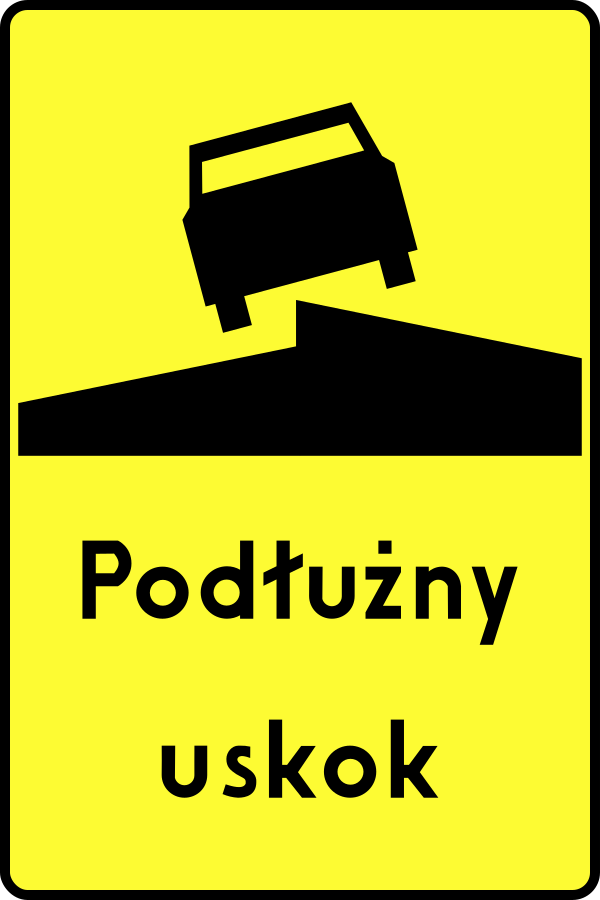
The T-12 - Longitudinal Step in Surface road sign may also be known by these alternative names or terms.
The T-12 - Longitudinal Step in Surface road sign is part of the Supplementary Plates (T) category, which groups together signs with similar rules and functions.
Reviewing similar road signs alongside the 'Longitudinal Step' (T-12) sign enhances your ability to distinguish between them, crucial for accurate theory test revision. Practicing traffic sign comparison and sign recognition directly improves your exam performance by solidifying your understanding of subtle differences.

Understand the T-1 'Distance to Hazard' Plate for Safe Driving
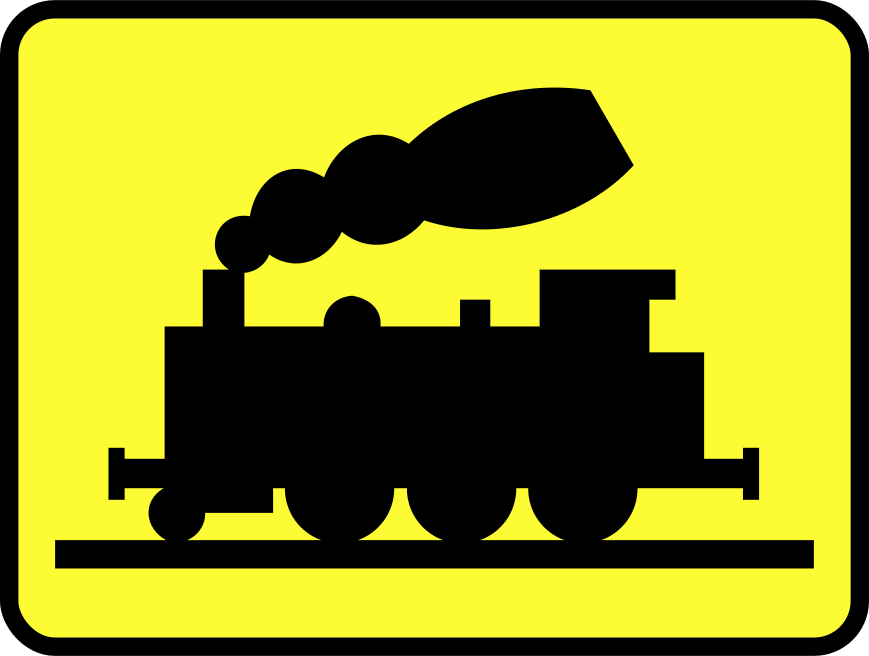
Beware of the T-10 sign: Industrial Railway Siding Ahead
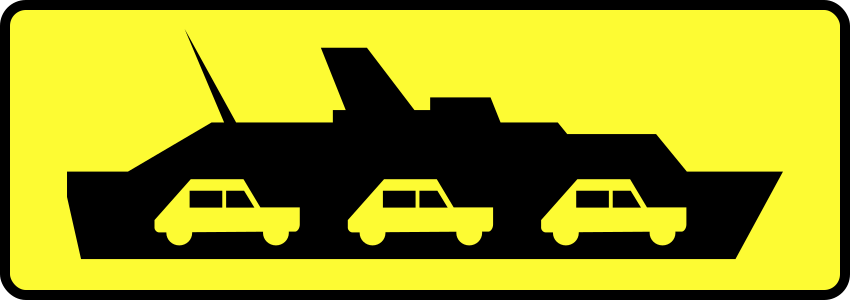
Prepare for a Ferry Crossing with the T-11 Warning Sign
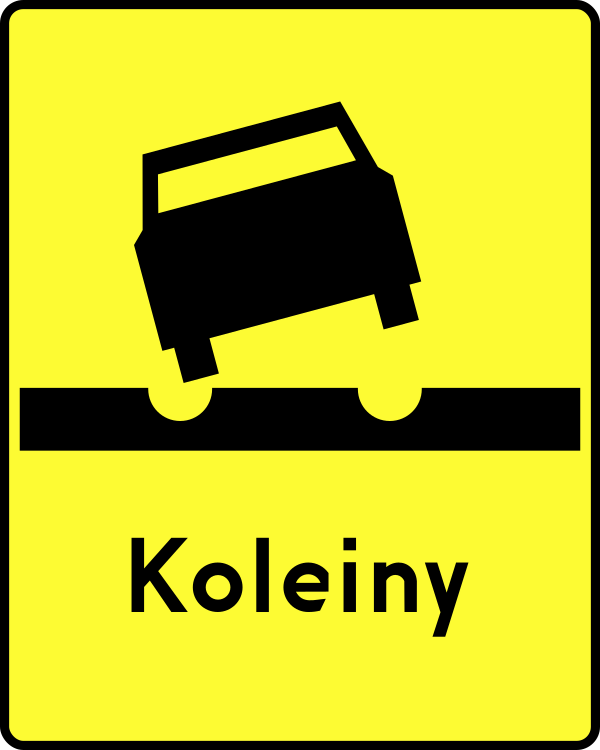
Warning: Deep Road Surface Ruts Ahead (T-13)
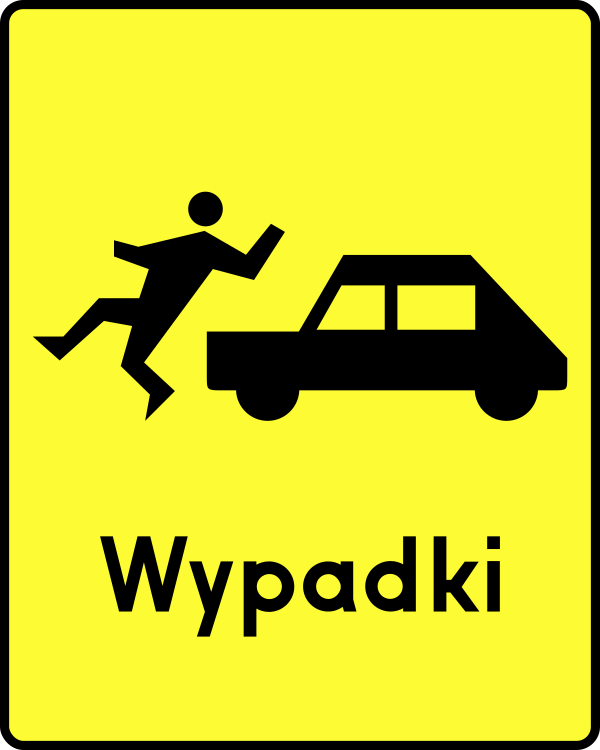
T-14: Beware of Frequent Pedestrian Accidents Ahead!
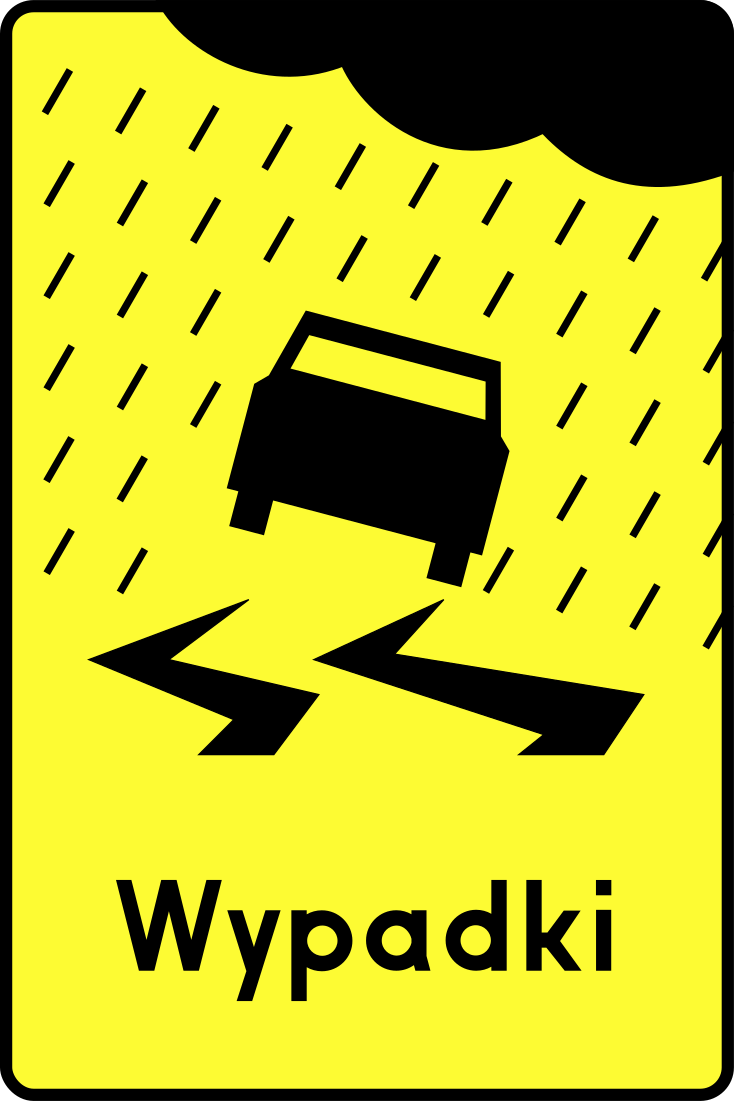
Beware: This Road Can Become Extremely Slippery When Wet!
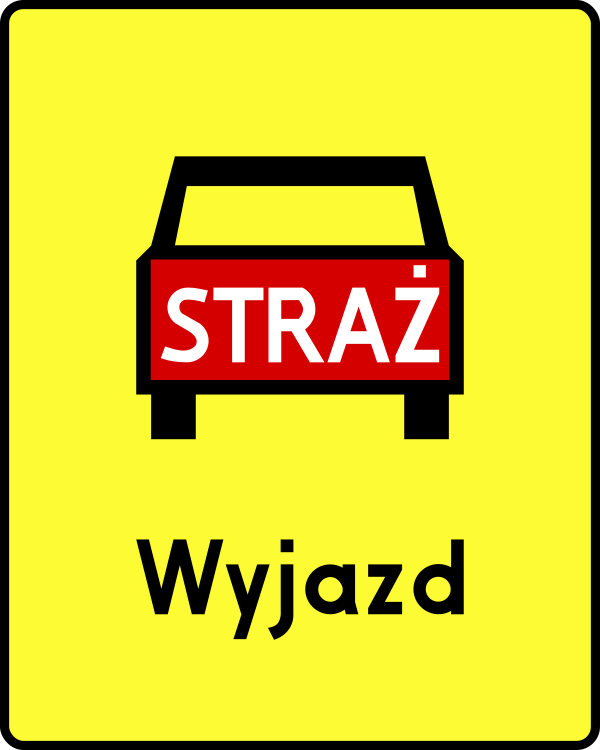
Prepare for sudden fire truck departures with the T-16 Fire Engine Exit sign.
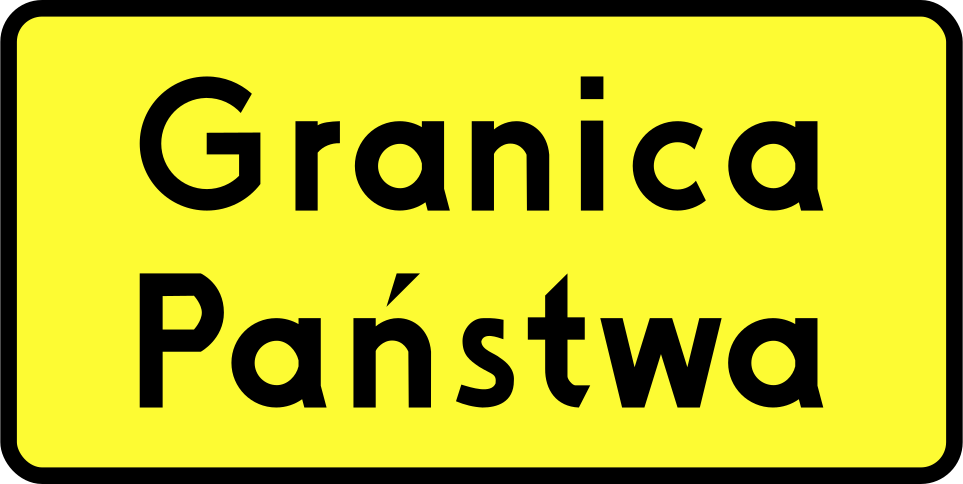
The T-17 State Border sign warns you that you are approaching an international boundary.
Deepen your understanding of specific road signs by reviewing official Polish traffic rules and associated real-world driving scenarios. These expert-led resources help you bridge the gap between visual recognition and practical exam application.
Learners often struggle to differentiate between binding regulatory signs and mere safety advice, which can lead to confusion during the official theory exam. This guide clarifies the specific role of Polish B-33 prohibitive signs versus international speed recommendations, helping you distinguish between legal mandates and situational safety advice. You will learn to identify key sign types, understand their legal weight, and recognize why adjusting your speed to road conditions remains a fundamental requirement of the Polish driving system.
Identifying the nature of fluid leaks under your car is a core competency for any responsible driver and a key topic in the Polish driving theory curriculum. This guide teaches you how to use simple physical markers—such as color, smell, and location—to assess potential vehicle malfunctions. Mastering these basic maintenance checks helps you prevent engine failure and ensures you are better prepared for the technical questions on your driving exam.
Master Polish Crossing Markings for a Safer Drive and Exam Success.
Navigate Tram Intersections Like a Pro: Essential for Your Polish Driving Exam.
The A-18a sign is placed in agricultural areas where animals are regularly moved between pastures or to and from farms. Large animals can cause immense damage to a vehicle and serious injury to occupants in a collision. They can also be easily spooked by loud noises. If you see animals on the road, you should slow down to a crawl or stop until they have passed.
The A-28 sign is placed on roads that have recently been resurfaced with 'chip seal' or near quarries and gravel pits. Loose stones reduce the grip of your tires and can be thrown at high speed by other vehicles, potentially cracking your windshield or hitting pedestrians. This sign is a prompt to slow down to protect both your vehicle and others.
After reviewing the full list of Polish road signs, explore specific sign categories for in-depth understanding. Challenge your knowledge with practice questions focused on sign recognition and interpretation to solidify your preparation for the driving theory exam.
Browse All Polish Road Signs