
The T-6b plate, used with D-1 or A-6a signs, visually guides you through intersections where side roads don't line up perfectly. It provides a clear 'map' of the junction ahead, showing your priority path and where traffic might emerge from offset roads. Understanding this sign is key to avoiding 'look-but-fail-to-see' accidents and ensuring safe passage through staggered junctions.
Master the T-6b sign, crucial for recognizing asymmetrical subordinate road layouts and ensuring correct priority. This traffic sign explanation is vital for theory test revision and safe driving in Poland.
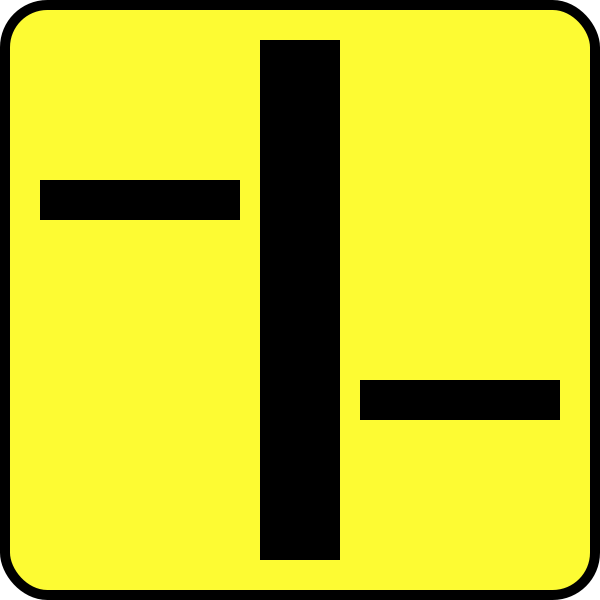
The T-6b plate is used with the D-1 sign or A-6a sign to show that side roads are not perfectly opposite each other. It provides a 'birds-eye view' of the intersection. This is vital for drivers to understand where traffic might enter from, especially if one side road is slightly further ahead than the other. The thick vertical line represents your priority path, and the thin horizontal lines show where you might encounter yielding traffic.
Shows the specific arrangement of side roads crossing the main priority road.
Get clear, practical answers to the most common questions about the T-6b - Asymmetric Layout of Subordinate Roads road sign. Learn how the sign works, what rules it represents, and how it affects real driving situations. This FAQ strengthens your understanding and supports accurate decision making for the Polish driving theory exam in Poland.
The T-6b sign displays a 'bird's-eye view' of an intersection where side roads are offset, meaning they aren't directly opposite each other. The thick vertical line represents your path on the priority road, and the thin horizontal lines indicate the direction from which subordinate roads join. It helps you anticipate traffic merging from these staggered approaches.
Asymmetrical layouts can be deceptive. Drivers might focus on one side and miss vehicles emerging from the other, which is further ahead or behind. The T-6b sign explicitly warns you of this potential hazard, prompting you to be more vigilant and scan both approaches to the junction carefully.
A common trap in the theory exam and in real driving is assuming that if the left side road is clear, the right side must also be clear. Learners may also be caught out by drivers 'creeping' out from the offset road to gain a better view. The T-6b sign is designed to combat these 'look-but-fail-to-see' issues.
When you see the T-6b sign, maintain your speed on the priority road but be extra alert. Scan both the left and right side roads individually as you approach. Be prepared for vehicles to emerge from these offset roads, and always be ready to adjust your speed or braking if necessary.
While the T-6b sign itself doesn't prohibit overtaking, it's generally ill-advised to do so near offset junctions. A vehicle might pull out unexpectedly from one of the side roads, creating a hazard. It's safer to complete any overtaking manoeuvre well before or after the junction.
A clear reference image of the T-6b - Asymmetric Layout of Subordinate Roads road sign used in Poland.
The T-6b - Asymmetric Layout of Subordinate Roads road sign may also be known by these alternative names or terms.
The T-6b - Asymmetric Layout of Subordinate Roads road sign is part of the Supplementary Plates (T) category, which groups together signs with similar rules and functions.
Reviewing related road signs like the T-6b alongside others in its group aids in distinguishing subtle differences and strengthens your memory for the theory test. Practicing this traffic sign comparison is key to accurate sign recognition and safe driving.
Understand the T-1 'Distance to Hazard' Plate for Safe Driving
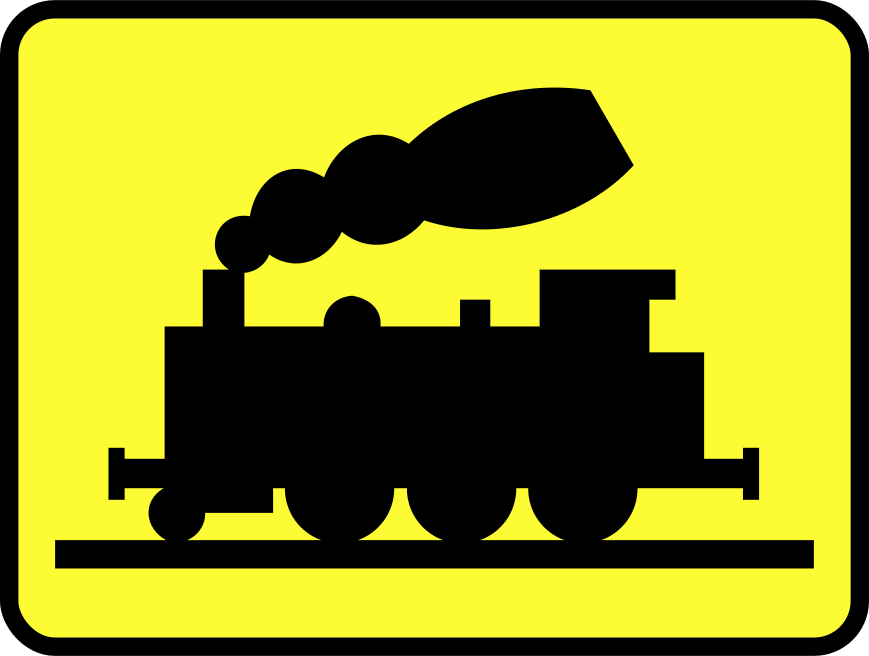
Beware of the T-10 sign: Industrial Railway Siding Ahead
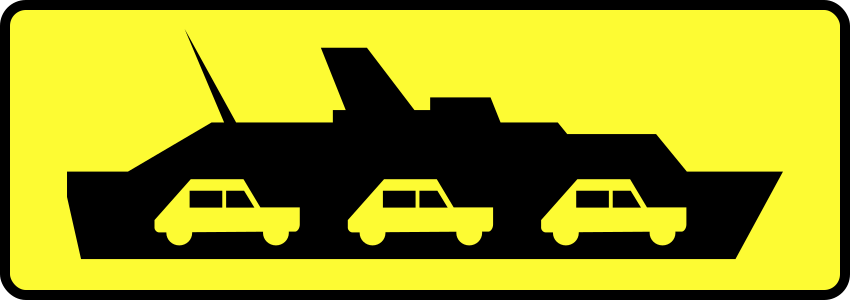
Prepare for a Ferry Crossing with the T-11 Warning Sign
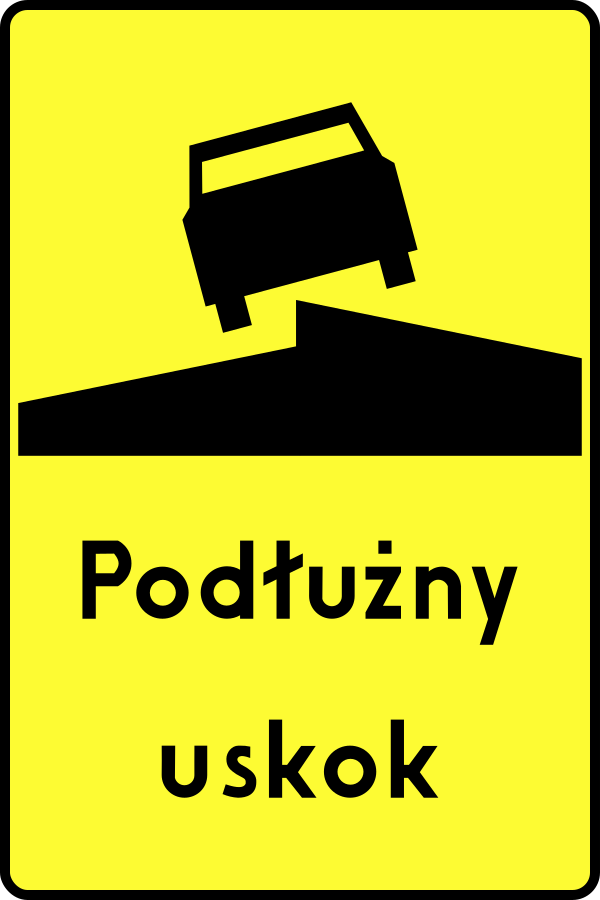
Watch out for the T-12 sign warning of a longitudinal step in the road surface!
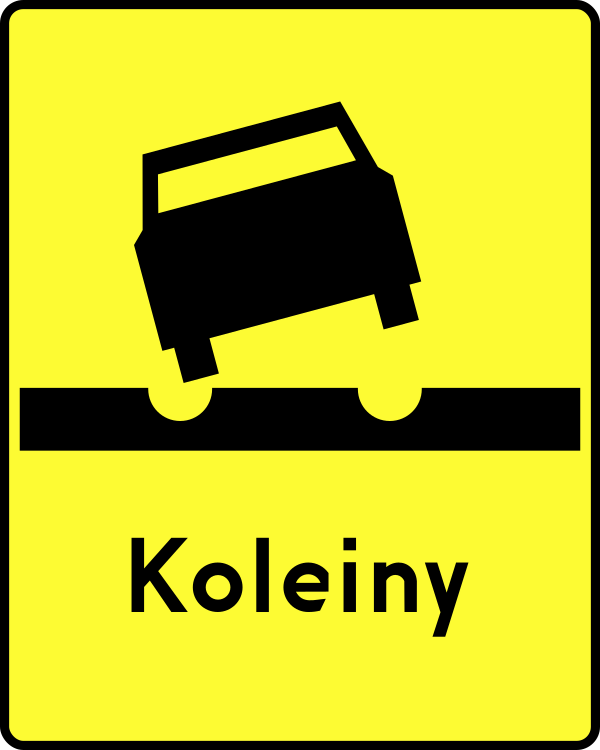
Warning: Deep Road Surface Ruts Ahead (T-13)
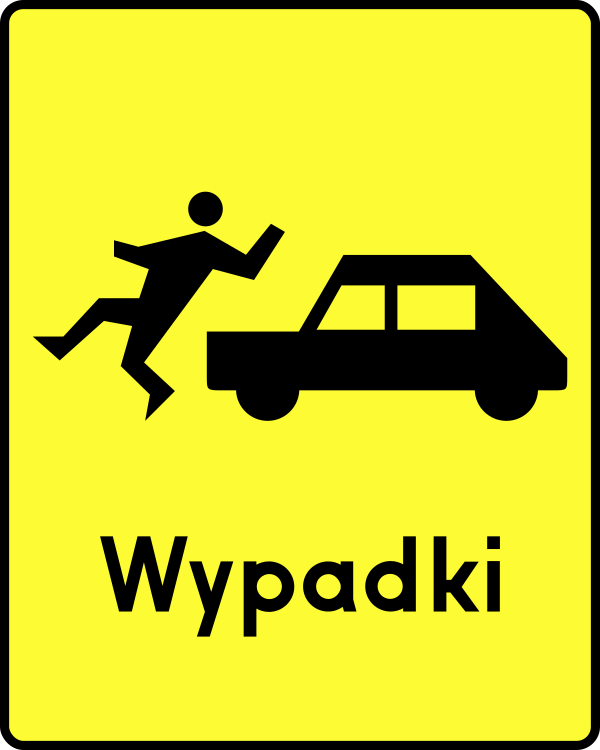
T-14: Beware of Frequent Pedestrian Accidents Ahead!
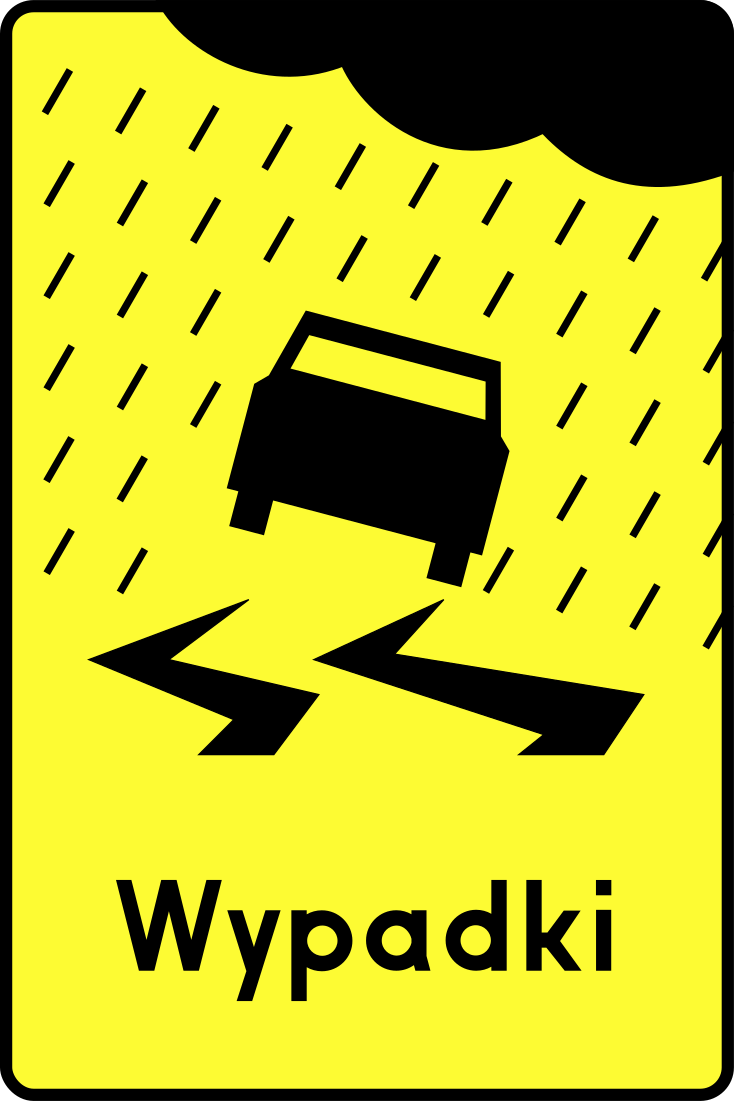
Beware: This Road Can Become Extremely Slippery When Wet!
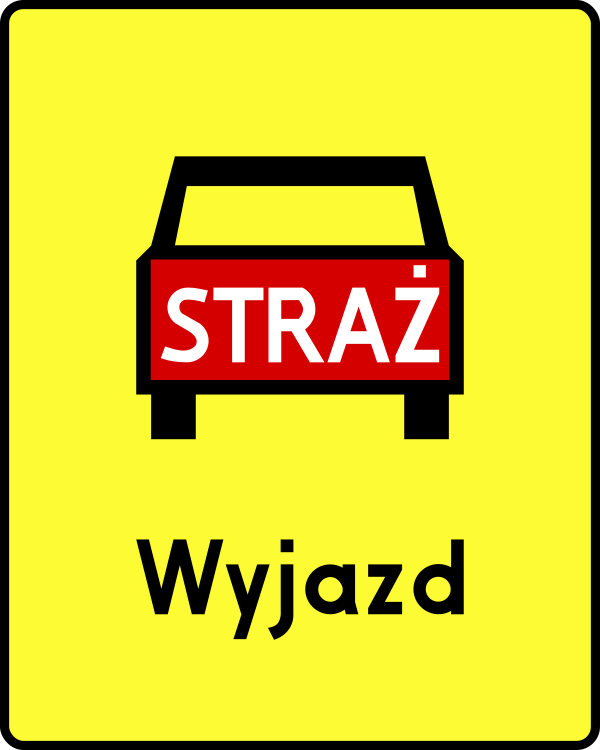
Prepare for sudden fire truck departures with the T-16 Fire Engine Exit sign.
Deepen your understanding of specific road signs by reviewing official Polish traffic rules and associated real-world driving scenarios. These expert-led resources help you bridge the gap between visual recognition and practical exam application.
Learning how to interact with law enforcement is a crucial part of your driver training in Poland, as it helps you understand the legal procedures governing roadside controls. This guide clarifies how officers identify themselves, what behaviors are expected of you as a driver, and how traffic enforcement impacts your penalty points and record. Mastery of these rules ensures you remain compliant with the law and prepared for any roadside situation you may encounter.
The A-30 sign serves as a vital warning for drivers to prepare for unexpected hazards that fall outside standard category signs. This guide clarifies how the sign is paired with supplementary plates to indicate risks like blind or deaf pedestrians, and outlines the mandatory safety behaviors required by Polish traffic law. You will learn the legal expectations for driver conduct to ensure you are fully prepared for hazard perception questions in your theory exam.
Master Your Rights and Obligations During a Polish Roadside Inspection
Master Roadworks: Prioritize Temporary Markings for a Safer Drive and Exam Pass.
The D-6b sign combines the functions of the D-6 and D-6a signs. It is used in locations where a sidewalk and a bicycle path run parallel and cross the road at the same point. The sign displays both the pedestrian and the bicycle silhouettes within the white triangle on a blue background. Drivers are obligated to treat this crossing with extreme care, yielding to both people on foot and those on bikes. The same rules regarding overtaking and parking apply here as with standard crossings.
The A-6a sign indicates that the driver is traveling on the main road (the thick vertical line) and will pass a junction with minor roads on both the left and right (the thin horizontal line). While you have the legal right of way, the sign serves as a warning to be alert for drivers on the side roads who might fail to see you or ignore their duty to yield.
After reviewing the full list of Polish road signs, explore specific sign categories for in-depth understanding. Challenge your knowledge with practice questions focused on sign recognition and interpretation to solidify your preparation for the driving theory exam.
Browse All Polish Road Signs