
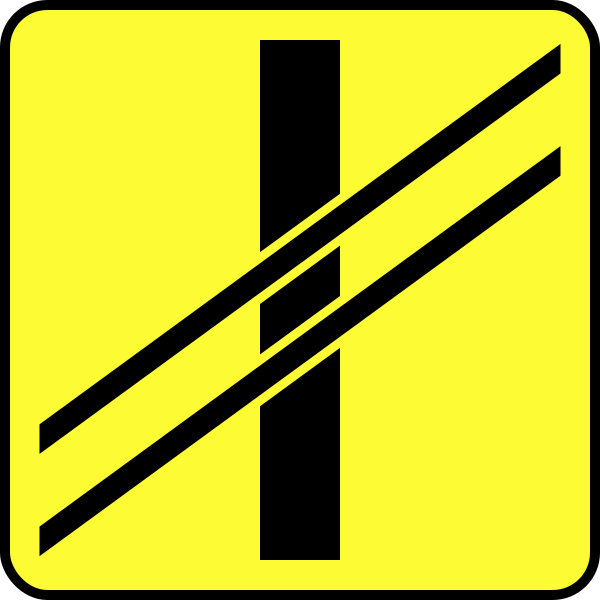
The T-7 traffic sign, often called the track angle plate, is used with warning signs for level crossings or trams. It signifies that the railway or tram tracks cross the road at an angle rather than perpendicularly. This geometry can pose a risk for vehicles, particularly long ones, and for cyclists or motorcyclists, so drivers must be extra vigilant. Slow down and prepare to negotiate the crossing carefully to avoid slipping or getting stuck.
This supplementary plate, T-7, explains the geometry of railway or tram tracks ahead, crucial for interpreting level crossing warning signs. Proper understanding of this sign's angled track layout is vital for safe negotiation and effective theory test revision.
The T-7 plate is used with warning signs for level crossings (A-9, A-10) or trams (A-21). It shows the specific geometry of the tracks relative to the road. This is extremely important for long vehicles that might 'bottom out' on a hump, or for cyclists and motorcyclists who could lose balance if their tires catch the rail at a sharp angle. It warns that the crossing is not a simple perpendicular one.
Indicates that the tracks cross the road at an angle or on a curve, increasing the risk of getting stuck or losing traction.
Get clear, practical answers to the most common questions about the T-7 - Railway or Tram Track Layout road sign. Learn how the sign works, what rules it represents, and how it affects real driving situations. This FAQ strengthens your understanding and supports accurate decision making for the Polish driving theory exam in Poland.
The T-7 sign indicates that the railway or tram tracks ahead cross the road at an angle, not at a right angle. This means the rails are laid diagonally across your path, which can be more challenging to cross safely than a perpendicular crossing.
Crossing angled tracks can increase the risk of your tires slipping on the metal rails, especially if you are travelling too fast or not at a close to 90-degree angle. For long vehicles, the angled approach can also create a 'hump' effect, potentially causing the underside of the vehicle to scrape the ground.
When you see the T-7 sign, you should slow down significantly to ensure you can cross the tracks at the safest possible angle, ideally as close to 90 degrees as your lane allows. Be observant of the specific path the tracks take to anticipate any unevenness and avoid sudden movements.
Yes, cyclists and motorcyclists are particularly vulnerable. Their tires can easily catch the edge of the angled rails, leading to a loss of balance or a fall. Drivers should be aware that other road users might have more difficulty navigating these crossings.
A common trap is not recognizing the increased risk posed by angled tracks and approaching them too quickly. Learners might also forget that long vehicles have specific ground clearance issues on such crossings, or they might not consider the need to adjust their angle of approach for safety.
Yes, like any level crossing, you must never stop your vehicle directly on the tracks, especially where they are angled. Always ensure you have enough space on the other side to clear the crossing completely before proceeding, as stopping can lead to dangerous situations.
A clear reference image of the T-7 - Railway or Tram Track Layout road sign used in Poland.
The T-7 - Railway or Tram Track Layout road sign may also be known by these alternative names or terms.
The T-7 - Railway or Tram Track Layout road sign is part of the Supplementary Plates (T) category, which groups together signs with similar rules and functions.
Comparing signs like the T-7 Railway Track Layout with others helps cement your understanding and reduce confusion. Effective traffic sign comparison is key for accurate theory test revision and confident driving.
Understand the T-1 'Distance to Hazard' Plate for Safe Driving
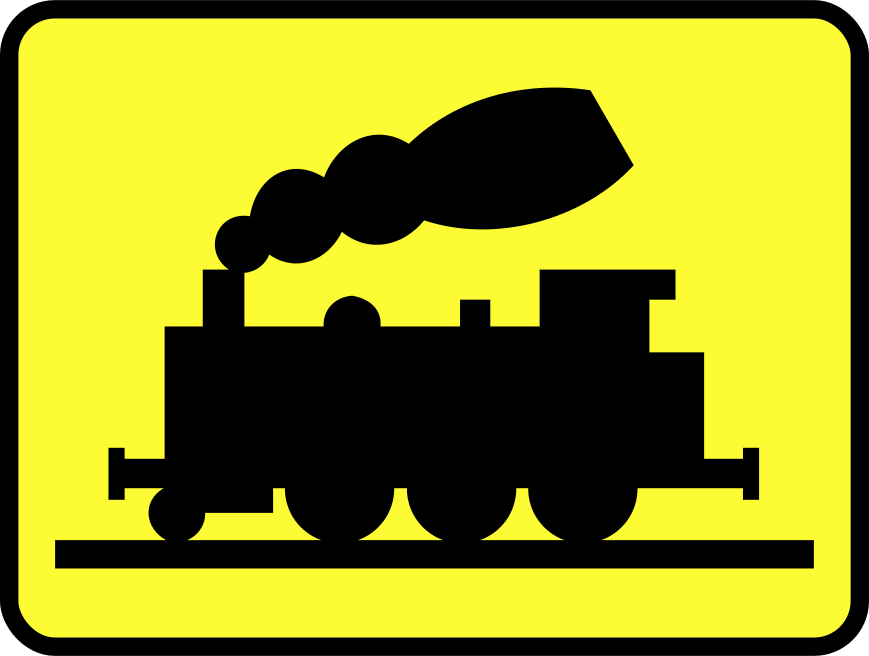
Beware of the T-10 sign: Industrial Railway Siding Ahead
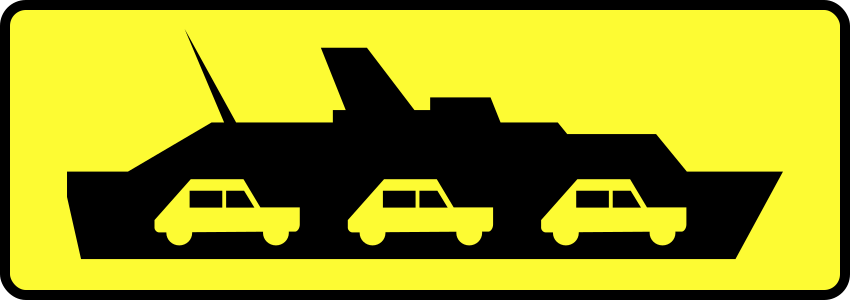
Prepare for a Ferry Crossing with the T-11 Warning Sign
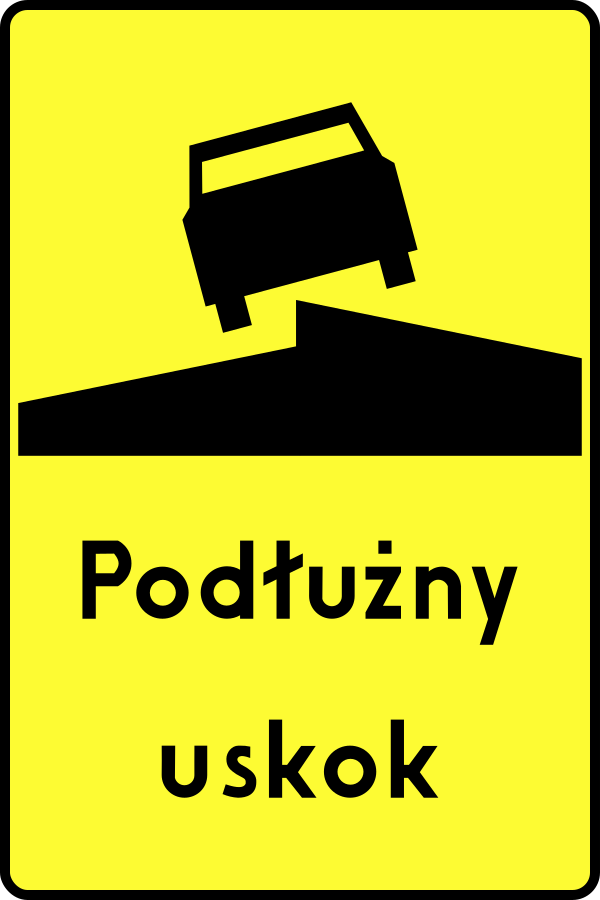
Watch out for the T-12 sign warning of a longitudinal step in the road surface!
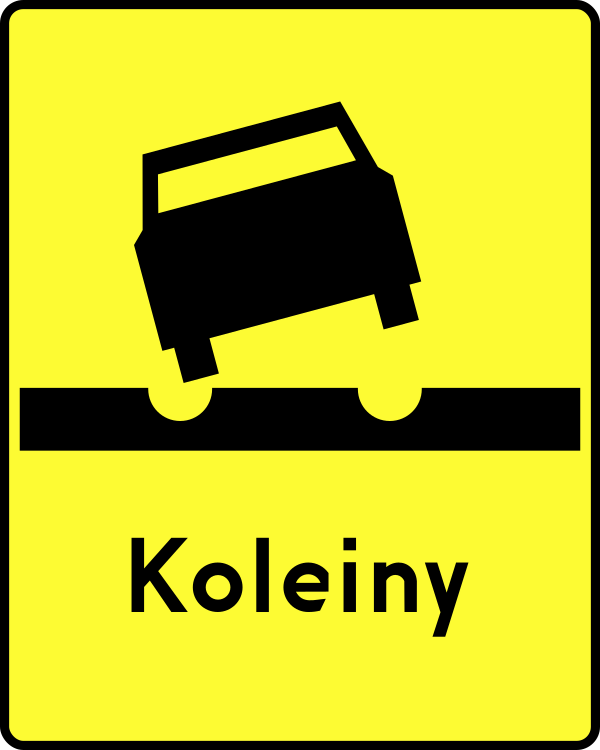
Warning: Deep Road Surface Ruts Ahead (T-13)
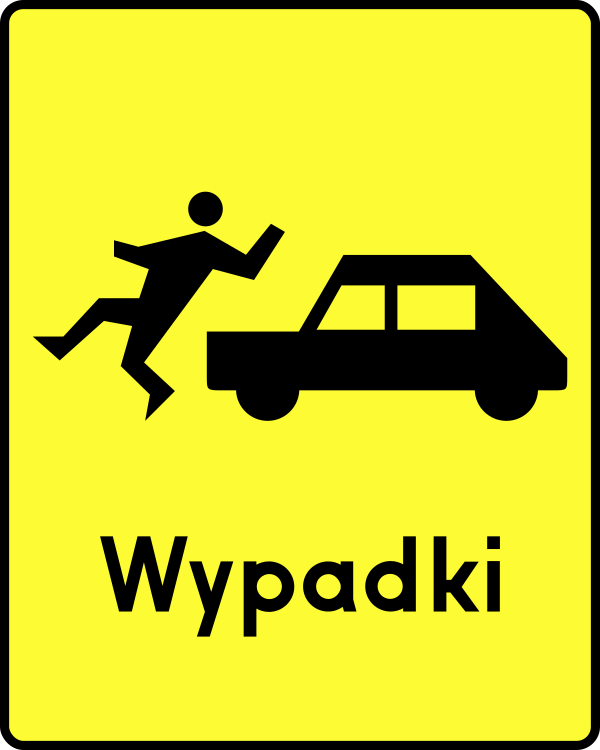
T-14: Beware of Frequent Pedestrian Accidents Ahead!
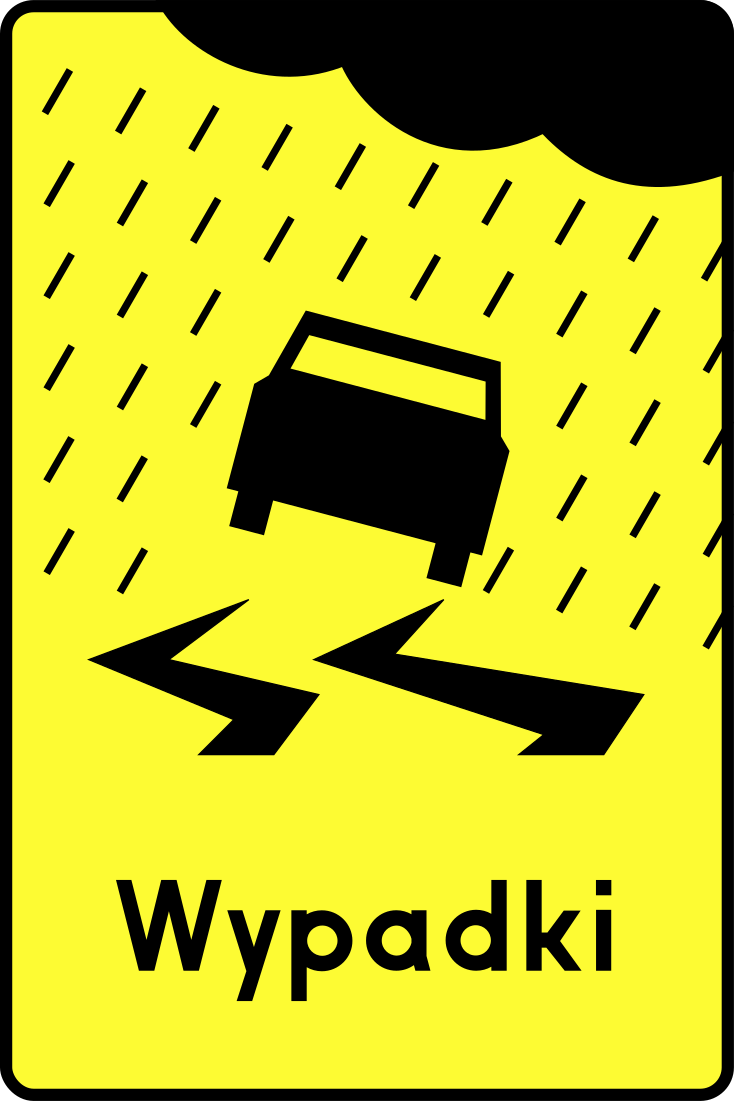
Beware: This Road Can Become Extremely Slippery When Wet!
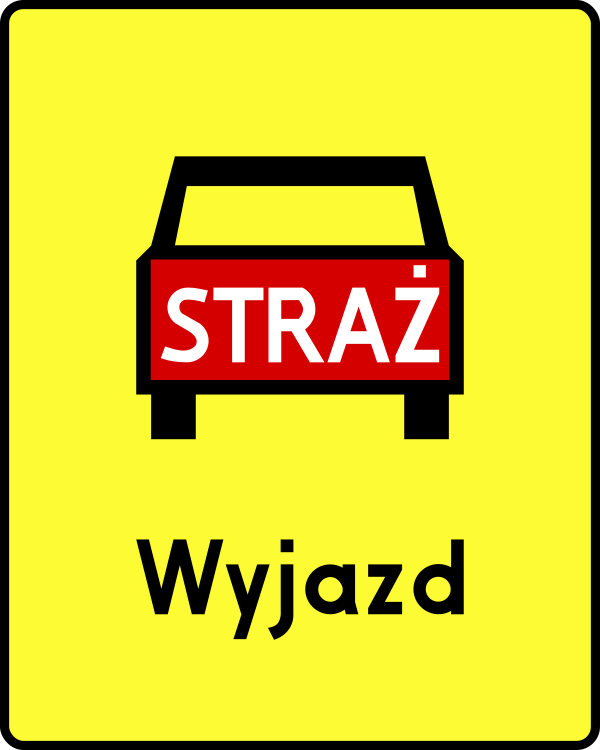
Prepare for sudden fire truck departures with the T-16 Fire Engine Exit sign.
Deepen your understanding of specific road signs by reviewing official Polish traffic rules and associated real-world driving scenarios. These expert-led resources help you bridge the gap between visual recognition and practical exam application.
Master Polish Crossing Markings for a Safer Drive and Exam Success.
Navigate Tram Intersections Like a Pro: Essential for Your Polish Driving Exam.
Learn the exact Polish traffic regulations for yielding to pedestrians at crossings, a crucial element of the national driving theory test. We clarify what constitutes 'yielding' and the significant consequences of non-compliance, including a common €1500 PLN fine and 10 penalty points. This essential knowledge will help you navigate pedestrian areas safely and pass your theory exam.
This article provides a detailed explanation of how Polish traffic signs A-7 ('Ustąp Pierwszeństwa' - Yield), B-20 ('STOP'), and D-1 ('Droga z Pierwszeństwem' - Priority Road) dictate right-of-way at intersections. Understanding the nuances of these signs is a fundamental aspect of the Polish driving theory exam, and mastering them will significantly improve your preparedness for real-world driving scenarios.
The R-1b sign is an essential navigation tool for cyclists. It shows the bicycle symbol and a colored stripe that bends at an angle. It is placed before and at the junction where the trail leaves the current road or path. Without these markers, cyclists could easily lose the designated route, especially in forested or complex rural areas.
The A-22 sign is used for descents of at least 10% in mountains or 7% elsewhere. Going down a steep hill can cause your brakes to overheat and fail if used constantly. The sign often includes a T-9 plate showing the actual percentage of the slope. Drivers should shift to a lower gear to let the engine's compression help control the speed, preserving the brakes for emergencies.
After reviewing the full list of Polish road signs, explore specific sign categories for in-depth understanding. Challenge your knowledge with practice questions focused on sign recognition and interpretation to solidify your preparation for the driving theory exam.
Browse All Polish Road Signs