
This informational sign, the T-3a 'End of Parking Area', is always used in conjunction with the D-18 (Parking) or D-18b (Covered Parking) signs. It signals that the designated parking area has concluded and parking is no longer permitted beyond this point. Drivers must ensure their vehicle is fully within the parking zone before reaching this sign, as parking afterwards could lead to fines or towing.
The T-3a supplementary plate, indicating the End of Parking Area, is vital for compliance with Polish traffic rules and managing your parking decisions. Understanding this road sign meaning is crucial for avoiding fines and ensuring you pass your driving theory test by correctly interpreting where legal parking concludes.
The T-3a plate is used exclusively with the D-18 (Parking) or D-18b (Covered Parking) signs. It is typically found at the far end of a parking lane along a curb or in a lot. It tells the driver that beyond this point, parking is no longer permitted under the 'Parking' sign's authority. This prevents vehicles from spilling over into intersections, driveways, or areas where they would obstruct traffic flow.
This plate signals the end of a designated parking zone.
Get clear, practical answers to the most common questions about the T-3a - End of Parking Area road sign. Learn how the sign works, what rules it represents, and how it affects real driving situations. This FAQ strengthens your understanding and supports accurate decision making for the Polish driving theory exam in Poland.
The T-3a sign indicates that the zone where parking was allowed, as marked by a D-18 or D-18b sign, has ended. You must not park your vehicle in the area after this sign.
You should only look for and occupy parking spaces in the area *before* the T-3a sign. Once you pass this sign, the parking restriction is in effect, and you should not leave your vehicle.
A common trap is assuming there's still room to park even if the T-3a sign is passed. Learners might also forget that parking beyond this sign is prohibited and could lead to towing. Always ensure your vehicle is fully within the designated zone before this sign.
No, you cannot park even partially beyond the post of the T-3a sign. Your entire vehicle must be within the permitted parking zone, which ends at this sign. Parking beyond it is considered an illegal parking manoeuvre.
Often, the area immediately following the T-3a sign is reserved for traffic movement or is a 'No Parking' or 'No Standing' zone. This is why the sign is crucial for maintaining clear traffic flow and preventing obstructions.
A clear reference image of the T-3a - End of Parking Area road sign used in Poland.

The T-3a - End of Parking Area road sign may also be known by these alternative names or terms.
The T-3a - End of Parking Area road sign is part of the Supplementary Plates (T) category, which groups together signs with similar rules and functions.
Reviewing related road signs alongside this 'End of Parking Area' marker helps solidify your understanding and prevent confusion. Comparing similar signs aids in accurate recognition and improves theory test revision, ensuring you master Polish traffic rules.

Understand the T-1 'Distance to Hazard' Plate for Safe Driving
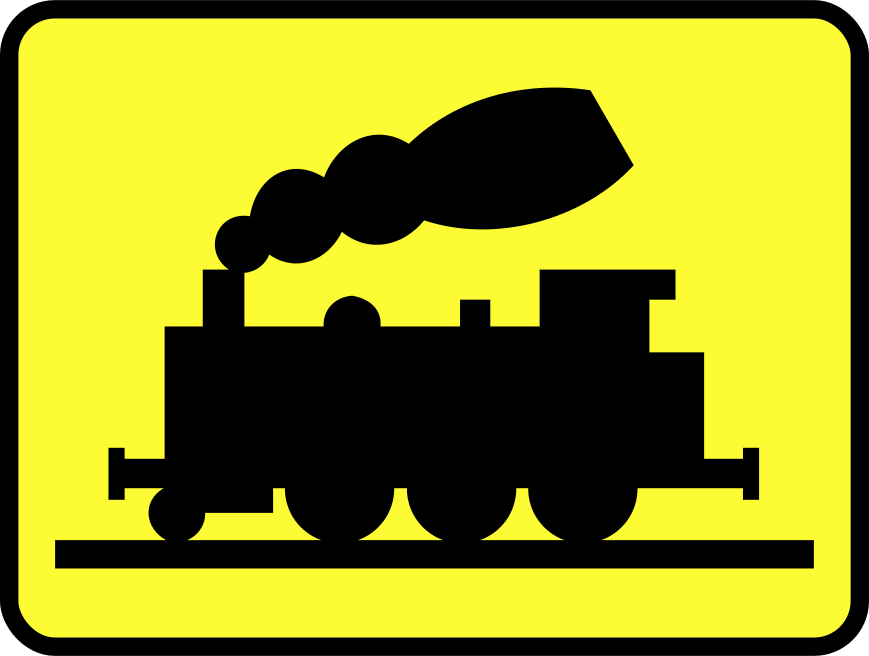
Beware of the T-10 sign: Industrial Railway Siding Ahead
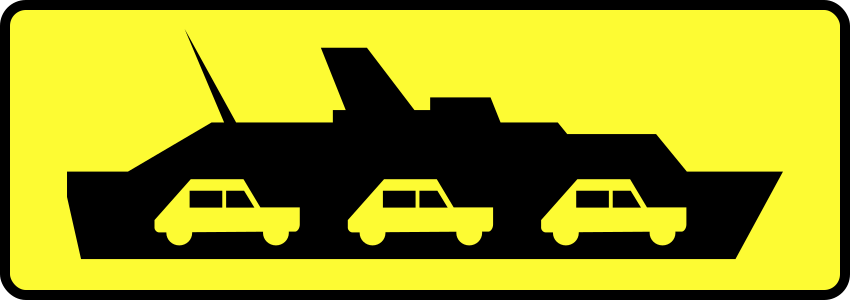
Prepare for a Ferry Crossing with the T-11 Warning Sign
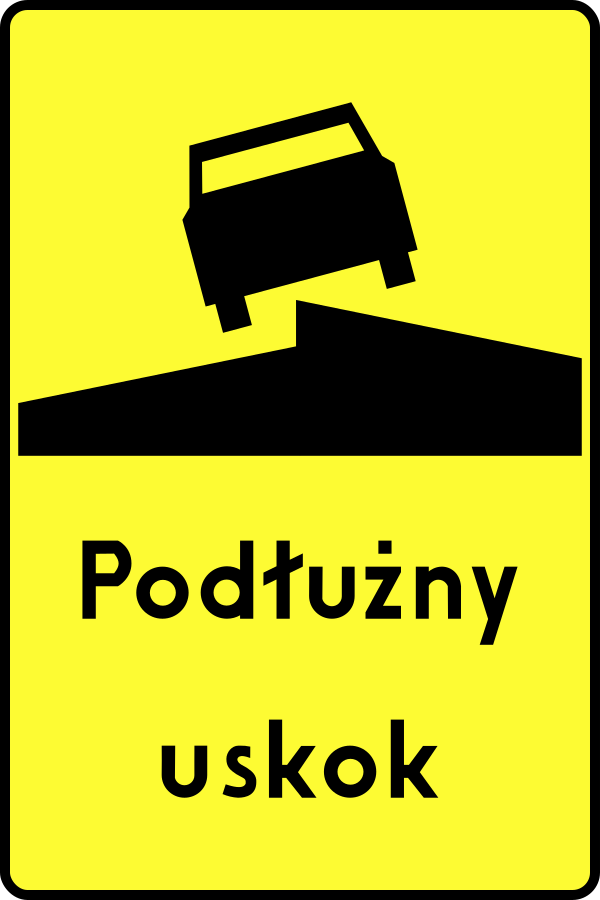
Watch out for the T-12 sign warning of a longitudinal step in the road surface!
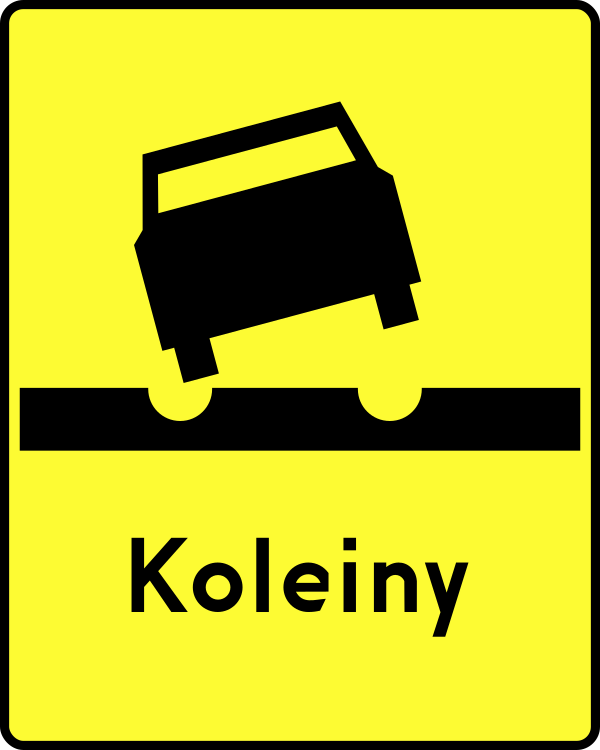
Warning: Deep Road Surface Ruts Ahead (T-13)
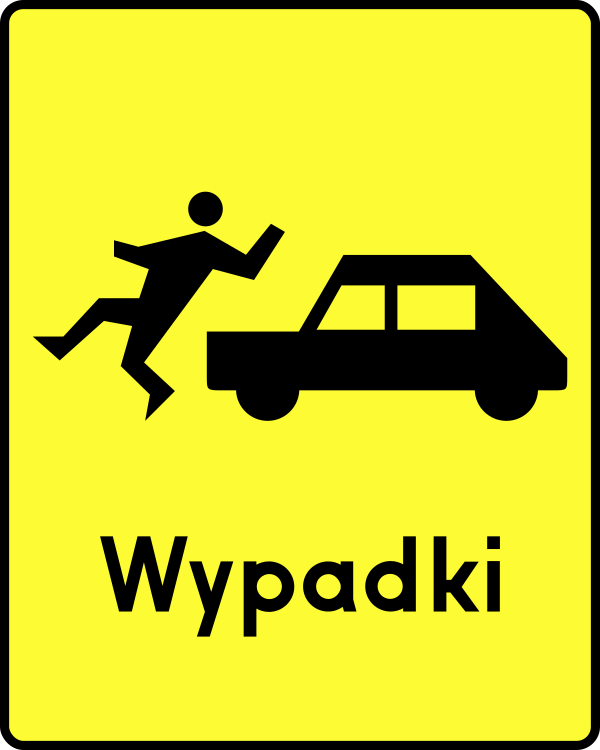
T-14: Beware of Frequent Pedestrian Accidents Ahead!
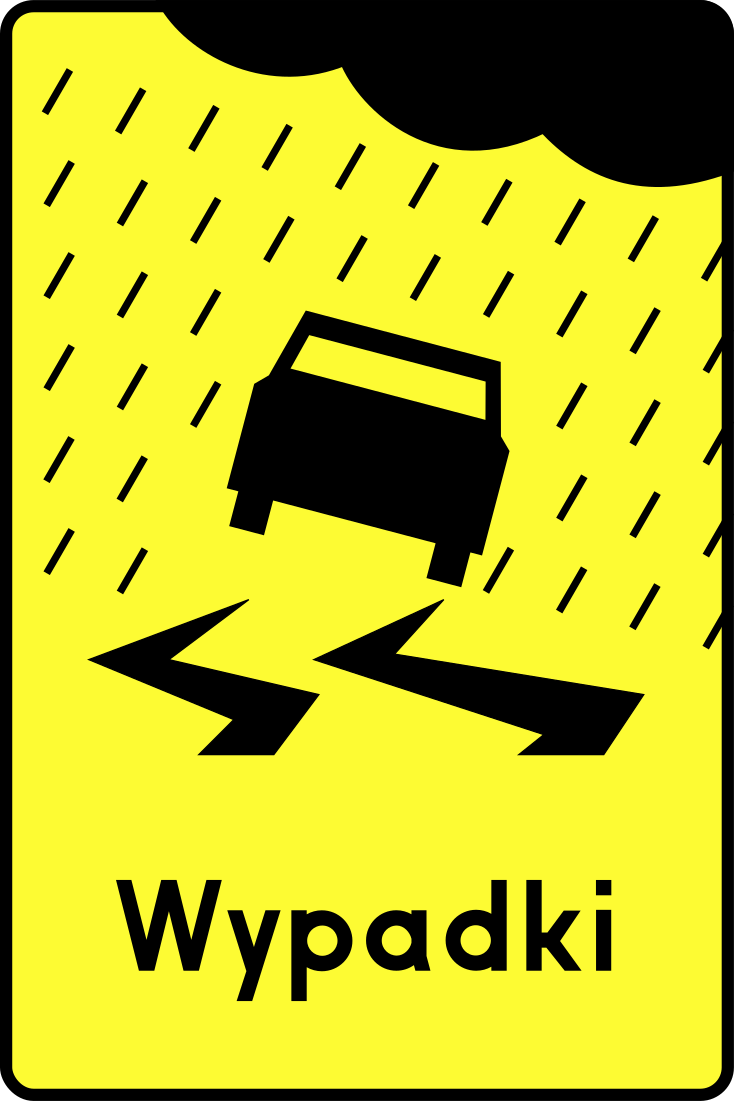
Beware: This Road Can Become Extremely Slippery When Wet!
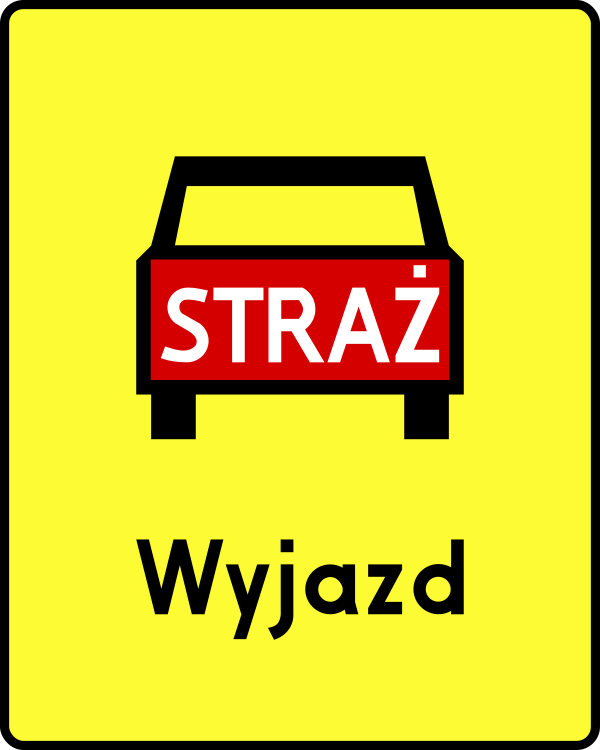
Prepare for sudden fire truck departures with the T-16 Fire Engine Exit sign.
Deepen your understanding of specific road signs by reviewing official Polish traffic rules and associated real-world driving scenarios. These expert-led resources help you bridge the gap between visual recognition and practical exam application.
Navigate Tram Intersections Like a Pro: Essential for Your Polish Driving Exam.
Master Polish Crossing Markings for a Safer Drive and Exam Success.
Navigating Polish intersections requires a clear understanding of priority rules, particularly the differing obligations imposed by the mandatory Stop sign (B-20) and the Yield sign (A-7). This article will break down the legal requirements for each sign, explaining precisely when and how you must act to ensure safety and compliance with Polish traffic law. Mastering these distinctions is vital for success in your driving theory exam and for safe driving.
Navigate Polish roads with confidence by understanding critical cyclist priority rules at junctions and crossings. This guide explains your legal obligations as a driver to yield to cyclists, a common area of confusion and potential exam pitfalls. Learn the nuances of right-of-way at intersections and designated cyclist passages to drive safely and pass your theory test.
The D-18b sign indicates a parking area that is protected from the elements. This could be a multi-story parking garage, an underground facility, or a simple roofed structure. This is particularly useful information for drivers during heavy snow, rain, or hail. Just like the standard parking sign, it may include information about disabled access (T-29) or specific vehicle restrictions.
The D-18 sign indicates a place where parking is permitted. It is a blue square with a large white 'P'. Unless otherwise specified by a supplementary plate (like T-23e), this parking area is for all vehicles except caravans. Often, this sign is paired with T-30 plates which show exactly how to park (e.g., parallel, perpendicular, or partially on the sidewalk). In urban areas, it might also be paired with a T-3a plate to show where the parking zone ends.
After reviewing the full list of Polish road signs, explore specific sign categories for in-depth understanding. Challenge your knowledge with practice questions focused on sign recognition and interpretation to solidify your preparation for the driving theory exam.
Browse All Polish Road Signs