
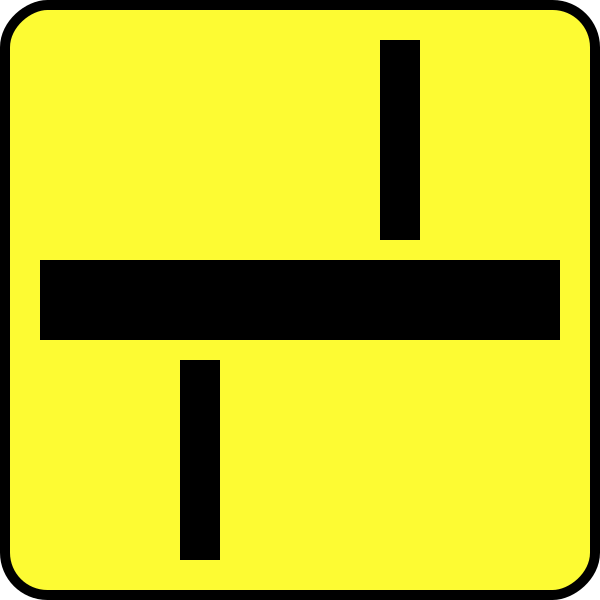
The T-6d road sign, often called 'Yield Path and Staggered Layout,' is an important information sign used in Poland. It informs drivers on a subordinate road about the complex layout of the priority road and potential other side roads that might be staggered or offset. This sign provides a crucial visual map, signalling that you are on a road where you must yield to traffic on the main, clearly marked priority route. Always approach such intersections with caution, reduce speed, and be ready to give way.
This crucial supplementary plate, the T-6d, clarifies the layout of priority roads and staggered side roads, demanding careful interpretation for safe navigation. Mastering this sign's meaning is essential for theory test revision and understanding priority rules in Poland.
The T-6d plate is found on side roads. It indicates that the priority road is perpendicular to you and that there may be other subordinate roads at the same intersection that are offset or staggered. This gives the driver a full situational map. Since you are on a thin line, you yield to everyone on the thick line. You also need to coordinate with other drivers on thin lines using standard priority rules (like yielding to the right).
Informs drivers on a subordinate road about the complex layout of the priority road and other side roads.
Get clear, practical answers to the most common questions about the T-6d - Yield Path and Staggered Layout road sign. Learn how the sign works, what rules it represents, and how it affects real driving situations. This FAQ strengthens your understanding and supports accurate decision making for the Polish driving theory exam in Poland.
The T-6d sign's primary purpose is to inform drivers on a less important road about the complicated nature of an upcoming intersection. It warns that the main (priority) road might have a staggered or offset layout, meaning other subordinate roads could be present, and traffic from multiple directions on the priority route needs to be considered.
When you encounter the T-6d sign, it means you are on a subordinate road and must yield to all traffic on the priority road. Slow down considerably, check both left and right segments of the priority road, and be aware of other subordinate traffic where you'll need to apply the 'yield to the right' rule. Only proceed when it is safe and clear.
A common trap is assuming the intersection is simple just because you can't see all parts of the priority road clearly. Drivers might pull out too quickly after seeing only one direction clear, or forget to check for other subordinate traffic. Another mistake is accelerating through, believing it's safe because you only see one clear lane, not anticipating traffic from other staggered approach routes.
The T-6d sign itself does not require you to come to a complete stop, but it mandates yielding. You must give way to all vehicles on the priority road. You should only proceed when it is safe to do so. If the priority road is busy, you may have to wait for a significant amount of time, effectively stopping before entering the intersection.
A 'staggered layout' means that the roads joining the priority route are not directly opposite each other. For instance, your road might join, then a short distance along the priority road, another road joins from the opposite side. The T-6d sign alerts you to this complexity so you can anticipate traffic coming from these offset points.
A clear reference image of the T-6d - Yield Path and Staggered Layout road sign used in Poland.
The T-6d - Yield Path and Staggered Layout road sign may also be known by these alternative names or terms.
The T-6d - Yield Path and Staggered Layout road sign is part of the Supplementary Plates (T) category, which groups together signs with similar rules and functions.
Comparing similar road signs like the T-6d 'Yield Path' with other priority or layout indicators aids in clear sign recognition. This targeted theory test revision sharpens your understanding of complex junction rules, reducing errors during your exam preparation.
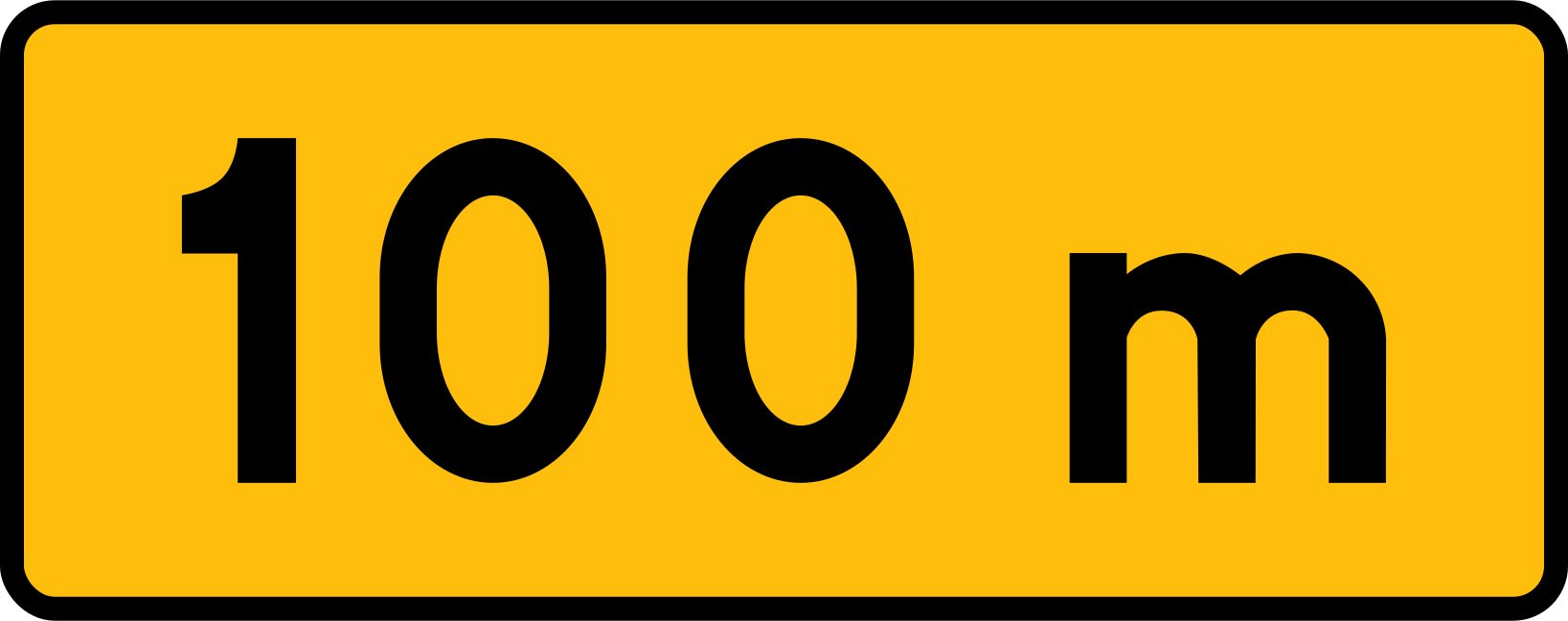
Understand the T-1 'Distance to Hazard' Plate for Safe Driving
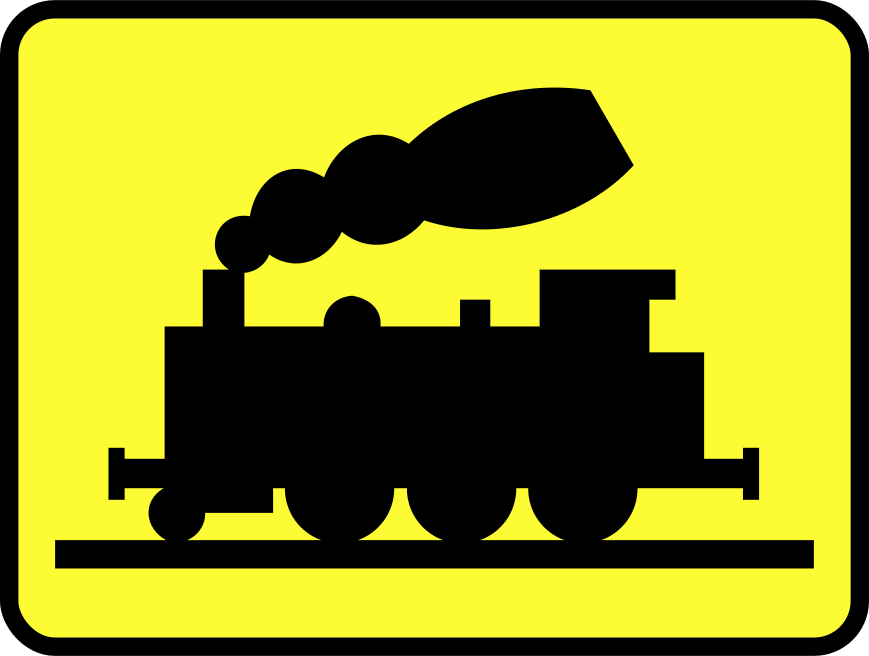
Beware of the T-10 sign: Industrial Railway Siding Ahead
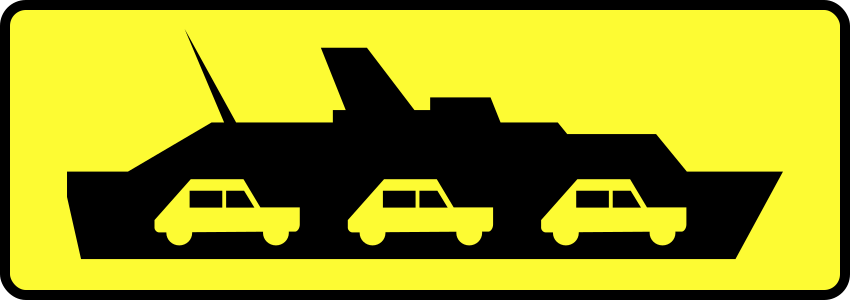
Prepare for a Ferry Crossing with the T-11 Warning Sign
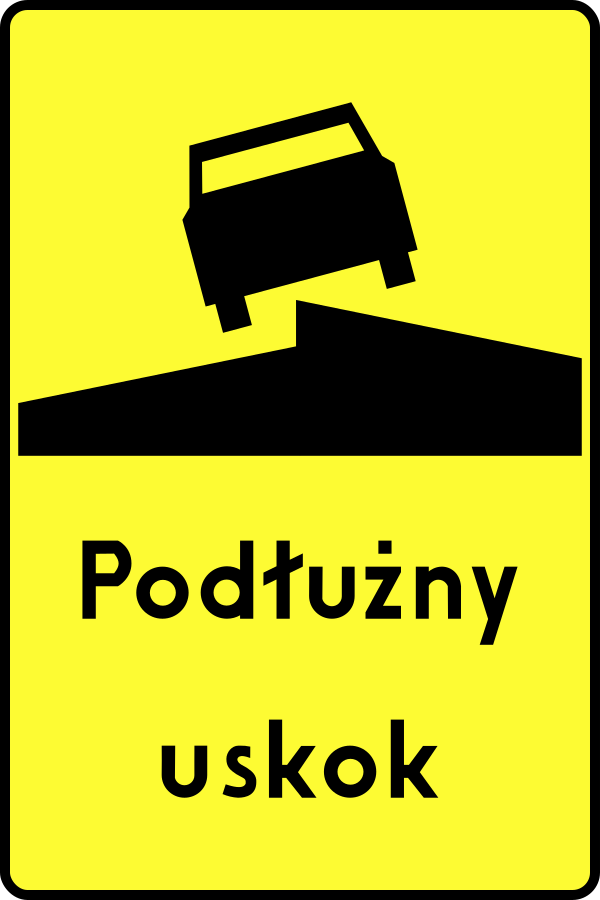
Watch out for the T-12 sign warning of a longitudinal step in the road surface!
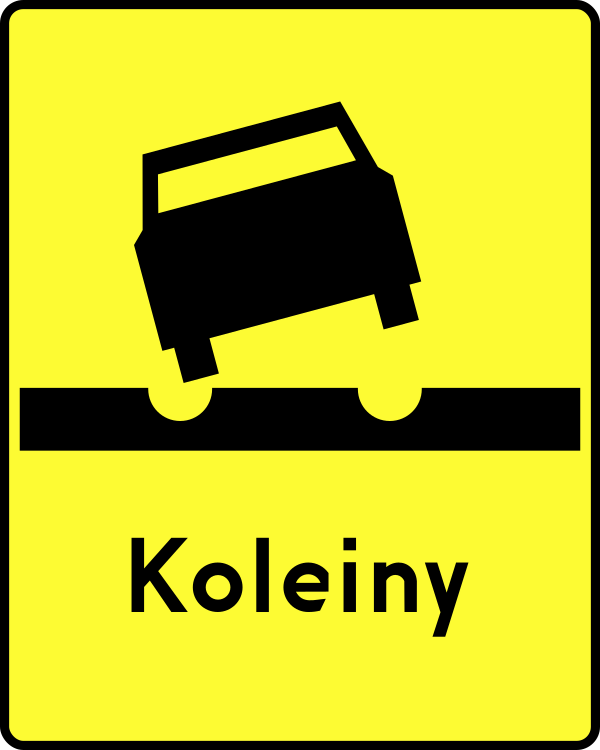
Warning: Deep Road Surface Ruts Ahead (T-13)
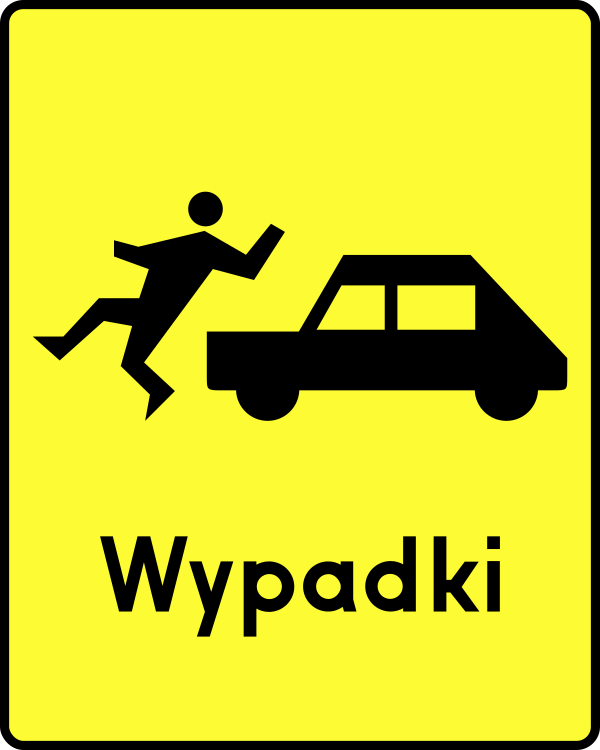
T-14: Beware of Frequent Pedestrian Accidents Ahead!
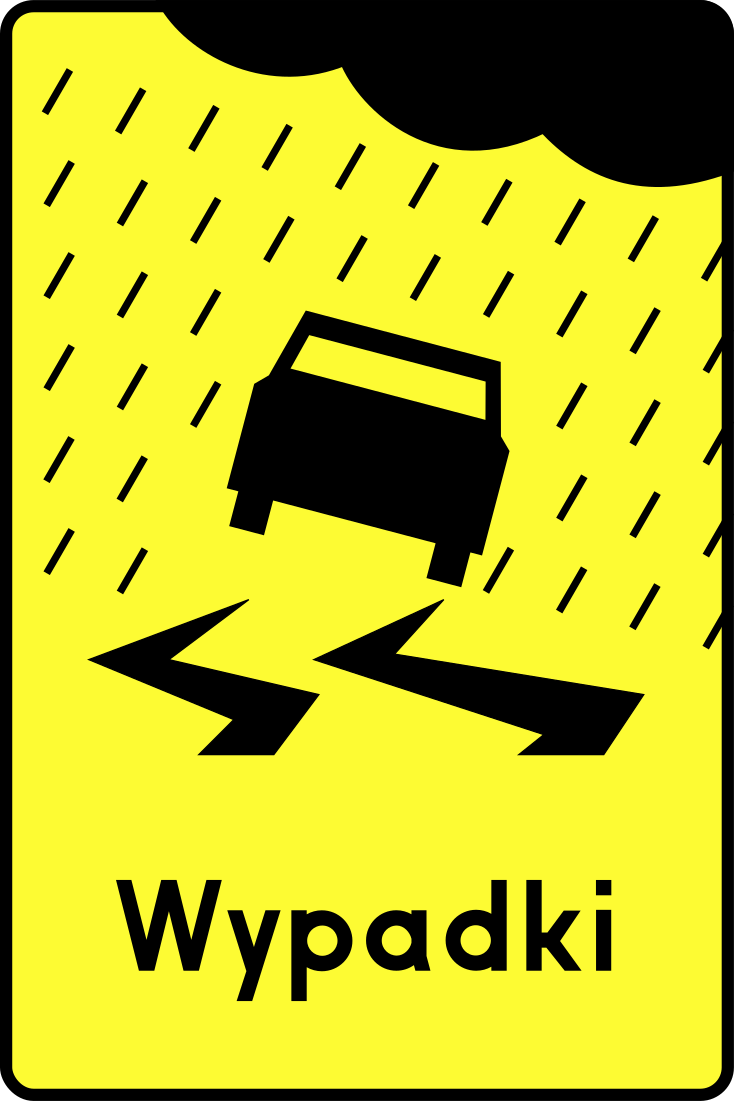
Beware: This Road Can Become Extremely Slippery When Wet!
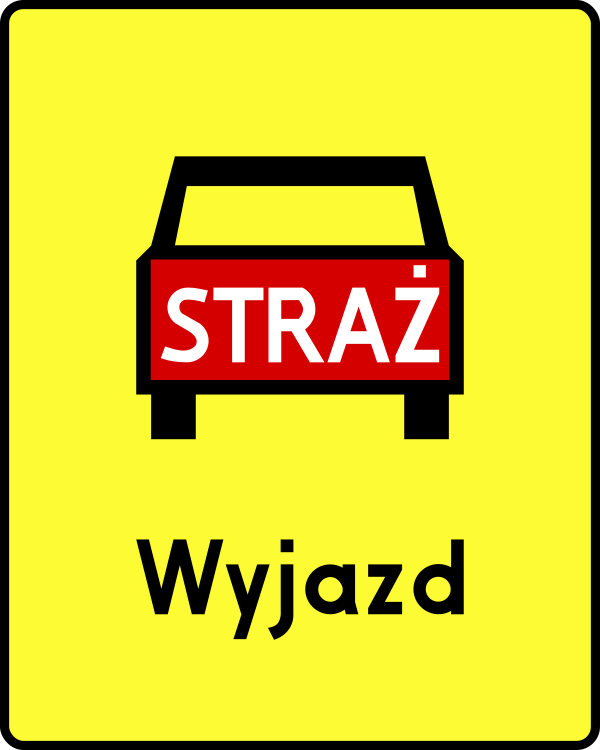
Prepare for sudden fire truck departures with the T-16 Fire Engine Exit sign.
Deepen your understanding of specific road signs by reviewing official Polish traffic rules and associated real-world driving scenarios. These expert-led resources help you bridge the gap between visual recognition and practical exam application.
Master Polish Crossing Markings for a Safer Drive and Exam Success.
Navigate Tram Intersections Like a Pro: Essential for Your Polish Driving Exam.
Navigating the different Polish driving licence categories for motorcycles can be complex. This guide breaks down the specific requirements for AM, A1, A2, and A licences, including the minimum age and the exact types of vehicles you can operate with each. Gaining a clear understanding of these categories is essential for success in your Polish driving theory exam and for safe riding on Polish roads.
Learning how to interact with law enforcement is a crucial part of your driver training in Poland, as it helps you understand the legal procedures governing roadside controls. This guide clarifies how officers identify themselves, what behaviors are expected of you as a driver, and how traffic enforcement impacts your penalty points and record. Mastery of these rules ensures you remain compliant with the law and prepared for any roadside situation you may encounter.
The T-17 plate is used with A-30 to mark the proximity of a national border. While within the Schengen Area these crossings are often open and require no stop, the sign reminds drivers that laws, speed limits, and even equipment requirements (like having a fire extinguisher or specific bulbs) may change immediately after crossing. It is also used at external EU borders where a full customs stop is required.
The A-20 sign is used to alert drivers that traffic will soon be coming toward them in the opposite lane. This often occurs at the end of a motorway, when a dual carriageway merges into a single road, or during roadworks where traffic is diverted. It is a critical reminder to stay in your lane and not attempt to overtake as if you were still on a one-way street.
After reviewing the full list of Polish road signs, explore specific sign categories for in-depth understanding. Challenge your knowledge with practice questions focused on sign recognition and interpretation to solidify your preparation for the driving theory exam.
Browse All Polish Road Signs