
The T-15 road sign warns you that the road surface ahead is prone to becoming exceptionally slippery during or after rainfall. This often happens because the road material has poor drainage or, more commonly, due to oil and dust mixing with the first raindrops, creating a lubricant effect. As part of warning signs in Poland, this sign requires immediate attention to your driving, especially when rain begins. You must reduce your speed significantly and avoid sudden manoeuvres to maintain control.
This T-15 supplementary plate warns of exceptionally slippery road surfaces during wet weather, a crucial detail for safe driving in Poland. Mastering its meaning is vital for your theory test revision and understanding traffic sign explanations.
The T-15 plate indicates that the asphalt used on this section has poor drainage or loses traction significantly when wet. This can lead to unexpected skidding or a loss of steering control. It is often used on older road surfaces or in places where oil and rubber buildup make the road like 'ice' during the first few minutes of a rain shower. Drivers must reduce speed and avoid sudden movements when it is raining.
Warns that the road becomes exceptionally slippery during or after rainfall.
Get clear, practical answers to the most common questions about the T-15 - Slippery When Wet road sign. Learn how the sign works, what rules it represents, and how it affects real driving situations. This FAQ strengthens your understanding and supports accurate decision making for the Polish driving theory exam in Poland.
The T-15 sign warns that the road surface ahead will become very slippery when it rains. This hazard is most pronounced at the start of a rainfall when oil and dust on the road mix with water, acting like a lubricant. Polish drivers must be extra cautious in these conditions.
When the T-15 sign is active due to rain, you must avoid maintaining your usual speed for dry conditions. Slamming on the brakes or making sharp steering adjustments are also prohibited actions as they can easily lead to skidding. Using cruise control during rain on such surfaces is also not recommended.
Upon seeing the T-15 sign and as soon as rain begins, you should significantly reduce your speed. It's crucial to increase your following distance to allow for longer braking distances. Always use smooth and gentle inputs for both steering and braking to maintain traction and control.
The hazard indicated by the T-15 sign is often most dangerous in the first few minutes after it starts raining. This is when accumulated oil, rubber debris, and dust on the road surface mix with the initial raindrops to create a slick, 'lubricated' surface that drastically reduces tyre grip.
While the T-15 sign itself is a Polish standard warning sign, the phenomenon of roads becoming slippery when wet is a universal driving hazard. The principles of reducing speed, increasing following distance, and driving smoothly apply to all countries when encountering such conditions.
A clear reference image of the T-15 - Slippery When Wet road sign used in Poland.
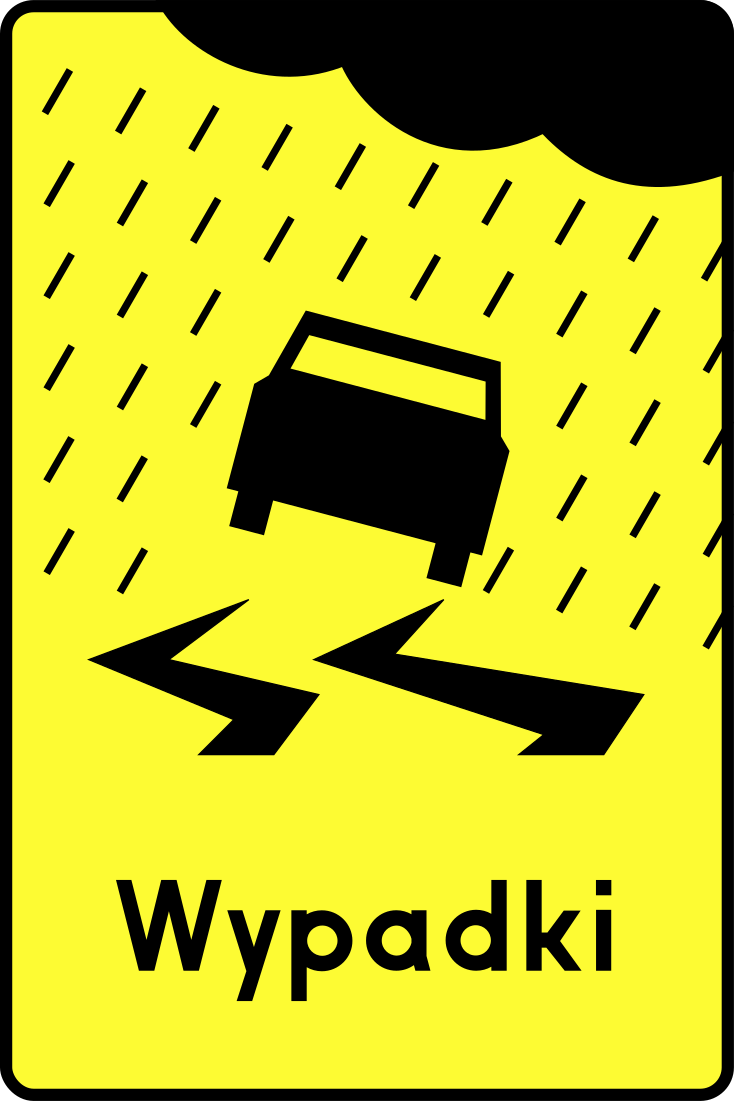
The T-15 - Slippery When Wet road sign may also be known by these alternative names or terms.
The T-15 - Slippery When Wet road sign is part of the Supplementary Plates (T) category, which groups together signs with similar rules and functions.
Reviewing related road signs side-by-side sharpens your recognition skills, essential for the Polish theory test. Effective traffic sign comparison aids memory and reduces mistakes when encountering these warnings on the road.

Understand the T-1 'Distance to Hazard' Plate for Safe Driving
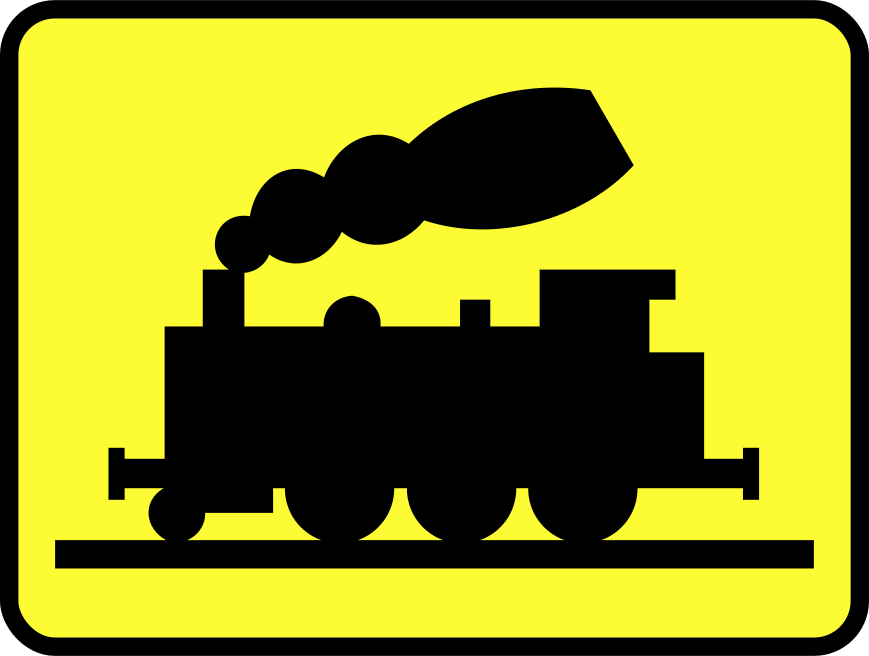
Beware of the T-10 sign: Industrial Railway Siding Ahead
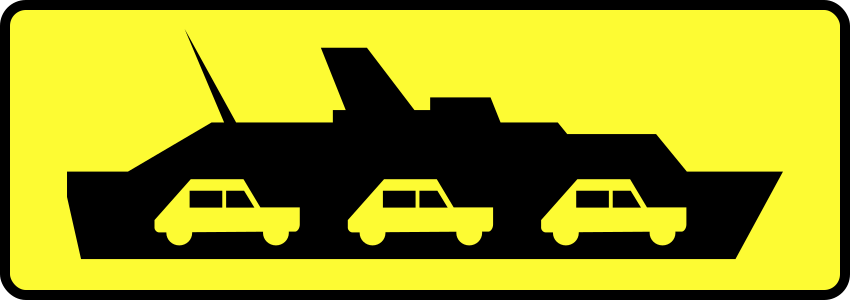
Prepare for a Ferry Crossing with the T-11 Warning Sign
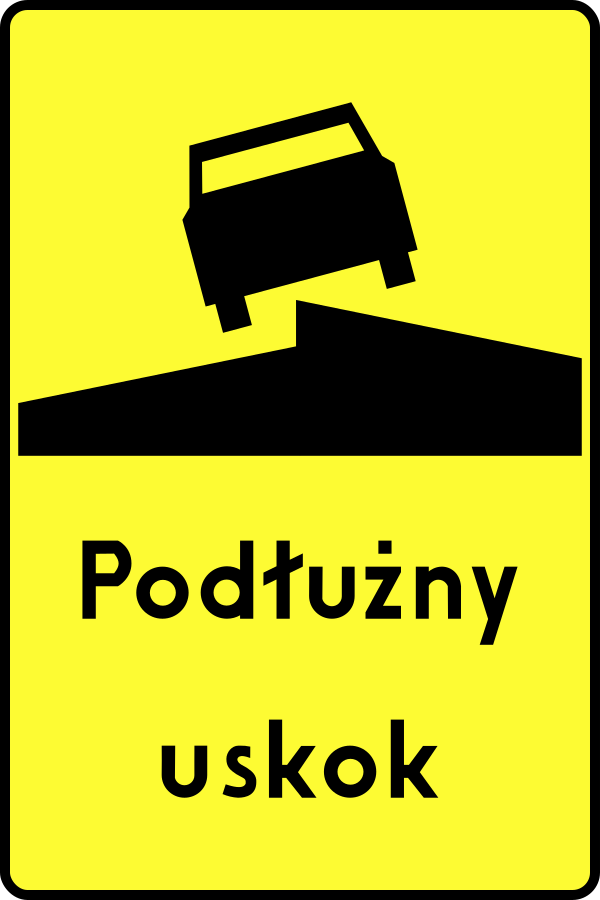
Watch out for the T-12 sign warning of a longitudinal step in the road surface!
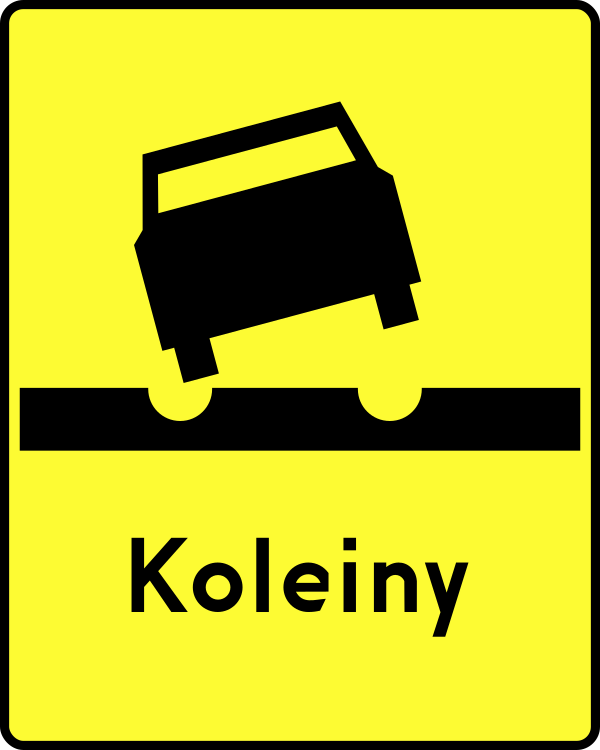
Warning: Deep Road Surface Ruts Ahead (T-13)
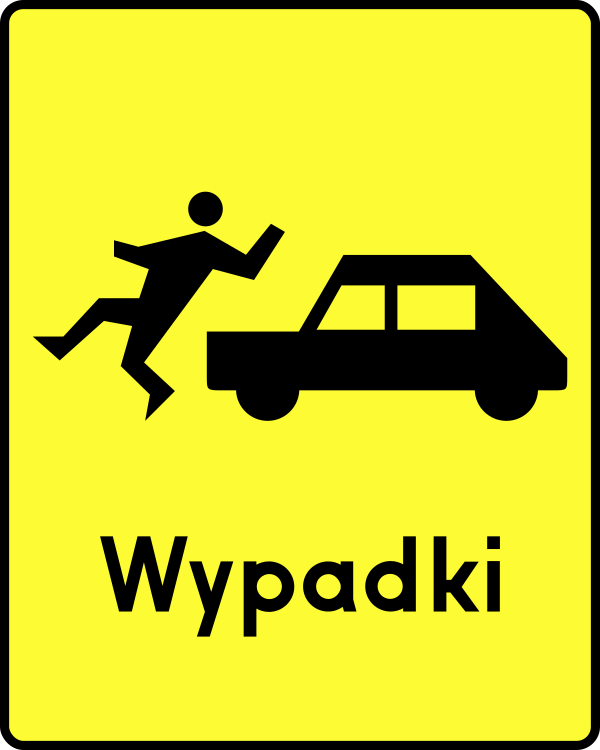
T-14: Beware of Frequent Pedestrian Accidents Ahead!
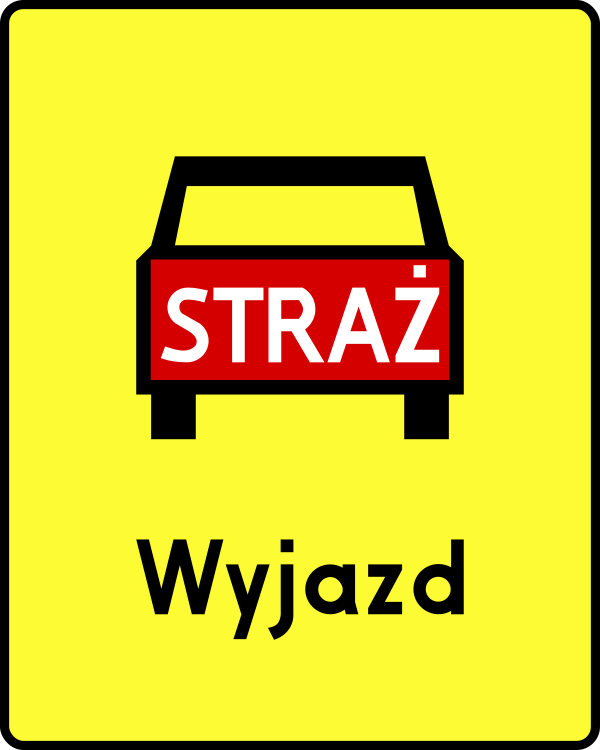
Prepare for sudden fire truck departures with the T-16 Fire Engine Exit sign.
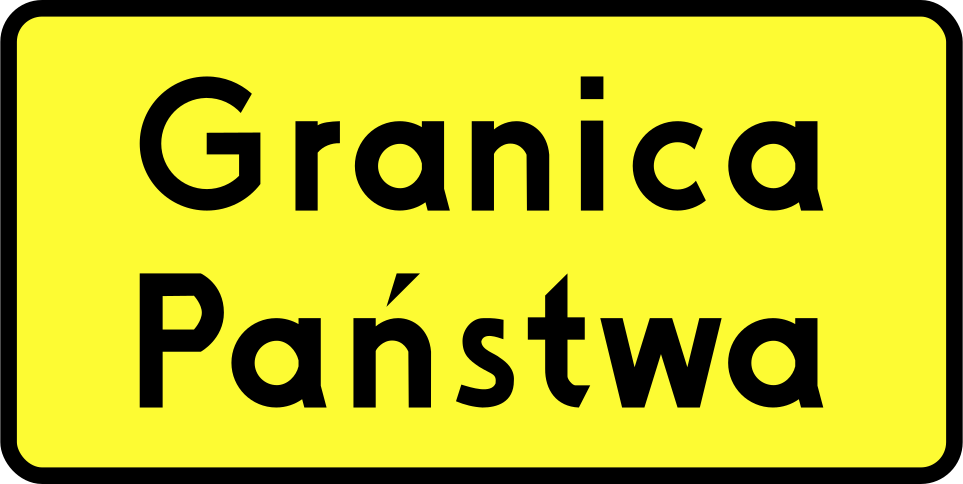
The T-17 State Border sign warns you that you are approaching an international boundary.
Deepen your understanding of specific road signs by reviewing official Polish traffic rules and associated real-world driving scenarios. These expert-led resources help you bridge the gap between visual recognition and practical exam application.
Even a Second Can Be Fatal: Understand Microsleep to Drive Safely in Poland.
When driving in the Czech Republic, recognizing specific parking signs like P+D, P+R, and K+R is essential for Polish drivers. This guide breaks down the meaning and application of these signs, helping you understand their purpose for carpooling, connecting with public transport, or quick pick-ups and drop-offs. Familiarize yourself with these conventions to ensure smooth travels and compliance with Czech traffic regulations, which is vital for your theory knowledge and practical driving.
Learn the critical distinctions between the Polish A-16 warning sign and the D-6 pedestrian crossing sign. This guide explains your legal responsibilities when approaching these areas, including the mandatory speed reduction and yielding requirements. Understand the significant penalties, such as hefty fines and accumulating penalty points, especially the 'recydywa' (repeat offender) system in Poland, which can lead to immediate license suspension.
Know Your Obligations: What to Do After a Road Incident in Poland.
The A-15 sign alerts drivers that the pavement has low skid resistance. This can be caused by a change in the road surface (like moving from asphalt to cobblestones), constant dampness in shaded areas, or the presence of oil or mud. In wet weather, the risk of hydroplaning is significantly higher on sections marked with this sign. It is a prompt to drive more gently and avoid sudden maneuvers.
The T-13 plate is used with A-11 or A-30. Ruts (koleiny) are dangerous because they can trap your tires, making steering difficult, or they can fill with water, causing severe aquaplaning. In dry weather, they can cause a car to 'jump' out of the groove unexpectedly. Drivers should try to drive slightly offset from the ruts or reduce speed significantly to maintain control over the vehicle's direction.
After reviewing the full list of Polish road signs, explore specific sign categories for in-depth understanding. Challenge your knowledge with practice questions focused on sign recognition and interpretation to solidify your preparation for the driving theory exam.
Browse All Polish Road Signs