
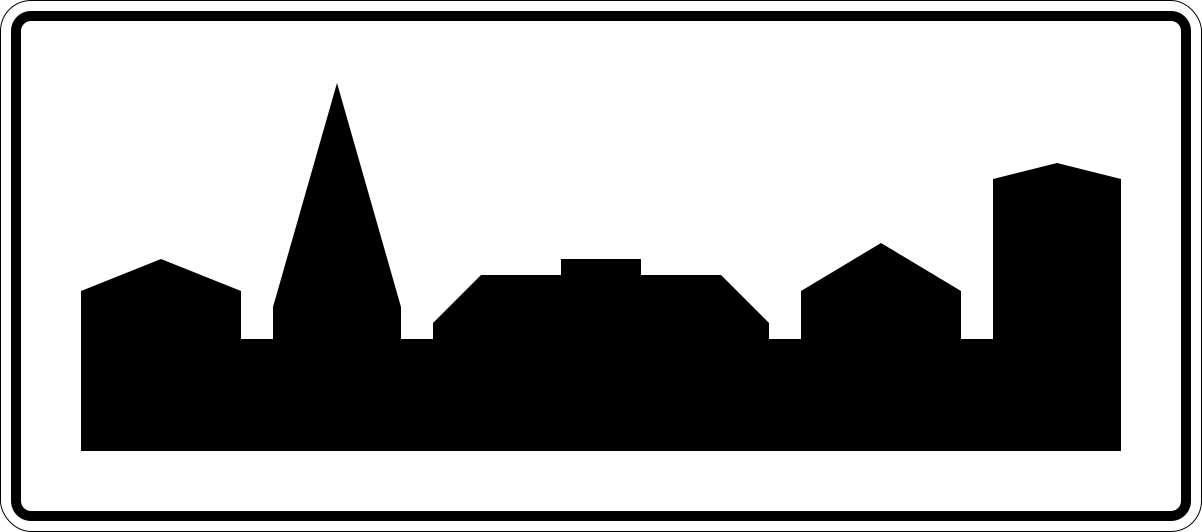
When you see the D-42 'Built-up Area' sign, it signals the beginning of an urban zone, indicated by a city skyline silhouette. From this point, the general speed limit automatically drops to 50 km/h, unless a different limit is posted. This sign is vital for safety as it alerts you to increased pedestrian activity, more intersections, and driveways, requiring heightened awareness and caution. It's a key indicator for adjusting your driving behaviour in Poland.
The D-42 Built-up Area sign fundamentally changes driving rules, imposing a 50 km/h speed limit and altering parking and honking regulations within Polish towns. Understanding this road sign meaning is vital for passing your driving theory exam and ensuring safe navigation through urban traffic, reflecting official Polish traffic rules.
The D-42 sign shows a black silhouette of a city skyline on a white background. It defines the legal boundary of a built-up area (Obszar zabudowany). From this point forward, the general speed limit is 50 km/h (unless otherwise posted). This sign also changes rules regarding honking (prohibited except for danger) and parking. It is a crucial marker for road safety, as it signals a higher density of pedestrians, intersections, and property entrances.
Marks the start of a town or city; the default speed limit is 50 km/h.
Get clear, practical answers to the most common questions about the D-42 - Built-up Area road sign. Learn how the sign works, what rules it represents, and how it affects real driving situations. This FAQ strengthens your understanding and supports accurate decision making for the Polish driving theory exam in Poland.
The D-42 sign indicates the start of a built-up area, and its primary effect is to lower the default maximum speed limit to 50 km/h. You must ensure your speed does not exceed this limit from the moment you pass the sign, unless a lower speed limit is explicitly indicated by another sign.
Yes, while the D-42 sign sets a default limit of 50 km/h, other traffic signs might override this. You may encounter signs indicating a higher speed limit (e.g., on main roads entering a larger city) or a lower speed limit (e.g., in school zones or areas with specific hazards).
Besides the speed limit, the D-42 sign also affects other rules. Honking is generally prohibited in built-up areas unless it's an immediate danger warning. Parking regulations may also change, and you should be more vigilant for pedestrians, cyclists, and children who are common in these zones.
While a town name sign (E-17a) might show you are entering a town, it doesn't automatically change the speed limit. The D-42 sign is the official marker that legally establishes the built-up area and enforces the 50 km/h speed limit. You must slow down only when you see the D-42, not just the town name sign.
A common trap is assuming the speed limit changes when you see the town's name sign (E-17a) rather than the D-42 'Built-up Area' sign. Another trap is forgetting that the 50 km/h limit applies immediately after the D-42 and not paying attention to potential signs indicating a different speed limit, especially at junctions.
A clear reference image of the D-42 - Built-up Area road sign used in Poland.
The D-42 - Built-up Area road sign may also be known by these alternative names or terms.
The D-42 - Built-up Area road sign is part of the Information Signs (D) category, which groups together signs with similar rules and functions.
Reviewing similar road signs side-by-side helps cement your understanding and improve recognition accuracy for the theory test. This focused comparison aids in recalling specific traffic sign meanings, essential for effective theory test revision and safe driving.
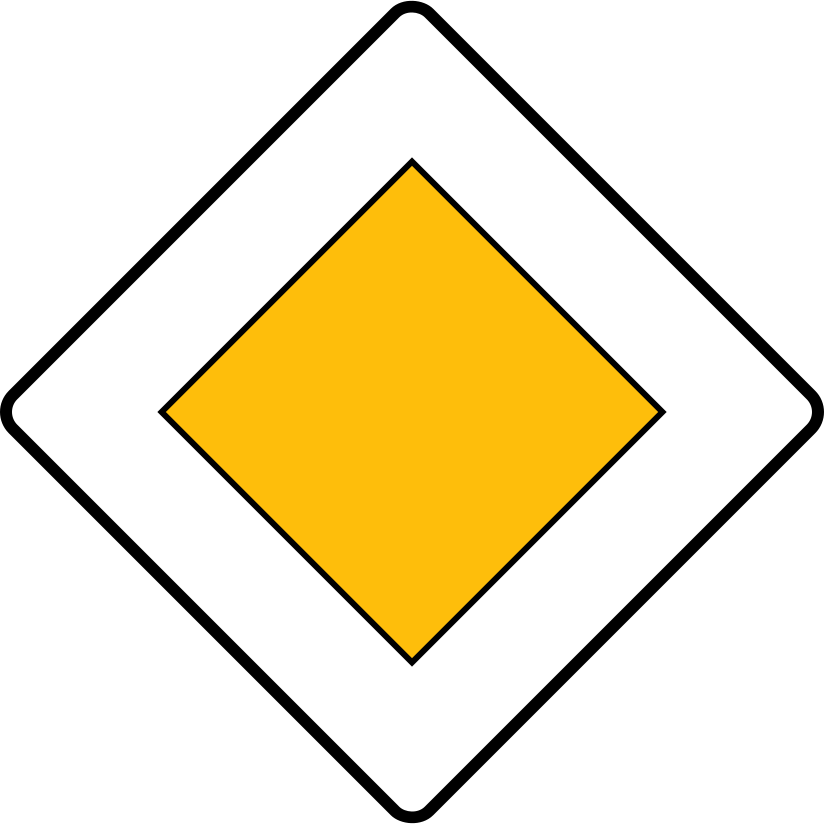
The D-1 Priority Road sign means you have the right of way.
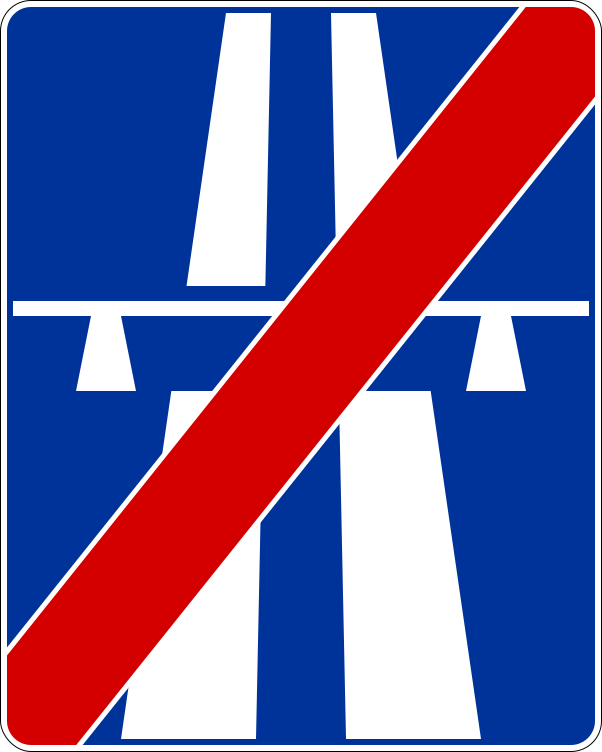
Prepare for the End of the Motorway with the D-10 Sign
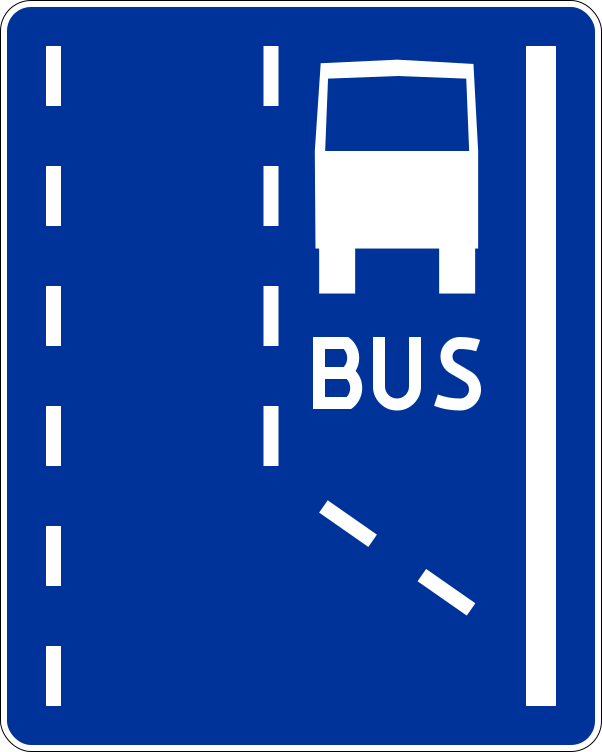
D-11 Road Sign: You're Approaching the Start of a Bus Lane
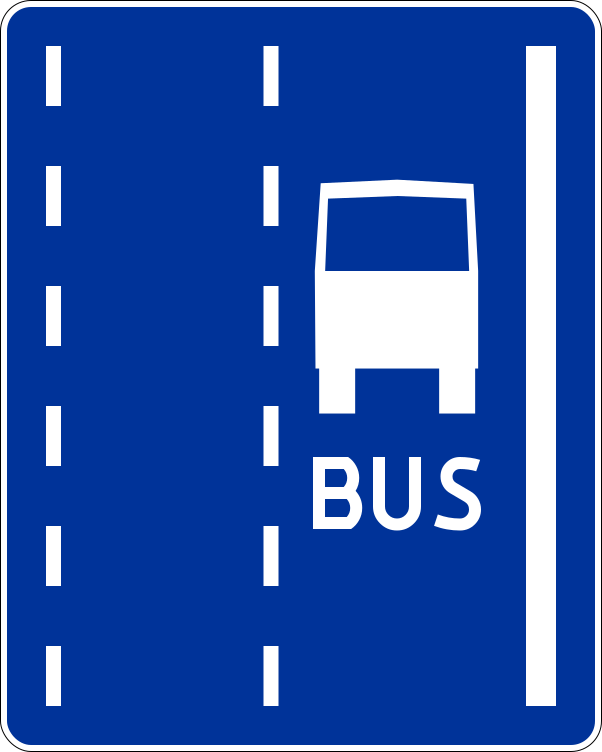
The D-12 'Bus Lane' sign confirms the lane remains exclusively for buses and authorized vehicles.
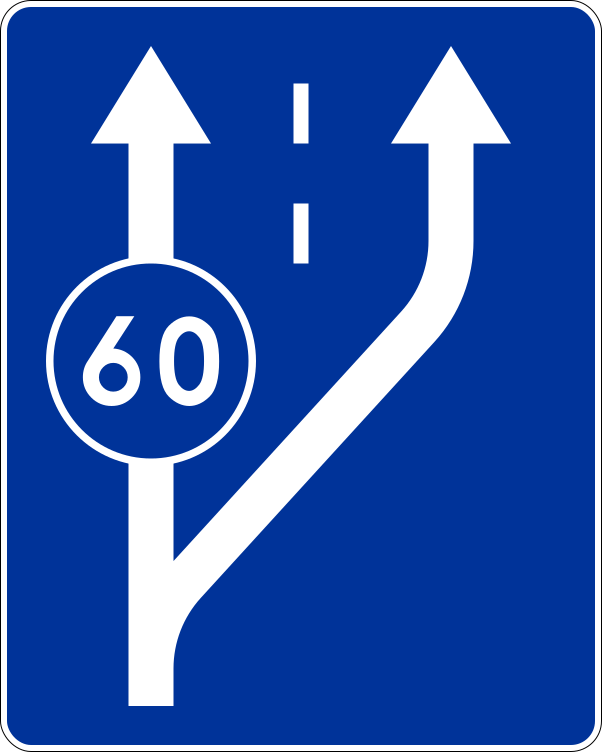
D-13 Sign: Prepare for the Start of a Slow-Moving Traffic Lane
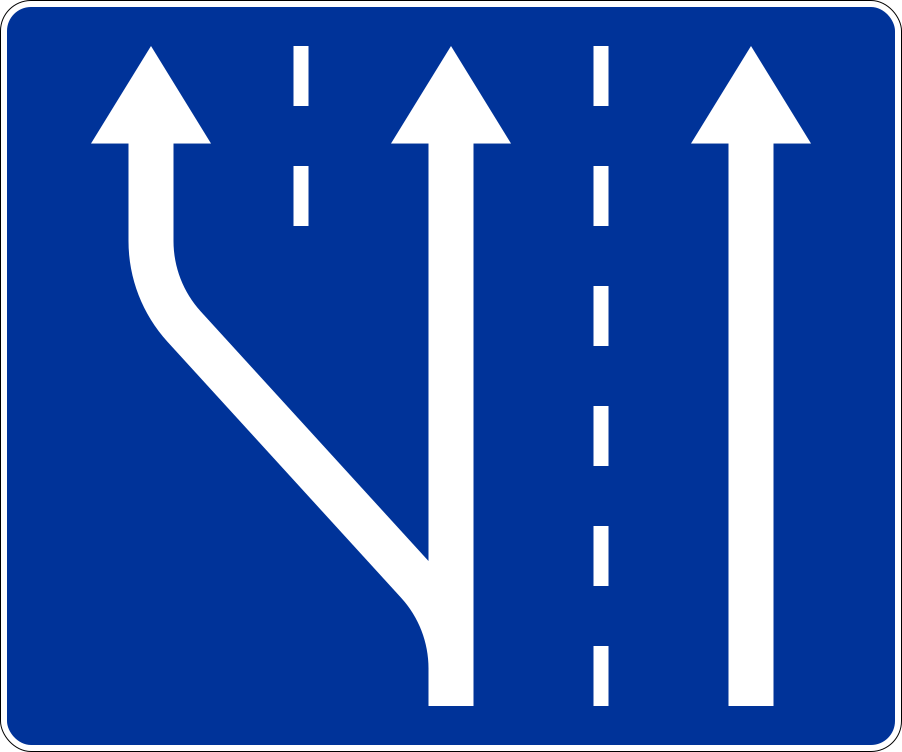
The D-13a 'Start of Lane' sign means a new lane is opening up ahead.
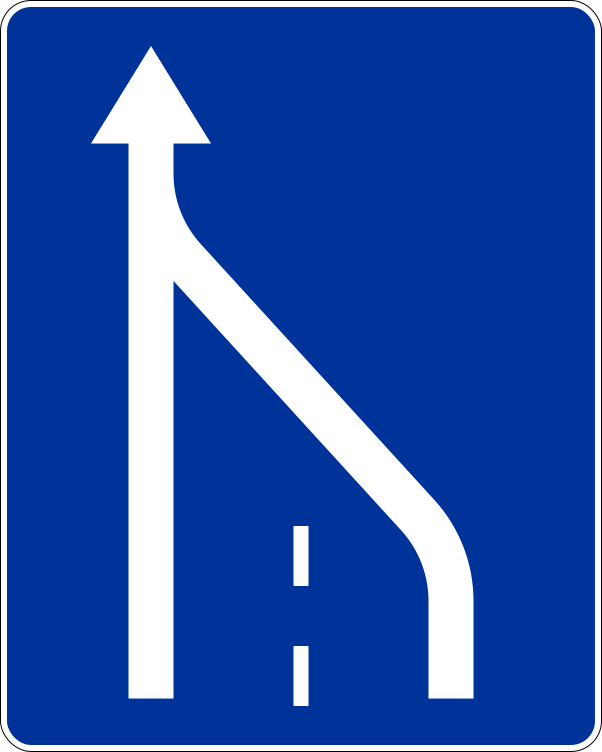
D-14 End of Lane: Know When and How to Merge Safely
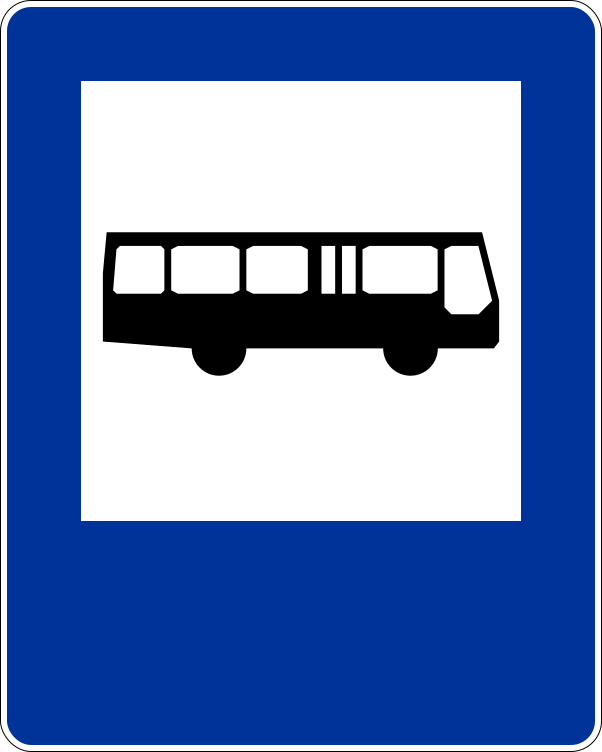
The D-15 'Bus Stop' Sign: Understanding and Reacting to Public Transport Stops
Deepen your understanding of specific road signs by reviewing official Polish traffic rules and associated real-world driving scenarios. These expert-led resources help you bridge the gap between visual recognition and practical exam application.
This article delves into the crucial meaning of the Polish D-42 'Obszar Zabudowany' (Built-up Area) sign, a key topic for your Polish driving theory exam. You will learn why this sign automatically enforces a 50 km/h speed limit and the severe penalties, including fines up to 5,000 PLN and potential license revocation, for violations. Understanding and respecting the D-42 sign is essential for safe driving and passing your theory test.
Master Urban Speed Limits and Drive Safely in Poland
Learn how higher speed limits outside Polish built-up areas must be balanced with awareness of constant hazards. This article delves into risks like poor visibility due to inadequate lighting and unpredictable road conditions, emphasizing that actual driving circumstances, not just posted signs, determine a safe speed. Mastering this interplay is essential for both passing your theory exam and ensuring your safety on Polish roads.
Navigate Polish City Streets with Confidence: Master Urban Speed Limits.
The D-43 sign is the city skyline with a red diagonal line. It signals that you are entering a rural environment. For most vehicles, the speed limit increases to 90 km/h (for single carriageways). However, you should still be cautious of farm vehicles, wild animals, and hidden driveways that are common in rural Poland. This sign also marks where you can once again use your horn for purposes other than immediate danger, such as before overtaking in low visibility.
The D-15 sign identifies a location where regular bus services stop to pick up and drop off passengers. It features a black bus silhouette on a blue background within a white rectangle. Beyond public transport, this sign also allows for the stopping of school buses and other vehicles performing regular passenger transport. Drivers should be particularly careful when passing a stopped bus, as passengers (especially children) may step out from behind the vehicle to cross the street.
After reviewing the full list of Polish road signs, explore specific sign categories for in-depth understanding. Challenge your knowledge with practice questions focused on sign recognition and interpretation to solidify your preparation for the driving theory exam.
Browse All Polish Road Signs