
The D-8 sign signals the end of expressway conditions and its associated speed limits. You must reduce your speed and prepare to follow standard road rules, which may include lower speed limits and different intersection rules. This sign is crucial for a safe transition from high-speed driving on an expressway to conditions on a national road or urban area, so pay close attention to it.
The D-8 "End of Expressway" sign signals a crucial shift, meaning special speed limits and rules of an expressway no longer apply. This road sign meaning is fundamental for adjusting your driving safely to standard Polish traffic rules on subsequent road sections.
The D-8 sign marks the termination of the expressway status. It is the same as the D-7 sign but with a thick red diagonal line through it. Beyond this sign, the special speed limits of the expressway no longer apply, and drivers must adhere to general speed limits (e.g., 90 km/h on standard rural roads). This sign often precedes a transition to a regular national road or an urban environment, requiring a significant change in driving behavior and alertness.
The expressway is ending; you must reduce your speed and prepare for standard road rules.
Get clear, practical answers to the most common questions about the D-8 - End of Expressway road sign. Learn how the sign works, what rules it represents, and how it affects real driving situations. This FAQ strengthens your understanding and supports accurate decision making for the Polish driving theory exam in Poland.
The D-8 sign indicates that the expressway section is ending. This means the higher speed limits (typically 120 km/h in Poland) no longer apply. You must reduce your speed and prepare to adhere to the general speed limits of the road you will be entering, which are usually lower.
When you see the D-8 sign, you should immediately begin to reduce your speed gradually. You also need to become more aware of your surroundings as standard road conditions, like traffic lights, junctions, and pedestrian crossings, will likely appear, which are not present on expressways.
A common mistake is failing to reduce speed sufficiently, continuing to drive at the expressway speed. Another error is not paying attention to upcoming intersections or traffic lights that appear after the sign, as expressways typically have limited access points. Always anticipate a change in driving environment.
You can overtake after the D-8 sign, but you must do so according to the rules of the new road you are on. Overtaking manoeuvres that might be safe on a multi-lane dual carriageway could be dangerous on a standard two-way road. Always assess the situation carefully and ensure it is safe under the new conditions.
Both D-7 and D-8 signs indicate the end of an expressway. The D-8 sign is visually identical to the D-7 but has a thick red diagonal line through it, emphasizing the termination. Both signs require drivers to reduce speed and adapt to standard road conditions.
Yes, a supplementary plate, typically T-1a, may be used with the D-8 sign. This plate often shows a distance, for example '1000m', to indicate how far away the end of the expressway is. This gives you advance warning to prepare for the speed reduction and change in road conditions.
A clear reference image of the D-8 - End of Expressway road sign used in Poland.
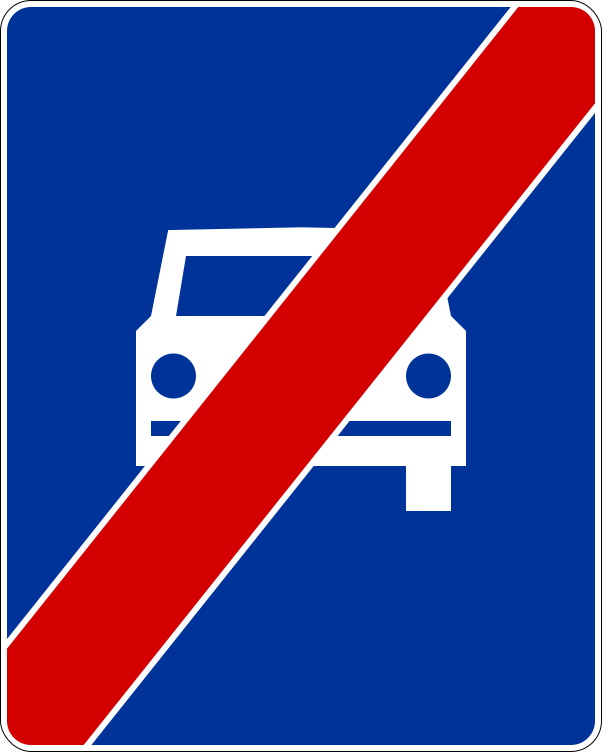
The D-8 - End of Expressway road sign may also be known by these alternative names or terms.
The D-8 - End of Expressway road sign is part of the Information Signs (D) category, which groups together signs with similar rules and functions.
Comparing related road signs like the D-8 'End of Expressway' with similar indicators aids in precise recognition and reduces confusion during your theory test revision. Effective traffic sign comparison sharpens your recall for Poland's diverse road signage, crucial for exam preparation.
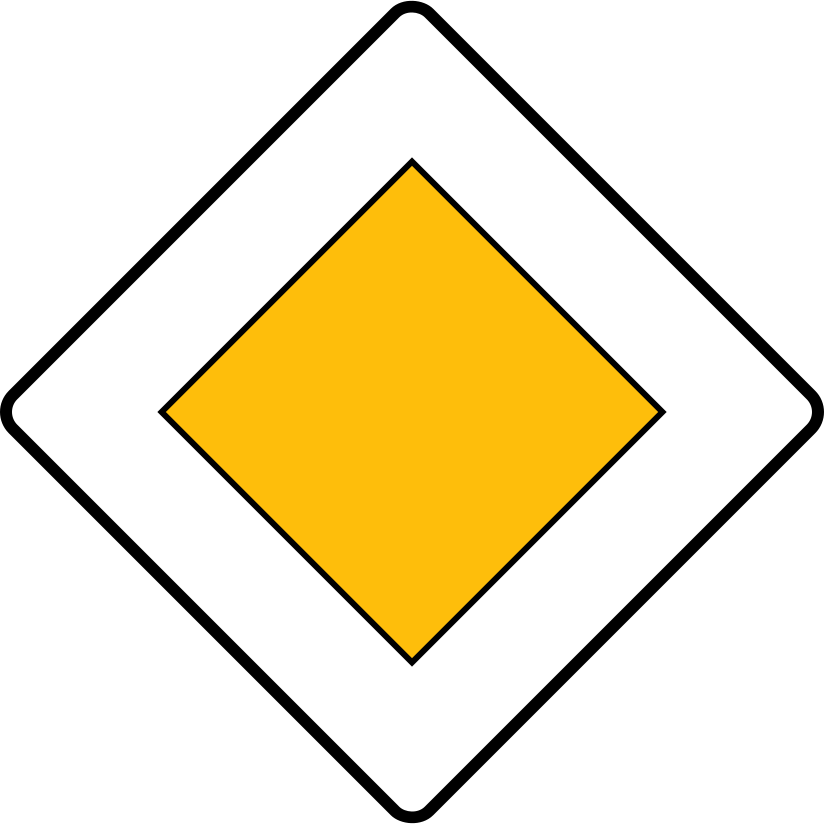
The D-1 Priority Road sign means you have the right of way.
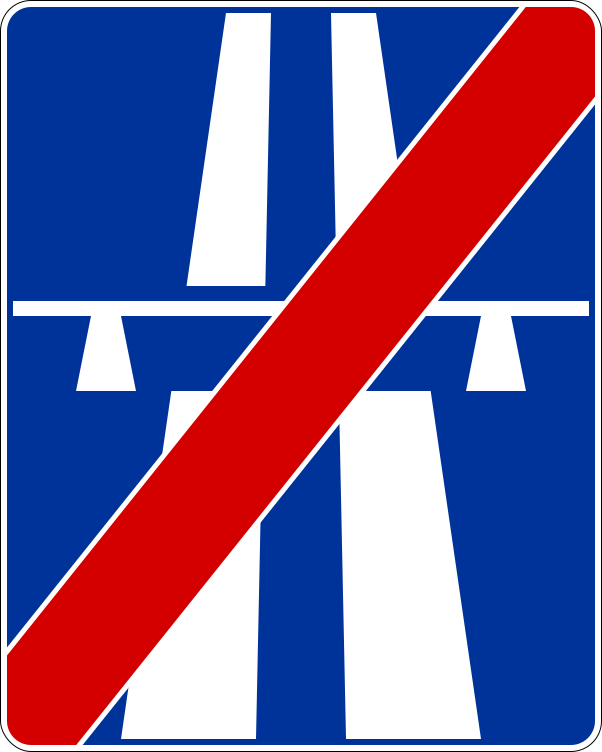
Prepare for the End of the Motorway with the D-10 Sign
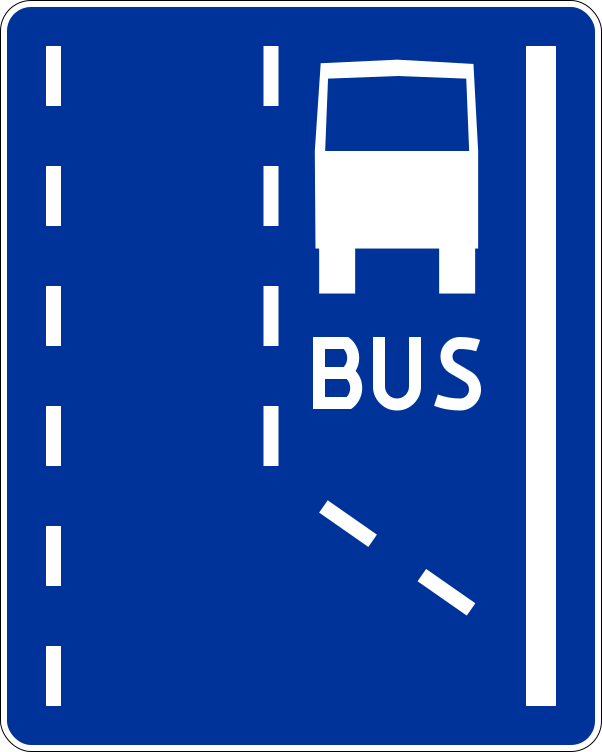
D-11 Road Sign: You're Approaching the Start of a Bus Lane
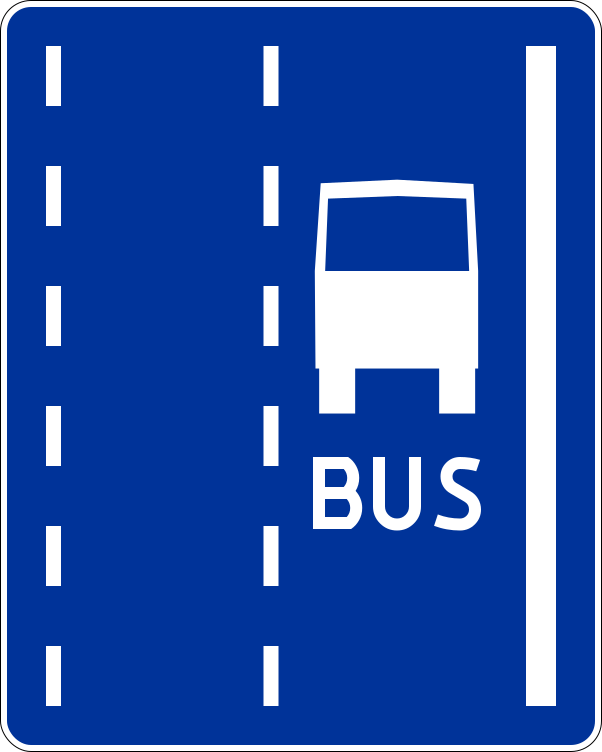
The D-12 'Bus Lane' sign confirms the lane remains exclusively for buses and authorized vehicles.
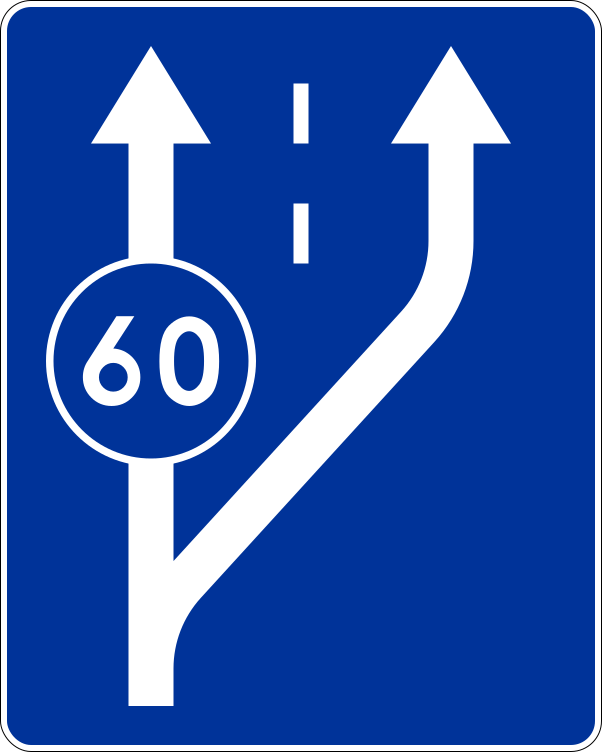
D-13 Sign: Prepare for the Start of a Slow-Moving Traffic Lane
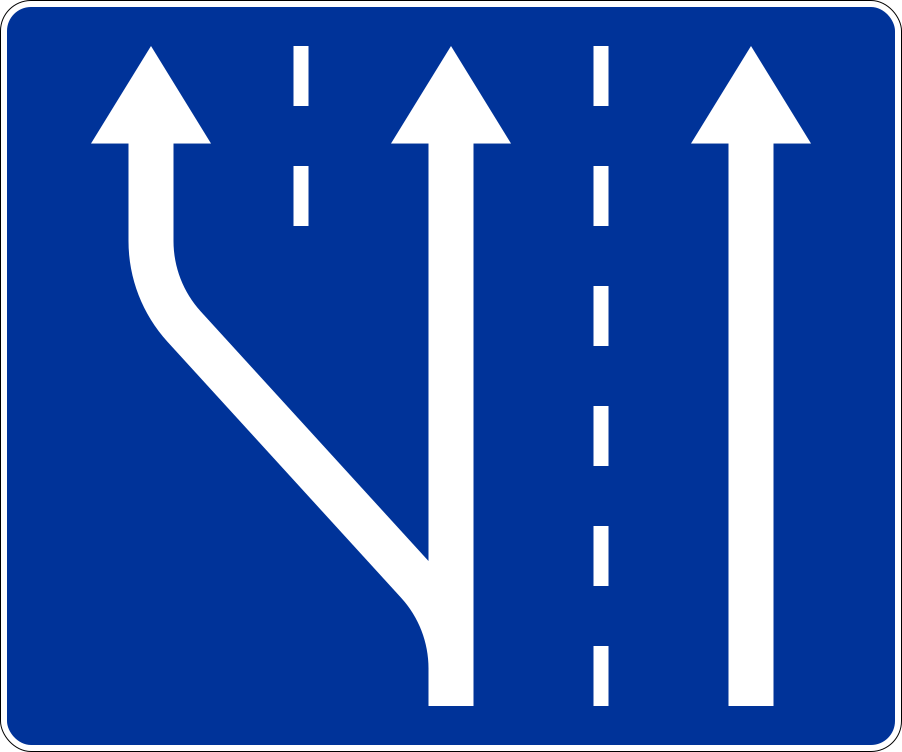
The D-13a 'Start of Lane' sign means a new lane is opening up ahead.
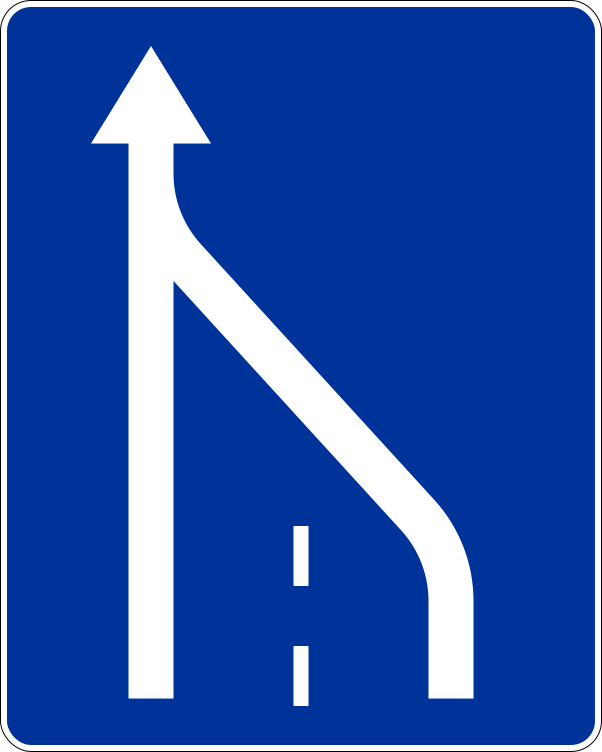
D-14 End of Lane: Know When and How to Merge Safely
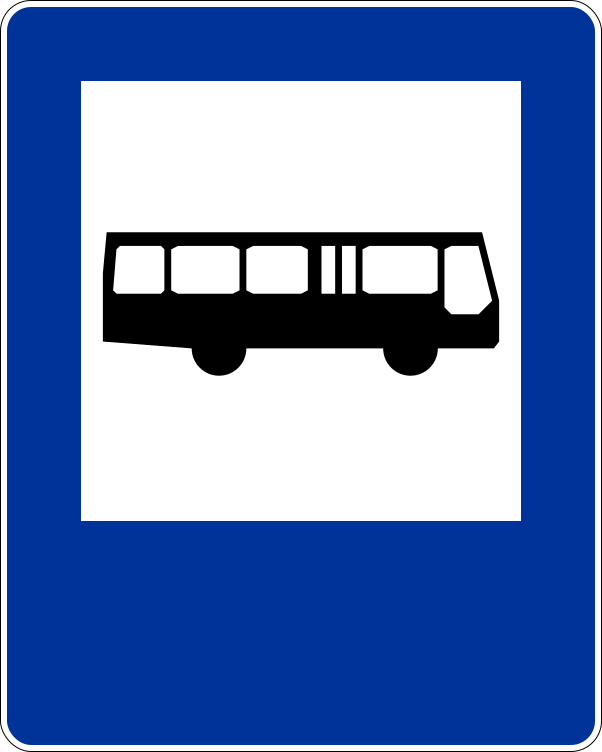
The D-15 'Bus Stop' Sign: Understanding and Reacting to Public Transport Stops
Deepen your understanding of specific road signs by reviewing official Polish traffic rules and associated real-world driving scenarios. These expert-led resources help you bridge the gap between visual recognition and practical exam application.
When selling a car in Poland, you have specific legal duties regarding insurance and registration that must be met promptly. This article clarifies these seller obligations, including the crucial 14-day window to inform your insurer and the 30-day deadline to notify the relevant communication department, ensuring a smooth and compliant transfer of ownership for both parties.
Learning how to interact with law enforcement is a crucial part of your driver training in Poland, as it helps you understand the legal procedures governing roadside controls. This guide clarifies how officers identify themselves, what behaviors are expected of you as a driver, and how traffic enforcement impacts your penalty points and record. Mastery of these rules ensures you remain compliant with the law and prepared for any roadside situation you may encounter.
Go Beyond the Rules: Master Pedestrian Prediction and Drive Safely in Poland.
Even a Second Can Be Fatal: Understand Microsleep to Drive Safely in Poland.
Understand the process for applying, renewing, or replacing a Karta Parkingowa in Poland. This guide covers eligibility, necessary documents, where to apply, and how to correctly display your disabled parking card for valid use.
The D-46 sign indicates a non-public road, such as those within housing estates, shopping center lots, or factory grounds. The rules of the road (PoRD) still apply for safety, but the road is maintained by a private manager whose name might be written on the sign. Importantly, when you exit an internal road onto a public road, you are 'entering traffic' and must yield to all other road users.
After reviewing the full list of Polish road signs, explore specific sign categories for in-depth understanding. Challenge your knowledge with practice questions focused on sign recognition and interpretation to solidify your preparation for the driving theory exam.
Browse All Polish Road Signs