
The D-10 'End of Motorway' sign is a crucial information sign that signals the conclusion of a motorway section. It features the motorway symbol with a red diagonal bar, warning you to reduce speed significantly and prepare for a transition to a different type of road, which might have lower speed limits, at-grade intersections, or even oncoming traffic. It’s vital to heed this sign, especially after prolonged periods at high speeds, to avoid misjudging your speed on the new road.
Understanding the D-10 End of Motorway road sign meaning is crucial for safely adjusting your driving in Poland, especially to counteract speed adaptation after high-speed travel. Proper sign interpretation prepares you for significantly lower limits and changed road conditions, which is essential for passing your Polish driving theory test and maintaining road safety.
The D-10 sign indicates the end of the motorway section. It features the motorway symbol crossed by a red diagonal line. This is a critical point for safety, as drivers who have been traveling at 140 km/h for a long time may suffer from 'speed adaptation'—where 90 km/h feels much slower than it actually is. The sign warns you that the road may now have at-grade intersections, oncoming traffic without a median, and significantly lower speed limits.
The motorway is ending; you must slow down and transition to a lower-class road.
Get clear, practical answers to the most common questions about the D-10 - End of Motorway road sign. Learn how the sign works, what rules it represents, and how it affects real driving situations. This FAQ strengthens your understanding and supports accurate decision making for the Polish driving theory exam in Poland.
The D-10 sign indicates that the motorway section you are on is about to end. You must prepare to slow down and transition to a road with different characteristics and likely lower speed limits. It's a warning that the road ahead will not be a high-speed, controlled-access highway anymore.
When you see the D-10 sign, you must begin to reduce your speed considerably. Check your speedometer to ensure you are complying with the new, lower speed limit that will apply. Be aware of potential changes like at-grade junctions, roundabouts, or the possibility of two-way traffic.
Drivers can experience 'speed adaptation' after driving at high motorway speeds for a long time. This means that a lower speed, like 90 km/h, might feel like 60 km/h. Slowing down ensures you correctly perceive and adhere to the new, lower speed limit and can react safely to the changing road environment.
A common trap is not understanding the need for a significant speed reduction. Learners might assume they can maintain a higher speed for longer. Another trap is failing to anticipate what comes after the end of the motorway, such as traffic lights, other vehicles merging, or different road surfaces, which the D-10 sign warns you about.
Not necessarily immediately, but it signals the end is approaching. Often, there's a distance of 500m to 1000m before the actual end to allow for gradual deceleration. The sign serves as an important warning to start preparing for the transition well in advance.
A clear reference image of the D-10 - End of Motorway road sign used in Poland.
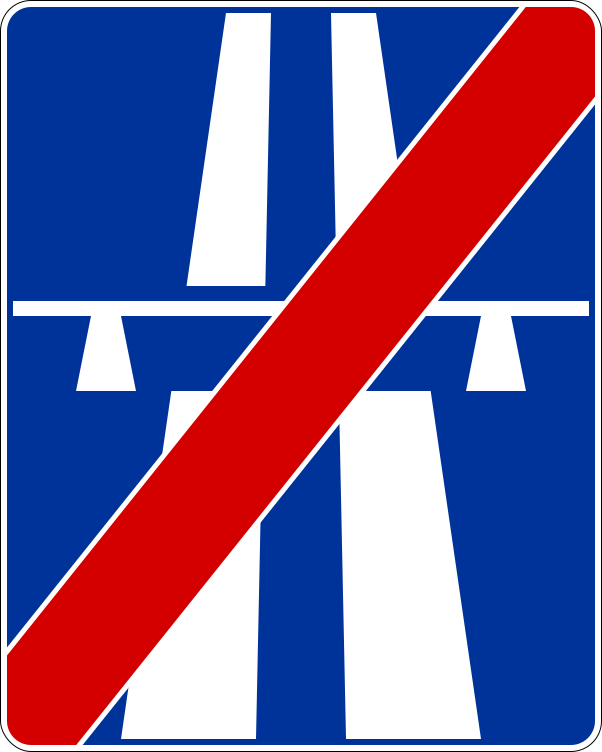
The D-10 - End of Motorway road sign may also be known by these alternative names or terms.
The D-10 - End of Motorway road sign is part of the Information Signs (D) category, which groups together signs with similar rules and functions.
Reviewing related road signs aids in distinguishing subtle differences and reinforces memory for your Polish theory test. Practicing traffic sign comparison and sign recognition is key to mastering the official Polish road rules.
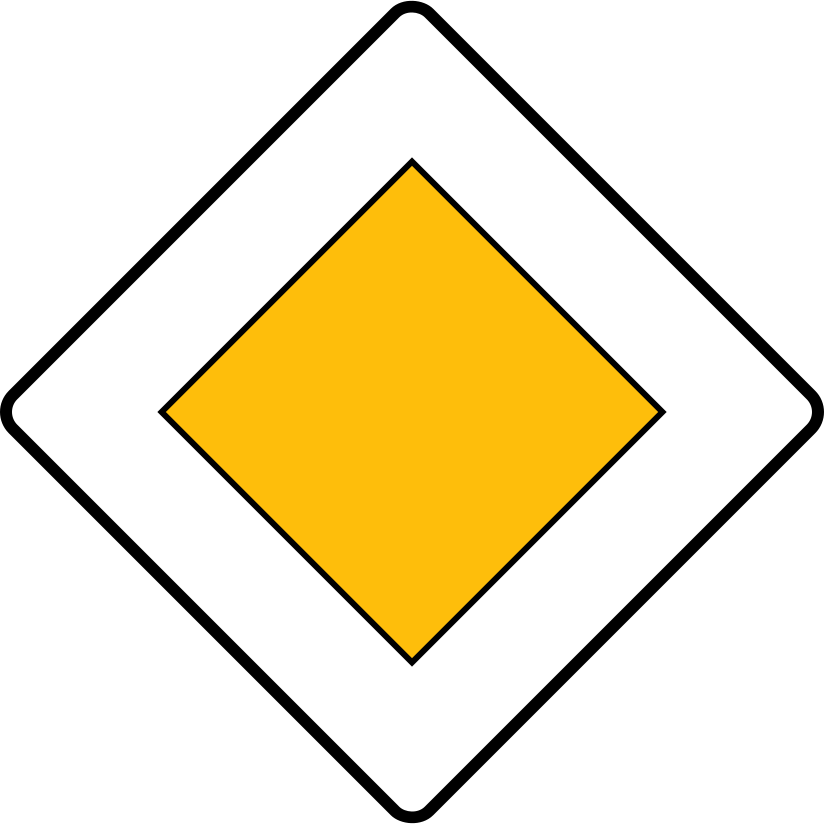
The D-1 Priority Road sign means you have the right of way.
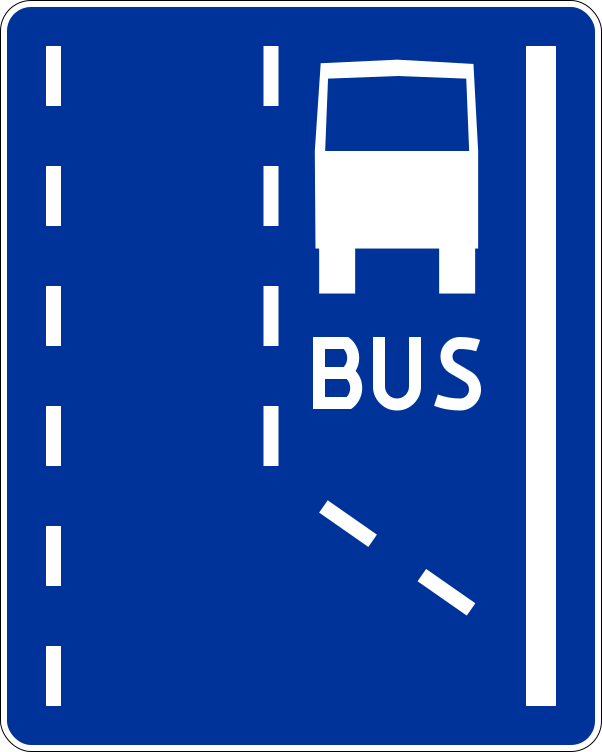
D-11 Road Sign: You're Approaching the Start of a Bus Lane
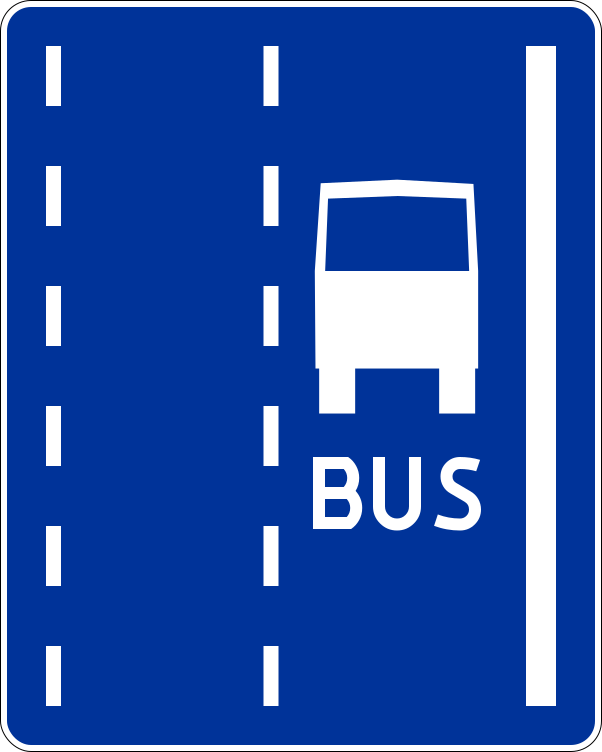
The D-12 'Bus Lane' sign confirms the lane remains exclusively for buses and authorized vehicles.
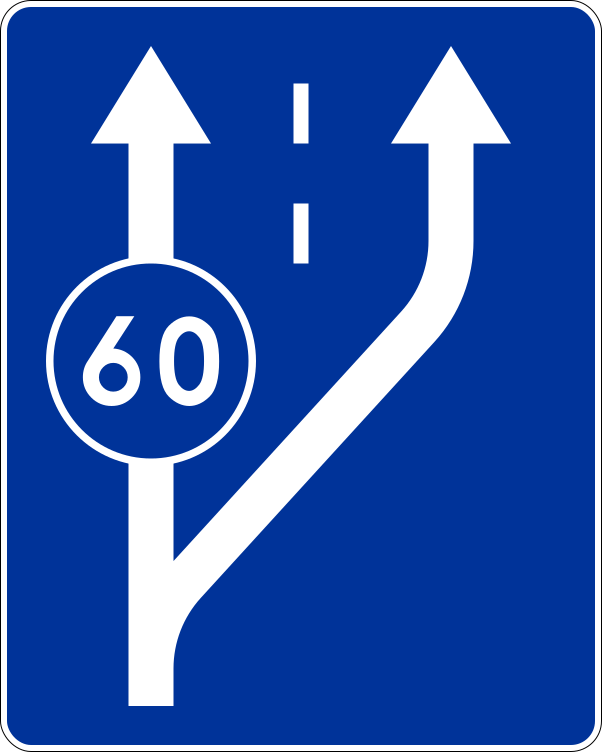
D-13 Sign: Prepare for the Start of a Slow-Moving Traffic Lane
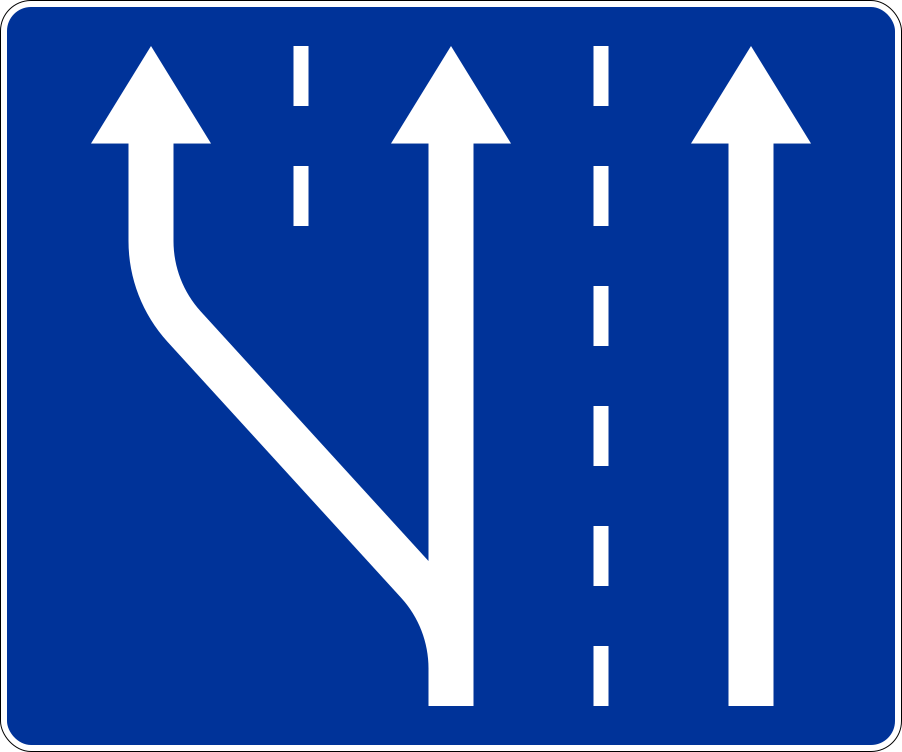
The D-13a 'Start of Lane' sign means a new lane is opening up ahead.
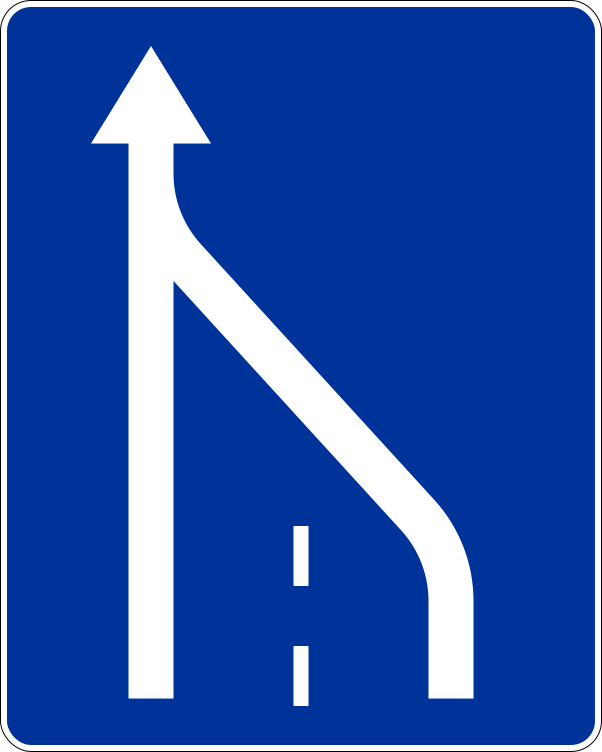
D-14 End of Lane: Know When and How to Merge Safely
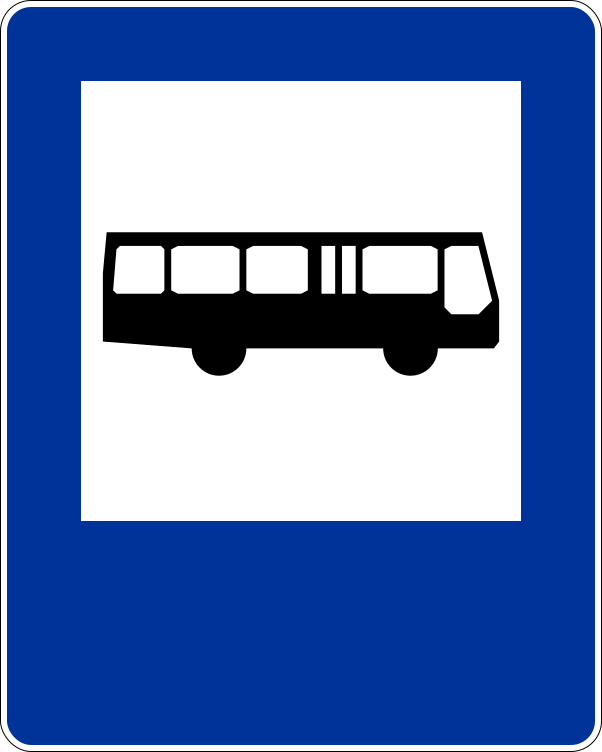
The D-15 'Bus Stop' Sign: Understanding and Reacting to Public Transport Stops
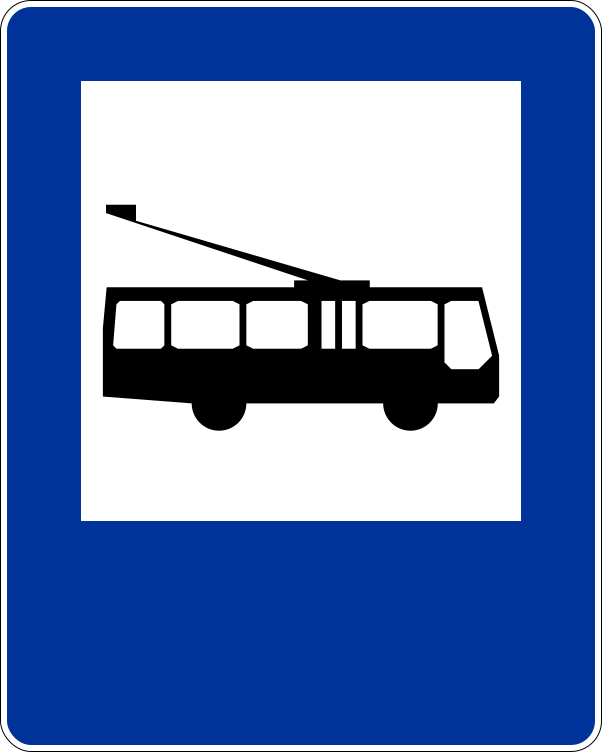
Understand the D-16 Trolleybus Stop Sign for safe city driving.
Deepen your understanding of specific road signs by reviewing official Polish traffic rules and associated real-world driving scenarios. These expert-led resources help you bridge the gap between visual recognition and practical exam application.
Master Polish Crossing Markings for a Safer Drive and Exam Success.
Navigate Polish roads with confidence by understanding critical cyclist priority rules at junctions and crossings. This guide explains your legal obligations as a driver to yield to cyclists, a common area of confusion and potential exam pitfalls. Learn the nuances of right-of-way at intersections and designated cyclist passages to drive safely and pass your theory test.
Navigate Tram Intersections Like a Pro: Essential for Your Polish Driving Exam.
When selling a car in Poland, you have specific legal duties regarding insurance and registration that must be met promptly. This article clarifies these seller obligations, including the crucial 14-day window to inform your insurer and the 30-day deadline to notify the relevant communication department, ensuring a smooth and compliant transfer of ownership for both parties.
The D-7 sign indicates the beginning of a high-speed road designated for motor vehicles only. In Poland, expressways (Drogi Ekspresowe) have specific speed limits (usually 120 km/h for dual carriageways) and prohibit slow-moving vehicles, pedestrians, and cyclists. The sign shows a white car silhouette on a blue rectangular background. These roads are designed for long-distance travel and typically feature grade-separated interchanges, though they may occasionally have at-grade intersections in older sections.
The E-2a is a rectangular board usually mounted on the shoulder. It serves as the final confirmation of which way to turn at a junction. It can list multiple cities in one direction and include road numbers. Unlike arrow-shaped signs, this board provides a broader overview of the directions available at that specific point in the journey. It is a staple of standard national and local road navigation.
After reviewing the full list of Polish road signs, explore specific sign categories for in-depth understanding. Challenge your knowledge with practice questions focused on sign recognition and interpretation to solidify your preparation for the driving theory exam.
Browse All Polish Road Signs