
The D-3 road sign, a blue rectangle with a prominent white arrow, is an information sign indicating that traffic on the road or lane ahead moves in a single, specified direction. Drivers must adhere to the direction shown by the arrow to ensure traffic flow and safety, especially in busy urban areas. If you encounter this sign, remember that driving against the arrow is prohibited for most vehicles, although cyclists might have exceptions with supplementary plates.
This sign confirms that all traffic must move in the direction specified by the arrow, crucial for safe urban navigation and your theory test revision. Mastering road sign meaning is key to understanding traffic flow and avoiding violations.
The D-3 sign indicates a street where vehicular traffic is legally restricted to move in a single direction. It is a blue rectangular sign with a large white arrow pointing upward. This setup is common in dense urban centers to improve traffic flow and reduce head-on collision risks. If a T-22 supplementary plate is present, it indicates that bicycles are allowed to travel in the opposite direction (contraflow) on a designated lane.
Traffic on this road or lane moves in only one direction as indicated by the arrow.
Get clear, practical answers to the most common questions about the D-3 - One-Way Road road sign. Learn how the sign works, what rules it represents, and how it affects real driving situations. This FAQ strengthens your understanding and supports accurate decision making for the Polish driving theory exam in Poland.
The D-3 sign, a blue rectangle with a white arrow, clearly indicates that traffic on that particular road or lane is restricted to only one direction. You must travel in the direction the arrow is pointing. This helps organize traffic and prevent head-on collisions.
When you see the D-3 sign, you must only drive in the direction shown by the white arrow. Driving or reversing against the direction of the arrow is prohibited and dangerous, unless you are a cyclist on a specially marked contraflow lane (indicated by a supplementary plate T-22).
Yes, while most vehicles must follow the arrow's direction, cyclists might be permitted to travel in the opposite direction on a designated lane if a supplementary plate (T-22) is present below the D-3 sign. Always check for such plates.
When making a left turn from a one-way street, you must position your vehicle at the far left edge of your lane before turning. This is a common maneuver on one-way roads and often tested in practical driving and the theory exam to ensure safe lane discipline.
Learners sometimes forget the rule about positioning for a left turn from a one-way street, or they overlook supplementary plates like the T-22 for cyclists. Understanding that 'one-way' applies strictly to the indicated direction, unless specific exceptions are clearly marked, is crucial.
A clear reference image of the D-3 - One-Way Road road sign used in Poland.
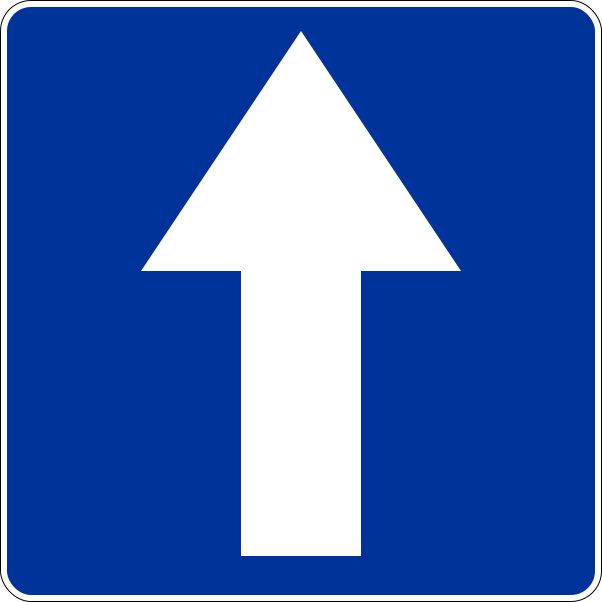
The D-3 - One-Way Road road sign may also be known by these alternative names or terms.
The D-3 - One-Way Road road sign is part of the Information Signs (D) category, which groups together signs with similar rules and functions.
Master Polish traffic signs by comparing related ones, which aids memory and reduces confusion. This focused review helps improve sign recognition and is essential for your theory test revision and overall driving knowledge.
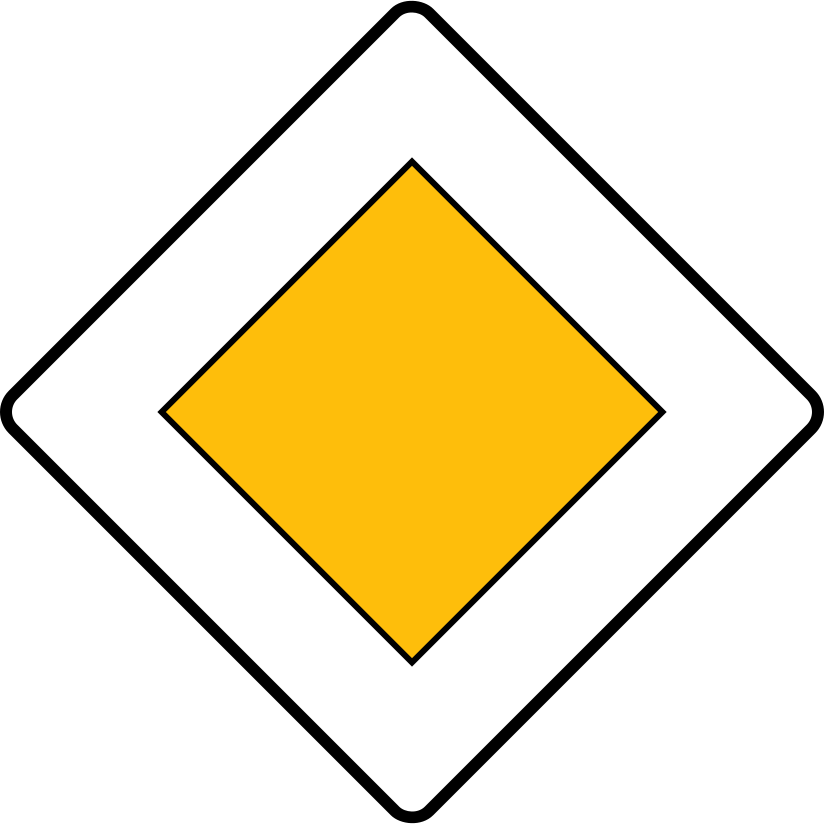
The D-1 Priority Road sign means you have the right of way.
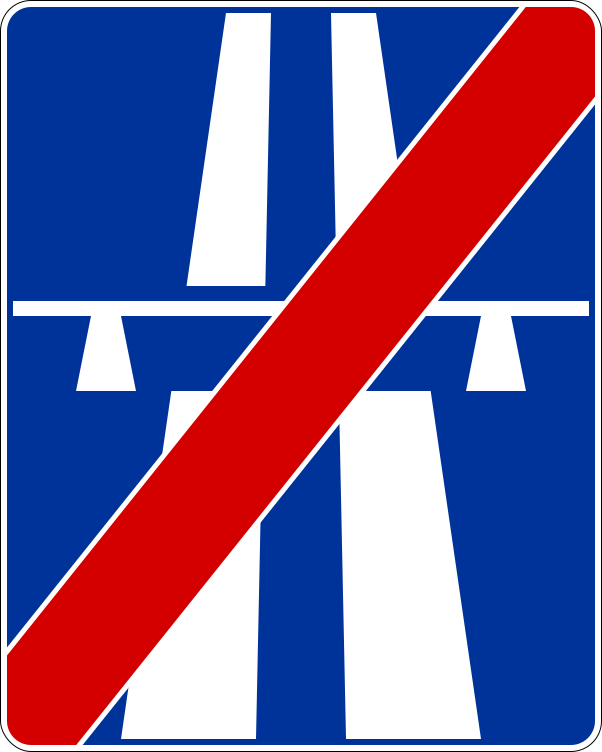
Prepare for the End of the Motorway with the D-10 Sign
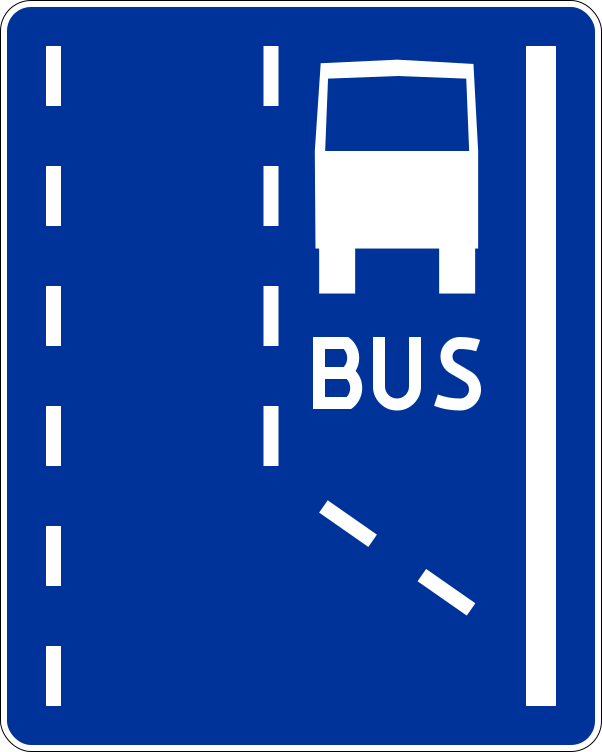
D-11 Road Sign: You're Approaching the Start of a Bus Lane
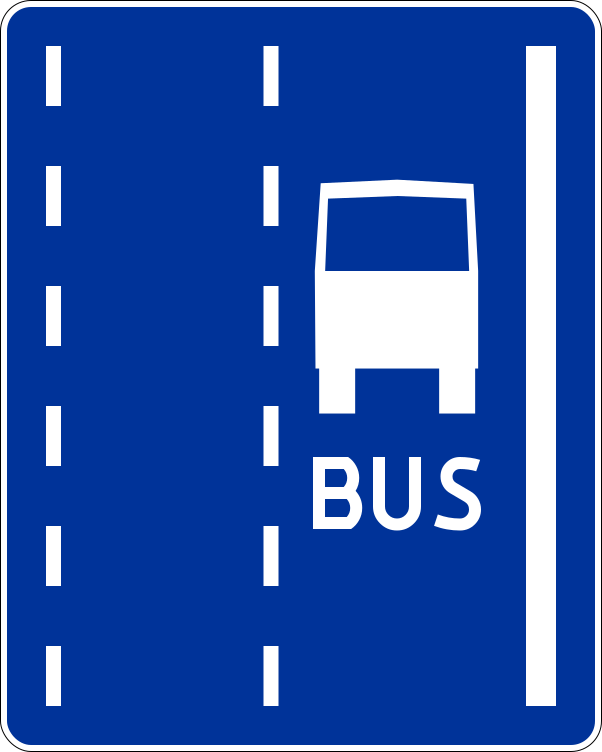
The D-12 'Bus Lane' sign confirms the lane remains exclusively for buses and authorized vehicles.
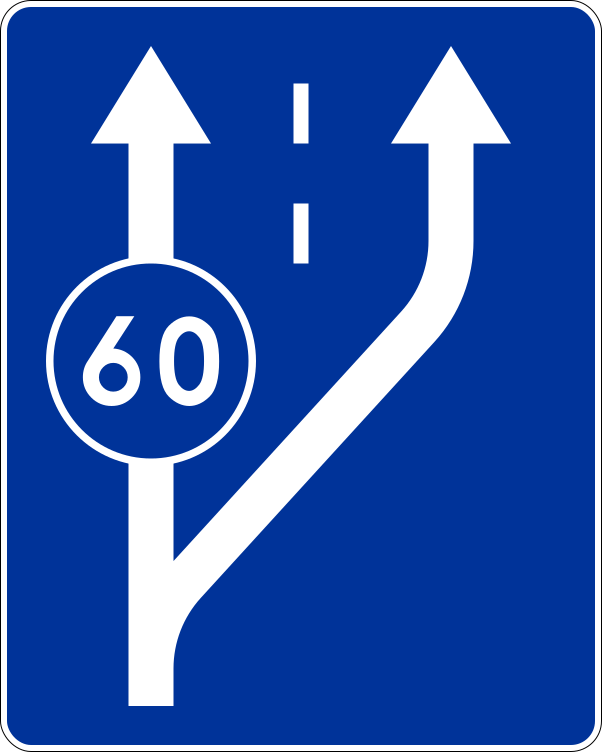
D-13 Sign: Prepare for the Start of a Slow-Moving Traffic Lane
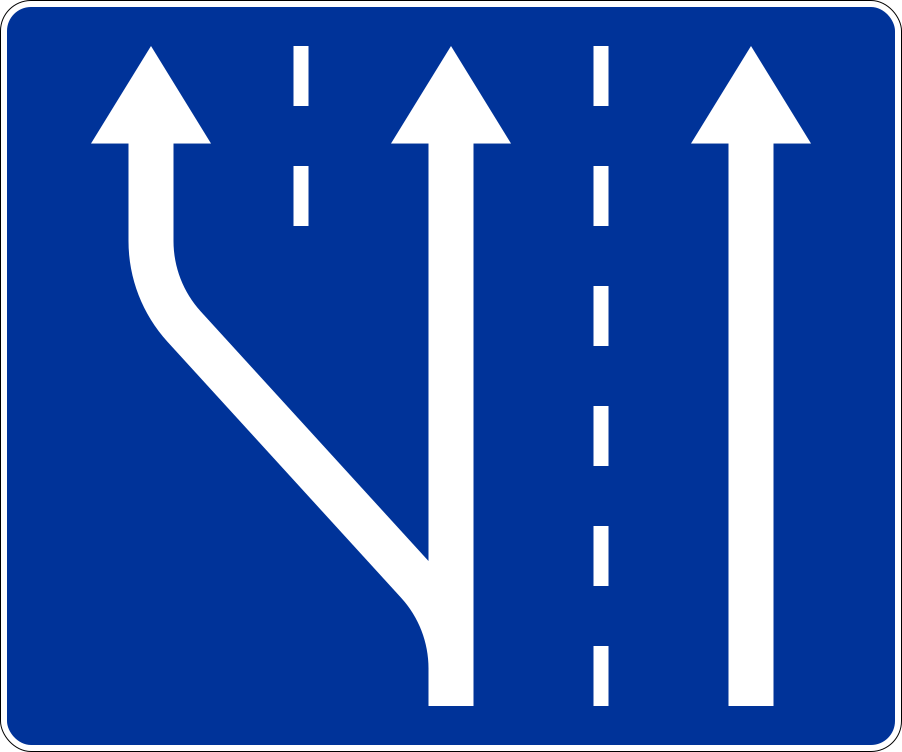
The D-13a 'Start of Lane' sign means a new lane is opening up ahead.
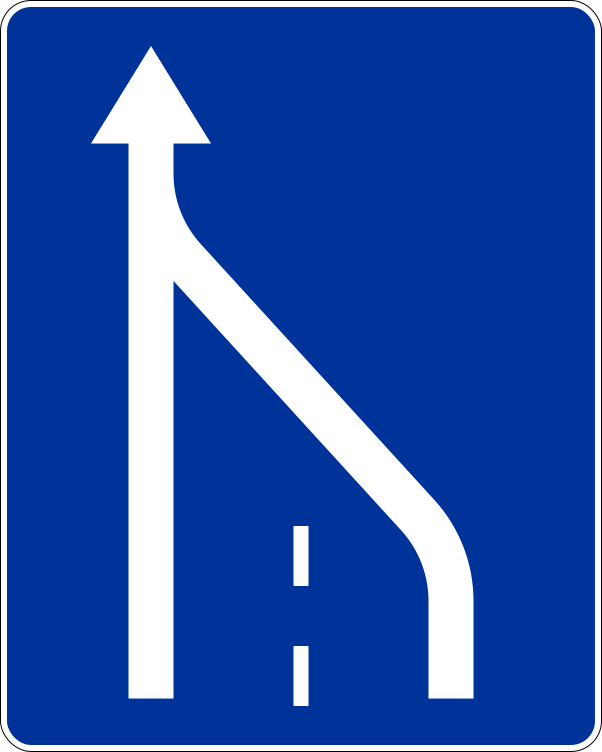
D-14 End of Lane: Know When and How to Merge Safely
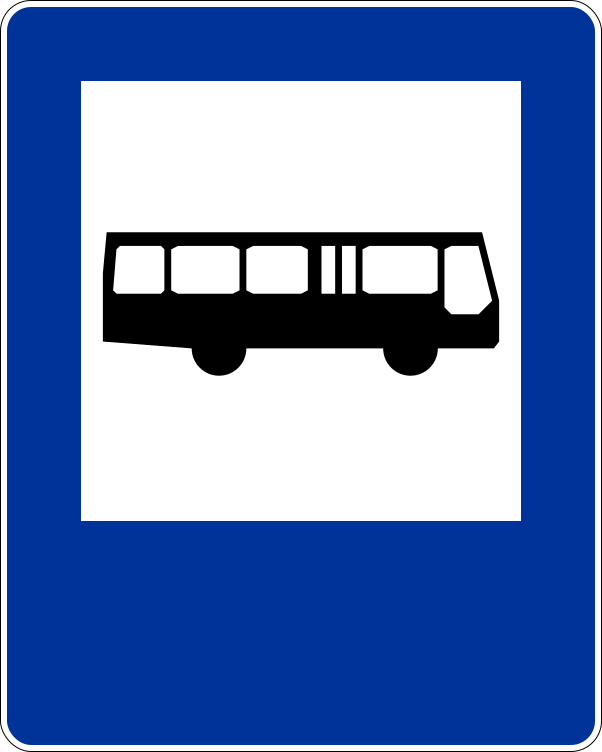
The D-15 'Bus Stop' Sign: Understanding and Reacting to Public Transport Stops
Deepen your understanding of specific road signs by reviewing official Polish traffic rules and associated real-world driving scenarios. These expert-led resources help you bridge the gap between visual recognition and practical exam application.
The A-30 sign serves as a vital warning for drivers to prepare for unexpected hazards that fall outside standard category signs. This guide clarifies how the sign is paired with supplementary plates to indicate risks like blind or deaf pedestrians, and outlines the mandatory safety behaviors required by Polish traffic law. You will learn the legal expectations for driver conduct to ensure you are fully prepared for hazard perception questions in your theory exam.
Learning how to interact with law enforcement is a crucial part of your driver training in Poland, as it helps you understand the legal procedures governing roadside controls. This guide clarifies how officers identify themselves, what behaviors are expected of you as a driver, and how traffic enforcement impacts your penalty points and record. Mastery of these rules ensures you remain compliant with the law and prepared for any roadside situation you may encounter.
Master Your Rights and Obligations During a Polish Roadside Inspection
Don't Be a Road Block: Master Minimum Speeds and Smooth Traffic Flow for Your Polish Exam!
The C-16 sign indicates a road or path reserved solely for people on foot. It is used in areas with high pedestrian volume, such as city centers or park paths, to ensure their safety and comfort. Motorized vehicles and cyclists are not allowed to enter these zones, creating a car-free environment.
The D-40 sign marks the entrance to a 'Strefa Zamieszkania'. Inside this zone, pedestrians are allowed to use the entire width of the road and have absolute priority over vehicles. The speed limit is strictly 20 km/h. Drivers must be extremely vigilant as children are legally allowed to play on the street without adult supervision. Additionally, parking is only permitted in designated spaces, and all speed bumps are considered 'marked' by this entry sign.
After reviewing the full list of Polish road signs, explore specific sign categories for in-depth understanding. Challenge your knowledge with practice questions focused on sign recognition and interpretation to solidify your preparation for the driving theory exam.
Browse All Polish Road Signs