
The D-17 sign indicates a designated tram stop. In Poland, trams often stop in the middle of the road, meaning passengers may need to cross car lanes to reach the pavement. If the tram stop lacks a dedicated island, you must stop your vehicle to allow passengers to board or alight safely. Drivers should be vigilant for pedestrians near tram tracks, even when no tram is present.
Master the D-17 'Tram Stop' sign to ensure passenger safety and comply with Polish traffic rules. Understanding its specific meaning is crucial for navigating urban theory test scenarios and avoiding potential hazards on the road.
The D-17 sign marks a tram stop. It features a black tram silhouette on a blue and white background. Trams often stop in the middle of the road, meaning passengers must cross the car lane to reach the sidewalk. In such cases, drivers are legally required to stop and allow passengers safe passage between the tram and the curb. Even if the tram is not at the stop, drivers should be alert for people waiting near the tracks.
A designated stop for trams; drivers must be cautious of passengers crossing to/from the tram.
Get clear, practical answers to the most common questions about the D-17 - Tram Stop road sign. Learn how the sign works, what rules it represents, and how it affects real driving situations. This FAQ strengthens your understanding and supports accurate decision making for the Polish driving theory exam in Poland.
The D-17 sign's primary purpose is to alert drivers to a tram stop. It signifies that a tram may stop here and that passengers might be boarding or alighting. Crucially, if there's no separate island, drivers must stop to ensure passenger safety when they cross the roadway.
You must come to a complete stop if a tram is at a stop that does not have a pedestrian island, and passengers are crossing the car lane to reach the sidewalk or vice-versa. You should only proceed once all passengers have cleared the roadway and it is safe to do so.
Even without a tram, the D-17 sign means you should be aware that this is a tram stop. Be extra cautious as people may be waiting to board or have just alighted and might be present near the tracks or crossing points. Anticipate pedestrian movement.
A common trap is assuming you only need to stop if you are directly behind a tram. The rule requires stopping to allow passengers to cross between the tram and the curb, even if you are approaching the stop and the tram is already there. Another trap is not anticipating passengers crossing car lanes when no island is present.
You are prohibited from driving past a stopped tram when passengers are crossing the roadway to reach the sidewalk. Parking within 15 meters of the sign is also typically forbidden, and you must never block tram tracks or the designated boarding areas.
A clear reference image of the D-17 - Tram Stop road sign used in Poland.
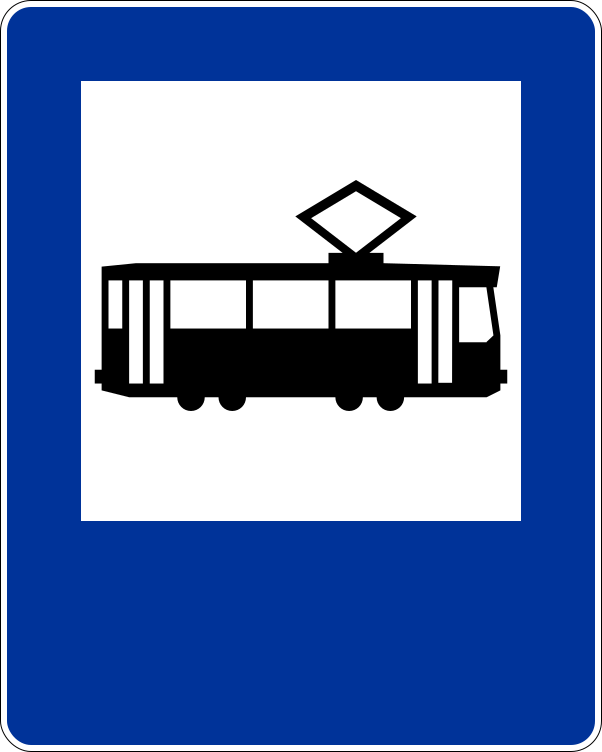
The D-17 - Tram Stop road sign may also be known by these alternative names or terms.
The D-17 - Tram Stop road sign is part of the Information Signs (D) category, which groups together signs with similar rules and functions.
Reviewing related road signs alongside the 'Tram Stop' sign helps cement your understanding and improve recognition. Effective traffic sign comparison and sign recognition practice are key for passing your theory test revision.
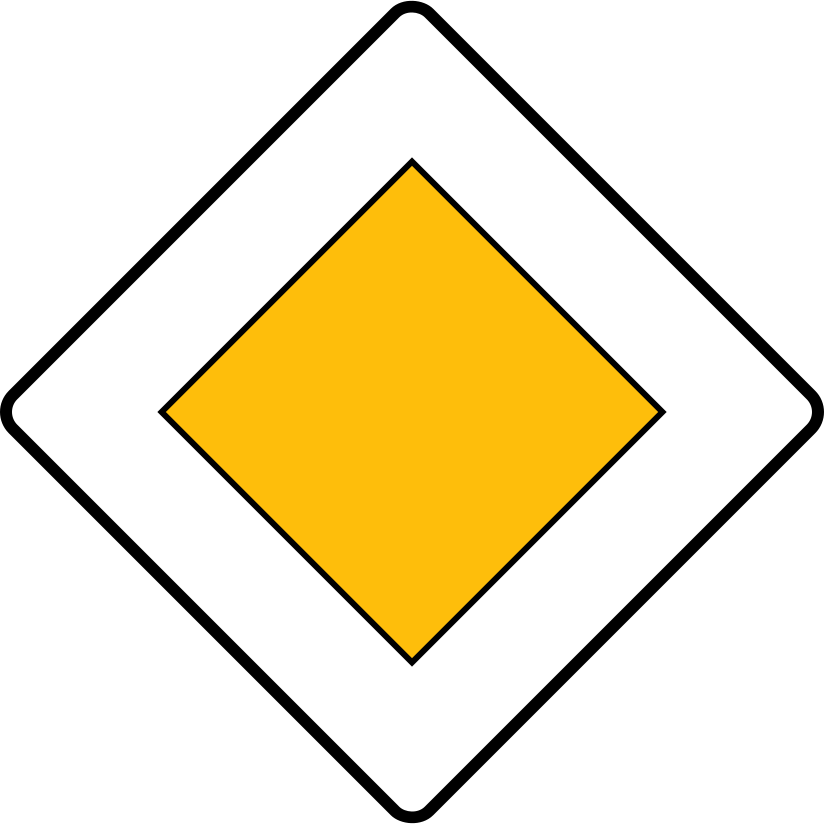
The D-1 Priority Road sign means you have the right of way.
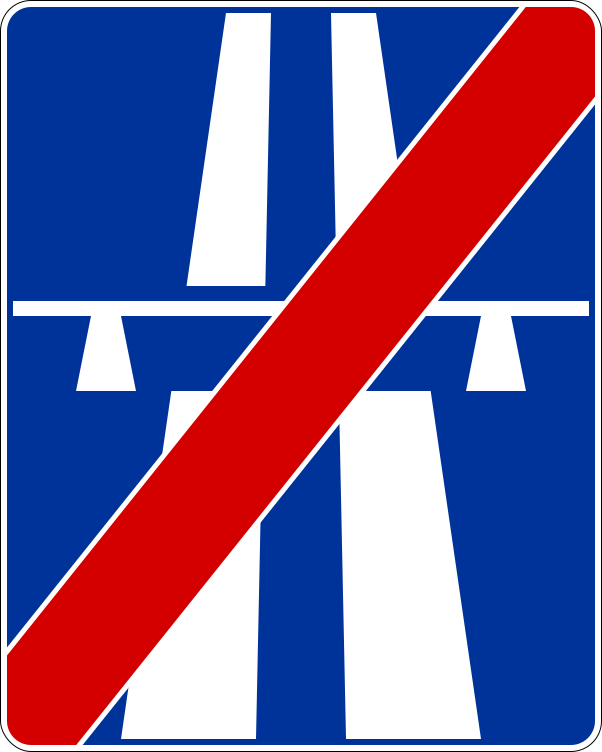
Prepare for the End of the Motorway with the D-10 Sign
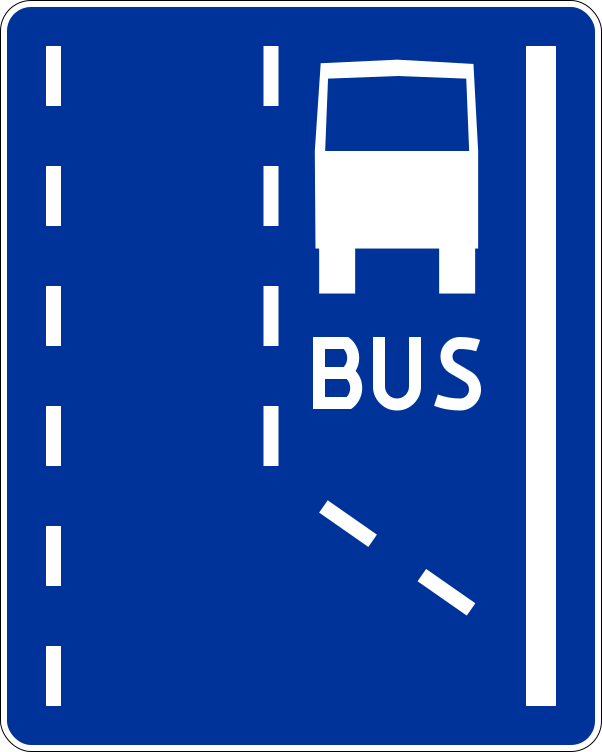
D-11 Road Sign: You're Approaching the Start of a Bus Lane
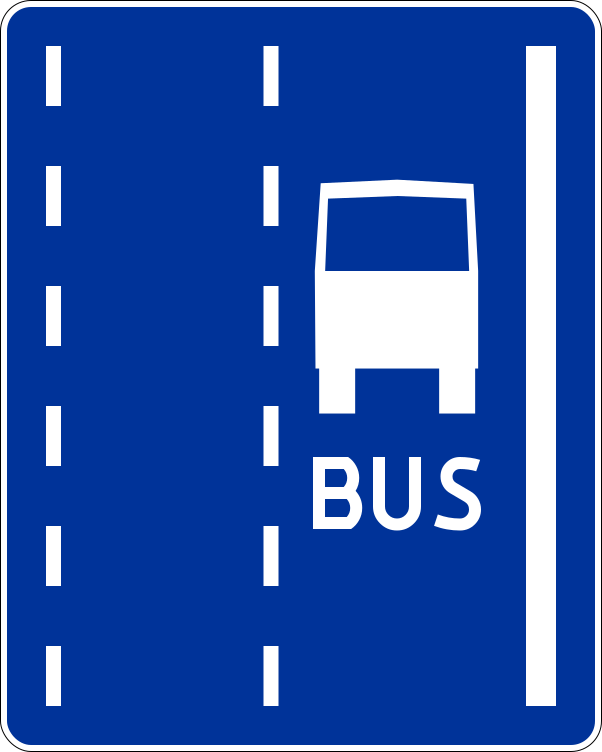
The D-12 'Bus Lane' sign confirms the lane remains exclusively for buses and authorized vehicles.
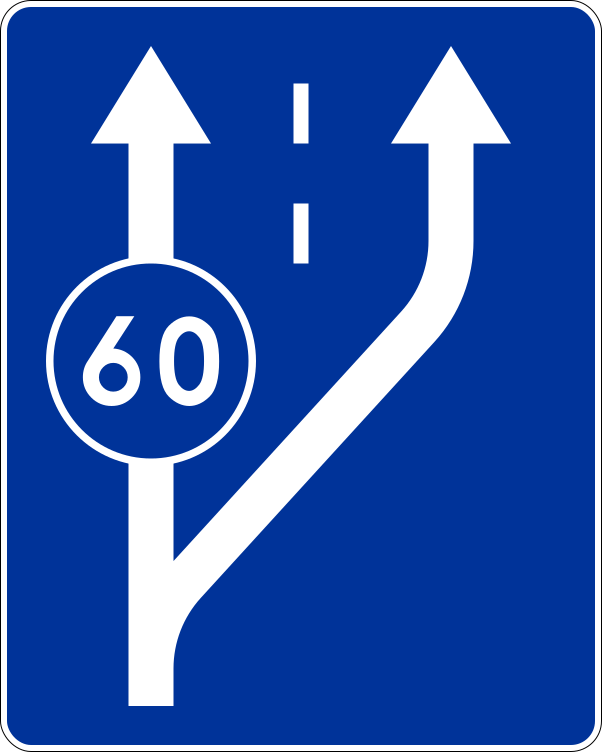
D-13 Sign: Prepare for the Start of a Slow-Moving Traffic Lane
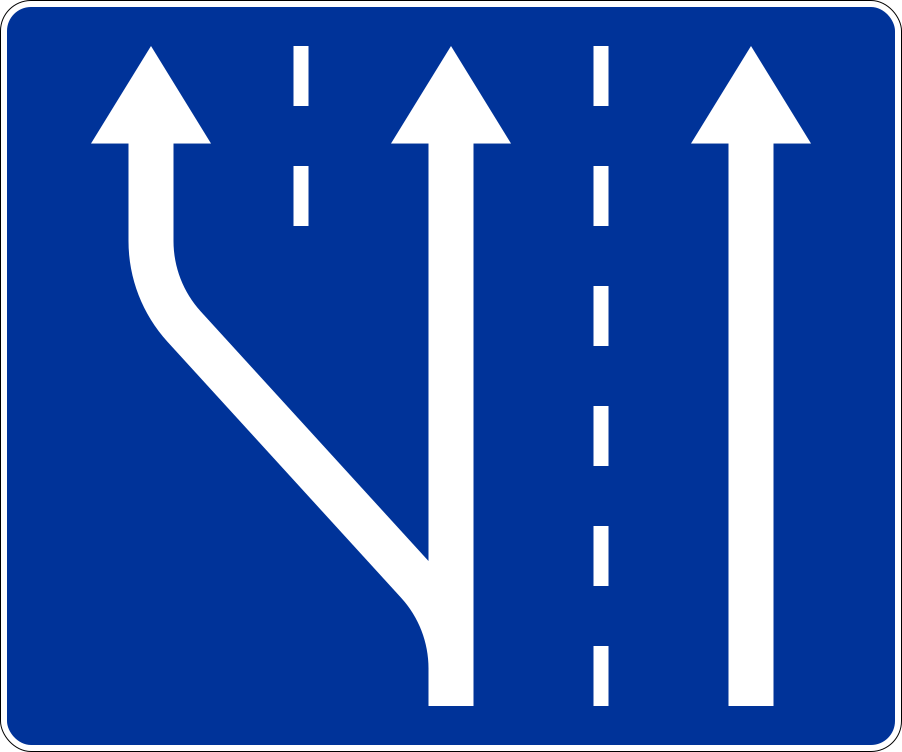
The D-13a 'Start of Lane' sign means a new lane is opening up ahead.
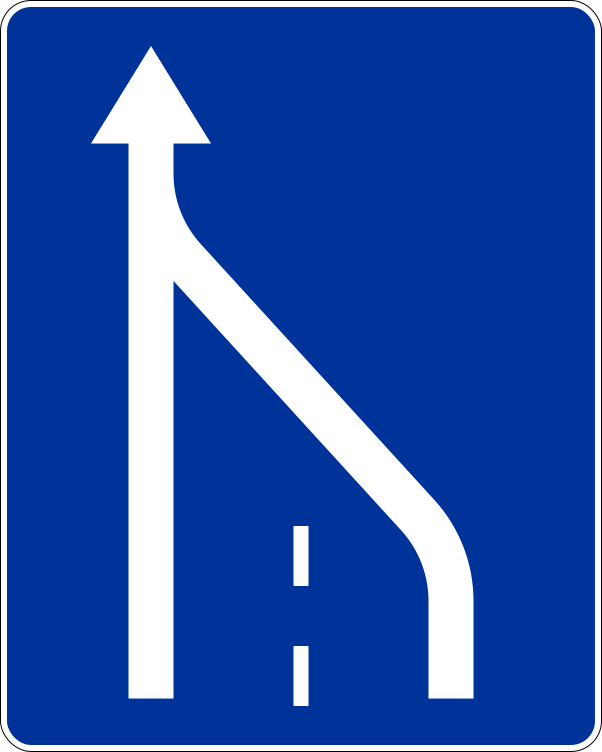
D-14 End of Lane: Know When and How to Merge Safely
The D-15 'Bus Stop' Sign: Understanding and Reacting to Public Transport Stops
Deepen your understanding of specific road signs by reviewing official Polish traffic rules and associated real-world driving scenarios. These expert-led resources help you bridge the gap between visual recognition and practical exam application.
Learners often struggle to differentiate between binding regulatory signs and mere safety advice, which can lead to confusion during the official theory exam. This guide clarifies the specific role of Polish B-33 prohibitive signs versus international speed recommendations, helping you distinguish between legal mandates and situational safety advice. You will learn to identify key sign types, understand their legal weight, and recognize why adjusting your speed to road conditions remains a fundamental requirement of the Polish driving system.
Master Polish Crossing Markings for a Safer Drive and Exam Success.
Discover the new Polish regulations that permit 17-year-olds to start their driving journey with a Category B license. This guide clarifies the essential conditions for supervised driving, focusing on the qualifications of the accompanying driver and the specific restrictions young drivers must adhere to. Gaining this knowledge is crucial for passing the Polish theory exam and ensuring safe, legal driving practices from day one.
Don't Be a Road Block: Master Minimum Speeds and Smooth Traffic Flow for Your Polish Exam!
The A-17 sign indicates locations where children between the ages of 7 and 15 are likely to be present. Unlike adults, children can be unpredictable and may suddenly run into the street without looking. This sign is a signal to slow down significantly and be extra alert. It is common near primary schools, daycare centers, and organized sports fields.
The E-15b sign has black numbers on a yellow background. These roads connect smaller towns and serve as secondary routes to the national road network. They are managed at the provincial level. While often well-maintained, they may be narrower or have more local traffic and curves than the red-coded national roads.
After reviewing the full list of Polish road signs, explore specific sign categories for in-depth understanding. Challenge your knowledge with practice questions focused on sign recognition and interpretation to solidify your preparation for the driving theory exam.
Browse All Polish Road Signs