
The A-7 'Yield' sign, often called a 'Give Way' or 'triangle sign', is a crucial traffic sign placed on subordinate roads. When you encounter this sign, you must slow down and be prepared to stop to allow vehicles on the main, priority road to pass. It ensures smooth traffic flow by clearly defining who has the right of way at intersections. Failing to yield correctly is a common cause of accidents and a frequent topic in the Polish driving theory exams.
This explanation details the critical meaning of the Polish A-7 'Give Way' sign, essential for your theory test revision. Master its interpretation to navigate intersections safely and comply with Polish traffic rules.
The A-7 'Yield' sign is placed on subordinate roads at intersections. It requires you to slow down and, if necessary, stop to let any vehicle on the main road pass before you enter. Unlike a Stop sign, you are not legally required to come to a full halt if the road is completely clear and visibility is sufficient. It is often paired with the C-12 sign at roundabouts.
You must yield the right of way to vehicles traveling on the intersecting priority road.
Get clear, practical answers to the most common questions about the A-7 - Give Way (Yield) road sign. Learn how the sign works, what rules it represents, and how it affects real driving situations. This FAQ strengthens your understanding and supports accurate decision making for the Polish driving theory exam in Poland.
The A-7 sign requires you to yield the right of way to vehicles on the intersecting priority road. This means you must slow down and be ready to stop if necessary to let them pass before you proceed. You should only enter the intersection when it is safe and will not cause other drivers to slow down or change their course.
Not necessarily. Unlike a 'Stop' sign, the A-7 'Give Way' sign only requires you to stop if there is traffic on the priority road that you need to yield to. If the priority road is clear and visibility is good, you may proceed without stopping, but you must always slow down and check for traffic first.
A common exam trap is assuming you can 'roll' through the intersection without slowing down, or misjudging the speed of approaching vehicles. Learners sometimes also forget to check both left and right thoroughly. The key is to always slow down significantly and be prepared to stop completely, especially if visibility is limited or the intersection is busy.
The main difference is that a 'Stop' sign (B-20) mandates a complete stop at all times, regardless of traffic. The A-7 'Give Way' sign only requires a stop if necessary to yield to traffic on the priority road. However, you must always slow down at an A-7 sign and prioritize safety.
In Poland, if the priority road is a main road and speeds are expected to be high (over 60 km/h), an advance warning sign is often placed before the A-7 sign itself. This gives drivers more time to prepare and adjust their speed accordingly, helping to prevent sudden braking or confusion at the intersection.
A clear reference image of the A-7 - Give Way (Yield) road sign used in Poland.
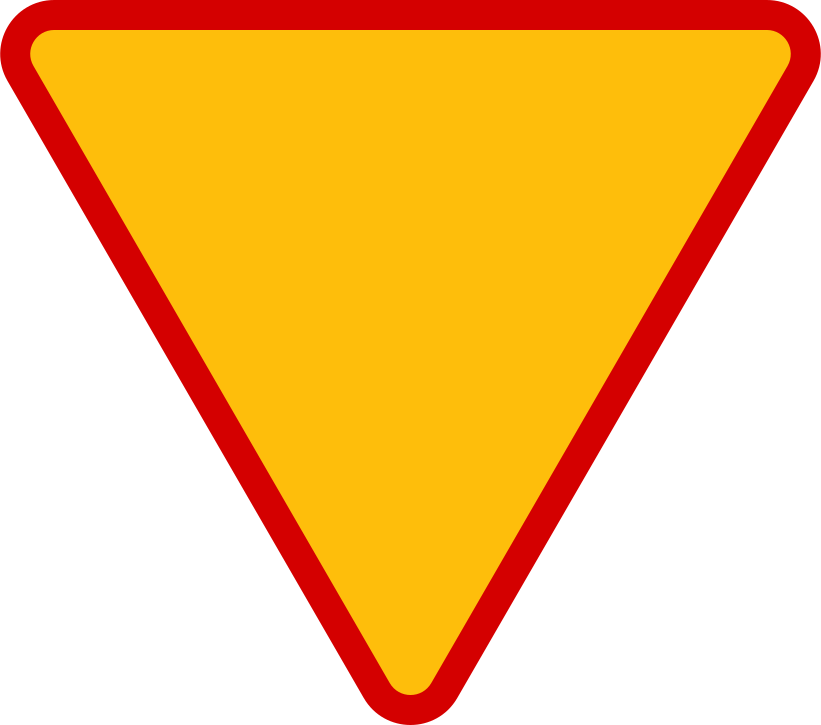
The A-7 - Give Way (Yield) road sign may also be known by these alternative names or terms.
The A-7 - Give Way (Yield) road sign is part of the Warning Signs (A) category, which groups together signs with similar rules and functions.
Comparing similar road signs aids recognition and reduces errors in your theory test revision. Understanding the subtle differences between related signs is crucial for accurate sign recognition during your exam preparation.
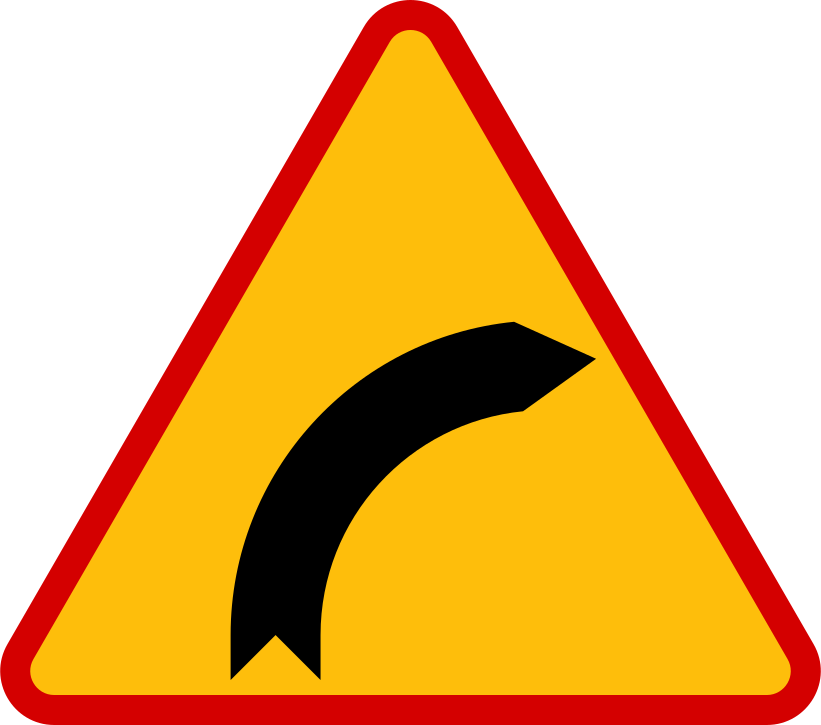
Watch Out for Dangerous Bends to the Right with the A-1 Sign
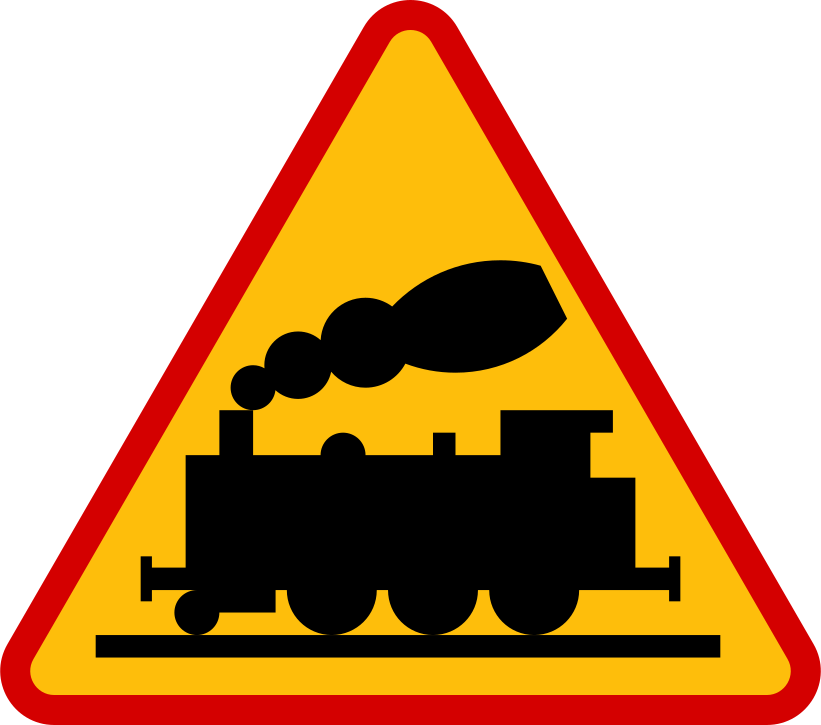
Beware of Ungated Railway Crossings with the A-10 Sign!
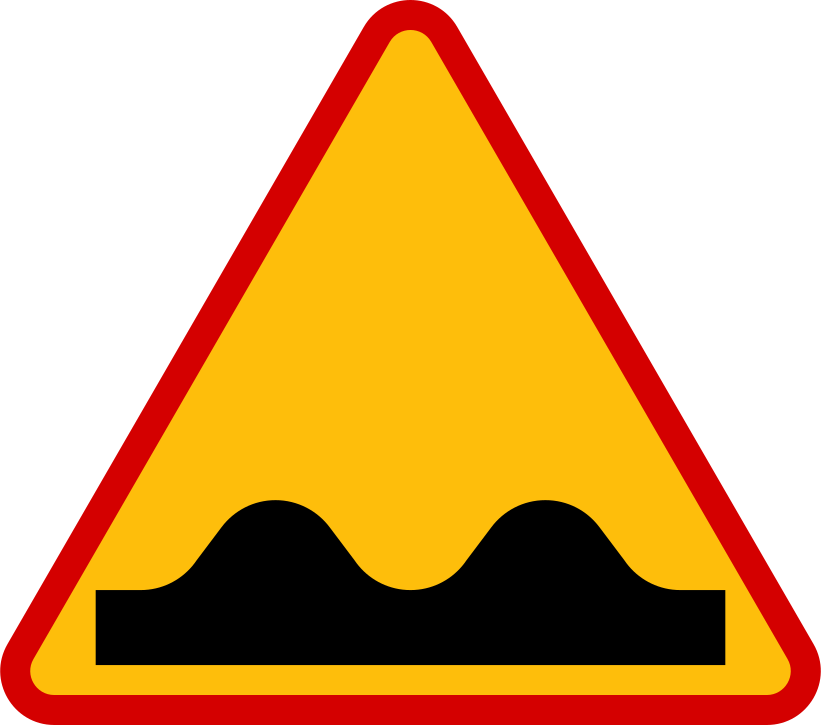
Warning: Prepare for an Uneven Road Surface Ahead!
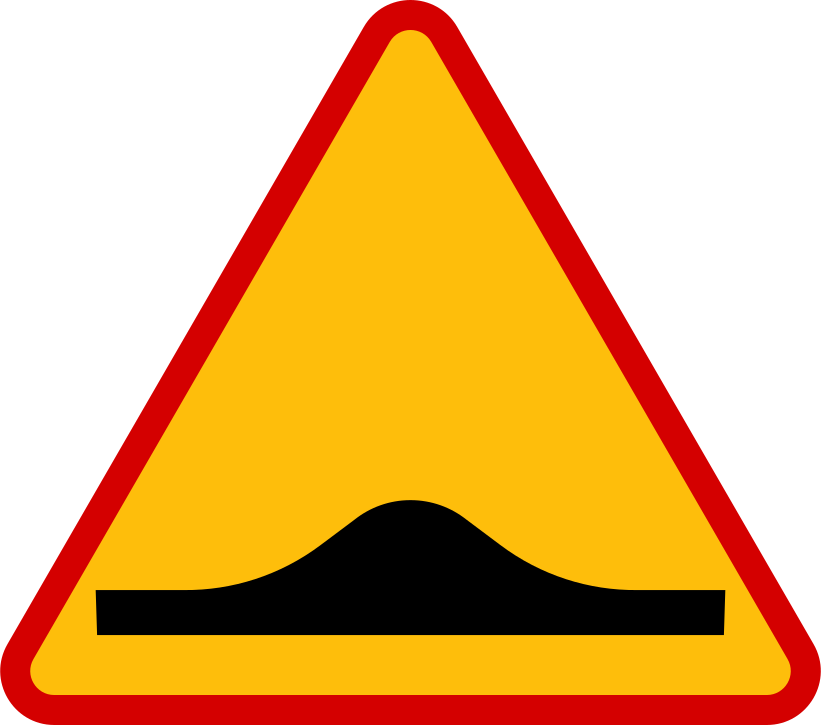
The A-11a Speed Bump sign warns you to significantly reduce your speed.
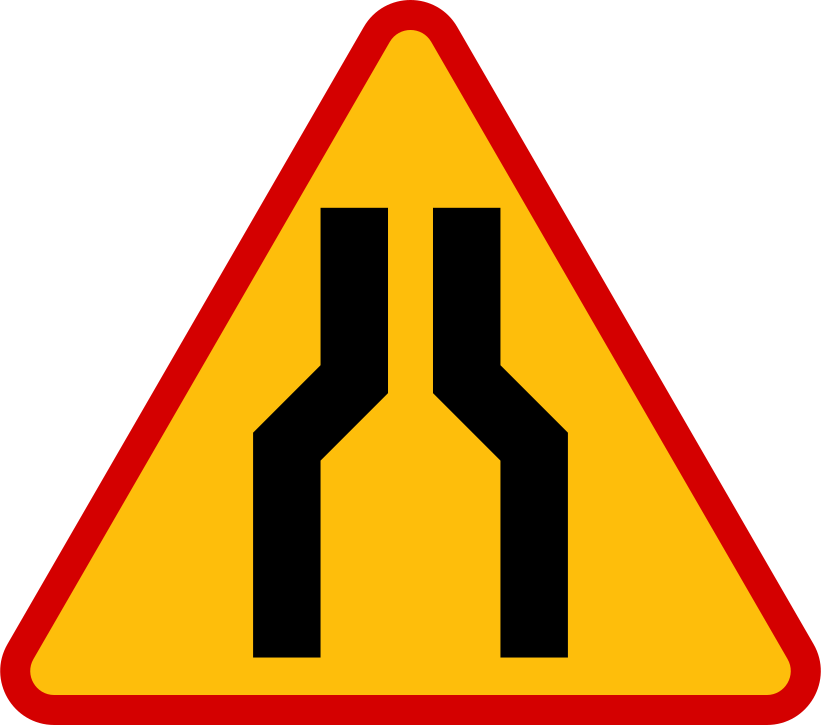
Prepare for Road Narrows on Both Sides with the A-12a Warning Sign
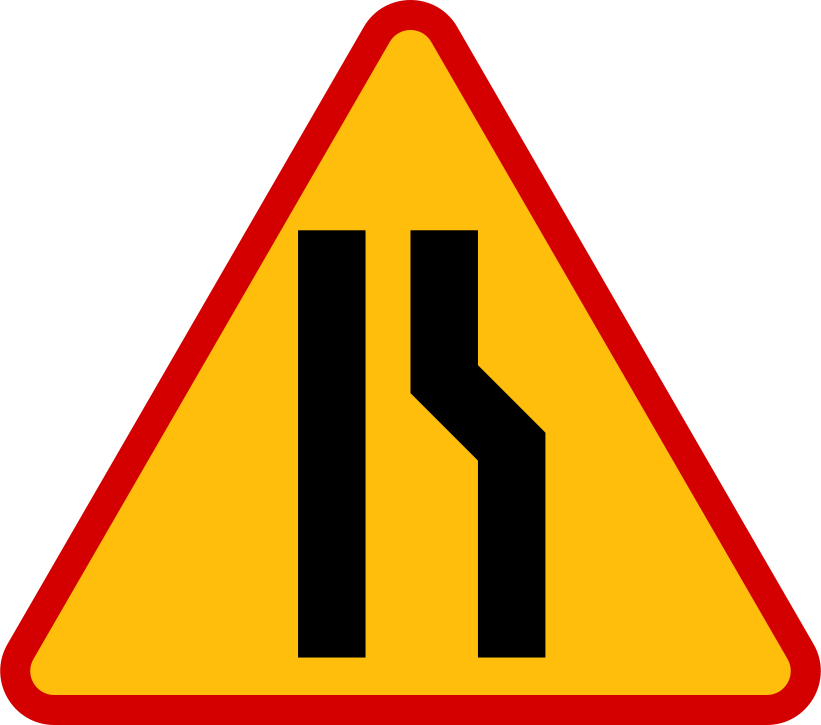
A-12b: Road Narrows Ahead on the Right – Prepare to Merge Left
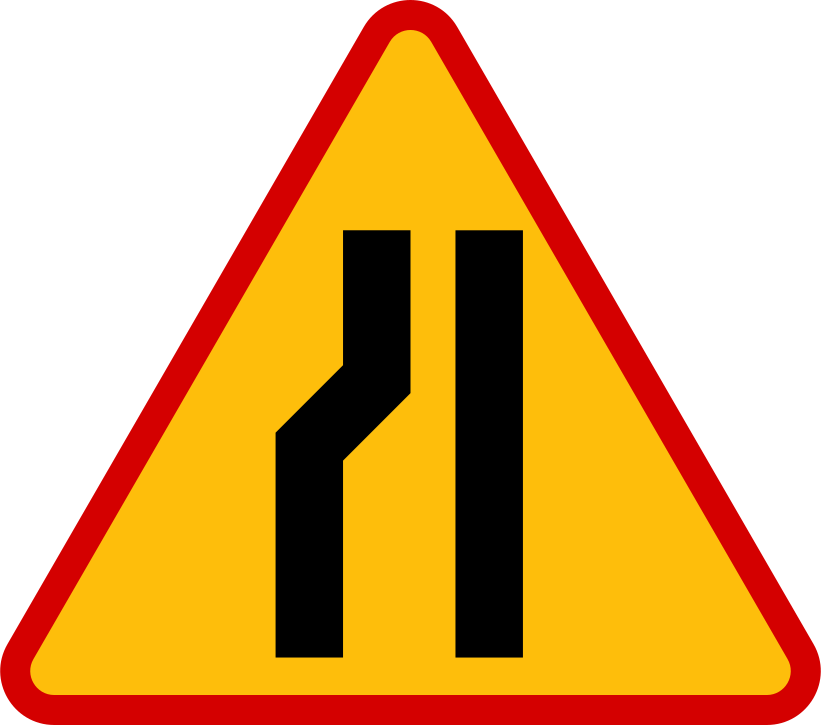
Warning: The Road Narrows Ahead on the Left!
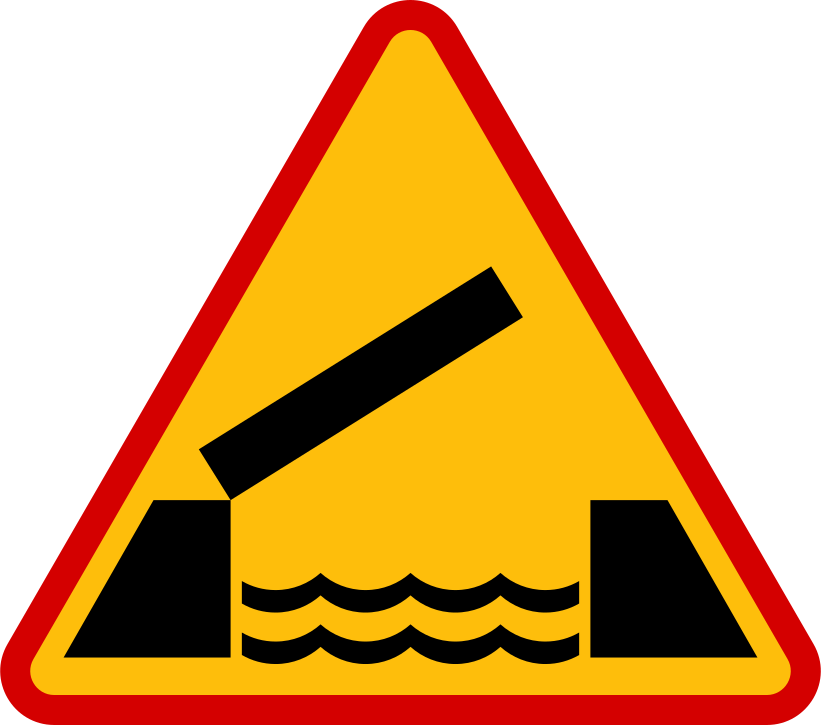
Prepare to stop for a Movable Bridge ahead!
Deepen your understanding of specific road signs by reviewing official Polish traffic rules and associated real-world driving scenarios. These expert-led resources help you bridge the gap between visual recognition and practical exam application.
Learning how to interact with law enforcement is a crucial part of your driver training in Poland, as it helps you understand the legal procedures governing roadside controls. This guide clarifies how officers identify themselves, what behaviors are expected of you as a driver, and how traffic enforcement impacts your penalty points and record. Mastery of these rules ensures you remain compliant with the law and prepared for any roadside situation you may encounter.
To obtain a Category C driving licence in Poland, you must undergo specific medical (badania lekarskie) and psychological (badania psychologiczne) assessments. This article explains why these rigorous checks are vital for ensuring you are fit and capable of safely driving heavy goods vehicles and what they entail for your application.
Master Polish Crossing Markings for a Safer Drive and Exam Success.
Navigate Tram Intersections Like a Pro: Essential for Your Polish Driving Exam.
The C-1 sign is a circular blue sign featuring a white arrow pointing to the right. It is typically positioned on an island or at the extension of the road axis to indicate that forward movement is prohibited and a right turn is mandatory. This sign is frequently used at intersections with one-way streets where driving straight or turning left would result in entering traffic from the wrong direction.
Similar to its counterpart C-1, the C-3 sign consists of a blue circle with a white arrow pointing left. It is positioned to direct traffic into a leftward path before the sign itself. This is common at intersections where the road ahead becomes a one-way street in the opposite direction or where a central barrier prevents further straight travel.
After reviewing the full list of Polish road signs, explore specific sign categories for in-depth understanding. Challenge your knowledge with practice questions focused on sign recognition and interpretation to solidify your preparation for the driving theory exam.
Browse All Polish Road Signs