The A-13 Movable Bridge warning sign signifies that you are approaching a bridge with a span that lifts or swings to allow water traffic to pass. This is a crucial warning, as you may need to stop suddenly. Be attentive for flashing red lights and potential barriers, and always be ready to halt your vehicle safely and patiently wait for the bridge to be fully operational again.
This essential warning sign, A-13, alerts you to an upcoming movable bridge, demanding readiness to stop for water traffic. Mastering its meaning is crucial for your Polish theory test revision and safe navigation.
The A-13 sign is placed before bridges with movable spans (like drawbridges or bascule bridges). When the bridge is operating, traffic is stopped by red lights and often a physical barrier. This sign warns you to be prepared to stop and wait for ships to pass. These bridges can be found in coastal areas or near major rivers and canals.
Warning that the road leads to a drawbridge or swing bridge that may be open for water traffic.
Get clear, practical answers to the most common questions about the A-13 - Movable Bridge road sign. Learn how the sign works, what rules it represents, and how it affects real driving situations. This FAQ strengthens your understanding and supports accurate decision making for the Polish driving theory exam in Poland.
The A-13 sign warns drivers that they are approaching a bridge with a movable section, such as a drawbridge or swing bridge. Its main purpose is to alert you to the possibility that the bridge may open, requiring you to stop and wait for water traffic to pass.
Upon seeing the A-13 sign, you should increase your awareness and be prepared to stop. If you encounter flashing red lights, a bell, or a barrier, you must stop behind the designated line or barrier. Never attempt to cross if the bridge is in operation or the warning signals are active.
A common trap in the theory exam is understanding that you must stop as soon as warning lights flash, even before barriers are lowered. Another mistake is assuming you can proceed immediately after the bridge closes; always wait for the lights to stop flashing and ensure the road is clear and safe.
Absolutely not. You must never stop your vehicle on the movable part of the bridge itself. Always wait behind the stop line or barrier until the bridge is fully lowered, locked, and the road is clear and safe to proceed. Patience is key.
If the bridge starts to open while you are waiting, continue to remain stopped behind the designated line. Ensure you maintain a safe distance from the vehicle in front of you, as there may be multiple vehicles in the queue. Wait for the bridge to be fully closed, locked, and for the warning lights to cease flashing.
A clear reference image of the A-13 - Movable Bridge road sign used in Poland.
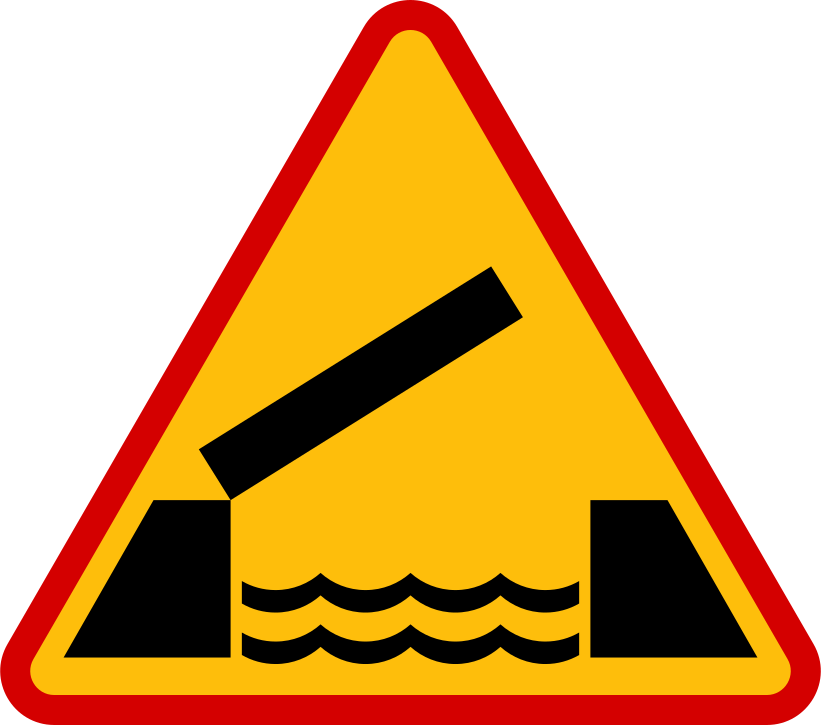
The A-13 - Movable Bridge road sign may also be known by these alternative names or terms.
The A-13 - Movable Bridge road sign is part of the Warning Signs (A) category, which groups together signs with similar rules and functions.
Comparing adjacent warning signs, like the Movable Bridge (A-13) with other hazard signs, sharpens your theory test revision and sign recognition skills. Effective traffic sign comparison helps prevent confusion and ensures you recall correct meanings during your exam.
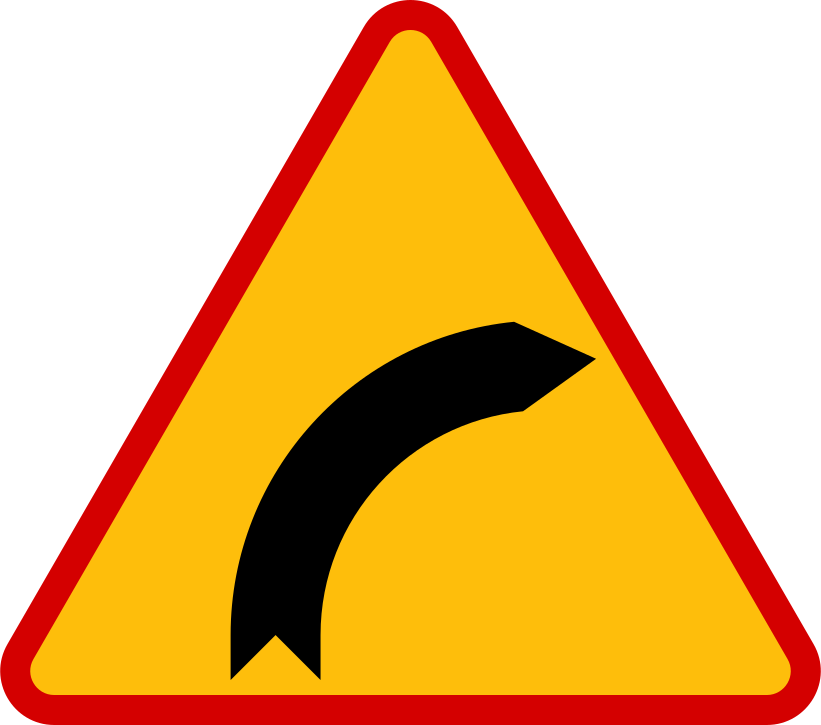
Watch Out for Dangerous Bends to the Right with the A-1 Sign
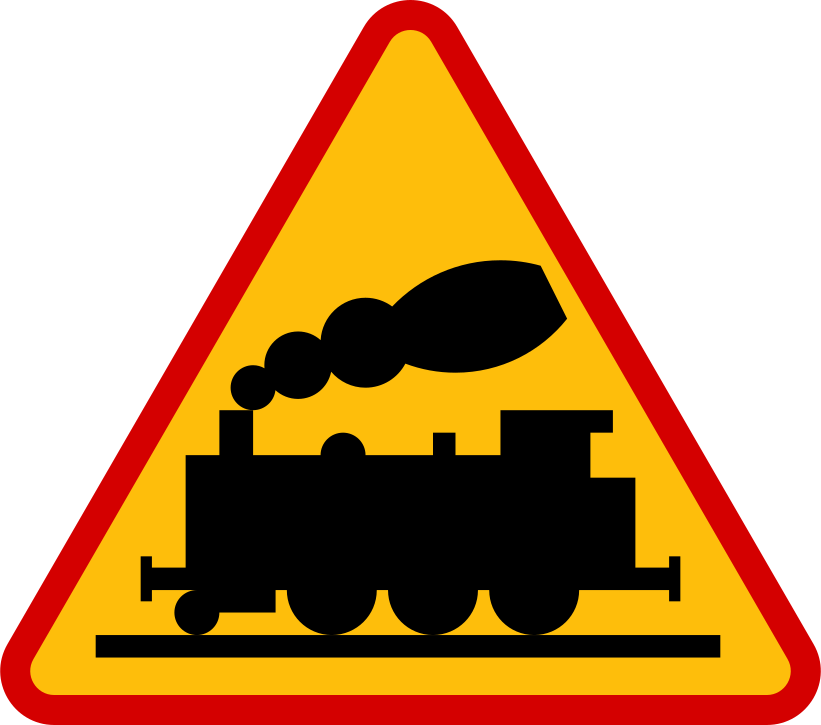
Beware of Ungated Railway Crossings with the A-10 Sign!
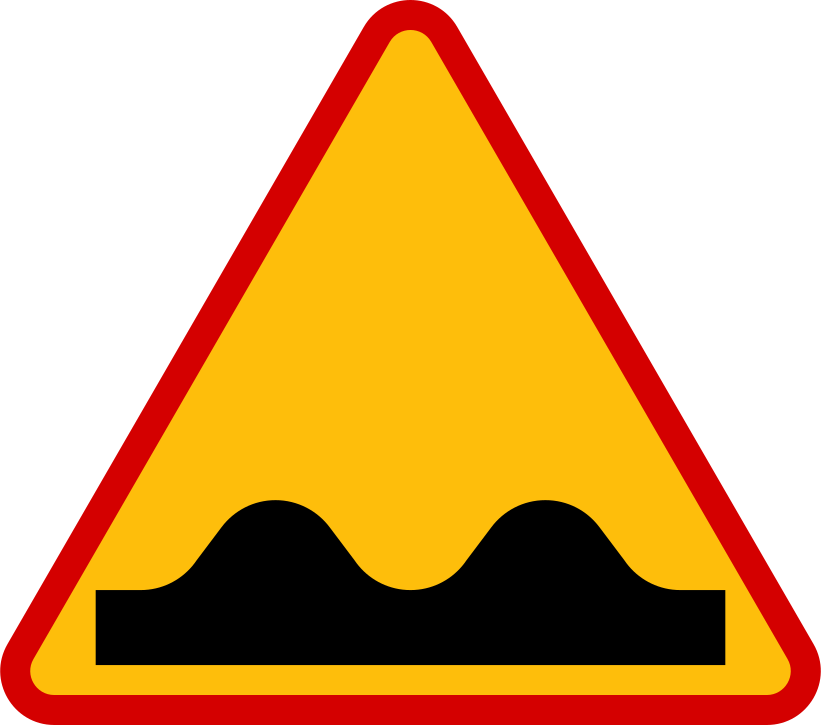
Warning: Prepare for an Uneven Road Surface Ahead!
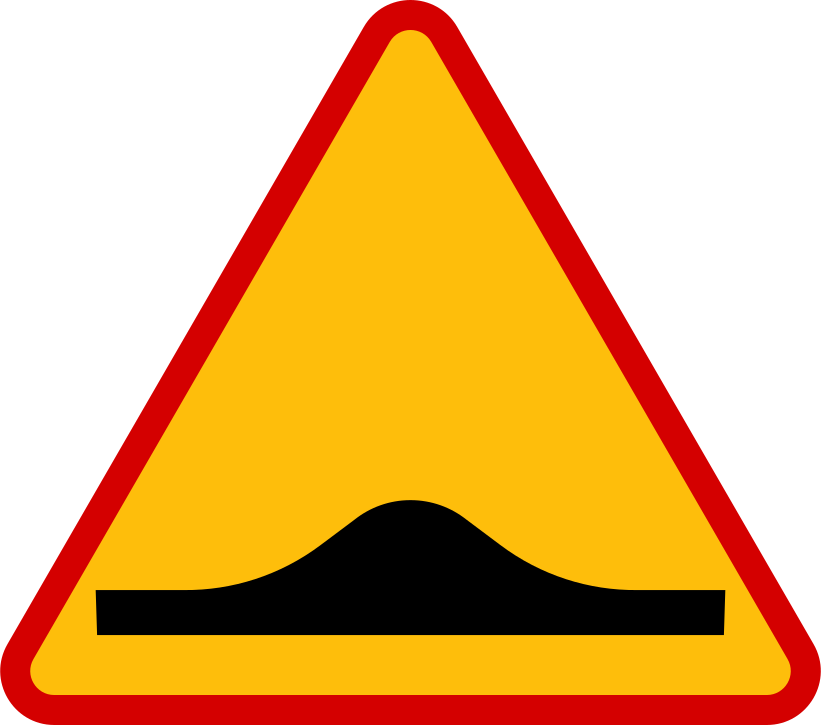
The A-11a Speed Bump sign warns you to significantly reduce your speed.
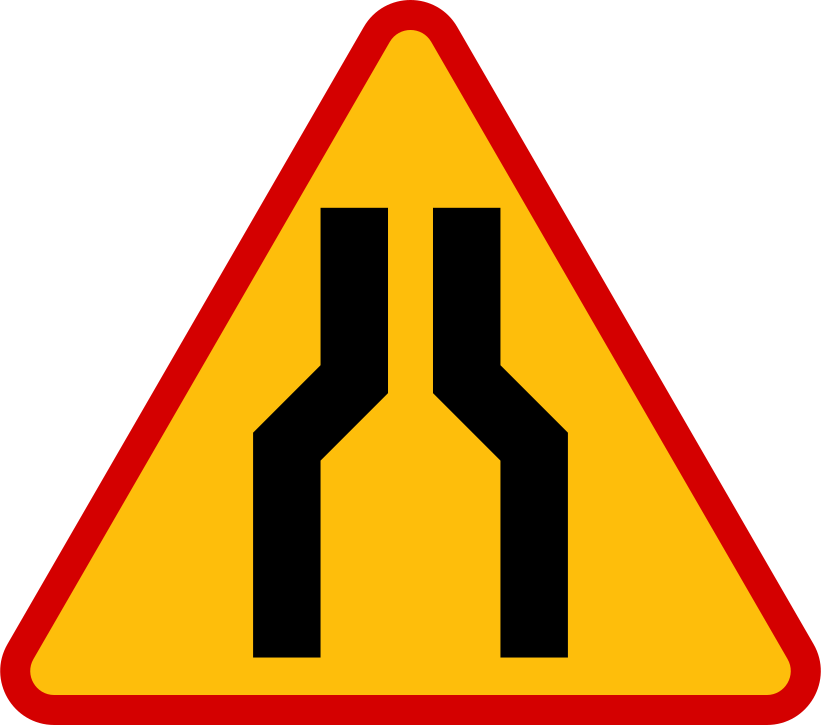
Prepare for Road Narrows on Both Sides with the A-12a Warning Sign
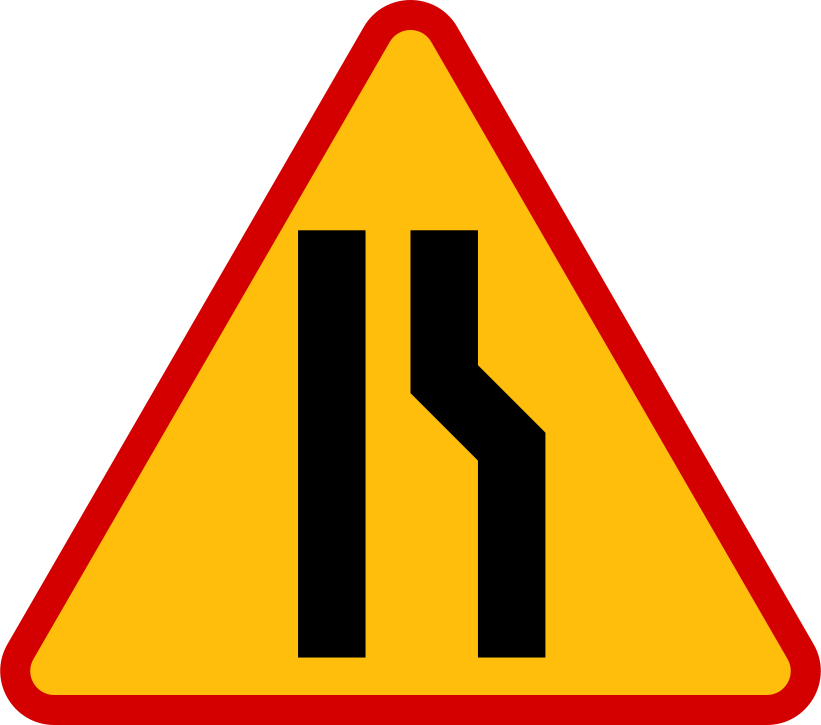
A-12b: Road Narrows Ahead on the Right – Prepare to Merge Left
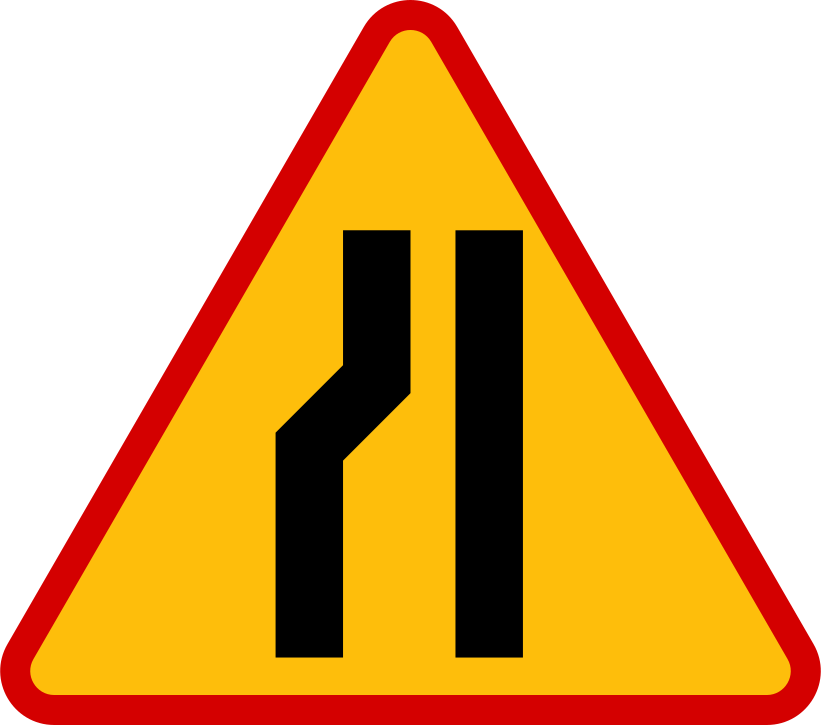
Warning: The Road Narrows Ahead on the Left!
Deepen your understanding of specific road signs by reviewing official Polish traffic rules and associated real-world driving scenarios. These expert-led resources help you bridge the gap between visual recognition and practical exam application.
Don't Be a Road Block: Master Minimum Speeds and Smooth Traffic Flow for Your Polish Exam!
Learn how higher speed limits outside Polish built-up areas must be balanced with awareness of constant hazards. This article delves into risks like poor visibility due to inadequate lighting and unpredictable road conditions, emphasizing that actual driving circumstances, not just posted signs, determine a safe speed. Mastering this interplay is essential for both passing your theory exam and ensuring your safety on Polish roads.
Even a Second Can Be Fatal: Understand Microsleep to Drive Safely in Poland.
Every vehicle registered in Poland must have valid third-party liability insurance (OC) at all times, regardless of whether the car is driven or parked in a private garage. This guide clarifies the automated enforcement process managed by the Insurance Guarantee Fund and the substantial financial risks associated with even a single-day lapse in coverage. By mastering these administrative requirements, you will be prepared to handle vehicle ownership duties confidently and avoid avoidable legal penalties.
The A-12a sign is used when the width of the road decreases by more than 0.2 meters on each side and the resulting passage is less than 5.5 meters wide. This often happens at bridges, tunnels, or older sections of road. It requires drivers to be careful about their vehicle's width and to be prepared to yield to larger oncoming vehicles like trucks or buses.
The F-12 sign is used to guide through-traffic (transit) away from city centers or sensitive areas. It features a symbol of a specific vehicle (usually a truck) and an arrow. By following this sign, long-distance drivers can stay on roads designed for heavy traffic, avoiding narrow streets or residential zones. This sign is an advance warning placed before the junction where the turn must be made.
After reviewing the full list of Polish road signs, explore specific sign categories for in-depth understanding. Challenge your knowledge with practice questions focused on sign recognition and interpretation to solidify your preparation for the driving theory exam.
Browse All Polish Road Signs