
The A-6e road sign is a crucial warning sign that alerts you to a junction where a one-way road will merge into your current path from the left. This sign is vital because traffic merging from the left is less common and can be harder to spot than from the right. When you see this sign, especially on complex interchanges or where routes converge, be extra vigilant and prepared to adjust your speed or lane to accommodate merging vehicles safely. Understanding this sign is key for safe navigation and succeeding in your Polish theory driving test.
Master the 'One-Way Inflow from the Left' sign (A-6e) crucial for Polish theory test revision, as it signals merging traffic from an unexpected direction. This essential road sign explanation prepares you for nuanced road situations and enhances your overall driving knowledge.
This is a rarer sign (A-6e) indicating that traffic will be merging from the left-hand side. It is found in complex road layouts or where two major routes converge. Because drivers typically expect merging traffic from the right, this sign is vital for situational awareness, as merging from the left can be more difficult for both parties due to visibility and standard road conventions.
Warns of a junction where a one-way road merges from the left, usually via an acceleration lane.
Get clear, practical answers to the most common questions about the A-6e - One-way Inflow from the Left road sign. Learn how the sign works, what rules it represents, and how it affects real driving situations. This FAQ strengthens your understanding and supports accurate decision making for the Polish driving theory exam in Poland.
The A-6e sign warns you that a one-way road will be merging into your lane from the left side. This often happens on motorways or in complex junctions and requires you to be aware of vehicles entering your path from an unexpected direction.
When you see the A-6e sign, be prepared for vehicles to merge from your left. It's advisable to check your mirrors and blind spot on the left. If possible and safe to do so, consider moving to a center or right lane to give merging traffic space and make it easier for them to join.
Most drivers are accustomed to traffic merging from the right. Merging from the left can be more challenging due to visibility limitations and the natural flow of traffic, making it essential for drivers on the main road to be extra cautious and aware of vehicles entering from that side.
Yes, while the sign doesn't directly prohibit actions, it implies that you should not stay rigidly in the left lane if traffic is trying to merge. Avoid sudden steering movements. Always signal and check mirrors before any lane changes, and be defensively aware of the merging traffic, even if they are supposed to yield.
A common trap is assuming merging traffic will always come from the right. The A-6e sign specifically addresses this by warning of a left-side merge. Learners might also forget to check their left blind spot or fail to anticipate the need to adjust their speed or position to assist merging vehicles.
Yes, the A-6e sign often appears alongside yield signs (like the 'Give Way' sign) that the merging traffic must obey. It's crucial to understand that while the merging traffic has a duty to yield, your primary focus should be on safety and anticipating their actions, especially given the unexpected direction of the merge.
A clear reference image of the A-6e - One-way Inflow from the Left road sign used in Poland.
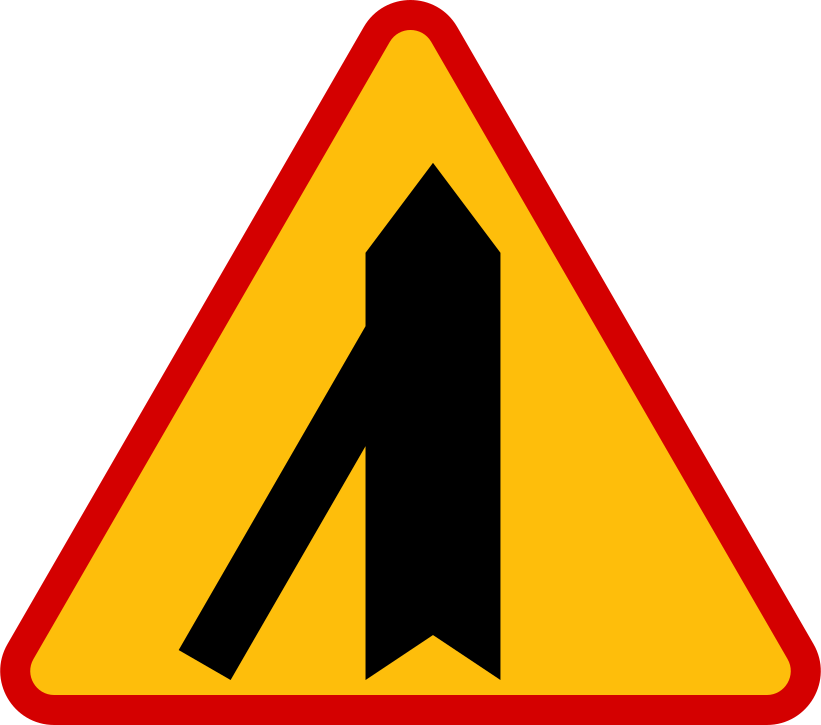
The A-6e - One-way Inflow from the Left road sign may also be known by these alternative names or terms.
The A-6e - One-way Inflow from the Left road sign is part of the Warning Signs (A) category, which groups together signs with similar rules and functions.
Master similar road signs by comparing them side-by-side to improve your theory test revision. Understanding subtle differences aids sign recognition and reduces errors in Poland's complex traffic situations.
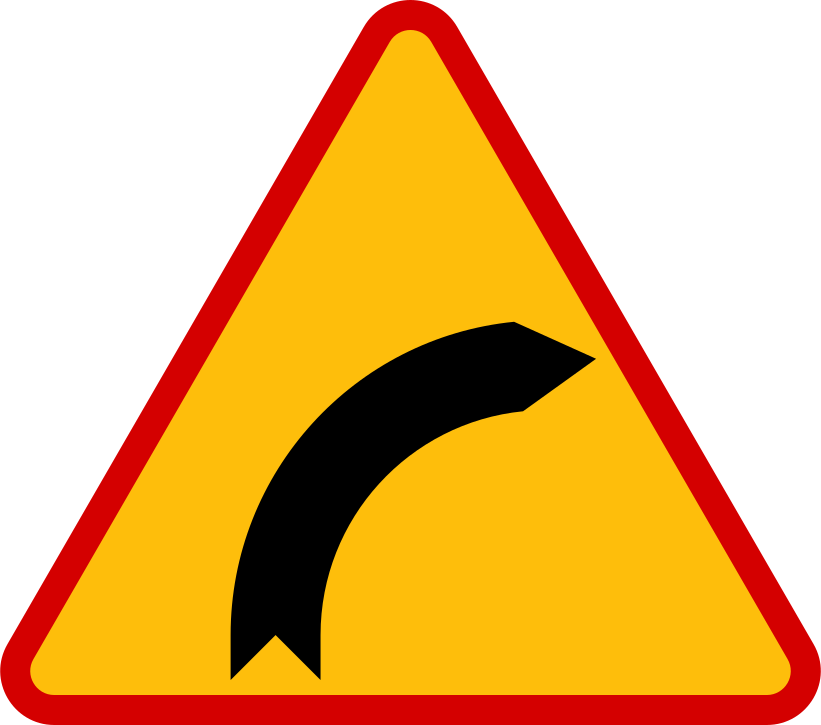
Watch Out for Dangerous Bends to the Right with the A-1 Sign
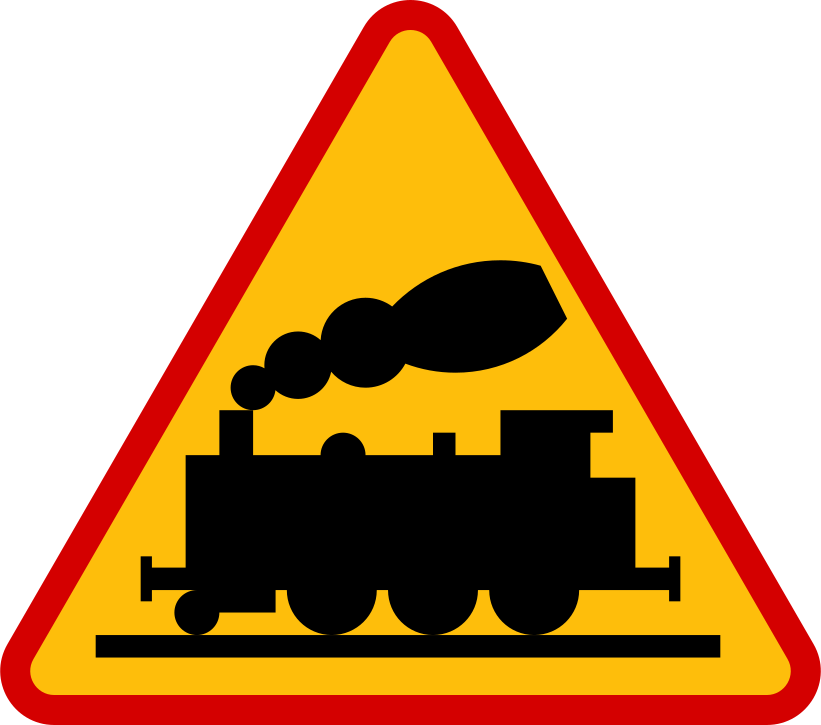
Beware of Ungated Railway Crossings with the A-10 Sign!
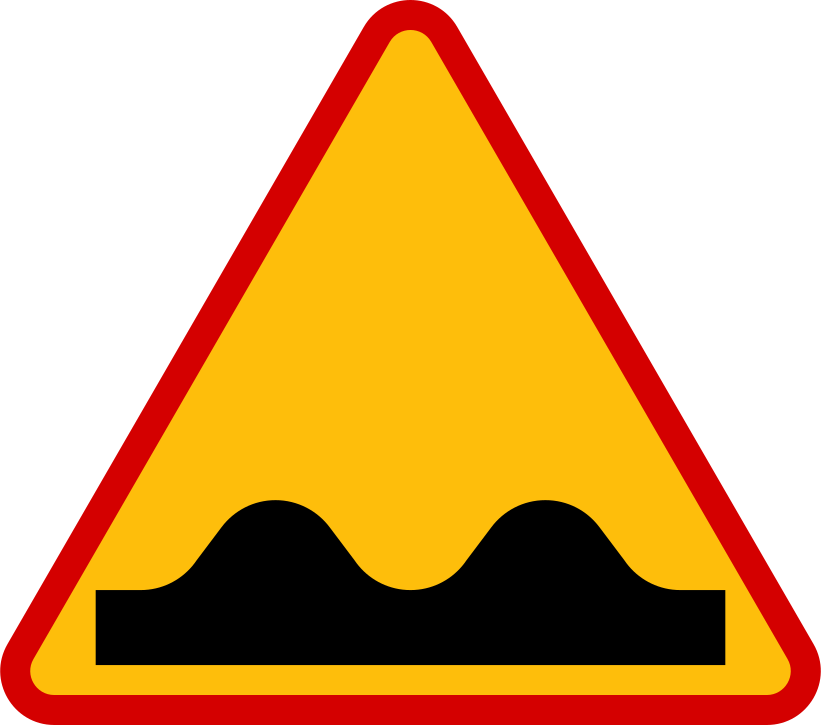
Warning: Prepare for an Uneven Road Surface Ahead!
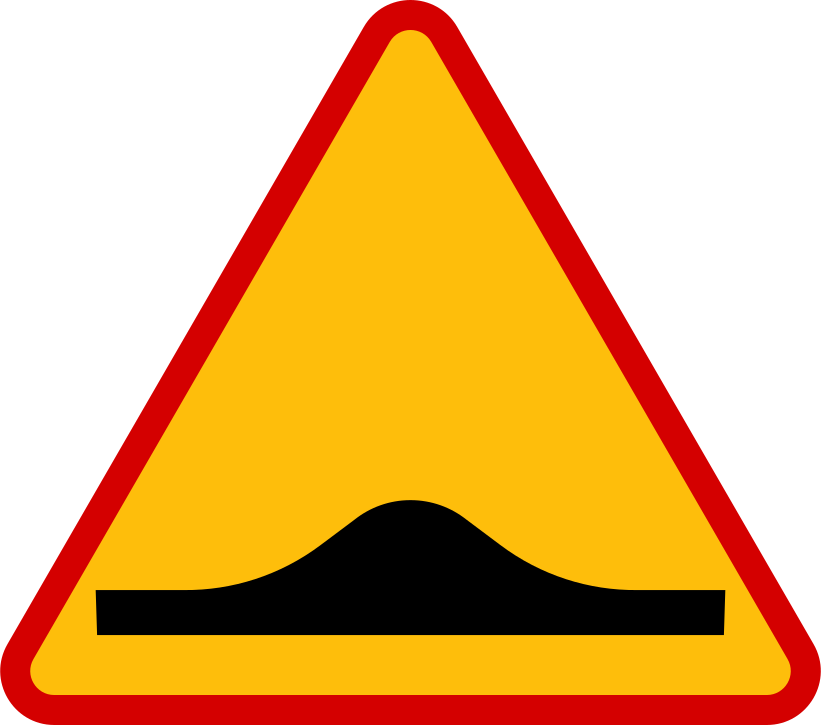
The A-11a Speed Bump sign warns you to significantly reduce your speed.
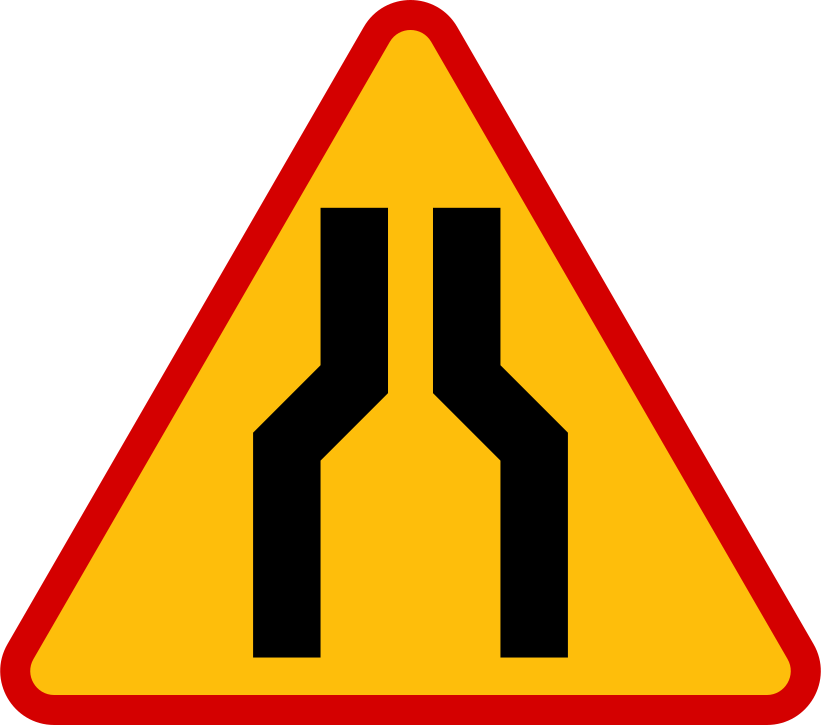
Prepare for Road Narrows on Both Sides with the A-12a Warning Sign
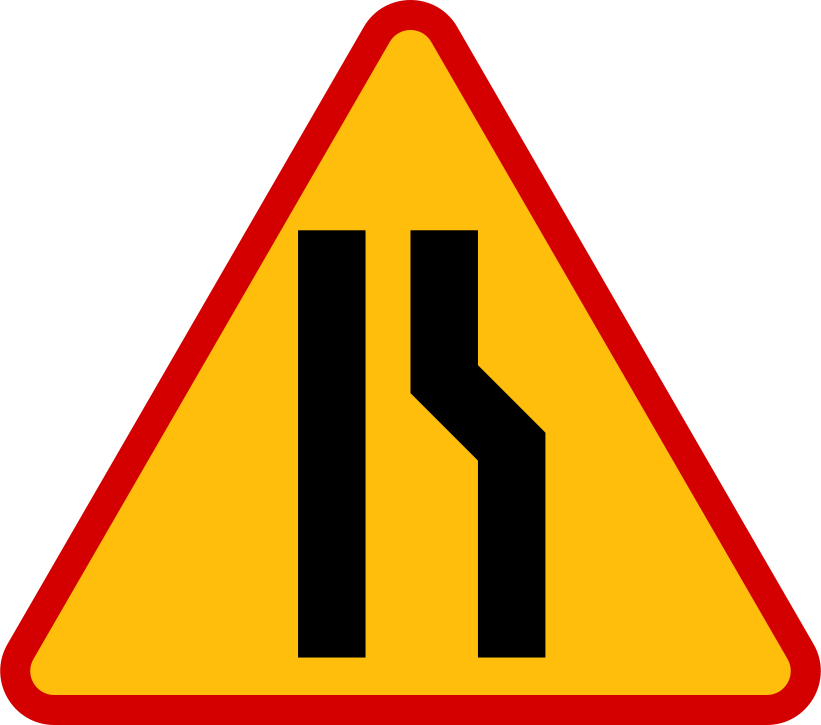
A-12b: Road Narrows Ahead on the Right – Prepare to Merge Left
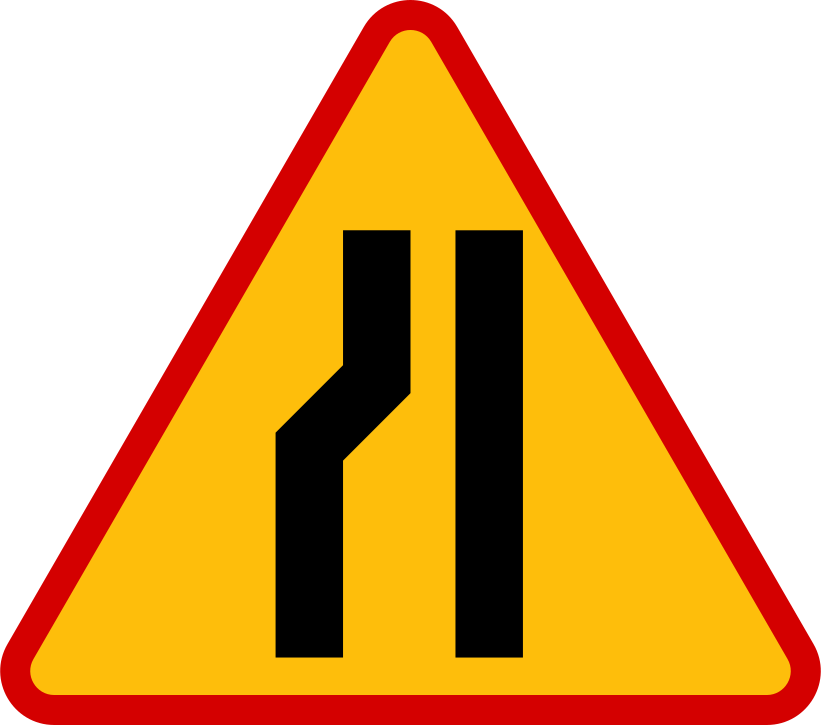
Warning: The Road Narrows Ahead on the Left!
Prepare to stop for a Movable Bridge ahead!
Deepen your understanding of specific road signs by reviewing official Polish traffic rules and associated real-world driving scenarios. These expert-led resources help you bridge the gap between visual recognition and practical exam application.
Even a Second Can Be Fatal: Understand Microsleep to Drive Safely in Poland.
Don't Be a Road Block: Master Minimum Speeds and Smooth Traffic Flow for Your Polish Exam!
When selling a car in Poland, you have specific legal duties regarding insurance and registration that must be met promptly. This article clarifies these seller obligations, including the crucial 14-day window to inform your insurer and the 30-day deadline to notify the relevant communication department, ensuring a smooth and compliant transfer of ownership for both parties.
Navigating Polish roads requires a precise understanding of rules for overtaking slow-moving vehicles, especially on continuous solid lines. This article will detail when such maneuvers are legal, the legal obligations of tractor drivers, and the consequences of violations according to Polish traffic law. Mastering this topic is essential for safe driving and succeeding in your theory exam.
The A-6a sign indicates that the driver is traveling on the main road (the thick vertical line) and will pass a junction with minor roads on both the left and right (the thin horizontal line). While you have the legal right of way, the sign serves as a warning to be alert for drivers on the side roads who might fail to see you or ignore their duty to yield.
The A-28 sign is placed on roads that have recently been resurfaced with 'chip seal' or near quarries and gravel pits. Loose stones reduce the grip of your tires and can be thrown at high speed by other vehicles, potentially cracking your windshield or hitting pedestrians. This sign is a prompt to slow down to protect both your vehicle and others.
After reviewing the full list of Polish road signs, explore specific sign categories for in-depth understanding. Challenge your knowledge with practice questions focused on sign recognition and interpretation to solidify your preparation for the driving theory exam.
Browse All Polish Road Signs