
The A-3 road sign warns you about a series of at least two dangerous curves, starting with the first one turning to the right. This sign is crucial for understanding road hazards, especially when curves follow each other closely, with the distance between them being less than 300 meters. Always adapt your speed and be ready for the direction of the road to change suddenly; do not assume the road straightens out after the initial right turn. Understanding this sign is vital for safe driving and passing your Polish theory test.
The A-3 road sign warns of dangerous double bends, first turning right, demanding immediate speed and steering adjustments. Accurate sign interpretation prevents loss of control on Polish roads. Mastering this warning sign meaning ensures safe navigation through complex curves and is key for driving theory test success.
This sign is used when multiple curves are located close to one another—specifically when the distance between the end of the first and the start of the second is less than 300 meters. It warns the driver that passing the first curve is not the end of the danger. The setup requires a rhythm of driving that accounts for shifting weight as the car moves from a right turn to a left turn.
Indicates a series of two or more dangerous curves, where the first one turns to the right.
Get clear, practical answers to the most common questions about the A-3 - Double Bend - First to the Right road sign. Learn how the sign works, what rules it represents, and how it affects real driving situations. This FAQ strengthens your understanding and supports accurate decision making for the Polish driving theory exam in Poland.
The A-3 sign indicates a sequence of two or more dangerous bends, where the first bend directs you to the right. It warns drivers that the road ahead is not straight and requires careful navigation through successive curves.
Upon seeing the A-3 sign, you must reduce your speed significantly and prepare for rapid changes in direction. Focus on maintaining a stable rhythm as you transition from the right bend to the subsequent left bend. It is also advisable to avoid overtaking until you are safely past the entire series of bends indicated.
Yes, the A-3 sign can be accompanied by supplementary plates. A T-4 plate might show the total number of bends, while a T-2 plate can indicate the total length of the winding section, sometimes extending for several kilometres. These plates provide more context about the upcoming road conditions.
A common trap is assuming the road straightens after the first right bend. Drivers might accelerate too soon between curves or not anticipate the immediate follow-up left bend. It's essential to remember that the 'danger' described by the sign persists until the end of the series of bends.
Yes, within safe limits and without crossing lane markings, you can use the width of your lane to make the transition between opposing curves smoother and safer. This technique helps maintain a steady pace and control through winding sections.
If you meet a large vehicle, such as a bus or truck, on a narrow section indicated by the A-3 sign, be prepared to slow down considerably or even stop. These situations require extra caution due to limited space and visibility in the curves.
A clear reference image of the A-3 - Double Bend - First to the Right road sign used in Poland.
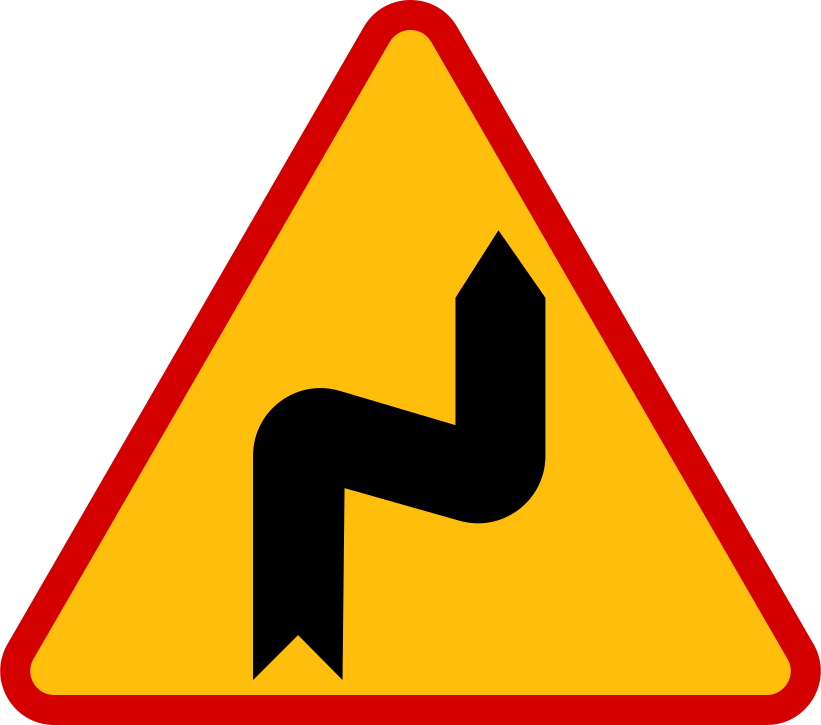
The A-3 - Double Bend - First to the Right road sign may also be known by these alternative names or terms.
The A-3 - Double Bend - First to the Right road sign is part of the Warning Signs (A) category, which groups together signs with similar rules and functions.
Comparing similar road signs, like the 'Double Bend - First to the Right,' helps solidify your understanding and reduces confusion. Practicing this type of traffic sign comparison is key for effective theory test revision and confident sign recognition on Polish roads.
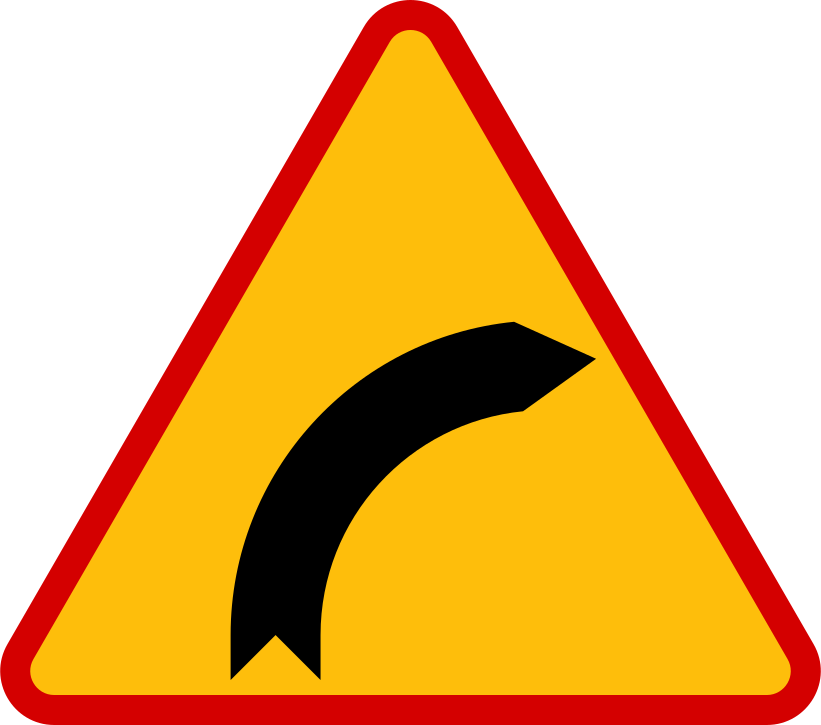
Watch Out for Dangerous Bends to the Right with the A-1 Sign
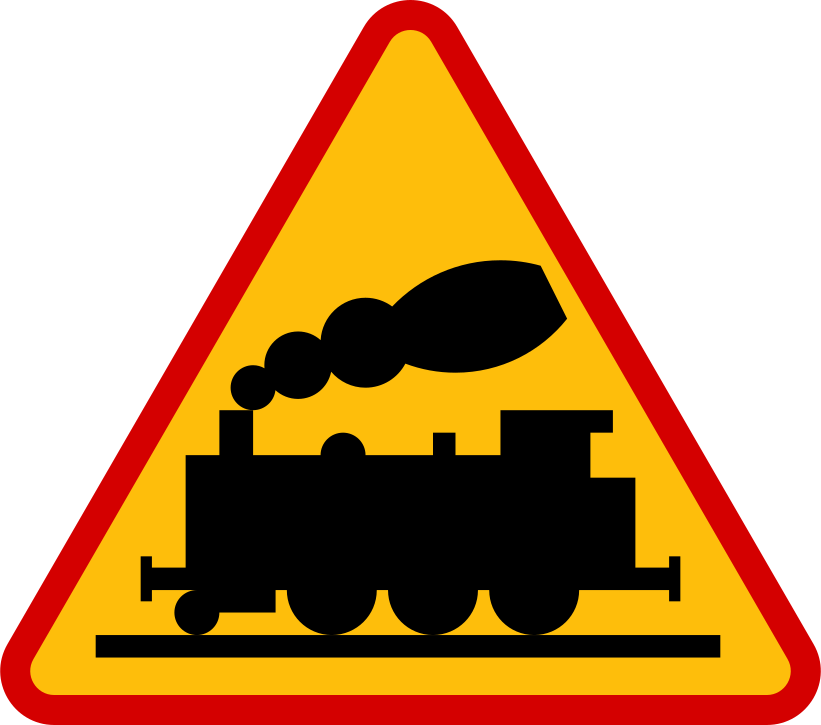
Beware of Ungated Railway Crossings with the A-10 Sign!
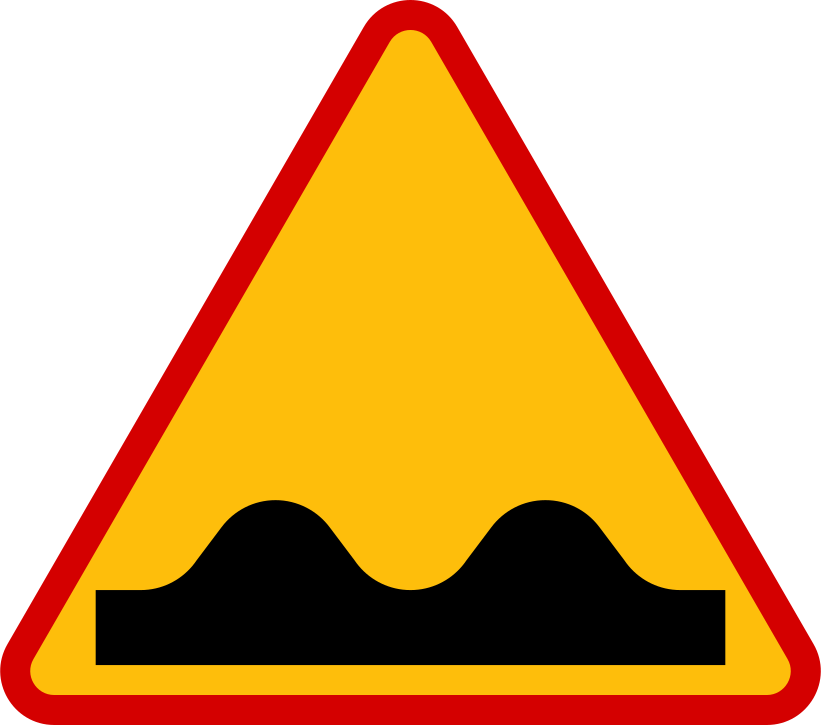
Warning: Prepare for an Uneven Road Surface Ahead!
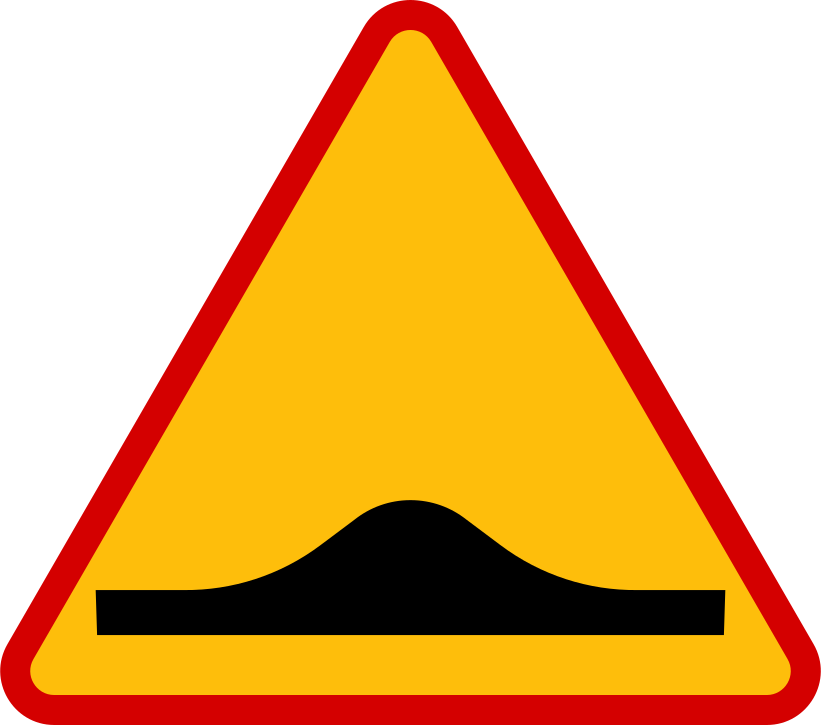
The A-11a Speed Bump sign warns you to significantly reduce your speed.
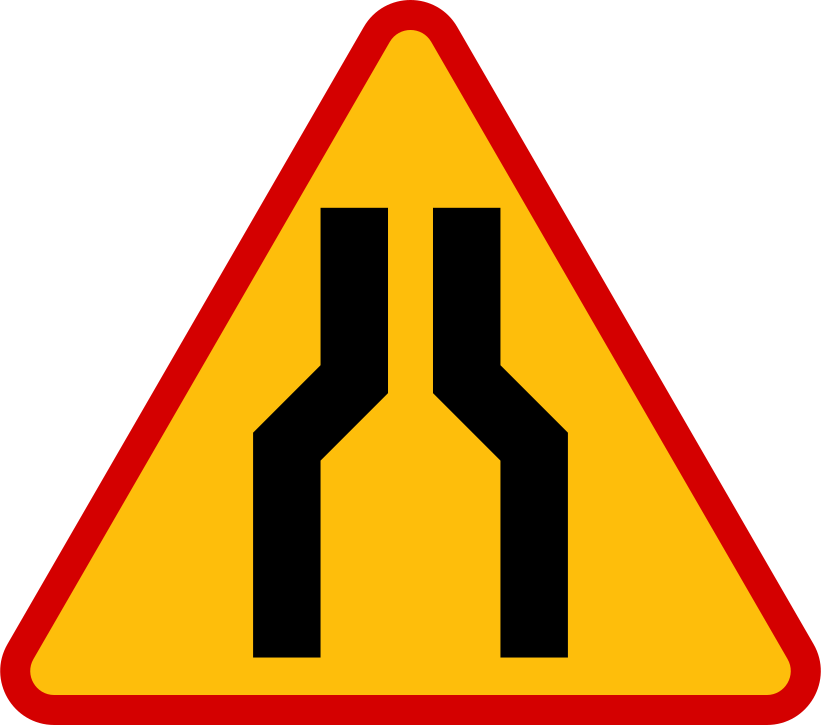
Prepare for Road Narrows on Both Sides with the A-12a Warning Sign
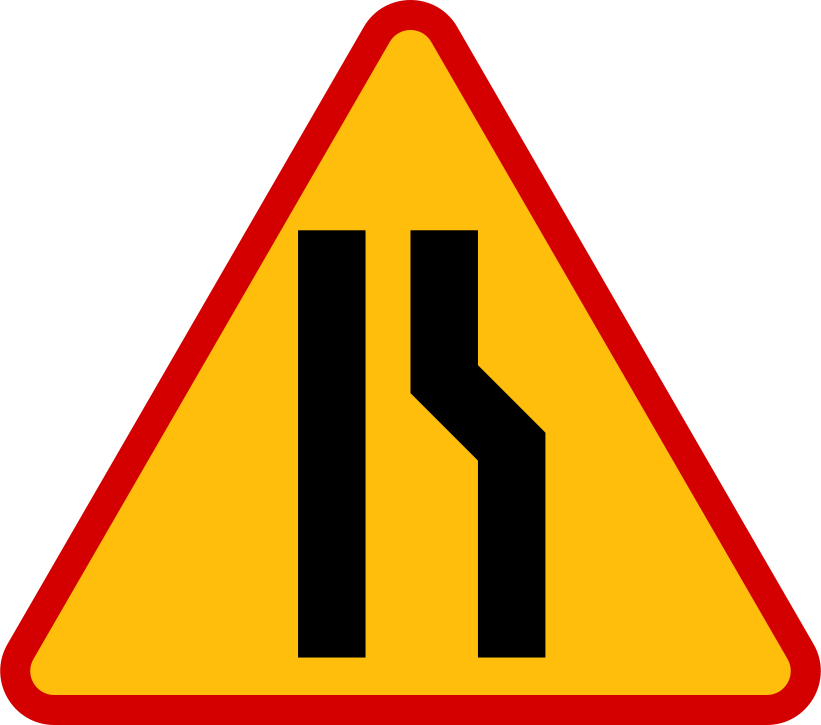
A-12b: Road Narrows Ahead on the Right – Prepare to Merge Left
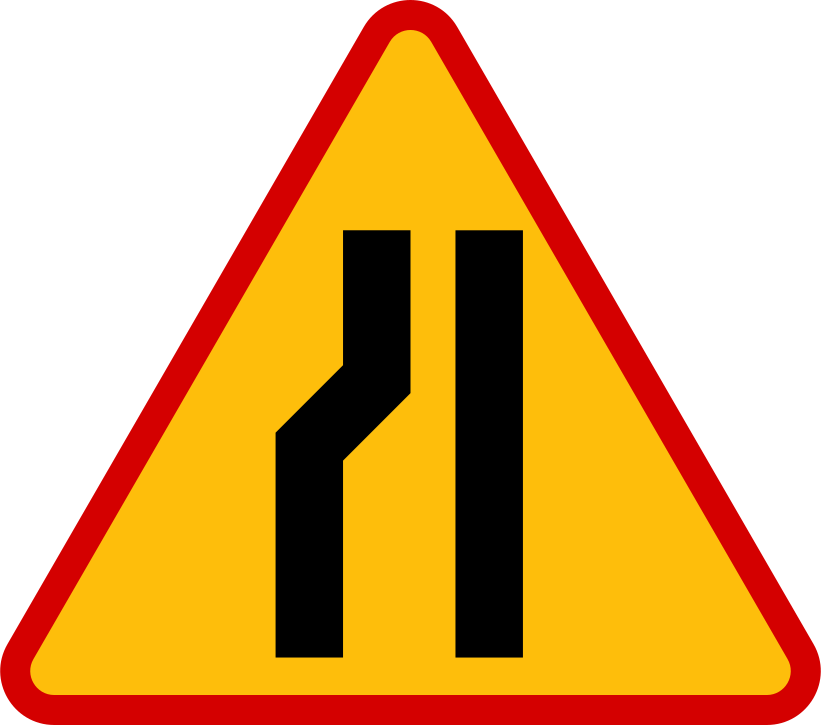
Warning: The Road Narrows Ahead on the Left!
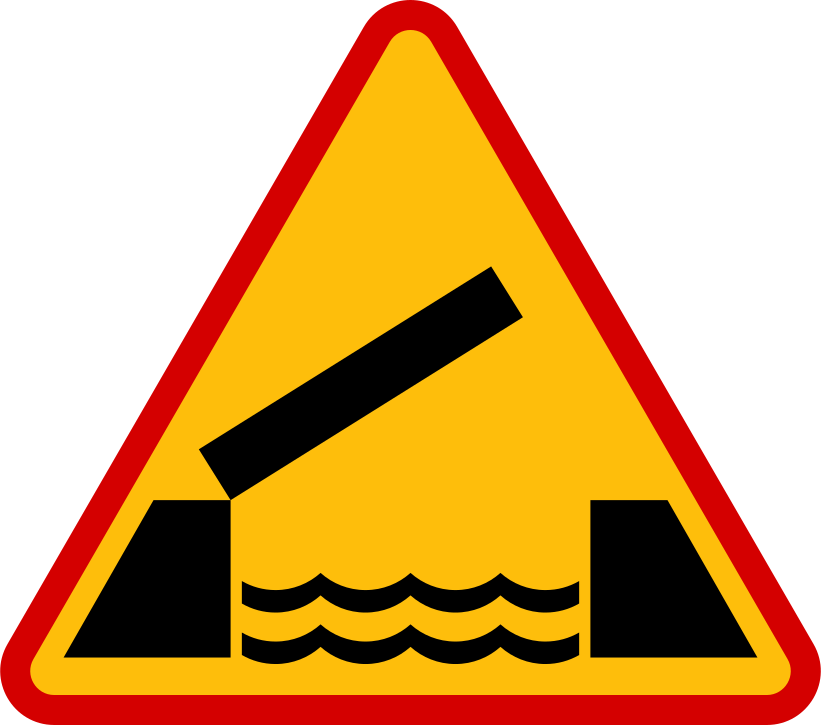
Prepare to stop for a Movable Bridge ahead!
Deepen your understanding of specific road signs by reviewing official Polish traffic rules and associated real-world driving scenarios. These expert-led resources help you bridge the gap between visual recognition and practical exam application.
When selling a car in Poland, you have specific legal duties regarding insurance and registration that must be met promptly. This article clarifies these seller obligations, including the crucial 14-day window to inform your insurer and the 30-day deadline to notify the relevant communication department, ensuring a smooth and compliant transfer of ownership for both parties.
Identifying the nature of fluid leaks under your car is a core competency for any responsible driver and a key topic in the Polish driving theory curriculum. This guide teaches you how to use simple physical markers—such as color, smell, and location—to assess potential vehicle malfunctions. Mastering these basic maintenance checks helps you prevent engine failure and ensures you are better prepared for the technical questions on your driving exam.
Master Your Rights and Obligations During a Polish Roadside Inspection
Don't Be a Road Block: Master Minimum Speeds and Smooth Traffic Flow for Your Polish Exam!
The T-34 plate features a symbol of a signal transmitting between a car and a gantry. It indicates that the road is part of the 'e-TOLL' network. There are no physical gates; instead, cameras and sensors record your passage. This is mandatory for all vehicles over 3.5 tonnes and buses. Passenger cars on certain state-run motorways also use this system via the e-TOLL app instead of buying paper tickets.
The P-6 line is a broken line where the white dashes are significantly longer than the gaps between them. It serves as a transition between a standard dashed line (P-1) and a solid line (P-2). When a driver sees the dashes getting longer, it is a clear warning to finish any overtaking maneuvers and return to their lane immediately because the road is about to become restricted or dangerous.
After reviewing the full list of Polish road signs, explore specific sign categories for in-depth understanding. Challenge your knowledge with practice questions focused on sign recognition and interpretation to solidify your preparation for the driving theory exam.
Browse All Polish Road Signs