
The B-39 'Limited Waiting Zone' sign is a prohibition sign used in Poland to indicate that parking is restricted on all roads within the designated area. Unlike signs placed on individual streets, this sign acts as a blanket restriction covering an entire zone until you encounter the 'End of Limited Waiting Zone' sign (B-40). It's crucial to observe any time limits or specific hours mentioned on the sign, as violations can lead to penalties. Remember, this sign applies to all public roads within the zone, not just main thoroughfares.
This sign marks the start of a zone where parking is restricted, often with specific time limits detailed on supplementary plates. Mastering its meaning is crucial for your Polish driving theory test revision and safe urban navigation.
The B-39 sign creates a 'blanket' parking restriction for an entire neighborhood. Instead of placing B-35 signs on every single block, this one sign at the entrance covers all streets until you see the 'End' sign (B-40). It often specifies a time limit (e.g., 'max 30 min') or specific hours of the day when parking is banned.
Indicates entry into a zone where parking is restricted on all roads within the area.
Get clear, practical answers to the most common questions about the B-39 - Limited Waiting Zone road sign. Learn how the sign works, what rules it represents, and how it affects real driving situations. This FAQ strengthens your understanding and supports accurate decision making for the Polish driving theory exam in Poland.
The B-39 sign generally prohibits parking your vehicle on any public road within the marked zone. While the basic rule often implies a very short stopping time (like 1 minute) for essential tasks, any extended stop that could be considered parking is forbidden. Always check for specific time limits indicated on supplementary plates.
Yes, the B-39 sign does not apply to parking in officially designated parking bays marked with the 'P' (D-18) sign. Additionally, briefly stopping to load or unload passengers or goods within the generally allowed short stopping time (if not explicitly forbidden by a supplementary plate) is usually permitted. Operating public transport vehicles at designated stops is also an exception.
The B-39 'Limited Waiting Zone' sign is a broader prohibition. It designates an entire area or zone where parking is restricted, rather than just a single spot or street. You'll see this sign once at the entrance to the zone, and it applies to all streets within until you see the B-40 'End of Zone' sign. A 'No Parking' sign (B-35) typically applies to the specific stretch of road where it is placed.
A common trap is assuming the restriction only applies to main roads; the B-39 covers all public roads within the zone. Another trap is misunderstanding the time limit; it's not just about 'no parking' but often a very short waiting period (e.g., 1-3 minutes) unless specified otherwise. Learners may also forget that designated parking bays (D-18) are an exception. Pay close attention to any supplementary plates indicating hours or specific durations.
The B-39 sign itself often implies a very short stopping time, typically no more than 1 minute for essential tasks. However, supplementary plates frequently specify a maximum waiting time (e.g., 'max 15 min', 'max 30 min') or restricted hours (e.g., '8:00-18:00'). You must adhere to these limits. If no supplementary plate is present, assume only very brief stops for immediate passenger or good drop-off/pick-up are allowed.
A clear reference image of the B-39 - Limited Waiting Zone road sign used in Poland.
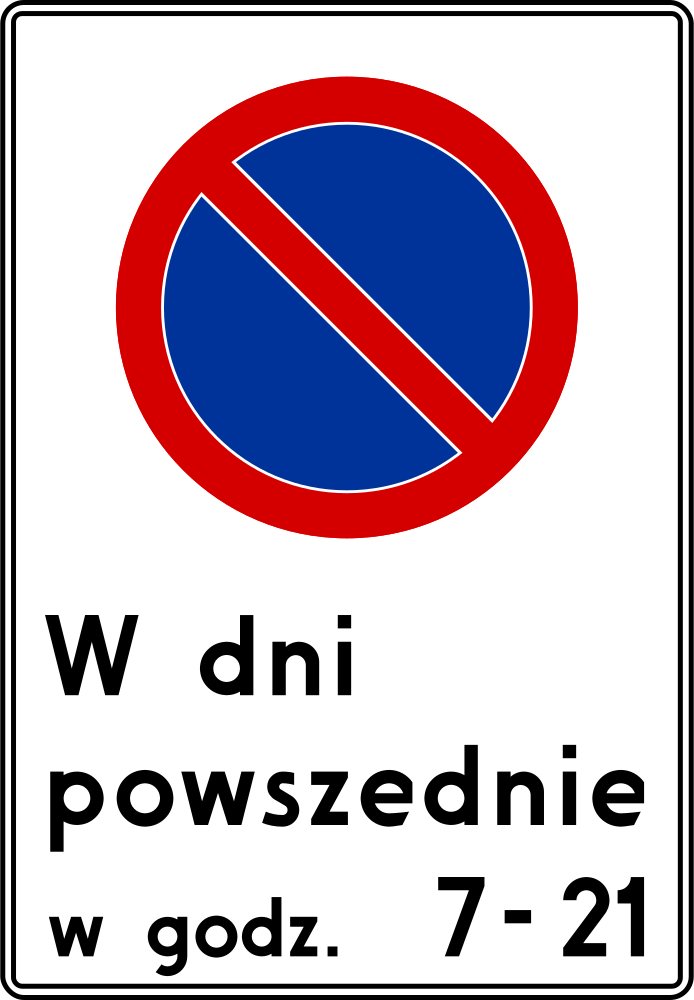
The B-39 - Limited Waiting Zone road sign may also be known by these alternative names or terms.
The B-39 - Limited Waiting Zone road sign is part of the Prohibitory Signs (B) category, which groups together signs with similar rules and functions.
Comparing 'Limited Waiting Zone' signs with similar prohibitory or advisory signs sharpens your sign recognition and reduces confusion. This focused theory test revision helps you avoid common mistakes and build confidence for your exam.

B-1 Sign: Road Closed to All Traffic in Both Directions
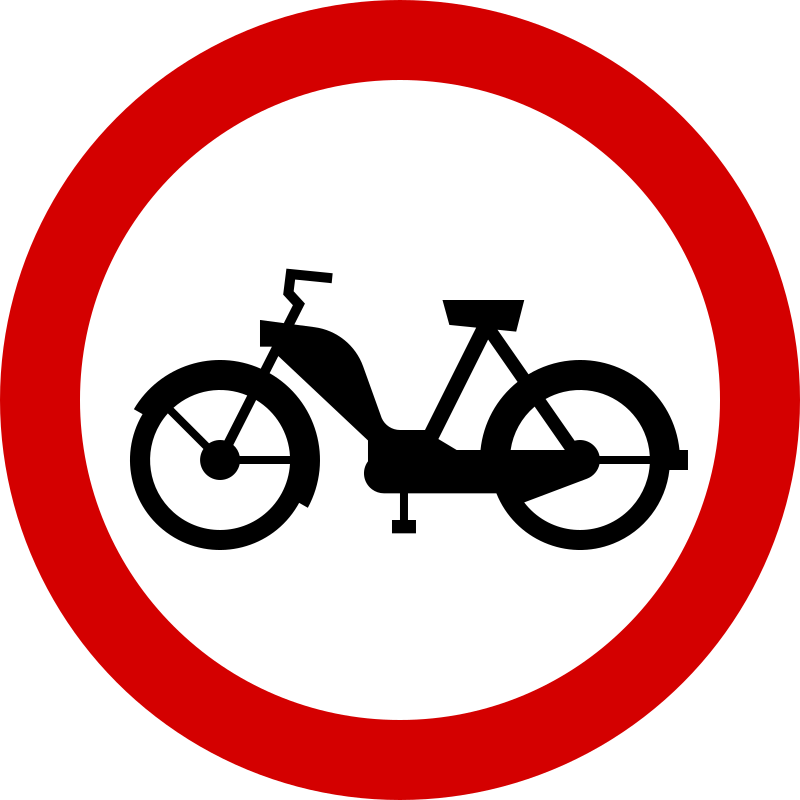
The B-10 'No Mopeds' sign prohibits entry for all mopeds past this point.
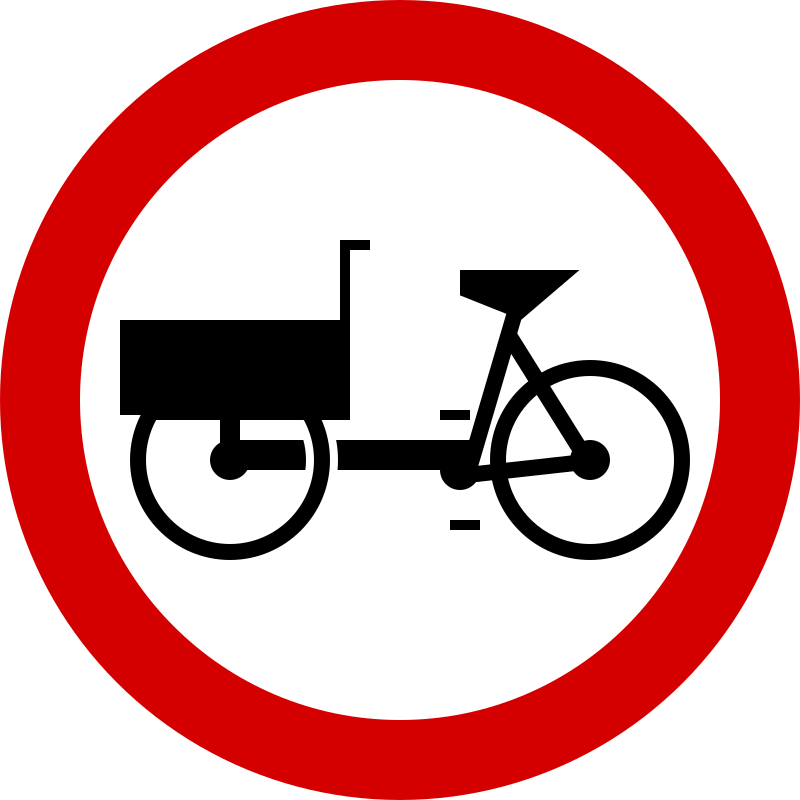
B-11: No Entry for Cycle Rickshaws and Multi-Track Carts
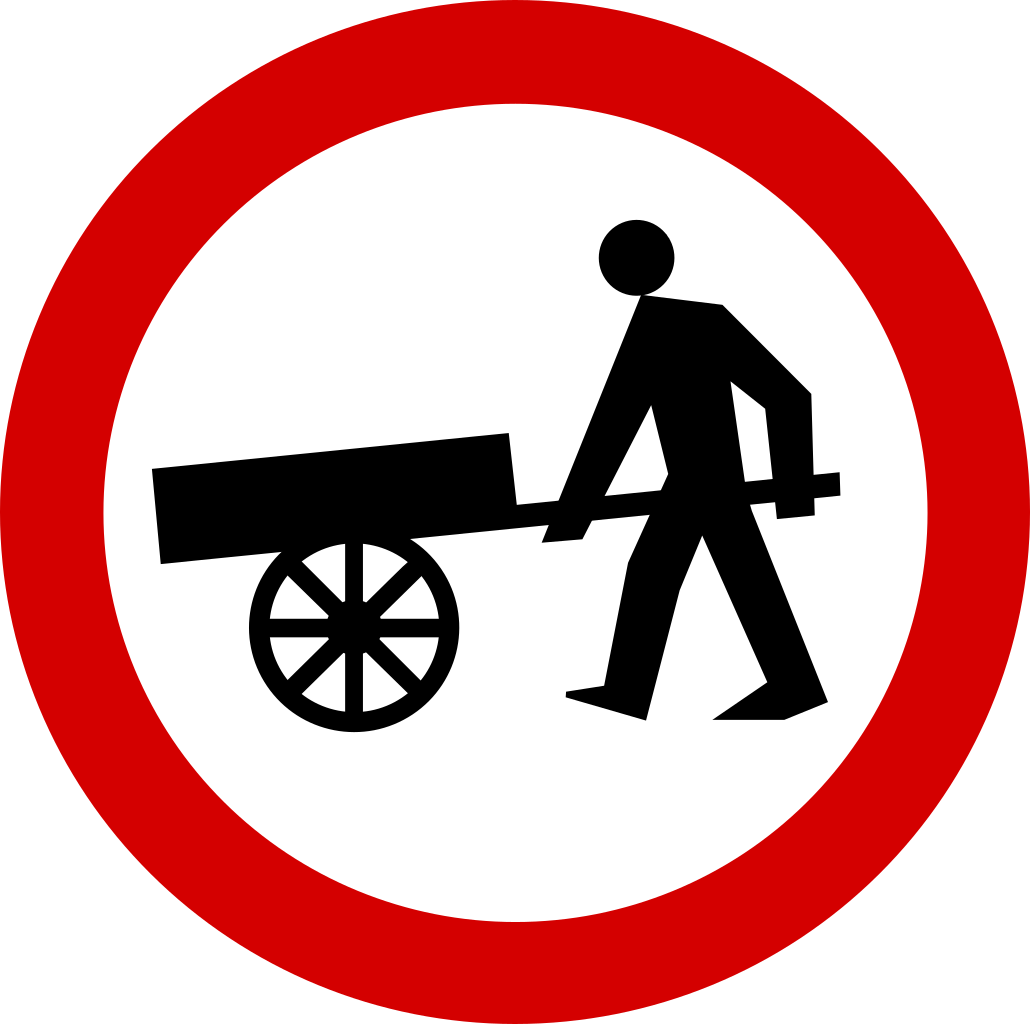
Understand the B-12 'No Handcarts' Road Sign
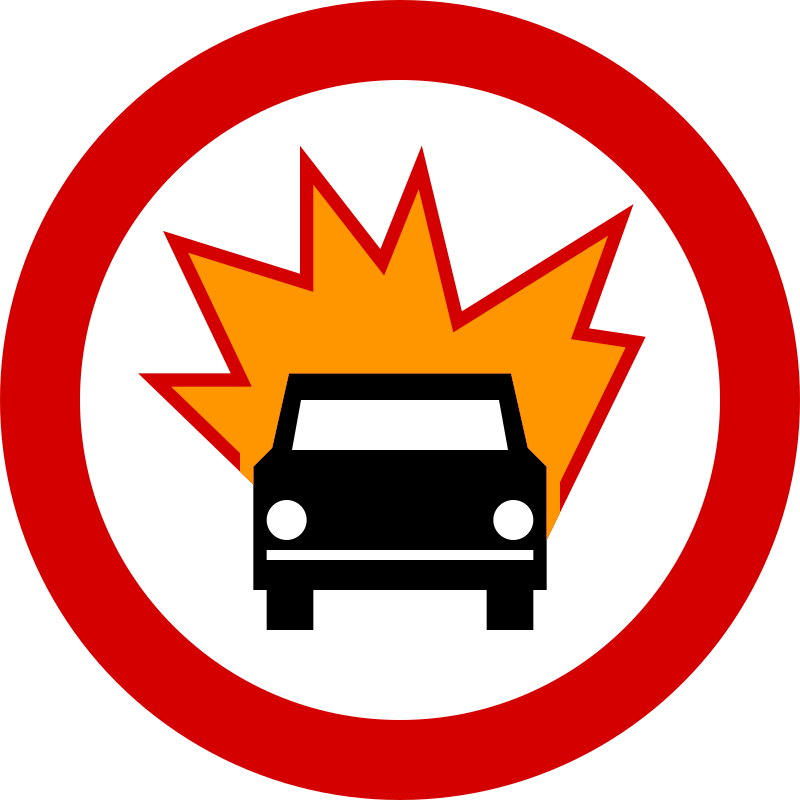
Understand the B-13 sign: No vehicles carrying explosives or flammable goods allowed.
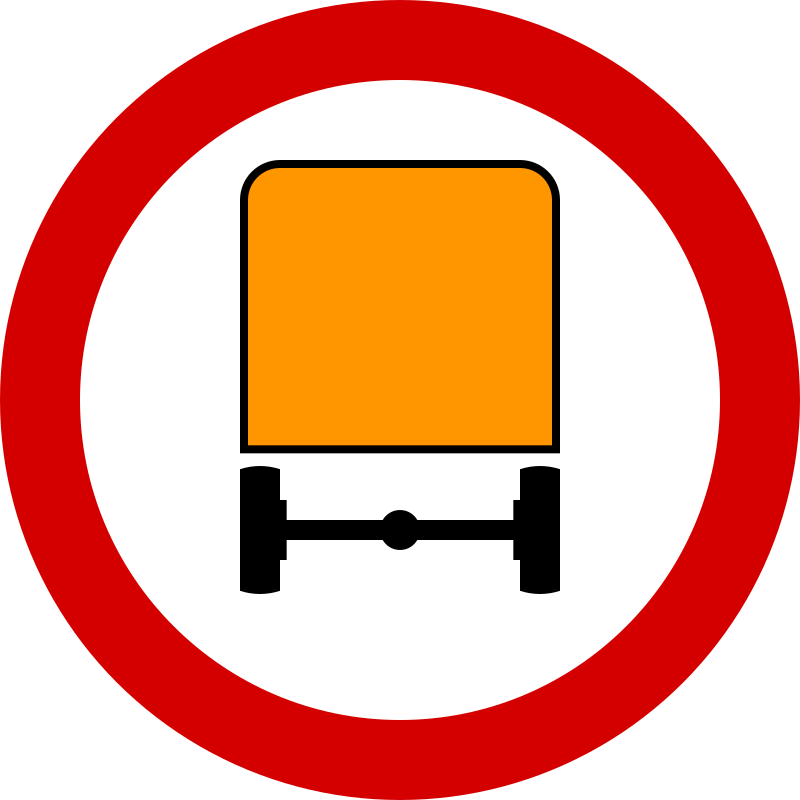
The B-13a sign means no vehicles carrying dangerous goods are allowed past this point.
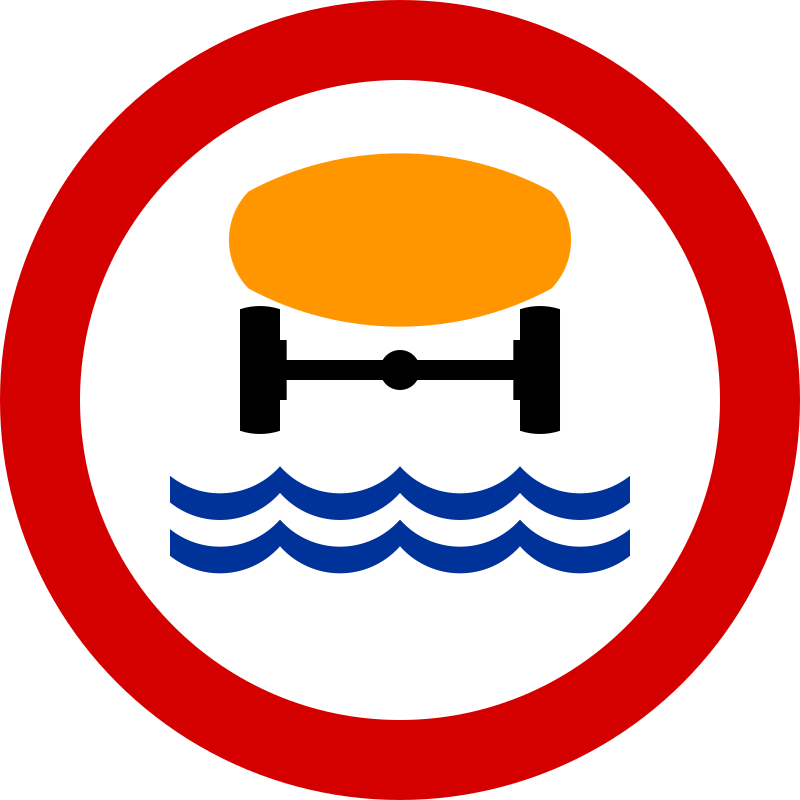
B-14 Sign: No Vehicles Carrying Water Contaminants
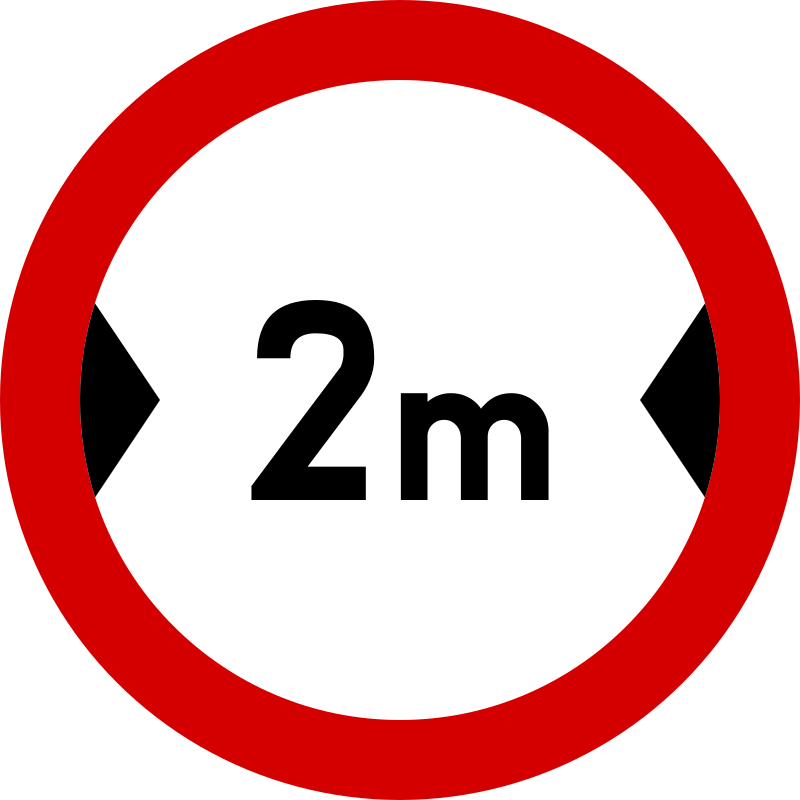
The B-15 sign prohibits vehicles wider than the specified limit from passing.
Deepen your understanding of specific road signs by reviewing official Polish traffic rules and associated real-world driving scenarios. These expert-led resources help you bridge the gap between visual recognition and practical exam application.
Navigating Polish intersections requires a clear understanding of priority rules, particularly the differing obligations imposed by the mandatory Stop sign (B-20) and the Yield sign (A-7). This article will break down the legal requirements for each sign, explaining precisely when and how you must act to ensure safety and compliance with Polish traffic law. Mastering these distinctions is vital for success in your driving theory exam and for safe driving.
This article provides a detailed explanation of how Polish traffic signs A-7 ('Ustąp Pierwszeństwa' - Yield), B-20 ('STOP'), and D-1 ('Droga z Pierwszeństwem' - Priority Road) dictate right-of-way at intersections. Understanding the nuances of these signs is a fundamental aspect of the Polish driving theory exam, and mastering them will significantly improve your preparedness for real-world driving scenarios.
Navigate Tram Intersections Like a Pro: Essential for Your Polish Driving Exam.
Master Polish Crossing Markings for a Safer Drive and Exam Success.
When a direct left turn is banned at an intersection (usually by a B-21 sign), the F-7 sign shows the legal detour maneuver. This often involves driving straight, turning right several times, or using a dedicated loop to cross the main road perpendicularly. It is a vital navigational aid in complex urban layouts where left turns are restricted to improve traffic flow on main arteries.
The B-43 sign is often used in residential 'Tempo 30' zones. Within this zone, every single street is governed by the speed shown on the sign. A key rule is that if the limit is 30 km/h or less, speed bumps or other physical traffic calming measures do not need to be individually marked with warning signs, as you are expected to be driving slowly enough to handle them.
After reviewing the full list of Polish road signs, explore specific sign categories for in-depth understanding. Challenge your knowledge with practice questions focused on sign recognition and interpretation to solidify your preparation for the driving theory exam.
Browse All Polish Road Signs