
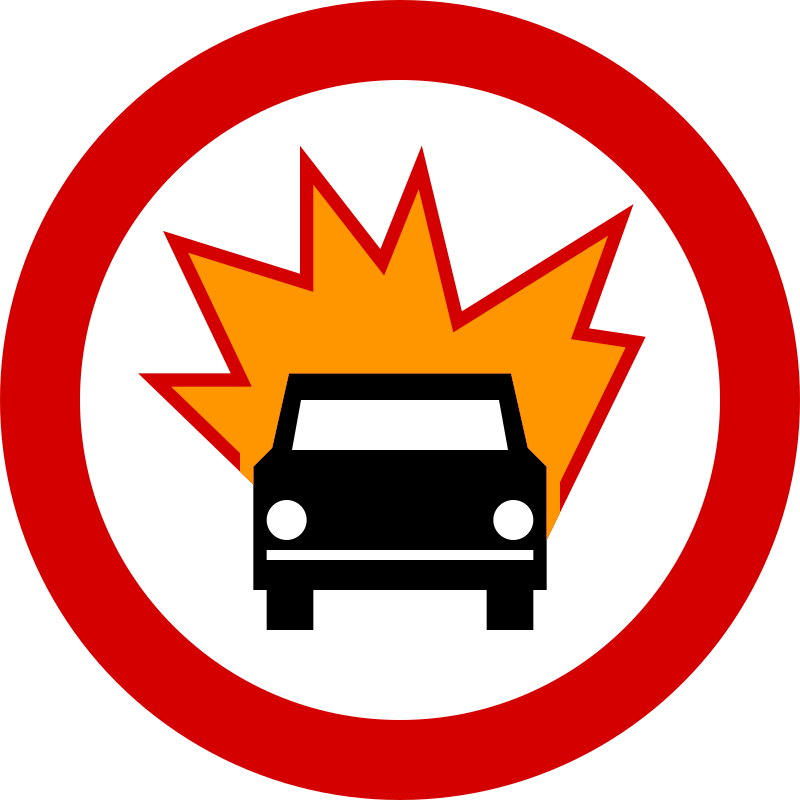
This 'No Vehicles Carrying Dangerous Goods' (B-13a) traffic sign is a prohibition sign indicating that vehicles transporting hazardous materials, which are required to display orange warning plates (under ADR regulations), are strictly forbidden from proceeding. This sign is crucial for safety, especially when placed near sensitive areas like tunnels, where specific additional restrictions may be detailed on a supplementary T-31 plate. Always be aware of the type of cargo your vehicle carries and whether it requires these warning plates before passing this sign.
This essential prohibitory sign, B-13a, signifies a ban on all vehicles carrying hazardous materials. Proper recognition and understanding of this road sign meaning are crucial for safe driving and compliance with Polish regulations, making it a key topic for your theory test revision.
This sign is more general than B-13, as it covers all categories of dangerous goods, not just explosives. It is often used at tunnel entrances where specific 'Tunnel Categories' (B, C, D, or E) may be indicated on a T-31 plate to define exactly which hazardous materials are banned. This is essential for preventing chemical leaks or mass poisonings in enclosed or sensitive spaces.
Prohibits all vehicles carrying hazardous materials (ADR) that require orange warning plates.
Get clear, practical answers to the most common questions about the B-13a - No Vehicles Carrying Dangerous Goods road sign. Learn how the sign works, what rules it represents, and how it affects real driving situations. This FAQ strengthens your understanding and supports accurate decision making for the Polish driving theory exam in Poland.
The B-13a sign prohibits vehicles carrying dangerous goods that require orange warning plates to be displayed. This covers a wide range of hazardous materials, including explosives, toxic substances, and radioactive materials, as defined by ADR regulations. It is a general ban on vehicles carrying such cargo.
While both signs prohibit vehicles carrying dangerous goods, the B-13 sign specifically bans vehicles carrying explosives. The B-13a sign is more general and covers all categories of dangerous goods requiring orange plates, not just explosives. This means B-13a has a broader scope of prohibited cargo.
You'll often see the B-13a sign placed before tunnel entrances or other sensitive areas where the risk of an incident involving hazardous materials is high. It's frequently accompanied by a T-31 supplementary plate, which specifies the 'Tunnel Category' (A, B, C, D, or E) and details exactly which types of dangerous goods are banned within that specific tunnel or area.
If your vehicle is carrying hazardous materials in quantities below the 'Limited Quantity' (LQ) threshold, or if the goods are not classified as dangerous under ADR regulations, you are generally permitted to pass the B-13a sign. The prohibition specifically applies to vehicles that are legally required to display the orange warning plates on their exterior.
The B-13a sign is a strict prohibition. If you are driving a vehicle carrying dangerous goods that require orange plates, you must not proceed past it. Look for alternative routes that are specifically designated for such transport. For tunnels, the T-31 plate will indicate which specific categories of dangerous goods are restricted, so you may be allowed through if your cargo falls into a permitted category.
A clear reference image of the B-13a - No Vehicles Carrying Dangerous Goods road sign used in Poland.
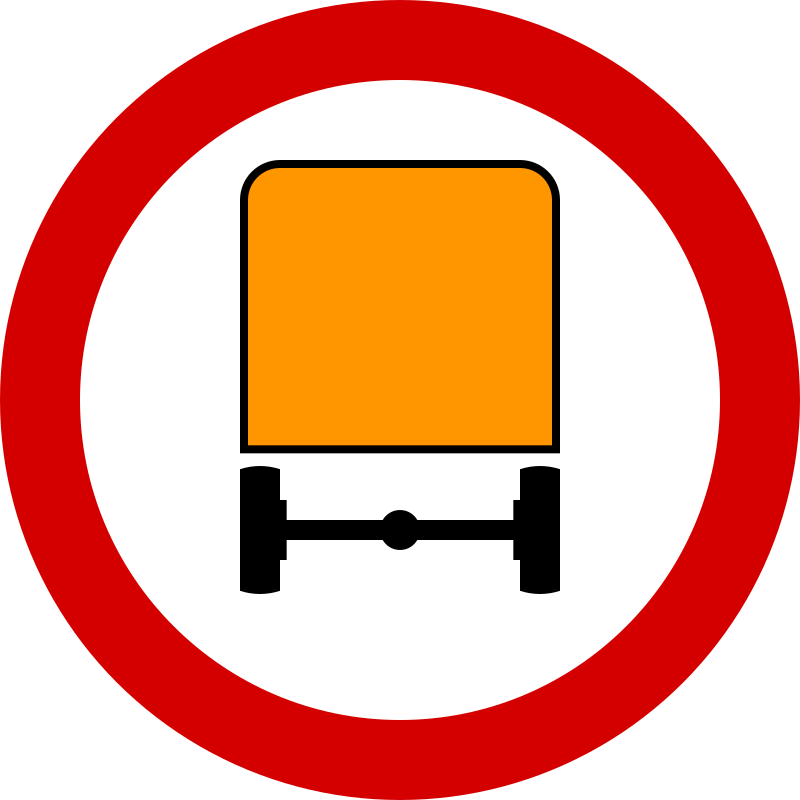
The B-13a - No Vehicles Carrying Dangerous Goods road sign may also be known by these alternative names or terms.
The B-13a - No Vehicles Carrying Dangerous Goods road sign is part of the Prohibitory Signs (B) category, which groups together signs with similar rules and functions.
Reviewing related road signs like the 'No Vehicles Carrying Dangerous Goods' sign helps solidify your understanding and reduces confusion in theory test revision. Comparing similar traffic signs aids in accurate recognition, crucial for passing your Polish driving theory exam.

B-1 Sign: Road Closed to All Traffic in Both Directions
The B-10 'No Mopeds' sign prohibits entry for all mopeds past this point.
B-11: No Entry for Cycle Rickshaws and Multi-Track Carts
Understand the B-12 'No Handcarts' Road Sign
Understand the B-13 sign: No vehicles carrying explosives or flammable goods allowed.
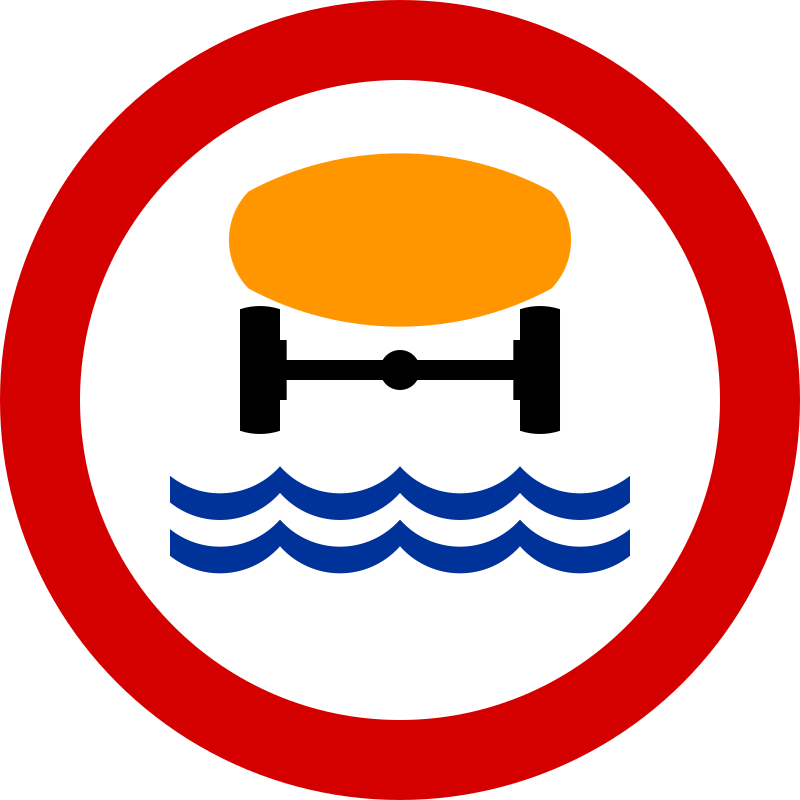
B-14 Sign: No Vehicles Carrying Water Contaminants
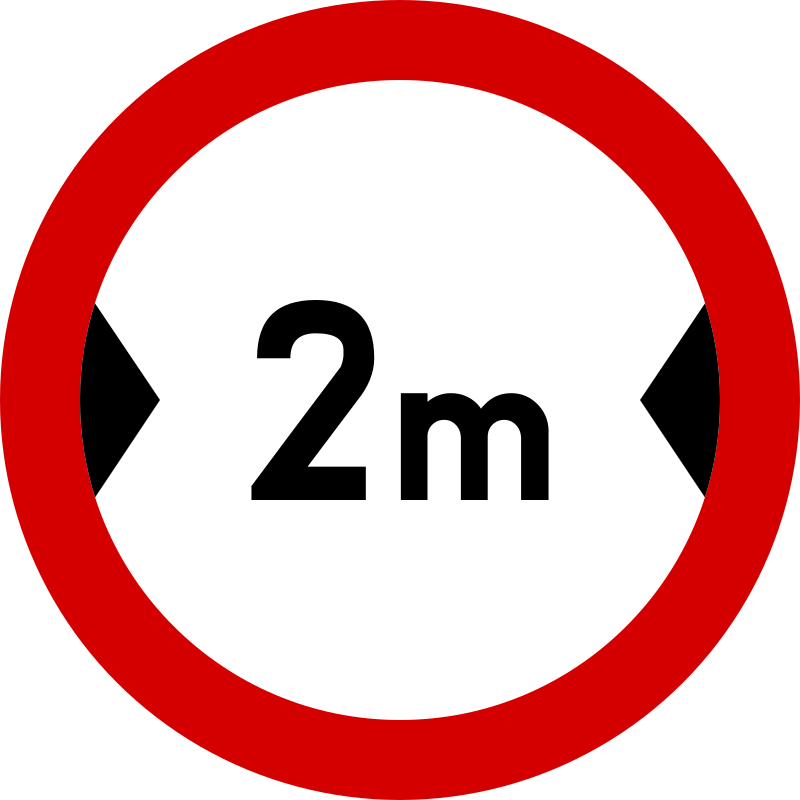
The B-15 sign prohibits vehicles wider than the specified limit from passing.
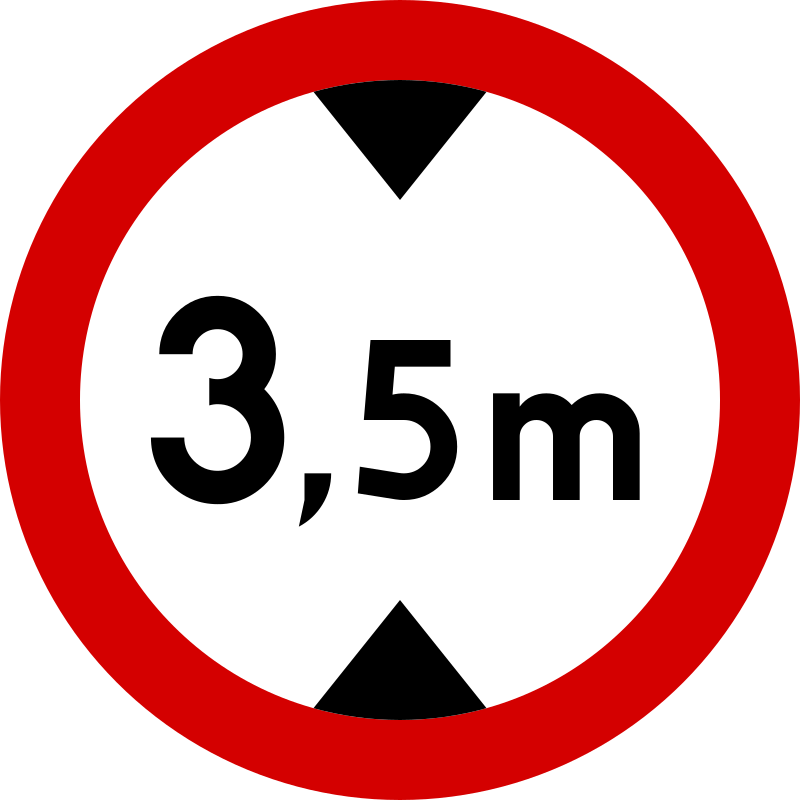
Recognise and Obey the B-16 'Height Restriction' Traffic Sign
Deepen your understanding of specific road signs by reviewing official Polish traffic rules and associated real-world driving scenarios. These expert-led resources help you bridge the gap between visual recognition and practical exam application.
Navigating Polish intersections requires a clear understanding of priority rules, particularly the differing obligations imposed by the mandatory Stop sign (B-20) and the Yield sign (A-7). This article will break down the legal requirements for each sign, explaining precisely when and how you must act to ensure safety and compliance with Polish traffic law. Mastering these distinctions is vital for success in your driving theory exam and for safe driving.
This article provides a detailed explanation of how Polish traffic signs A-7 ('Ustąp Pierwszeństwa' - Yield), B-20 ('STOP'), and D-1 ('Droga z Pierwszeństwem' - Priority Road) dictate right-of-way at intersections. Understanding the nuances of these signs is a fundamental aspect of the Polish driving theory exam, and mastering them will significantly improve your preparedness for real-world driving scenarios.
Don't Be a Road Block: Master Minimum Speeds and Smooth Traffic Flow for Your Polish Exam!
Master Polish Priority Signs and Navigate Intersections with Confidence
The B-43 sign is often used in residential 'Tempo 30' zones. Within this zone, every single street is governed by the speed shown on the sign. A key rule is that if the limit is 30 km/h or less, speed bumps or other physical traffic calming measures do not need to be individually marked with warning signs, as you are expected to be driving slowly enough to handle them.
The B-2 sign is most commonly found at the end of one-way streets to prevent drivers from entering the wrong way. It applies to all vehicles, including non-motorized ones like bicycles and horse-drawn carriages. Unlike the B-1 sign, traffic may be flowing toward you from the other side. Entering past this sign is extremely dangerous as it leads to head-on collision risks.
After reviewing the full list of Polish road signs, explore specific sign categories for in-depth understanding. Challenge your knowledge with practice questions focused on sign recognition and interpretation to solidify your preparation for the driving theory exam.
Browse All Polish Road Signs